
New · FreePlay The Witnesses The in-depth puzzle battle quest through Bible history

People of the Bible

Simon the Zealot

A man whose politics were in his name, sent out beside a man who collected Rome’s taxes.

Also called Simon the Canaanite

He is named in every list of the twelve and the label never comes off. Zealot in that century meant the party that held armed resistance to Rome to be a religious duty, and whether Simon was a member or merely hot tempered enough to earn the nickname, the word put him at one end of a room. He says nothing in any gospel. What the lists say about him is said by where his name sits.

Where he appearsMatthew 10 · Mark 3 · Luke 6

Scroll down to the account
Simon the Zealot

The movements, in the order the text gives them.

The Account of Simon the Zealot

  1. 01

    Luke 6:12-16

    He named twelve

    Luke gives the list after a whole night of prayer, and puts Simon called Zelotes near the end, four names after Matthew.

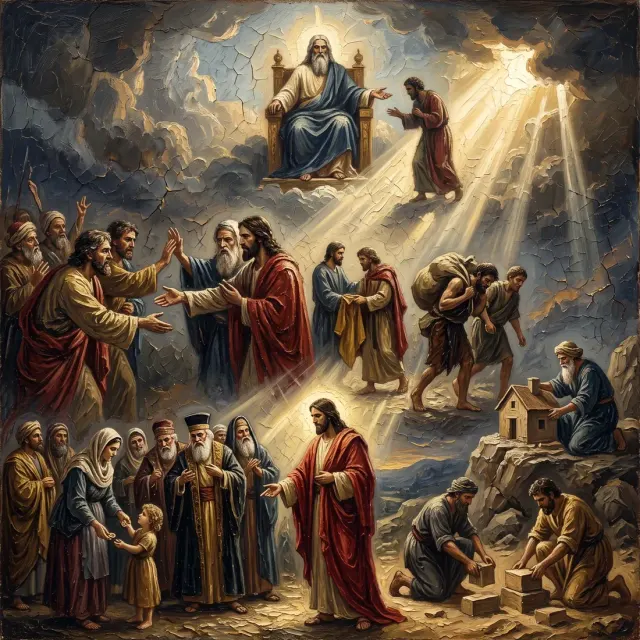
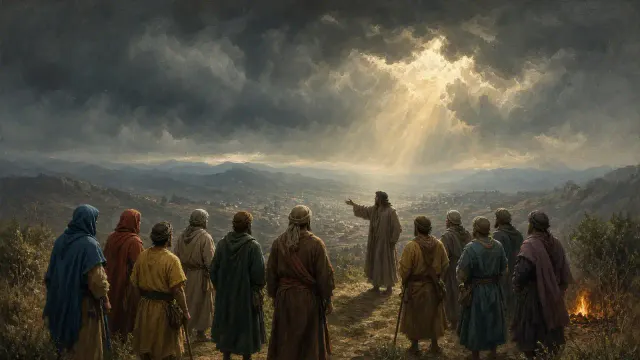
    The night belongs to Jesus before the list belongs to the apostles. Luke places the naming of the twelve after an entire night of prayer, not after a public contest for places. Simon's appointment begins in that setting. The decisive action is Jesus' choice, not anything Simon is reported to have claimed for himself.

    Of them is another small phrase with considerable weight. There is a larger company of disciples, and twelve are chosen from it and named apostles. Simon is therefore not being introduced as one of the only twelve people who follow Jesus. He receives a particular appointment within a wider gathering.

    Zelotes distinguishes him from the Simon already identified as Peter. The word marks zeal, but the passage does not provide a party membership, a record of violence, or the exact object of that zeal. Religious fervor and political association have both figured in interpretations of the epithet. The secure point is less elaborate and more substantial: Jesus includes this named man among the twelve. Luke gives the appointment a whole night of prayer. Simon's unrecorded past does not need to be invented to give it weight.

    Verse by verse

    1. 6:12

      Luke says that Jesus continued all night in prayer. The verse does not say that Simon or the other candidates kept that vigil with him.

    2. 6:13

      The twelve are selected from a larger company of disciples. Apostles is the designation Jesus gives to the chosen group.

    3. 6:15

      Zelotes means a zealous person. The name alone cannot establish Simon's precise affiliation or any alleged acts before his calling.
    Luke 6:12-16

    King James Version · 5 verses

    6:12And it came to pass in those days, that he went out into a mountain to pray, and continued all night in prayer to God.

    6:13And when it was day, he called unto him his disciples: and of them he chose twelve, whom also he named apostles;

    6:14Simon, (whom he also named Peter,) and Andrew his brother, James and John, Philip and Bartholomew,

    6:15Matthew and Thomas, James the son of Alphæus, and Simon called Zelotes,

    6:16And Judas the brother of James, and Judas Iscariot, which also was the traitor.

    Luke 6:12-16: He named twelve
  2. 02

    Matthew 10:2-4

    Simon the Canaanite

    Matthew keeps the label in Aramaic form and also keeps the publican on his own name, so both men carry their old allegiance into the list.

    The label looks like geography. Luke's parallel shows why that first impression can mislead. Simon the Canaanite here is Simon called Zelotes in Luke 6:15. The designation represents a Semitic expression for zeal, not a statement that Matthew has slipped a man of Canaanite ancestry into the list.

    There are two Simons, and each receives an identifying addition: Peter near the beginning, Canaanite near the end. That is the immediate job the names are doing. A descriptive label is useful identification, but it is not a complete account of a man's previous commitments.

    Matthew the publican also remains visibly identified in the same list. It is tempting to fill the space between the tax collector and the zealous man with an imagined quarrel, followed by an equally imagined reconciliation. Matthew records neither. The actual contrast is enough: these differently identified men receive the same authority in verse 1 and belong to the same sending in verse 5. Their names are not made interchangeable, and no separate mission is carved out for Simon. His place is within the twelve.

    Verse by verse

    1. 10:2

      Simon called Peter and Simon the Canaanite are distinct apostles. Their identifying additions prevent the repeated given name from becoming a confusion.

    2. 10:3-4

      Matthew names the publican and Simon within one company. It does not describe their personal relationship or designate them as a missionary pair.

    3. 10:4

      Canaanite here corresponds to Zelotes in Luke 6:15, rather than to the ethnic term used for the woman in Matthew 15:22.

    Matthew 10:2-4

    King James Version · 3 verses

    10:2Now the names of the twelve apostles are these; The first, Simon, who is called Peter, and Andrew his brother; James the son of Zebedee, and John his brother;

    10:3Philip, and Bartholomew; Thomas, and Matthew the publican; James the son of Alphaeus, and Lebbaeus, whose surname was Thaddaeus;

    10:4Simon the Canaanite, and Judas Iscariot, who also betrayed him.

    Matthew 10:2-4: Simon the Canaanite
  3. 03

    Mark 3:18

    One of the twelve, unqualified

    Mark records the appointing without comment. The point is not that the label is explained but that it is not treated as disqualifying.

    Simon keeps his identifying name when he receives his appointment. Mark does not call him the former Canaanite, and Acts 1:13 still names him Simon Zelotes after the ascension. The name helps follow the man across the accounts; it does not explain every conviction he held at every stage.

    The authority surrounding this list is specific. Jesus appoints the twelve to accompany him, preach, and exercise power against sickness and unclean spirits. Simon belongs to that commission without a special exemption or a separate assignment. Whatever can be inferred about his epithet must not displace the work the passage actually names.

    His later appearance in Acts brings the same precision. He is among the named apostles gathered in the upper room, and the next verse places that company in united prayer with the women, Mary the mother of Jesus, and his brethren. No individual farewell speech is preserved for Simon. His last explicit appearance is nonetheless a scene of participation, not disappearance. He remains identifiable within the company. A name in a room full of prayer is not an empty ending.

    Verse by verse

    1. 3:18

      Simon's epithet distinguishes him from Simon Peter in verse 16. Mark does not recount a separate episode from his life here.

    2. 3:18

      The authority and purposes in Mark 3:14-15 apply to the appointed twelve, including Simon.

    3. 3:18

      Acts 1:13-14 preserves Simon's name and places him within the company gathered in prayer after the ascension.

    Mark 3:18

    King James Version · 1 verse

    3:18And Andrew, and Philip, and Bartholomew, and Matthew, and Thomas, and James the son of Alphaeus, and Thaddaeus, and Simon the Canaanite,

    Mark 3:18: One of the twelve, unqualified

Why it matters

Matthew the publican and Simon the Zealot are in the same group of twelve, and the gospels never stage a scene about it. A tax collector worked for the occupation; a zealot killed men for working for the occupation. They are sent out two by two on the same mission with the same authority and no note is made. It is the quietest argument in the New Testament about what the calling does to the sides people came in on.

4 songs

The music

Every song in the catalogue whose passage falls inside these chapters.

  1. Matthew 9:35-10:20

    The Harvest Is Plenteous

  2. Mark 2:23-3:6

    Lord of the Sabbath

    Play here
    Open song pageRead lyrics
  3. Mark 3:20-35

    A House Divided

  4. Luke 6:27-49

    Love Your Enemies

Nearby

All the people

Report an error on this page