
Videos · Matthew 27 · 2:53
The Veil Was Torn
This video sets Matthew 27 to music and film, in 2 min 53 sec. Watch it here, then read what the passage covers and carry on into the study and the songs drawn from the same Scripture.
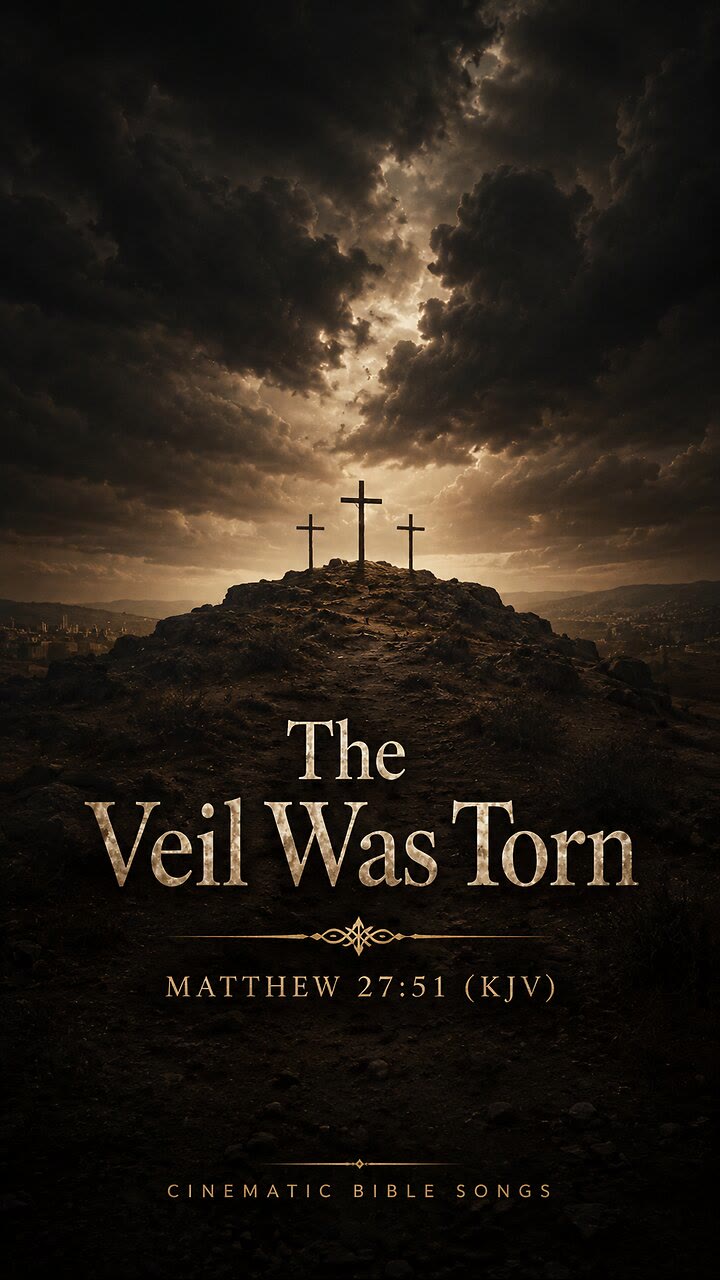
Now showing
The Veil Was Torn
Matthew 27 keeps placing declarations of Jesus’ innocence beside decisions that move his execution forward. Judas confesses “innocent blood,” Pilate knows envy is involved, Pilate’s wife calls Jesus just, and the governor himself asks what evil he has done, yet the chapter still moves from hearing to scourging and crucifixion.
About the passageAbout the passage
Matthew 27: The rejected king, the opened graves, and the sealed tomb
Matthew 27 keeps placing declarations of Jesus’ innocence beside decisions that move his execution forward. Judas confesses “innocent blood,” Pilate knows envy is involved, Pilate’s wife calls Jesus just, and the governor himself asks what evil he has done, yet the chapter still moves from hearing to scourging and crucifixion. Royal language follows Jesus into the abuse: robe, crown, kneeling, accusation, and repeated mockery all call him king while attempting to empty the title of meaning. At his death, the scale changes. Darkness falls, the veil tears, the earth shakes, rocks split, and graves open. The centurion and those with him respond in fear, while the women remain as witnesses. Joseph then gives Jesus his own new tomb. The chapter ends with the stone sealed and a watch set because Jesus’ opponents remember his resurrection prediction well enough to fear what might be said next.
Study Matthew 27 in depthSongs from this passage
- The Veil Was TornMatthew 27:27-56
- Sealed until the Third DayMatthew 27:57-66
- Behold the ManMatthew 27:1-31; Mark 15:1-20; Luke 22:63-23:25; John 18:28-19:16
- It Is FinishedMatthew 27:32-56; Mark 15:21-41; Luke 23:26-49; John 19:16-37
- A Stone at the DoorMatthew 27:57-66; Mark 15:42-47; Luke 23:50-56; John 19:38-42
Named in this passageJesusJudasPilate
More videos from Matthew
- The Narrow WayMatthew 7:13-14 · 3:27
- It Is WrittenMatthew 4:1-11 · 3:14
- Matthew Part II: The Cross and the Risen KingMatthew · 4:58
- Matthew, Part I: The King RevealedMatthew · 5:58