The big picture
Judah, one of Israel's tribes, receives a large share in the south as the land is divided. Joshua, Israel's leader, assigns towns and borders to its families. Israel is the people God has brought into this land. Caleb, the older man granted Hebron, a hill-country city, secures his portion within Judah. His daughter Achsah asks for water to accompany her land. The chapter ends by naming one city where Judah has not removed the existing inhabitants.
In this chapter
- Judah's Boundary Runs from Sea to Sea Joshua 15:1-12
The southern edge of Judah's share runs near Edom, a neighbouring land, and the dry wilderness.
- Achsah Asks for Springs with Her Land Joshua 15:13-19
Caleb receives Hebron and drives out the three sons of Anak who live there.
- The Southern Towns Are Listed Joshua 15:20-32
After the borders come the towns inside them.
- Lowland Towns Extend Toward the Coast Joshua 15:33-47
Towns in the lowland come next in groups.
- Hill Towns and Wilderness Settlements Receive Names Joshua 15:48-62
Hill towns now receive their places in the list.
- Jerusalem Still Has Its Earlier Inhabitants Joshua 15:63
Jerusalem forms an exception at the end of the list.
Central truth
Judah receives named towns and clear borders, yet its people still need water and have not taken all the land assigned.
Scripture beside the summary
Joshua · King James Version · 63Joshua 15:1-12
Judah's Boundary Runs from Sea to Sea
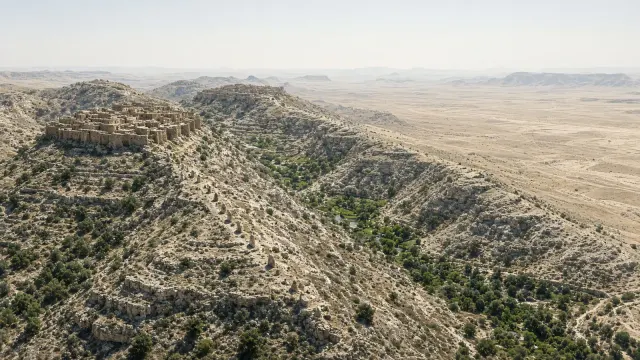
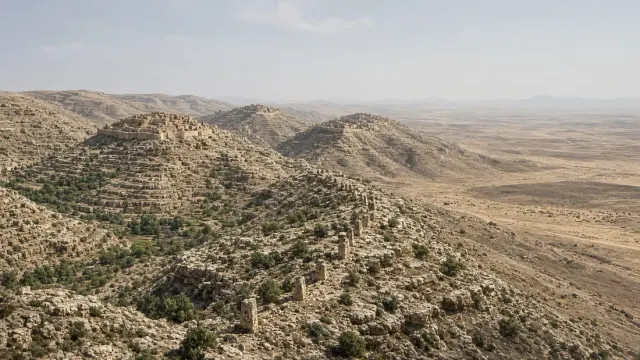
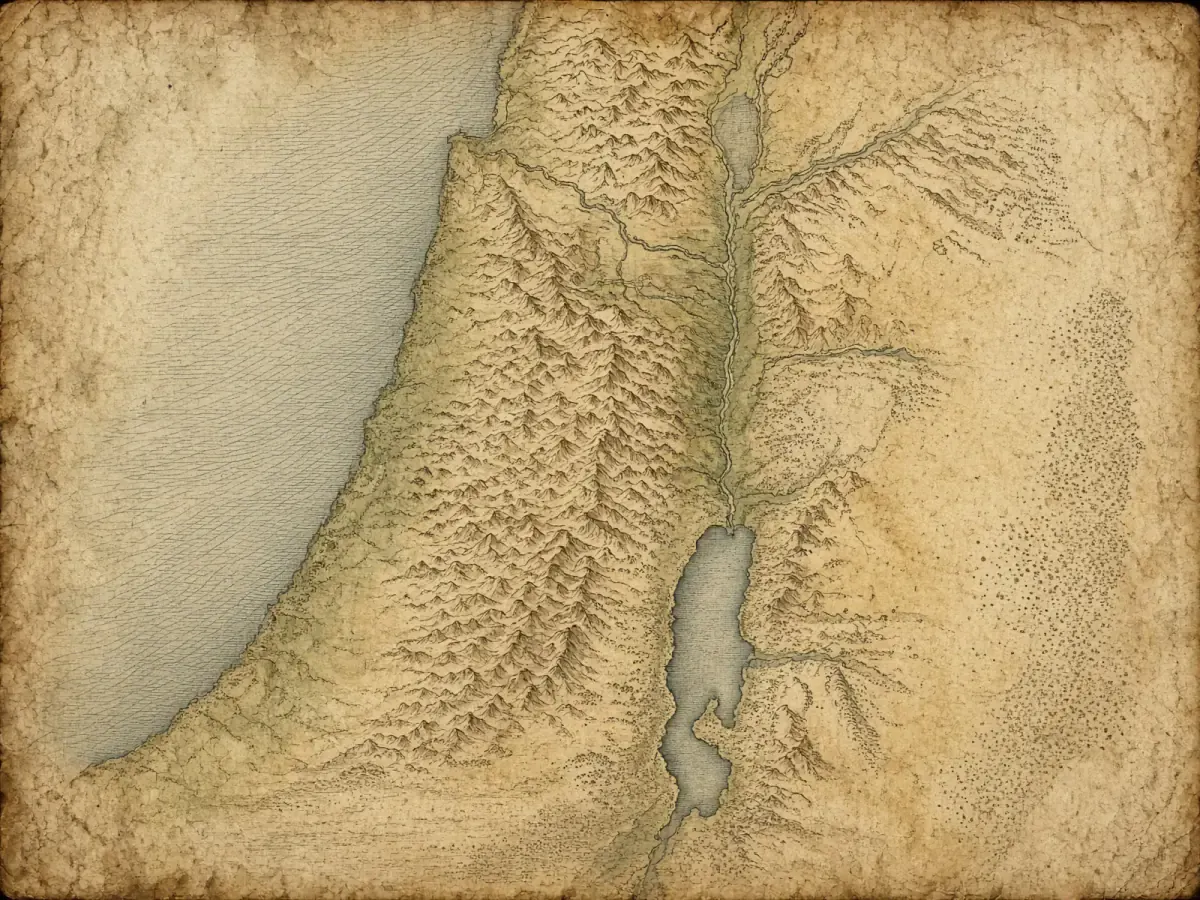
The southern edge of Judah's share runs near Edom, a neighbouring land, and the dry wilderness. Its eastern edge follows the salt sea. In the north, the line turns past springs, valleys, hills and towns. The great sea forms the west. These names trace the outside of the gift, rather than each home within it. Families can follow the turns on the ground. God gives Judah a place with edges, not a right to claim every field or town its people see.
In everyday life
A park ranger traces the border from a lake inlet to an old stone. She follows the ridge toward the western fence. She checks each turn before replacing a fallen marker. A broad description becomes a line people can actually trace. Judah's boundary assigns a tribal inheritance, not an area managed for public recreation.
Notice
Joshua 15:12 The boundary description ends by calling it Judah's land around its families. The detailed route serves a shared landholding rather than a traveller's itinerary.
Joshua 15:1-12
King James Version1This then was the lot of the tribe of the children of Judah by their families; even to the border of Edom the wilderness of Zin southward was the uttermost part of the south coast.
2And their south border was from the shore of the salt sea, from the bay that looketh southward:
3And it went out to the south side to Maaleh-acrabbim, and passed along to Zin, and ascended up on the south side unto Kadesh-barnea, and passed along to Hezron, and went up to Adar, and fetched a compass to Karkaa:
4From thence it passed toward Azmon, and went out unto the river of Egypt; and the goings out of that coast were at the sea: this shall be your south coast.
5And the east border was the salt sea, even unto the end of Jordan. And their border in the north quarter was from the bay of the sea at the uttermost part of Jordan:
6And the border went up to Beth-hogla, and passed along by the north of Beth-arabah; and the border went up to the stone of Bohan the son of Reuben:
7And the border went up toward Debir from the valley of Achor, and so northward, looking toward Gilgal, that is before the going up to Adummim, which is on the south side of the river: and the border passed toward the waters of En-shemesh, and the goings out thereof were at En-rogel:
8And the border went up by the valley of the son of Hinnom unto the south side of the Jebusite; the same is Jerusalem: and the border went up to the top of the mountain that lieth before the valley of Hinnom westward, which is at the end of the valley of the giants northward:
9And the border was drawn from the top of the hill unto the fountain of the water of Nephtoah, and went out to the cities of mount Ephron; and the border was drawn to Baalah, which is Kirjath-jearim:
10And the border compassed from Baalah westward unto mount Seir, and passed along unto the side of mount Jearim, which is Chesalon, on the north side, and went down to Beth-shemesh, and passed on to Timnah:
11And the border went out unto the side of Ekron northward: and the border was drawn to Shicron, and passed along to mount Baalah, and went out unto Jabneel; and the goings out of the border were at the sea.
12And the west border was to the great sea, and the coast thereof. This is the coast of the children of Judah round about according to their families.
Joshua 15:13-19
Achsah Asks for Springs with Her Land
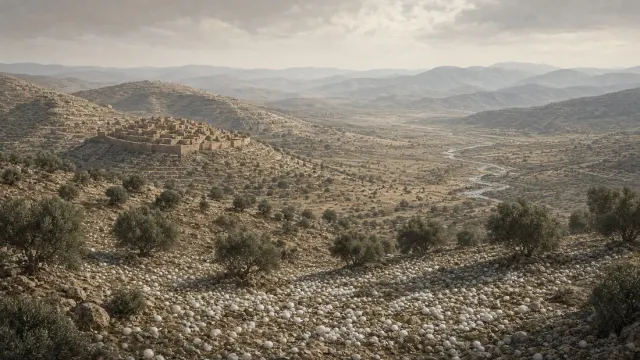
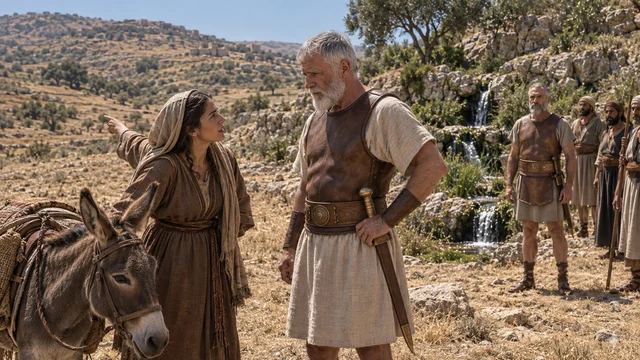
Caleb receives Hebron and drives out the three sons of Anak who live there. He then offers his daughter Achsah in marriage to the man who captures nearby Debir, also called Kirjath-sepher. Othniel takes it and marries her. Achsah urges a request for land and then approaches Caleb herself. When he asks what she wants, she says the southern land he gave needs springs. Caleb gives both upper and lower springs. Her request makes the granted land usable by securing water along with it.
In everyday life
The newlywed grower walks her father through the dry field he has given her. She thanks him for the land, then points to the empty irrigation channel and asks for access to the springs above it. He agrees to include both outlets. Achsah's marriage is linked with a military capture, unlike this family gift.
Notice
Joshua 15:19 Water is Achsah's request because of the kind of land she received. The field needs more than a boundary. Springs will make the dry ground she receives useful.
Joshua 15:13-19
King James Version13And unto Caleb the son of Jephunneh he gave a part among the children of Judah, according to the commandment of the LORD to Joshua, even the city of Arba the father of Anak, which city is Hebron.
14And Caleb drove thence the three sons of Anak, Sheshai, and Ahiman, and Talmai, the children of Anak.
15And he went up thence to the inhabitants of Debir: and the name of Debir before was Kirjath-sepher.
16And Caleb said, He that smiteth Kirjath-sepher, and taketh it, to him will I give Achsah my daughter to wife.
17And Othniel the son of Kenaz, the brother of Caleb, took it: and he gave him Achsah his daughter to wife.
18And it came to pass, as she came unto him, that she moved him to ask of her father a field: and she lighted off her ass; and Caleb said unto her, What wouldest thou?
19Who answered, Give me a blessing; for thou hast given me a south land; give me also springs of water. And he gave her the upper springs, and the nether springs.
Joshua 15:20-32
The Southern Towns Are Listed
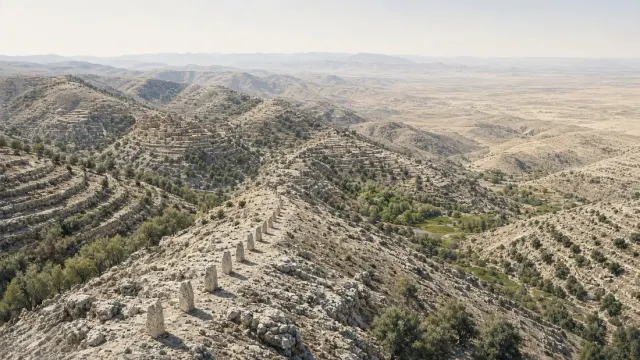
After the borders come the towns inside them. The list starts near Edom in the south. Beer-sheba and Ziklag appear with many other names. Villages are included with the towns, so the gift reaches farms and smaller homes too. The list gives a count of twenty-nine cities. It is not clear how all the written names fit that total. Its purpose is still plain: Judah's families receive places where people live, not only lines on a map or markers along a road.
In everyday life
The school bus driver pins the southern route list beside the windscreen before her first run. Large villages and tiny lanes each have an entry, so she does not stop only at familiar places. She checks the stated total against the named stops. Judah's list assigns homes and land, not transport service to pupils.
Notice
Joshua 15:32 The total includes cities with their villages. The nearby settlements belong to the grant even when each one is not separately named in the list.
Joshua 15:20-32
King James Version20This is the inheritance of the tribe of the children of Judah according to their families.
21And the uttermost cities of the tribe of the children of Judah toward the coast of Edom southward were Kabzeel, and Eder, and Jagur,
22And Kinah, and Dimonah, and Adadah,
23And Kedesh, and Hazor, and Ithnan,
24Ziph, and Telem, and Bealoth,
25And Hazor, Hadattah, and Kerioth, and Hezron, which is Hazor,
26Amam, and Shema, and Moladah,
27And Hazar-gaddah, and Heshmon, and Beth-palet,
28And Hazar-shual, and Beer-sheba, and Bizjothjah,
29Baalah, and Iim, and Azem,
30And Eltolad, and Chesil, and Hormah,
31And Ziklag, and Madmannah, and Sansannah,
32And Lebaoth, and Shilhim, and Ain, and Rimmon: all the cities are twenty and nine, with their villages:
Joshua 15:33-47
Lowland Towns Extend Toward the Coast
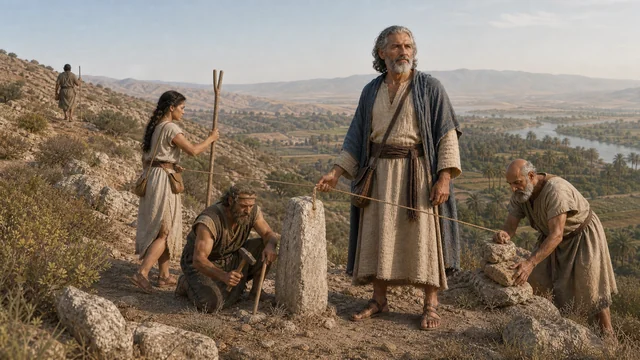
Towns in the lowland come next in groups. Each group has a count and includes nearby villages. Lachish, Eglon and Makkedah link this list to places named during the fighting. Farther west are Ekron, Ashdod and Gaza, with the towns around them. Judah's share reaches toward the sea. Naming these places records what the tribe is given. It does not say each one is already under full control. The last verse will show that an assigned town can still hold people Judah has failed to drive out.
In everyday life
An irrigation fitter lays district labels beside a row of valve handles serving lowland farms. Each main channel supplies smaller branches, and a missing branch would leave households without water. She checks the groups before opening the flow. No worker turns Judah's inheritance on or off as the fitter controls these channels.
Notice
Joshua 15:45 Ekron is listed together with its towns and villages. A main city stands for a wider local district, rather than an isolated point on the map.
Joshua 15:33-47
King James Version33And in the valley, Eshtaol, and Zoreah, and Ashnah,
34And Zanoah, and En-gannim, Tappuah, and Enam,
35Jarmuth, and Adullam, Socoh, and Azekah,
36And Sharaim, and Adithaim, and Gederah, and Gederothaim; fourteen cities with their villages:
37Zenan, and Hadashah, and Migdal-gad,
38And Dilean, and Mizpeh, and Joktheel,
39Lachish, and Bozkath, and Eglon,
40And Cabbon, and Lahmam, and Kithlish,
41And Gederoth, Beth-dagon, and Naamah, and Makkedah; sixteen cities with their villages:
42Libnah, and Ether, and Ashan,
43And Jiphtah, and Ashnah, and Nezib,
44And Keilah, and Achzib, and Mareshah; nine cities with their villages:
45Ekron, with her towns and her villages:
46From Ekron even unto the sea, all that lay near Ashdod, with their villages:
47Ashdod with her towns and her villages, Gaza with her towns and her villages, unto the river of Egypt, and the great sea, and the border thereof:
Joshua 15:48-62
Hill Towns and Wilderness Settlements Receive Names
Hill towns now receive their places in the list. Hebron is among them, named here as Kirjath-arba too. Debir also appears under a second name, Kirjath-sannah. These paired names help identify the same town. Each group includes its villages. After the hill groups come six towns in the wilderness, one of them En-gedi. Judah's land is not all alike. Some families will live among hills and towns; others will have homes in dry country. All these places belong within the tribe's stated share.
In everyday life
A shepherd unfolds a grazing register beside the upland gate. It separates the sheltered hill meadows from the dry lower stretches and gives old names beside newer ones. He marks where each flock belongs before leading them out. Judah's families receive towns as their inheritance, not seasonal permission to graze animals.
Notice
Joshua 15:49 Debir is also named Kirjath-sannah here. Giving an alternate name helps readers recognise that different place names can refer to the same settlement.
Joshua 15:48-62
King James Version48And in the mountains, Shamir, and Jattir, and Socoh,
49And Dannah, and Kirjath-sannah, which is Debir,
50And Anab, and Eshtemoh, and Anim,
51And Goshen, and Holon, and Giloh; eleven cities with their villages:
52Arab, and Dumah, and Eshean,
53And Janum, and Beth-tappuah, and Aphekah,
54And Humtah, and Kirjath-arba, which is Hebron, and Zior; nine cities with their villages:
55Maon, Carmel, and Ziph, and Juttah,
56And Jezreel, and Jokdeam, and Zanoah,
57Cain, Gibeah, and Timnah; ten cities with their villages:
58Halhul, Beth-zur, and Gedor,
59And Maarath, and Beth-anoth, and Eltekon; six cities with their villages:
60Kirjath-baal, which is Kirjath-jearim, and Rabbah; two cities with their villages:
61In the wilderness, Beth-arabah, Middin, and Secacah,
62And Nibshan, and the city of Salt, and En-gedi; six cities with their villages.
Joshua 15:63
Jerusalem Still Has Its Earlier Inhabitants
Jerusalem forms an exception at the end of the list. The Jebusites, the people living in that city, have not been driven out. Judah cannot remove them, and they remain there with Judah's people. No new battle is described to settle the problem. The long list of towns has named the tribe's share, but this last line shows a gap between gift and control. Jerusalem is counted within the claim to land while its earlier people still live in the city.
In everyday life
The railway engineer reaches the end of a planned extension. An old crossing is still blocked by a dispute over the ground. The line is marked on the official plan, yet trains cannot run through that point. She records the unfinished stretch. Jerusalem's issue concerns a people remaining in their city, not a strip of track.
Notice
Joshua 15:63 The continuing presence of the Jebusites is stated after the full town list. The closing note prevents the division record from sounding like complete possession.
Joshua 15:63
King James Version63As for the Jebusites the inhabitants of Jerusalem, the children of Judah could not drive them out: but the Jebusites dwell with the children of Judah at Jerusalem unto this day.
Details worth noticing
The opening image
Joshua 15:1 begins with “This then was the lot of the tribe of the children of Judah by their families; even to the border of Edom the wilderness of Zin southward was the uttermost…”
Where the chapter turns
Joshua 15:18 forms a natural hinge: “And it came to pass, as she came unto him, that she moved him to ask of her father a field: and she lighted off her ass; and Caleb said unto her, What…”
The final note
Joshua 15:63 leaves the reader with “As for the Jebusites the inhabitants of Jerusalem, the children of Judah could not drive them out: but the Jebusites dwell with the children of Judah at…”
A word trail through the chapter
The words border, villages, cities, Beth, children, passed help reveal the chapter’s repeated concerns.
KJV words made clear
- nether
- Lower, used here to distinguish one set of springs from the upper springs.
Music and video connected to the passage
Related media appears when its Scripture reference overlaps this study. Music and video can illuminate a theme while the biblical text remains the foundation.