The big picture
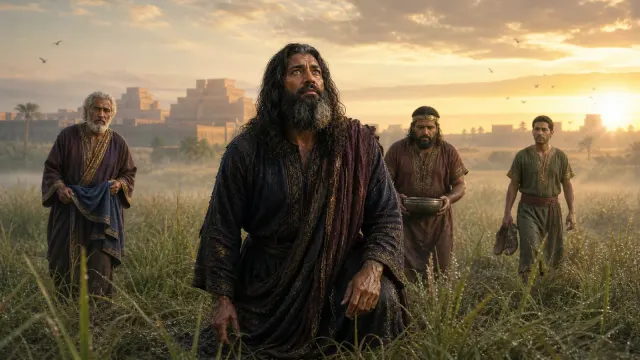
Nebuchadnezzar tells this chapter as the account of what the Most High did to him. A vast tree pictures a kingship that shelters and feeds others, but a heavenly decree orders it cut down while preserving the stump. Daniel interprets the dream with visible reluctance, names the king as the tree, and urges him toward righteousness and mercy to the poor. Twelve months pass before the warning meets Nebuchadnezzar in the middle of a boast about Babylon, his power, and his majesty. The announced humiliation follows, reducing the ruler who saw himself at the center of a great city to a life exposed among the beasts. Restoration begins when his understanding returns and he looks toward heaven. His kingdom and honor come back, but his explanation of greatness has changed. The final praise does not abolish earthly government. It places the restored king beneath a dominion he now confesses no earthly ruler can restrain.
In this chapter
- A Royal Proclamation with an Unexpected Subject Daniel 4:1-9
Nebuchadnezzar opens with the ending already in his mouth.
- A Tree That Shelters Others, and a Stump Left Alive Daniel 4:10-18
The dream's tree is not merely tall.
- The Interpreter Does Not Relish the Interpretation Daniel 4:19-27
Daniel does not enjoy having the answer.
- The Boast Is Interrupted Before It Leaves His Mouth Daniel 4:28-33
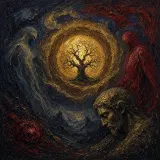
A year after the warning, Nebuchadnezzar walks through Babylon and supplies the explanation the Book of Daniel has resisted from its opening chapter.
- Understanding Returns with a Different Account of Greatness Daniel 4:34-37
Nebuchadnezzar's restoration begins with an upward look and the return of understanding.

Scripture beside the summary
Daniel · King James Version · 37Daniel 4:1-9
A Royal Proclamation with an Unexpected Subject
Nebuchadnezzar opens with the ending already in his mouth. He writes to peoples, nations, and languages about the signs the high God has worked "toward me," turning the machinery of royal proclamation toward the account of his own humiliation. The same broad audience once summoned around his golden image now hears a king explain how his settled prosperity was interrupted. He had been at rest and flourishing when a dream disturbed him. Even after Daniel's success in chapter 2, the usual specialists are called first, and the king still describes Daniel through the "spirit of the holy gods" while linking his Babylonian name to his own deity. The old vocabulary is preserved because the distance matters. The proclamation does not pretend Nebuchadnezzar began the episode with the confession he reaches at its end. It lets the reader hear the categories from which the king is going to be moved.
Deep dive
The chapter opens as a royal communication to peoples, nations, and languages, the same broad audience summoned around the image in chapter 3. This time the subject is what the high God has done to the king himself. The man accustomed to publishing orders publishes the history of his own reduction. The opening praise tells the outcome before the account describes how he reached it.
His earlier condition is expressed through rest and flourishing. The dream interrupts that settled prosperity without an invading army or visible change in the palace. Even after the disclosure in chapter 2, the familiar specialists are summoned again before Daniel appears. The king knows Daniel's ability but still speaks of the "spirit of the holy gods" in him and connects his Babylonian name with his own god. The proclamation preserves those earlier words. It allows the distance between the king's initial categories and his concluding acknowledgment to be heard rather than smoothing the whole account into one uniform confession.
Words to trace: dream, interpretation, Belteshazzar, generation, gods, holy
Verse-by-verse path
- Daniel 4:1
In Aramaic and Hebrew Bibles, verses 1–3 are the last three verses of chapter 3, so the letter follows straight on from the furnace. It opens like an ancient letter, sender, addressees, greeting. “Peace be multiplied” is the greeting Darius uses in 6:25, and 1 Peter 1:2 opens with the same wish.
- Daniel 4:2
“I thought it good” is the phrase of a royal pronouncement, it seemed good before me. “Signs and wonders” is the vocabulary of the Exodus (Deuteronomy 4:34; 6:22), and a king of Babylon uses it for what God did to him personally: “toward me”.
- Daniel 4:3
The second half is nearly Psalm 145:13: “Thy kingdom is an everlasting kingdom, and thy dominion endureth throughout all generations.” The king will say it again in verse 34, so his letter opens and closes on the same confession.
- Daniel 4:4
“At rest” is untroubled, at ease. “Flourishing” is ra’anan, green and leafy, the word Psalm 52:8 uses for “a green olive tree”. Before any dream is told, the king has described himself in the language of a tree in full leaf.
- Daniel 4:5
In chapter 2 his spirit was troubled; here he is afraid, and this time he remembers the dream and tells it. “The visions of my head” is the idiom of 2:28, dreams seen on a bed.
- Daniel 4:6
The king who once decreed the death of all the wise men of Babylon now decrees that all of them be brought in. It is the book’s third royal decree, and the first that threatens no one.
- Daniel 4:7
The dream is told this time, and they still cannot interpret it. The failure in chapter 2 could be blamed on the missing dream; this one cannot. The guilds are listed again, with the soothsayers of 2:27 now among them.
- Daniel 4:8
“At the last” is how the king records Daniel’s arrival, as if the chief of the wise men always comes in after the rest have failed. Pharaoh said of Joseph, “a man in whom the Spirit of God is” (Genesis 41:38); the king reaches for the same thought in his own plural terms.
- Daniel 4:9
“Master of the magicians” is the office of 2:48. “No secret troubleth thee” uses a verb meaning to press hard, to be too heavy for. The request keeps the old shape, the visions and the interpretation, but he has already told the dream.
Daniel 4:1-9
King James Version1Nebuchadnezzar the king, unto all people, nations, and languages, that dwell in all the earth; Peace be multiplied unto you.
2I thought it good to shew the signs and wonders that the high God hath wrought toward me.
3How great are his signs! and how mighty are his wonders! his kingdom is an everlasting kingdom, and his dominion is from generation to generation.
4I Nebuchadnezzar was at rest in mine house, and flourishing in my palace:
5I saw a dream which made me afraid, and the thoughts upon my bed and the visions of my head troubled me.
6Therefore made I a decree to bring in all the wise men of Babylon before me, that they might make known unto me the interpretation of the dream.
7Then came in the magicians, the astrologers, the Chaldeans, and the soothsayers: and I told the dream before them; but they did not make known unto me the interpretation thereof.
8But at the last Daniel came in before me, whose name was Belteshazzar, according to the name of my god, and in whom is the spirit of the holy gods: and before him I told the dream, saying,
9O Belteshazzar, master of the magicians, because I know that the spirit of the holy gods is in thee, and no secret troubleth thee, tell me the visions of my dream that I have seen, and the interpretation thereof.
Daniel 4:10-18
A Tree That Shelters Others, and a Stump Left Alive
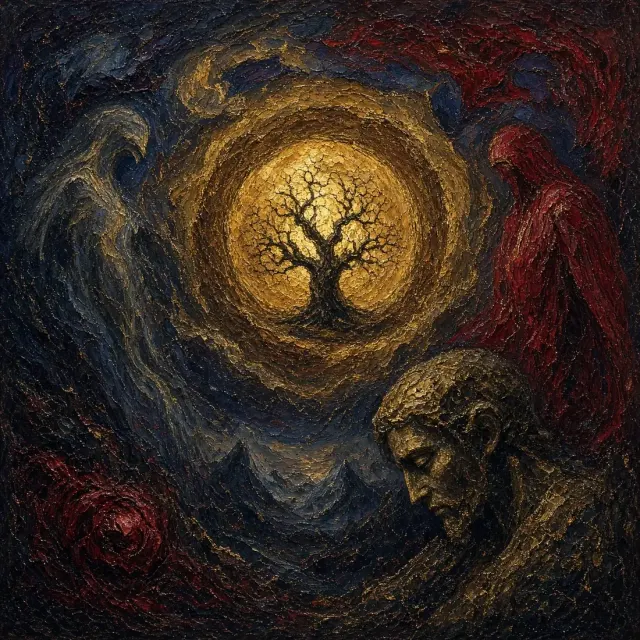
The dream's tree is not merely tall. It feeds, shelters, and houses life far beyond itself. That makes the command to cut it down more disturbing than the removal of a decorative monument. Royal power has become useful to creatures living in its shade, and its fall scatters them. Yet the stump remains. A band surrounds the roots, and the sentence shifts from tree language into the life of a person who will share the field with beasts until "seven times" pass. The period is bounded even before Daniel explains it. The chapter does not explicitly name the unit as years, though that is a common reading, and it offers no medical theory for what will happen to the king. It does state the purpose with unusual clarity: the living are to know that the Most High rules in human kingdoms and gives them as he wills. The tree's fall is severe, but the preserved root makes the humiliation something other than final destruction.
Deep dive
The tree's greatness is measured not only by its height but by the lives it sustains. Animals shelter beneath it, birds inhabit its branches, and its fruit feeds others. The image gives royal dominion a genuinely supporting function before describing its removal. The dream does not begin by declaring that everything about the king's power is barren or useless.
The command to cut it down scatters that dependent life. Then the description crosses from tree to person: a portion with beasts and a changed heart belong to the king represented by the image. The watcher comes from heaven, and verse 17 states the purpose of the sentence, that the living may know who rules over human kingdoms. The watchers' decree is later identified with the decree of the Most High, not with an independent rival authority.
The remaining stump is as important as the fall. Destruction is limited rather than final. The "seven times" are commonly understood as years, but the unit is not explicitly named in this chapter. The dream gives a bounded humiliation and a preserved future, not a detailed medical or administrative explanation.
Words to trace: earth, heaven, beasts, holy, tree, able
Verse-by-verse path
- Daniel 4:10
A tree “in the midst of the earth” is a world tree. Ezekiel 31 had drawn the Assyrian king as a cedar with birds in its boughs and beasts beneath, felled for its pride, and Babylon’s own king now dreams the same image of himself.
- Daniel 4:11
The height “reached unto heaven”, the ambition of the builders of Babel in Genesis 11:4, whose top may reach unto heaven. “The sight thereof” means it could be seen from everywhere. Three verbs of growth pile up: grew, was strong, reached.
- Daniel 4:12
Shade for the beasts, branches for the birds and food for “all flesh”. The picture recurs in Ezekiel 17:23, where every fowl dwells in the shadow of a planted cedar. This tree is not only large; everything around it lives off it.
- Daniel 4:13
“Watcher” is ir, from the verb to be awake: one who does not sleep. It appears in the Bible only in this chapter (verses 13, 17, 23). Later Jewish writings, 1 Enoch above all, made “the Watchers” a name for angels, drawing on this word.
- Daniel 4:14
“He cried aloud” is the same Aramaic phrase used for the herald on the plain of Dura in 3:4. Heaven has its herald too. Four verbs of destruction follow in order, hew, cut, shake, scatter, and then the creatures that lived off the tree run.
- Daniel 4:15
The band of iron and bronze round the stump may protect it from splitting, or it may be a fetter; readers have taken it both ways. Mid-sentence the stump becomes “his”, with a portion among the beasts, and the dream has stopped being about a tree.
- Daniel 4:16
It is the heart that is changed, the seat of mind and understanding, not the body. The verb is shanah, the same used for the king’s face changing in 3:19 and for God changing the times in 2:21.
- Daniel 4:17
“Decree” is gezerah, from the verb for cutting and deciding that named the soothsayers in 2:27. “The basest of men” means the lowliest. The dream’s own speaker gives the reason for it, a thing no Babylonian omen text would have done.
- Daniel 4:18
These are the king’s last words in the first person until verse 34. From verse 19 the letter speaks of him as “the king” and “Nebuchadnezzar”, as though he could not narrate his own madness, and he picks up the “I” only when his understanding returns.
Daniel 4:10-18
King James Version10Thus were the visions of mine head in my bed; I saw, and behold a tree in the midst of the earth, and the height thereof was great.
11The tree grew, and was strong, and the height thereof reached unto heaven, and the sight thereof to the end of all the earth:
12The leaves thereof were fair, and the fruit thereof much, and in it was meat for all: the beasts of the field had shadow under it, and the fowls of the heaven dwelt in the boughs thereof, and all flesh was fed of it.
13I saw in the visions of my head upon my bed, and, behold, a watcher and an holy one came down from heaven;
14He cried aloud, and said thus, Hew down the tree, and cut off his branches, shake off his leaves, and scatter his fruit: let the beasts get away from under it, and the fowls from his branches:
15Nevertheless leave the stump of his roots in the earth, even with a band of iron and brass, in the tender grass of the field; and let it be wet with the dew of heaven, and let his portion be with the beasts in the grass of the earth:
16Let his heart be changed from man’s, and let a beast’s heart be given unto him; and let seven times pass over him.
17This matter is by the decree of the watchers, and the demand by the word of the holy ones: to the intent that the living may know that the most High ruleth in the kingdom of men, and giveth it to whomsoever he will, and setteth up over it the basest of men.
18This dream I king Nebuchadnezzar have seen. Now thou, O Belteshazzar, declare the interpretation thereof, forasmuch as all the wise men of my kingdom are not able to make known unto me the interpretation: but thou art able; for the spirit of the holy gods is in thee.
Daniel 4:19-27
The Interpreter Does Not Relish the Interpretation
Daniel does not enjoy having the answer. His troubled silence lasts long enough for Nebuchadnezzar to reassure the interpreter, and Daniel openly wishes the dream belonged to the king's enemies. Then he says what must be said: "It is thou, O king." The giant tree is Nebuchadnezzar's greatness, and the preserved stump means the kingdom can be restored after he learns that heaven rules. The Book of Daniel holds concern for the man together with an unsoftened interpretation. Daniel's counsel then turns the dream's political grandeur toward the poor. He urges righteousness and mercy, making the responsibilities of power part of the issue rather than reducing pride to a private feeling inside the king's head. His appeal also speaks of possible lengthening of tranquillity rather than offering a transaction by which charitable behavior automatically purchases immunity. A full year will pass before the warning is fulfilled, leaving real space between announcement and consequence.
Deep dive
Daniel's troubled pause belongs to the text itself. His wish that the dream concerned the king's enemies does not soften the identification that follows: the tree is Nebuchadnezzar. The account holds concern for the king together with an unwelcome explanation. Daniel neither turns the judgment into a taunt nor withholds it to preserve comfort at court.
The stump means that the kingdom will remain available to him after he knows "that the heavens do rule." Restoration is tied to recognition of a sovereignty he did not create. Daniel then gives counsel with a concrete social edge: righteousness and mercy toward the poor. The dream's tree fed others, and the interpretation returns to the responsibilities attached to greatness. Pride is not treated merely as an excessive private opinion of oneself.
Daniel's counsel is expressed with the possibility of extended tranquillity, not a mechanical guarantee that a particular act purchases immunity. His words are an appeal within the account, addressed to this king in this situation. The chapter then leaves a full year between the warning and its fulfillment, allowing the warning to stand as more than a sentence announced at the last instant.
Words to trace: heaven, king, field, beasts, Belteshazzar, earth
Verse-by-verse path
- Daniel 4:19
“One hour” is sha’ah, the same word as “the same hour” in 3:6: a moment, not sixty minutes. Daniel’s wish is a courtly curse deflected onto enemies, as when the Cushite told David, “The enemies of my lord the king... be as that young man is” (2 Samuel 18:32).
- Daniel 4:20
Daniel repeats the dream before he explains it, and he picks out the four words he is about to apply: grew, strong, height, sight. The retelling is a setting of the table for verse 22.
- Daniel 4:21
The retelling follows verse 12 closely but leaves one line out: “all flesh was fed of it.” Daniel keeps the leaves, the fruit, the shade and the birds, and moves straight to the identification.
- Daniel 4:22
Each tree verb from verse 11 is reused of the king: grown, strong, reached unto heaven. “Thy dominion to the end of the earth” was close to true; Nebuchadnezzar’s empire ran from the borders of Egypt to the Persian Gulf.
- Daniel 4:23
Daniel quotes the watcher, and one verb has been added that was not in verse 14: “destroy it”. He then sets the dew, the beasts and the seven times into one breathless sentence, the whole sentence of heaven at once.
- Daniel 4:24
“Is come upon” is the verb meta, to reach, the same verb used when the tree’s height reached heaven (verses 11, 20, 22). The tree reached up to heaven; now a decree from heaven reaches down to the king.
- Daniel 4:25
“They shall drive thee” is an Aramaic idiom with no actual subject, a way of saying you will be driven. The dream said his portion would be with the beasts; the interpretation specifies grass, “as oxen”. The refrain about who gives kingdoms is heard for the second time.
- Daniel 4:26
“The heavens do rule” is the only place in the Old Testament where heaven stands in for God’s name. Later Jewish usage made the substitution common, and it lies behind “the kingdom of heaven” in Matthew’s Gospel.
- Daniel 4:27
“Break off” may also mean redeem or ransom, and “righteousness” came in later Aramaic to mean almsgiving, which is how later Jewish readers took the verse. “Tranquillity” is from the root of “at rest” in verse 4: the ease the dream disturbed might yet be lengthened.
Daniel 4:19-27
King James Version19Then Daniel, whose name was Belteshazzar, was astonied for one hour, and his thoughts troubled him. The king spake, and said, Belteshazzar, let not the dream, or the interpretation thereof, trouble thee. Belteshazzar answered and said, My lord, the dream be to them that hate thee, and the interpretation thereof to thine enemies.
20The tree that thou sawest, which grew, and was strong, whose height reached unto the heaven, and the sight thereof to all the earth;
21Whose leaves were fair, and the fruit thereof much, and in it was meat for all; under which the beasts of the field dwelt, and upon whose branches the fowls of the heaven had their habitation:
22It is thou, O king, that art grown and become strong: for thy greatness is grown, and reacheth unto heaven, and thy dominion to the end of the earth.
23And whereas the king saw a watcher and an holy one coming down from heaven, and saying, Hew the tree down, and destroy it; yet leave the stump of the roots thereof in the earth, even with a band of iron and brass, in the tender grass of the field; and let it be wet with the dew of heaven, and let his portion be with the beasts of the field, till seven times pass over him;
24This is the interpretation, O king, and this is the decree of the most High, which is come upon my lord the king:
25That they shall drive thee from men, and thy dwelling shall be with the beasts of the field, and they shall make thee to eat grass as oxen, and they shall wet thee with the dew of heaven, and seven times shall pass over thee, till thou know that the most High ruleth in the kingdom of men, and giveth it to whomsoever he will.
26And whereas they commanded to leave the stump of the tree roots; thy kingdom shall be sure unto thee, after that thou shalt have known that the heavens do rule.
27Wherefore, O king, let my counsel be acceptable unto thee, and break off thy sins by righteousness, and thine iniquities by shewing mercy to the poor; if it may be a lengthening of thy tranquillity.
Daniel 4:28-33
The Boast Is Interrupted Before It Leaves His Mouth
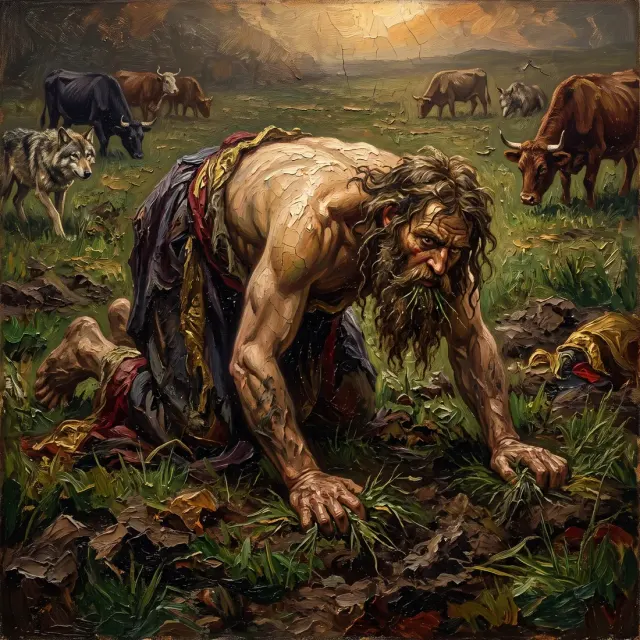
A year after the warning, Nebuchadnezzar walks through Babylon and supplies the explanation the Book of Daniel has resisted from its opening chapter. This is "great Babylon" built by "the might of my power" and for "the honour of my majesty." The problem is not that a king has participated in building a city. It is that the entire account of greatness closes around him with no giver beyond him. Heaven answers while the boast is still in his mouth. Before the sentence can settle into the air, the kingdom is declared departed. The humiliation follows immediately: separation from human society, grass for food, exposure to dew, and hair and nails growing unchecked. The text describes a king living in beastlike conditions without saying his body literally becomes an animal. It also does not diagnose him or explain how Babylon's administration functioned meanwhile. The theological purpose has already been given, and the fulfillment is measured against that announced purpose.
Deep dive
The king's speech concentrates possession into a few phrases: his power, his majesty, the city he has built. Babylon's visible grandeur becomes evidence for an explanation with no giver beyond himself. That is the precise explanation chapter 1 has refused and chapter 2 has corrected. The issue is not whether Nebuchadnezzar undertook royal building. It is the claim that the city's greatness terminates in his own might and honor.
The answering voice comes while the word is still in his mouth. The timing turns an apparently settled conclusion into an interrupted assertion. His kingdom is declared departed before he can secure the boast by finishing it. The fulfillment is described through exclusion from human society, eating grass, exposure to dew, and untrimmed hair and nails. These details depict a human king living in beastlike conditions; they do not say his body literally becomes an animal. The chapter explains the event through its announced theological purpose and supplies no diagnosis or account of how the government operated during his absence.
Words to trace: kingdom, king, Nebuchadnezzar, Babylon, grass, heaven
Verse-by-verse path
- Daniel 4:28
Six words sum up the whole fulfilment before it is told. The verb is again meta, reached: it all reached the king. The third person continues; the letter is still speaking of its author from outside.
- Daniel 4:29
Twelve months pass between warning and fulfilment. The Aramaic has him walking “upon” the palace, most likely on its roof, looking out over the city, as David walked on his roof in 2 Samuel 11:2 before his own fall.
- Daniel 4:30
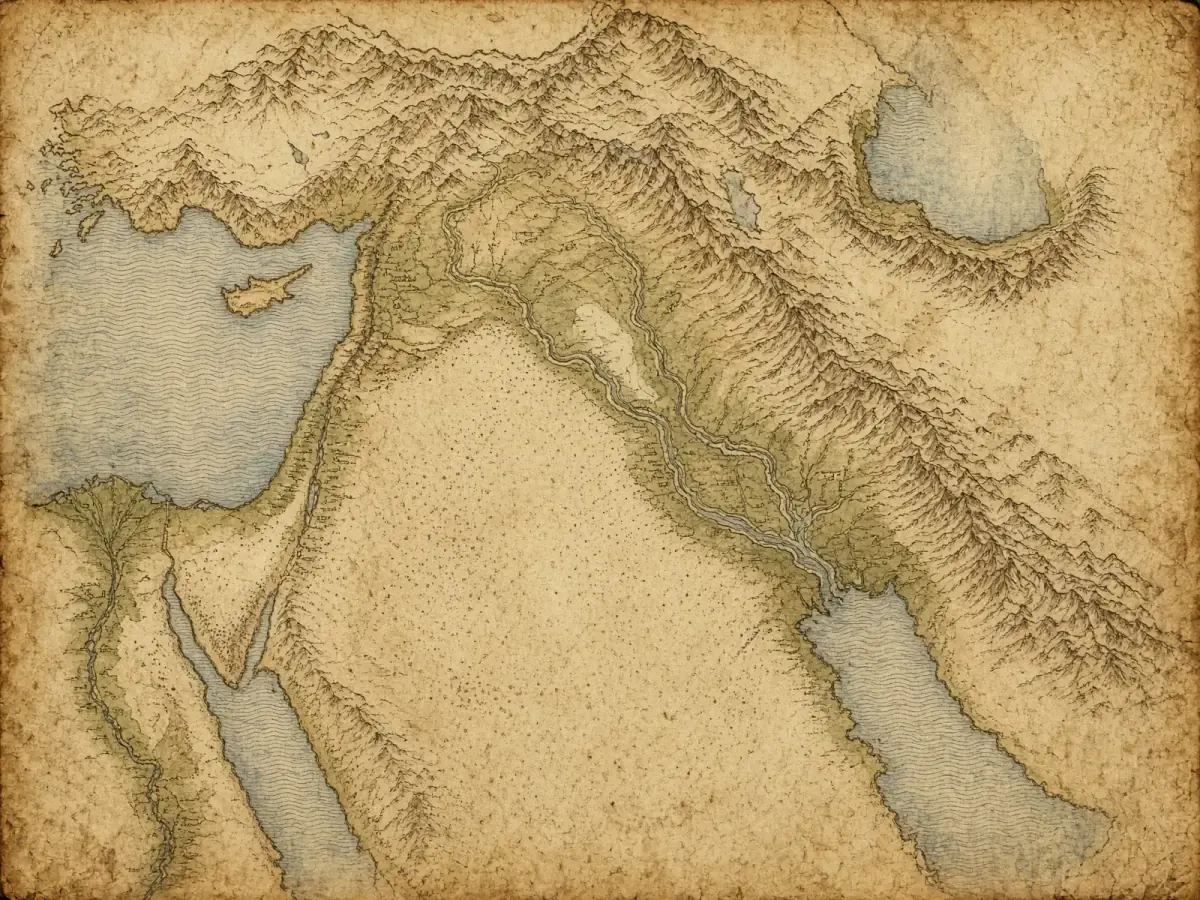
Nebuchadnezzar’s surviving building inscriptions boast of rebuilding Babylon, its walls, its temple Esagila and its gates, in terms very like these. Revelation 14:8 takes up the phrase: “Babylon is fallen, is fallen, that great city.”
- Daniel 4:31
“There fell a voice” uses nefal, the verb of falling down to worship all through chapter 3. The king who ordered the world to fall before his image hears a voice fall on him. For the first time heaven speaks to him directly, with no dream and no interpreter.
- Daniel 4:32
The voice repeats the sentence Daniel gave in verse 25 almost word for word, and this third telling drops the dew. What never drops out, in any of the three, is the purpose clause: until thou know.
- Daniel 4:33
The hair like feathers and nails like claws are what happens to a man left in the open with no barber. No Babylonian record describes such a madness. A text found at Qumran, the Prayer of Nabonidus, tells of the later king Nabonidus struck for seven years at Teima, and many think the two accounts are related.
Daniel 4:28-33
King James Version28All this came upon the king Nebuchadnezzar.
29At the end of twelve months he walked in the palace of the kingdom of Babylon.
30The king spake, and said, Is not this great Babylon, that I have built for the house of the kingdom by the might of my power, and for the honour of my majesty?
31While the word was in the king’s mouth, there fell a voice from heaven, saying, O king Nebuchadnezzar, to thee it is spoken; The kingdom is departed from thee.
32And they shall drive thee from men, and thy dwelling shall be with the beasts of the field: they shall make thee to eat grass as oxen, and seven times shall pass over thee, until thou know that the most High ruleth in the kingdom of men, and giveth it to whomsoever he will.
33The same hour was the thing fulfilled upon Nebuchadnezzar: and he was driven from men, and did eat grass as oxen, and his body was wet with the dew of heaven, till his hairs were grown like eagles’ feathers, and his nails like birds’ claws.
Daniel 4:34-37
Understanding Returns with a Different Account of Greatness
Nebuchadnezzar's restoration begins with an upward look and the return of understanding. The motion reverses the closed circle of his earlier boast. Instead of city, power, and majesty all pointing back to himself, he now praises a dominion that extends across generations and a will no creature can halt or cross-examine. His own honor and kingdom return as well. Counselors seek him, royal brightness is restored, and additional majesty is given. The Book of Daniel therefore does not end the chapter by treating earthly rule itself as the problem. The king resumes rule with a different account of where rule sits in the larger order. The stump was preserved for precisely this kind of return. His closing words identify God's works as truth, his ways as judgment, and his ability to abase the proud as something Nebuchadnezzar has personally learned rather than a slogan attached from outside. The king ends with his throne restored and his self-explanation dismantled.
Deep dive
The first-person voice returns emphatically: Nebuchadnezzar lifts his eyes and blesses the Most High. Looking upward reverses the self-contained circuit of the earlier boast. His restored understanding is expressed in acknowledgment of a kingdom that endures across generations and a will that no creature can restrain. The king who demanded answers from others now recognizes that he cannot summon heaven to justify itself before his throne.
His honor, counselors, and kingdom return, so the final picture is not simply the abolition of earthly rule. It is restored rule accompanied by a different confession about its source and limits. The preserved stump has served its purpose. The chapter ends with the king identifying God's works as truth and his ways as judgment, then naming the abasement of the proud as a power he has personally encountered. That closing statement is Nebuchadnezzar's own interpretation of the events, carefully earned by the account rather than attached as an outside moral at the end.
Words to trace: heaven, kingdom, returned, dominion, earth, generation
Verse-by-verse path
- Daniel 4:34
The first person returns with the king’s understanding. He praises “him that liveth for ever”, the words of the court greeting “O king, live for ever” (2:4; 3:9), now given to the one to whom they belong. The doxology of verse 3 comes back almost unchanged.
- Daniel 4:35
“Reputed as nothing” echoes Isaiah 40:17. “Stay his hand” is literally strike his hand, to stop a blow. Ecclesiastes 8:4 says of a king, “who may say unto him, What doest thou?” Nebuchadnezzar hands that royal privilege up to God.
- Daniel 4:36
“Brightness” is ziw, the splendor of the image in 2:31. The counsellors who deserted him come looking for him. “Excellent majesty was added”, more than before, as Job’s later days were blessed more than his beginning (Job 42:12).
- Daniel 4:37
“King of heaven” appears nowhere else in the Old Testament. The man Daniel called “king of kings” in 2:37 ends his letter under a greater title. These are his last recorded words; the book does not mention him again except as Belshazzar’s father.
Daniel 4:34-37
King James Version34And at the end of the days I Nebuchadnezzar lifted up mine eyes unto heaven, and mine understanding returned unto me, and I blessed the most High, and I praised and honoured him that liveth for ever, whose dominion is an everlasting dominion, and his kingdom is from generation to generation:
35And all the inhabitants of the earth are reputed as nothing: and he doeth according to his will in the army of heaven, and among the inhabitants of the earth: and none can stay his hand, or say unto him, What doest thou?
36At the same time my reason returned unto me; and for the glory of my kingdom, mine honour and brightness returned unto me; and my counsellors and my lords sought unto me; and I was established in my kingdom, and excellent majesty was added unto me.
37Now I Nebuchadnezzar praise and extol and honour the King of heaven, all whose works are truth, and his ways judgment: and those that walk in pride he is able to abase.
Questions to keep in mind while reading
- Identify the historical crisis, covenant failure, warning, and promised hope.
- Distinguish the prophet’s immediate audience from later biblical connections.
- Do not turn present-day headlines into confident fulfillment claims without textual evidence.
Text first
Where readers differ
The chapter summary begins with what the passage says and how its parts fit together. It does not assume one denomination has already settled every question. Where a conclusion depends on a tradition, literary theory, or historical reconstruction, that dependence is named openly.
The KJV text is presented first. Interpretive conclusions are labeled, and differences are introduced only when they help a reader understand why serious communities do not always reach the same answer.
Comparative interpretive notes for this chapter are in preparation. Until reviewed notes are ready, this page separates the KJV text from summary and application without claiming that serious readers agree on every question.
Questions beneath the surface
- What account of God, human freedom, responsibility, and the good life emerges from Daniel 4?
- Which tension does the chapter refuse to resolve quickly?
- What changes when the chapter is read as part of the whole canon rather than as an isolated moral lesson?
- Where might a sincere reader confuse a familiar tradition with something the text states directly?
Questions for serious personal contemplation
These open-ended questions make room for tension, honest response, prayer, and conclusions that remain accountable to the chapter.
Observe without rushing
What part of Daniel 4 makes you stop, feel unsettled, or feel surprised, and why?
Which detail in the passage would be easiest to overlook? How does that detail change your understanding?
Where do you see tension between what happens and this focus: The great tree dream, Nebuchadnezzar’s pride from the palace, and his later humbling and restoration?
What important question does the passage leave open instead of resolving quickly?
Examine your inner life honestly
Which person, response, fear, or desire in the passage feels most like your own life right now?
What assumption about God, other people, or yourself does this text challenge?
Which part would you rather soften, avoid, or explain away too quickly? What might that reaction reveal?
If this Scripture could ask you one direct question, what do you think it would ask?
Respond with wisdom and courage
What do you need to remember, confess, grieve, thank God for, or trust after reading this passage?
How might another faithful person read this situation differently without ignoring the text?
What obedient response would be costly, uncomfortable, or slow, yet still faithful to Scripture?
What question will you carry into prayer this week, and which verses will you keep in front of you?
Music and video connected to the passage
Related media appears when its Scripture reference overlaps this study. Music and video can illuminate a theme while the biblical text remains the foundation.