The big picture
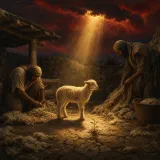
Isaiah 12 is only six verses long, but it gives the preceding sequence a genuine landing place. The anger that chapters 9 and 10 repeatedly said was "not turned away" is finally described as turned away, and the result is comfort rather than denial that judgment ever happened. Salvation is spoken as something trusted, sung, and drawn like water from a well. Then the song turns outward. The restored people are told to declare the LORD's doings among the peoples and make his name known through the earth. Zion remains central, but Zion does not keep the news to itself. The title "Holy One of Israel," so often heard in accusation through the opening chapters, now appears at the end of a shout of joy because the Holy One is "in the midst of thee." Estranged children, bloodied hands, invasion, remnant, and return have arrived at water, comfort, presence, and song.
In this chapter
- A Different Ending for the Repeated Anger Isaiah 12:1-3
The opening line answers a refrain the book has allowed to hang unresolved for several chapters.
- Zion's Song Is Not Kept Inside Zion Isaiah 12:4-6
The second "in that day" opens the song outward.


Scripture beside the summary
Isaiah · King James Version · 6Isaiah 12:1-3
A Different Ending for the Repeated Anger
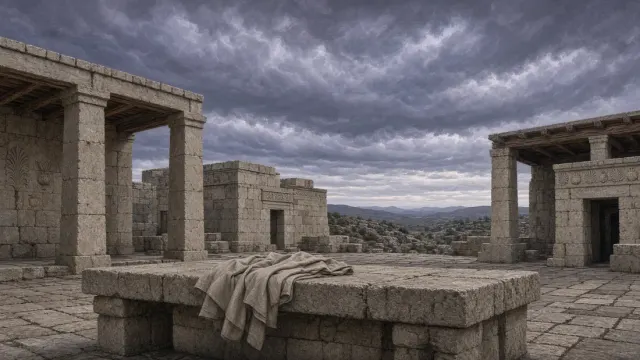
The opening line answers a refrain the book has allowed to hang unresolved for several chapters. Earlier the LORD's anger was repeatedly "not turned away." Now the singer can say, "thine anger is turned away, and thou comfortedst me." Isaiah does not manufacture comfort by deleting the anger from memory. Both realities remain in the same sentence, which gives the praise its weight. The language of strength, song, and salvation recalls the song after the exodus in Exodus 15, a fitting echo after chapter 11 compared the coming return with Israel's departure from Egypt. Water also changes character. Isaiah has shown gentle waters refused and an Assyrian river overflowing its banks. Here people draw from "the wells of salvation" with joy. The image is ordinary, almost household-sized, after the scale of armies and seas. Salvation is not only announced from a distance. It is pictured as a supply people can approach, receive, and carry away with gladness.
Deep dive
The opening "in that day" attaches the song to the promised restoration rather than placing it outside the preceding history of judgment. Its first confession directly answers the refrain of chapters 9 and 10. There the anger was not turned away; here it is. The change is not achieved by pretending there was never cause for anger. The singer names the anger and the comfort in the same sentence.
The language of strength, song, and salvation recalls Exodus 15:2. That connection is especially apt after chapter 11's promised highway and explicit comparison with the departure from Egypt. Deliverance is followed by a song, just as the earlier crossing was.
Water also returns with a changed function. Earlier chapters pictured refused gentle waters and an invading river; now water is drawn from wells of salvation. The act is ordinary enough to be vivid, but the supply is named by what it gives. Fear has yielded to trust, and the people are pictured receiving rather than desperately manufacturing their own security.
Words to trace: salvation, LORD, afraid, anger, angry, become
Verse-by-verse path
- Isaiah 12:1
“Thou” is singular: the song begins in one voice before the plural “ye” of verse 3 takes it up. “I will praise thee” is odekha, from the verb Leah used when she named Judah, “Now will I praise the LORD” (Genesis 29:35). “Comfortedst” is nacham, the word that will open chapter 40, “Comfort ye, comfort ye my people.”
- Isaiah 12:2
“The LORD JEHOVAH” renders the short name Yah followed by the full divine name. This is one of only four verses where the King James prints JEHOVAH in its running text, with Exodus 6:3, Psalm 83:18 and Isaiah 26:4. “Salvation”, yeshuah, is the root of Isaiah’s own name and of Joshua’s.
- Isaiah 12:3
“Wells” are springs, water that rises by itself, not cisterns that hold rain. At the Feast of Tabernacles priests drew water from Siloam and poured it at the altar, a rite the rabbis tied to this verse; on the last day of that feast Jesus stood and cried, “If any man thirst” (John 7:37).
Isaiah 12:1-3
King James Version1And in that day thou shalt say, O LORD, I will praise thee: though thou wast angry with me, thine anger is turned away, and thou comfortedst me.
2Behold, God is my salvation; I will trust, and not be afraid: for the LORD JEHOVAH is my strength and my song; he also is become my salvation.
3Therefore with joy shall ye draw water out of the wells of salvation.
Isaiah 12:4-6
Zion's Song Is Not Kept Inside Zion
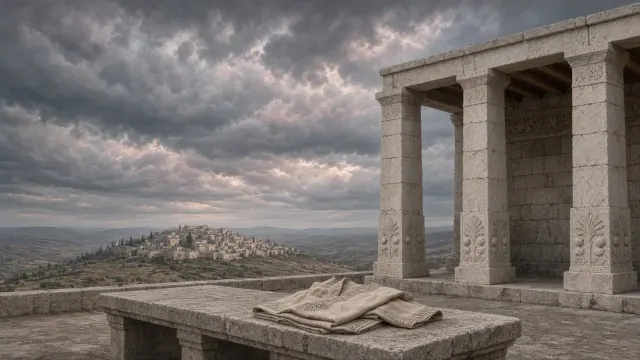
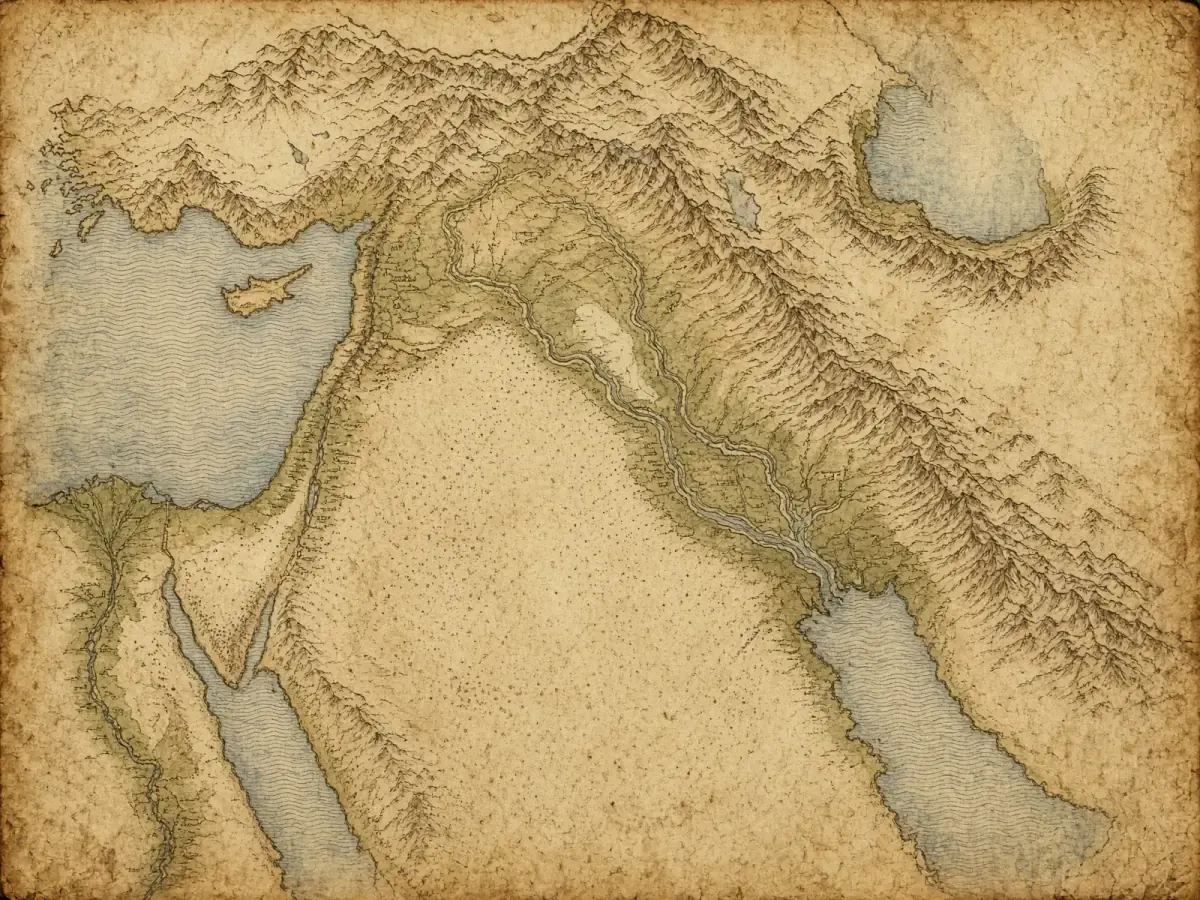
The second "in that day" opens the song outward. Calling, declaring, making mention, singing, crying, and shouting fill the verses with public sound, but the content is not Zion congratulating itself on survival. The LORD's name and doings are what must be made known "among the people" and throughout the earth. That wider horizon fits the nations seeking the root of Jesse and the earth filled with the knowledge of the LORD in chapter 11. Zion still has a particular place, yet it is not the edge of the announcement. The closing title is especially rich in context: "the Holy One of Israel." Isaiah has used that holiness repeatedly in accusation, as the standard Judah offended and the reality before which pride collapsed. Now the same title stands inside praise because the Holy One is "in the midst of thee." The change is not that holiness became softer. The relation between the Holy One and the restored city has changed.
Deep dive
The renewed "in that day" opens a second movement, shifting into a series of public acts: calling, declaring, remembering, and singing. The LORD's name, deeds, and excellence supply the content. The song does not become an account of Zion's remarkable performance. What is to be made known is what the LORD has done.
The horizon extends among the peoples and throughout the earth, answering the nations' gathering and the fullness of knowledge in chapter 11. Zion remains the place addressed, but it is not the limit of the announcement. The final phrase locates the Holy One "in the midst of thee." That title has carried severe accusations throughout these opening chapters. Its return in a song does not make holiness a different quality; it shows a changed relation between the Holy One and a restored people.
The six-verse chapter gives the preceding large sequence a genuine conclusion. The book has moved from estranged children and bloodied hands to a community supplied with water, comfort, and a song whose subject can be spoken beyond its own boundaries.
Words to trace: LORD, name, call, declare, doings, earth
Verse-by-verse path
- Isaiah 12:4
The wording runs close to the psalm David gave the Levites when the ark came to Jerusalem: “call upon his name, make known his deeds among the people” (1 Chronicles 16:8; Psalm 105:1). “Make mention” is a causative of the verb to remember, making others remember. The plural “ye” now addresses the whole restored people.
- Isaiah 12:5
“Excellent things” is ge’ut, from the root of the first line of the Song of the Sea, “he hath triumphed gloriously” (Exodus 15:1), literally risen up in majesty. Where Babylon’s excellency (13:19) is pride, this is the LORD’s rightful height, and the nations are said already to know it.
- Isaiah 12:6
“Cry out” is tsahali, the shrill shout used in 10:30, “Lift up thy voice, O daughter of Gallim”, where it was a cry of terror at the approaching army. Here the same voice is raised for joy. “Inhabitant” is feminine, the city pictured as a woman, the counterpart of the daughter of Zion shaken at in 10:32.
Isaiah 12:4-6
King James Version4And in that day shall ye say, Praise the LORD, call upon his name, declare his doings among the people, make mention that his name is exalted.
5Sing unto the LORD; for he hath done excellent things: this is known in all the earth.
6Cry out and shout, thou inhabitant of Zion: for great is the Holy One of Israel in the midst of thee.
Questions to keep in mind while reading
- Identify the historical crisis, covenant failure, warning, and promised hope.
- Distinguish the prophet’s immediate audience from later biblical connections.
- Do not turn present-day headlines into confident fulfillment claims without textual evidence.
Text first
Where readers differ
The chapter summary begins with what the passage says and how its parts fit together. It does not assume one denomination has already settled every question. Where a conclusion depends on a tradition, literary theory, or historical reconstruction, that dependence is named openly.
The KJV text is presented first. Interpretive conclusions are labeled, and differences are introduced only when they help a reader understand why serious communities do not always reach the same answer.
Comparative interpretive notes for this chapter are in preparation. Until reviewed notes are ready, this page separates the KJV text from summary and application without claiming that serious readers agree on every question.
Questions beneath the surface
- What account of God, human freedom, responsibility, and the good life emerges from Isaiah 12?
- Which tension does the chapter refuse to resolve quickly?
- What changes when the chapter is read as part of the whole canon rather than as an isolated moral lesson?
- Where might a sincere reader confuse a familiar tradition with something the text states directly?
Questions for serious personal contemplation
These open-ended questions make room for tension, honest response, prayer, and conclusions that remain accountable to the chapter.
Observe without rushing
What part of Isaiah 12 makes you stop, feel unsettled, or feel surprised, and why?
Which detail in the passage would be easiest to overlook? How does that detail change your understanding?
Where do you see tension between what happens and this focus: Isaiah 12:1–6 completes a passage that was not covered by the original study-unit map. Its own wording and immediate context supply the focus.?
What important question does the passage leave open instead of resolving quickly?
Examine your inner life honestly
Which person, response, fear, or desire in the passage feels most like your own life right now?
What assumption about God, other people, or yourself does this text challenge?
Which part would you rather soften, avoid, or explain away too quickly? What might that reaction reveal?
If this Scripture could ask you one direct question, what do you think it would ask?
Respond with wisdom and courage
What do you need to remember, confess, grieve, thank God for, or trust after reading this passage?
How might another faithful person read this situation differently without ignoring the text?
What obedient response would be costly, uncomfortable, or slow, yet still faithful to Scripture?
What question will you carry into prayer this week, and which verses will you keep in front of you?
Music and video connected to the passage
Related media appears when its Scripture reference overlaps this study. Music and video can illuminate a theme while the biblical text remains the foundation.