The big picture
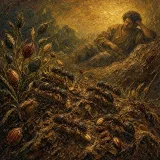
Chapter 6 gathers several avoidable traps under one roof. A careless financial pledge can bind a person with his own words. Laziness can turn a series of harmless-sounding delays into sudden want. A schemer can coordinate eyes, fingers, feet, mouth, and heart around the work of division. The LORD's hatred of pride, lies, innocent bloodshed, plotting, and discord shows that social damage is not a minor concern. The chapter then returns to sexual betrayal, where remembered parental teaching becomes a lamp that exposes danger before contact. Fire and hot coals make the point without delicacy: some forms of intimacy cannot be made harmless by confidence. The final comparison with a hungry thief shows why adultery cannot be reduced to a price. Property may answer some losses, but wounded trust and jealousy do not submit neatly to compensation.
In this chapter
- The Handshake Has Become a Trap Proverbs 6:1-5
A spoken pledge and a struck hand can create a trap long before anyone intended to feel trapped.
- The Ant Has No Supervisor to Impress Proverbs 6:6-11
The ant becomes a teacher precisely because no overseer appears in the picture.
- Discord Has a Whole Body at Work Proverbs 6:12-19
The wicked schemer is almost a negative mirror of the coordinated body described in chapter 4.
- The Lamp Is Needed Before the Fire Proverbs 6:20-29
Parental instruction is made into a companion that travels, guards sleep, and speaks upon waking.
- A Payment Cannot Restore Everything Proverbs 6:30-35
The hungry thief is not acquitted, but his motive is understandable enough that people do not treat the act as inexplicable.


Scripture beside the summary
Proverbs · King James Version · 35Proverbs 6:1-5
The Handshake Has Become a Trap
A spoken pledge and a struck hand can create a trap long before anyone intended to feel trapped. The warning concerns becoming surety for another person's obligation, not ordinary generosity or direct help. Once the promise is made, the son has placed part of his future under circumstances he does not fully control. That is why his own words are twice called the snare. The solution is strikingly unglamorous. He is told to humble himself, press for release, and treat escape as urgent enough to interrupt sleep. The gazelle fleeing a hunter and the bird escaping a catcher do not preserve dignity by waiting for a more convenient hour. The Book of Proverbs uses those animals to strip pride from financial repair. A promise should not be defended merely because one made it. When words have created a dangerous liability, wisdom may require an immediate and humble attempt to undo their grip.

Deep dive
The danger begins with the mouth and a struck hand. A pledge that may have seemed simple has placed the son under another person's power. The chapter does not describe a direct gift to someone in need, nor does it condemn generosity as such. It describes assuming an obligation whose consequences no longer depend solely on the person who made the promise.
The instruction is deliberately undignified: humble oneself and press for release instead of preserving appearances. The animals in verse 5 supply the required urgency. A gazelle escaping a hunter and a bird escaping a catcher do not postpone escape until a more convenient social moment. The command to forgo sleep belongs to that immediate emergency, not to a general celebration of exhaustion. These opening verses put a costly limit on confidence in one's own words: speech can bind more tightly than its speaker expected.
Words to trace: hand, friend, thyself, deliver, mouth, words
Verse-by-verse path
- Proverbs 6:1
“Surety” is arav, to stand guarantor for another’s debt. Judah uses the verb when he pledges himself for Benjamin, “I will be surety for him” (Genesis 43:9). Striking hands sealed the deal like a handshake; 17:18 and 22:26 repeat the warning.
- Proverbs 6:2
“Snared” is yaqosh, to be lured into a fowler’s trap, the word behind “the fowler” of verse 5 and “the snare of the fowlers” in Psalm 124:7. The phrase “the words of thy mouth” is repeated in each half of the line exactly, as a man repeats the thing he cannot undo.
- Proverbs 6:3
“Humble thyself” is hitrappes, to let oneself be trampled, to grovel; the root is used of feet fouling water (Ezekiel 32:2). “Make sure thy friend” is rehav re’eicha, storm at your neighbour, pester him; the root gives Rahab, the name of the arrogant sea monster in Isaiah 51:9.
- Proverbs 6:4
These are almost the words of David’s vow in Psalm 132:4, “I will not give sleep to mine eyes, or slumber to mine eyelids, until I find out a place for the LORD.” David gave up sleep to build God a house; the son must give it up to get free of a bad signature.
- Proverbs 6:5
“Roe” is tsevi, the gazelle, the swiftest animal in Israel; Asahel was “as light of foot as a wild roe” (2 Samuel 2:18). The Hebrew says only “from the hand”; “of the hunter” is printed in italics in the King James because the translators supplied it.
Proverbs 6:1-5
King James Version1My son, if thou be surety for thy friend, if thou hast stricken thy hand with a stranger,
2Thou art snared with the words of thy mouth, thou art taken with the words of thy mouth.
3Do this now, my son, and deliver thyself, when thou art come into the hand of thy friend; go, humble thyself, and make sure thy friend.
4Give not sleep to thine eyes, nor slumber to thine eyelids.
5Deliver thyself as a roe from the hand of the hunter, and as a bird from the hand of the fowler.
Proverbs 6:6-11
The Ant Has No Supervisor to Impress
The ant becomes a teacher precisely because no overseer appears in the picture. It prepares food in the proper season without needing someone nearby to make the work visible or enforce the schedule. Summer and harvest matter because opportunity has timing. Necessary provision cannot always be postponed until motivation improves. The sluggard's defense is built out of the word "little." A little more sleep, a little more slumber, a little folding of the hands never sounds like a final decision to abandon the future. Yet repeated postponement produces a result that arrives with the force of a traveler or armed man. The Book of Proverbs is examining avoidable neglect, not explaining every case of poverty. That distinction matters because later sayings recognize oppression and failed justice. Here the target is the ordinary habit of delaying work while its season quietly closes.

Deep dive
The ant's usefulness as a teacher lies in the absence of an overseer. Its preparation is not explained by someone standing nearby to demand visible activity. Summer and harvest establish the importance of timing: provision is gathered while gathering is possible. The comparison sends a human being with language, options, and excuses to a creature that simply gets on with the necessary work.
The repeated "little" makes the sluggard's defense sound harmless one installment at a time. A little sleep, a little slumber, a little folded-hands rest never presents itself as a complete abandonment of the future. Poverty nevertheless arrives like a traveler and want like an armed man, converting small deferrals into a large loss of control. The portrait concerns this particular pattern of avoidable neglect. It is not an explanation of every person's poverty, and Proverbs will elsewhere name oppression and injustice as causes of deprivation.
Words to trace: sleep, little, sluggard, arise, armed, consider
Verse-by-verse path
- Proverbs 6:6
The sluggard, atsel, is one of the book’s recurring characters (13:4, 20:4, 26:13–16). 30:24–25 counts the ant among four small creatures that are “exceeding wise”. The harvester ants of Israel carry grain into underground stores, which is exactly what the verse describes.
- Proverbs 6:7
The three titles are the hierarchy of a people: qatsin, a chief or commander; shoter, an officer or foreman, the word for the Israelite overseers of Egypt’s brickmakers (Exodus 5:6); and moshel, a ruler. The ant has none of the three.
- Proverbs 6:8
“Summer” and “harvest” are qayits and qatsir, words that sound alike, the dry season of gathering. 10:5 draws the same line: “He that gathereth in summer is a wise son.” The Greek translation adds three lines after this verse, sending the reader to the bee as well.
- Proverbs 6:9
“How long” is ad matai, Wisdom’s question to the simple in 1:22, now put to the sluggard in bed. The verse is two questions and no command. The father asks when he will get up, as though the only thing lacking is the moment.
- Proverbs 6:10
“Folding of the hands” is chibbuq yadayim, hands embracing each other, from chabaq, the verb for embracing wisdom in 4:8. Ecclesiastes 4:5 uses the same gesture: “The fool foldeth his hands together.” These two verses reappear word for word at 24:33–34.
- Proverbs 6:11
“One that travelleth” is mehallekh, a vagrant or highwayman on the road. “An armed man” is ish magen, literally “a man of the shield”, the magen that was God’s protection of the upright in 2:7. Want comes armed, where the sluggard is not.
Proverbs 6:6-11
King James Version6Go to the ant, thou sluggard; consider her ways, and be wise:
7Which having no guide, overseer, or ruler,
8Provideth her meat in the summer, and gathereth her food in the harvest.
9How long wilt thou sleep, O sluggard? when wilt thou arise out of thy sleep?
10Yet a little sleep, a little slumber, a little folding of the hands to sleep:
11So shall thy poverty come as one that travelleth, and thy want as an armed man.
Proverbs 6:12-19
Discord Has a Whole Body at Work
The wicked schemer is almost a negative mirror of the coordinated body described in chapter 4. Mouth, eyes, feet, fingers, and heart all participate, but instead of facing one straight direction they are organized around deceit. The person's gestures communicate manipulation while the heart continually devises harm. Sowing discord names the social harvest of that inward design. The numerical list of six things, then seven, sharpens the portrait without pretending that every evil not named is acceptable. Pride, lying, innocent bloodshed, planning harm, eagerness for mischief, false testimony, and cultivated division move from attitude to action and back again. Discord appears before the list and closes it, showing how much weight the Book of Proverbs places on deliberate relational damage. This is not a condemnation of disagreement itself. The target is manufactured division, especially division produced through falsehood and calculated signals.

Deep dive
"Naughty" in the KJV does not describe mild misbehavior here. The accompanying terms identify a wicked person whose gestures coordinate deceit. Eyes wink, feet signal, fingers teach, and the heart continually devises harm. Chapter 4 assembled the body around a straight path; this portrait assembles it around manipulation. The outward movements reveal an organized inward intention.
The numerical progression from six to seven is a way of presenting a pointed list, not a suggestion that everything outside it is acceptable. Pride, lies, innocent bloodshed, plotting, eagerness for harm, false testimony, and discord move between inward purpose and public injury. Sowing discord appears both before and at the end of the list, binding the two portraits together. This is not a condemnation of every disagreement. The subject is a person who cultivates division through deceit, making relationships the field in which harm is planted.
Words to trace: deviseth, discord, feet, heart, mischief, soweth
Verse-by-verse path
- Proverbs 6:12
“Naughty person” is adam beliya’al, a man of Belial, worthlessness, the phrase used of Eli’s sons (1 Samuel 2:12) and of Nabal (1 Samuel 25:25). In 1611 “naughty” meant good for naught. “Froward mouth” is the twisted mouth of 4:24, word for word.
- Proverbs 6:13
“Teacheth” is moreh, the verb of torah and of the “teachers” of 5:13: his fingers give lessons of their own. Isaiah 58:9 condemns “the putting forth of the finger”. 10:10 adds that “he that winketh with the eye causeth sorrow”. “Speaketh with his feet” is mollel, shuffles or scrapes.
- Proverbs 6:14
“Deviseth” is charash, plough, the verb of 3:29. “Soweth discord” is literally “sends out strife”, meshalleach midanim; shalach is used for letting loose animals or fire, as Samson let the foxes loose into the grain (Judges 15:5).
- Proverbs 6:15
“Suddenly” translates two related words, pit’om and peta, one in each half of the line, so the blow is announced twice. “Without remedy” is ein marpe, no healing, the marpe of 4:22. 29:1 uses the whole phrase again: “shall suddenly be destroyed, and that without remedy.”
- Proverbs 6:16
The pattern of a number followed by one more is an old way of listing: “in six troubles: yea, in seven” (Job 5:19), “For three transgressions of Damascus, and for four” (Amos 1:3). The last item carries the weight. The verb is plain: the LORD hates.
- Proverbs 6:17
“A proud look” is literally “high eyes”, einayim ramot, the phrase of Psalm 18:27, “wilt bring down high looks”. The list runs down the body: eyes, tongue, hands. “Innocent blood” is dam naqi, the charge laid against King Manasseh (2 Kings 21:16).
- Proverbs 6:18
The body list continues: after the hands, the heart, then the feet. “Deviseth” is charash, plough, again. “Swift in running to mischief” nearly repeats 1:16, the gang’s feet, and “imaginations” is machshevot, plans, the scheming of a mind at work.
- Proverbs 6:19
“False witness” is ed sheqer, the words of the ninth commandment (Exodus 20:16). “Speaketh lies” is yafiach kezavim, literally “breathes out lies”, a verb Proverbs uses again for witnesses (14:5, 14:25, 19:5). Lies come as easily as breath.
Proverbs 6:12-19
King James Version12A naughty person, a wicked man, walketh with a froward mouth.
13He winketh with his eyes, he speaketh with his feet, he teacheth with his fingers;
14Frowardness is in his heart, he deviseth mischief continually; he soweth discord.
15Therefore shall his calamity come suddenly; suddenly shall he be broken without remedy.
16These six things doth the LORD hate: yea, seven are an abomination unto him:
17A proud look, a lying tongue, and hands that shed innocent blood,
18An heart that deviseth wicked imaginations, feet that be swift in running to mischief,
19A false witness that speaketh lies, and he that soweth discord among brethren.
Proverbs 6:20-29
The Lamp Is Needed Before the Fire
Parental instruction is made into a companion that travels, guards sleep, and speaks upon waking. Father and mother again share authority, and their teaching remains active after the teachers themselves are out of sight. That is why commandment and law can function as lamp and light. Reproof reveals a hazard before desire reaches it. The warning then turns from flattering speech and beauty to fire. A person cannot carry flame against his clothing or walk on coals while declaring the contact harmless. The image is intentionally physical because adultery can be rationalized as a manageable encounter until the consequence is included in the act. The Book of Proverbs does not recommend one sexual wrong as a cheaper substitute for another. Its compressed comparison moves toward the more important point: the neighbor's wife is not an isolated pleasure but a contact with damage that confidence cannot simply negotiate away.

Deep dive
Father and mother again speak with shared authority. Their teaching leads during movement, guards during sleep, and speaks on waking. The image is almost conversational: instruction retained inwardly can address the person when the original teacher is absent. Its reproof is light, not merely restriction, because it makes the threatened consequence visible before the act.
The fire comparisons depend on contact. Clothing cannot safely cradle flame, and bare feet do not make hot coals harmless by stepping confidently. The language of touching another man's wife follows directly from those images. Verse 26's compressed comparison between prostitution and adultery has translation difficulties, but the KJV's movement is clear enough: economic reduction gives way to the hunting of a precious life. This is not a recommendation of one sexual wrong as a cheaper alternative. The paragraph warns that beauty and smooth speech can conceal damage that cannot be separated from the encounter.
Words to trace: keep, woman, burned, commandment, heart, life
Verse-by-verse path
- Proverbs 6:20
Almost 1:8 again, with one change: “hear” has become “keep”, natsar, to guard. The mother’s law is named as firmly as the father’s commandment, and the chapter’s last lesson starts from the household where the first one did.
- Proverbs 6:21
“Tie” is anad, to bind something on as an ornament; Job uses it of wearing a document as a crown (Job 31:36). “Continually” makes the heart a place where the words are fastened at all times, not taken out for special occasions.
- Proverbs 6:22
Going, sleeping and waking are the three times of the Shema: “when thou walkest by the way, and when thou liest down, and when thou risest up” (Deuteronomy 6:7). “Talk with thee” is tesichecha, from siach, the musing verb of Psalm 145:5: the teaching murmurs to him as he wakes.
- Proverbs 6:23
Psalm 119:105 uses the same pair, lamp and light: “Thy word is a lamp unto my feet, and a light unto my path.” A lamp, ner, was the small clay oil lamp of a house; the teaching is that close. “Reproofs of instruction” are tochchot musar, correction received from discipline.
- Proverbs 6:24
“Evil woman” in the Hebrew is eshet ra; with different vowels the same letters read eshet re’a, “a neighbour’s wife”, which is what the Greek translation has. “Flattery of the tongue” is chelqat lashon, smoothness, the slippery speech of 2:16.
- Proverbs 6:25
“Lust” is chamad, to covet, the verb of the tenth commandment, “Thou shalt not covet thy neighbour’s wife” (Exodus 20:17). Jesus puts the same act in the heart (Matthew 5:28). “Eyelids” may mean glances, or eyes painted with kohl, as Jezebel painted hers (2 Kings 9:30).
- Proverbs 6:26
“A piece of bread” is kikkar lechem, a round loaf: one kind of woman costs a man a loaf. The other “will hunt for the precious life”, nefesh yeqarah, using the yaqar of 1:13, where the gang hunted “precious substance”. Here the precious thing hunted is the man himself.
- Proverbs 6:27
The Hebrew has a sound play: ish, man, and esh, fire. “Clothes” is beged, the same letters as bagad, to deal treacherously, the word behind the “transgressors” of 2:22. The fire is carried in the bosom, cheq, where 5:20 placed the stranger.
- Proverbs 6:28
“Hot coals” are gechalim, live embers, the word of 25:22, “thou shalt heap coals of fire upon his head”. Feet appear again, the feet of 5:5 that went down to death. The question expects its answer from anyone who has stepped on an ember.
- Proverbs 6:29
“Goeth in” is the Hebrew idiom for sexual union, as in Genesis 16:2, “go in unto my maid”. “Shall not be innocent” is lo yinnaqeh, shall not go unpunished, the verb of the third commandment, “the LORD will not hold him guiltless” (Exodus 20:7).
Proverbs 6:20-29
King James Version20My son, keep thy father’s commandment, and forsake not the law of thy mother:
21Bind them continually upon thine heart, and tie them about thy neck.
22When thou goest, it shall lead thee; when thou sleepest, it shall keep thee; and when thou awakest, it shall talk with thee.
23For the commandment is a lamp; and the law is light; and reproofs of instruction are the way of life:
24To keep thee from the evil woman, from the flattery of the tongue of a strange woman.
25Lust not after her beauty in thine heart; neither let her take thee with her eyelids.
26For by means of a whorish woman a man is brought to a piece of bread: and the adulteress will hunt for the precious life.
27Can a man take fire in his bosom, and his clothes not be burned?
28Can one go upon hot coals, and his feet not be burned?
29So he that goeth in to his neighbour’s wife; whosoever toucheth her shall not be innocent.
Proverbs 6:30-35
A Payment Cannot Restore Everything
The hungry thief is not acquitted, but his motive is understandable enough that people do not treat the act as inexplicable. Even so, discovery brings restitution. That comparison gives the chapter a way to distinguish consequences without pretending every wrong is identical. Adultery has no necessity resembling hunger in the argument, and its losses are not easily translated into property. Wounds, dishonor, and reproach reach beyond a bill that can be paid. The final figure is the wronged husband's jealousy, described as rage that refuses ransom and gifts. The Book of Proverbs is not issuing a legal authorization for private vengeance. It is exposing the adulterer's mistaken arithmetic. Some injuries cannot be priced confidently before they are committed. The chapter began with a rash pledge whose danger might still be escaped through urgent negotiation. It ends with a betrayal that may create a human grievance no payment can force into settlement.

Deep dive
The hungry thief receives a measure of human understanding, yet discovery still requires restitution. The "sevenfold" language intensifies the cost in this proverbial comparison; it should not be silently substituted for the varied restitution rules in Israel's legal passages. The point is that even an act with an understandable motive has consequences. The comparison then turns to a betrayal for which the preceding account offers no equivalent necessity.
The adulterer's losses include wounds, dishonor, and enduring reproach. The final obstacle is a husband who will not accept a ransom or be satisfied by gifts. The text describes the force of jealousy rather than issuing a legal authorization for private vengeance. Its argument concerns the adulterer's mistaken calculation: some injuries cannot be made right simply by handing over property. The chapter began with a rash commitment that required urgent release. It ends with a bond broken in a way no negotiator can confidently price.
Words to trace: soul, adultery, committeth, content, despise, destroyeth
Verse-by-verse path
- Proverbs 6:30
“Soul” is nefesh again, here the appetite, the empty throat of a hungry man. Some translators read the line as a question, “Do not men despise a thief…?”, which gives the opposite sense; the King James takes it as a concession that hunger earns some sympathy.
- Proverbs 6:31
“Be found” is the verb of Exodus 22:2, “If a thief be found breaking up”, caught in the act. The Law required double, or four and five fold for livestock (Exodus 22:1, 22:4); seven here means payment in full, and “all the substance of his house” may be what it takes.
- Proverbs 6:32
“Lacketh understanding” is chasar lev, lacking heart, the Hebrew idiom for a man without sense (7:7, 10:13). “Destroyeth his own soul” is mashchit nafsho, ruins himself. The Law set death as the penalty for adultery (Leviticus 20:10, Deuteronomy 22:22).
- Proverbs 6:33
“Wound” is nega, a blow or stroke, the same word used for a plague or a mark of disease. “Shall not be wiped away” is lo timmacheh, the verb for wiping a dish clean (2 Kings 21:13) or blotting a name out. The disgrace outlives the act.
- Proverbs 6:34
“Rage” is chemah, heat, and “a man” is gever, a strong man, the husband in his full strength. The Song of Solomon says “jealousy is cruel as the grave” (8:6), and Numbers 5:14 speaks of a “spirit of jealousy” coming upon a husband. The day of vengeance belongs to him.
- Proverbs 6:35
“Ransom” is kofer, the payment that could buy off a death sentence (Exodus 21:30), which the Law refused for a murderer (Numbers 35:31). “Gifts” is shochad, the word for a bribe (Exodus 23:8). The husband is a judge who will not be bought.
Proverbs 6:30-35
King James Version30Men do not despise a thief, if he steal to satisfy his soul when he is hungry;
31But if he be found, he shall restore sevenfold; he shall give all the substance of his house.
32But whoso committeth adultery with a woman lacketh understanding: he that doeth it destroyeth his own soul.
33A wound and dishonour shall he get; and his reproach shall not be wiped away.
34For jealousy is the rage of a man: therefore he will not spare in the day of vengeance.
35He will not regard any ransom; neither will he rest content, though thou givest many gifts.
Questions to keep in mind while reading
- Follow the speaker, images, parallel lines, questions, and emotional movement.
- Notice where tension or suffering resists an easy answer.
- Read a saying as wisdom for faithful discernment, not as a mechanical promise detached from context.
Text first
Where readers differ
The chapter summary begins with what the passage says and how its parts fit together. It does not assume one denomination has already settled every question. Where a conclusion depends on a tradition, literary theory, or historical reconstruction, that dependence is named openly.
The KJV text is presented first. Interpretive conclusions are labeled, and differences are introduced only when they help a reader understand why serious communities do not always reach the same answer.
Comparative interpretive notes for this chapter are in preparation. Until reviewed notes are ready, this page separates the KJV text from summary and application without claiming that serious readers agree on every question.
Questions beneath the surface
- What account of God, human freedom, responsibility, and the good life emerges from Proverbs 6?
- Which tension does the chapter refuse to resolve quickly?
- What changes when the chapter is read as part of the whole canon rather than as an isolated moral lesson?
- Where might a sincere reader confuse a familiar tradition with something the text states directly?
Questions for serious personal contemplation
These open-ended questions make room for tension, honest response, prayer, and conclusions that remain accountable to the chapter.
Observe without rushing
What part of Proverbs 6 makes you stop, feel unsettled, or feel surprised, and why?
Which detail in the passage would be easiest to overlook? How does that detail change your understanding?
Where do you see tension between what happens and this focus: An ant colony at work, a sluggard’s neglected field, and dishonest hands, eyes, and speech sowing conflict; Proverbs 6:20–35 completes a passage that was not covered by the original study-unit map. Its own wording and immediate context supply the focus.?
What important question does the passage leave open instead of resolving quickly?
Examine your inner life honestly
Which person, response, fear, or desire in the passage feels most like your own life right now?
What assumption about God, other people, or yourself does this text challenge?
Which part would you rather soften, avoid, or explain away too quickly? What might that reaction reveal?
If this Scripture could ask you one direct question, what do you think it would ask?
Respond with wisdom and courage
What do you need to remember, confess, grieve, thank God for, or trust after reading this passage?
How might another faithful person read this situation differently without ignoring the text?
What obedient response would be costly, uncomfortable, or slow, yet still faithful to Scripture?
What question will you carry into prayer this week, and which verses will you keep in front of you?
Music and video connected to the passage
Related media appears when its Scripture reference overlaps this study. Music and video can illuminate a theme while the biblical text remains the foundation.