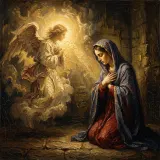
The big picture
The Book of Luke 12 gathers a huge crowd but repeatedly dismantles the kinds of security a crowd can mistake for safety. Hidden hypocrisy will be exposed, human persecutors do not possess final authority, and the God whose judgment reaches beyond death also remembers sparrows and numbers hairs. A dispute over inheritance becomes a parable about a man rich in produce but unable to store the years he has promised himself. Jesus then points to ravens and lilies, not to romanticize carelessness but to expose the limits of anxiety and possessions before the Father's knowledge and gift of the kingdom. Readiness takes the form of servants doing entrusted work, and authority increases rather than decreases accountability. Jesus' mission will not produce universal household agreement; it can divide even the closest relationships. The chapter ends by comparing the crowd's accurate weather reading with its failure to read the present moment. The recurring pressure is the same: apparent control over reputation, goods, time, authority, or tomorrow cannot secure what only God governs.
Central truth
Luke 11–12 presses disciples toward prayerful dependence, inner integrity, freedom from greed and fear, and readiness for the Master’s return, while exposing religion that polishes appearances but neglects justice, love, and faithful stewardship.

The study notes have a page of their own
The movement by movement analysis, the words to trace, the verse by verse notes and where readers differ are written for someone studying alone. They are on the Deep Personal Reflections page for this chapter. This page is the lesson.
A chapter-specific teaching brief
These anchors come from this chapter itself. They help a teacher use the Level 1 overview, the Level 2 study, and the Scripture text as one lesson.
Open with the chapter’s first image
Luke 12:1: “In the mean time, when there were gathered together an innumerable multitude of people, insomuch that they trode one upon another, he began to say unto his…”
Slow down at the turning point
Luke 12:31: “But rather seek ye the kingdom of God; and all these things shall be added unto you.”
Keep this word trail visible
lord, cometh, Fear, thought, daughter, hour
What to explain, in order
Teach the passage in this order. Each step names the verses it rests on, so every point can be shown in the text before it is applied.
Luke 11:1-13
Lord, teach us to pray
Begin where the disciples begin, watching Jesus pray. Teach the prayer line by line, explaining hallowed and the link between forgiving and being forgiven. Then the friend at midnight. Explain importunity as shameless persistence, and note that the point is a contrast: if a sleepy friend gives because he is pestered, how much more will the Father give. Then the father and the good gifts, ending with the Holy Spirit. Teach this first because the whole unit calls disciples to depend on the Father, and prayer is where that dependence starts.
Luke 11:14-28
The finger of God
A mute man speaks after a devil is cast out, and some say Jesus does it by Beelzebub, a name for the prince of devils. Teach Jesus' three answers and the parable of the strong man. Explain that Jesus is the stronger one who plunders Satan's house. Then the warning about the empty house: deliverance must be followed by being filled with God, or worse returns. Then the woman who blesses his mother, and Jesus' reply: "blessed are they that hear the word of God, and keep it". Teach this as the choice: neutrality toward Jesus is impossible (11:23).
Luke 11:29-36
A greater than Jonah
Explain the sign of Jonah: Jonah himself, coming from the depths with God's warning, was the sign to Nineveh. The queen of Sheba, called the queen of the south, travelled far to hear Solomon. Teach the logic of judgement: those with less light who responded will condemn those with more who did not. Then the lamp and the eye. Explain a single eye as clear, undivided, seeing truly, and an evil eye as diseased or greedy. Teach this step as a call to examine how we see: the light is present, but the eye that receives it must be healthy.
Luke 11:37-54
Clean cups and unmarked graves
At a Pharisee's table Jesus does not wash in the expected ritual way, and the host is surprised. Teach the six woes in two groups: three to the Pharisees, about inner wickedness, neglect of justice and love, and love of honour; three to the lawyers, about heavy burdens, honouring dead prophets while resembling those who killed them, and taking away the key of knowledge. Explain that walking over a hidden grave made a person unclean without knowing. Close with 11:53-54: the opponents begin to lay traps. Teach the woes as grief over religion that hides the heart.
Luke 12:1-12
Fear God, not people
With crowds pressing in, Jesus warns his disciples first about the leaven of the Pharisees, hypocrisy. Explain leaven as yeast, which spreads quietly through dough. Everything hidden will be revealed. Then fear: do not fear those who can only kill the body; fear God. And immediately, comfort: sparrows sold cheaply are not forgotten, the hairs of your head are counted. Teach the balance carefully. Then confession before others and the warning about blasphemy against the Holy Ghost, and the promise that the Spirit will teach them what to say when they are on trial.
Luke 12:13-34
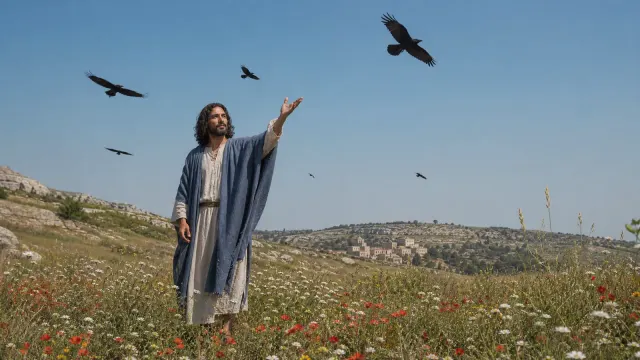
Barns, ravens and lilies
A man wants Jesus to settle an inheritance dispute, and Jesus refuses to be a divider and warns against covetousness. Teach 12:15 as the key: life does not consist in possessions. Then the rich fool. Then the turn to the disciples: do not worry about food or clothing. Teach the ravens and lilies as arguments from the lesser to the greater, and 12:31-32 as the heart: seek the kingdom, the Father is pleased to give it. Close with treasure in heaven and 12:34. Avoid politics; Jesus speaks to every heart about trust, not to any economic system.
Luke 12:35-59
Ready when the master comes
Teach the images of readiness: belts fastened, lamps burning, servants waiting for their master from a wedding. Point out the astonishing reversal of 12:37, where the master serves the servants. Then the thief and the steward. Explain that faithful readiness means doing the master's work, not watching the sky. Then the hard sayings about fire, baptism and division, which point to his coming death and to the cost of following him. Close with discerning the time and settling with an adversary on the way. Teach this last because it presses the urgency of everything before it.
Where learners get stuck
The misreadings this passage tends to produce, and how to answer each from the text.
"If I keep asking, God has to give me what I want."
The friend at midnight teaches by contrast: if a reluctant friend gives because of "importunity" (11:8), how much more will a good Father give. Jesus ends not with whatever you ask, but with "how much more shall your heavenly Father give the Holy Spirit to them that ask him?" (11:13). Persistence is encouraged, and the Father is generous, but he gives good gifts, not stones. Teach learners to keep praying with confidence, and be gentle with those whose long prayers seem unanswered.
"I am afraid I have committed the unforgivable sin."
In 12:10 Jesus warns that blasphemy against the Holy Ghost will not be forgiven, in a setting where opponents called his work by God's Spirit the work of Beelzebub (11:15). Traditions explain this sin in different ways, and this lesson does not settle it. What can be said is that the warning is aimed at settled hostility to God's work, and that a person anxious about having committed it is showing the opposite: a heart that cares about God. Treat this confusion pastorally, and encourage anyone troubled to speak with a pastor.
"Jesus says it is wrong to save money or plan for the future."
The rich man is called a fool not for planning but because he "layeth up treasure for himself, and is not rich toward God" (12:21). His plan was all for himself and assumed many years he did not have. Proverbs praises the ant that stores food (6:6-8). Jesus warns against covetousness (12:15) and anxiety (12:22), and calls for generosity (12:33). Teach the class to ask whether their planning flows from trust in God or from fear, and whether it includes others.
"Being ready for Jesus' return means predicting when it will happen."
Jesus says "the Son of man cometh at an hour when ye think not" (12:40). Readiness is shown by the steward who is found "so doing" (12:43), faithfully feeding the household, not by calculating the date. The unfaithful servant fails precisely because he assumes delay and behaves badly (12:45). Teach readiness as daily faithfulness, and steer the class away from setting dates or mapping events onto current affairs.
"Jesus came to divide families, so it is fine if I fall out with mine."
In 12:51-53 Jesus warns that following him will cause division, even in households, because some will follow and some will not. This describes the cost of loyalty to him; it is not permission to cause conflict. The same Gospel commands love of enemies (6:27) and honour of parents (18:20). Teach this saying with care for learners whose families oppose their faith, and make clear that the division is caused by allegiance to Jesus, not by unkindness.
Learning objectives
- Explain the shape of the prayer Jesus gives in Luke 11:1–4 and the persistence encouraged by the midnight-friend illustration.
- Trace Jesus’ response to the Beelzebub accusation and explain the 'divided kingdom' argument.
- Identify the sign of Jonah and the examples of the queen of the south and Nineveh in Jesus’ rebuke of the generation.
- List the Pharisee and lawyer woes in Luke 11:37–54 and identify the repeated contrast between outward care and neglected weightier matters.
- Explain why Jesus’ warning about covetousness in Luke 12:15 leads directly into the rich fool account.
- Describe the watchful servants and faithful steward material in Luke 12:35–48, including the principle that greater knowledge brings greater accountability.
Teacher preparation
- Read the KJV Lord’s Prayer in Luke 11 rather than importing Matthew’s longer wording.
- Prepare to explain the social force of midnight hospitality without claiming every household arrangement is known.
- Mark the sequence in Luke 11:37–54: dinner invitation, surprise over unwashed hands, woes to Pharisees, lawyer’s protest, woes to lawyers, then growing hostility.
- Prepare to explain 'leaven' in Luke 12:1 as a spreading influence, here identified by Jesus as hypocrisy.
- Read Ecclesiastes 2:18–23 and Psalm 39:6 as optional background to the rich fool, but let Jesus’ own conclusion in Luke 12:20–21 control the application: stored abundance cannot secure the owner’s life.
Evidence and interpretation checks
Explicit
Luke 11:42 explicitly rebukes Pharisees for tithing small herbs while passing over judgment and the love of God, and says the neglected matters ought to have been done without leaving the others undone.
Scripture-supported
Luke 12:15–21 directly warns that life does not consist in abundant possessions and illustrates the point through a rich man whose larger barns cannot prevent God’s demand for his life that very night.
Strong inference
Because Jesus moves from the rich fool to ravens, lilies, seeking the kingdom, almsgiving, and treasure in heaven, the passage strongly presents freedom from anxiety and greed as trust expressed in redirected priorities, not as indifference to ordinary needs.
Possible or traditional reading
Interpretations differ over the exact referent of the 'baptism' Jesus says He must be baptized with in Luke 12:50, though the surrounding movement toward suffering strongly supports reading it as His approaching passion ordeal.
Limit
Luke 11–12 does not specify the name of the disciple who asks about prayer, the identity of the person interrupting over inheritance, the rich man’s crop type, or the date of the Master’s return.
Discussion with answer guidance
1. What priorities appear in the prayer of Luke 11:2–4?
What a good answer contains
The prayer begins with God: "Our Father which art in heaven, Hallowed be thy name. Thy kingdom come. Thy will be done, as in heaven, so in earth" (11:2). Only then come our needs: "Give us day by day our daily bread" (11:3), forgiveness "for we also forgive every one that is indebted to us", and "lead us not into temptation; but deliver us from evil" (11:4). A strong answer sees the order, God's honour and rule before our requests, and notices that forgiving others is part of asking to be forgiven. Explain hallowed as treated as holy. A weak answer treats the prayer as a formula to recite rather than a pattern of priorities.
Show teacher guidance
Name God’s name, kingdom, daily bread, forgiveness linked with forgiving others, and deliverance from temptation and evil.
2. How does Jesus answer the charge that He casts out devils through Beelzebub?
What a good answer contains
With three arguments. First, "Every kingdom divided against itself is brought to desolation" (11:17), so Satan would not fight himself. Second, "by whom do your sons cast them out?" (11:19), which turns the accusation on their own exorcists. Third, "if I with the finger of God cast out devils, no doubt the kingdom of God is come upon you" (11:20). Explain finger of God from Exodus 8:19. Then the parable of the stronger man who overcomes the strong man (11:21-22). A good answer sees Jesus claiming that his works show God's kingdom invading Satan's house. A weak answer stops at the first argument.
Show teacher guidance
He argues that a kingdom or house divided against itself falls, asks by whom their own sons cast out devils, and says His work by the finger of God means the kingdom has come upon them.
3. What makes the generation’s demand for a sign culpable in 11:29–32?
What a good answer contains
They demand a sign while ignoring what is in front of them. Jesus says no sign will be given "but the sign of Jonas the prophet" (11:29), and that the queen of the south came far to hear Solomon and the men of Nineveh repented at Jonah's preaching, "and, behold, a greater than Jonas is here" (11:32). A strong answer sees that outsiders who had less light responded, while this generation has more and refuses. The sign of Jonah is the preacher himself and his message of repentance, with many seeing a pointer to the resurrection. A weak answer treats the demand for a sign as innocent curiosity.
Show teacher guidance
Jesus names the sign of Jonah and says both the queen of the south and Nineveh responded to lesser light, while one greater than Solomon and Jonah is present.
4. What outward-inward contrast dominates the dinner confrontation in 11:37–44?
What a good answer contains
The Pharisee is surprised that Jesus did not wash before dinner (11:38). Jesus answers "do ye Pharisees make clean the outside of the cup and the platter; but your inward part is full of ravening and wickedness" (11:39), and reminds him that God made the inside as well as the outside (11:40). Then he condemns tithing herbs while passing over "judgment and the love of God" (11:42), loving seats of honour, and being like unmarked graves (11:44). A good answer sees that the woes target religion that cleans appearances and neglects justice and love. A weak answer hears Jesus against all religious practice; he says the tithes "ought ye to have done".
Show teacher guidance
The Pharisee notices ritual washing.
5. What is foolish about the rich man’s plan in 12:16–21?
What a good answer contains
The rich man's land "brought forth plentifully" (12:16), and his plan is all about himself: "I will pull down my barns, and build greater" (12:18), then "Soul, thou hast much goods laid up for many years; take thine ease, eat, drink, and be merry" (12:19). God calls him a fool: "this night thy soul shall be required of thee" (12:20). A strong answer notices the repeated my and I, the assumption of many years, and the lesson in 12:21, being "not rich toward God". A weak answer says his sin was being rich or farming well; the text faults his trust and his selfishness, not his harvest.
Show teacher guidance
His land produces plentifully, he plans larger barns and long ease, but he treats stored goods as security for years he does not possess.
6. What distinguishes the faithful steward from the abusive servant in 12:42–48?
What a good answer contains
The faithful steward gives the household "their portion of meat in due season" (12:42), and his lord will find him "so doing" when he comes (12:43). The other says "My lord delayeth his coming" and begins "to beat the menservants and maidens, and to eat and drink, and to be drunken" (12:45). A good answer sees the difference: one uses delay to serve others faithfully, the other uses it to abuse power and indulge himself. Then 12:48: "unto whomsoever much is given, of him shall be much required". A weak answer reads the steward as a picture of earning salvation; the parable is about faithful responsibility.
Show teacher guidance
The faithful steward gives the household its portion at the proper time.
Responsible application
Heart and habits
Use the prayer, ravens, lilies, and watchfulness passages to identify habits of dependence that are specific to Luke 11–12: asking, seeking, receiving daily provision, resisting anxious accumulation, and staying ready.
Relationships and community
Place Luke 11:42 beside 12:33.
The barn cannot hold tomorrow
Let learners examine the rich fool’s repeated first-person planning in 12:17–19 and then God’s interruption in verse 20.
Session plans
Two timings of the same lesson. The shorter keeps the reading, the central discussion and one response; the longer gives the confusions and the application their own time.
45 minutes
Teach us to pray
Read 11:1-13. Ask question one and take confusion one.
The finger of God
Read 11:14-23 and ask question two.
The sign of Jonah
Read 11:29-32 and ask question three.
Outside and inside
Read 11:37-44 and ask question four.
The rich fool
Read 12:13-34. Ask question five and take confusion three.
The faithful steward
Read 12:35-48. Ask question six and take confusion four.
Handout
Read the key verse together, give out the sheet, and pray the prayer of 11:2-4 together.
90 minutes
What we pray for
Ask the group to list, honestly, what they pray for most. Then read 11:1-4 and ask question one.
Ask, seek, knock
Read 11:5-13 and take confusion one.
Strong man and greater sign
Read 11:14-36 and Exodus 8:19. Ask questions two and three.
Woes at dinner
Read 11:37-54 and ask question four. Let each learner name one outward habit that might be hiding an inward neglect.
Fear and confession
Read 12:1-12. Take confusions two and five with pastoral care.
Possessions and anxiety
Read 12:13-34 and Proverbs 6:6-8. Ask question five and take confusion three.
Ready servants
Read 12:35-59. Ask question six and take confusion four.
Handout and prayer
Read the key verse together, point to the take-home line, and pray through each line of the Lord's Prayer.
Adapting the lesson
Children
Teach the prayer line by line with hand actions: hands up for Father, hands open for daily bread, hands shaking for forgiving each other. Act out the friend knocking at midnight and the sleepy neighbour. Show a picture of birds and flowers and talk about God feeding the birds and dressing the flowers. Keep the woes and the warnings about hell out of a young class; focus on trusting God.
Youth
Ask them what makes them anxious: grades, money, the future, what others think. Read 12:22-32 and let them talk about whether Jesus' words feel realistic. Discuss the leaven of hypocrisy and the pressure to look good online while being different in private. Ask what treasure they are storing up. Give a written option for anyone who does not want to share their worries aloud.
Adults
Give time to the Lord's Prayer as a pattern, the Beelzebub controversy, and the woes as a mirror for religious people today. Spend time on possessions, inheritance disputes, retirement planning and anxiety, without turning the passage into economics or politics. Discuss readiness and stewardship for those with responsibility over others at work, in church and at home: 12:48 speaks directly to them.
One to one
Ask which part of these chapters speaks most to their life right now: prayer, fear, money or readiness. Follow their answer. If anxiety is heavy, read 12:6-7 and 12:32 slowly. If they fear the unforgivable sin, reassure them as the confusion answer does and offer to pray. Pray the Lord's Prayer together at the end.
Song and video learning lab
A song or video may interpret, compress, or dramatize the text. Its value becomes clearer when its choices are compared with Scripture.
- Before the media: the exact passage and its central movement.
- During the media: the words, people, events, and emotions the artist emphasizes.
- After the media: what it clarifies, what it leaves out, and what belongs back in the biblical text.
Handout
One page for learners to take home. The print button prints this section alone.
Luke 11–12
The passage in brief
When the disciples asked Jesus to teach them to pray, he gave them a prayer to God as Father and told them to keep asking, seeking and knocking. He showed that his power over evil spirits came from God. At a Pharisee's dinner he warned against keeping the outside clean while the heart is greedy. He told of a rich man who built bigger barns but was not rich toward God, and said not to worry because the Father knows what we need. He told his followers to be ready and faithful, like servants waiting for their master.
A verse to keep
But rather seek ye the kingdom of God; and all these things shall be added unto you. Fear not, little flock; for it is your Father’s good pleasure to give you the kingdom.
Luke 12:31-32 · King James Version
Questions to take home
What does Jesus teach us to ask for in his prayer (11:2-4)?
Why was the rich man called a fool (12:20-21)?
What does the faithful servant do while waiting for his master (12:42-43)?
This week
Each day this week, before you check your phone or your money, pray the prayer Jesus taught in Luke 11:2-4.
Music and video connected to the passage
Related media appears when its Scripture reference overlaps this study. Music and video can illuminate a theme while the biblical text remains the foundation.