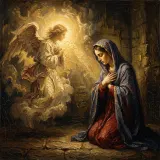
The big picture
The Book of Luke 12 gathers a huge crowd but repeatedly dismantles the kinds of security a crowd can mistake for safety. Hidden hypocrisy will be exposed, human persecutors do not possess final authority, and the God whose judgment reaches beyond death also remembers sparrows and numbers hairs. A dispute over inheritance becomes a parable about a man rich in produce but unable to store the years he has promised himself. Jesus then points to ravens and lilies, not to romanticize carelessness but to expose the limits of anxiety and possessions before the Father's knowledge and gift of the kingdom. Readiness takes the form of servants doing entrusted work, and authority increases rather than decreases accountability. Jesus' mission will not produce universal household agreement; it can divide even the closest relationships. The chapter ends by comparing the crowd's accurate weather reading with its failure to read the present moment. The recurring pressure is the same: apparent control over reputation, goods, time, authority, or tomorrow cannot secure what only God governs.
In this chapter
- Hidden Words and Public Allegiance Luke 12:1-12
The crowd is so large that people are stepping on one another, but Jesus begins by warning the disciples about hypocrisy rather than celebrating the size of the audience.
- The Barn Plan Omits Its Owner Luke 12:13-21
A man in the crowd wants Jesus to tell his brother to divide an inheritance.
- Ravens Without Barns and a Flock Given a Kingdom Luke 12:22-34
The ravens have no storehouse or barn, which makes them a deliberately sharp neighbor to the rich man who thought larger barns could secure many years.
- The Returning Master Serves, and the Steward Answers Luke 12:35-48
The first servants are waiting for their lord to return from a wedding, lamps burning and clothing arranged for action.
- Peace Does Not Mean Universal Agreement Luke 12:49-53
Fire, baptism, and division make the chapter's urgency feel compressed almost past comfort.
- The Forecast Is Accurate and the Moment Is Missed Luke 12:54-59
The weather examples begin by giving the crowd credit.


Scripture beside the summary
Luke · King James Version · 59Luke 12:1-12
Hidden Words and Public Allegiance
The crowd is so large that people are stepping on one another, but Jesus begins by warning the disciples about hypocrisy rather than celebrating the size of the audience. Leaven works hidden until its effects spread, and the following sayings make concealment temporary: covered things will be revealed, whispered words will reach housetops. Public presentation cannot permanently control reality. Then Jesus changes the scale of fear. People who can kill the body exercise terrible power, but not ultimate power. Divine judgment reaches farther. The Book of Luke places sparrows and numbered hairs directly inside that severe contrast, so accountability and care cannot be split into unrelated portraits of God. The one whose authority is final is also the one before whom small lives are not forgotten. Public confession and denial therefore occur inside a larger courtroom than the magistrates disciples may face. Even the promise about the Holy Ghost is situated there. When authorities demand answers, the disciples' future does not rest on constructing a perfectly invulnerable defense in advance; the Spirit will teach them in the hour.
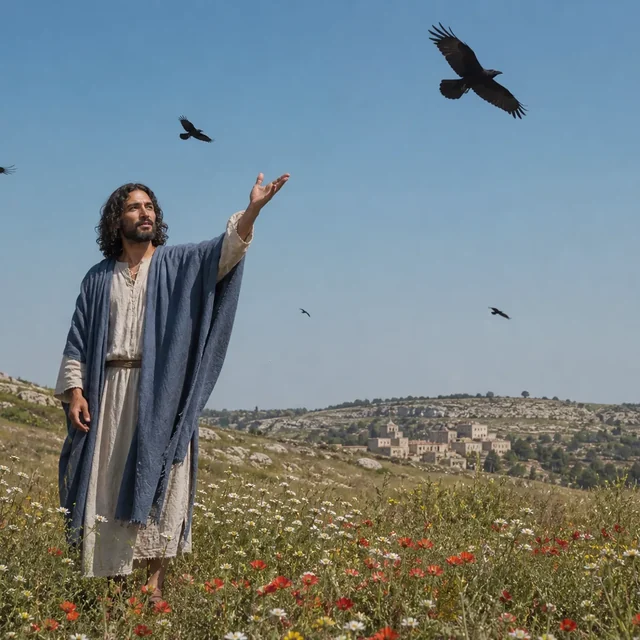
Deep dive
The crowd is large enough for people to tread on one another, yet Jesus begins with the disciples rather than flattering the scale of the gathering. The leaven to avoid is hypocrisy: a hidden influence capable of spreading through an entire community. The following sayings about covered things becoming known give that warning its logic. A carefully managed public appearance cannot permanently conceal what it covers.
The contrast between human killers and divine judgment is severe, but Luke places the sparrows and numbered hairs within it. The God whose authority exceeds death is also the one before whom apparently insignificant lives are not forgotten. These are not two unrelated portraits, one frightening and one reassuring. Together they locate both ultimate accountability and particular care beyond the reach of the persecutor.
The sayings about acknowledgment, denial, and blasphemy concern responses to divine testimony. The unforgivable offense against the Holy Spirit is not explained here as an accidental phrase or an involuntary thought. Its exact scope is debated, and Luke's immediate setting emphasizes responsible public response under opposition. The same Spirit appears in the promise of help before authorities, where the disciples' testimony will depend on divine instruction rather than their ability to prepare an invulnerable defense.
Words to trace: Fear, angels, confess, forgiven, Ghost, Holy
Verse-by-verse path
- Luke 12:1
“An innumerable multitude” is myriades, tens of thousands, the Greek word that gives English “myriad”. Leaven was a lump of old fermented dough kept back to start the next batch, and a little of it worked through the whole; Passover law ordered every scrap out of the house (Exodus 12:15).
- Luke 12:2
The same saying appeared in 8:17, where it promised that what Jesus taught in parables would come to light. Here the identical words are turned into a warning: whatever hypocrisy covers will be uncovered as well.
- Luke 12:3
“Closets” are tameia, the inner storerooms of a house, usually windowless, the most private space a family had. Flat roofs served as a public platform, the natural place for shouting news down to the street.
- Luke 12:4
“My friends” is the only place in the first three gospels where Jesus addresses his disciples as friends, a title John 15:14-15 develops. The persecutor’s power is real but capped: “after that” there is nothing more he can do.
- Luke 12:5
“Hell” here is geenna, Gehenna, the valley of Hinnom south of Jerusalem where children had been burned to Molech (Jeremiah 7:31), which became the name for final judgment. It differs from the hadēs of 10:15, the place of the dead. “Forewarn” means show plainly.
- Luke 12:6
A farthing is an assarion, a small copper coin worth a sixteenth of a denarius. Matthew 10:29 has two sparrows sold for one; Luke has five for two, as though the fifth were thrown in for nothing, and yet that one too is remembered.
- Luke 12:7
“Are numbered” is a perfect tense: have been counted, and the count stands. The picture recalls the oath that saved Jonathan, “there shall not one hair of his head fall to the ground” (1 Samuel 14:45).
- Luke 12:8
“Confess me” is literally “confess in me”, an Aramaic turn of phrase for openly acknowledging someone. “Before the angels of God” is a reverent way of saying before God, picturing the heavenly court where the Son of man stands as witness.
- Luke 12:9
The second half is shorter and passive, and the Son of man is not named in it. Luke will set this saying to work on the night of the arrest, when Peter says three times that he does not know Jesus, and yet Jesus has prayed that his faith would not fail (22:32).
- Luke 12:10
Luke’s own sequel shows the first half at work: Peter tells the crowd in Jerusalem that they killed Jesus “through ignorance” and calls them to repent (Acts 3:17-19). Paul says the same of himself (1 Timothy 1:13). The word against the Son of man is not beyond pardon.
- Luke 12:11
The three settings climb in rank: synagogue courts, then Gentile “magistrates”, then “powers”, the highest authorities. Acts walks through each, from Peter and John before the council to Paul before Gallio, Felix, Festus and Agrippa. “How or what” covers both manner and content.
- Luke 12:12
Acts records the promise kept: “Peter, filled with the Holy Ghost, said unto them” (Acts 4:8), and Stephen’s opponents “were not able to resist the wisdom and the spirit by which he spake” (Acts 6:10). “In the same hour” means at the moment it is needed.
Luke 12:1-12
King James Version1In the mean time, when there were gathered together an innumerable multitude of people, insomuch that they trode one upon another, he began to say unto his disciples first of all, Beware ye of the leaven of the Pharisees, which is hypocrisy.
2For there is nothing covered, that shall not be revealed; neither hid, that shall not be known.
3Therefore whatsoever ye have spoken in darkness shall be heard in the light; and that which ye have spoken in the ear in closets shall be proclaimed upon the housetops.
4And I say unto you my friends, Be not afraid of them that kill the body, and after that have no more that they can do.
5But I will forewarn you whom ye shall fear: Fear him, which after he hath killed hath power to cast into hell; yea, I say unto you, Fear him.
6Are not five sparrows sold for two farthings, and not one of them is forgotten before God?
7But even the very hairs of your head are all numbered. Fear not therefore: ye are of more value than many sparrows.
8Also I say unto you, Whosoever shall confess me before men, him shall the Son of man also confess before the angels of God:
9But he that denieth me before men shall be denied before the angels of God.
10And whosoever shall speak a word against the Son of man, it shall be forgiven him: but unto him that blasphemeth against the Holy Ghost it shall not be forgiven.
11And when they bring you unto the synagogues, and unto magistrates, and powers, take ye no thought how or what thing ye shall answer, or what ye shall say:
12For the Holy Ghost shall teach you in the same hour what ye ought to say.
Luke 12:13-21
The Barn Plan Omits Its Owner
A man in the crowd wants Jesus to tell his brother to divide an inheritance. Jesus refuses to become the requested arbitrator and turns instead toward covetousness, leaving the actual legal merits of the brothers' dispute undisclosed. The parable that follows is striking because the rich man's wealth is not blamed on theft or incompetence. His ground simply produces well. The trouble emerges in the grammar of his private planning: my fruits, my barns, my goods, my soul, my years. Other people never enter the conversation, and time is treated as though it were another crop already stacked under his control. Larger barns may solve the storage problem, but they cannot warehouse the future he has promised himself. God's interruption exposes the category error: "this night thy soul shall be required of thee." The goods remain while the owner does not. Jesus' conclusion about being rich toward God therefore reaches deeper than the embarrassment of dying prosperous. The failure concerns where accumulation is directed and what kind of security it was asked to provide.
Deep dive
The interruption asks Jesus to settle a family division of property. He refuses that role and addresses covetousness instead, moving beneath the proposed settlement to the understanding of life that may be driving it. Luke does not disclose which brother has the stronger legal claim. The warning is not dependent on proving that the speaker is the wronged or wrongful party.
The rich man's land produces abundantly. No theft, dishonest trade, or agricultural mismanagement is alleged. His error emerges in the conversation he conducts entirely with himself: his fruits, his barns, his goods, his soul, his coming years. Other people do not enter the plan, and time is treated as another asset already in storage. The proposed buildings may be large enough for the harvest, but no building can warehouse the years he has promised himself.
God's intervention distinguishes possession from control. The man's life is required that night, while the goods remain for an owner he has not established. The judgment "fool" belongs to God within the parable. Jesus' concluding contrast with being rich toward God explains the failure as the direction and foundation of his accumulation, not merely the embarrassing fact that a prosperous farmer died.
Words to trace: soul, bestow, fruits, goods, rich, abundance
Verse-by-verse path
- Luke 12:13
Under Deuteronomy 21:17 the firstborn received a double share, and families often brought such disputes to a respected teacher. The speaker is probably a younger brother who wants the estate split while his elder brother would keep it whole.
- Luke 12:14
“Man” is a cool, distancing address, the word Peter will use in denial, “Man, I know not what thou sayest” (22:60). The question echoes the Hebrew who challenged Moses: “Who made thee a prince and a judge over us?” (Exodus 2:14).
- Luke 12:15
“Covetousness” is pleonexia, literally the desire to have more. The Greek of the second half is compressed and awkward, roughly “not in abundance does anyone’s life come out of his possessions”; “life” is zōē, life itself, not a standard of living.
- Luke 12:16
“Brought forth plentifully” is euphoreō, bore well, a verb found only here in the New Testament. The ground is the subject of the sentence: the harvest is not credited to the man’s effort at all.
- Luke 12:17
“Thought within himself” is dialogizomai, to debate or deliberate, and the only partner in the debate is himself. “What shall I do” is the question the lawyer asked in 10:25 and the unjust steward will ask in 16:3.
- Luke 12:18
He does not add a barn; he tears down working barns to build larger ones. The storehouses Joseph filled in Egypt (Genesis 41:48) were raised against famine for a whole nation, a use of surplus this man never considers.
- Luke 12:19
Addressing oneself as “Soul” was a recognised way of talking to oneself in both Hebrew and Greek. “Eat, drink, and be merry” echoes the preacher of Ecclesiastes 8:15, and also the careless revellers of Isaiah 22:13, who add, “for to morrow we shall die.”
- Luke 12:20
“Fool” is aphrōn, and Psalm 14:1 says “the fool hath said in his heart, There is no God”; this man too has been speaking in his heart. “Shall be required” is literally “they demand back”, an impersonal plural, and apaiteō is the word for recalling a loan.
- Luke 12:21
“Layeth up treasure” is thēsaurizō, to hoard. Being “rich toward God” is not defined here; verse 33 supplies it, where treasure is laid up in the heavens by giving goods away.
Luke 12:13-21
King James Version13And one of the company said unto him, Master, speak to my brother, that he divide the inheritance with me.
14And he said unto him, Man, who made me a judge or a divider over you?
15And he said unto them, Take heed, and beware of covetousness: for a man’s life consisteth not in the abundance of the things which he possesseth.
16And he spake a parable unto them, saying, The ground of a certain rich man brought forth plentifully:
17And he thought within himself, saying, What shall I do, because I have no room where to bestow my fruits?
18And he said, This will I do: I will pull down my barns, and build greater; and there will I bestow all my fruits and my goods.
19And I will say to my soul, Soul, thou hast much goods laid up for many years; take thine ease, eat, drink, and be merry.
20But God said unto him, Thou fool, this night thy soul shall be required of thee: then whose shall those things be, which thou hast provided?
21So is he that layeth up treasure for himself, and is not rich toward God.
Luke 12:22-34
Ravens Without Barns and a Flock Given a Kingdom
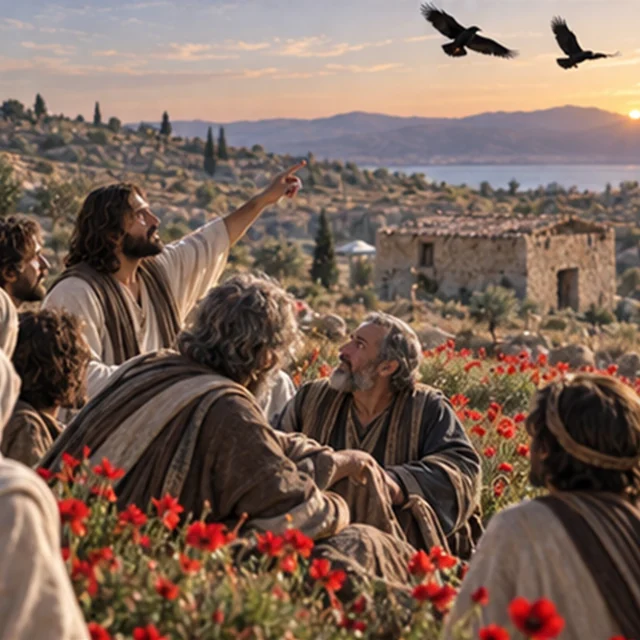
The ravens have no storehouse or barn, which makes them a deliberately sharp neighbor to the rich man who thought larger barns could secure many years. Jesus does not tell human beings to copy every feature of bird life. He exposes the limit of storage as the final explanation of sustained life. The lilies carry the same argument into clothing. They do not spin, yet their beauty exceeds Solomon's, and their brief existence makes divine provision more, not less, striking. "Take no thought" means do not be consumed by anxiety, not abolish practical reasoning. Jesus openly acknowledges that food and clothing are real needs and says the Father knows them. Then "little flock" places vulnerability beside an immense gift: it is the Father's good pleasure to give the kingdom. That gift relocates treasure and therefore attachment. Selling and giving alms are not tactics for pretending possessions do not exist. They move wealth toward a treasure that thief and moth cannot reach. The heart, Jesus says, follows where treasure has been established.
Deep dive
The connection with the preceding parable is immediate: the ravens have neither storehouse nor barn. The rich man's expanded buildings were unable to secure his life, while creatures without them continue to receive food. Jesus' argument is not that human beings should imitate every feature of bird behavior. It is that the presence or absence of a barn is not the ultimate explanation of sustained life.
The lilies carry the comparison into clothing, surpassing Solomon without spinning. Their short existence intensifies the contrast between apparent insignificance and divine provision. "Take no thought" in the KJV concerns anxiety here, not the elimination of practical reasoning. Jesus explicitly acknowledges that food and clothing are needed and that the Father knows this; bodily need is neither denied nor mocked.
The address "little flock" then places a vulnerable group beside the gift of the kingdom. The kingdom is not a prize large enough to be earned only after ordinary needs have been mastered. It is the Father's pleasure to give it. Selling and giving alms express the resulting relocation of treasure. The final saying places the heart where treasure has been established, so the passage concerns the formation of attachment as well as the management of possessions.
Words to trace: seek, thought, body, clothe, Consider, kingdom
Verse-by-verse path
- Luke 12:22
In 1611, to “take thought” meant to worry, as when Saul fears his father will stop caring about the asses “and take thought for us” (1 Samuel 9:5). The “therefore” ties this teaching for the disciples to the parable just told to the crowd.
- Luke 12:23
The argument runs from greater to lesser: the God who gave life and body will not fail over food and clothing. “Meat” is trophē, nourishment of any kind.
- Luke 12:24
Matthew says “the fowls of the air”; Luke names ravens, birds unclean under the law (Leviticus 11:15). Scripture already had God feeding them: “he giveth… food… to the young ravens which cry” (Psalm 147:9, compare Job 38:41). “Consider” is katanoeō, look closely.
- Luke 12:25
“Stature” is hēlikia, which can mean height or length of life, and a cubit was about eighteen inches. Eighteen inches of height would be enormous, so many read it as adding a small measure to one’s lifespan.
- Luke 12:26
Only Luke has this verse, and it calls adding a cubit “that thing which is least”. If worry cannot manage the smallest addition, it will hardly manage the rest.
- Luke 12:27
“Lilies” probably means the wild flowers of the Galilean hills in general, such as the red anemones that cover them in spring. Spinning thread was the first step in making every garment. Solomon’s glory is described in 1 Kings 10, where the queen of Sheba saw his servants’ apparel.
- Luke 12:28
Dried grass and stubble were common fuel for the clay ovens in which bread was baked, so the flowers of today are tomorrow’s kindling. “O ye of little faith” is one Greek word, oligopistoi, used by Luke only here.
- Luke 12:29
“Of doubtful mind” is meteōrizomai, literally to be lifted up in the air, used of a ship riding the swell or of a mind left hovering in suspense. It appears nowhere else in the New Testament.
- Luke 12:30
“Nations of the world” means the Gentiles, ta ethnē; Luke adds “of the world”. The sentence turns on its two verbs: they seek, your Father knows. The disciples are not told their needs are unreal, only that they are already known.
- Luke 12:31
Many manuscripts read “seek his kingdom”. Luke has neither Matthew’s “first” nor “his righteousness”. “Added” is prostithēmi, given in addition, the way an extra measure is thrown in with a purchase.
- Luke 12:32
“Little flock” is a double diminutive in Greek, tiny flock, a picture of the vulnerable disciples. Daniel 7:27 speaks of the kingdom being given to “the people of the saints of the most High”, and the verb here, “to give”, is the heart of the promise.
- Luke 12:33
“Bags” are ballantia, purses, the very item the seventy were forbidden to carry (10:4); here they are allowed purses that do not wear out. Moths ate fine clothing, which in the ancient world was a common form of stored wealth.
- Luke 12:34
In Hebrew thinking the heart was the seat of thought and will, not only feeling. The saying makes it follow the treasure: where the money has gone, the mind and the decisions will go after it.
Luke 12:22-34
King James Version22And he said unto his disciples, Therefore I say unto you, Take no thought for your life, what ye shall eat; neither for the body, what ye shall put on.
23The life is more than meat, and the body is more than raiment.
24Consider the ravens: for they neither sow nor reap; which neither have storehouse nor barn; and God feedeth them: how much more are ye better than the fowls?
25And which of you with taking thought can add to his stature one cubit?
26If ye then be not able to do that thing which is least, why take ye thought for the rest?
27Consider the lilies how they grow: they toil not, they spin not; and yet I say unto you, that Solomon in all his glory was not arrayed like one of these.
28If then God so clothe the grass, which is to day in the field, and to morrow is cast into the oven; how much more will he clothe you, O ye of little faith?
29And seek not ye what ye shall eat, or what ye shall drink, neither be ye of doubtful mind.
30For all these things do the nations of the world seek after: and your Father knoweth that ye have need of these things.
31But rather seek ye the kingdom of God; and all these things shall be added unto you.
32Fear not, little flock; for it is your Father’s good pleasure to give you the kingdom.
33Sell that ye have, and give alms; provide yourselves bags which wax not old, a treasure in the heavens that faileth not, where no thief approacheth, neither moth corrupteth.
34For where your treasure is, there will your heart be also.
Luke 12:35-48
The Returning Master Serves, and the Steward Answers
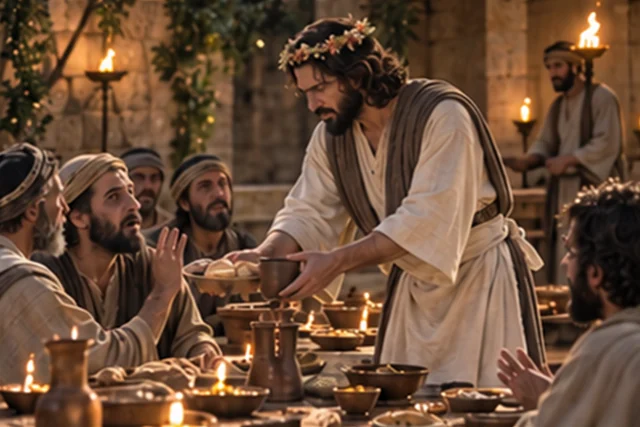
The first servants are waiting for their lord to return from a wedding, lamps burning and clothing arranged for action. Then the image suddenly reverses every ordinary household expectation: when the master finds them watching, he girds himself, seats them, and serves them. Faithful readiness is met by a generosity larger than routine compensation. The thief image removes the fantasy that readiness can be postponed until a known date, and Peter's question about the audience leads Jesus to the steward responsible for feeding a household at the proper time. That answer makes readiness especially concrete for anyone entrusted with others. The unfaithful steward does not merely miscalculate the schedule. He turns delay into permission to beat servants, indulge himself, and use authority against the household he was assigned to sustain. The closing distinction between many and few stripes establishes proportionate accountability. Knowledge and entrusted responsibility are not shields from judgment. They increase what may rightly be required when the master returns.
Deep dive
The first household image contains a startling reversal. Servants remain prepared for their master's return, but when he finds them watching, he arranges for them to sit and serves them himself. The scene exceeds a routine reward for competent staff. It makes the master's generosity the surprise within an otherwise familiar arrangement of duty and expectation.
The thief image then removes the possibility of readiness by calendar calculation. Peter asks whether the instruction is for the disciples or everyone, and Jesus answers by describing a steward responsible for feeding a household. The answer particularly concerns those entrusted with others, without supplying a neat list of exempt hearers. Faithfulness means giving the household its portion at the proper time, not merely maintaining an alert personal attitude.
The alternative steward interprets delay as freedom to beat subordinates and indulge himself. His failure is not simply mistaken timing; it is the use of entrusted authority against those it should sustain. The distinctions between knowing and not knowing the master's will establish proportionate accountability. Greater knowledge and greater trust increase responsibility rather than providing a superior defense when the master returns.
Words to trace: lord, cometh, servant, Blessed, find, hour
Verse-by-verse path
- Luke 12:35
Long robes were tucked up into the belt for work or running; Israel ate the Passover “with your loins girded” (Exodus 12:11). Oil lamps had to be trimmed and refilled through the night, so a lamp still burning was evidence of someone awake.
- Luke 12:36
A wedding feast could last for days, and a guest might leave it at any hour. “Knocketh” recalls the promise of 11:9-10: here it is the master who knocks, and the servants who must open at once.
- Luke 12:37
“Verily” is amēn, which Luke keeps only a handful of times, marking a solemn saying. The master tying up his own robe to wait on his servants anticipates the scene where Jesus girds himself with a towel to wash his disciples’ feet (John 13:4-5).
- Luke 12:38
Jewish reckoning divided the night into three watches, so the second and third run from about ten at night until dawn, the hours when watchers flag. Matthew and Mark speak of four watches, the Roman count.
- Luke 12:39
The “goodman of the house” is 1611 English for the householder. “Broken through” is diorussō, to dig through: houses of mud brick could be tunnelled through the wall, which is how a thief got in without using the door.
- Luke 12:40
The thief example turns inside out: the householder would have watched if he had known the hour, but the disciples do not know it and so must be ready all the time. “Ready” is hetoimos, prepared.
- Luke 12:41
Only Luke records Peter’s question. He wants to know whether the parable is for the Twelve or for the whole crowd, and Jesus answers with another parable instead of a direct yes or no.
- Luke 12:42
The steward, oikonomos, managed an estate and was often himself a slave. “Portion of meat” is sitometrion, a measured ration of grain, a technical word found only here in the New Testament. “In due season” means at the proper time.
- Luke 12:43
The blessing is on the servant found “so doing”, in the middle of the task. It matches the blessing on the watchful servants of verse 37, but here what is rewarded is work, not only wakefulness.
- Luke 12:44
Joseph is the pattern: set over all that Potiphar had (Genesis 39:4), then over all Egypt (Genesis 41:41). Faithfulness with the rations brings charge of the whole estate.
- Luke 12:45
“But and if” is an old English way of saying “but if”. “Delayeth” is chronizō, takes his time, and the servant says it “in his heart”, like the rich fool. The menservants and maidens are his fellow slaves.
- Luke 12:46
“Cut him in sunder” is dichotomeō, to cut in two, a punishment known from the ancient world; some think it means a savage flogging or being cut off. Matthew 24:51 puts him with the hypocrites; Luke with the unbelievers, apistoi, the unfaithful.
- Luke 12:47
Deuteronomy 25:3 capped a beating at forty stripes. “Prepared not himself” uses hetoimazō, the root of “ready” in verse 40, so his failure is the one the chapter has been warning against.
- Luke 12:48
The law distinguished sins of ignorance from presumptuous sins (Numbers 15:27-30), and here too ignorance lessens but does not remove the penalty. “Committed” is paratithēmi, to deposit in trust, a banking word.
Luke 12:35-48
King James Version35Let your loins be girded about, and your lights burning;
36And ye yourselves like unto men that wait for their lord, when he will return from the wedding; that when he cometh and knocketh, they may open unto him immediately.
37Blessed are those servants, whom the lord when he cometh shall find watching: verily I say unto you, that he shall gird himself, and make them to sit down to meat, and will come forth and serve them.
38And if he shall come in the second watch, or come in the third watch, and find them so, blessed are those servants.
39And this know, that if the goodman of the house had known what hour the thief would come, he would have watched, and not have suffered his house to be broken through.
40Be ye therefore ready also: for the Son of man cometh at an hour when ye think not.
41Then Peter said unto him, Lord, speakest thou this parable unto us, or even to all?
42And the Lord said, Who then is that faithful and wise steward, whom his lord shall make ruler over his household, to give them their portion of meat in due season?
43Blessed is that servant, whom his lord when he cometh shall find so doing.
44Of a truth I say unto you, that he will make him ruler over all that he hath.
45But and if that servant say in his heart, My lord delayeth his coming; and shall begin to beat the menservants and maidens, and to eat and drink, and to be drunken;
46The lord of that servant will come in a day when he looketh not for him, and at an hour when he is not aware, and will cut him in sunder, and will appoint him his portion with the unbelievers.
47And that servant, which knew his lord’s will, and prepared not himself, neither did according to his will, shall be beaten with many stripes.
48But he that knew not, and did commit things worthy of stripes, shall be beaten with few stripes. For unto whomsoever much is given, of him shall be much required: and to whom men have committed much, of him they will ask the more.
Luke 12:49-53
Peace Does Not Mean Universal Agreement
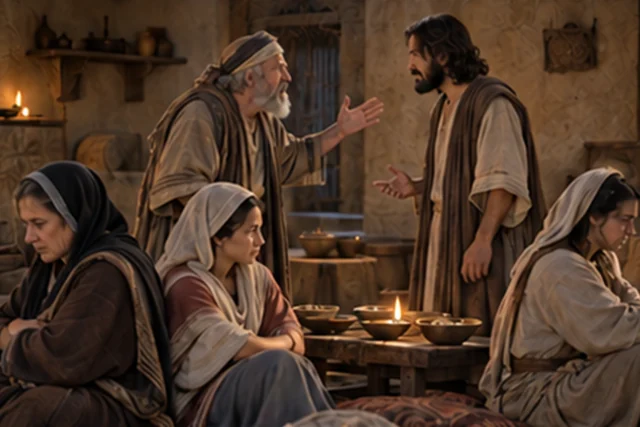
Fire, baptism, and division make the chapter's urgency feel compressed almost past comfort. The exact force of the fire image is debated, since fire can carry judgment, purification, or the disruptive arrival of God's purpose, but the surrounding language in the Book of Luke will not let it become a decorative picture of enthusiasm. Something decisive is at work. The baptism Jesus still must undergo is also clearly not John's baptism, which lies behind him. It points toward an ordeal yet to be accomplished, fitting the suffering he has already announced on the road to Jerusalem. "Straitened" gives the sense of pressure or constraint until that work is complete. Then Jesus overturns any expectation that peace means automatic agreement. His mission can divide five people in one house along the most ordinary family lines: father and son, mother and daughter, mother-in-law and daughter-in-law. The passage describes the consequence of divided responses, not a command to manufacture domestic hostility. Peace in the Book of Luke has never meant that everyone will receive Jesus in the same way.
Deep dive
Fire, baptism, and division compress the chapter's urgency into a few sayings. Fire can signify judgment, purification, or the disruptive arrival of God's purpose, and the exact emphasis here is debated. The surrounding language prevents it from being reduced to a pleasant image of enthusiasm. Something decisive is being brought upon the earth.
The baptism still to be undergone is distinct from the baptism already received from John. Jesus speaks of an ordeal awaiting completion, naturally read in the light of the suffering he has repeatedly announced. The KJV's "straitened" describes the pressure or constraint under which he stands until it is accomplished. Luke gives the language its weight without inventing a private scene beyond what Jesus says.
Household division describes a consequence of responses to him, not a command to manufacture family hostility. Earlier promises of peace have not guaranteed unanimous reception. The detailed pairings of parents, children, and in-laws show that the line of disagreement can run through the most ordinary domestic relationships. The kingdom's arrival cannot be measured simply by whether everyone at the table approves.
Words to trace: daughter, mother, divided, earth, father, accomplished
Verse-by-verse path
- Luke 12:49
The Greek of the second half is hard, and most modern versions take it as a wish: “how I wish it were already kindled!” John had promised a coming one who would baptize “with the Holy Ghost and with fire” (3:16).
- Luke 12:50
Baptism is used figuratively for being overwhelmed, as in Psalm 69:2, “I am come into deep waters, where the floods overflow me”. “Accomplished” is teleō, to finish, the verb of 18:31 and 22:37, where what is written of the Son of man is brought to its end.
- Luke 12:51
The angels had sung “on earth peace” (2:14), and Simeon had warned that the child would be “a sign which shall be spoken against” (2:34). Both lines stand behind this question, which uses the same words, peace and earth.
- Luke 12:52
Five people make a normal household in one house: father, mother, a son, a daughter, and the son’s wife. “From henceforth” means from now on, the time of the fire and the baptism just spoken of.
- Luke 12:53
The line reworks Micah 7:6: “the son dishonoureth the father, the daughter riseth up against her mother, the daughter in law against her mother in law”. Micah’s divisions run one way; Luke makes each pair turn against the other, both ways.
Luke 12:49-53
King James Version49I am come to send fire on the earth; and what will I, if it be already kindled?
50But I have a baptism to be baptized with; and how am I straitened till it be accomplished!
51Suppose ye that I am come to give peace on earth? I tell you, Nay; but rather division:
52For from henceforth there shall be five in one house divided, three against two, and two against three.
53The father shall be divided against the son, and the son against the father; the mother against the daughter, and the daughter against the mother; the mother in law against her daughter in law, and the daughter in law against her mother in law.
Luke 12:54-59
The Forecast Is Accurate and the Moment Is Missed
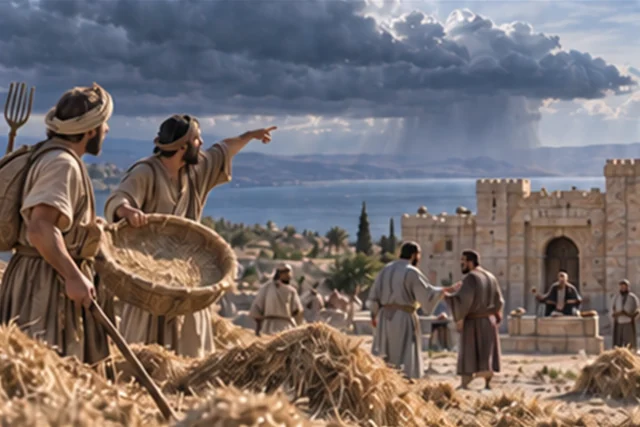
The weather examples begin by giving the crowd credit. They see a cloud in the west and correctly expect rain; they feel the south wind and correctly expect heat. Jesus' accusation is therefore not that they lack intelligence or the ability to infer unseen outcomes from visible signs. They already do it every week. The problem is selective discernment: the same capacity used on sky and wind is not being brought to "this time," the moment defined by his presence, words, and works. The legal illustration then moves from interpretation to urgency. Two opponents are still on the road to the magistrate, which means the interval for settlement remains open. Once judge, officer, and prison take over, the options narrow. The "very last mite" stresses the completeness of liability without giving a detailed map of the afterlife or a mechanism for postmortem payment. The point in the Book of Luke is temporal and sharp. The remaining interval is real, but treating it as indefinite can turn a present opportunity into a closed door.
Deep dive
The examples grant the crowd real competence. A western cloud and a southern wind lead to forecasts that prove correct. Jesus does not accuse the hearers of lacking the capacity to draw conclusions from visible evidence. The inconsistency is that the capacity works for the sky while remaining unused in relation to "this time," the period defined by his presence and message.
The legal illustration sharpens the issue from recognition to action. Two opponents are still on the way to the magistrate, so an opportunity for settlement remains. Once the process reaches judge, officer, and prison, that freedom narrows. The sequence gives urgency a concrete shape: the same dispute looks different before and after the decision has been handed over.
The last mite emphasizes the completeness of the liability. The illustration does not by itself establish a detailed doctrine of the afterlife or specify how every debt is paid beyond death. Its immediate force is the danger of treating the remaining interval as though it will continue indefinitely. Discernment delayed can become an opportunity lost.
Words to trace: judge, cometh, discern, officer, adversary, blow
Verse-by-verse path
- Luke 12:54
West was the Mediterranean, and clouds off the sea brought rain, as when Elijah’s servant saw “a little cloud out of the sea, like a man’s hand” (1 Kings 18:44). The crowd’s forecast is right, and Jesus says so.
- Luke 12:55
The south wind blew in from the Negev and the Arabian desert, the scorching wind still known in the region as the sirocco or hamsin. “Heat” is kausōn, burning heat, the word James 1:11 uses of the sun withering the grass.
- Luke 12:56
“Discern” is dokimazō, to test or assay, as metals are tested for purity. “This time” is kairos, the appointed or decisive moment, rather than chronos, a stretch of clock time.
- Luke 12:57
“Of yourselves” means without waiting for a sign or a court to tell you. The verse bridges the weather and the lawsuit: they can judge the sky and the right thing to do on their own.
- Luke 12:58
The “officer” is praktōr, the court’s debt collector, a technical term known from Egyptian papyri for the official who enforced judgments. “Hale” means drag, and “give diligence” is literally “give work”, make every effort to settle.
- Luke 12:59
The “mite” is the lepton, the smallest copper coin in circulation, the coin the widow puts two of into the treasury (21:2). Matthew 5:26 has a quadrans, worth two lepta; Luke drives the debt down to the last possible coin.
Luke 12:54-59
King James Version54And he said also to the people, When ye see a cloud rise out of the west, straightway ye say, There cometh a shower; and so it is.
55And when ye see the south wind blow, ye say, There will be heat; and it cometh to pass.
56Ye hypocrites, ye can discern the face of the sky and of the earth; but how is it that ye do not discern this time?
57Yea, and why even of yourselves judge ye not what is right?
58When thou goest with thine adversary to the magistrate, as thou art in the way, give diligence that thou mayest be delivered from him; lest he hale thee to the judge, and the judge deliver thee to the officer, and the officer cast thee into prison.
59I tell thee, thou shalt not depart thence, till thou hast paid the very last mite.
Questions to keep in mind while reading
- Watch what Jesus says and does, and how people respond.
- Trace kingdom, discipleship, opposition, cross, and resurrection in the evangelist’s own sequence.
- Let later doctrine clarify the scene without erasing its immediate setting.
Text first
Where readers differ
The chapter summary begins with what the passage says and how its parts fit together. It does not assume one denomination has already settled every question. Where a conclusion depends on a tradition, literary theory, or historical reconstruction, that dependence is named openly.
The KJV text is presented first. Interpretive conclusions are labeled, and differences are introduced only when they help a reader understand why serious communities do not always reach the same answer.
Comparative interpretive notes for this chapter are in preparation. Until reviewed notes are ready, this page separates the KJV text from summary and application without claiming that serious readers agree on every question.
Questions beneath the surface
- What account of God, human freedom, responsibility, and the good life emerges from Luke 12?
- Which tension does the chapter refuse to resolve quickly?
- What changes when the chapter is read as part of the whole canon rather than as an isolated moral lesson?
- Where might a sincere reader confuse a familiar tradition with something the text states directly?
Questions for serious personal contemplation
These open-ended questions make room for tension, honest response, prayer, and conclusions that remain accountable to the chapter.
Observe without rushing
What part of Luke 12 makes you stop, feel unsettled, or feel surprised, and why?
Which detail in the passage would be easiest to overlook? How does that detail change your understanding?
Where do you see tension between what happens and this focus: Luke 12 develops its own movement around lord, cometh, Fear, thought, daughter?
What important question does the passage leave open instead of resolving quickly?
Examine your inner life honestly
Which person, response, fear, or desire in the passage feels most like your own life right now?
What assumption about God, other people, or yourself does this text challenge?
Which part would you rather soften, avoid, or explain away too quickly? What might that reaction reveal?
If this Scripture could ask you one direct question, what do you think it would ask?
Respond with wisdom and courage
What do you need to remember, confess, grieve, thank God for, or trust after reading this passage?
How might another faithful person read this situation differently without ignoring the text?
What obedient response would be costly, uncomfortable, or slow, yet still faithful to Scripture?
What question will you carry into prayer this week, and which verses will you keep in front of you?
Music and video connected to the passage
Related media appears when its Scripture reference overlaps this study. Music and video can illuminate a theme while the biblical text remains the foundation.