The big picture
Luke 18 gathers people who cannot secure the outcome they need and shows what happens when dependence is placed in the open. A widow keeps returning to an unjust judge until even a man who fears neither God nor people acts on her case. A Pharisee then arrives at the temple with a résumé built partly from comparison, while a publican offers nothing but a plea for mercy, and the verdict comes from outside both men. Infants are carried to Jesus and become the model for receiving the kingdom before they can display achievement. A wealthy ruler has the opposite problem: he possesses much, yet the one demanded relinquishment exposes what he cannot simply add to his existing life. The Twelve hear a clear prediction of suffering, death, and resurrection and still do not understand. Near Jericho, a blind beggar recognizes enough to keep crying “Son of David” when the procession tells him to be quiet. Jesus stops, restores his sight, and the man joins the road. Dependence in this chapter is not passivity. It is the admission that the decisive gift cannot be manufactured by status, wealth, comparison, or proximity.
Central truth
Luke 18–19 repeatedly overturns confident human ranking: persistent petition, humble prayer, childlike reception, costly wealth, blind faith, Zacchaeus’s restitution, and accountable stewardship all prepare for the King who comes to seek and save the lost.
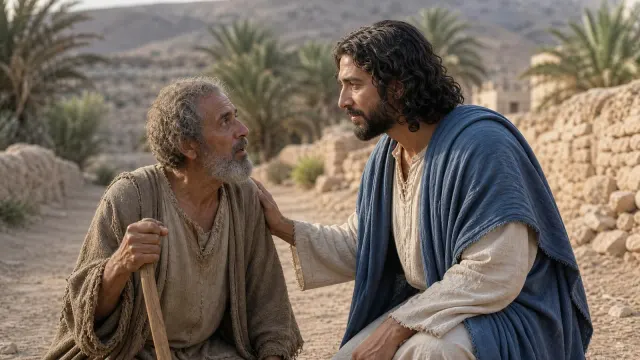

The study notes have a page of their own
The movement by movement analysis, the words to trace, the verse by verse notes and where readers differ are written for someone studying alone. They are on the Deep Personal Reflections page for this chapter. This page is the lesson.
A chapter-specific teaching brief
These anchors come from this chapter itself. They help a teacher use the Level 1 overview, the Level 2 study, and the Scripture text as one lesson.
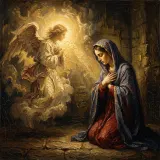
Open with the chapter’s first image
Luke 18:1: “And he spake a parable unto them to this end, that men ought always to pray, and not to faint;”
Slow down at the turning point
Luke 18:22: “Now when Jesus heard these things, he said unto him, Yet lackest thou one thing: sell all that thou hast, and distribute unto the poor, and thou shalt have…”
Keep this word trail visible
Jesus, kingdom, avenge, receive, asked, certain
What to explain, in order
Teach the passage in this order. Each step names the verses it rests on, so every point can be shown in the text before it is applied.
Luke 18:1-8
Pray and do not lose heart
Start with the purpose Luke states before the parable: always to pray and not to faint, meaning not to give up. Then the judge who fears neither God nor people, and the widow who keeps coming. Explain that widows had little power or protection in that society. Teach the argument from contrast: God is not like this judge. Then close on the haunting question of 18:8, whether the Son of man will find faith on the earth. Teach this first because the unit is about who receives God's kingdom, and the first answer is those who keep asking.
Luke 18:9-14
Two men at prayer
Read the introduction carefully: the parable is told to those who "trusted in themselves that they were righteous, and despised others". Describe both men in the temple. Explain that Pharisees were respected for strict obedience and publicans despised as collaborators and cheats, so Jesus' hearers would expect the opposite verdict. Teach the Pharisee's prayer as self congratulation and the publican's as a cry for mercy. Then Jesus' verdict and the principle repeated from 14:11. This step defines how anyone comes to God: by asking mercy, not by listing merits.
Luke 18:15-17
Infants brought to Jesus
Parents bring babies for Jesus to touch and bless, and the disciples try to stop them as an interruption. Jesus calls the children to himself. Teach his words as a rebuke to the disciples and a lesson to everyone: the kingdom belongs to such as these. Explain that in that culture children had no status. Place this step directly after the publican to show the same truth from another angle: those who come empty handed are welcomed. Then let the class see it tested in the next step by a man who comes with full hands.
Luke 18:18-30
A rich ruler and the needle's eye
A ruler asks what he must do to inherit eternal life. Teach Jesus' first question, why callest thou me good, as an invitation to think about who Jesus is. Then the commandments, the claim, the one thing lacking. Explain the camel and the needle's eye as a deliberate impossibility, not a gate in Jerusalem. Then the disciples' question, Jesus' answer about God's power, and his promise to those who leave everything. Teach without politics: Jesus addresses one man's heart, where wealth had become the thing he would not leave to follow him.
Luke 18:31-43
Blind disciples and a seeing beggar
Jesus tells the twelve for the third time what will happen in Jerusalem: delivered to the Gentiles, mocked, spat on, scourged, killed, raised on the third day. Read it plainly but without graphic detail. They understand none of it. Then near Jericho a blind beggar hears the crowd and cries out, Son of David. Teach the irony: the disciples see but do not understand; the blind man cannot see but recognises who Jesus is. He receives his sight and follows, glorifying God. Teach this as a picture of the faith the disciples still need.
Luke 19:1-10
Zacchaeus comes down
In Jericho lives Zacchaeus, chief of the tax collectors and rich. Teach his eagerness, the short man running ahead and climbing a sycamore fig. Then Jesus stops, looks up, calls him by name and invites himself to his house: "to day I must abide at thy house". Explain that a guest in a home shared in the host's standing, which is why the crowd murmurs. Then Zacchaeus stands and promises half his goods and fourfold restitution. Teach 19:10 as the summary of the whole Gospel, and point out how Zacchaeus succeeds where the rich ruler went away sad.
Luke 19:11-27
The pounds and the absent king
Jesus tells this parable because people thought the kingdom would appear at once. A nobleman goes to receive a kingdom, gives ten servants a pound each, and some citizens reject him. Explain a pound as a sum worth about three months' wages. On his return two servants have traded and are rewarded with cities; one hid the pound out of fear and loses it. Teach the parable as a call to faithful work during the time before the king returns. Read 19:27 soberly as a warning about final judgement on those who reject the king, without dwelling on violent images.
Where learners get stuck
The misreadings this passage tends to produce, and how to answer each from the text.
"God is like the unjust judge; I have to nag him until he gives in."
Jesus says "Hear what the unjust judge saith" (18:6) and then asks "shall not God avenge his own elect" (18:7). The parable works by contrast: God is just and loves his people, so he will answer them "speedily" (18:8). Persistent prayer is encouraged because God is good, not because he is reluctant. Teach learners to keep praying with trust, and be gentle with those who feel God has been slow; the parable itself admits that he may "bear long with them".
"Jesus told the rich ruler to sell everything, so all Christians must give away everything they own."
Jesus says to this ruler "Yet lackest thou one thing" (18:22), naming what held him back from following. Zacchaeus gives half and makes restitution, and Jesus declares salvation in his house (19:8-9). The women of 8:3 support Jesus from their means. The point is that nothing may keep us from following Jesus, and for this man it was his wealth. Teach each learner to ask what that one thing might be for them, without turning the passage into a rule or a political programme.
"The Pharisee was a hypocrite who did not really fast or tithe."
Luke gives no hint that the Pharisee lied: he may well have fasted twice a week and tithed everything (18:12). His problem was that he "trusted in themselves that they were righteous, and despised others" (18:9), praying "with himself" (18:11) and comparing himself with the publican. Teach the class that good religious practices can become the very thing we trust instead of God's mercy, which makes this parable a mirror for faithful people.
"Zacchaeus was saved because he gave away his money."
Jesus calls Zacchaeus first, "Zacchæus, make haste, and come down" (19:5), and Zacchaeus receives him "joyfully" (19:6) before he promises anything. His giving in 19:8 is the response of a man who has been welcomed. Jesus explains the salvation by his own mission: "the Son of man is come to seek and to save that which was lost" (19:10). Teach generosity as the fruit of grace, which makes it joyful rather than anxious.
Learning objectives
- Explain how the persistent widow account encourages prayer without equating God with the unjust judge.
- Contrast the Pharisee’s and publican’s prayers and identify Jesus’ conclusion about justification and self-exaltation.
- Explain why Jesus receives little children and how the saying about receiving the kingdom governs the scene.
- Trace the rich ruler’s claims, Jesus’ challenge concerning possessions, and the disciples’ astonishment about salvation.
- Compare the blind beggar’s persistence near Jericho with Zacchaeus’s determined effort to see Jesus and Jesus’ responses to each.
- Explain Zacchaeus’s restitution and Jesus’ declaration in Luke 19:9–10, then relate the following pounds account to accountability while the kingdom’s timing is misunderstood.
Teacher preparation
- Read the opening purpose statement in Luke 18:1.
- Prepare to explain 'publican' again as tax collector and 'smote upon his breast' in 18:13 as a gesture of grief or contrition.
- Mark the repeated 'receive' language around children and the kingdom in 18:15–17.
- Prepare the Jericho sequence carefully.
- Do not stop Luke 19 at Zacchaeus if the page displays the whole chapter.
Evidence and interpretation checks
Explicit
Luke 18:14 explicitly says the publican goes down to his house justified rather than the Pharisee, followed by the principle that self-exaltation leads to abasement and humility to exaltation.
Scripture-supported
Luke 19:8–10 directly links Zacchaeus’s response with concrete restitution and Jesus’ declaration that salvation has come to the house, concluding that the Son of man came to seek and to save that which was lost.
Strong inference
The placement of the pounds account after verse 11, where people suppose the kingdom of God should immediately appear, strongly indicates that the parable addresses expectation, delay, stewardship, and reckoning before full royal manifestation.
Possible or traditional reading
Interpretations differ over whether Zacchaeus’s verbs in 19:8 should be translated as present practice or new resolve.
Limit
Luke 18–19 does not name the persistent widow, publican, rich ruler, or blind man in Luke’s account, does not tell us Zacchaeus’s exact height, and does not permit calculating the timing of the kingdom from the pounds parable.
Discussion with answer guidance
1. What contrast makes the unjust judge illustration work in 18:1–8?
What a good answer contains
The judge "feared not God, neither regarded man" (18:2), yet the widow's persistence moves him: "because this widow troubleth me, I will avenge her" (18:5). Jesus argues from the lesser to the greater: "shall not God avenge his own elect, which cry day and night unto him" (18:7), and "he will avenge them speedily" (18:8). A strong answer sees that God is contrasted with the judge, not compared to him: if an unjust man gives justice to a stranger, how much more will the just God answer his own. Explain avenge as give justice. A weak answer thinks we must wear God down. Note the purpose stated in 18:1, "that men ought always to pray, and not to faint".
Show teacher guidance
The judge neither fears God nor regards man, yet persistence moves him to act.
2. What is the difference between the Pharisee’s prayer and the publican’s in 18:9–14?
What a good answer contains
The Pharisee "stood and prayed thus with himself", thanking God "that I am not as other men are", listing his fasting and tithes (18:11-12). The publican stands "afar off", will not lift his eyes, "smote upon his breast, saying, God be merciful to me a sinner" (18:13). Jesus' verdict: "this man went down to his house justified rather than the other" (18:14). A good answer sees that the Pharisee's prayer is about himself and against others, while the publican's asks only for mercy. Explain justified as declared right with God. A weak answer makes the Pharisee's practices the problem; his trust in them and his contempt are.
Show teacher guidance
The Pharisee lists his superiority and practices.
3. What must be received 'as a little child' in 18:17?
What a good answer contains
"The kingdom of God" must be received "as a little child" (18:17). Parents bring infants for Jesus to touch, the disciples rebuke them, and Jesus says "Suffer little children to come unto me, and forbid them not: for of such is the kingdom of God" (18:16). Explain suffer as allow. A strong answer sees what a child brings: nothing to offer, complete dependence, readiness to receive a gift. Placing this after the publican shows the same humility. A weak answer says children are innocent and therefore deserve the kingdom; the point is that they receive what they cannot earn.
Show teacher guidance
The kingdom of God.
4. Why does the rich ruler go away sorrowful?
What a good answer contains
The ruler claims to have kept the commandments "from my youth up" (18:21), and Jesus says "Yet lackest thou one thing: sell all that thou hast, and distribute unto the poor, and thou shalt have treasure in heaven: and come, follow me" (18:22). Then "when he heard this, he was very sorrowful: for he was very rich" (18:23). A good answer sees that his wealth was the one thing holding him from following Jesus, and that the call is first to follow. Then the camel and the needle, and "The things which are impossible with men are possible with God" (18:27). A weak answer turns 18:22 into a universal law or ignores it.
Show teacher guidance
After affirming commandment observance, he is told to sell, distribute to the poor, gain treasure in heaven, and follow Jesus.
5. What do the blind man and Zacchaeus refuse to let the crowd prevent?
What a good answer contains
The blind man, told to "hold his peace", "cried so much the more, Thou Son of David, have mercy on me" (18:39). Zacchaeus, who "could not for the press, because he was little of stature" (19:3), "ran before, and climbed up into a sycomore tree to see him" (19:4). A strong answer sees that both refuse to let a crowd keep them from Jesus, and both are met: Jesus stops for the blind man and calls Zacchaeus by name. Note that the blind man calls Jesus Son of David, a royal title, just before Jerusalem. A weak answer misses that it is the crowd in both scenes that stands in the way.
Show teacher guidance
The blind man keeps crying out when rebuked, and Zacchaeus climbs a tree because he cannot see for the press.
6. What changes in Zacchaeus’s house according to 19:8–10?
What a good answer contains
Zacchaeus says "the half of my goods I give to the poor; and if I have taken any thing from any man by false accusation, I restore him fourfold" (19:8). Jesus says "This day is salvation come to this house, forsomuch as he also is a son of Abraham. For the Son of man is come to seek and to save that which was lost" (19:9-10). A good answer sees that his generosity is the fruit of being received, not the price of it; Jesus came to him first. Fourfold was the restitution the law required for theft (Exodus 22:1). Contrast him with the rich ruler: a rich man is saved, as 18:27 promised.
Show teacher guidance
Zacchaeus addresses possessions and fraud through giving and fourfold restoration, while Jesus declares salvation present and names His mission to seek and save the lost.
Responsible application
Heart and habits
Compare the widow’s persistence, the publican’s humility, and the blind man’s repeated cry.
Relationships and community
Notice how crowds rebuke the blind man and murmur about Zacchaeus.
Money tells on us
Place the rich ruler beside Zacchaeus.
Session plans
Two timings of the same lesson. The shorter keeps the reading, the central discussion and one response; the longer gives the confusions and the application their own time.
45 minutes
Do not faint
Read 18:1-8. Ask question one and take confusion one.
Two prayers
Read 18:9-17. Ask questions two and three and take confusion three.
One thing lacking
Read 18:18-30. Ask question four and take confusion two.
Son of David
Read 18:35-43 and begin question five.
Zacchaeus
Read 19:1-10. Finish question five, ask question six, and take confusion four.
The pounds
Summarise 19:11-27 as a call to faithful work until the king returns.
Handout
Read the key verse together, give out the sheet, and pray the publican's prayer together.
90 minutes
Who gets in
Ask the group to rank a respected religious leader, a tax cheat, a baby, a rich businessman and a blind beggar by who is closest to God. Keep the ranking. Then read 18:1-8 and ask question one.
The two men in the temple
Read 18:9-14. Ask question two and take confusions one and three.
As a little child
Read 18:15-17 and ask question three.
The rich ruler
Read 18:18-30. Ask question four and take confusion two.
The third prediction and the blind man
Read 18:31-43 and ask question five, first half.
Salvation comes to a house
Read 19:1-10 and Exodus 22:1. Finish question five, ask question six and take confusion four. Return to the opening ranking.
The pounds
Read 19:11-27. Discuss what faithful trading with the master's pound looks like in daily life.
Handout and prayer
Read the key verse together, point to the take-home line, and pray for one person each learner thinks is far from God.
Adapting the lesson
Children
Let a child climb onto a sturdy chair as Zacchaeus while others crowd in front. Then say Jesus stopped, looked up, and called his name. Ask how Zacchaeus felt. Talk about Jesus welcoming babies when the disciples tried to send them away; tell the children Jesus wants them to come to him. Teach the short prayer God be merciful to me a sinner as a prayer anyone can pray.
Youth
Ask whether they ever compare themselves with others to feel better about themselves, online or at school. Read 18:9-14 and let them find themselves in the Pharisee. Then talk about Zacchaeus: everyone had written him off, and Jesus came to his house. Ask what one thing might hold them back from following Jesus fully, as wealth held back the rich ruler.
Adults
Give time to the theme of reversal: who is justified, who enters, who is saved. Discuss the rich ruler and Zacchaeus side by side as two rich men with opposite endings, without making either a rule for everyone. Consider the pounds as a challenge to faithful use of gifts and opportunities in work, family and church, especially for those tempted to bury their gifts out of fear.
One to one
Read 18:13 and 19:10 together. Ask whether they find it easier to pray like the Pharisee or the publican. If they feel unworthy, tell them Jesus came to seek and save the lost, and that he stopped for the blind man and called Zacchaeus by name. If they are holding something back from God, ask gently what it is. Pray the publican's prayer with them.
Song and video learning lab
A song or video may interpret, compress, or dramatize the text. Its value becomes clearer when its choices are compared with Scripture.
- Before the media: the exact passage and its central movement.
- During the media: the words, people, events, and emotions the artist emphasizes.
- After the media: what it clarifies, what it leaves out, and what belongs back in the biblical text.
Handout
One page for learners to take home. The print button prints this section alone.
Luke 18–19
The passage in brief
Jesus told of a widow who kept asking an unjust judge for justice, to teach that we should always pray. He told of a proud Pharisee and a humble tax collector at prayer, and said the tax collector went home right with God. He welcomed little children. A rich ruler went away sad because he would not give up his wealth to follow Jesus. Near Jericho a blind man called out to Jesus and was healed. Zacchaeus, a rich tax collector, climbed a tree to see Jesus, welcomed him home, and gave generously.
A verse to keep
For the Son of man is come to seek and to save that which was lost.
Luke 19:10 · King James Version
Questions to take home
What did the tax collector pray in the temple (18:13)?
Why did the rich ruler go away sad (18:22-23)?
What did Zacchaeus promise to do after Jesus came to his house (19:8)?
This week
Pray the publican's prayer, God be merciful to me a sinner, each morning this week, and notice how it changes the way you see others.
Music and video connected to the passage
Related media appears when its Scripture reference overlaps this study. Music and video can illuminate a theme while the biblical text remains the foundation.