The big picture
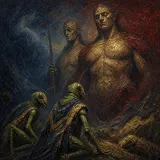
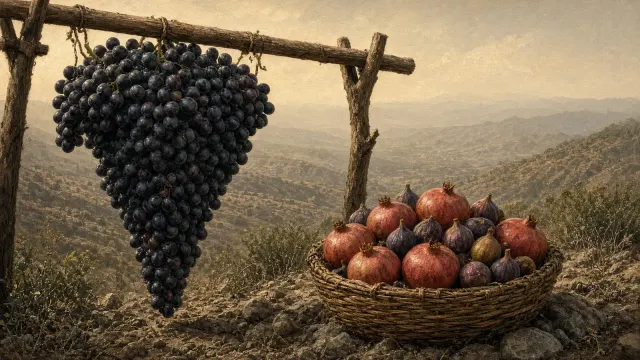
Twelve tribal leaders enter Canaan under one commission and return with one body of evidence but two incompatible conclusions. Moses asks them to investigate the people, cities, land, trees, and produce, and the scouts come back after forty days carrying grapes, pomegranates, and figs. They agree that the land flows with milk and honey and that its inhabitants and fortifications are formidable. The divide appears in what those facts mean. Caleb says Israel should go up and possess the land. The other men say Israel cannot, escalating their report until the inhabitants become giants and the scouts become grasshoppers in their own eyes. Numbers calls their resulting message an evil report. The chapter therefore distinguishes observation from interpretation. The crisis is not that the scouts saw hard facts. It is that men who saw the same land used those facts to announce opposite futures.
Central truth
Numbers 13–14 shows one fruitful land receiving two rival verdicts, and Israel’s refusal to trust the Lord turns forty days of reconnaissance into forty years of wilderness judgment.

The study notes have a page of their own
The movement by movement analysis, the words to trace, the verse by verse notes and where readers differ are written for someone studying alone. They are on the Deep Personal Reflections page for this chapter. This page is the lesson.
A chapter-specific teaching brief
These anchors come from this chapter itself. They help a teacher use the Level 1 overview, the Level 2 study, and the Scripture text as one lesson.
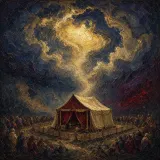
Open with the chapter’s first image
Numbers 13:1: “And the LORD spake unto Moses, saying,”
Slow down at the turning point
Numbers 13:31: “But the men that went up with him said, We be not able to go up against the people; for they are stronger than we.”
Keep this word trail visible
land, tribe, children, Moses, dwell, Israel
What to explain, in order
Teach the passage in this order. Each step names the verses it rests on, so every point can be shown in the text before it is applied.
Numbers 13:1-20
A mission to see a gift
Start with the Lord's words in 13:2: the land is one “which I give unto the children of Israel”. The spies are not sent to decide whether to go but to see what has been promised. Read the list of twelve leaders briefly and note 13:16, where Moses renames Hoshea as Joshua. Then read Moses' instructions in 13:17-20, including “be ye of good courage, and bring of the fruit of the land”. Teach this first so the class hears the whole mission as a gift to be received. The question was never whether the land was good.
Numbers 13:21-29
Fruit and fortresses
Follow the spies through the land for forty days, and stop at Eshcol with the cluster carried between two men. Then read the report in 13:27-29 and mark the word “Nevertheless” in 13:28. Everything before it confirms the promise; everything after it is fear. Explain the sons of Anak as a people of great stature remembered in Deuteronomy 2:10-11 and Joshua 11:21-22. Teach the report in its two halves so the class sees that the facts were not in dispute. The dispute was over what the facts meant in light of the Lord's word.
Numbers 13:30-33
Two verdicts on one land
Read Caleb's words in 13:30 and the majority's reply in 13:31. Then show how the report hardens into “an evil report” in 13:32, now saying the land “eateth up the inhabitants thereof”, which contradicts the fruit they carried. End with 13:33, “we were in our own sight as grasshoppers, and so we were in their sight”. Point out that they assume what the giants thought of them. Teach this step as the turning point: fear rewrites the evidence and then imagines the enemy's opinion.
Numbers 14:1-10
The night of weeping and the stones
Read the congregation's response. They weep, murmur, wish for death, accuse the Lord of bringing them to die, and propose a captain to take them back to Egypt. Then show Moses and Aaron falling on their faces, and Joshua and Caleb tearing their clothes and pleading: “If the LORD delight in us, then he will bring us into this land” (14:8). Explain “they are bread for us” (14:9) as an idiom for easy defeat. End with the people ready to stone them and the glory of the Lord appearing. This is the crisis of the book.
Numbers 14:11-38
Intercession, pardon and sentence
Read the Lord's words in 14:11-12 and Moses' prayer in 14:13-19, and explain that Moses quotes Exodus 34:6-7. Then read the answer: “I have pardoned according to thy word” (14:20), followed at once by the sentence of 14:21-35. Explain how pardon and consequence stand together: the nation is not destroyed, but the generation that refused will die in the wilderness. Explain “each day for a year” (14:34) as forty days of searching becoming forty years. Read 14:31 aloud, since the children are spared, and note the death of the ten spies.
Numbers 14:39-45
Too late, and without the Lord
End with the presumptuous attack. The people mourn, confess “we have sinned”, and go up anyway. Moses tells them “the LORD is not among you” (14:42), and the ark stays in camp. They are routed to Hormah. Teach this last because it shows that obedience is not doing what you were told yesterday; it is doing what the Lord says now. Connect it back to 9:18 and 10:33, where Israel moved only with the cloud and the ark. Here they move without both, and fail.
Where learners get stuck
The misreadings this passage tends to produce, and how to answer each from the text.
“The spies lied about the land.”
The first report in 13:27-29 is accurate: the land flows with milk and honey, and its cities are walled and its people strong. Caleb does not dispute these facts in 13:30. The lie comes later, in the “evil report” of 13:32, which claims the land “eateth up the inhabitants”. The sin was not in seeing the danger but in judging that the Lord's promise was not enough to overcome it.
“God forgave them, so there were no consequences.”
Numbers 14:20 says “I have pardoned according to thy word”, and 14:21-23 says the same generation “shall not see the land”. The nation is spared and not disinherited, as threatened in 14:12, but the adults who refused will die in the wilderness. Forgiveness here preserves the people and the promise; it does not cancel the outcome of their choice. The text holds both, and so should the teacher.
“The people repented in 14:40, so God should have let them go.”
The Lord had told them to turn back toward the wilderness (14:25). Going up after that command was a fresh disobedience, which is why Moses asks “Wherefore now do ye transgress the commandment of the LORD?” (14:41). Their words were “we have sinned”, but their actions refused the Lord's sentence. Repentance accepts the Lord's word as it now stands. The ark and Moses stayed behind (14:44).
“The forty years were God's punishment on the children too.”
The children wander because their parents refused the land, and they “bear your whoredoms” (14:33), sharing the consequence. But the Lord says “your little ones, which ye said should be a prey, them will I bring in” (14:31). The children receive the promise their parents despised. Joshua and Caleb lead them in. The wilderness years are hard for them, but they are not the end of their history.
Learning objectives
- Identify what all twelve spies agree is true about the land.
- Contrast Caleb’s conclusion with the majority report.
- Trace the congregation’s response from fear to proposed return to Egypt.
- Explain the basis of Moses’ intercession in Numbers 14:13–19.
- State the judgment connected to the forty days of searching the land.
- Explain why the attempted invasion at the end of chapter 14 fails.
Teacher preparation
- Prepare a two-column board labeled “shared evidence” and “different conclusion.” The land’s fruitfulness is not disputed; the interpretation of danger is.
- Mark the cluster from Eshcol in 13:23–27, Caleb’s interruption in 13:30, and the grasshopper language in 13:33.
- Read Exodus 34:6–7 before class because Moses echoes the Lord’s revealed character in 14:18 rather than inventing a new argument under pressure.
- Do not soften the judgment.
- Keep 14:39–45 attached to the lesson.
Evidence and interpretation checks
Explicit
Numbers 13:27 reports the spies agreeing that the land flows with milk and honey and displaying its fruit; the dispute is not over whether the land is good.
Scripture-supported
Numbers 14:26–35 explicitly connects the forty-year wilderness judgment to the forty days of searching the land, one year for each day.
Strong inference
The contrast between “we be not able” in 13:31 and “the Lord is with us” in 14:9 shows that the dispute concerns how danger is weighed against the Lord’s promise.
Possible or traditional reading
The Nephilim and giant language in 13:33 invites speculation, but the passage does not explain their origin or justify building the lesson on later theories.
Limit
The text does not say the Canaanites were imaginary threats. Cities are fortified and inhabitants formidable; the failure lies in treating those facts as decisive against the Lord’s command and promise.
Discussion with answer guidance
1. What physical evidence do the spies carry back from Eshcol?
What a good answer contains
At the brook of Eshcol they “cut down from thence a branch with one cluster of grapes, and they bare it between two upon a staff; and they brought of the pomegranates, and of the figs” (13:23). The place is named after the cluster (13:24), and the fruit is shown to the whole congregation (13:26). A good answer sees that the evidence confirms the Lord's promise: “surely it floweth with milk and honey; and this is the fruit of it” (13:27). A weak answer jumps to the giants and forgets that the report begins with abundance.
Show teacher guidance
They cut a cluster of grapes carried on a staff between two men, along with pomegranates and figs.
2. What does Caleb say in 13:30 before the majority gives its “evil report”?
What a good answer contains
“Caleb stilled the people before Moses, and said, Let us go up at once, and possess it; for we are well able to overcome it” (13:30). He does not deny the walled cities or the sons of Anak; he speaks after they have been described. A good answer sees that Caleb's confidence rests on the Lord's promise, as Joshua and Caleb say in 14:8-9. A weak answer makes Caleb an optimist who did not see the danger, when he saw the same land as the others.
Show teacher guidance
He urges immediate advance and says Israel is well able to overcome.
3. How does the congregation’s fear change into rebellion in 14:1–4?
What a good answer contains
First they weep all night (14:1). Then they murmur against Moses and Aaron and wish they had died in Egypt or in the wilderness (14:2). Then they accuse the Lord: “wherefore hath the LORD brought us unto this land, to fall by the sword, that our wives and our children should be a prey?” (14:3). Finally, “Let us make a captain, and let us return into Egypt” (14:4), and they move to stone Joshua and Caleb (14:10). A good answer traces fear turning into rebellion against God's purpose.
Show teacher guidance
They weep, murmur, wish for death, accuse the Lord’s purpose, and propose making a captain to return to Egypt.
4. What reasons does Moses give in 14:13–19 when he asks the Lord to pardon Israel?
What a good answer contains
First, the reputation of the Lord: the Egyptians and the nations will say “the LORD was not able to bring this people into the land” (14:16). Second, the Lord's own words from Exodus 34:6-7: “The LORD is longsuffering, and of great mercy, forgiving iniquity and transgression, and by no means clearing the guilty” (14:18). Third, his past mercy, “as thou hast forgiven this people, from Egypt even until now” (14:19). A good answer sees Moses praying God's character back to him. A weak answer misses that the pardon of 14:20 still includes consequences.
Show teacher guidance
He appeals to the nations’ knowledge of the Lord’s presence and power, then cites the Lord’s own revealed character as longsuffering, merciful, and just.
5. Who are the named exceptions to the wilderness sentence?
What a good answer contains
“save Caleb the son of Jephunneh, and Joshua the son of Nun” (14:30). Verse 24 explains Caleb: “because he had another spirit with him, and hath followed me fully”. Verse 38 confirms both “lived still” when the ten spies died. A good answer also notes the children, whom the people said would be a prey: “them will I bring in, and they shall know the land which ye have despised” (14:31). A weak answer forgets that the next generation is spared.
Show teacher guidance
Caleb son of Jephunneh and Joshua son of Nun are preserved among the adult generation because they did not join the rebellion.
6. Why does the late attempt to enter the land fail in 14:40–45?
What a good answer contains
Moses warns, “Go not up, for the LORD is not among you” (14:42), and verse 44 says “the ark of the covenant of the LORD, and Moses, departed not out of the camp”. They went anyway and were beaten back to Hormah (14:45). A good answer sees that their late obedience was a new disobedience: the command was now to turn back (14:25). Saying “we have sinned” (14:40) without accepting the Lord's word is not repentance. A weak answer says God was unfair to refuse their change of mind.
Show teacher guidance
Moses says the Lord is not among them for this action, and neither Moses nor the ark leaves the camp.
Responsible application
Heart and habits
Give the class a neutral case where everyone shares the same facts but frames them differently.
Relationships and community
Trace how one fearful report spreads through an entire congregation.
Presumption is not trust
Compare 14:1–4 with 14:39–45.
Session plans
Two timings of the same lesson. The shorter keeps the reading, the central discussion and one response; the longer gives the confusions and the application their own time.
45 minutes
Sent to see a gift
Read 13:1-2 and 13:17-20. Point to the words which I give.
Fruit and fear
Read 13:23-33. Take questions one and two, and confusion one.
The night of weeping
Read 14:1-10 and take question three.
Moses' prayer and the sentence
Read 14:11-24 and 14:29-31. Take questions four and five, and confusion two.
Too late
Read 14:39-45. Take question six and confusion three.
Response and handout
Ask learners where they see giants and grasshoppers in their own lives. Read the key verse and hand out the sheet.
90 minutes
Seeing the same thing differently
Show an ambiguous picture and ask what learners see. Then read 13:1-2 and 13:17-20.
Forty days in the land
Read 13:21-29. Take question one. Mark the word nevertheless in 13:28.
Two verdicts
Read 13:30-33. Take question two and confusion one.
Rebellion
Read 14:1-10 and take question three. Ask what fear does to memory and to hope.
Moses prays
Read 14:11-20 beside Exodus 34:6-7. Take question four and confusion two.
Forty years and the children
Read 14:21-38. Take question five and confusion four.
The failed attack
Read 14:39-45 and take question six and confusion three.
Application
Ask learners to name a promise of God they find hard to believe and pray it back to him as Moses did.
Handout and prayer
Read the key verse and pray for courage.
Adapting the lesson
Children
Bring a big bunch of grapes and have two children carry it on a stick. Tell how ten spies were afraid and two trusted God. Act out being as small as grasshoppers and then standing tall because God is with us. Leave out the deaths of the spies; say that the people who would not trust God had to stay in the desert, and their children went in later.
Youth
Ask them how fear changes the way they see things, and read 13:33. Discuss peer pressure: ten against two, and the crowd ready to stone the minority. Ask what it costs to be Caleb. Read 14:40-45 and talk about trying to fix a mistake our own way instead of listening to God. Keep the discussion honest without heavy guilt.
Adults
Give time to Moses' intercession and its use of Exodus 34. Discuss how pardon and consequence relate, carefully, since some adults live with consequences of past choices. Consider the children of 14:31 for parents who fear their failures will define their children. Discuss presumption in 14:40-45 as a pattern in church and personal life.
One to one
Ask the person what giants they face and whether they feel like a grasshopper. Read 14:8-9 together. If they carry regret over a missed opportunity, read 14:20 and 14:31 and talk about pardon and the next generation. If they are about to act out of panic, read 14:42 and pray for patience.
Song and video learning lab
A song or video may interpret, compress, or dramatize the text. Its value becomes clearer when its choices are compared with Scripture.
- Before the media: the exact passage and its central movement.
- During the media: the words, people, events, and emotions the artist emphasizes.
- After the media: what it clarifies, what it leaves out, and what belongs back in the biblical text.
Handout
One page for learners to take home. The print button prints this section alone.
Numbers 13:1–14:45
The passage in brief
Twelve spies explore Canaan for forty days and bring back a huge cluster of grapes. All agree the land is rich, but ten say its people are too strong. Caleb and Joshua say the Lord will give it. The people weep, want to go back to Egypt, and threaten to stone the two. Moses prays and the Lord pardons, but the generation that refused will die in the wilderness over forty years, and their children will enter. When the people try to go up anyway, they are defeated.
A verse to keep
If the LORD delight in us, then he will bring us into this land, and give it us; a land which floweth with milk and honey. Only rebel not ye against the LORD, neither fear ye the people of the land; for they are bread for us: their defence is departed from them, and the LORD is with us: fear them not.
Numbers 14:8-9 · King James Version
Questions to take home
What did the spies bring back from Eshcol (13:23)?
What did Caleb say in 13:30, and why was he confident?
Why did the attack in 14:40-45 fail?
This week
Write down one promise of God that feels too big this week and pray it back to him every day.
Music and video connected to the passage
Related media appears when its Scripture reference overlaps this study. Music and video can illuminate a theme while the biblical text remains the foundation.