- 01
Mark 6:37
Give ye them to eat
The problem is handed back to the people who raised it, and their reply is a costing rather than a refusal.
- 02
John 6:8-9
But what are they among so many
Andrew finds the resource and dismisses it in the same sentence, which is the most honest line in the chapter.
- 03
Mark 6:39-40
By companies upon the green grass
The crowd is organised into countable groups before anything happens, which is what makes the number reliable.
- 04
John 6:12-13
That nothing be lost
The collection of leftovers is commanded, and the twelve baskets are the arithmetic of the miracle made portable.
- 05
John 6:26
Ye seek me, because ye did eat of the loaves, and were filled
The next day he names the motive out loud, and the sermon that follows is the one that empties the room.



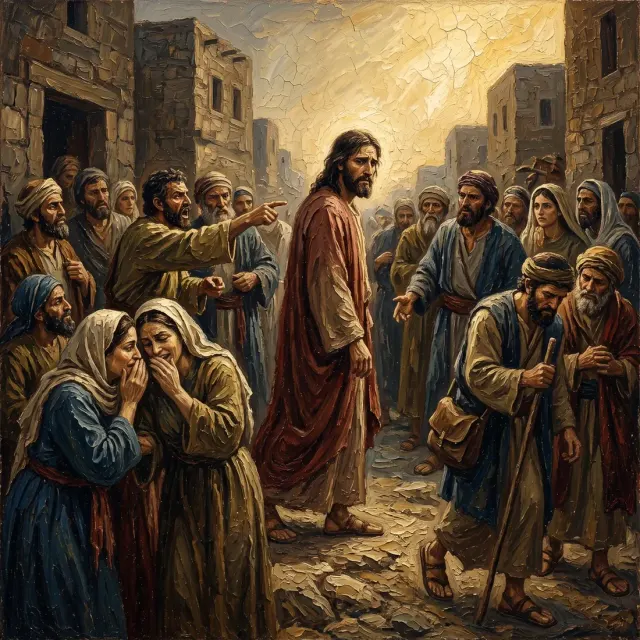

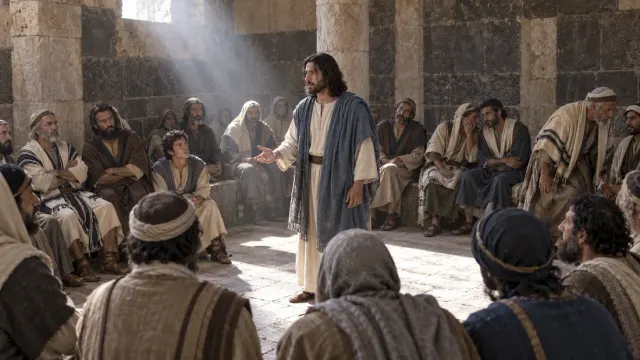





The disciples propose a dispersal. Jesus appoints a meal. Their plan in the preceding verse is perfectly intelligible: the place is remote, the hour is late, and the surrounding villages have food. His answer changes the assignment without first changing the inventory. Give ye them to eat. The men who have identified the shortage are made responsible for serving the crowd.
Two hundred pennyworth is their attempt to put a price on that responsibility. The sum does not establish how much money they possess, and the question does not require an invented sarcastic tone. The difficulty is real. The Book of Mark lets it stand before counting the five loaves and two fish. What changes is not the disciples' arithmetic but the source of provision. They will indeed give the people something to eat, through the distribution described in verse 41. The command that sounded financially impossible becomes their actual work at the meal.