Places of the Bible

The Sea of Galilee

A lake small enough to cross in a night and deep enough below sea level to make its own weather.

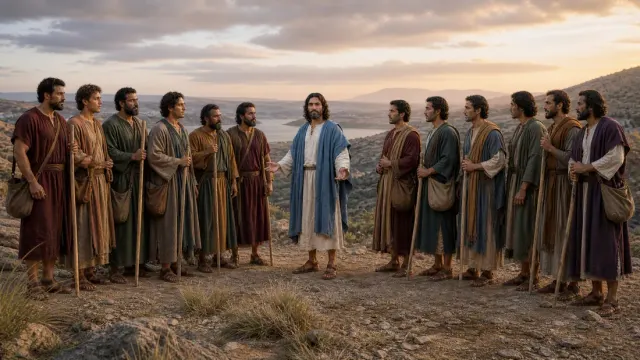
It is thirteen miles long and eight across, which is small for a sea and large for a lake, and it sits about six hundred and eighty feet below sea level in a bowl of hills. Cold air off the heights drops into warm air over the water and the surface turns violent in minutes with no warning from the shore. Fishermen who had worked it all their lives were frightened of it, which is the detail that makes the storm accounts worth reading twice.

Where it appearsMark 4 to 5 · Matthew 14 · Luke 5 · John 21

Scroll down to the account

The movements, in the order the text gives them.

The Account of The Sea of Galilee

  1. 01

    Luke 5:1-11

    Launch out into the deep

    A carpenter gives fishing advice to fishermen at the wrong time of day, and the nets break. Peter’s first response is to ask him to leave.

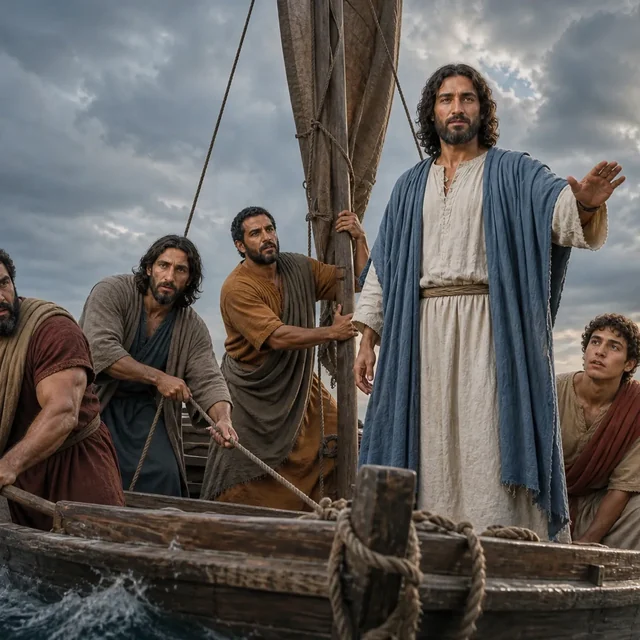
    The nets are already being washed. That detail puts the command after the night's work, when the fishermen have moved from trying to catch something to clearing up the evidence that they did not. Simon states the result plainly and then obeys a word that does not arise from his own experience of the water. The boat first serves as a place of teaching; then its owner receives a demonstration that nearly overloads it.

    The abundance produces an unexpected response. Simon does not ask Jesus to become a permanent business partner. He falls at his knees and names his own sinfulness. The catch has disclosed more than an exceptional knowledge of where fish gather. Jesus answers the fear without granting the requested departure, and the language of fishing becomes the language of a new vocation. James and John are not decorative figures at the edge of the scene: their partnership has already been needed to bring the catch in. The closing departure is therefore particularly sharp. They do not leave because the lake has finally failed them. They leave after a catch large enough to threaten both boats.

    Verse by verse

    1. 5:1

      The lake of Gennesaret is the body of water elsewhere called the Sea of Galilee. John 21:1 also calls it the sea of Tiberias.

    2. 5:5

      The night's failure is Simon's stated experience, not an accusation that the fishermen lacked skill. His obedience follows the command despite that experience.

    3. 5:8-10

      Simon himself calls himself sinful. Jesus answers with a reassurance and a commission, not by leaving the boat.

    Luke 5:1-11

    King James Version · 11 verses

    5:1And it came to pass, that, as the people pressed upon him to hear the word of God, he stood by the lake of Gennesaret,

    5:2And saw two ships standing by the lake: but the fishermen were gone out of them, and were washing their nets.

    5:3And he entered into one of the ships, which was Simon’s, and prayed him that he would thrust out a little from the land. And he sat down, and taught the people out of the ship.

    5:4Now when he had left speaking, he said unto Simon, Launch out into the deep, and let down your nets for a draught.

    5:5And Simon answering said unto him, Master, we have toiled all the night, and have taken nothing: nevertheless at thy word I will let down the net.

    5:6And when they had this done, they inclosed a great multitude of fishes: and their net brake.

    5:7And they beckoned unto their partners, which were in the other ship, that they should come and help them. And they came, and filled both the ships, so that they began to sink.

    5:8When Simon Peter saw it, he fell down at Jesus’ knees, saying, Depart from me; for I am a sinful man, O Lord.

    5:9For he was astonished, and all that were with him, at the draught of the fishes which they had taken:

    5:10And so was also James, and John, the sons of Zebedee, which were partners with Simon. And Jesus said unto Simon, Fear not; from henceforth thou shalt catch men.

    5:11And when they had brought their ships to land, they forsook all, and followed him.

  2. 02

    Mark 4:35-41

    He was in the hinder part of the ship, asleep on a pillow

    The detail about the pillow is the kind nobody invents. The question afterwards is not how did he do it but what manner of man is this.

    The pillow is almost offensively ordinary. Water is entering the boat, experienced lake workers are afraid, and Jesus is asleep in the stern. The Book of Mark does not soften that physical contrast into an appearance of sleep. Nor is the crossing a venture the disciples undertook against instructions: Jesus proposed it. The danger arrives on the route he named.

    Their appeal does more than ask for help. It questions whether he cares. His answer to the weather is brief, and the change is complete enough to be called a great calm. Yet calm water does not produce calm disciples. The final fear belongs to the encounter with the man whose word has just stopped the wind and sea. Before the command, the boat seemed unable to contain the water. After it, their understanding seems unable to contain the identity of its passenger. The scene therefore ends without a satisfied explanation of the mechanism. It ends with their question about him. The storm has been answered. His identity has become the larger matter.

    Verse by verse

    1. 4:35

      The crossing follows Jesus' instruction. The passage does not describe the storm as punishment for a disobedient journey.

    2. 4:38

      The hinder part is the stern. Mark alone among the parallel storm accounts specifies the pillow or cushion.

    3. 4:41

      The final question concerns Jesus' identity, not whether the storm was severe. The disciples are afraid after the water becomes calm.

    Mark 4:35-41

    King James Version · 7 verses

    4:35And the same day, when the even was come, he saith unto them, Let us pass over unto the other side.

    4:36And when they had sent away the multitude, they took him even as he was in the ship. And there were also with him other little ships.

    4:37And there arose a great storm of wind, and the waves beat into the ship, so that it was now full.

    4:38And he was in the hinder part of the ship, asleep on a pillow: and they awake him, and say unto him, Master, carest thou not that we perish?

    4:39And he arose, and rebuked the wind, and said unto the sea, Peace, be still. And the wind ceased, and there was a great calm.

    4:40And he said unto them, Why are ye so fearful? how is it that ye have no faith?

    4:41And they feared exceedingly, and said one to another, What manner of man is this, that even the wind and the sea obey him?

    Mark 4:35-41: He was in the hinder part of the ship, asleep on a pillow
  3. 03

    Mark 5:1-20

    They came over unto the other side of the sea

    The crossing has a purpose on the far shore, and the whole country asks him to leave once it has seen what the purpose cost.

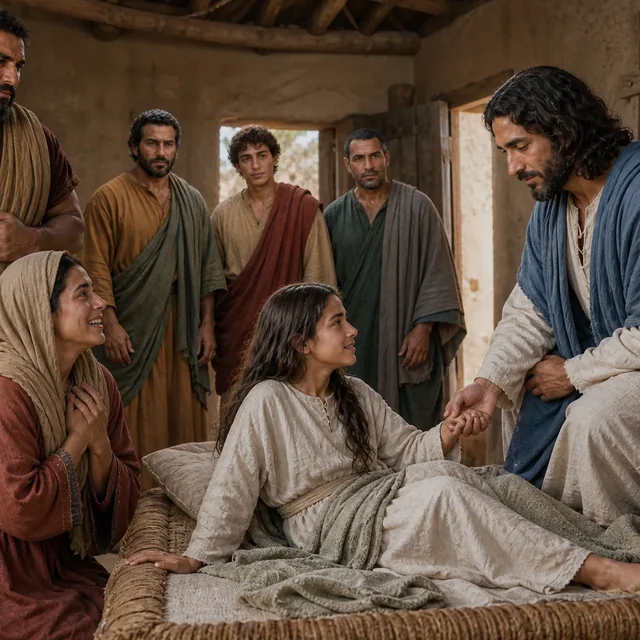
    The neighborhood has learned how to attempt restraint, not how to restore the man. Chains have failed; stones have become instruments against his own body; the living inhabitant stays among the dead. The Book of Mark refuses to make the horror tidy. It also refuses to let the multitude named Legion make this man disappear. Jesus' command is directed toward getting the unclean spirit out of the man, not getting the man out of sight.

    Afterward, sitting, clothed, and in his right mind is an extraordinarily quiet description beside all the previous violence. Yet the neighbors are afraid. The lost herd is reported alongside the man's recovery, but the text does not quote a calculation in which every resident explicitly values pigs above people. Their stated response is to ask Jesus to leave. The healed man's request moves in the opposite direction: he wants to go with him.

    Jesus grants neither the same kind of answer nor the same destination to everyone. He leaves the region but sends the restored man home to speak. The command concerns compassion, not an exhibition of his former torment. The sea carries Jesus away. It does not carry away the testimony.

    Verse by verse

    1. 5:5

      The self-injury is explicitly reported. Assigning a modern psychiatric diagnosis goes beyond the account, which identifies an unclean spirit.

    2. 5:9

      Legion is explained by the words for we are many. The passage does not supply an exact number of spirits corresponding to the size of a military unit.

    3. 5:17-19

      The residents request Jesus' departure, while the restored man requests his company. Being sent home is a commission to speak, not a reversal of his release.

    Mark 5:1-20: They came over unto the other side of the sea

    Mark 5:1-20

    King James Version · 20 verses

    5:1And they came over unto the other side of the sea, into the country of the Gadarenes.

    5:2And when he was come out of the ship, immediately there met him out of the tombs a man with an unclean spirit,

    5:3Who had his dwelling among the tombs; and no man could bind him, no, not with chains:

    5:4Because that he had been often bound with fetters and chains, and the chains had been plucked asunder by him, and the fetters broken in pieces: neither could any man tame him.

    5:5And always, night and day, he was in the mountains, and in the tombs, crying, and cutting himself with stones.

    5:6But when he saw Jesus afar off, he ran and worshipped him,

    5:7And cried with a loud voice, and said, What have I to do with thee, Jesus, thou Son of the most high God? I adjure thee by God, that thou torment me not.

    5:8For he said unto him, Come out of the man, thou unclean spirit.

    5:9And he asked him, What is thy name? And he answered, saying, My name is Legion: for we are many.

    5:10And he besought him much that he would not send them away out of the country.

    5:11Now there was there nigh unto the mountains a great herd of swine feeding.

    5:12And all the devils besought him, saying, Send us into the swine, that we may enter into them.

    5:13And forthwith Jesus gave them leave. And the unclean spirits went out, and entered into the swine: and the herd ran violently down a steep place into the sea, (they were about two thousand;) and were choked in the sea.

    5:14And they that fed the swine fled, and told it in the city, and in the country. And they went out to see what it was that was done.

    5:15And they come to Jesus, and see him that was possessed with the devil, and had the legion, sitting, and clothed, and in his right mind: and they were afraid.

    5:16And they that saw it told them how it befell to him that was possessed with the devil, and also concerning the swine.

    5:17And they began to pray him to depart out of their coasts.

    5:18And when he was come into the ship, he that had been possessed with the devil prayed him that he might be with him.

    5:19Howbeit Jesus suffered him not, but saith unto him, Go home to thy friends, and tell them how great things the Lord hath done for thee, and hath had compassion on thee.

    5:20And he departed, and began to publish in Decapolis how great things Jesus had done for him: and all men did marvel.

  4. 04

    Matthew 14:28-31

    When he saw the wind boisterous, he was afraid

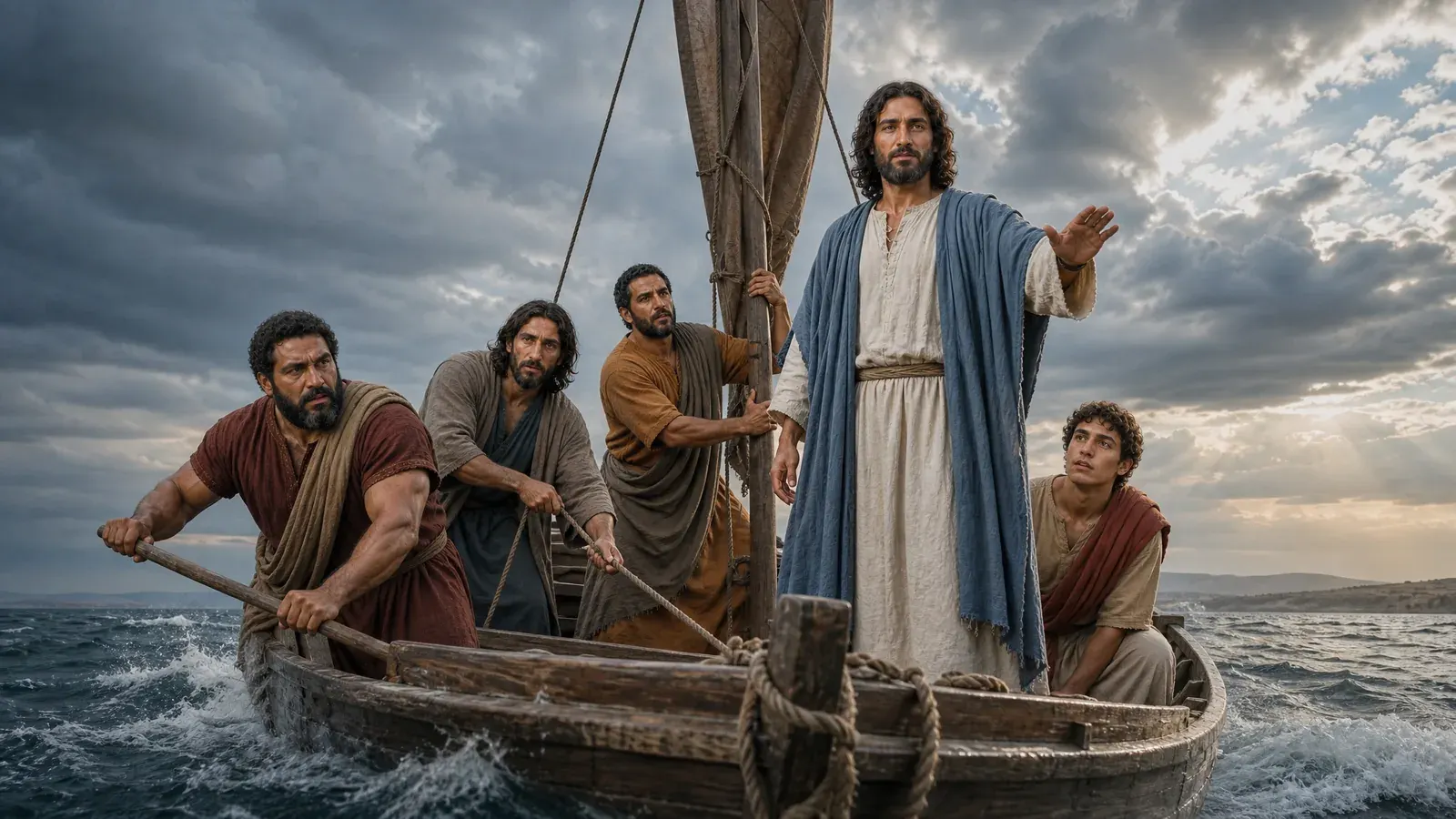
    The walking works until the attention moves. The hand that catches him arrives immediately, before the rebuke rather than after it.

    Peter asks for a command before he steps out. The movement is not presented simply as a successful experiment in self-confidence. Its warrant is Jesus' Come, and the Book of Matthew says plainly that Peter walked on the water. Reducing the episode to his failure erases the surprising thing that precedes it. The water supports no independent achievement; it is the setting in which a disciple moves toward the one who called him.

    The fear is equally explicit. Peter sees the force of the wind, begins to sink, and asks to be saved. Nothing requires an invented description of his thoughts between those actions. The sequence of Jesus' response supplies the weight: immediately he stretches out his hand and catches him, then addresses his little faith. The rescue is not postponed until Peter produces a better answer. Nor does the correction disappear because he has been rescued. Both belong to the encounter. The next verses bring them into the boat and end the wind. Within these four verses, however, the decisive physical detail is a hand taking hold.

    Verse by verse

    1. 14:28-29

      Peter requests Jesus' command, and Come supplies it. Matthew records actual walking before he describes the sinking.

    2. 14:30

      The passage reports fear when Peter notices the boisterous wind. It does not give a count of his steps or the distance he walked.

    3. 14:31

      The hand reaches and catches immediately, before the spoken correction. Little faith is the expression used, not a declaration that Peter had never trusted at all.

    Matthew 14:28-31

    King James Version · 4 verses

    14:28And Peter answered him and said, Lord, if it be thou, bid me come unto thee on the water.

    14:29And he said, Come. And when Peter was come down out of the ship, he walked on the water, to go to Jesus.

    14:30But when he saw the wind boisterous, he was afraid; and beginning to sink, he cried, saying, Lord, save me.

    14:31And immediately Jesus stretched forth his hand, and caught him, and said unto him, O thou of little faith, wherefore didst thou doubt?

    Matthew 14:28-31: When he saw the wind boisterous, he was afraid
  5. 05

    John 21:9-17

    A fire of coals there, and fish laid thereon

    Breakfast is already cooking before their catch arrives, and the three questions that follow are asked beside a charcoal fire, the second one in the account.

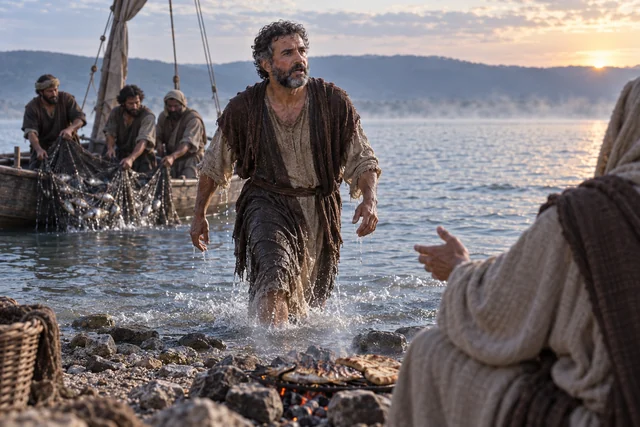
    Breakfast is already on the fire. The disciples bring a remarkable catch, but they do not arrive to find Jesus dependent on it for something to serve. Fish and bread are waiting, and he nevertheless asks them to bring fish from their own net. Provision and participation stand together without an explanation of where the first fish came from. The Book of John gives an exact count for the catch and no decoding instructions for the number.

    Only after the meal does the conversation turn directly to Peter. Three declarations of love and three commands to feed the flock answer, in a striking pattern, the three denials recorded in chapter 18. The connection is strong without inventing words of accusation Jesus does not speak here. Peter is grieved, and the text gives the reason: the third questioning. His final appeal rests on Jesus' knowledge, not a fresh promise that he will outperform the others. The commission also keeps its possessive pronoun. The lambs and sheep are mine, Jesus says. Peter receives responsibility for them, not ownership of them. At the lake where the men have caught fish, their risen host entrusts a man with a flock.

    Verse by verse

    1. 21:11

      The total is 153 large fish. John supplies no explicit symbolic interpretation of that number, and the unbroken net is the contrast he actually emphasizes.

    2. 21:14

      Third time counts the appearances to the gathered disciples in John's account. It does not deny the earlier appearance to Mary Magdalene in chapter 20.

    3. 21:15-17

      The object of more than these is debated: other disciples and fishing-related things are proposed. The triple exchange clearly commissions Peter to care for Jesus' flock.

    John 21:9-17

    King James Version · 9 verses

    21:9As soon then as they were come to land, they saw a fire of coals there, and fish laid thereon, and bread.

    21:10Jesus saith unto them, Bring of the fish which ye have now caught.

    21:11Simon Peter went up, and drew the net to land full of great fishes, an hundred and fifty and three: and for all there were so many, yet was not the net broken.

    21:12Jesus saith unto them, Come and dine. And none of the disciples durst ask him, Who art thou? knowing that it was the Lord.

    21:13Jesus then cometh, and taketh bread, and giveth them, and fish likewise.

    21:14This is now the third time that Jesus shewed himself to his disciples, after that he was risen from the dead.

    21:15So when they had dined, Jesus saith to Simon Peter, Simon, son of Jonas, lovest thou me more than these? He saith unto him, Yea, Lord; thou knowest that I love thee. He saith unto him, Feed my lambs.

    21:16He saith to him again the second time, Simon, son of Jonas, lovest thou me? He saith unto him, Yea, Lord; thou knowest that I love thee. He saith unto him, Feed my sheep.

    21:17He saith unto him the third time, Simon, son of Jonas, lovest thou me? Peter was grieved because he said unto him the third time, Lovest thou me? And he said unto him, Lord, thou knowest all things; thou knowest that I love thee. Jesus saith unto him, Feed my sheep.

    John 21:9-17: A fire of coals there, and fish laid thereon

Why it matters

The lake is where the disciples are recruited, where most of the parables are spoken from a boat pushed out a little from the land, and where two of the hardest scenes happen. In one, he is asleep on a pillow while professionals bail. In the other, he is walking, and Peter asks to come, and the walking lasts exactly as long as the looking does. The last chapter of John brings it all back here: the same lake, the same empty nets, the same man on the shore, and a fire of coals with fish laid on it already.

10 songs

The music

Every song in the catalogue whose passage falls inside these chapters.

  1. Mark 4:1-20

    He That Hath Ears to Hear

    Play here
    Open song pageRead lyrics
  2. Mark 4:35-41

    Peace, Be Still

    Play here
    Open song pageRead lyrics
  3. Mark 4:26-34

    The Kingdom Grows

    Play here
    Open song pageRead lyrics
  4. Mark 5:1-20

    Legion

    Play here
    Open song pageRead lyrics
  5. Matthew 14:13-21; Mark 6:30-44; Luke 9:10-17; John 6:1-15

    Give Ye Them to Eat

  6. Matthew 14:22-33; Mark 6:45-52; John 6:16-21

    Upon the Water

  7. Matthew 14:22-33

    Why Didst Thou Doubt?

  8. Luke 5:1-11

    Launch Out into the Deep

    Play here
    Open song pageRead lyrics
  9. John 21

    Feed His Sheep

  10. John 21:1-25

    Lovest Thou Me

    Play here
    Open song pageRead lyrics

The videos

The videos

Every release whose passage falls inside these chapters, playing here.

Nearby

All the places

Report an error on this page