


John 1:35-42
He first found his own brother
He hears where the teacher is staying and asks to see it. After a day he goes straight for Simon with one sentence: we have found the Messiah. And he brought him.
Verse by verse
- 1:35-36
John here is John the Baptist. The Lamb of God repeats his identification of Jesus in John 1:29, where taking away the world's sin is explicit.
- 1:39
The Gospel records the approximate hour and that they stayed with Jesus that day. It does not identify the dwelling or preserve the conversation held there.
- 1:40
Only Andrew is named among the two disciples. Identifying the other as John the apostle is a traditional inference, not an identification made in this verse.
- 1:42
Cephas and Peter are corresponding forms of the rock or stone name. The KJV renders the explanation as A stone; the Greek text has Petros.


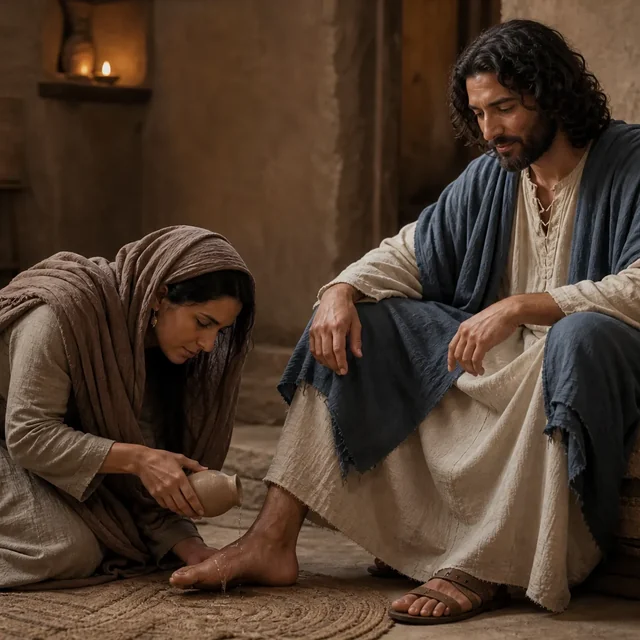

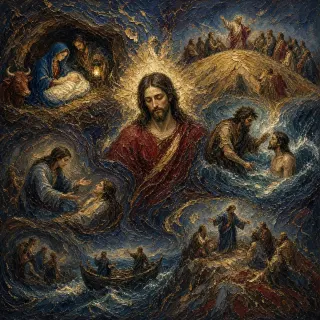



Andrew is introduced with his brother's name before his brother has entered the scene. Simon Peter's brother is an identification the Gospel expects to be useful; what follows explains how Simon came to Jesus in the first place. Andrew is not merely a name attached to a more prominent name. In this encounter, he is the one who goes and finds.
John the Baptist's testimony has an unusual immediate result: two of his disciples leave his side. The testimony has worked. Earlier, John was identified as a witness to the Light, not the Light itself; here his words actually turn people toward someone else. The two follow the man John calls the Lamb of God, and Jesus invites them to come and see. The movement slows from walking after him to spending the day with him. The Gospel preserves an approximate hour but no transcript of the visit. That restraint leaves Andrew's announcement to carry the weight of what the encounter has meant: he has found the Messiah.
Then comes the wonderfully unadorned sentence, And he brought him to Jesus. Andrew does not report the discovery and leave Simon to work out the directions. He brings his brother. Yet the decisive words about Simon's identity belong to Jesus, who names him Cephas. Andrew supplies neither the new name nor the authority behind it. His place in the passage is substantial without being central: he hears testimony, stays with Jesus, finds his brother, and brings him into a meeting whose outcome he does not control.