

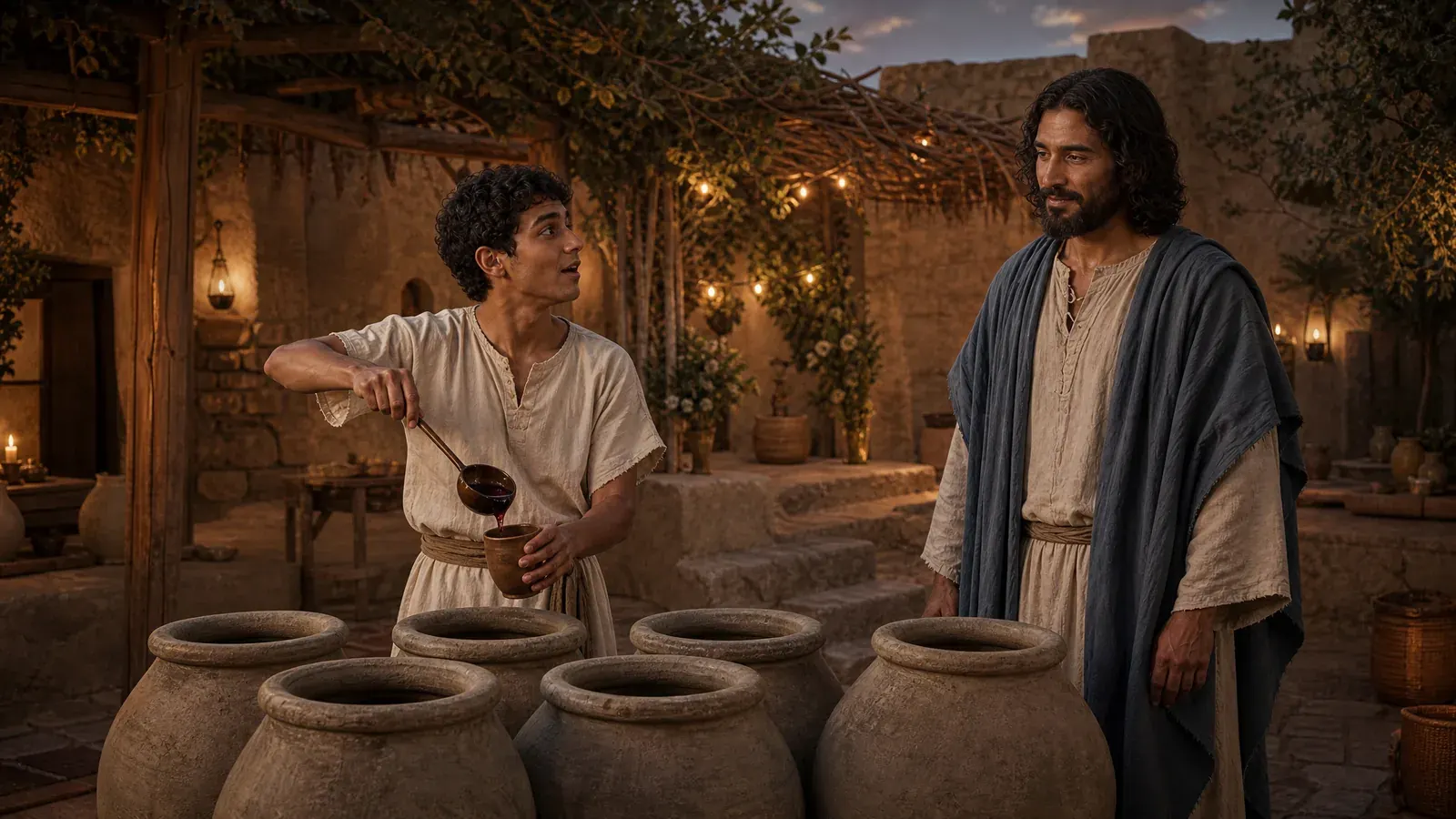
John 2:15-17
The zeal of thine house hath eaten me up
He makes a whip of small cords before he does anything, which the account mentions and does not explain.
Verse by verse
- 2:15
A scourge of small cords is a whip made from cords. John does not describe its use in terms of blows landing on particular people.
- 2:16
House of merchandise identifies the commercial use being challenged. No exchange rates or amounts of profit are supplied in this passage.
- 2:17
The quotation is Psalm 69:9. Romans 15:3 applies the other half of that verse, bearing reproaches, to Christ.
- 2:17
John places this episode near the beginning of the ministry, whereas Mark 11 places a temple expulsion in the final Jerusalem visit. Whether these are two incidents or differently arranged accounts of one is disputed.
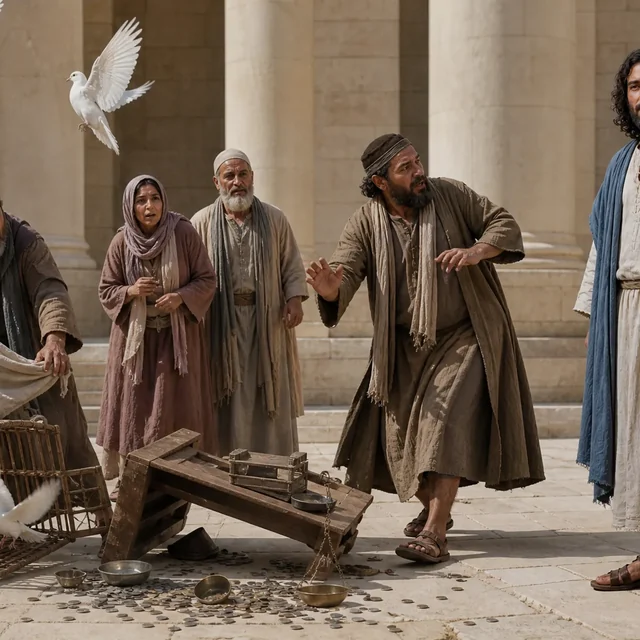





The claim is in the possessive: my Father's house. Jesus does not describe a public hall with an inconvenient market attached. He names a relationship, and that relationship governs what may happen in the place. The coins are poured out, not collected as a rival offering. The tables are overturned, not acquired by a new manager. This is an interruption of the arrangement, not a change of proprietor.
The Book of John is also more exact about the animals than many reconstructions of the scene. Sheep and oxen are driven out; the sellers of doves are told to take their goods away. No release of birds is described, and no blows or injuries to people are reported. The passage supplies a whip, a physical expulsion, and scattered money. It does not supply every action an artist might put between them. Its force does not need additions.
The disciples recognize Psalm 69:9, and that recognition changes the weight of the scene. In the psalm, zeal for God's house stands beside estrangement from brothers and reproaches borne for God's sake. It is not a slogan about winning an argument. The remembered text names a zeal that consumes the one who bears it. John connects the defense of the house with the suffering of its defender, not merely with the inconvenience of its traders.