Objects of the Bible

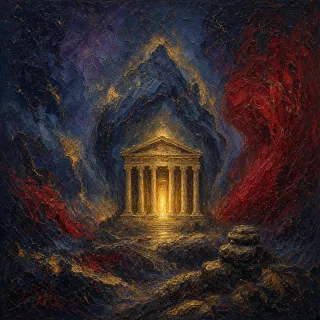
The second temple

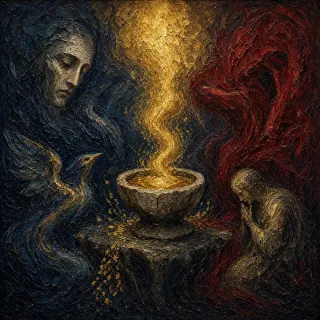
The foundation was laid to a sound that was two sounds, and nobody could tell them apart.

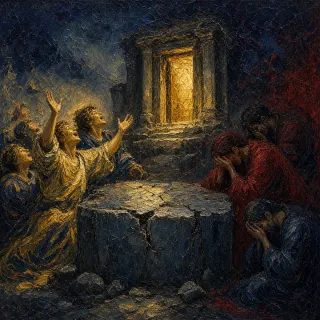
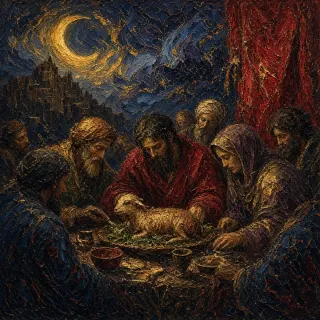
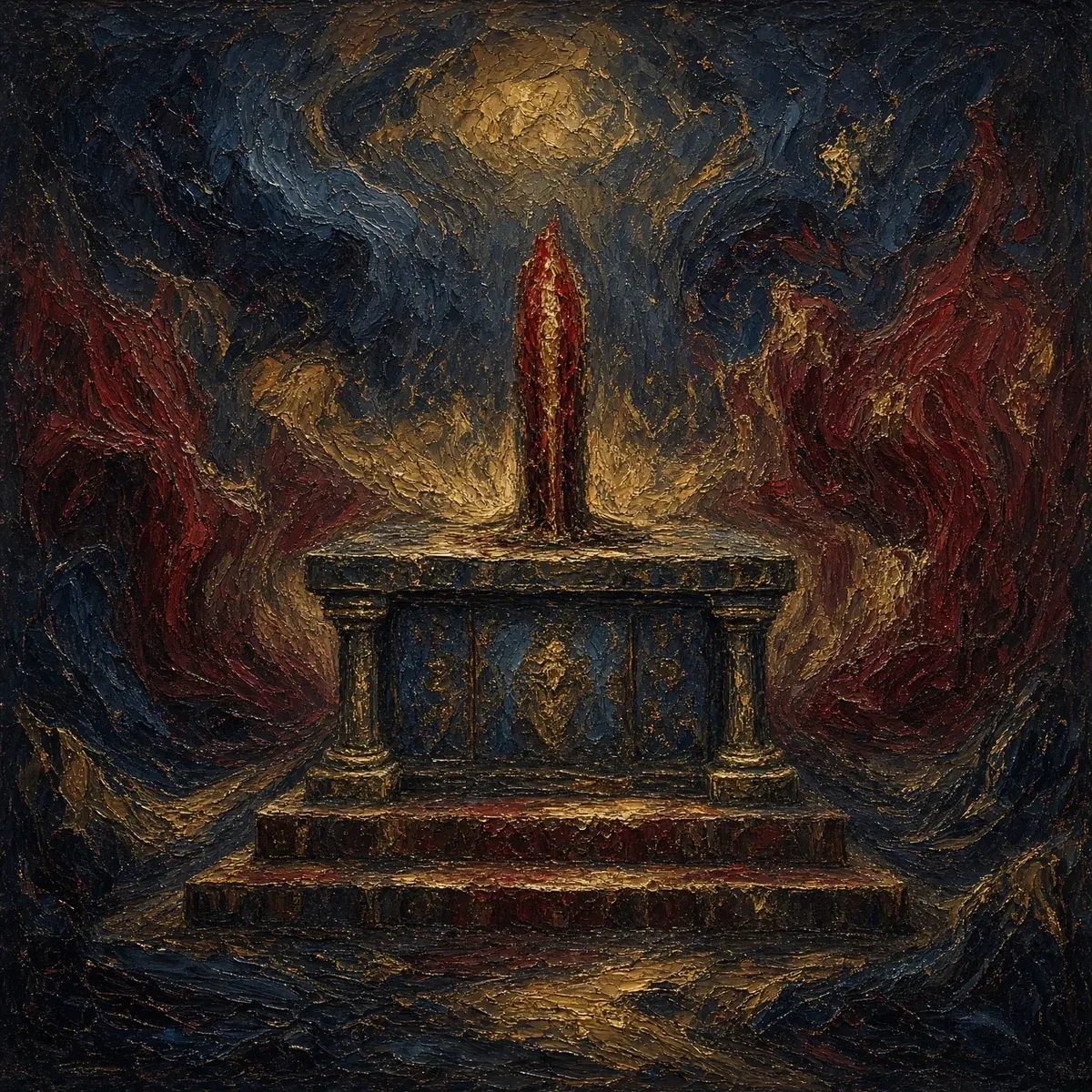
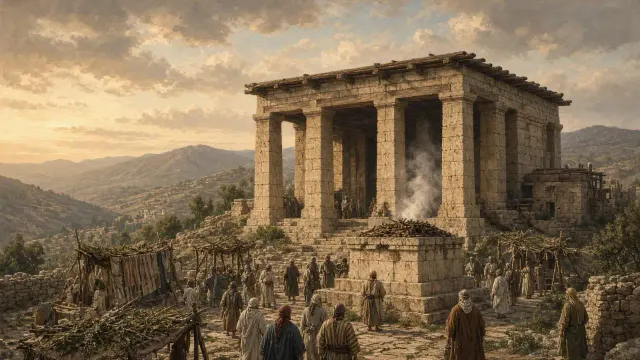
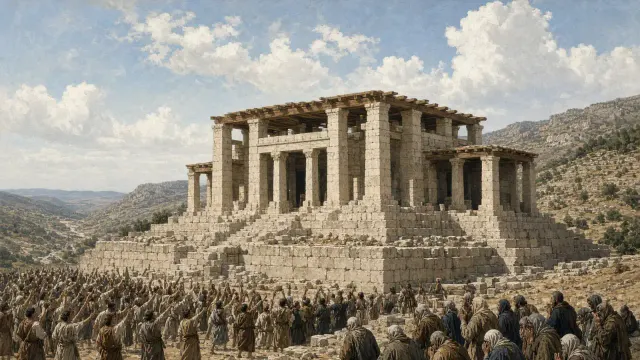
The returned exiles set the altar on its bases first, before a stone of the house is laid, because they were afraid of the people around them. When the foundation does go down there is a ceremony with trumpets and cymbals, and then the account records something it did not have to. Many of the priests and Levites and chief of the fathers, who were ancient men, that had seen the first house, wept with a loud voice; and many shouted aloud for joy. The people could not discern the noise of the shout of joy from the noise of the weeping.

Where it appearsEzra 3 · Ezra 6 · Haggai 2 · Zechariah 4

Scroll down to the account
The second temple

The movements, in the order the text gives them.

The Account of The second temple

  1. 01

    Ezra 3:3

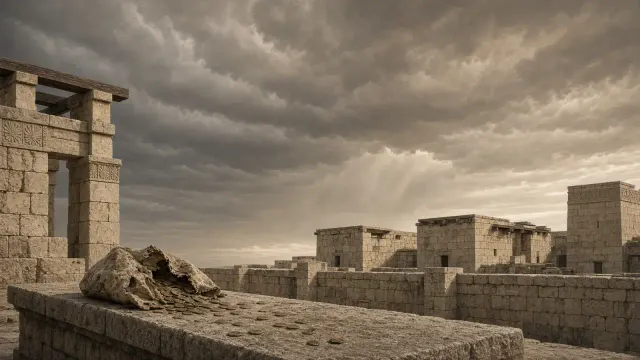
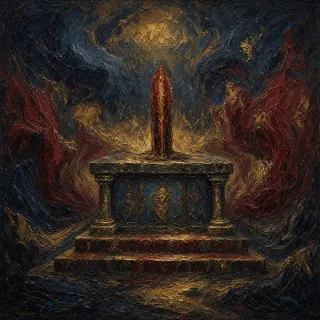
    They set the altar upon his bases, for fear was upon them

    The first construction decision is made under threat, and the account gives the reason without dressing it up.

    The altar is already in service before the temple has a foundation. Verse 6 makes that order explicit. Restored worship does not begin with a completed building and then find something to do inside it. The returned community establishes the altar at its appointed site and resumes the morning and evening offerings while the larger work remains unfinished.

    Fear stands in the middle of the sentence, not safely behind it. The surrounding peoples are a present cause of alarm, and the King James wording connects that fear with the setting up of the altar. The account does not first announce that the country has become secure. Nor does it supply a battle at this moment. It shows a community restoring its prescribed worship under the conditions it actually faces. The repetition morning and evening gives that restoration a daily rhythm, distinct from the feast of tabernacles named next. There will be festival offerings, but the ordinary offerings have already returned. The new beginning is measured not only in stones placed on a site, but in days given their old shape again.

    Verse by verse

    1. 3:3

      Upon his bases refers to the altar's bases or established site; it does not say that every stone of the former altar survived.

    2. 3:3

      Verse 6 explicitly distinguishes the resumed burnt offerings from the temple foundation, which had not yet been laid.

    3. 3:3

      Morning and evening marks the regular daily offerings, distinct from the festival sacrifices described in the following verses.
    Ezra 3:3

    King James Version · 1 verse

    3:3And they set the altar upon his bases; for fear was upon them because of the people of those countries: and they offered burnt offerings thereon unto the LORD, even burnt offerings morning and evening.

    Ezra 3:3: They set the altar upon his bases, for fear was upon them
  2. 02

    Ezra 3:12-13

    The people could not discern the shout from the weeping

    Two responses to the same event, at the same volume, in the same room, and the text refuses to rank them.

    The same foundation is a beginning and a reminder of an ending. The older priests, Levites and family heads have seen the first house. That prior sight is the detail attached to their loud weeping. The stones before their eyes are not being measured against an imagined temple; there are people present who remember the one that was lost.

    The Book of Ezra does not call those men ungrateful, and it does not identify everyone shouting for joy as young. Those familiar labels would make the scene easier to sort and less faithful to the wording. What the text gives is two powerful responses sharing one occasion. Joy is not withheld until the whole house stands. Grief is not silenced because its foundation has been laid.

    The final verse turns from the people making the sounds to the difficulty of distinguishing them. Neither is a quiet undertone beneath the other. The celebration and the weeping are loud enough to carry beyond the gathering, but they cannot be separated by ear. A house is beginning to rise in a community that still contains witnesses to its destruction. The shout does not cancel the tears.

    Verse by verse

    1. 3:12

      Ancient men means elderly men who had seen the first temple. The verse does not supply their ages.

    2. 3:12

      The people shouting for joy are described as many; the passage does not assign them all to a younger generation.

    3. 3:13

      The mingled sound, not a unanimous emotional response, is what the verse says could be heard far away.

    Ezra 3:12-13

    King James Version · 2 verses

    3:12But many of the priests and Levites and chief of the fathers, who were ancient men, that had seen the first house, when the foundation of this house was laid before their eyes, wept with a loud voice; and many shouted aloud for joy:

    3:13So that the people could not discern the noise of the shout of joy from the noise of the weeping of the people: for the people shouted with a loud shout, and the noise was heard afar off.

    Ezra 3:12-13: The people could not discern the shout from the weeping
  3. 03

    Haggai 2:3

    Is it not in your eyes in comparison of it as nothing

    The prophet asks the discouraging question himself rather than talking around it, and then answers it.

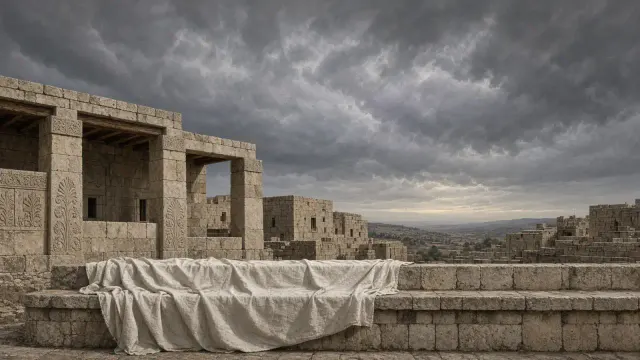
    The diminished appearance is admitted in the word from God itself. Haggai is not told to make the new work look grand by describing it more loudly. The address recognizes survivors who saw the house in its former glory, then names the contrast between that memory and the sight before them. In comparison of it as nothing is severe language. It is allowed to stand.

    Yet the address still says this house when speaking of its first glory. The destruction and rebuilding have not erased the continuity of the place being discussed. The following verses turn toward the governor, the high priest and the people with a repeated call to strength and work, grounded in God's presence and the covenant associated with the departure from Egypt. The answer to the comparison is not a denial that the earlier temple was magnificent. It is a statement about who remains with those rebuilding now. The Book of Haggai gives the loss its proper scale without granting the loss the final description of the house.

    Verse by verse

    1. 2:3

      The survivors' memory of the first glory is explicitly invoked; the verse gives no individual ages or names.

    2. 2:3

      The repeated this house links the former glory and present work within the same address.

    3. 2:3

      Haggai 2:4-5 answers the comparison with work, God's presence and the continuing covenant connection to the exodus.

    Haggai 2:3

    King James Version · 1 verse

    2:3Who is left among you that saw this house in her first glory? and how do ye see it now? is it not in your eyes in comparison of it as nothing?

    Haggai 2:3: Is it not in your eyes in comparison of it as nothing
  4. 04

    Haggai 2:9

    The glory of this latter house shall be greater

    The promise is about the house they are actually building, not a replacement for it, which is why the comparison was allowed to stand.

    The promise ends with peace, not with an extra quantity of gold. Gold and silver have just been named in verse 8 as belonging to the LORD, so material splendour is not absent from the setting. But verse 9 does not finish by measuring a larger treasury. It joins greater glory to what God will give in this place. The final gift has a different name.

    The future tense also keeps the promise distinct from the builders' present view. The word is not claiming that the house already looks more magnificent than Solomon's. The comparison in verse 3 has been acknowledged, and the announced glory exceeds what that comparison can presently establish. Haggai's surrounding language includes the shaking of heaven, earth and nations, not simply the financing of a construction project. The scope of the promise is larger than an invoice for metal.

    This house and this place keep the announcement attached to the work before the returned people. They are not interchangeable scenery for a general hopeful saying. Precisely how the promised shaking, glory and peace reach their fulfilment requires more than counting the furnishings. The verse itself names the giver twice.

    Verse by verse

    1. 2:9

      The Hebrew wording permits emphasis on the latter glory of this house; the expression this house also appears in verses 3 and 7.

    2. 2:9

      Peace is explicitly promised in this place. The statement does not reduce glory to a list of architectural improvements.

    3. 2:9

      The surrounding promise includes the shaking of the nations in verse 7 and God's ownership of silver and gold in verse 8.

    Haggai 2:9

    King James Version · 1 verse

    2:9The glory of this latter house shall be greater than of the former, saith the LORD of hosts: and in this place will I give peace, saith the LORD of hosts.

    Haggai 2:9: The glory of this latter house shall be greater
  5. 05

    Zechariah 4:6-10

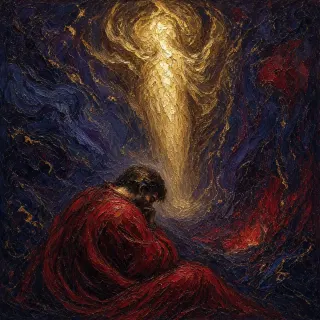
    Who hath despised the day of small things

    The vision of the lampstand and the two olive trees is explained by a sentence about power, and then by a question about scale.

    The Spirit does not make Zerubbabel's hands unnecessary. Within three verses of the declaration that the work is not by might or power, those hands are named twice: they laid the foundation, and they will finish the house. The contrast concerns the source of the work's accomplishment, not the disappearance of the work itself. The promise has a builder attached to it.

    The great mountain becoming a plain gives an obstacle the scale of a landscape. The passage does not identify one particular hill to be excavated or name the mountain as a specific official. It moves instead toward completion, with the headstone brought out amid cries of grace. The unfinished house is to have an ending, and the same named hands connect that ending to its beginning.

    Then the scale changes again. The vision reaches through the whole earth with the LORD's seven eyes, yet gives attention to the plummet in one man's hand. A builder's measuring weight belongs inside this enormous field of vision. The day of small things is not dismissed as a mistake in the project. It is the condition from which the promised completion is being announced. The Book of Zechariah places worldwide sight beside a tool small enough to hold.

    Verse by verse

    1. 4:6

      The word is specifically addressed to Zerubbabel. It identifies God's Spirit as the source of the promised accomplishment.

    2. 4:7

      The headstone belongs to the image of bringing the work to completion; it is not the already laid foundation of verse 9.

    3. 4:9

      Ezra 6:14-15 records the completed house and names Haggai and Zechariah in connection with the building work.

    4. 4:10

      Plummet renders the Hebrew expression stone of tin, understood in the KJV as a builder's plumb weight. The seven are explicitly identified as the LORD's eyes.

    Zechariah 4:6-10

    King James Version · 5 verses

    4:6Then he answered and spake unto me, saying, This is the word of the LORD unto Zerubbabel, saying, Not by might, nor by power, but by my spirit, saith the LORD of hosts.

    4:7Who art thou, O great mountain? before Zerubbabel thou shalt become a plain: and he shall bring forth the headstone thereof with shoutings, crying, Grace, grace unto it.

    4:8Moreover the word of the LORD came unto me, saying,

    4:9The hands of Zerubbabel have laid the foundation of this house; his hands shall also finish it; and thou shalt know that the LORD of hosts hath sent me unto you.

    4:10For who hath despised the day of small things? for they shall rejoice, and shall see the plummet in the hand of Zerubbabel with those seven; they are the eyes of the LORD, which run to and fro through the whole earth.

    Zechariah 4:6-10: Who hath despised the day of small things

Why it matters

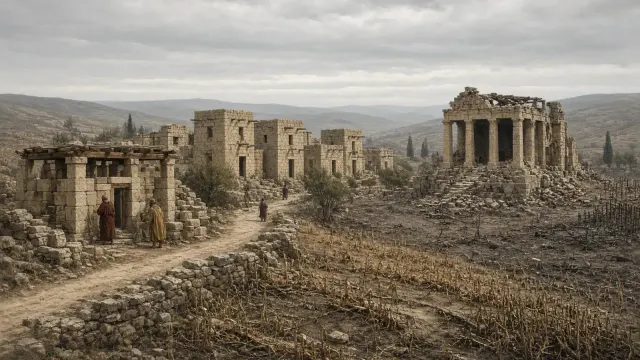
The work stops for years, restarted by two prophets who will not let it drop. Haggai asks the old men the question directly: who is left among you that saw this house in her first glory, and how do ye see it now, is it not in your eyes in comparison of it as nothing. He does not deny the comparison. He says the glory of this latter house shall be greater than of the former. Zechariah gives the other half, addressed to anyone despising the day of small things: not by might, nor by power, but by my spirit.

9 songs

The music

Every song in the catalogue whose passage falls inside these chapters.

  1. Ezra 3:8-13

    Joy and Weeping at the Foundation

  2. Ezra 3:1-7

    The Altar upon Its Bases

  3. Ezra 6:1-15

    Let the House of God Be Builded

  4. Ezra 6:16-22

    They Kept the Passover with Joy

  5. Haggai 1:1-2:23

    Haggai (Consider Your Ways)

    Play here
    Open song pageRead lyrics
  6. Haggai 1:1-2:23

    Haggai, Definitive Edition

    Play here
    Open song pageRead lyrics
  7. Haggai 2:10-23

    From This Day the LORD Will Bless You

    Play hereOpen song pageRead lyrics
  8. Haggai 2:1-9

    The Glory of This Latter House

    Play hereOpen song pageRead lyrics
  9. Zechariah 4:1-14

    Not by Might, nor by Power

    Play hereOpen song pageRead lyrics

Nearby

All the objects

Report an error on this page