The big picture
After Josiah, the former king, dies, rulers in Judah, the kingdom centred on Jerusalem, lose control to foreign powers. Egypt, a neighbouring kingdom, removes one king, and Babylon, another kingdom, takes later kings and temple treasures. Zedekiah, the final ruler named here, refuses God's warnings through Jeremiah, a prophet. Leaders and people follow the same path until Jerusalem and God's temple are destroyed. Survivors are taken away. The ending then turns to Cyrus, king of Persia, a rising kingdom, whose decree opens a way back to rebuild God's house.
In this chapter
- Egypt Removes the People’s Chosen King 2 Chronicles 36:1-4
The people make Josiah's son Jehoahaz king at twenty-three.
- Babylon Takes Kings and Sacred Vessels 2 Chronicles 36:5-10
Jehoiakim rules eleven years and does wrong before God.
- Zedekiah and the Leaders Refuse to Turn 2 Chronicles 36:11-14
Zedekiah rules eleven years but will not humble himself before Jeremiah's message from God.
- Mocked Warnings End in Destruction 2 Chronicles 36:15-17
God repeatedly sends messengers because he has compassion on his people and his house.
- The Land Lies Empty During Exile 2 Chronicles 36:18-21
Babylon takes the temple treasures and the wealth of the king and officials.
- Cyrus Opens a Way to Rebuild 2 Chronicles 36:22-23
In the first year of Cyrus's rule, God stirs the Persian king to issue a decree.
Central truth
Repeated rejection of God's warnings ends in destruction and exile, but God moves Cyrus to open the way for rebuilding.

Scripture beside the summary
2 Chronicles · King James Version · 232 Chronicles 36:1-4
Egypt Removes the People’s Chosen King
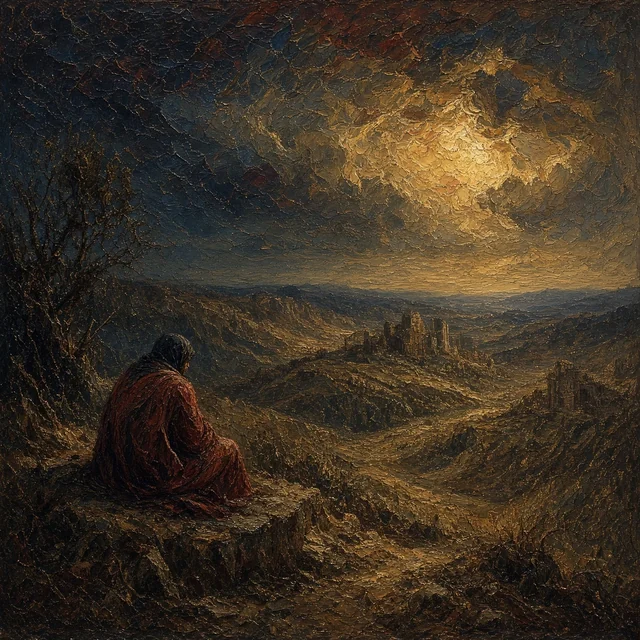
The people make Josiah's son Jehoahaz king at twenty-three. His reign lasts only three months. Egypt's king removes him and demands silver and gold from the land. He then sets Jehoahaz's brother Eliakim on the throne and changes his name to Jehoiakim. Jehoahaz is carried away to Egypt. The people can name a king, but a stronger power now decides who remains. A changed royal name and a forced payment show how far Judah's freedom has already weakened.
In everyday life
A small ferry company's workers choose a manager, but its major creditor removes him within months. The lender installs his brother and rewrites the terms painted on the booking desk. Local choice gives way to outside control. Judah's loss concerns a royal throne, tribute and a king taken into foreign captivity.
Notice
2 Chronicles 36:4 Egypt's king changes Eliakim's name as well as appointing him. The act shows control over the ruler's public identity, not only over payments.
2 Chronicles 36:1-4
King James Version1Then the people of the land took Jehoahaz the son of Josiah, and made him king in his father’s stead in Jerusalem.
2Jehoahaz was twenty and three years old when he began to reign, and he reigned three months in Jerusalem.
3And the king of Egypt put him down at Jerusalem, and condemned the land in an hundred talents of silver and a talent of gold.
4And the king of Egypt made Eliakim his brother king over Judah and Jerusalem, and turned his name to Jehoiakim. And Necho took Jehoahaz his brother, and carried him to Egypt.
2 Chronicles 36:5-10
Babylon Takes Kings and Sacred Vessels
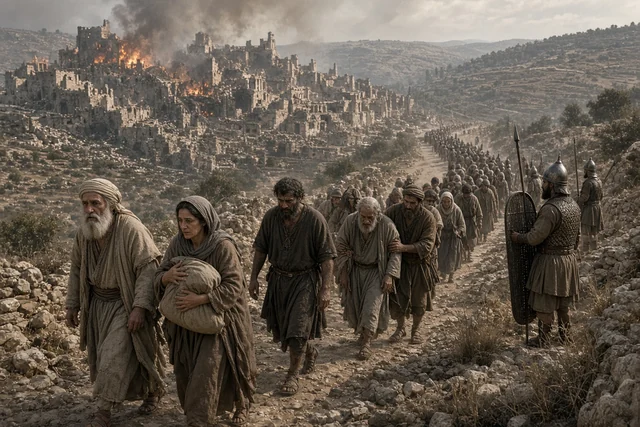
Jehoiakim rules eleven years and does wrong before God. Nebuchadnezzar of Babylon binds him for removal and takes temple vessels to his own temple. Jehoiachin follows him, but his reign lasts only three months and ten days. He too is judged evil. Babylon takes him and more sacred vessels away, then places Zedekiah on the throne. The losses reach both palace and temple. A new name on the throne does not end the pattern of wrong or restore what the foreign ruler has taken.
In everyday life
The displaced homeowner checks successive lists of goods removed from houses during an occupation. Another truck leaves, and more rooms stand bare. Each inventory marks a deeper loss of control over a place that once felt secure. Judah loses kings and sacred vessels under foreign rule, within an account of God's judgement.
Notice
2 Chronicles 36:10 Jehoiachin goes to Babylon with valuable temple vessels. Royal and sacred losses occur together as the foreign king appoints another ruler over Judah.
2 Chronicles 36:5-10
King James Version5Jehoiakim was twenty and five years old when he began to reign, and he reigned eleven years in Jerusalem: and he did that which was evil in the sight of the LORD his God.
6Against him came up Nebuchadnezzar king of Babylon, and bound him in fetters, to carry him to Babylon.
7Nebuchadnezzar also carried of the vessels of the house of the LORD to Babylon, and put them in his temple at Babylon.
8Now the rest of the acts of Jehoiakim, and his abominations which he did, and that which was found in him, behold, they are written in the book of the kings of Israel and Judah: and Jehoiachin his son reigned in his stead.
9Jehoiachin was eight years old when he began to reign, and he reigned three months and ten days in Jerusalem: and he did that which was evil in the sight of the LORD.
10And when the year was expired, king Nebuchadnezzar sent, and brought him to Babylon, with the goodly vessels of the house of the LORD, and made Zedekiah his brother king over Judah and Jerusalem.
2 Chronicles 36:11-14
Zedekiah and the Leaders Refuse to Turn
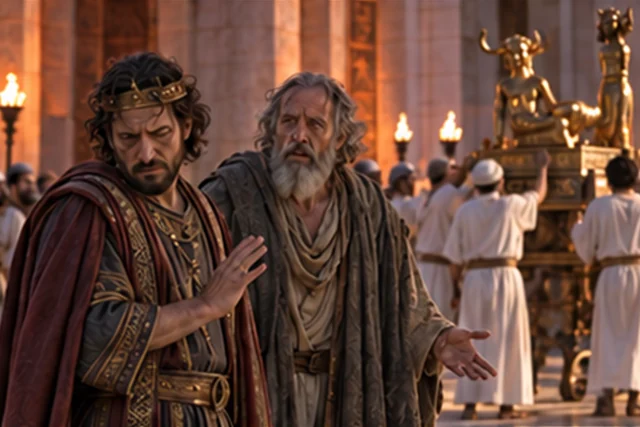
Zedekiah rules eleven years but will not humble himself before Jeremiah's message from God. He also rebels against Nebuchadnezzar despite an oath sworn by God. His stubbornness prevents a return to the God of Israel. Priestly leaders and the people join in serious wrongdoing and defile the temple. The trouble is not confined to one palace decision. Those charged with sacred service and the wider community share in it. Refusal to listen spreads through the whole nation as its danger grows.
In everyday life
A care-home governor refuses an inspection finding and breaks a signed undertaking to repair the harm. Senior staff hide faults, and routine neglect spreads through the rooms. Replacing a form will not answer a shared refusal to change. Zedekiah and Judah reject God's warning and pollute the house he set apart for himself.
Notice
2 Chronicles 36:12 Zedekiah refuses humility before a prophet speaking God's words. His failure concerns the source of the warning, not merely a quarrel with Jeremiah as a man.
2 Chronicles 36:11-14
King James Version11Zedekiah was one and twenty years old when he began to reign, and reigned eleven years in Jerusalem.
12And he did that which was evil in the sight of the LORD his God, and humbled not himself before Jeremiah the prophet speaking from the mouth of the LORD.
13And he also rebelled against king Nebuchadnezzar, who had made him swear by God: but he stiffened his neck, and hardened his heart from turning unto the LORD God of Israel.
14Moreover all the chief of the priests, and the people, transgressed very much after all the abominations of the heathen; and polluted the house of the LORD which he had hallowed in Jerusalem.
2 Chronicles 36:15-17
Mocked Warnings End in Destruction
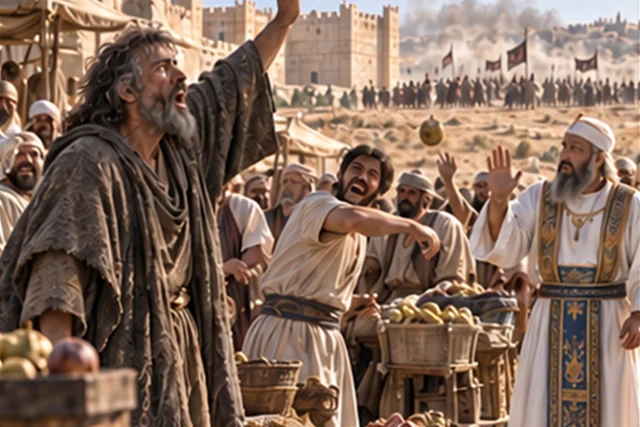
God repeatedly sends messengers because he has compassion on his people and his house. They mock the messengers, reject the words and mistreat the prophets. At last there is no remedy for the judgement they have brought near. The king of the Chaldees attacks. Young people die by the sword in the holy place, and the old receive no mercy. The account presents the destruction after repeated warnings, not as a sudden change without cause. The loss reaches those of every age.
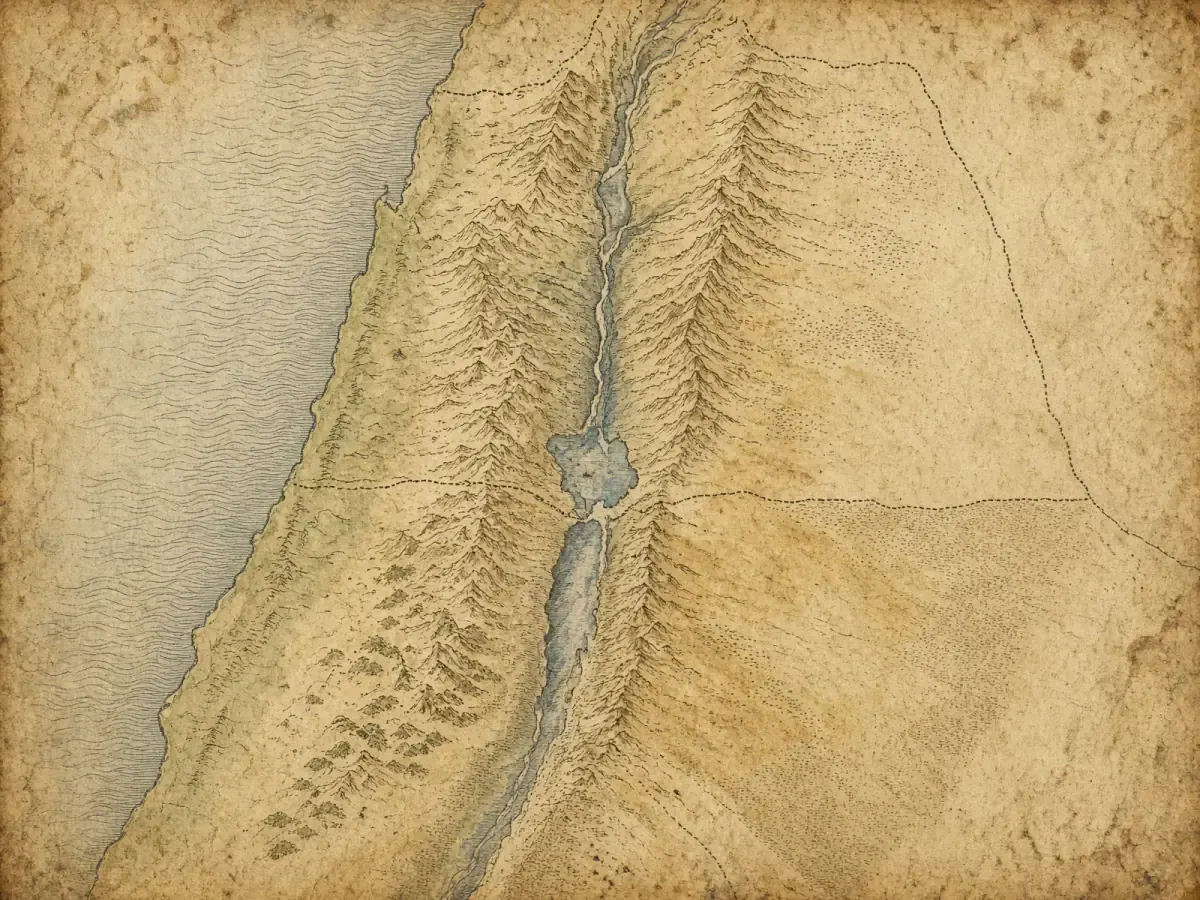
In everyday life
A disaster chaplain listens to survivors describe warnings that leaders dismissed for years. She lets them name the lost without turning their grief into a lecture. The record of ignored calls matters, but it does not make the suffering small. Jerusalem's destruction is presented as God's judgement after repeated messages sent in compassion.
Notice
2 Chronicles 36:15 Compassion is given as the reason God sends messengers again and again. The warnings are acts of care before the final judgement falls.
2 Chronicles 36:15-17
King James Version15And the LORD God of their fathers sent to them by his messengers, rising up betimes, and sending; because he had compassion on his people, and on his dwelling place:
16But they mocked the messengers of God, and despised his words, and misused his prophets, until the wrath of the LORD arose against his people, till there was no remedy.
17Therefore he brought upon them the king of the Chaldees, who slew their young men with the sword in the house of their sanctuary, and had no compassion upon young man or maiden, old man, or him that stooped for age: he gave them all into his hand.
2 Chronicles 36:18-21
The Land Lies Empty During Exile
Babylon takes the temple treasures and the wealth of the king and officials. The temple and palaces burn, and Jerusalem's wall is broken down. Survivors are carried to Babylon to serve the conquerors until Persia rises. The ruined land rests through the years of desolation. This fulfils Jeremiah's word and gives the land its missed sabbath rest, reaching seventy years. Buildings, people and land all bear the effects of the defeat. Yet the stated span also places a limit on the period of loss.

In everyday life
An agricultural surveyor walks abandoned fields after families have been driven away. Empty houses and unused terraces show that loss reaches the land as well as its owners. She marks what will need care when people return. Judah's desolation fulfils God's word and is described as the land receiving its sabbath rest.
Notice
2 Chronicles 36:21 The empty land is said to keep sabbath during its desolation. The absence of cultivation is linked to God's earlier word and a counted span of years.
2 Chronicles 36:18-21
King James Version18And all the vessels of the house of God, great and small, and the treasures of the house of the LORD, and the treasures of the king, and of his princes; all these he brought to Babylon.
19And they burnt the house of God, and brake down the wall of Jerusalem, and burnt all the palaces thereof with fire, and destroyed all the goodly vessels thereof.
20And them that had escaped from the sword carried he away to Babylon; where they were servants to him and his sons until the reign of the kingdom of Persia:
21To fulfil the word of the LORD by the mouth of Jeremiah, until the land had enjoyed her sabbaths: for as long as she lay desolate she kept sabbath, to fulfil threescore and ten years.
2 Chronicles 36:22-23
Cyrus Opens a Way to Rebuild
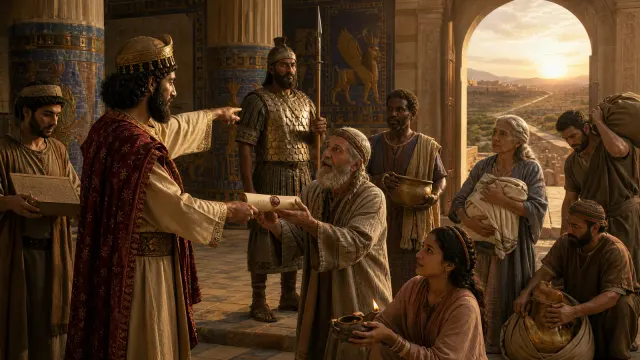
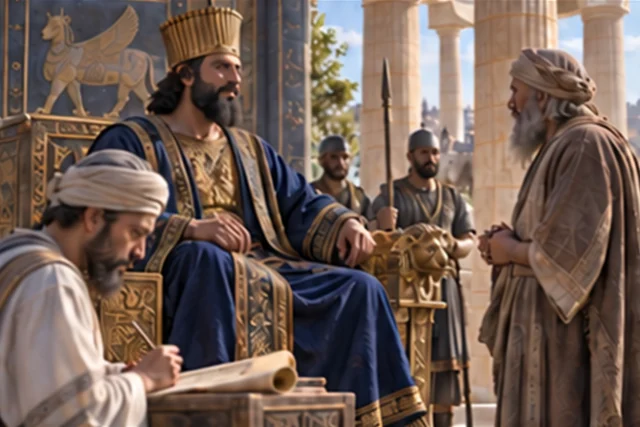
In the first year of Cyrus's rule, God stirs the Persian king to issue a decree. It is spoken throughout his kingdom and put in writing. Cyrus says the God of heaven has given him his rule and charged him to build a house at Jerusalem. He permits God's people to go up and do the work, with God beside them. The book ends with an invitation to return. The power that now governs the exiles becomes a means of fulfilling God's promised word.
In everyday life
A displaced craftworker reads an official notice permitting families to return and rebuild their workshops. A written order changes what years of longing had not changed. She begins gathering tools for the work ahead. Cyrus's decree concerns God's house, and the account says God stirs the king to fulfil his word.
Notice
2 Chronicles 36:23 The final words permit the people to go up. The ending points toward rebuilding instead of leaving the exiles permanently under the destruction already described.
2 Chronicles 36:22-23
King James Version22Now in the first year of Cyrus king of Persia, that the word of the LORD spoken by the mouth of Jeremiah might be accomplished, the LORD stirred up the spirit of Cyrus king of Persia, that he made a proclamation throughout all his kingdom, and put it also in writing, saying,
23Thus saith Cyrus king of Persia, All the kingdoms of the earth hath the LORD God of heaven given me; and he hath charged me to build him an house in Jerusalem, which is in Judah. Who is there among you of all his people? The LORD his God be with him, and let him go up.
Details worth noticing
The opening image
2 Chronicles 36:1 begins with “Then the people of the land took Jehoahaz the son of Josiah, and made him king in his father’s stead in Jerusalem.”
Where the chapter turns
2 Chronicles 36:8 forms a natural hinge: “Now the rest of the acts of Jehoiakim, and his abominations which he did, and that which was found in him, behold, they are written in the book of the…”
The final note
2 Chronicles 36:23 leaves the reader with “Thus saith Cyrus king of Persia, All the kingdoms of the earth hath the LORD God of heaven given me; and he hath charged me to build him an house in…”
A word trail through the chapter
The words LORD, king, Jerusalem, house, Babylon, years help reveal the chapter’s repeated concerns.
KJV words made clear
- behold
- look, or pay close attention
- unto
- to
- hath
- has
Music and video connected to the passage
Related media appears when its Scripture reference overlaps this study. Music and video can illuminate a theme while the biblical text remains the foundation.