The big picture
Chapter 51 of the Book of Isaiah is built from calls to listen, remember, awaken, and rise. The people are sent back to Abraham and Sarah, not as nostalgia, but as evidence that a nation can begin with almost nothing and still become larger than its visible starting point. Salvation and righteousness are then measured against things that appear far more durable: sky, earth, garments, and the voices of people who revile. The chapter’s own plea calls the arm of the LORD to wake by recalling the exodus, but the answer turns the summons back toward Jerusalem. She has drained the cup of fury and cannot steady herself, yet the decisive action is not her sudden recovery of balance. The LORD removes the cup. The city once flattened like a road beneath its oppressors is told that the instrument of judgment will pass into other hands, while the Maker who rules the sea again names Zion as his people.
In this chapter
- A Nation Once Began with Very Little Isaiah 51:1-3
The rock and quarry imagery does not remain an unsolved symbol.
- The Garment Wears Out; Salvation Does Not Isaiah 51:4-8
Three calls to hear organize this part of the chapter, but the audience keeps widening.
- The Old Sea Crossing Becomes the Language of a New Plea Isaiah 51:9-11
The cry “Awake, awake” is addressed to the arm of the LORD and filled with remembered power.
- The Maker Answers at the Scale of Bread and Captivity Isaiah 51:12-16
The answer to the plea begins with emphatic identity: “I, even I, am he that comforteth you.” Human fear is then set beside the mortality of the oppressor and the scale of the Maker who stretched heaven and founded earth.
- The Cup Is Taken from the Hand That Cannot Steady Itself Isaiah 51:17-23
Jerusalem is ordered to awaken and stand, but the Book of Isaiah first explains why she cannot simply straighten herself.
Scripture beside the summary
Isaiah · King James Version · 23Isaiah 51:1-3
A Nation Once Began with Very Little
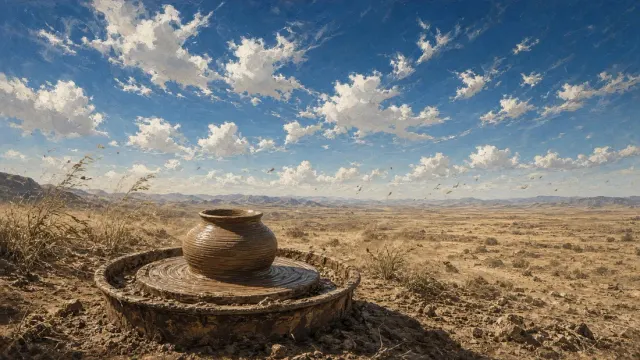
The rock and quarry imagery does not remain an unsolved symbol. The Book of Isaiah identifies Abraham and Sarah as the source from which this people came and then emphasizes the smallness of the beginning: “I called him alone.” That memory becomes an argument against allowing present diminishment to define the future. The nation did not begin with impressive numbers, so the visible size of the community has never been the measure of what the LORD can make from it. The promise then turns toward Zion’s waste places. They are named honestly before they are compared with Eden. Desert becomes garden, but the transformation is heard as well as seen: thanksgiving and melody replace the acoustic emptiness of desolation. Abraham’s increase and Zion’s comfort belong to one line of thought. The Book of Isaiah does not deny the ruin in order to speak about renewal. It uses the people’s own unlikely beginning to show why ruin need not be the last description.
Deep dive
The rock and quarry are not left as a puzzle for a symbolic guessing game. The next verse supplies Abraham and Sarah as the ancestral reference. The command to look backward concerns the source from which this people came, and the explanation emphasizes Abraham's singular beginning before blessing and increase. The argument addresses a diminished community by recalling that its existence never began with impressive numbers.
Zion's waste places are then set beside Eden and the garden of the LORD. The comparison goes beyond making a damaged place barely habitable. Wilderness becomes cultivated abundance, and its sound changes to thanksgiving and music. Abraham's increase and Zion's renewal belong to the same argument about the LORD's capacity to create an outcome larger than the visible beginning suggests. The passage does not claim that the losses were imaginary. It names the waste places before promising their comfort, and lets the ancestral history establish why desolation need not be the final description.
Words to trace: LORD, comfort, look, Abraham, bare, blessed
Verse-by-verse path
- Isaiah 51:1
“Follow after righteousness” is rodfei tsedeq, those who chase it, the verb of Deuteronomy 16:20, “That which is altogether just shalt thou follow.” “Hewn” is chatsav, the quarryman’s verb for cutting building stone out of the hillside (1 Kings 5:15). The people are pictured as blocks cut from a quarry face.
- Isaiah 51:2
Sarah is named nowhere else in the Hebrew Bible outside Genesis. “I called him alone” is literally “one”. Ezekiel 33:24 records the survivors in the ruins using the same fact as a boast: “Abraham was one, and he inherited the land: but we are many.” Isaiah uses it as a promise.
- Isaiah 51:3
The garden of Eden is named only here in Isaiah; the “Eden” of 37:12 was Bit-Adini on the Euphrates. Ezekiel 36:35 uses the same comparison: “This land that was desolate is become like the garden of Eden.” The “voice of melody” is zimrah, song with instruments, the sound of a place lived in.
Isaiah 51:1-3
King James Version1Hearken to me, ye that follow after righteousness, ye that seek the LORD: look unto the rock whence ye are hewn, and to the hole of the pit whence ye are digged.
2Look unto Abraham your father, and unto Sarah that bare you: for I called him alone, and blessed him, and increased him.
3For the LORD shall comfort Zion: he will comfort all her waste places; and he will make her wilderness like Eden, and her desert like the garden of the LORD; joy and gladness shall be found therein, thanksgiving, and the voice of melody.
Isaiah 51:4-8
The Garment Wears Out; Salvation Does Not
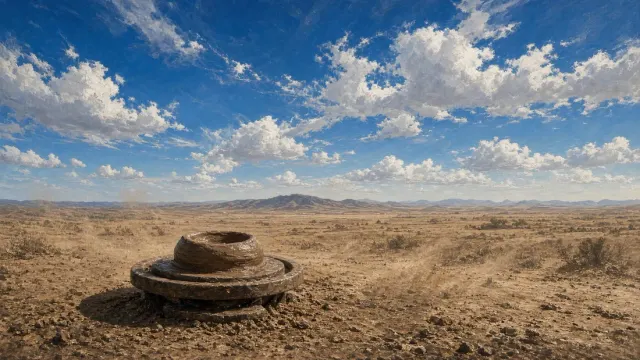
Three calls to hear organize this part of the chapter, but the audience keeps widening. Those who pursue righteousness, the LORD’s own people, and those carrying his law in their hearts all receive the summons. Yet what proceeds from him is not confined to them. Judgment becomes light for the peoples, islands wait for his arm, and the saving purpose reaches beyond the immediate community. The Book of Isaiah then measures permanence by placing divine righteousness beside things that look almost impossible to move. Heaven vanishes like smoke. Earth wears out like clothing. Human beings die, and those who revile the faithful are consumed like wool by a moth. Salvation and righteousness do not share that expiration date. The comparison works at two scales at once: the visible world and the personal force of contempt. Both can feel more solid than a promise, yet both are described as temporary beside what the LORD says will endure from generation to generation.
Deep dive
Three calls to hear structure the opening movement of the chapter, appearing in verses 1, 4, and 7. The address moves among those pursuing righteousness, God's named people, and those with his law in their hearts. The instruction proceeding from him is not confined to that audience, however. Judgment becomes a light for peoples, and the distant islands wait upon his arm. The faithful community stands within a purpose that reaches beyond itself.
The repeated contrast is one of endurance. Heaven can vanish like smoke, earth can wear out like clothing, and the reviling opponents can be consumed like wool by a moth. Salvation and righteousness remain. These are not competing objects of equal permanence. The imagery also brings the vast and the personal into the same comparison: the apparent stability of the entire world and the immediate force of an opponent's insult are both measured against God's lasting work. Human reproach is named as a real pressure, but not granted the authority to determine what finally endures.
Words to trace: people, righteousness, salvation, earth, garment, generation
Verse-by-verse path
- Isaiah 51:4
“My nation” is le’ummi, and le’om is a word usually used of foreign peoples; a few Hebrew manuscripts and the Syriac read “O peoples”. “Make my judgment to rest” uses a verb that elsewhere means to do something in a moment, the root of rega, the “small moment” of 54:7-8.
- Isaiah 51:5
“Mine arms” is plural in the first line, “mine arm” singular in the last, as though one arm is enough. The isles that were ordered to keep silence before the court in 41:1 are now pictured hoping in that arm, yeyachelun, the patient waiting of those who expect it to move.
- Isaiah 51:6
“Vanish away” is nimlachu, from a root used for worn-out rags; Jeremiah was lowered into the cistern with “old rotten rags” (Jeremiah 38:11). The heavens fray like cloth. “In like manner” is kemo ken, which many read as “like gnats”, ken being the word behind the gnats of the third plague.
- Isaiah 51:7
“In whose heart is my law” is the condition Jeremiah promises in the new covenant, “I will put my law in their inward parts, and write it in their hearts” (Jeremiah 31:33), and Psalm 37:31 says of the righteous, “The law of his God is in his heart.” “Men” is enosh, man in his frailty.
- Isaiah 51:8
“The worm” is sas, a word found only here, probably the larva of the clothes moth that eats wool, set beside ash, the moth itself. The verse turns the reproach of verse 7 around: those who insult are the ones pictured as a moth-eaten garment.
Isaiah 51:4-8
King James Version4Hearken unto me, my people; and give ear unto me, O my nation: for a law shall proceed from me, and I will make my judgment to rest for a light of the people.
5My righteousness is near; my salvation is gone forth, and mine arms shall judge the people; the isles shall wait upon me, and on mine arm shall they trust.
6Lift up your eyes to the heavens, and look upon the earth beneath: for the heavens shall vanish away like smoke, and the earth shall wax old like a garment, and they that dwell therein shall die in like manner: but my salvation shall be for ever, and my righteousness shall not be abolished.
7Hearken unto me, ye that know righteousness, the people in whose heart is my law; fear ye not the reproach of men, neither be ye afraid of their revilings.
8For the moth shall eat them up like a garment, and the worm shall eat them like wool: but my righteousness shall be for ever, and my salvation from generation to generation.
Isaiah 51:9-11
The Old Sea Crossing Becomes the Language of a New Plea
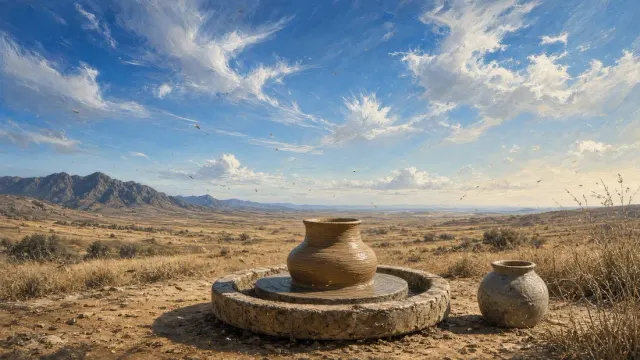
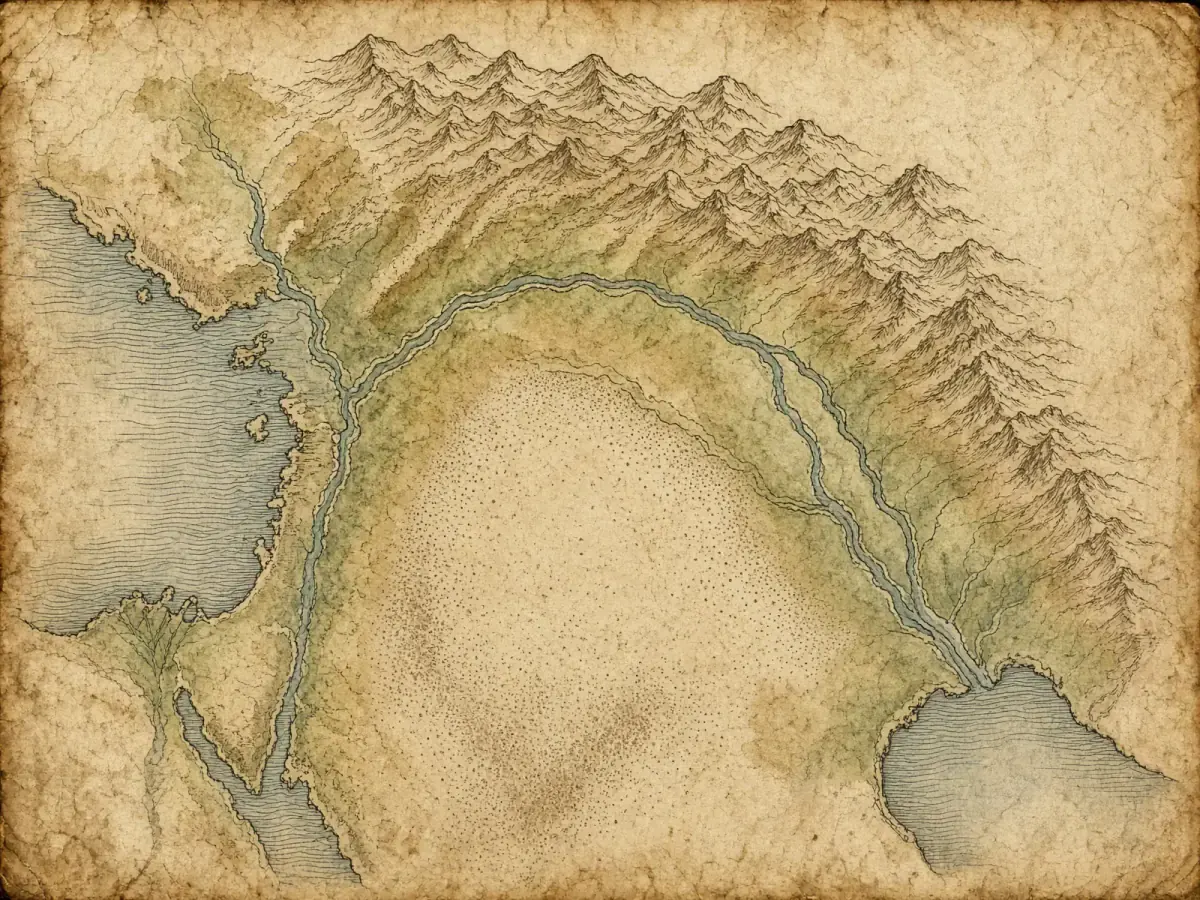
The cry “Awake, awake” is addressed to the arm of the LORD and filled with remembered power. The appeal reaches back to ancient days, naming Rahab, the defeated sea power, and then the drying of the sea itself. In this context Rahab is not the woman from Joshua, but poetic language associated with Egypt and hostile power. The exodus connection becomes unmistakable when the deep turns into a road for the ransomed. The remembered miracle in the Book of Isaiah is therefore not merely a spectacle of strength. Its point is that a path appeared where escape had been impossible. The plea for present rescue borrows that old geography. The expected answer is another return in which the redeemed reach Zion singing, with enduring joy upon them. Sorrow and mourning are the ones now pictured as fleeing. The people who once needed a road through danger arrive as the conditions that burdened them lose their place.
Deep dive
The repeated "Awake" is now addressed to the arm of the LORD. The speakers appeal to ancient saving action as the pattern for the rescue still needed. Rahab here is not the woman of Joshua 2. The name belongs to poetic imagery of Egypt and the hostile power pictured as a defeated sea creature; the drying sea and the route for the ransomed in verse 10 make the exodus connection explicit.
Isaiah joins victory over the threatening deep to the very practical making of a road. Power is displayed not merely in striking an enemy but in enabling the redeemed to cross. The promised return with singing repeats the language of Isaiah 35:10, drawing the earlier vision into this renewed appeal. Sorrow and mourning are pictured as the ones now forced to flee. The reversal is precise: the people once needing a path out of danger arrive crowned with lasting joy, while the conditions that burdened their journey lose their place.
Words to trace: awake, LORD, ancient, days, deep, depths
Verse-by-verse path
- Isaiah 51:9
“Put on strength” is the language of clothing, and 52:1 turns the same words to Zion: “Awake, awake; put on thy strength, O Zion.” The “dragon” is tannin, the sea creature of Genesis 1:21, the “great whales”. Psalm 74:13 says, “thou breakest the heads of the dragons in the waters.”
- Isaiah 51:10
“The great deep” is tehom rabbah, the phrase for the fountains of the great deep that broke open in the flood (Genesis 7:11). The flood waters that destroyed and the sea that parted are called by the same name. What was a grave for Pharaoh’s army was a road for the ransomed.
- Isaiah 51:11
The Hebrew is almost identical to 35:10, the same refrain word for word. The King James varies its English, “ransomed” there and “redeemed” here, “sorrow and sighing” there and “sorrow and mourning” here, though the Hebrew nouns are the same: yagon va’anachah.
Isaiah 51:9-11
King James Version9Awake, awake, put on strength, O arm of the LORD; awake, as in the ancient days, in the generations of old. Art thou not it that hath cut Rahab, and wounded the dragon?
10Art thou not it which hath dried the sea, the waters of the great deep; that hath made the depths of the sea a way for the ransomed to pass over?
11Therefore the redeemed of the LORD shall return, and come with singing unto Zion; and everlasting joy shall be upon their head: they shall obtain gladness and joy; and sorrow and mourning shall flee away.
Isaiah 51:12-16
The Maker Answers at the Scale of Bread and Captivity
The answer to the plea begins with emphatic identity: “I, even I, am he that comforteth you.” Human fear is then set beside the mortality of the oppressor and the scale of the Maker who stretched heaven and founded earth. The Book of Isaiah does not say the oppressor was harmless. The problem is that the oppressor’s fury has occupied the whole field of attention as though it were more permanent than the Creator. The chapter quickly brings the cosmic claim down to the captive’s level. Release from the pit and the fear that bread might fail sit beside the roaring sea and the foundations of the earth. The Maker’s power is not allowed to float above human need. Words are put in a mouth, protection is given under the divine hand, and Zion is named again as “my people.” Creation and covenant meet at the scale of captivity, food, speech, and belonging.
Deep dive
The reply begins by identifying the comforter with emphatic directness. Fear of a mortal oppressor is placed beside forgetting the Maker who stretched out heaven and founded earth. The point is not that oppression has no force; the chapter repeatedly describes its damage. Its force has been allowed to occupy the field of attention as though it were more permanent than the one who made that field.
The captive's release and threatened bread supply prevent the cosmic language from floating away from human need. The God named as ruler of the roaring sea addresses the pit and the lack of food. Verse 16 then speaks of words placed in a mouth and protection beneath the divine hand. The immediate addressee is not explicitly named, and the line can be read with reference to a commissioned servant or to the people represented through that commission. Its stated goal includes the renewed naming of Zion as God's people. Creation language and covenant relationship are brought together without reducing either to a purely private reassurance.
Words to trace: LORD, earth, foundations, fury, heavens, oppressor
Verse-by-verse path
- Isaiah 51:12
Three times in two verses the person addressed changes: “you” plural, then “who art thou” in the feminine, speaking to Zion, then “forgettest” in the masculine. “A man that shall die” is enosh again, the frail one; “the son of man” is ben adam, a mortal born of mortals.
- Isaiah 51:13
“As if he were ready to destroy” is ka’asher konen, “when he takes aim”, the verb for fitting an arrow to the string (Psalm 11:2). “Where is the fury of the oppressor?” asks the same kind of question as 33:18, “Where is the scribe?” The threat is spoken of as already gone.
- Isaiah 51:14
“The captive exile” is tso’eh, one bent low, stooping under chains. “The pit” is bor, the dungeon, the word Joseph used of the prison he had been thrown into (Genesis 40:15). The fear of dying there and the fear of running out of bread are the two fears of every prisoner.
- Isaiah 51:15
The line is repeated almost exactly in Jeremiah 31:35: “which divideth the sea when the waves thereof roar; The LORD of hosts is his name.” The verb raga can mean to stir up or to still, so the same word covers raising the storm and splitting the sea.
- Isaiah 51:16
“Plant the heavens” is lintoa, where “stretch out”, lintot, would be the expected verb, one letter different; the Syriac reads “stretch out”. “The shadow of mine hand” is the phrase used of the servant in 49:2. What was said of the servant is said here of the one addressed.
Isaiah 51:12-16
King James Version12I, even I, am he that comforteth you: who art thou, that thou shouldest be afraid of a man that shall die, and of the son of man which shall be made as grass;
13And forgettest the LORD thy maker, that hath stretched forth the heavens, and laid the foundations of the earth; and hast feared continually every day because of the fury of the oppressor, as if he were ready to destroy? and where is the fury of the oppressor?
14The captive exile hasteneth that he may be loosed, and that he should not die in the pit, nor that his bread should fail.
15But I am the LORD thy God, that divided the sea, whose waves roared: The LORD of hosts is his name.
16And I have put my words in thy mouth, and I have covered thee in the shadow of mine hand, that I may plant the heavens, and lay the foundations of the earth, and say unto Zion, Thou art my people.
Isaiah 51:17-23
The Cup Is Taken from the Hand That Cannot Steady Itself
Jerusalem is ordered to awaken and stand, but the Book of Isaiah first explains why she cannot simply straighten herself. She has drunk the cup of divine fury to its dregs and is staggering, while the sons who might guide her have collapsed as well. The city’s incapacity is not treated as theatrical weakness. Desolation, destruction, famine, and sword have brought her to the ground. The decisive turn comes when the God who pleads his people’s cause says, “I have taken out of thine hand the cup of trembling.” The rescue begins with removal, not with pretending the cup had no effect. Then the image reverses. The oppressors who told Jerusalem to lie down so they could walk across her body receive the cup instead. The chapter ends with both facts intact: the LORD acknowledges his own judgment, and the trampling done by others is not therefore made innocent. The city’s future is no longer controlled by either the cup she drained or the feet that crossed her back.
Deep dive
The plea for the LORD's arm to awake is answered by a command for Jerusalem herself to awake and stand. Her staggering is explained by the cup of divine fury, not ordinary wine. The image makes judgment something that has penetrated and disabled the city. Her many sons supply no guide because they too have collapsed, caught like an animal in a net. The description does not pretend that a command to rise is the same as already possessing the strength to do so.
The decisive action comes from the God who pleads his people's cause: he removes the cup. The oppressors who ordered the city to become a roadway beneath their feet receive it instead. That bodily image of Jerusalem flattened into the ground gives the reversal a disturbing specificity. The LORD's acknowledgment of his own judgment has not made the tramplers innocent. The chapter ends with the city's helplessness still fully accounted for, but its future no longer determined by the cup it has drained or the feet that have crossed its back.
Words to trace: hand, LORD, fury, sons, awake, dregs
Verse-by-verse path
- Isaiah 51:17
The appeal of verse 9 was uri, awake, addressed to the LORD’s arm; this command is hit’oreri, rouse yourself, addressed to Jerusalem. “Dregs” is qubba’at, a goblet, a word found only in this chapter. Jeremiah 25:15-17 has the prophet hand round the cup of fury to the nations.
- Isaiah 51:18
A good son’s duties in the Canaanite epic of Aqhat, from Ugarit, include taking his father by the hand when he is drunk and carrying him home when he is full of wine. Jerusalem has raised many sons, and not one is in a state to lead her.
- Isaiah 51:19
“Two things” are then given as four, in two pairs: desolation and destruction for the land, famine and sword for the people. “By whom shall I comfort thee?” echoes Lamentations 2:13, “what shall I equal to thee, that I may comfort thee?” The Qumran scroll reads “who will comfort thee?”
- Isaiah 51:20
“Wild bull” is to’, an antelope or oryx, listed among clean game in Deuteronomy 14:5, thrashing in a hunter’s net. “At the head of all the streets” is the phrase of Lamentations 2:19, where young children “faint for hunger in the top of every street”.
- Isaiah 51:21
“Drunken, but not with wine” repeats 29:9 almost word for word: “they are drunken, but not with wine; they stagger, but not with strong drink.” In chapter 29 the drunkenness was a stupor sent as judgment on those who would not see. Here it describes a city that has already drunk the judgment.
- Isaiah 51:22
Lamentations 4:21 had warned Edom that the cup would pass on: “the cup also shall pass through unto thee: thou shalt be drunken.” Jeremiah 25:28 said the nations must drink whether they would or not. “Thou shalt no more drink it again” is the first time the cup is taken from Jerusalem instead of handed on to her.
- Isaiah 51:23
Conquerors put their feet on the necks of the defeated, as Joshua’s captains did to the five kings (Joshua 10:24), and Assyrian reliefs show kings standing on prostrate enemies. “To thy soul” means to thee, to thy very person. The city had to lie flat and let armies march across her back.
Isaiah 51:17-23
King James Version17Awake, awake, stand up, O Jerusalem, which hast drunk at the hand of the LORD the cup of his fury; thou hast drunken the dregs of the cup of trembling, and wrung them out.
18There is none to guide her among all the sons whom she hath brought forth; neither is there any that taketh her by the hand of all the sons that she hath brought up.
19These two things are come unto thee; who shall be sorry for thee? desolation, and destruction, and the famine, and the sword: by whom shall I comfort thee?
20Thy sons have fainted, they lie at the head of all the streets, as a wild bull in a net: they are full of the fury of the LORD, the rebuke of thy God.
21Therefore hear now this, thou afflicted, and drunken, but not with wine:
22Thus saith thy Lord the LORD, and thy God that pleadeth the cause of his people, Behold, I have taken out of thine hand the cup of trembling, even the dregs of the cup of my fury; thou shalt no more drink it again:
23But I will put it into the hand of them that afflict thee; which have said to thy soul, Bow down, that we may go over: and thou hast laid thy body as the ground, and as the street, to them that went over.
Questions to keep in mind while reading
- Identify the historical crisis, covenant failure, warning, and promised hope.
- Distinguish the prophet’s immediate audience from later biblical connections.
- Do not turn present-day headlines into confident fulfillment claims without textual evidence.
Text first
Where readers differ
The chapter summary begins with what the passage says and how its parts fit together. It does not assume one denomination has already settled every question. Where a conclusion depends on a tradition, literary theory, or historical reconstruction, that dependence is named openly.
The KJV text is presented first. Interpretive conclusions are labeled, and differences are introduced only when they help a reader understand why serious communities do not always reach the same answer.
Comparative interpretive notes for this chapter are in preparation. Until reviewed notes are ready, this page separates the KJV text from summary and application without claiming that serious readers agree on every question.
Questions beneath the surface
- What account of God, human freedom, responsibility, and the good life emerges from Isaiah 51?
- Which tension does the chapter refuse to resolve quickly?
- What changes when the chapter is read as part of the whole canon rather than as an isolated moral lesson?
- Where might a sincere reader confuse a familiar tradition with something the text states directly?
Questions for serious personal contemplation
These open-ended questions make room for tension, honest response, prayer, and conclusions that remain accountable to the chapter.
Observe without rushing
What part of Isaiah 51 makes you stop, feel unsettled, or feel surprised, and why?
Which detail in the passage would be easiest to overlook? How does that detail change your understanding?
Where do you see tension between what happens and this focus: Isaiah 51 develops its own movement around LORD, people, awake, fury, hand?
What important question does the passage leave open instead of resolving quickly?
Examine your inner life honestly
Which person, response, fear, or desire in the passage feels most like your own life right now?
What assumption about God, other people, or yourself does this text challenge?
Which part would you rather soften, avoid, or explain away too quickly? What might that reaction reveal?
If this Scripture could ask you one direct question, what do you think it would ask?
Respond with wisdom and courage
What do you need to remember, confess, grieve, thank God for, or trust after reading this passage?
How might another faithful person read this situation differently without ignoring the text?
What obedient response would be costly, uncomfortable, or slow, yet still faithful to Scripture?
What question will you carry into prayer this week, and which verses will you keep in front of you?
Music and video connected to the passage
Related media appears when its Scripture reference overlaps this study. Music and video can illuminate a theme while the biblical text remains the foundation.