
The big picture
James begins with pressure, but he does not leave the discussion at endurance. Testing exposes what a person lacks, and wisdom is met by a God who gives generously rather than reproaching the petitioner. The danger is divided allegiance, pictured as a wave that cannot hold its course. From there the chapter sets two births beside each other: desire conceives sin and death, while God brings forth life through the word of truth. That word then becomes the chapter's practical test. Hearing without doing is a mirror glanced into and forgotten. Religion that looks impressive but cannot bridle the tongue, attend to the fatherless and widows in affliction, or remain unspotted from the world is called vain. James makes reception visible by what follows it.
In this chapter
- A Generous Giver and a Divided Petitioner James 1:1-8
The letter begins with scattered people and immediately gives testing a destination.
- Wealth Has the Life Span of a Flower James 1:9-12
James puts social rank under a very short clock.
- Two Kinds of Birth, Two Different Outcomes James 1:13-18
The same English word "tempted" has carried two very different movements, and James now separates them.
- Anger Cannot Certify Its Own Righteousness James 1:19-21
James assigns different speeds to the mouth, the ear, and anger.
- A Mirror Is Not Useful Because Someone Admired It James 1:22-27
The mirror works perfectly.


Scripture beside the summary
James · King James Version · 27James 1:1-8
A Generous Giver and a Divided Petitioner
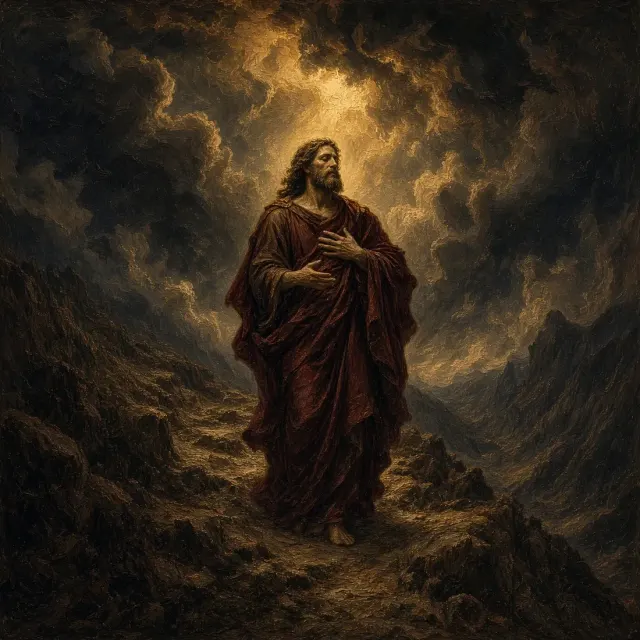
The letter begins with scattered people and immediately gives testing a destination. The "trying of your faith" can work patience, but patience is not valuable merely because it lasts. James wants it to finish its work until maturity is complete. That makes the next move to wisdom almost inevitable: endurance does not mean possessing every answer. God is presented as the opposite of a reluctant examiner, one who "giveth to all men liberally, and upbraideth not." The sharp contrast is not between smart and foolish people but between the giver's undivided generosity and the petitioner's divided allegiance. The wave image turns that inner split into something visible, driven and tossed rather than steadily directed. James's double-minded person is unstable "in all his ways," so the problem reaches beyond one uncertain question into a life unable to remain single in loyalty.
Deep dive
James introduces himself by service to God and the Lord Jesus Christ, not by recounting personal achievements. The address to the twelve tribes gives the dispersed recipients a corporate identity before any instruction begins. The opening call to joy is grounded in what the testing of faith produces, not in a claim that painful circumstances are pleasant. Patience is endurance that is meant to finish its work. The repeated language of completeness makes maturity, rather than the mere passage of time, the stated aim.
The need for wisdom follows naturally: endurance does not mean already possessing every answer. God's giving is described as generous and without reproach. The petitioner is not told that asking exposes an embarrassing deficiency. The difficulty arises instead in divided commitment. The sea wave gives that condition visible form, moved first one way and then another by forces it does not govern. James's description of the double-minded person concerns an instability extending through life, not a passing question honestly brought to God. The passage contrasts the giver's undivided generosity with the petitioner's inability to remain single in allegiance.
Words to trace: faith, Lord, nothing, patience, perfect, abroad
Verse-by-verse path
- James 1:1
“James” is Iakobos, the Greek form of Jacob, so a Jacob writes to the twelve tribes. “Scattered abroad” is en te diaspora, “in the Diaspora”, the name for Jews living outside the land. “Greeting” is the plain Greek chairein, which opens only one other letter from the apostles, the one sent from the Jerusalem council where James spoke (Acts 15:23).
- James 1:2
“Joy”, chara, plays on the chairein of verse 1, the first of the catchwords by which James links sentence to sentence. “Fall into” is the verb of the man who “fell among thieves” (Luke 10:30): trials are not chosen. “Divers” is poikilos, many-coloured, the word used in the Greek Old Testament for Joseph’s coat.
- James 1:3
“Trying” is dokimion, the assaying of metal to find what is genuine, the same word Peter uses with gold tried in the fire (1 Peter 1:7). “Patience” is hypomone, the endurance of someone who stays under a load. “Worketh” is katergazomai, to produce or bring about.
- James 1:4
“Perfect” comes twice, teleios, whole and mature. “Entire” is holokleros, sound in every part, the word used for the uncut “whole stones” of an altar in the Greek of Deuteronomy 27:6. “Wanting nothing” is leipo, to lack, and the next verse starts with the same verb: “if any of you lack wisdom”.
- James 1:5
“Liberally” is haplos, simply or single-heartedly, the adverb of an undivided giver, which sets up the “double minded” of verse 8. “Upbraideth not” names a habit Sirach 20:15 mocks in the grudging man, who “giveth little, and upbraideth much”. Solomon’s request for an understanding heart (1 Kings 3:9) is the classic prayer of this kind.
- James 1:6
“Wavering” is diakrinomai, to be divided in judgment, arguing with oneself, the verb Jesus uses in Matthew 21:21, “if ye have faith, and doubt not”. “Driven with the wind” is anemizo, found in no earlier Greek writing, and “tossed” is rhipizo, fanned back and forth. The sea is a picture of motion with no course.
- James 1:7
“Think” is oiomai, to suppose, a verb that often marks a mistaken opinion. After the warm “any of you” of verse 5, the doubter is held at arm’s length as “that man”. “The Lord” here is God, the giver of verse 5.
- James 1:8
“Double minded” is dipsychos, literally “two-souled”, a word first met in James (again at 4:8) and later a favourite of the Shepherd of Hermas. Psalm 12:2 has the Hebrew version, speaking “with a double heart”, literally “a heart and a heart”. “Unstable” is akatastatos, the word for the tongue’s “unruly evil” in 3:8.
James 1:1-8
King James Version1James, a servant of God and of the Lord Jesus Christ, to the twelve tribes which are scattered abroad, greeting.
2My brethren, count it all joy when ye fall into divers temptations;
3Knowing this, that the trying of your faith worketh patience.
4But let patience have her perfect work, that ye may be perfect and entire, wanting nothing.
5If any of you lack wisdom, let him ask of God, that giveth to all men liberally, and upbraideth not; and it shall be given him.
6But let him ask in faith, nothing wavering. For he that wavereth is like a wave of the sea driven with the wind and tossed.
7For let not that man think that he shall receive any thing of the Lord.
8A double minded man is unstable in all his ways.
James 1:9-12
Wealth Has the Life Span of a Flower
James puts social rank under a very short clock. The person of low degree is called a brother and is told to rejoice in exaltation, while the rich person is confronted with lowering. Then wealth receives the lifespan of a wildflower. Heat rises, the grass withers, the flower falls, and its attractive appearance disappears while ordinary life is still moving. The rich man likewise fades "in his ways," not after every project has been neatly completed. Verse 12 returns to the chapter's opening subject of endurance and sets a different future beside that fading. The crown of life is connected with enduring trial and loving the Lord, not with purchasing power or present visibility. James does not promise that poverty will simply turn into wealth. He places both poverty and riches inside a reversal where visible advantage proves far less durable than it looks.
Deep dive
The person of low degree is explicitly called a brother. The wealthy figure is placed alongside him, but the grounds of boasting reverse ordinary expectations: the lowly person's elevation and the rich person's lowering take priority over their current social appearance. James does not pause to resolve every question about the rich person's relation to the community. He makes the transience of wealth unmistakable through the grass and its flower. The burning heat does not need to negotiate with the flower's beauty.
The wealthy person fades "in his ways," while the business of life is still under way. The picture is not of someone who neatly finishes every project before mortality intervenes. Verse 12 then returns to the endurance introduced at the beginning, creating a contrast between what passes and the promised crown of life. That crown is not attributed to purchasing power or superior social rank. It belongs within the relation of love to the Lord and endurance under testing. The section places present reversals and future life in the same frame without promising that every poor person will acquire wealth.
Words to trace: flower, grass, rich, Blessed, brother, burning
Verse-by-verse path
- James 1:9
“Rejoice” is kauchaomai, to boast, which the King James softens. Jeremiah 9:23–24 forbids the rich man to glory in his riches and allows glorying only in knowing the LORD. “Low degree” is tapeinos, lowly or poor, and the poor brother is told to boast of his height.
- James 1:10
“As the flower of the grass” draws on Isaiah 40:6–7, “All flesh is grass, and all the goodliness thereof is as the flower of the field.” The Greek has no verb in the first clause; “let him rejoice” carries over from verse 9, so the rich man is told to boast in his humiliation.
- James 1:11
“Burning heat” is kauson, which the Greek Old Testament uses for the scorching east wind of Jonah 4:8, the sirocco off the desert. The verbs are past tense in Greek, “the sun rose and withered the grass”, the way a proverb states what always happens. “Ways” can mean journeys, a hint at the travelling traders of 4:13.
- James 1:12
“Blessed is the man” opens like Psalm 1:1. “When he is tried” means once he has passed the test, dokimos, approved like metal after assay. The crown is the stephanos, a victor’s wreath; the phrase “crown of life” returns in Revelation 2:10. “The Lord” is supplied by the translators; the Greek says only “he promised”.
James 1:9-12
King James Version9Let the brother of low degree rejoice in that he is exalted:
10But the rich, in that he is made low: because as the flower of the grass he shall pass away.
11For the sun is no sooner risen with a burning heat, but it withereth the grass, and the flower thereof falleth, and the grace of the fashion of it perisheth: so also shall the rich man fade away in his ways.
12Blessed is the man that endureth temptation: for when he is tried, he shall receive the crown of life, which the Lord hath promised to them that love him.
James 1:13-18
Two Kinds of Birth, Two Different Outcomes
The same English word "tempted" has carried two very different movements, and James now separates them. Testing can produce endurance, but enticement to evil is not assigned to God. Desire draws a person away, then the image changes from bait to birth: lust conceives, sin is born, and sin completed brings forth death. The sequence makes wrongdoing a development with a history rather than an event that arrived from nowhere. Then James places another birth beside it. Every good and perfect gift comes from the Father of lights, whose giving is marked by constancy rather than shifting shadow, and "of his own will" he brings forth a people through the word of truth. Desire produces death; God gives life. Before James begins pressing hard on obedience, he makes the source of that new life explicit. Action will matter, but it does not begin with human self-creation.
Deep dive
The KJV uses the language of temptation both for trials and for enticement, but James makes the distinction explicit. The earlier testing can produce endurance; the temptation now considered draws a person toward evil. Responsibility is not transferred to God. The image begins with desire luring and drawing its subject away, then becomes a pregnancy: desire conceives, sin is born, and sin's completed course produces death. The sequence gives desire a developing history rather than treating the finished act as though it had arrived without preparation.
The following description of God supplies a deliberate counter-birth. His own will brings forth a people through the word of truth, whereas desire brings forth sin and death. The "Father of lights" is associated with good and complete gifts, and the absence of shifting shadow marks the constancy of their source. The firstfruits image describes the people as an initial portion belonging to a larger divine purpose for creation. James will soon insist on action, but he has first identified the life and word received from God. His account of obedience begins with that gift, not with human self-creation.
Words to trace: tempted, bringeth, gift, lust, begat, beloved
Verse-by-verse path
- James 1:13
Sirach 15:11–12 had warned, “Say not thou, It is through the Lord that I fell away.” “Cannot be tempted with evil” is one adjective, apeirastos, found nowhere else in the Bible, meaning untemptable or without experience of evil. The same word peirazo is used for God testing Abraham, which is why James must draw the line.
- James 1:14
“Drawn away” and “enticed” are words from fishing and hunting: dragged out, then lured with bait, delear. “His own” is emphatic; the pull comes from inside. Jewish teaching named this the yetzer hara, the evil inclination, from the “imagination” of the heart in Genesis 6:5.
- James 1:15
Three generations appear in one sentence: desire gives birth to sin, and sin grows up and bears death. “Finished” is apoteleo, brought to maturity, so the child comes of age before it has its own offspring. “Lust” here is epithymia, any desire, not only sexual appetite.
- James 1:16
“Do not err” is planasthe, “be not led astray”, a formula that introduces a correction, used by Paul in 1 Corinthians 15:33 and Galatians 6:7, “Be not deceived”. The verse sits on a hinge, rounding off the warning about desire and opening the account of what truly comes from God.
- James 1:17
In Greek the first half of the verse falls into a line of hexameter, the metre of epic poetry, perhaps a known saying. Two words for gift stand side by side, dosis, the giving, and dorema, the thing given. “Variableness” and “turning” were used of the heavens’ motions: the sun and moon God made wax, wane and cast shadows, and their Maker does not.
- James 1:18
“Begat” is apokyeo, the same verb as verse 15’s “bringeth forth” of death, found only in these two places in the New Testament: James sets one birth against the other with the same word. “Of his own will” stands first in the Greek sentence. “Firstfruits” is aparche, the first sheaf offered to God before harvest (Leviticus 23:10).
James 1:13-18
King James Version13Let no man say when he is tempted, I am tempted of God: for God cannot be tempted with evil, neither tempteth he any man:
14But every man is tempted, when he is drawn away of his own lust, and enticed.
15Then when lust hath conceived, it bringeth forth sin: and sin, when it is finished, bringeth forth death.
16Do not err, my beloved brethren.
17Every good gift and every perfect gift is from above, and cometh down from the Father of lights, with whom is no variableness, neither shadow of turning.
18Of his own will begat he us with the word of truth, that we should be a kind of firstfruits of his creatures.
James 1:19-21
Anger Cannot Certify Its Own Righteousness
James assigns different speeds to the mouth, the ear, and anger. Hearing should be quick, while speech and wrath are made to wait. The reason is more serious than good manners: "the wrath of man worketh not the righteousness of God." Intensity cannot certify its own divine authority, and a heated reaction does not become righteous merely because the person delivering it feels certain. The next command is equally concrete. Filthiness and wickedness are put aside so that the "engrafted word" can be received with meekness. That word connects back to the life-giving word of truth in the previous section, but the agricultural image now suggests something meant to take root rather than sit decoratively on the surface. James is already moving toward his next test. A received word that never governs speech or conduct will prove as unproductive as a seed treated as an ornament.
Deep dive
The sequence of quick hearing, slow speech, and slow anger is carefully weighted. James does not assign the same speed to every response. Hearing receives priority, while speech and wrath are made to wait. The reason is not merely that anger can be socially awkward. Human wrath does not produce the righteousness of God. A heated reaction cannot establish its divine authority simply by being intense, and the force of its delivery cannot substitute for the kind of life the letter is describing.
The KJV's "naughtiness" carries a stronger sense than minor childish misbehavior: wickedness is being set aside. The "engrafted word" then brings the argument back to what was given in verse 18. It is received with meekness, a posture incompatible with making angry self-assertion the measure of truth. The agricultural image also anticipates growth rather than mere possession. The word is not presented as an ornament added to an otherwise unchanged life. Its saving capacity belongs to the movement of reception and response that the next section will test through a mirror, an uncontrolled tongue, and neglected people.
Words to trace: slow, wrath, able, apart, beloved, brethren
Verse-by-verse path
- James 1:19
Some manuscripts read “Ye know this” instead of “Wherefore”. The triple rule has a long pedigree in Jewish wisdom: Sirach 5:11 says “Be swift to hear”, and Proverbs 29:20 finds more hope for a fool than for a man hasty in his words. James extends slowness from speech to anger.
- James 1:20
“The righteousness of God” here means the right conduct God requires, not the saving righteousness Paul means by the same phrase in Romans 1:17. “Worketh” answers verse 3: trial works patience, but anger works nothing of the kind.
- James 1:21
“Lay apart” is apotithemi, to strip off like clothing, the verb of “put off” in Ephesians 4:22 and 1 Peter 2:1. “Filthiness” is rhyparia, dirt, and the adjective returns in 2:2 for the poor man’s “vile raiment”. “Engrafted” is emphytos, implanted, rooted in, not the grafting of branches of Romans 11.
James 1:19-21
King James Version19Wherefore, my beloved brethren, let every man be swift to hear, slow to speak, slow to wrath:
20For the wrath of man worketh not the righteousness of God.
21Wherefore lay apart all filthiness and superfluity of naughtiness, and receive with meekness the engrafted word, which is able to save your souls.
James 1:22-27
A Mirror Is Not Useful Because Someone Admired It
The mirror works perfectly. The problem is the person who looks, leaves, and immediately forgets what was seen. James uses that ordinary failure to expose hearing without doing as self-deception. The contrast is someone who looks into the "perfect law of liberty" and continues there, joining freedom to sustained obedience rather than treating them as opposites. The chapter then strips religion of any ability to hide behind appearance. An unbridled tongue can make a religious claim vain, because the heart may be fooled by its own performance. Pure religion is described with equally concrete tests: the fatherless and widows are visited "in their affliction," where care must meet actual need, and the person remains unspotted from the world. James does not make purity mean distance from suffering people. His closing picture holds restrained speech, practical care, and guarded conduct together as the visible difference between hearing a word and doing it.
Deep dive
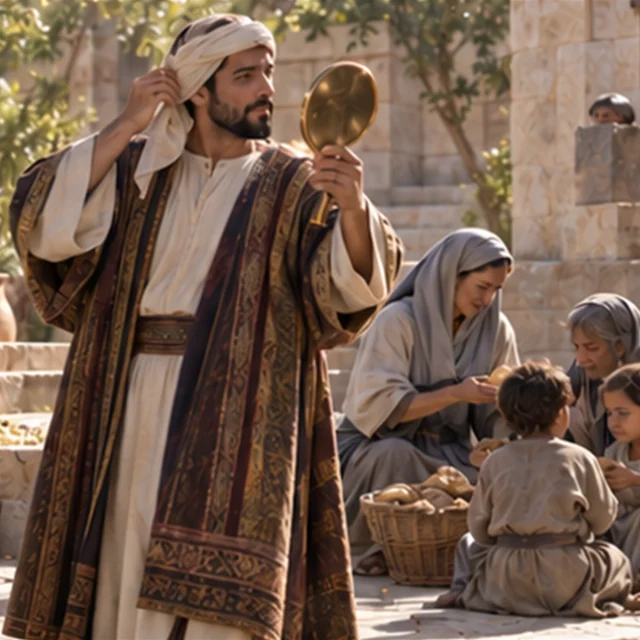
The person in the mirror illustration does actually look. The failure is not lack of access to the reflection but the speed with which its significance disappears after departure. The mirror has done its part; the observer has simply walked away from the result. Against that fleeting encounter James places looking into the "law of liberty" and continuing in it. Freedom and obligation are not opposites within this passage. The law is associated with a continuing practice that frees the hearer from the self-deception of treating exposure as obedience.
The conclusion becomes deliberately ordinary. A religious appearance cannot compensate for an unbridled tongue, and the heart can be deceived by its own performance. The care of the fatherless and widows is named in the setting of their affliction, so the visit means attention to actual need rather than a ceremonial appearance. Keeping unspotted from the world stands beside that involvement, not instead of it. James does not define purity as distance from suffering people. The chapter closes with speech restrained, need attended to, and conduct guarded, giving concrete content to the difference between hearing a word and doing it.
Words to trace: doer, hearer, religion, word, affliction, beholdeth
Verse-by-verse path
- James 1:22
“Hearers” is akroatai, the word for an audience at a lecture, people who listen without committing. “Deceiving” is paralogizomai, to reason falsely, a miscalculation. Paul uses the same two nouns in Romans 2:13: “not the hearers of the law are just before God, but the doers”.
- James 1:23
“Natural face” is literally “the face of his birth”, the face he was born with. Mirrors were polished bronze, and Corinth was known for making them; Paul speaks of seeing “through a glass, darkly” in 1 Corinthians 13:12. A “glass” in 1611 was a looking-glass.
- James 1:24
Three verbs, quickly: he looked, he has gone away, he forgot. The middle one is a Greek perfect, a departure that stays a departure. “What manner of man he was” is hopoios, what sort, the thing the mirror had shown him and he no longer carries.
- James 1:25
“Looketh into” is parakypto, to stoop and peer in, the verb used of the disciples and Mary bending to look into the empty tomb (Luke 24:12, John 20:5, 11). It is a different look from the glance of verse 23. “Blessed in his deed” is literally “blessed in his doing”, poiesis, the same root as “doer”.
- James 1:26
“Religious” is threskos, used of outward worship and observance, found only here in the New Testament; Paul uses the related noun for “our religion” as a Pharisee (Acts 26:5). “Bridleth” is chalinagogeo, to guide with a bit, a picture 3:3 develops with horses. “Vain” is mataios, the word the Greek Old Testament uses of idols.
- James 1:27
“Pure” and “undefiled” are temple words for what may be offered, applied here to conduct. Psalm 68:5 calls God “a father of the fatherless, and a judge of the widows”, which is why he is named “God and the Father” here. “Visit” is episkeptomai, the verb of Matthew 25:36, “I was sick, and ye visited me”.
James 1:22-27
King James Version22But be ye doers of the word, and not hearers only, deceiving your own selves.
23For if any be a hearer of the word, and not a doer, he is like unto a man beholding his natural face in a glass:
24For he beholdeth himself, and goeth his way, and straightway forgetteth what manner of man he was.
25But whoso looketh into the perfect law of liberty, and continueth therein, he being not a forgetful hearer, but a doer of the work, this man shall be blessed in his deed.
26If any man among you seem to be religious, and bridleth not his tongue, but deceiveth his own heart, this man’s religion is vain.
27Pure religion and undefiled before God and the Father is this, To visit the fatherless and widows in their affliction, and to keep himself unspotted from the world.
Questions to keep in mind while reading
- Identify the audience, problem, argument, command, and pastoral purpose.
- Follow connecting words so that one sentence remains inside the author’s reasoning.
- Distinguish a universal theological claim from an instruction shaped by a particular situation.
Text first
Where readers differ
The chapter summary begins with what the passage says and how its parts fit together. It does not assume one denomination has already settled every question. Where a conclusion depends on a tradition, literary theory, or historical reconstruction, that dependence is named openly.
The KJV text is presented first. Interpretive conclusions are labeled, and differences are introduced only when they help a reader understand why serious communities do not always reach the same answer.
Comparative interpretive notes for this chapter are in preparation. Until reviewed notes are ready, this page separates the KJV text from summary and application without claiming that serious readers agree on every question.
Questions beneath the surface
- What account of God, human freedom, responsibility, and the good life emerges from James 1?
- Which tension does the chapter refuse to resolve quickly?
- What changes when the chapter is read as part of the whole canon rather than as an isolated moral lesson?
- Where might a sincere reader confuse a familiar tradition with something the text states directly?
Questions for serious personal contemplation
These open-ended questions make room for tension, honest response, prayer, and conclusions that remain accountable to the chapter.
Observe without rushing
What part of James 1 makes you stop, feel unsettled, or feel surprised, and why?
Which detail in the passage would be easiest to overlook? How does that detail change your understanding?
Where do you see tension between what happens and this focus: A tested believer asking for wisdom, a poor and rich worshiper hearing reversal, and a person looking into a mirror but failing to act?
What important question does the passage leave open instead of resolving quickly?
Examine your inner life honestly
Which person, response, fear, or desire in the passage feels most like your own life right now?
What assumption about God, other people, or yourself does this text challenge?
Which part would you rather soften, avoid, or explain away too quickly? What might that reaction reveal?
If this Scripture could ask you one direct question, what do you think it would ask?
Respond with wisdom and courage
What do you need to remember, confess, grieve, thank God for, or trust after reading this passage?
How might another faithful person read this situation differently without ignoring the text?
What obedient response would be costly, uncomfortable, or slow, yet still faithful to Scripture?
What question will you carry into prayer this week, and which verses will you keep in front of you?
Music and video connected to the passage
Related media appears when its Scripture reference overlaps this study. Music and video can illuminate a theme while the biblical text remains the foundation.