The big picture
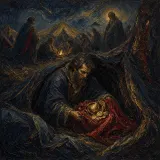
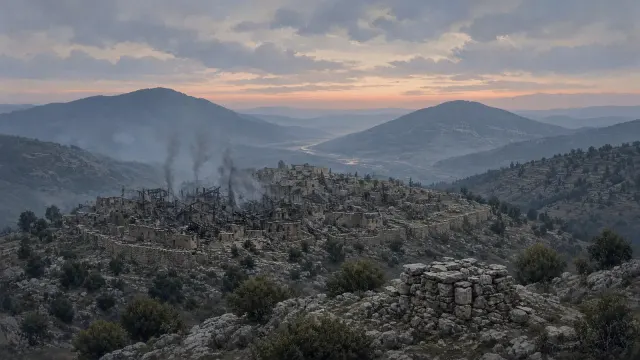
After Achan's judgment, God tells Joshua not to fear and sends Israel back against Ai with new instructions. This time livestock and spoil may be kept, making the contrast with Jericho unmistakable. The battle plan also changes completely. An ambush and feigned retreat use Ai's memory of Israel's earlier defeat against it, drawing the defenders away until smoke from the captured city reveals the trap. The destruction that follows is severe, but the handling of spoil and the removal of the king's body at sunset remain under specific commands. Then the chapter shifts abruptly from battle to covenant ceremony. At Mount Ebal, Joshua builds an altar of unworked stones, writes the law, and reads blessings and curses before the entire assembly. Leaders, women, children, and resident foreigners all stand within its hearing. Ai is taken, but the chapter's final image is not smoke. It is a whole people listening to the law that governs their inheritance.
Central truth
Joshua 8 joins Israel’s renewed victory at Ai to covenant worship at Ebal and Gerizim, showing the campaign restored under the LORD’s command and then deliberately interrupted so Joshua can build the altar, write the law, and read it to the whole assembly.
The study notes have a page of their own
The movement by movement analysis, the words to trace, the verse by verse notes and where readers differ are written for someone studying alone. They are on the Deep Personal Reflections page for this chapter. This page is the lesson.
A chapter-specific teaching brief
These anchors come from this chapter itself. They help a teacher use the Level 1 overview, the Level 2 study, and the Scripture text as one lesson.
Open with the chapter’s first image
Joshua 8:1: “And the LORD said unto Joshua, Fear not, neither be thou dismayed: take all the people of war with thee, and arise, go up to Ai: see, I have given into thy…”
Slow down at the turning point
Joshua 8:14: “And it came to pass, when the king of Ai saw it, that they hasted and rose up early, and the men of the city went out against Israel to battle, he and all…”
Keep this word trail visible
city, Joshua, Israel, people, LORD, ambush
What to explain, in order
Teach the passage in this order. Each step names the verses it rests on, so every point can be shown in the text before it is applied.
Joshua 8:1-2
Fear not, a second time
Begin with the LORD's words: "Fear not, neither be thou dismayed", the same words as 1:9. After the defeat and the judgment, the LORD restores Joshua with the old promise. Then note what has changed. This time "all the people of war" go, not a few thousand, and this time they may take spoil and cattle. Teach this first because it shows that the LORD's anger has turned (7:26) and that the relationship is restored. Point out the poignancy of the permission, which Achan did not wait for.
Joshua 8:3-13
The plan and the night
Explain the ambush with a simple diagram: Ai, Bethel to its west, the ambush between them, the main army north across the valley. Do not get lost in the numbers; there are two figures, thirty thousand in verse 3 and five thousand in verse 12, and readers explain the relation between them differently. The point is a deliberate plan in which Israel pretends to repeat its defeat. Teach the plan before the battle so the class can follow the action, and note that Joshua "lodged that night among the people".
Joshua 8:14-23
The city left open
Read the battle as it unfolds. The king of Ai sees Israel and hurries out; he "wist not that there were liers in ambush". Israel flees; the whole city follows, and "they left the city open". At the LORD's word Joshua stretches out his spear, and the ambush takes and burns the city. Explain "liers in wait" as people lying in ambush. Teach this so the class sees the LORD's command at the decisive moment in verse 18: the strategy is Joshua's, but the signal and the victory are the LORD's.
Joshua 8:24-29
The end of Ai
Read the end of Ai plainly. The text says all who fell were twelve thousand, men and women, and that Joshua kept the spear stretched out until the city was devoted. Say this is the ban of chapter 6 applied here as the LORD commanded, and teach it with the same care, as judgment at a particular time and never a model for today. Explain the hanging of the king until evening with Deuteronomy 21:22-23, which commanded that a body not remain overnight. Note the heap of stones, like the heap over Achan.
Joshua 8:30-35
Altar, stones and the whole law read aloud
Turn to the scene the Book of Joshua places immediately after the victory. Explain the journey to Shechem between Ebal and Gerizim, perhaps twenty miles north. Read the altar of unhewn stones, the law copied on stones, and the whole people on two mountainsides. Read verse 35 slowly and point to every group named. Teach this last and give it the most weight, because the chapter's surprise is that the campaign stops for worship and Scripture. Israel's life in the land is meant to rest on the word read to everyone.
Where learners get stuck
The misreadings this passage tends to produce, and how to answer each from the text.
"Joshua used deception at Ai, so lying is acceptable in war or business."
The LORD commands the ambush (8:2), and an ambush is an ordinary act of war, not a broken promise. Israel does not swear a false oath or deceive a friend. Teachers can note that the chapter describes a military tactic in a war the LORD commanded and does not teach a general ethic of deception. Christians have different views on the ethics of war, but this passage does not license lying to colleagues, neighbours or anyone else.
"The covenant ceremony was just a religious break between battles."
The text says Joshua built the altar "as Moses the servant of the LORD commanded" (8:31) and read "all the words of the law, the blessings and cursings" (8:34), fulfilling Deuteronomy 27. The Book of Joshua places it right after the victory to show that the conquest serves the covenant, not the other way round. Israel needs the law read publicly more than it needs another victory, which is why "There was not a word of all that Moses commanded, which Joshua read not" (8:35).
"Women, children and foreigners were just bystanders while the men heard the law."
Verse 35 names them deliberately: "the women, and the little ones, and the strangers that were conversant among them". Verse 33 also says "as well the stranger, as he that was born among them". The whole community stands before the ark and hears the whole law. Deuteronomy 31:12 had commanded exactly this inclusion so that everyone might "hear, and that they may learn". The text treats them as hearers and members of the covenant assembly.
"The second battle at Ai shows that God helps those who plan well."
Joshua's plan was good, but the chapter insists the victory was given: "I have given into thy hand the king of Ai" (8:1), and "Stretch out the spear that is in thy hand toward Ai; for I will give it into thine hand" (8:18). The first attack failed because of hidden sin, not bad planning (7:11-12). Planning and obedience are both present; the chapter does not say that one replaces the other, and it keeps the credit with the LORD.
Learning objectives
- Compare the second attack on Ai with the failed first attack and identify the LORD’s explicit instructions that change the situation.
- Trace the ambush plan and explain how Ai’s pursuit leaves the city open.
- Identify Joshua’s outstretched spear as the signal connected with the ambush action.
- Explain why Israel may take the spoil of Ai even though taking spoil from Jericho was forbidden.
- Describe the altar on Mount Ebal and the requirements that its stones remain whole and untouched by iron tools.
- Identify who hears the blessing, curse, and law reading at the end of the chapter.
Teacher preparation
- Read Deuteronomy 27:1–13 and 31:9–13 before class.
- Compare Joshua 7:2–5 with 8:1–2.
- Mark the troop numbers in the chapter.
- Locate Ai, Bethel, Mount Ebal, Mount Gerizim, and Shechem.
- Prepare to explain “not lift up any iron tool” in verse 31 by linking it to the altar command in Exodus 20:25 and Deuteronomy 27:5–6.
Evidence and interpretation checks
Explicit
Joshua 8:1–2 explicitly commands the renewed attack and permits Israel to take Ai’s spoil and cattle, while verses 30–35 explicitly record the altar, sacrifices, writing of the law, and public reading.
Scripture-supported
The Mount Ebal altar and blessing-and-curse setting are supported directly by Deuteronomy 27, which instructs Israel to build an altar there and names Ebal and Gerizim for the covenant ceremony.
Strong inference
By placing the law-reading ceremony immediately after victory, the Book of Joshua makes possession of the land answer to covenant instruction rather than allowing military success to become the nation’s final measure.
Possible or traditional reading
The relationship between the thirty thousand in verse 3 and about five thousand in verse 12 is debated.
Limit
Joshua 8 does not reproduce the words Joshua writes on the stones or the full text he reads.
Discussion with answer guidance
1. What does the LORD allow Israel to do with Ai that was forbidden at Jericho?
What a good answer contains
"only the spoil thereof, and the cattle thereof, shall ye take for a prey unto yourselves" (8:2). At Jericho everything was devoted and the silver and gold went to the treasury (6:18-19). A good answer sees the irony: had Achan waited, he could have taken spoil lawfully at Ai. It also notes that the LORD sets the terms of each victory, and that obedience is not always to the same rule. A weak answer misses the link back to chapter 7 that makes the permission poignant.
Show teacher guidance
Joshua 8:2 permits the spoil and cattle to be taken for themselves.
2. How does the ambush succeed once the men of Ai leave the city?
What a good answer contains
Joshua and the main army approach from the north and pretend to flee "as at the first" (8:5-6, 15), drawing the men of Ai and Bethel out after them, so that "they left the city open" (8:17). The ambush of five thousand on the west then rises, enters and burns the city (8:19). When the men of Ai see the smoke, they are trapped between two forces (8:20-22). A good answer sees that the LORD uses their memory of Israel's defeat against them. A weak answer confuses the numbers and misses the plan.
Show teacher guidance
Read verses 14–19.
3. What does Joshua keep extended until the defeat of Ai is complete?
What a good answer contains
His hand with the spear: "Joshua drew not his hand back, wherewith he stretched out the spear, until he had utterly destroyed all the inhabitants of Ai" (8:26). The command came from the LORD in 8:18, "Stretch out the spear that is in thy hand toward Ai". A good answer links it to Moses' raised hands in Exodus 17:11-12 and sees that the outstretched spear is a sign of the LORD's giving the city. A weak answer reads it as a military signal only and misses the echo of Moses.
Show teacher guidance
Verse 26 says he does not draw back the hand with which he stretched out the spear until he has utterly destroyed the inhabitants of Ai.
4. What physical rules govern the altar Joshua builds on Mount Ebal?
What a good answer contains
"an altar of whole stones, over which no man hath lift up any iron" (8:31), built "as it is written in the book of the law of Moses". Exodus 20:25 and Deuteronomy 27:5-6 give the command. A good answer explains that the altar must be made from what God made, not shaped by human tools, so that worship is not turned into a display of human craft. It also notices the burnt offerings and peace offerings that follow. A weak answer misses that the altar was built by command, not invention.
Show teacher guidance
Verses 30–31 specify whole stones over which no iron has been lifted.
5. Where are the tribes positioned during the covenant ceremony?
What a good answer contains
"half of them over against mount Gerizim, and half of them over against mount Ebal" (8:33), with the ark and the priests in the middle, "as Moses the servant of the LORD had commanded before" in Deuteronomy 27:11-13. Blessings were read toward Gerizim and curses toward Ebal. A good answer can picture the valley between the two mountains, the people standing on the slopes and the ark in the centre. A weak answer misses the link with Deuteronomy and the theatre of blessing and curse.
Show teacher guidance
Verse 33 places half over against Mount Gerizim and half over against Mount Ebal, with the ark, priests, Levites, elders, officers, judges, strangers, and native-born participants present.
6. Who is included when Joshua reads all the law in verse 35?
What a good answer contains
"all the congregation of Israel, with the women, and the little ones, and the strangers that were conversant among them" (8:35). Verse 33 already included "as well the stranger, as he that was born among them". A good answer notices that nobody is left out, not women, not children, not foreigners living with Israel. It also notices "There was not a word of all that Moses commanded, which Joshua read not": the whole law, blessings and cursings, is read. A weak answer names only the men.
Show teacher guidance
The verse expressly includes the whole congregation, women, little ones, and strangers who converse among them.
Responsible application
Session plans
Two timings of the same lesson. The shorter keeps the reading, the central discussion and one response; the longer gives the confusions and the application their own time.
45 minutes
Fear not again
Read 8:1-2. Take question one and link it to Achan.
The plan
Read 8:3-17 quickly with a diagram. Take question two.
The spear and the city
Read 8:18-29. Take question three. Handle the ban with the same care as in chapter 6.
Altar and law
Read 8:30-35. Take questions four, five and six, and the second confusion.
Who heard
Work through the third confusion and ask who today is left out of hearing God's word.
Close
Hand out the sheet and read the key verse aloud together.
90 minutes
After failure
Ask the class what helps a team recover after a failure. Then read 8:1.
Restored
Read 8:1-2 beside 1:9 and 7:26. Take question one.
The ambush
Read 8:3-23 with a diagram. Take question two and the first confusion, about deception.
The spear
Read 8:18 and 8:26 beside Exodus 17:11-12. Take question three and the fourth confusion.
The end of Ai
Read 8:24-29 and Deuteronomy 21:22-23. Handle the ban with care and answer questions honestly.
Ebal and Gerizim
Read Deuteronomy 27:1-13, then Joshua 8:30-35. Take questions four, five and six, and the second and third confusions.
Application
Complete the victory does not cancel the reading application from the plan, then read verse 35 together.
Close
Read the key verse, give out the handout, and pray for the whole household of God to hear his word.
Adapting the lesson
Children
Tell the battle simply as God helping Israel after they had put things right, and do not describe the deaths. Spend most of the time on the big meeting between the two mountains: put half the children on one side of the room and half on the other, place a box for the ark in the middle, and read a few short blessings. Make sure they hear that children were there too, in verse 35.
Youth
Ask what happens after a big win: do people slow down to remember why they are there? Read 8:30-35 as a deliberate pause. Draw the ambush for them, because they will enjoy the tactics, but keep coming back to verse 18 and the spear. Let them discuss whether their own group hears God's word together or only alone.
Adults
Adults may want to discuss the ethics of the ambush and of the ban; give them space while keeping the text in front of them. Then give real time to the covenant ceremony, its roots in Deuteronomy 27 and 31, and its inclusion of women, children and foreigners. Ask how their church reads Scripture publicly, and whether anyone is left out of hearing it.
One to one
If the person has come through a failure, read 8:1 together and let the LORD's "Fear not" after chapter 7 speak to them. Then read 8:30-35 and ask how often they hear God's word read aloud with others. Suggest reading a passage aloud with them now, as the whole congregation heard Joshua read.
Song and video learning lab
A song or video may interpret, compress, or dramatize the text. Its value becomes clearer when its choices are compared with Scripture.
- Before the media: the exact passage and its central movement.
- During the media: the words, people, events, and emotions the artist emphasizes.
- After the media: what it clarifies, what it leaves out, and what belongs back in the biblical text.
Handout
One page for learners to take home. The print button prints this section alone.
Joshua 8:1–35
The passage in brief
After Achan's sin is dealt with, the LORD tells Joshua not to fear and to go up again against Ai. This time Israel sets an ambush and pretends to run away. When the men of Ai chase them out of the city, the ambush captures it. Then Joshua builds an altar of uncut stones on Mount Ebal, writes a copy of Moses' law on stones, and reads every word of the law to the whole people, including women, children and foreigners living among them.
A verse to keep
There was not a word of all that Moses commanded, which Joshua read not before all the congregation of Israel, with the women, and the little ones, and the strangers that were conversant among them.
Joshua 8:35 · King James Version
Questions to take home
What did the LORD allow Israel to take at Ai that was forbidden at Jericho (8:2)?
Why was the altar made of stones no tool had touched (8:31)?
Who was there to hear the law read (8:33-35)?
This week
Read a chapter of the Bible aloud this week with your household or a friend, and talk about one verse.
Music and video connected to the passage
Related media appears when its Scripture reference overlaps this study. Music and video can illuminate a theme while the biblical text remains the foundation.