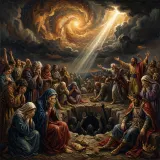
The big picture
Romans 3 answers the obvious question raised by chapter 2: if outward privilege does not acquit, has Jewish advantage disappeared? Paul says no, beginning with the entrusting of God's oracles, but privilege cannot convert unbelief into an excuse or make God unfaithful. A chain of scriptural accusations then sweeps across speech, movement, thought, and desire until "every mouth" is stopped and both Jew and Gentile stand under sin. At that point the letter turns with "But now." God's righteousness is manifested apart from works of law while still being witnessed by the law and prophets. Grace, redemption, Christ's blood, and faith answer a real charge rather than pretending there was none. Boasting is excluded not by better manners but by the way justification is received. One God justifies circumcised and uncircumcised through faith, and Paul closes by insisting that this does not make the law void.
Central truth
Romans 1:18–3:20 brings pagan idolatry and Jewish confidence in law before one impartial judgment until every mouth is stopped before God. Romans 3:21–4:25 presents God's righteousness through faith in Jesus Christ and uses Abraham, counted righteous before circumcision, as the decisive witness that promise is received by faith.
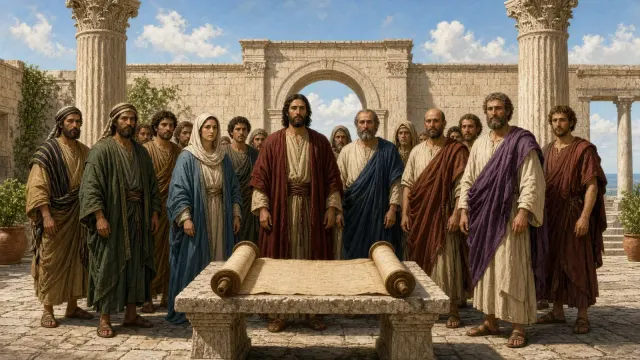

The study notes have a page of their own
The movement by movement analysis, the words to trace, the verse by verse notes and where readers differ are written for someone studying alone. They are on the Deep Personal Reflections page for this chapter. This page is the lesson.
A chapter-specific teaching brief
These anchors come from this chapter itself. They help a teacher use the Level 1 overview, the Level 2 study, and the Scripture text as one lesson.
Open with the chapter’s first image
Romans 3:1: “What advantage then hath the Jew? or what profit is there of circumcision?”
Slow down at the turning point
Romans 3:19: “Now we know that what things soever the law saith, it saith to them who are under the law: that every mouth may be stopped, and all the world may become…”
Keep this word trail visible
faith, righteousness, justified, forbid, Gentiles, Jesus
What to explain, in order
Teach the passage in this order. Each step names the verses it rests on, so every point can be shown in the text before it is applied.
Romans 1:18–3:20
Romans 1:18-23
Wrath revealed, and the truth held down
Start by laying 1:17 and 1:18 side by side: righteousness revealed, wrath revealed. The good news is announced first and the need second, which tells the class the bad news is not the last word. Explain “hold the truth in unrighteousness” as suppressing it. Verse 20 says creation makes God's power and “Godhead”, his divine nature, plain enough that people are without excuse. Then mark verse 21: the first failure is refusing to glorify God and to give thanks. Teach this first because every later sin in the chapter grows from this root of ingratitude.
Romans 1:24-32
Three exchanges and three handings over
Draw two columns. In one, the exchanges of verses 23, 25 and 26; in the other, God gave them up in verses 24, 26 and 28. Show that each handing over answers an exchange. Then read verses 26 and 27 soberly: Paul names same-sex acts among the results of a world that has turned from its Creator. Do not linger on them alone, and do not move past them. Read on through the list of verses 29 to 31, envy, deceit, gossip, pride, disobedience to parents, until everyone in the room is named. Finish on verse 32, approving what God condemns.
Romans 2:1-11
The judge in the dock
The pronoun changes from they to thou, and the reader who nodded along is now addressed. Read 2:1-3 and let the turn land. Explain “treasurest up unto thyself wrath” in verse 5 as storing it up. Then show God's character in verse 4: goodness, forbearance and longsuffering meant to lead to repentance. Verses 6 to 10 say God renders to every man according to his deeds, and verse 11 gives the principle: “there is no respect of persons with God”. Readers differ on whether verse 7 describes believers or states the standard before 3:20 shows no one meets it; name both.
Romans 2:12-16
Law in hand and law on the heart
Explain that Gentiles without the written law are still judged, and that the measure is the light they had. The phrase “a law unto themselves” does not mean making up their own rules; it means their conscience bears witness that they know right from wrong, accusing or excusing. Some readers take verses 14 and 15 as Gentile believers with the law written on their hearts, as Jeremiah 31:33 promised; others as conscience in everyone. Keep the fixed point of verse 16: God will judge “the secrets of men by Jesus Christ”. Nothing hidden is outside his court.
Romans 2:17-29
Privilege examined
List the privileges of verses 17 to 20 first and treat them as real: the law, knowledge of God's will, a calling to be a light. Then read the questions of verses 21 to 23 in turn. Verse 24 quotes Isaiah 52:5, so Paul is using Israel's own prophets. Explain circumcision “of the heart” in verse 29 from Deuteronomy 30:6 and Jeremiah 4:4. Take care here. Paul is a Jew arguing inside his own Scriptures, and this passage has been misused to feed contempt; 11:18 forbids exactly that. The point is that privilege without obedience gives no shelter, for anyone.
Romans 3:1-20
Objections answered and every mouth stopped
Read 3:1-8 as a set of questions an objector might raise, and let the class find Paul's two answers: God forbid, and God is true. Then read the chain of quotations in 3:10-18 aloud in turns, from the Psalms and Isaiah, and mark the body parts: throat, tongues, lips, mouth, feet, eyes. Sin uses the whole person. Close on 3:19-20 and let the room be quiet. Teach this last because the unit is built to end in silence; the next words of the letter are “But now”, and they mean most to those who have heard every mouth stopped.
Romans 3:21–4:25
Romans 3:21-22
But now: a righteousness witnessed by the law
Read 3:19-20 again and then pause before “But now”. Teach the turn as the hinge of the letter. Explain that “without the law” means apart from law keeping as the way to stand right with God, while “witnessed by the law and the prophets” means the Scriptures themselves point to it. Then show verse 22: this righteousness comes “by faith of Jesus Christ unto all and upon all them that believe”. Readers differ on whether “faith of Jesus Christ” means faith in him or his own faithfulness; both readings keep believers receiving it.
Romans 3:23-26
Justified freely: redemption and propitiation
Take the three great words one at a time. “Justified” is a courtroom word, declared in the right. “Redemption” is release bought at a price, the language of the slave market and of the Exodus. “Propitiation” is a sacrifice that deals with sin and turns away wrath; it is the word used for the mercy seat in the Greek Old Testament, and traditions explain it with different emphases. Then show what verse 26 solves: God passed over “sins that are past”, and the cross shows he is both just and the one who justifies.
Romans 3:27-31
No boasting, one God, the law upheld
Ask what is left to boast about after verse 24. Then show why boasting matters to Paul: in verses 29 and 30 he asks whether God is the God of the Jews only, and answers from the Shema that there is one God, who justifies both by faith. Boasting was not only personal pride; it was one people's sense of standing over another. Close with verse 31 and leave it as a promise to be kept: Romans will show how faith establishes the law in 8:4 and 13:8-10.
Romans 4:1-8
Abraham and David: credited and forgiven
Read Genesis 15:1-6 first so the class hears the night under the stars. Then show how Paul uses it. Explain that the word “counted”, also translated “reckoned” and “imputed”, runs through the whole chapter, and that it means credited to an account. Draw two columns for verses 4 and 5, wages and gift, and underline “justifieth the ungodly”. Then add David from Psalm 32: God credits righteousness and also does not count sin. Teach this before circumcision because the class needs to know what was credited before asking when.
Romans 4:9-17
Before circumcision, father of many nations
Draw a timeline on the board: the promise and Abraham's belief in Genesis 15, Ishmael's birth when Abraham was eighty six in Genesis 16, circumcision at ninety nine in Genesis 17, Isaac's birth, and much later Genesis 22. Abraham was counted righteous years before the sign. Explain “seal” as a mark confirming what was already true. Then read verses 13 to 17: the promise came through faith, “that it might be by grace”, so it is sure to all his seed. Abraham's God “calleth those things which be not as though they were”.
Romans 4:18-25
Against hope, and the God who raises the dead
Read Abraham's faith as a portrait: he looked at the facts, his age and Sarah's barrenness, and looked past them to the God who promised. Explain “staggered not” as did not waver in unbelief. Then reach the turn in verses 23 and 24: this was “not written for his sake alone”. Abraham believed God could bring life from his dead body; we believe the God who raised Jesus from the dead. End on verse 25, which ties the cross and the resurrection to our offences and our justification. The next unit begins with its “Therefore”.
Where learners get stuck
The misreadings this passage tends to produce, and how to answer each from the text.
Romans 1:18–3:20
“People who never heard of God are innocent, so Paul cannot mean them.”
Paul's charge is not ignorance of the gospel but suppression of what is plain: “that which may be known of God is manifest in them” and creation shows his power “so that they are without excuse” (1:19-20). Verse 12 of chapter 2 says those without the law are judged without the law, by the light they had, and 2:14-15 adds conscience. Paul is establishing accountability here, not answering every question about those who never hear, which Christians answer in different ways.
“Romans 1 is about those people out there; the rest of us are fine.”
Chapter 2 begins “whosoever thou art that judgest” and turns the whole of chapter 1 on the reader. The list in 1:29-31 includes envy, debate, deceit, whisperers, backbiters, the proud, boasters and the disobedient to parents, which leaves no one outside. The verdict in 3:9 is that “both Jews and Gentiles” are “all under sin”, and 3:10 quotes, “There is none righteous, no, not one”.
“Romans 2:6-7 and 2:13 show we can be saved by doing good.”
Paul states God's standard honestly: judgment according to deeds, and “the doers of the law shall be justified” (2:13). Then 3:9-20 shows that no one has met that standard and ends, “by the deeds of the law there shall no flesh be justified in his sight” (3:20). Some readers take 2:7 and 2:13 as describing believers whose changed lives show their faith (compare 2:29 and 8:4). Either way, Paul is not offering a route to God by merit, as 3:28 makes plain.
“Paul is saying the Jewish people are worse than everyone else.”
Paul asks “are we better than they?” and answers “No, in no wise” (3:9): the same charge falls on both. He also says the Jew's advantage is “Much every way” (3:2), and that unbelief does not cancel the faithfulness of God (3:3-4). He quotes Israel's own Scriptures and is himself an Israelite (11:1). Teach this with care, because Romans has been used for contempt, and 11:18 tells Gentile believers, “Boast not against the branches”.
Romans 3:21–4:25
“Faith is the good work I do that earns God's approval.”
Paul sets faith against earning in 4:4-5: wages are “of debt”, but the one who “worketh not, but believeth” is credited. Verse 16 says “it is of faith, that it might be by grace”, so faith is the empty hand that receives, not a payment. The object of faith matters more than its strength: Abraham trusted God who “justifieth the ungodly” (4:5). Boasting is “excluded” (3:27), which could not be said if faith were a work of merit.
“If we are saved by faith, the Old Testament law is thrown away.”
Paul says the opposite in 3:31: “we establish the law”. The righteousness of God is “witnessed by the law and the prophets” (3:21), and the whole of chapter 4 is an argument from Genesis and the Psalms. What faith ends is law keeping as the ground of standing before God. Romans will say later how the law's righteous requirement is fulfilled in those who walk by the Spirit (8:4) and how love fulfils it (13:8-10).
“Abraham was counted righteous because he was circumcised and obeyed.”
Paul asks this exact question in 4:10 and answers, “Not in circumcision, but in uncircumcision.” Genesis 15:6 comes years before the circumcision of Genesis 17, and decades before the offering of Isaac in Genesis 22. Circumcision was “a seal of the righteousness of the faith which he had yet being uncircumcised” (4:11). James 2 speaks of Abraham's later obedience as faith at work, but Paul's point here is the order of events.
“Propitiation means an angry Father had to be calmed by a kind Son.”
Paul says it is God who “hath set forth” Christ (3:25); the provision comes from God himself, and 5:8 says God “commendeth his love toward us” in Christ's death. The Father and the Son are not set against each other. The cross shows God's righteousness, that he might be “just, and the justifier” (3:26). Traditions explain the word propitiation with different emphases, but every explanation should keep God as the giver.
Learning objectives
- Trace the exchanges and repeated 'gave them up' pattern in Romans 1.
- Explain why Romans 2 turns judgment back upon the judging person.
- Identify truth, deeds, impartiality, and secrets within God's judgment.
- Show why possessing law and circumcision cannot shield a lawbreaker.
- Explain how Romans 3 preserves Jewish advantage without granting immunity.
- Summarize Paul's conclusion that Jews and Gentiles are all under sin.
- Explain the turn introduced by 'But now' in Romans 3:21.
- Distinguish excluded boasting from the law of faith in Romans 3.
- Show how Abraham and David witness to counted righteousness apart from works.
- Explain why Abraham's circumcision comes after he is counted righteous.
- Trace promise, law, wrath, grace, and faith in Romans 4.
- Describe Abraham's faith without reducing it to optimism or denial.
Teacher preparation
- Mark every 'therefore,' 'for,' 'but,' and rhetorical question across the unit.
- Prepare Gentile and Jew columns under one heading: 'all under sin.'
- Review the Old Testament quotations collected in Romans 3:10–18.
- Flag Romans 2:14–16 and 2:28–29 as debated passages requiring restraint.
- Handle Romans 1:26–27 soberly within the chapter's much wider catalogue of sin.
- Mark righteousness, faith, law, justify, grace, redemption, and boasting in Romans 3:21–31.
- Review Genesis 15:1–6 and 17:1–14 for Abraham's chronology.
- Review Psalm 32:1–2, quoted in Romans 4:7–8.
- Prepare a timeline: promise, belief counted righteous, circumcision, later testing.
- Define KJV 'propitiation' and 'impute' without replacing the passage's own vocabulary.
Evidence and interpretation checks
Explicit
Romans 3:9 says Jews and Gentiles are all under sin; 3:19 says every mouth is stopped. Romans 3:28 says a person is justified by faith without deeds of law; 4:3 quotes Genesis 15:6.
Scripture-supported
Romans 3:10–18 chains several Old Testament texts together to support the universal charge. Romans 4:6–8 cites David, while 4:17–18 returns to God's promise that Abraham would father many nations.
Strong inference
The shift from 'they' in chapter 1 to 'thou' in chapter 2 exposes the morally confident reader. Abraham's righteous standing before circumcision removes that covenant sign as a ground for boasting.
Possible or traditional reading
Romans 2:14–16 has several readings. Keep the fixed point: God's judgment is impartial and reaches hidden things. Romans 3:25 has several readings of 'propitiation.' Keep the secure center: God sets forth Christ concerning sin and righteousness.
Limit
This unit establishes guilt and law's limits but does not yet explain justification through Christ. This unit does not present faith as meritorious work or give the letter's full account of obedience.
Discussion with answer guidance
1. What is exchanged in Romans 1:23, 25, and 26?
What a good answer contains
First, people “changed the glory of the uncorruptible God into an image made like to corruptible man” (1:23). Then they “changed the truth of God into a lie, and worshipped and served the creature more than the Creator” (1:25). Then “their women did change the natural use into that which is against nature” (1:26). A good answer sees that the first two exchanges are about worship and the third follows from them. A weak answer starts at verse 26 as though it were the chapter's main charge; Paul starts with God refused.
Show teacher guidance
Name glory for images, truth for a lie, and natural use for what is against nature.
2. What phrase repeats in Romans 1:24, 26, and 28?
What a good answer contains
“God also gave them up to uncleanness” (1:24), “God gave them up unto vile affections” (1:26), and “God gave them over to a reprobate mind” (1:28). This is how the wrath of 1:18 is first revealed: God hands people over to what they chose. A strong answer notices the order in each case, they exchanged and then God gave them up, and the wordplay of verse 28, where those who “did not like to retain God” receive a “reprobate”, that is unapproved, mind. A weak answer says God made them sin.
Show teacher guidance
Trace 'God gave them up' into uncleanness, vile affections, and a reprobate mind.
3. Why is the judging person in Romans 2:1 called inexcusable?
What a good answer contains
“Therefore thou art inexcusable, O man, whosoever thou art that judgest: for wherein thou judgest another, thou condemnest thyself; for thou that judgest doest the same things” (2:1). The reader who agreed with chapter 1 is caught. A good answer sees that the fault is not having moral standards but applying them to others while doing the same, and expecting to escape (2:3). Verse 4 adds the deeper fault: despising the goodness of God that “leadeth thee to repentance”.
Show teacher guidance
Verse 1 says the judge condemns himself by practicing the same things.
4. How do Romans 2:17–23 turn Jewish privileges into accountability?
What a good answer contains
Paul lists real gifts: “thou art called a Jew, and restest in the law, and makest thy boast of God” (2:17), knowing his will and confident of being “a guide of the blind, a light of them which are in darkness” (2:19). Then the questions: “Thou therefore which teachest another, teachest thou not thyself?” (2:21). Privilege becomes accountability, because knowing God's will is measured by doing it. A weak answer hears Paul calling Jews worse than others; he applies to the teacher the same standard he applied to the Gentiles.
Show teacher guidance
List the privileges first, then read the repeated questions about teaching and obeying.
5. How does Romans 3:1–8 preserve advantage without excusing unbelief?
What a good answer contains
“What advantage then hath the Jew?” Paul answers, “Much every way: chiefly, because that unto them were committed the oracles of God” (3:1-2). Israel's unbelief does not cancel God's faithfulness: “let God be true, but every man a liar” (3:4). Yet Paul refuses the conclusion that sin is fine because it shows off God's righteousness, rejecting “Let us do evil, that good may come” (3:8). A good answer keeps all three: real advantage, faithful God, no excuse.
Show teacher guidance
Verse 2 names the entrusted oracles; the paragraph still defends God's truth and judgment.
6. What can and cannot the law do in Romans 3:19–20?
What a good answer contains
The law speaks “that every mouth may be stopped, and all the world may become guilty before God” (3:19). It cannot justify: “by the deeds of the law there shall no flesh be justified in his sight: for by the law is the knowledge of sin” (3:20). A good answer says the law diagnoses but does not cure, and notices how the unit ends in silence. A weak answer concludes the law is bad; Paul will call it “holy, and just, and good” in 7:12.
Show teacher guidance
It stops mouths and gives knowledge of sin; it does not justify flesh by deeds.
7. What changes when Romans 3:21 says 'But now'?
What a good answer contains
The words turn the letter from verdict to provision: “But now the righteousness of God without the law is manifested, being witnessed by the law and the prophets” (3:21). After every mouth was stopped in 3:19, God speaks. A good answer holds both halves: apart from law as the means, yet with the law and the prophets as witnesses, as Genesis 15, Psalm 32 and Habakkuk 2 will show. A weak answer says the law has been discarded; Paul says it testifies.
Show teacher guidance
God's righteousness is manifested apart from law, while law and prophets still bear witness.
8. What shared problem and provision appear in Romans 3:22–26?
What a good answer contains
The problem is shared, “For all have sinned, and come short of the glory of God” (3:23), and so is the provision, “Being justified freely by his grace through the redemption that is in Christ Jesus” (3:24). Verse 22 says “there is no difference”, and that phrase cuts both ways. God set forth Christ “to be a propitiation through faith in his blood” so that “he might be just, and the justifier of him which believeth in Jesus” (3:25-26). A weak answer quotes verse 23 and stops before the gift.
Show teacher guidance
All sin and fall short; justification is by grace through redemption in Christ.
9. Why does boasting disappear in Romans 3:27–31?
What a good answer contains
“Where is boasting then? It is excluded. By what law? of works? Nay: but by the law of faith” (3:27). Faith receives a gift, so the one who receives has nothing to boast of. A good answer connects verse 27 with verses 29 and 30: one God justifies the circumcised and the uncircumcised by faith, so no group can boast over another. It also keeps verse 31: “Do we then make void the law through faith? God forbid: yea, we establish the law.”
Show teacher guidance
Faith excludes boasting, yet verse 31 refuses the claim that faith makes law void.
10. What happens when Abraham believes God in Romans 4:1–8?
What a good answer contains
Paul quotes Genesis 15:6: “Abraham believed God, and it was counted unto him for righteousness” (4:3). Then he contrasts wages and gift: to the one who works, the reward is “of debt”, but to the one who “believeth on him that justifieth the ungodly, his faith is counted for righteousness” (4:4-5). David adds, “Blessed are they whose iniquities are forgiven, and whose sins are covered” (4:7). A good answer explains counted as credited. A weak answer turns faith into the work that earns the wage.
Show teacher guidance
His faith is counted for righteousness; David adds forgiven and non-imputed sin.
11. Why does Paul ask when Abraham was circumcised?
What a good answer contains
Because the order of events settles the argument. “How was it then reckoned? when he was in circumcision, or in uncircumcision? Not in circumcision, but in uncircumcision” (4:10). Genesis 15 comes years before Genesis 17. Circumcision followed as “a seal of the righteousness of the faith which he had yet being uncircumcised” (4:11), so that Abraham is “the father of all them that believe, though they be not circumcised”, and of circumcised believers who “walk in the steps of that faith” (4:12).
Show teacher guidance
Romans 4:10 says righteousness was counted in uncircumcision; circumcision followed as sign and seal.
12. What facts does Abraham face in Romans 4:18–21?
What a good answer contains
Abraham faced a body “now dead, when he was about an hundred years old” and “the deadness of Sara’s womb” (4:19). Yet he “against hope believed in hope” (4:18), “being fully persuaded that, what he had promised, he was able also to perform” (4:21). A good answer sees that his faith rested on God “who quickeneth the dead” (4:17), not on pretending the facts were otherwise. A weak answer says Abraham never struggled; Genesis 16 and 17:17 show he did, and Paul's point is that he did not let go of the promise.
Show teacher guidance
He faces bodily impossibility yet trusts God's power to perform what God promised.
Responsible application
Do not build better defendants
Keep respectable hypocrisy and obvious rebellion under the same examination of Romans 2:1 and 3:9.
Let privilege increase responsibility
Use Romans 2:17–24 to test the assumption that possessing Scripture equals obeying it.
Close where Paul closes
Before moving to 3:21, require a summary of stopped mouths, guilt, and knowledge of sin.
Make boasting answer the text
Return praise of religious achievement to Romans 3:27 and 4:2–5 before allowing it to stand.
Teach faith with open eyes
Use Romans 4:18–21 to distinguish trust in God's promise from pretending hard facts do not exist.
Keep the timeline visible
Leave belief before circumcision on the board so Paul's chronological argument cannot disappear.
Session plans
Two timings of the same lesson. The shorter keeps the reading, the central discussion and one response; the longer gives the confusions and the application their own time.
Romans 1:18–3:20
45 minutes
Two revelations
Read 1:16-23 and mark revealed in verses 17 and 18. Touch confusion one briefly.
Exchanged and given up
Read 1:24-32. Take questions one and two with the two columns, keeping verses 26 and 27 inside the whole list.
The judge in the dock
Read 2:1-11. Take question three and confusion two, ending on the kindness of verse 4.
Privilege and practice
Read 2:17-29. Take question four and confusion four.
Every mouth stopped
Read 3:1-20, the quotations in turns. Take questions five and six and confusion three.
Silence, then But now
Read 3:19-20, pause, then read 3:21 alone. Give out the handout and pray.
90 minutes
Good news before bad
Read 1:16-18 together. Ask why Paul announces righteousness before wrath, and mark revealed twice.
Truth held down
Read Psalm 19:1-4, then Romans 1:18-23. Take the first half of question one and confusion one.
Three handings over
Read 1:24-32. Take question two, keep the tone sober, and let the class name the sins in 1:29-31 they meet every week.
The judge in the dock
Read 2:1-11. Take question three and confusion two, then reread verse 4 slowly.
Law on the heart
Read 2:12-16. Name the two readings of verses 14 and 15 and take confusion three.
Privilege examined
Read Deuteronomy 30:6, then Romans 2:17-29. Take question four and confusion four.
God forbid, and God is true
Read 3:1-8 as objections and answers. Take question five.
Every mouth stopped
Read 3:9-20 with the quotations in turns, marking the body parts. Take question six.
Handout and prayer
Read the key verse together and pray, thanking God for the kindness that leads to repentance.
Romans 3:21–4:25
45 minutes
But now
Reread 3:19-20, pause, then read 3:21-22. Take question one.
Freely by his grace
Read 3:23-26 and define justified, redemption and propitiation. Take question two and confusion four.
Where is boasting
Read 3:27-31. Take question three and confusion two.
Counted for righteousness
Read Genesis 15:5-6, then Romans 4:1-8 with the wages and gift columns. Take question four and confusion one.
Before the sign
Read 4:9-17 with the timeline on the board. Take question five and confusion three.
Against hope
Read 4:18-25 and take question six. Read the key verse together, give out the handout, and pray.
90 minutes
After the silence
Read 3:19-20 aloud, wait, then read 3:21. Ask what has changed and what has not.
Witnessed by the law and prophets
Read 3:21-22 and take question one. List the witnesses Paul will call: Genesis 15:6, Psalm 32:1-2, Habakkuk 2:4.
Justified, redeemed, set forth
Read Leviticus 16:14-15, then Romans 3:23-26. Define the three words, take question two and confusion four.
No boasting
Read 3:27-31 and take question three. Ask where people still boast before God today, then take confusion two.
Wages or gift
Read Genesis 15:1-6 and Psalm 32:1-2, then Romans 4:1-8. Take question four and confusion one.
The timeline
Read Genesis 17:9-11 and build the timeline. Read Romans 4:9-17 and take question five and confusion three.
The God who quickeneth the dead
Read Genesis 18:9-14, then Romans 4:18-25. Take question six and ask what promises look dead to the group.
Handout and prayer
Read the key verse together, point to the take-home line, and thank God for 4:25.
Adapting the lesson
Romans 1:18–3:20
Children
Hold up a mirror and a pointing finger. Read 2:1 simply and talk about how easy it is to see what others do wrong and miss our own. Go outside or show pictures of the sky and trees, read 1:20, and thank God together, since verse 21 says not thanking him was where things went wrong. Leave 1:26-27 aside entirely with this age, and end by telling them next week brings good news.
Youth
They know the reflex of judging others online and in person. Read 1:29-31 and ask them to circle what has become normal in their world, then read 2:1 and watch the turn. Some will ask about 1:26-27. Answer calmly from the text, keep it inside the whole list Paul gives, never allow it to become mockery of a classmate, and offer to talk privately with anyone who wants to.
Adults
Follow the argument as a courtroom, with charges, defence and verdict, and give time to the debated verses 2:7 and 2:13-16 without forcing a single reading. Discuss how religious privilege, knowing the Bible, teaching others, belonging to a good church, can become a quiet boast. Treat 1:26-27 with the same seriousness and gentleness as every other line; someone in the room may carry these questions personally.
One to one
Read 1:28-32 and 2:1-4 together and ask, without pressing, which words they recognise in their own life. If the person is crushed by guilt, show them that the unit stops at 3:20 on purpose so that 3:21 can begin, and read it. If they are confident of their own goodness, stay with 2:1-4. Ask where God's kindness has been leading them lately.
Romans 3:21–4:25
Children
Bring two envelopes, one marked pay and one marked present. Explain that pay is earned for jobs done and a present is given because someone loves you, then read 4:4-5 in simple words. Turn off the lights, shine small torches on the ceiling as stars, and read Genesis 15:5-6: Abraham believed God. Say that Jesus gave himself to take away our sin, and leave words like propitiation for older learners.
Youth
They live inside rankings, grades and followers, so start with 3:27: boasting is excluded. Give them cards with justified, redemption, propitiation and counted, and let them work out the meaning from the verses before you explain. Then take Abraham in 4:18-21 and show that faith is not pretending the facts are different; it is trusting the God who is able, as verse 21 puts it.
Adults
Read Genesis 15 to 17 so the timeline is in their hands, not only on the board. Present the main explanations of propitiation and of faith of Jesus Christ fairly. Then sit with “justifieth the ungodly” in 4:5, which is meant to startle. Discuss how a church can reintroduce boasting through background, knowledge or service, and what verse 29 asks of a congregation made of different peoples.
One to one
If the person believes they must improve before God will have them, read 4:5 slowly and point out that the ungodly is where God begins. If a promise of God seems impossible in their circumstances, read 4:17-21 together. Ask which promise they find hardest to believe, and pray it back to God with them, ending with verse 25.
Song and video learning lab
A song or video may interpret, compress, or dramatize the text. Its value becomes clearer when its choices are compared with Scripture.
- Before the media: the exact passage and its central movement.
- During the media: the words, people, events, and emotions the artist emphasizes.
- After the media: what it clarifies, what it leaves out, and what belongs back in the biblical text.
Handout
One page for learners to take home. The print button prints this section alone.
Romans 1:18–3:20
The passage in brief
Paul explains why everyone needs the good news. People could see God's power in creation, but they would not honour him or thank him, and they turned to idols; so God gave them up to what they had chosen. Then Paul turns to people who judge others, and to his own people who had God's law, and shows that knowing what is right is not the same as doing it. His conclusion is that everyone, Jew and Gentile, is under sin, and the law can show sin but cannot make anyone right with God.
A verse to keep
Or despisest thou the riches of his goodness and forbearance and longsuffering; not knowing that the goodness of God leadeth thee to repentance?
Romans 2:4 · King James Version
Questions to take home
What did people exchange in 1:23 and 1:25?
Why does 2:1 say the person who judges others is without excuse?
What can the law do, and what can it not do, in 3:19-20?
This week
Before you judge someone this week, ask whether you do the same, and thank God for his patience with you.
Romans 3:21–4:25
The passage in brief
After showing that everyone has sinned, Paul announces good news: God makes people right with himself as a free gift through Jesus Christ, whom he gave for our sins. No one can boast, because this gift is received by faith, by Jews and Gentiles alike. Abraham shows how it works. He believed God's promise and was counted righteous years before he was circumcised. He trusted the God who gives life to the dead, and the same is true for all who believe in the God who raised Jesus.
A verse to keep
For all have sinned, and come short of the glory of God; Being justified freely by his grace through the redemption that is in Christ Jesus:
Romans 3:23-24 · King James Version
Questions to take home
What does “But now” in 3:21 introduce?
Why does Paul ask when Abraham was circumcised in 4:10?
What did Abraham believe about God in 4:21?
This week
Write down one promise of God you find hard to believe, and pray it each morning this week.
Music and video connected to the passage
Related media appears when its Scripture reference overlaps this study. Music and video can illuminate a theme while the biblical text remains the foundation.