The big picture
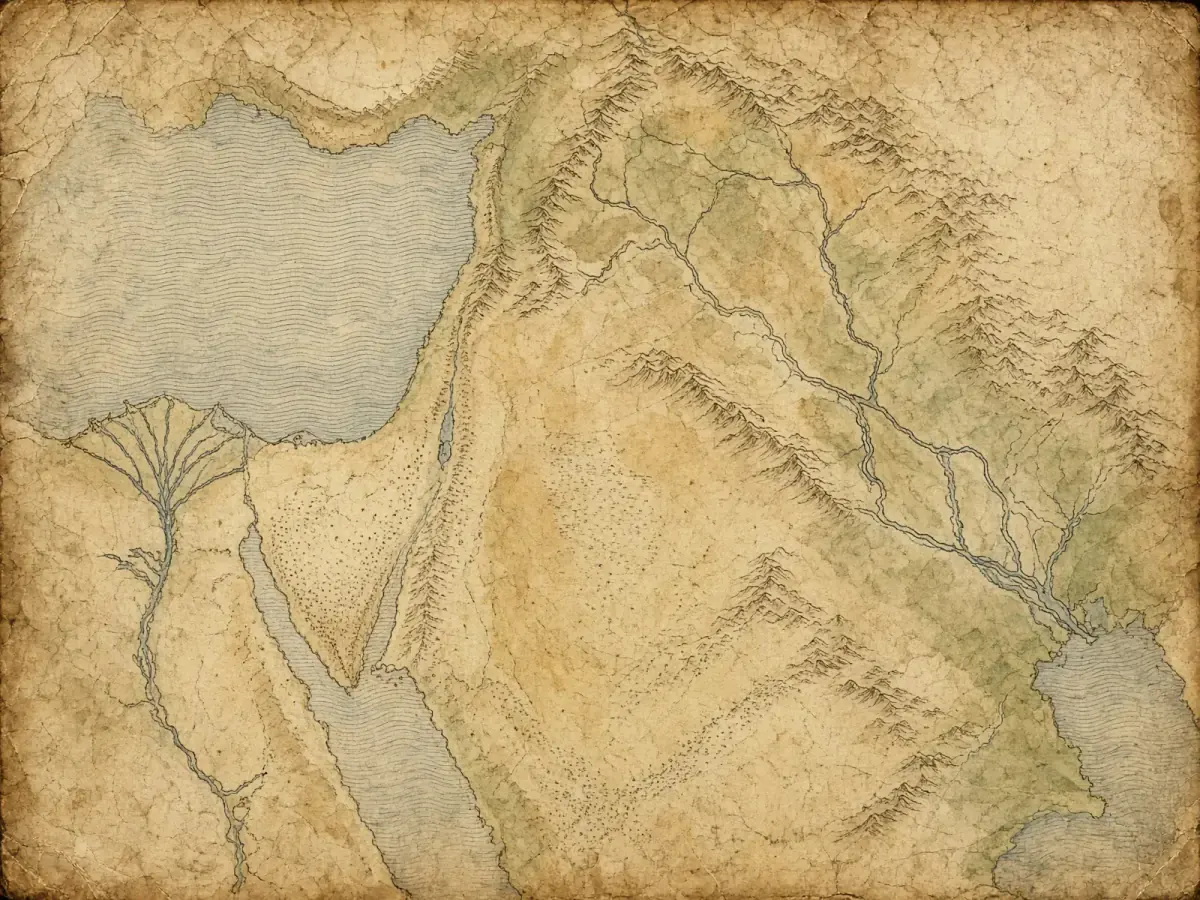
Abraham and Sarah are a married couple living in Canaan, the land where God told Abraham to settle. God has promised that Sarah will have a son, though both parents are old. Isaac is that son, born at the start of this chapter. Hagar is an enslaved woman from Egypt, a nation southwest of Canaan, and Ishmael is Abraham's older son by her. Later Abimelech, a local ruler, and Phichol, his army commander, meet Abraham near Beer-sheba, a place in southern Canaan.
In this chapter
- Sarah Gives Birth to Isaac Genesis 21:1-7
The LORD does what He promised Sarah.
- Hagar and Ishmael Are Sent Away Genesis 21:8-21
Isaac grows and is weaned, and Abraham holds a large feast.
- Abraham and Abimelech Make Peace Genesis 21:22-34
Abimelech comes to Abraham with Phichol, the commander of his army.
Central truth
Genesis 21 shows Isaac's promised birth, God's care for Ishmael, and Abraham's growing stability in the land.
Scripture beside the summary
Genesis · King James Version · 34Genesis 21:1-7
Sarah Gives Birth to Isaac
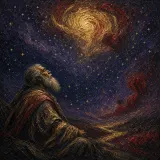
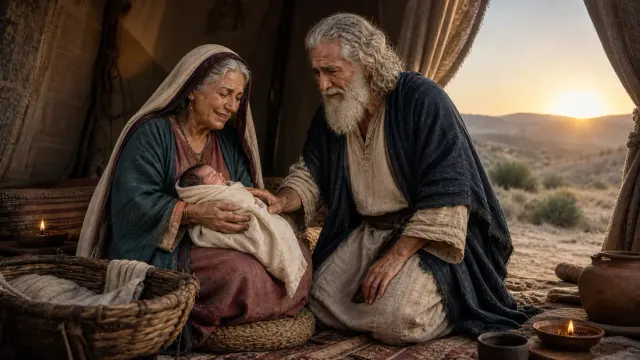
The LORD does what He promised Sarah. She becomes pregnant and gives Abraham a son at the time God had named. Abraham calls the boy Isaac. When Isaac is eight days old, Abraham circumcises him, the physical sign God had commanded for males in his household. Abraham is one hundred years old when Isaac is born. Sarah responds with laughter. The birth had once seemed impossible to her, but now the child is in her arms. She says people who hear about it will laugh with her. She also marvels that she is nursing a son in Abraham's old age. Isaac's birth is presented as the direct fulfillment of God's promise.
In everyday life
A foster mother signs final adoption papers after years of hearings and home visits. A judge had set the date long ago. That date arrives, and the child legally joins her family. A promise has moved from words to a settled fact. Isaac's birth differs because Sarah gives birth to the promised son herself.
Notice
Genesis 21:4 Isaac is circumcised at eight days old, exactly as God had commanded Abraham earlier. From infancy, the promised child bears the physical sign of God's agreement with Abraham.
Genesis 21:1-7
King James Version1And the LORD visited Sarah as he had said, and the LORD did unto Sarah as he had spoken.
2For Sarah conceived, and bare Abraham a son in his old age, at the set time of which God had spoken to him.
3And Abraham called the name of his son that was born unto him, whom Sarah bare to him, Isaac.
4And Abraham circumcised his son Isaac being eight days old, as God had commanded him.
5And Abraham was an hundred years old, when his son Isaac was born unto him.
6And Sarah said, God hath made me to laugh, so that all that hear will laugh with me.
7And she said, Who would have said unto Abraham, that Sarah should have given children suck? for I have born him a son in his old age.
Genesis 21:8-21
Hagar and Ishmael Are Sent Away
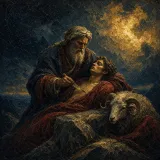
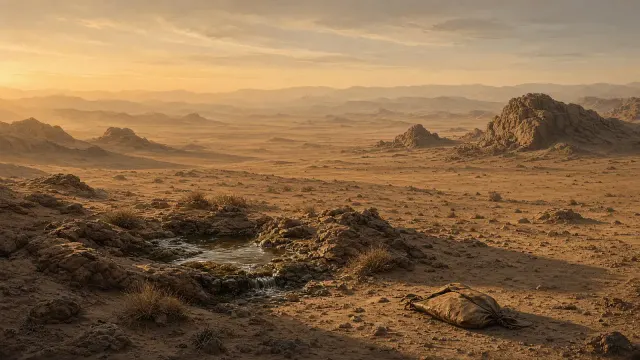
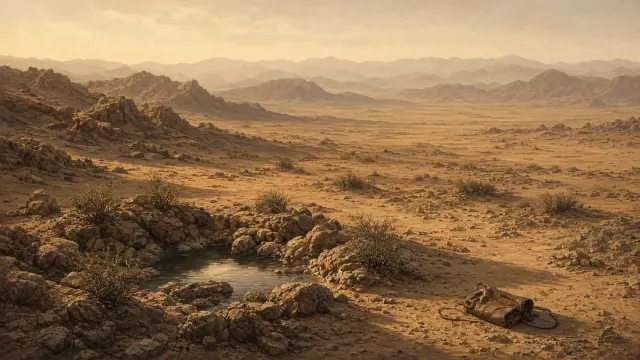
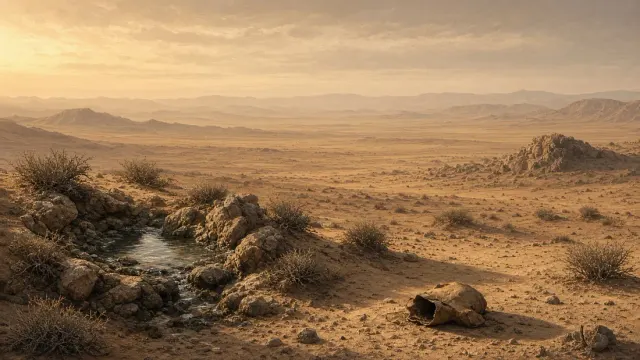
Isaac grows and is weaned, and Abraham holds a large feast. Sarah sees Ishmael mocking and demands that Hagar and her son be sent away. She does not want Ishmael to share Isaac's inheritance. Abraham is deeply troubled because Ishmael is his son too. God tells Abraham to listen to Sarah about Isaac's family line. God also promises that Ishmael will become a nation. Abraham sends Hagar away with bread and water. In the wilderness near Beer-sheba, the water runs out. Hagar sits at a distance because she cannot bear to see Ishmael die. God hears the boy, calls to Hagar, and shows her a well. Ishmael survives, grows up in the wilderness, becomes an archer, and later marries an Egyptian woman.
In everyday life
A father sits at a kitchen table with two adult sons from different relationships. A bitter dispute has forced an inheritance decision. He names one son as heir to the family farm. He also pays rent and job training for the son who leaves home. The household splits, but support does not end. Genesis is harsher: Hagar and Ishmael face the wilderness without modern legal protection.
Notice
Genesis 21:17 God hears Ishmael's voice even though the previous verse focuses on Hagar's crying. His future does not end when he leaves Abraham's household.
Genesis 21:8-21
King James Version8And the child grew, and was weaned: and Abraham made a great feast the same day that Isaac was weaned.
9And Sarah saw the son of Hagar the Egyptian, which she had born unto Abraham, mocking.
10Wherefore she said unto Abraham, Cast out this bondwoman and her son: for the son of this bondwoman shall not be heir with my son, even with Isaac.
11And the thing was very grievous in Abraham’s sight because of his son.
12And God said unto Abraham, Let it not be grievous in thy sight because of the lad, and because of thy bondwoman; in all that Sarah hath said unto thee, hearken unto her voice; for in Isaac shall thy seed be called.
13And also of the son of the bondwoman will I make a nation, because he is thy seed.
14And Abraham rose up early in the morning, and took bread, and a bottle of water, and gave it unto Hagar, putting it on her shoulder, and the child, and sent her away: and she departed, and wandered in the wilderness of Beer-sheba.
15And the water was spent in the bottle, and she cast the child under one of the shrubs.
16And she went, and sat her down over against him a good way off, as it were a bowshot: for she said, Let me not see the death of the child. And she sat over against him, and lift up her voice, and wept.
17And God heard the voice of the lad; and the angel of God called to Hagar out of heaven, and said unto her, What aileth thee, Hagar? fear not; for God hath heard the voice of the lad where he is.
18Arise, lift up the lad, and hold him in thine hand; for I will make him a great nation.
19And God opened her eyes, and she saw a well of water; and she went, and filled the bottle with water, and gave the lad drink.
20And God was with the lad; and he grew, and dwelt in the wilderness, and became an archer.
21And he dwelt in the wilderness of Paran: and his mother took him a wife out of the land of Egypt.
Genesis 21:22-34
Abraham and Abimelech Make Peace
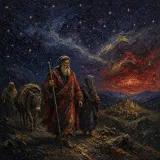
Abimelech comes to Abraham with Phichol, the commander of his army. He says he can see that God is with Abraham and asks for a sworn promise of honest treatment. Abraham agrees, but first raises a complaint about a well that Abimelech's servants seized. Abimelech says he did not know about it. The two men make a covenant, a binding agreement. Abraham sets apart seven ewe lambs as proof that he dug the well. They call the place Beer-sheba because both men swear there. Abimelech and Phichol then return to the land of the Philistines, the people named here as inhabitants of that land. Abraham plants a grove at Beer-sheba, calls on the LORD as the everlasting God, and stays in the region for many days.
In everyday life
Two ranchers meet beside a disputed well after one crew takes it over. They settle the complaint before signing a wider peace agreement. One rancher sets apart livestock to prove that he dug the well. Both leave knowing who owns the water and what each has promised. Modern owners usually record water rights in deeds or court files; Abraham and Abimelech seal theirs through an oath and livestock.
Notice
Genesis 21:25 Abraham does not let a peace agreement bury the seized well. He raises the grievance before the wider relationship is formally settled.
Genesis 21:22-34
King James Version22And it came to pass at that time, that Abimelech and Phichol the chief captain of his host spake unto Abraham, saying, God is with thee in all that thou doest:
23Now therefore swear unto me here by God that thou wilt not deal falsely with me, nor with my son, nor with my son’s son: but according to the kindness that I have done unto thee, thou shalt do unto me, and to the land wherein thou hast sojourned.
24And Abraham said, I will swear.
25And Abraham reproved Abimelech because of a well of water, which Abimelech’s servants had violently taken away.
26And Abimelech said, I wot not who hath done this thing: neither didst thou tell me, neither yet heard I of it, but to day.
27And Abraham took sheep and oxen, and gave them unto Abimelech; and both of them made a covenant.
28And Abraham set seven ewe lambs of the flock by themselves.
29And Abimelech said unto Abraham, What mean these seven ewe lambs which thou hast set by themselves?
30And he said, For these seven ewe lambs shalt thou take of my hand, that they may be a witness unto me, that I have digged this well.
31Wherefore he called that place Beer-sheba; because there they sware both of them.
32Thus they made a covenant at Beer-sheba: then Abimelech rose up, and Phichol the chief captain of his host, and they returned into the land of the Philistines.
33And Abraham planted a grove in Beer-sheba, and called there on the name of the LORD, the everlasting God.
34And Abraham sojourned in the Philistines’ land many days.
Details worth noticing
The opening image
Genesis 21:1 begins with “And the LORD visited Sarah as he had said, and the LORD did unto Sarah as he had spoken.”
Where the chapter turns
Genesis 21:17 forms a natural hinge: “And God heard the voice of the lad; and the angel of God called to Hagar out of heaven, and said unto her, What aileth thee, Hagar? fear not; for God hath…”
The final note
Genesis 21:34 leaves the reader with “And Abraham sojourned in the Philistines’ land many days.”
A word trail through the chapter
The words Abraham, Sarah, Abimelech, Isaac, water, Beer help reveal the chapter’s repeated concerns.
KJV words made clear
- suck
- nurse a baby at the breast.
- bondwoman
- an enslaved or unfree female servant.
- bowshot
- about the distance an arrow could be shot from a bow.
- wot
- know; an older English form used here.
- sojourned
- lived for a time in a place without settling there permanently.
Music and video connected to the passage
Related media appears when its Scripture reference overlaps this study. Music and video can illuminate a theme while the biblical text remains the foundation.