The big picture
Ezekiel 39 follows Gog's defeat beyond the moment of battle and into the long labor of aftermath. Weapons are knocked from the invaders' hands and then become fuel for the people they intended to despoil. The reversal is explicit: spoilers are spoiled and robbers robbed. Victory still leaves bodies, graves, bones, and a land that must be cleansed. Seven months of burial and continuing searches make the aftermath concrete rather than decorative. Birds and beasts are summoned to a terrible feast upon the fallen mighty, turning princely and military rank into no protection at all. The chapter then widens its explanation. Israel's former exile was not proof that its God had been defeated, but judgment for Israel's own iniquity. Gathering, restored divine favor, and the outpouring of the Spirit answer that estrangement and prepare for the sanctuary vision that follows.
In this chapter
- The Weapons Fall from the Hands Ezekiel 39:1-8
Chapter 39 repeats the sentence that governs Gog's entire campaign: "I am against thee." Then it makes defeat tactile.
- The Invaders Supply the Firewood Ezekiel 39:9-10
The invaders came for resources and leave resources behind.
- Victory Leaves Work to Be Done Ezekiel 39:11-16
The defeat of Gog does not vanish neatly when the fighting stops.
- A Feast No Victorious King Would Host Ezekiel 39:17-20
The next assembly is not an army council but a summons to birds and beasts.
- The Explanation Returns to the Exile Ezekiel 39:21-29
The chapter closes by explaining both Gog's defeat and Israel's earlier defeat so that neither can be misread.

Scripture beside the summary
Ezekiel · King James Version · 29Ezekiel 39:1-8
The Weapons Fall from the Hands
Chapter 39 repeats the sentence that governs Gog's entire campaign: "I am against thee." Then it makes defeat tactile. The bow is struck from one hand, the arrows fall from the other, and the army reaches Israel's mountains only to discover that arrival is not possession. Warriors become food for birds and beasts in the open field. Even the KJV's difficult phrase about a "sixth part" should not distract from what the surrounding language makes clear: weapons fail, forces fall, and the invasion does not survive its encounter with the LORD's judgment. Fire reaches beyond the immediate battlefield to Magog and secure coastlands. The stated issue is again God's holy name. It will be known in Israel and among the nations, and the day is described as the day already spoken of. Gog's collapse is therefore not presented as a surprise recovery by Israel. It is fulfillment of a declared word.

Deep dive
The chapter begins by repeating opposition to Gog, then moves immediately to the loss of effective weapons. Bow and arrows fall from the hands that intended to use them. The army reaches Israel's mountains, but arrival is not victory. Its destination becomes the place of its overthrow.
The KJV's "sixth part" in verse 2 reflects a disputed interpretation of a rare Hebrew verb. Older versions and commentators also support a sense such as leading Gog onward; Cambridge's discussion of the verse records this difficulty. A precise survival percentage should therefore not be built upon that phrase as though its meaning were uncontested. The surrounding outcome is much clearer: the weapons fail, the forces fall, and creatures consume the slain.
Fire also reaches Magog and those dwelling securely in the coastlands. The judgment is not confined to the point where the invasion meets its target. The LORD's name is made known in Israel, and the nations recognize him as Israel's Holy One. The day is described as arriving because it is the day he has spoken of.
Words to trace: LORD, Israel, fall, holy, cause, field
Verse-by-verse path
- Ezekiel 39:1
The chapter opens by repeating 38:2–3 almost word for word. The Gog oracle is built as two panels, each beginning with the same summons and each ending with the nations knowing the LORD. The second panel tells the defeat again, but stays on the ground to deal with what is left.
- Ezekiel 39:2
Four verbs in one verse have the LORD as their subject: turn back, lead, bring up, bring upon. Isaiah 14:25 had spoken of breaking the Assyrian “in my land, and upon my mountains”. The mountains of Israel, judged in chapter 6, become the place where the invader is broken.
- Ezekiel 39:3
An archer holds the bow in the left hand and draws arrows with the right. The horsemen of the northern steppe, Cimmerians and Scythians, were famous mounted archers. A single blow disables the whole technique: one hand loses the bow, the other the arrows.
- Ezekiel 39:4
“Ravenous birds” is ‘ayit, birds of prey, the word of Genesis 15:11, where birds of prey came down on Abram’s sacrifice “and Abram drove them away”. Here no one drives them off. The army that came for spoil is itself the spoil.
- Ezekiel 39:5
“The open field” is literally the face of the field: unburied ground. Yet verses 11 to 16 describe months of burial. The two belong to different moments: first the fall and exposure, then the cleansing work that clears the bodies away.
- Ezekiel 39:6
“Dwell carelessly” is the word Ezekiel used for Israel dwelling “safely” in 38:8, 11 and 14. Gog attacked a people who felt secure; now fire falls on his own secure homelands and on the “isles”, the coasts and islands of the Mediterranean world.
- Ezekiel 39:7
Isaiah calls God “the Holy One of Israel” some twenty-five times. Ezekiel’s form, “the Holy One in Israel”, is found only here. The name polluted by Israel’s conduct (36:20) will not be polluted “any more”.
- Ezekiel 39:8
“Behold, it is come, and it is done” repeats 21:7 almost exactly, where the same words were spoken over the news of Jerusalem’s fall. The prophet speaks of a future event in the past tense, as already accomplished in the LORD’s word.
Ezekiel 39:1-8
King James Version1Therefore, thou son of man, prophesy against Gog, and say, Thus saith the Lord GOD; Behold, I am against thee, O Gog, the chief prince of Meshech and Tubal:
2And I will turn thee back, and leave but the sixth part of thee, and will cause thee to come up from the north parts, and will bring thee upon the mountains of Israel:
3And I will smite thy bow out of thy left hand, and will cause thine arrows to fall out of thy right hand.
4Thou shalt fall upon the mountains of Israel, thou, and all thy bands, and the people that is with thee: I will give thee unto the ravenous birds of every sort, and to the beasts of the field to be devoured.
5Thou shalt fall upon the open field: for I have spoken it, saith the Lord GOD.
6And I will send a fire on Magog, and among them that dwell carelessly in the isles: and they shall know that I am the LORD.
7So will I make my holy name known in the midst of my people Israel; and I will not let them pollute my holy name any more: and the heathen shall know that I am the LORD, the Holy One in Israel.
8Behold, it is come, and it is done, saith the Lord GOD; this is the day whereof I have spoken.
Ezekiel 39:9-10
The Invaders Supply the Firewood
The invaders came for resources and leave resources behind. Shields, bucklers, bows, arrows, staves, and spears become fuel for Israel's cities, so abundant that the vision describes seven years of burning without the need to cut ordinary wood from field or forest. Ezekiel turns military equipment into household provision. The weapons that represented threat are reduced to something that keeps fires going. Then the section states its own interpretation in balanced verbs: those who came to spoil are spoiled, and those who came to rob are robbed. No modern technology needs to be hidden inside the list to make the reversal striking. The ancient equipment named in the passage already does the work. Gog calculated that Israel's restored prosperity could be consumed. Instead, the expedition itself becomes material the restored population can use. What was assembled to take from the land winds up sustaining people in it, a reversal as practical as it is humiliating.

Deep dive
The attention shifts from the fallen fighters to the equipment they brought. Shields, bows, arrows, staves, and spears are gathered for burning. The seven years give the aftermath an expansive duration, showing how completely the attempted seizure has been reversed. Israel's inhabitants do not need to go into the fields or cut wood from the forests for this fuel.
The last sentence interprets the scene through its matched actions. The spoilers are spoiled, and the robbers are robbed. Gog came expecting to carry away the restored people's goods; his own supplies now remain for their use. The description belongs to the weapons and burning named in the vision. Turning those items into a technical description of unmentioned modern armaments would move beyond what the passage supplies. Its clear point is already striking: the expedition that intended to consume the land's abundance instead leaves behind material that sustains its inhabitants.
Words to trace: burn, fire, weapons, arrows, both, bows
Verse-by-verse path
- Ezekiel 39:9
Ancient shields were largely wicker, wood and leather, bows were wood and horn, and spears and arrows were mounted on wooden shafts, so the arms of a vast army really would burn. The number seven returns: seven years of burning here, seven months of burial in verse 12.
- Ezekiel 39:10
When Israel left Egypt, “they spoiled the Egyptians” (Exodus 12:36). The same reversal is spelled out here in paired verbs. Isaiah 33:1 had put the principle as a woe: “when thou shalt cease to spoil, thou shalt be spoiled.”
Ezekiel 39:9-10
King James Version9And they that dwell in the cities of Israel shall go forth, and shall set on fire and burn the weapons, both the shields and the bucklers, the bows and the arrows, and the handstaves, and the spears, and they shall burn them with fire seven years:
10So that they shall take no wood out of the field, neither cut down any out of the forests; for they shall burn the weapons with fire: and they shall spoil those that spoiled them, and rob those that robbed them, saith the Lord GOD.
Ezekiel 39:11-16
Victory Leaves Work to Be Done
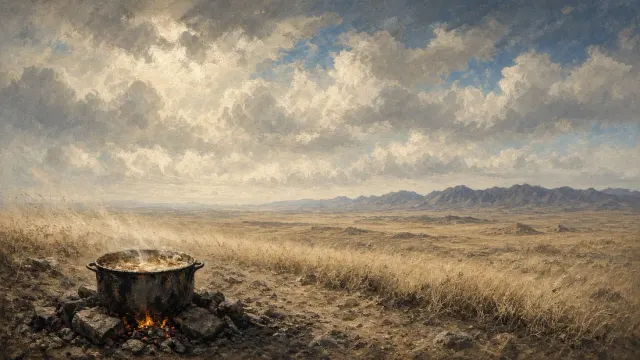
The defeat of Gog does not vanish neatly when the fighting stops. The invader receives land in Israel, but only as a grave. A whole valley becomes associated with the multitude, and seven months of burial are required to cleanse the country. Ezekiel makes the aftermath public labor. People bury the dead, dedicated searchers move through the land, travelers mark any discovered bone, and buriers return to remove what remains. The small detail of placing a sign beside a bone is especially revealing. Victory is not treated as permission to ignore the physical wreckage left behind. The land must be made clean for continuing habitation. Speculations about radiation or hidden protective procedures are unnecessary because the passage repeatedly tells the reader what the work is for. Bones are marked so they can be buried. The invader is gone, but cleansing requires patience, organization, and attention to what a triumphant population might otherwise be tempted to walk past.
Deep dive
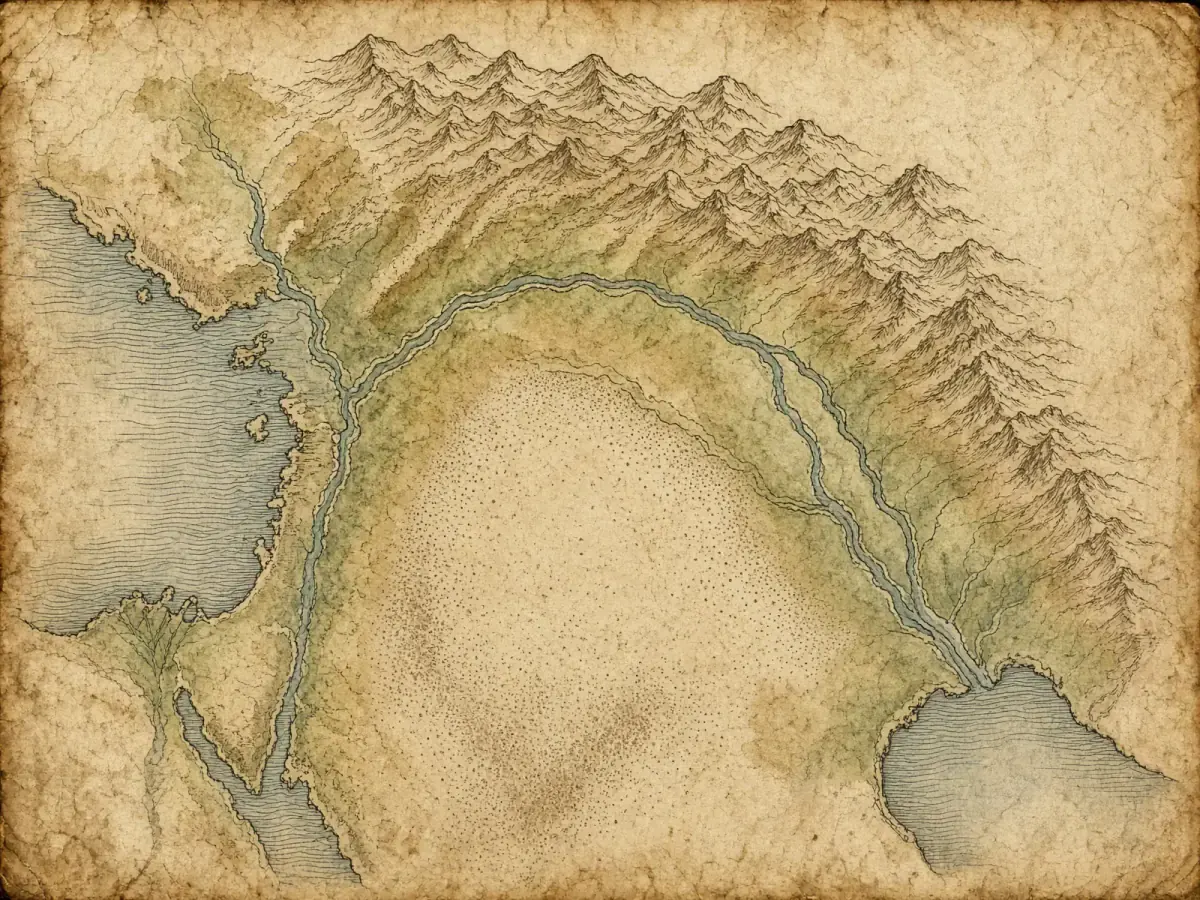
The invader receives a place in Israel, but it is a grave rather than an estate. The burial valley and its name make the scale of the defeated multitude part of the land's remembered geography. Seven months are assigned to the burial, and the work involves the people of the land. The announced victory has an aftermath that cannot simply be walked past.
A further search follows. Men are appointed to move through the country, and a discovered bone is marked until it can be buried. That small action gives unusual precision to the scene. The text does not only celebrate the disappearance of a threatening army; it attends to the bodily remains that would leave the land unclean.
The repeated purpose is cleansing. Nothing in the passage identifies protective equipment, radiation, or another concealed technological explanation for marking remains. Such proposals replace its stated concern with an imported one. Ezekiel's own sequence is sufficient: judgment has removed the threat, and deliberate burial work clears the land for continued habitation.
Words to trace: land, passengers, bury, cleanse, valley, Hamon
Verse-by-verse path
- Ezekiel 39:11
“The valley of the passengers” may be a play on Abarim, the range east of the Dead Sea (Numbers 27:12), since “passengers” and Abarim share a root. “Stop the noses” renders chasam, the verb for muzzling an ox in Deuteronomy 25:4: the valley is blocked, perhaps by the stench. Hamon-gog means “the multitude of Gog”.
- Ezekiel 39:12
Deuteronomy 21:23 forbade leaving a hanged body overnight, “that thy land be not defiled”. The logic here is the same: corpses on the ground pollute the land in which the LORD dwells. Seven months is the time it takes the whole house of Israel to finish the task.
- Ezekiel 39:13
“Renown” is shem, a name. Israel gains a reputation not for the victory, which was the LORD’s, but for the burying. “Glorified” is the verb of 28:22, where the LORD says of Sidon, “I will be glorified in the midst of thee”.
- Ezekiel 39:14
“Men of continual employment” is anshei tamid, men set apart permanently, a standing commission. Tamid is the word for the continual daily burnt offering (Numbers 28:3). After the seven months of public effort, a professional search begins for whatever was missed.
- Ezekiel 39:15
Numbers 19:16 makes anyone who touches “a bone of a man, or a grave” unclean for seven days. The marker, tsiyyun, is the word Josiah uses in 2 Kings 23:17 for a tomb marker: “What title is that that I see?” Later Jewish practice whitewashed graves before the pilgrim feasts for the same reason.
- Ezekiel 39:16
Hamonah means “multitude”. The word hamon was the refrain of chapters 31 and 32, used again and again for Pharaoh “and all his multitude”. No city of this name is known, and some take the clause as a later note explaining the valley’s name.
Ezekiel 39:11-16
King James Version11And it shall come to pass in that day, that I will give unto Gog a place there of graves in Israel, the valley of the passengers on the east of the sea: and it shall stop the noses of the passengers: and there shall they bury Gog and all his multitude: and they shall call it The valley of Hamon-gog.
12And seven months shall the house of Israel be burying of them, that they may cleanse the land.
13Yea, all the people of the land shall bury them; and it shall be to them a renown the day that I shall be glorified, saith the Lord GOD.
14And they shall sever out men of continual employment, passing through the land to bury with the passengers those that remain upon the face of the earth, to cleanse it: after the end of seven months shall they search.
15And the passengers that pass through the land, when any seeth a man’s bone, then shall he set up a sign by it, till the buriers have buried it in the valley of Hamon-gog.
16And also the name of the city shall be Hamonah. Thus shall they cleanse the land.
Ezekiel 39:17-20
A Feast No Victorious King Would Host
The next assembly is not an army council but a summons to birds and beasts. They are called to a great sacrifice on Israel's mountains, and the language deliberately blurs mighty men, princes, horses, and sacrificial animals into one terrible feast. Rank is still named, but it can no longer protect the person who bears it. Those who expected to decide the fate of others become the provision laid out before consuming creatures. Ezekiel's image is severe enough without making it gleeful. Israel is not commanded to eat the fallen. The feast belongs to the prophetic portrayal of judgment and exposure. Later biblical imagery will reuse the same dreadful summons because it captures a particular reversal: assembled military power can become the very spectacle of defeat it intended to impose on someone else. Gog's coalition came as a consuming threat. In the end, it is the gathered birds and beasts that consume on Israel's mountains.
Deep dive
The command to assemble is now addressed to birds and beasts rather than soldiers. The LORD provides a sacrifice upon Israel's mountains, and the language moves between human warriors and the fat animals of a sacrificial feast. Princes and mighty men occupy the place of the feast's provision. It is a dreadful reversal of rank: those who expected to determine the fate of others have become what the consuming creatures gather around.
The imagery is deliberately severe, and its severity should not be turned into cheerful spectacle. Horses, riders, and men of war together represent the defeated military strength. The command is not issued to Israel to consume them; it belongs to the prophetic picture of judgment and exposure.
Revelation 19:17–21 closely reuses this summons to birds and this catalogue of rulers, captains, mighty men, horses, and riders. The connection helps identify the image's function: a gathering against divine rule ends in a feast that publicly exposes the gathered powers' defeat.
Words to trace: sacrifice, blood, drink, flesh, Lord, mighty
Verse-by-verse path
- Ezekiel 39:17
“Every feathered fowl” is literally “bird of every wing”. The sacrifice, zevach, was a meal in which the worshippers ate the meat. Zephaniah 1:7 used the same picture: “the LORD hath prepared a sacrifice, he hath bid his guests.” Here the guests are scavengers, and they alone may drink the blood.
- Ezekiel 39:18
Bashan, the plateau east of the Sea of Galilee, was famous for its cattle; Amos 4:1 mocks the “kine of Bashan” and Psalm 22:12 has its “strong bulls”. The rams, lambs, goats and bullocks stand for the ranks of the fallen army, as the he goats stood for leaders in 34:17.
- Ezekiel 39:19
Leviticus 3:17 made it “a perpetual statute... that ye eat neither fat nor blood”; both belonged to God at the altar. The two things Israel may never eat are served here in excess, “till ye be full” and “till ye be drunken”, to guests outside the law.
- Ezekiel 39:20
“At my table” makes the LORD the host. “Chariots” may be read “riders” with a change of vowels, which suits horses better as a meal, and Revelation 19:18 has “the flesh of horses, and of them that sit on them”. Mighty men and men of war close the menu.
Ezekiel 39:17-20
King James Version17And, thou son of man, thus saith the Lord GOD; Speak unto every feathered fowl, and to every beast of the field, Assemble yourselves, and come; gather yourselves on every side to my sacrifice that I do sacrifice for you, even a great sacrifice upon the mountains of Israel, that ye may eat flesh, and drink blood.
18Ye shall eat the flesh of the mighty, and drink the blood of the princes of the earth, of rams, of lambs, and of goats, of bullocks, all of them fatlings of Bashan.
19And ye shall eat fat till ye be full, and drink blood till ye be drunken, of my sacrifice which I have sacrificed for you.
20Thus ye shall be filled at my table with horses and chariots, with mighty men, and with all men of war, saith the Lord GOD.
Ezekiel 39:21-29
The Explanation Returns to the Exile
The chapter closes by explaining both Gog's defeat and Israel's earlier defeat so that neither can be misread. The nations will see the LORD's judgment against the invader, but they are also told why Israel went into captivity. It was for iniquity, trespass, uncleanness, and transgression. Exile was not proof that Israel's God had been overpowered by stronger nations. His hidden face was itself part of judgment. That explanation makes the promised gathering more, not less, significant. The same LORD who sent the people away says he will gather them, show mercy, sanctify his name, and no longer hide his face. The language reaches toward a complete restored condition, leaving none behind among the nations. Its deepest resolution comes in the final line: "I have poured out my spirit upon the house of Israel." Weapons, graves, and international recognition all lead here, to the ending of estrangement and the return of divine presence.
Deep dive
The nations are to understand two things together. The LORD has acted decisively against Gog, and Israel previously went into captivity because of its own iniquity. The second claim prevents the first from becoming a claim that Israel never needed judgment. God's earlier hidden face was a response to trespass, not evidence that the nations had proved stronger than he was.
The promised gathering is correspondingly complete in its language. Israel knows the LORD through both exile and return, and the announcement speaks of leaving none of them behind among the nations. The relation between these comprehensive promises and particular historical stages of return is an interpretive question; the text itself speaks in the fullness of the restored condition rather than offering a sequence of dated migrations.
The last promise is that the LORD will no longer hide his face, because he has poured out his Spirit upon the house of Israel. This is the chapter's deepest resolution. The battlefield, the fuel, the graves, and the public recognition lead into renewed presence. The vision of the sanctuary can begin because the ending of estrangement has just been announced.
Words to trace: heathen, house, Israel, LORD, captivity, face
Verse-by-verse path
- Ezekiel 39:21
The glory that left Jerusalem in chapters 10 and 11 is here set “among the heathen” in judgment. Four chapters later it will return to the house (43:2). “My hand” has been on Ezekiel throughout the book; here it is laid on the nations.
- Ezekiel 39:22
“From that day and forward” is an open-ended date, marking a knowledge that does not lapse. The defeat of Gog is presented as settling, once and for all, the question of whose God Israel’s God is.
- Ezekiel 39:23
“I hid my face” is the language of Deuteronomy 31:17–18, where Moses foresees the LORD hiding his face and Israel being devoured. The phrase appears in Ezekiel only in this chapter, three times, twice about the past and once, in verse 29, to say it will not happen again.
- Ezekiel 39:24
“Uncleanness” and “transgressions” join the language of purity with the language of rebellion, tum’ah with pesha‘. The verse repeats verse 23 in compressed form, so that the nations and Israel alike hear twice that the exile was a sentence, not a defeat.
- Ezekiel 39:25
“Bring again the captivity” is shuv shevut, often better rendered “restore the fortunes”; Job 42:10 uses it of Job, who was never a captive. “Jacob” is a rare name for the people in Ezekiel. The jealousy that burned against the nations in 36:5 now burns for the holy name.
- Ezekiel 39:26
The Hebrew consonants read “they shall forget their shame”, and many modern versions translate it so; the King James reads “borne”, the verb nasa’. The difference is one letter. Either way the shame is placed in the past, from within a land where “none made them afraid”, the words of 34:28.
- Ezekiel 39:27
“Sanctified in them in the sight of many nations” is almost word for word 20:41 and 28:25. “Their enemies’ lands” is plural: by this time Judeans were scattered not only in Babylon but in Egypt (Jeremiah 43 and 44) and across the neighbouring countries.
- Ezekiel 39:28
“Caused them to be led into captivity” uses galah, from which comes golah, “the captivity”, Ezekiel’s own name for his audience (3:11; 11:25). The exile community is told it will be the last of its kind: “none of them any more there”.
- Ezekiel 39:29
Throughout the book the LORD has “poured out” his fury: 7:8, 9:8, 20:33, 36:18 and more. The same verb, shafakh, now pours out his spirit, as in Joel 2:28. The book reserves this use of the verb for its last sentence before the temple vision begins.
Ezekiel 39:21-29
King James Version21And I will set my glory among the heathen, and all the heathen shall see my judgment that I have executed, and my hand that I have laid upon them.
22So the house of Israel shall know that I am the LORD their God from that day and forward.
23And the heathen shall know that the house of Israel went into captivity for their iniquity: because they trespassed against me, therefore hid I my face from them, and gave them into the hand of their enemies: so fell they all by the sword.
24According to their uncleanness and according to their transgressions have I done unto them, and hid my face from them.
25Therefore thus saith the Lord GOD; Now will I bring again the captivity of Jacob, and have mercy upon the whole house of Israel, and will be jealous for my holy name;
26After that they have borne their shame, and all their trespasses whereby they have trespassed against me, when they dwelt safely in their land, and none made them afraid.
27When I have brought them again from the people, and gathered them out of their enemies’ lands, and am sanctified in them in the sight of many nations;
28Then shall they know that I am the LORD their God, which caused them to be led into captivity among the heathen: but I have gathered them unto their own land, and have left none of them any more there.
29Neither will I hide my face any more from them: for I have poured out my spirit upon the house of Israel, saith the Lord GOD.
Questions to keep in mind while reading
- Identify the historical crisis, covenant failure, warning, and promised hope.
- Distinguish the prophet’s immediate audience from later biblical connections.
- Do not turn present-day headlines into confident fulfillment claims without textual evidence.
Text first
Where readers differ
The chapter summary begins with what the passage says and how its parts fit together. It does not assume one denomination has already settled every question. Where a conclusion depends on a tradition, literary theory, or historical reconstruction, that dependence is named openly.
The KJV text is presented first. Interpretive conclusions are labeled, and differences are introduced only when they help a reader understand why serious communities do not always reach the same answer.
Comparative interpretive notes for this chapter are in preparation. Until reviewed notes are ready, this page separates the KJV text from summary and application without claiming that serious readers agree on every question.
Questions beneath the surface
- What account of God, human freedom, responsibility, and the good life emerges from Ezekiel 39?
- Which tension does the chapter refuse to resolve quickly?
- What changes when the chapter is read as part of the whole canon rather than as an isolated moral lesson?
- Where might a sincere reader confuse a familiar tradition with something the text states directly?
Questions for serious personal contemplation
These open-ended questions make room for tension, honest response, prayer, and conclusions that remain accountable to the chapter.
Observe without rushing
What part of Ezekiel 39 makes you stop, feel unsettled, or feel surprised, and why?
Which detail in the passage would be easiest to overlook? How does that detail change your understanding?
Where do you see tension between what happens and this focus: Ezekiel 39 develops its own movement around LORD, Israel, land, heathen, house?
What important question does the passage leave open instead of resolving quickly?
Examine your inner life honestly
Which person, response, fear, or desire in the passage feels most like your own life right now?
What assumption about God, other people, or yourself does this text challenge?
Which part would you rather soften, avoid, or explain away too quickly? What might that reaction reveal?
If this Scripture could ask you one direct question, what do you think it would ask?
Respond with wisdom and courage
What do you need to remember, confess, grieve, thank God for, or trust after reading this passage?
How might another faithful person read this situation differently without ignoring the text?
What obedient response would be costly, uncomfortable, or slow, yet still faithful to Scripture?
What question will you carry into prayer this week, and which verses will you keep in front of you?
Music and video connected to the passage
Related media appears when its Scripture reference overlaps this study. Music and video can illuminate a theme while the biblical text remains the foundation.