The big picture
Exodus 12 gives Israel's departure a form that can outlive the generation leaving Egypt. The calendar is reset, households select and share an unblemished animal, blood marks the doorway, and the meal is eaten dressed for travel. Before the chapter reports the midnight judgment, it already gives future Israel an annual memorial, seven days of unleavened bread, holy assemblies, and answers for children who will ask what the observance means. At midnight the firstborn die throughout Egypt, and Pharaoh finally orders Israel out with the families and animals he had tried to keep. The people leave in haste with unleavened dough, valuables, livestock, and a mixed multitude. The chapter then looks backward over the long sojourn and forward into Passover participation, defining a guarded covenant meal that also gives a way for committed outsiders to enter its observance.
Central truth
The LORD appoints Passover blood as the sign for preserving Israel’s households during judgment on Egypt and gives a memorial meal that teaches later generations how he delivered them. The LORD brings Israel out of Egypt and orders their continuing remembrance through Passover, firstborn redemption, and instruction, while guiding their journey by cloud and fire.
The study notes have a page of their own
The movement by movement analysis, the words to trace, the verse by verse notes and where readers differ are written for someone studying alone. They are on the Deep Personal Reflections page for this chapter. This page is the lesson.
A chapter-specific teaching brief
These anchors come from this chapter itself. They help a teacher use the Level 1 overview, the Level 2 study, and the Scripture text as one lesson.
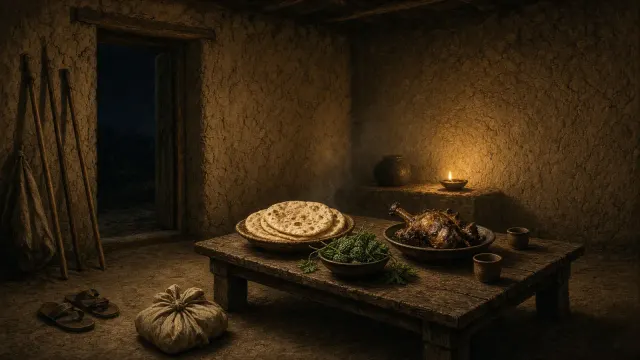
Open with the chapter’s first image
Exodus 12:1: “And the LORD spake unto Moses and Aaron in the land of Egypt, saying,”
Slow down at the turning point
Exodus 12:26: “And it shall come to pass, when your children shall say unto you, What mean ye by this service?”
Keep this word trail visible
LORD, Egypt, Israel, land, children, Egyptians
What to explain, in order
Teach the passage in this order. Each step names the verses it rests on, so every point can be shown in the text before it is applied.
Exodus 12:1–36
Exodus 12:1-6
A new beginning of months
Start with 12:2: "This month shall be unto you the beginning of months". Explain that God reorders Israel's calendar around this rescue; their year begins with deliverance. Then the instructions for the lamb: chosen on the tenth day, kept until the fourteenth, killed "in the evening" by the whole assembly. Explain "without blemish" as whole and healthy. Teach this first because it shows the Passover as a planned act of God, not a desperate improvisation, and because the details of choice and sharing matter later.
Exodus 12:7-13
The blood and the promise
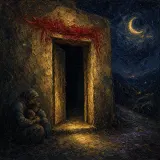
Read 12:7, then 12:12-13 together. Explain the "side posts" and "upper door post" as the frame of the door. Explain that "pass over" means God passes by the marked house and the plague does not touch it. Point out that 12:12 includes judgment "against all the gods of Egypt", which ties the night to the whole contest of chapters 7 to 11. Teach that the blood is a "token", a sign, and that the promise of 12:13 is what makes it effective. This is the centre of the passage.
Exodus 12:14-20
A feast for ever
Explain the feast of unleavened bread: seven days without leaven, beginning and ending with a holy convocation. Explain leaven as yeast or a piece of fermented dough used to make bread rise. Point out that the rules include "a stranger, or born in the land" (12:19). Teach this briefly but clearly so the class understands that the one night becomes a yearly observance, and that the Book of Exodus places these instructions before the event, so that remembering is part of the rescue itself.
Exodus 12:21-28
What mean ye by this service
Now Moses passes the instructions to the elders, adding the hyssop and the command to stay indoors. Explain hyssop as a small bushy plant used like a brush. Then read 12:26-27, the children's question and the given answer. Let the class notice that the answer is a short confession of what God did. Then 12:27-28: the people bow, worship and obey. Teach this step to show faith expressed as doing what God said, in the dark, before anything has happened.
Exodus 12:29-36
Midnight
Read 12:29-30 once, plainly and without elaboration. Name the grief: "a great cry in Egypt". Explain that Pharaoh, who would not let God's firstborn go (4:22-23), now loses his own. Then Pharaoh's surrender, which reverses every condition of his earlier offers, and his request, "bless me also". Close with the people carrying unleavened dough and receiving silver, gold and clothing from the Egyptians, as 3:21-22 promised. Teach this last with restraint, and do not let anyone in the room treat the deaths as a triumph.
Exodus 12:37–13:22
Exodus 12:37-42
A mixed multitude goes out
Begin with the departure: Rameses to Succoth, a vast number of men, children, a mixed multitude, livestock. Explain "mixed multitude" as people of other nations who joined Israel, perhaps including Egyptians. Then the unleavened cakes, baked because "they were thrust out of Egypt, and could not tarry". Read 12:40-41 and explain the four hundred and thirty years. Point to 12:42, "a night to be much observed". Teach this first so the class sees the exit as real and crowded before the passage turns to how it must be remembered.
Exodus 12:43-51
One law for homeborn and stranger
Read the ordinance as a whole. Explain that circumcision was the sign of the covenant with Abraham (Genesis 17), so the condition is joining the covenant people, not belonging by birth. The foreigner passing through and the hired worker do not eat; the bought servant and the committed sojourner do, once circumcised. Verse 46 adds that no bone is to be broken, a detail John 19:36 will recall. Teach this step to show that Israel's identity is defined by covenant, and that the door is open to outsiders who join.
Exodus 13:3-10
Remember this day
Moses tells the people, "Remember this day". Explain the month Abib as early spring. The feast of unleavened bread will be kept in the land. Read 13:8 and point out the first person: "that which the LORD did unto me". Then 13:9: a sign on the hand and a memorial between the eyes. Explain that readers understand this either as a figure for constant remembrance or as a literal reminder worn on the body, and that both have been practised. Teach this to show that the faith is handed on by parents speaking personally.
Exodus 13:11-16
The firstborn belong to the LORD
God claims every firstborn: "it is mine" (13:2). Explain "openeth the womb" and "matrix" as the first birth. Then the provisions of 13:12-13: clean animals are given, the donkey is redeemed with a lamb, sons are redeemed. Explain redeem as buying back by a payment. Read 13:15 to give the reason: the LORD struck Egypt's firstborn and spared Israel's. Teach this as the meaning of the Passover worked into Israel's family life, every time a first child is born. Numbers 3 and 18 later explain the price.
Exodus 13:17-19
The longer way and Joseph's bones
Read 13:17-18 and explain the way of the Philistines as the coastal road, the shorter route to Canaan. God knows the people are not ready for war. Explain "harnessed" as in battle order, organised in ranks. Then Joseph's bones, with Genesis 50:24-25 read alongside. Teach these together because both show God guiding with long memory and careful knowledge: he remembers his promise to Joseph and he knows the weakness of the people he is leading.
Exodus 13:20-22
Pillar of cloud, pillar of fire
End with the camp at Etham and the presence of the LORD going before them. Read 13:21-22 and point out that the pillar is never taken away, day or night. Explain that the cloud guides by day and the fire gives light by night, so they can travel either way. Connect forward to 14:19-20 and 40:34-38, where the cloud fills the tabernacle. Teach this last so the class leaves the unit with the image of God visibly leading his people into the wilderness.
Where learners get stuck
The misreadings this passage tends to produce, and how to answer each from the text.
Exodus 12:1–36
"The blood on the door was magic that kept death out."
The blood is called "a token" (12:13), a sign. What protects is God's promise: "when I see the blood, I will pass over you". The household's part is to believe the word and obey it, marking the door and staying inside (12:22). Hebrews 11:28 calls this faith. Teach learners that the blood's power lies in what God said about it, not in any property of the blood, and that this is how signs work throughout Exodus.
"God killed innocent children in Egypt, so he is cruel."
Take the grief seriously and do not hurry past it. Then show the context the text gives: Pharaoh ordered Israel's sons drowned (1:22); God named Israel his firstborn and warned Pharaoh of this exact judgment (4:22-23); nine judgments and repeated warnings came first (11:1-10). Exodus presents the night as God's judgment on a nation's sustained cruelty. Different readers carry this question differently; honour the difficulty rather than offering a glib answer.
"Passover was just the first Seder meal like the one families keep today."
The later Passover meal developed over centuries, with readings, cups and additional foods. Exodus 12 commands roast lamb, unleavened bread and bitter herbs, eaten dressed for travel and "in haste" (12:8-11). Teach the first Passover as Exodus describes it and treat later customs as later, without belittling them. This protects the class from importing details and from missing the urgency of the original night.
"The Israelites stole from the Egyptians."
The text says "the LORD gave the people favour in the sight of the Egyptians, so that they lent unto them such things as they required" (12:36). The verb rendered "borrowed" in 12:35 is commonly understood as "asked". The Egyptians give willingly, urging Israel to leave. God promised this in 3:21-22 so that Israel would not go out empty after generations of unpaid labour. Teach it as provision and as a measure of justice, not theft.
Exodus 12:37–13:22
"Only Israelites left Egypt."
Verse 38 says "a mixed multitude went up also with them". People of other backgrounds joined the exodus, and 12:48-49 makes provision for strangers to keep the Passover on equal terms, "One law shall be to him that is homeborn, and unto the stranger". Teach the class that from its first night Israel included people who were not born into it, joined through the covenant sign. This matters for how they read the rest of the Old Testament.
"Israel sacrificed its firstborn children to God."
The text rules this out. Verse 13 says "all the firstborn of man among thy children shalt thou redeem" (13:13), and "all the firstborn of my children I redeem" (13:15). Redeeming means buying back. The firstborn sons belong to God because he spared them in Egypt, and they are redeemed rather than offered. Teach this carefully, because the word sanctify in 13:2 can alarm learners who do not read the following verses.
"God took the long way because he did not know the short way was dangerous."
Verse 17 gives God's reason, "Lest peradventure the people repent when they see war, and they return to Egypt". He knows exactly what lies on the near road and what the people can bear. The longer route is a mercy fitted to their weakness. Teach learners that a long road is not necessarily a wrong road, and that God's guidance in this passage takes account of the people's fears.
"Keeping the feast is just tradition; you do it because your family always has."
The passage insists on meaning. Parents are to say, "This is done because of that which the LORD did unto me" (13:8), and to answer "What is this?" with "By strength of hand the LORD brought us out" (13:14). The practice is meant to carry a personal confession of God's act. Teach learners that the passage puts explanation beside practice so that ritual never becomes empty.
Learning objectives
- Identify the animal and household provisions for Passover.
- Explain the blood’s stated function at the doorway.
- Distinguish departure-night instructions from continuing memorial observance.
- Explain the answer commanded for children’s questions.
- Trace the firstborn judgment and Pharaoh’s resulting release.
- Distinguish Exodus’s wording from later Christian interpretation.
- Identify the departing company without inventing a total population.
- Explain the Passover participation rule for a sojourner.
- Distinguish firstborn animal offerings from the redemption of sons.
- Explain how observances prompt teaching about deliverance.
- Connect Joseph’s carried bones with his earlier oath.
- State the reason God does not choose the nearer route.
Teacher preparation
- Read Exodus 11:4–10 and 12:1–36; chart animal selection, midnight judgment, and departure preparations.
- Define “without blemish,” “sodden” as boiled, “lintel” as the upper doorway member, and “unleavened” as made without leaven.
- Prepare a doorway sketch with headings for that night and future generations; avoid reenacted sacrifice or an improvised observance.
- Read Hebrews 11:28 and 1 Corinthians 5:7–8; identify faith and Christ’s Passover connection as explicit later biblical interpretation.
- Describe the firstborn deaths soberly; do not reduce them to infants or erase the Egyptian households’ grief.
- Read Exodus 12:37–13:22; mark the shifts between travel and instructions for remembrance.
- Retain “about” and “men, beside children” in 12:37; do not invent a population total or an absolute date from the 430 years.
- Define “victual” as food, “matrix” as womb, and “redeem” here through the substitute described in 13:13.
- Explain circumcision’s covenant role from Genesis 17:10–14; acknowledge the servant status in 12:44 without making the rule a modern instruction.
- Prepare a schematic route; explain “harnessed” as equipped or arrayed, without assuming military experience or a precise formation.
Evidence and interpretation checks
Explicit
Cite Exodus 12:13 and 23 for the blood-sign and the LORD’s protection; cite 12:26–27 for the commanded explanation to children. Locate the mixed multitude in Exodus 12:38, the redeemed sons in 13:13, and God’s stated reason for the longer route in 13:17.
Scripture-supported
Use 1 Corinthians 5:7 to establish the Christian connection between Passover and Christ, rather than presenting that connection as merely an ingenious illustration. Use Genesis 50:24–25 and Exodus 13:19 to identify carrying Joseph’s bones as fulfillment of an oath, not an unexplained travel custom.
Strong inference
Infer from Exodus 12:2, 14, and 26–27 that deliverance is to shape the calendar and communal memory, not remain an unexplained annual routine. Infer from Exodus 13:8–9 and 14–16 that the observances are intended to produce informed remembrance, not actions whose meaning is withheld from children.
Possible or traditional reading
Treat the claim that the doorway’s blood markings themselves depict a cross as a devotional proposal; Exodus 12:7, 22 does not make that identification. Present literal wearable reminders and figurative language for embodied remembrance as readings of Exodus 13:9, 16; the verses do not describe later objects in detail.
Limit
Do not identify the destroyer more precisely than Exodus 12:23 does, or claim 12:29 explains every individual death’s moral circumstances. Do not derive a total headcount or exact modern route from Exodus 12:37–38 and 13:17–20; the passage provides selected numbers, places, and reasons.
Discussion with answer guidance
1. What governs the choice of animal and the size of the eating group?
What a good answer contains
Each household takes "a lamb for an house" (12:3), and if the household is too small, it shares with "his neighbour next unto his house", sharing it "according to the number of the souls" (12:4). The animal must be "without blemish, a male of the first year", taken "from the sheep, or from the goats" (12:5). A good answer sees that the rules are about both the animal's quality and making sure nothing is wasted and no one is left out. A weak answer imagines only a lamb or one lamb per family regardless of size.
Show teacher guidance
Use verses 3–6: a male of the first year without blemish, from sheep or goats; small households share according to the number eating.
2. What does God promise concerning the blood, and what must the household do?
What a good answer contains
God says, "when I see the blood, I will pass over you, and the plague shall not be upon you to destroy you" (12:13). The household must strike the blood on the side posts and lintel (12:7, 22) and "none of you shall go out at the door of his house until the morning" (12:22). A strong answer puts the protection in God's promise and the household's obedient trust. A weak answer treats the blood as a charm that worked by itself, or forgets that they had to stay inside.
Show teacher guidance
Join verses 7, 13, and 22–23: mark the doorway and remain inside until morning; protection rests on God’s stated promise, not independent magical power.
3. How do the meal’s clothing and food instructions fit imminent departure?
What a good answer contains
They eat roast lamb with "unleavened bread; and with bitter herbs" (12:8), dressed "with your loins girded, your shoes on your feet, and your staff in your hand" and "in haste" (12:11). Explain girded loins as robes tucked up for travel. By 12:34 they carry their dough "before it was leavened". A good answer connects every instruction to readiness to leave that night. A weak answer imports a later Passover meal with its added foods and readings.
Show teacher guidance
Read verses 8–11 and 34: roasted food, unleavened bread, bitter herbs, readiness, and haste. Do not import a complete later festival menu.
4. Why give future children an answer before Israel has even left?
What a good answer contains
Because the meal is meant to become a memorial: "this day shall be unto you for a memorial" (12:14), and "when your children shall say unto you, What mean ye by this service?" the answer is ready (12:26-27). The answer names the LORD "who passed over the houses of the children of Israel in Egypt, when he smote the Egyptians, and delivered our houses". A good answer sees that rescue and remembering are planned together. A weak answer has the ritual come first and the meaning later.
Show teacher guidance
Use verses 14 and 24–27: the event is to become an understood memorial. The commanded answer names both judgment and the preservation of their houses.
5. How far does the midnight judgment reach, and what changes in Pharaoh’s command?
What a good answer contains
It reaches "from the firstborn of Pharaoh that sat on his throne unto the firstborn of the captive that was in the dungeon; and all the firstborn of cattle" (12:29). Verse 30 adds that "there was not a house where there was not one dead". Pharaoh now says, "Rise up, and get you forth", and adds, "take your flocks and your herds", and finally, "be gone; and bless me also" (12:31-32). A good answer notes the complete reversal of 10:24 and treats the grief seriously. A weak answer celebrates.
Show teacher guidance
Read verses 29–33: palace, dungeon, and livestock are included; Pharaoh now orders the people and their flocks to go. Do not celebrate bereavement as comedy.
6. What do Hebrews 11:28 and 1 Corinthians 5:7 add without replacing Exodus?
What a good answer contains
Hebrews 11:28 says that Moses by faith "kept the passover, and the sprinkling of blood", and 1 Corinthians 5:7 says "Christ our passover is sacrificed for us". A good answer treats these as later Scripture reading Exodus 12 in the light of Christ, while keeping the historical night in Egypt in full view. A weak answer treats every detail of the meal as a hidden symbol, or lets the later meaning swallow the actual rescue of Israel's households.
Show teacher guidance
Identify faith and Christ our Passover as later scriptural interpretation. Keep Israel’s actual rescue visible and reject unsupported meanings assigned to every meal detail.
7. Who leaves Egypt, and what does the number in 12:37 actually count?
What a good answer contains
The verse counts "about six hundred thousand on foot that were men, beside children" (12:37). It counts men, not the whole population. Verse 38 adds "a mixed multitude" who went with them, and "flocks, and herds, even very much cattle". A good answer names all three groups and sees that the people leaving are larger and more varied than Israel's men alone. A weak answer treats the number as a census of everyone, or leaves out the non-Israelites who joined them.
Show teacher guidance
Identify about six hundred thousand men on foot, besides children, plus the mixed multitude and livestock in verse 38. Reject that number as a complete population total.
8. Can a sojourner participate in Passover, and on what terms?
What a good answer contains
At first "There shall no stranger eat thereof" (12:43), and a foreigner or hired servant may not (12:45). But a bought servant may eat once circumcised (12:44), and a stranger who "will keep the passover to the LORD" may do so when "all his males be circumcised", and then "he shall be as one that is born in the land" (12:48). Verse 49 sums it up: "One law shall be to him that is homeborn, and unto the stranger". A good answer reads the whole ordinance; a weak one stops at verse 43.
Show teacher guidance
Read 12:43–49 together: male circumcision permits participation, with one law for homeborn and sojourner. Do not isolate the initial exclusion from the stated provision.
9. What happens to a firstborn donkey, and what must happen to a firstborn son?
What a good answer contains
The law reads, "every firstling of an ass thou shalt redeem with a lamb; and if thou wilt not redeem it, then thou shalt break his neck: and all the firstborn of man among thy children shalt thou redeem" (13:13). A donkey cannot be sacrificed, so a lamb is given in its place or the donkey is killed. A son is always redeemed. A strong answer stresses the word redeem and links it to 13:15. A weak answer suggests Israel sacrificed children, which this verse rules out.
Show teacher guidance
Use 13:13–15: the donkey may be redeemed with a lamb; sons are redeemed. Correct any reading commanding child sacrifice.
10. What answer should a child receive about these observances?
What a good answer contains
"This is done because of that which the LORD did unto me when I came forth out of Egypt" (13:8), and when a son asks "What is this?" the answer is "By strength of hand the LORD brought us out from Egypt, from the house of bondage" (13:14), with the account of the firstborn in 13:15. A good answer gives a personal, specific confession of God's act. A weak answer says only that it is tradition, which is exactly what the passage is trying to prevent.
Show teacher guidance
Read 13:8 and 14–15: name the LORD’s strong-handed rescue from bondage and the firstborn judgment. Avoid substituting “because we always do this.”
11. Why do Joseph’s bones belong among the departure details?
What a good answer contains
Joseph made Israel swear, "God will surely visit you; and ye shall carry up my bones away hence with you" (13:19, recalling Genesis 50:25). Carrying the bones keeps that oath and shows that the promise Joseph trusted is being fulfilled. A good answer connects the two books and sees the departure as the fulfilment of a long-held hope. A weak answer turns it into sentiment about honouring a hero, or does not know why Joseph's bones were in Egypt at all.
Show teacher guidance
Connect 13:19 with Genesis 50:24–25. Explain the remembered oath and promised visitation rather than inventing sentimental motives.
12. Why does God avoid the nearer route, and how does he guide the people?
What a good answer contains
"God led them not through the way of the land of the Philistines, although that was near; for God said, Lest peradventure the people repent when they see war, and they return to Egypt" (13:17). He leads them "about" by the wilderness, and goes before them "in a pillar of a cloud" by day and "a pillar of fire" by night (13:21). A good answer sees God's care for a fragile people and his constant presence. A weak answer assumes the shortest route is always God's route.
Show teacher guidance
Use 13:17–22: anticipated war could prompt return to Egypt; the cloud and fire lead and give light. Nearer is not the stated criterion for this journey.
Responsible application
Heart and habits
Distinguish trusting the promise in 12:13 from treating an object as powerful by itself.
Relationships and community
Use 12:4 to plan a fictional communal remembrance that accounts for small households.
Teach the meaning of the observance
Draft a child-accessible answer to 12:26 using verse 27; preserve deliverance and judgment without graphic detail or a demanded profession of faith.
Keep the explanation with the practice
Draft a brief teaching label for unleavened bread, firstborn redemption, or Joseph’s bones, including the event or promise the object recalls.
Session plans
Two timings of the same lesson. The shorter keeps the reading, the central discussion and one response; the longer gives the confusions and the application their own time.
Exodus 12:1–36
45 minutes
Before midnight
Read 12:1-2 and ask what it means for a nation to begin its year with rescue.
The lamb and the household
Read 12:3-11. Ask questions one and three and list the items of readiness.
The blood and the promise
Read 12:12-13 and 12:21-23. Ask question two and take confusion one.
Tomorrow's children
Read 12:14 and 12:24-28. Ask question four and practise the answer of 12:27 aloud.
Midnight
Read 12:29-36 soberly. Ask question five and take confusion two with care.
Handout
Read the key verse together and give out the sheet.
90 minutes
Remembering a rescue
Ask the group how families remember important events. Then read 12:1-2.
Preparing the meal
Read 12:3-11. Ask questions one and three, explain girded loins and unleavened bread, and take confusion three.
The token on the door
Read 12:12-13 and 12:21-23. Ask question two, explain hyssop and lintel, and take confusion one.
A feast for ever
Read 12:14-20 and explain leaven. Note the inclusion of the stranger in 12:19.
The children's question
Read 12:24-28. Ask question four and let pairs practise asking and answering.
Midnight and the cry
Read 4:22-23, then 12:29-36. Ask question five, then take confusions two and four.
Christ our passover
Read Hebrews 11:28 and 1 Corinthians 5:7-8. Ask question six.
Application and prayer
Work through the application on teaching the meaning of an observance, read the key verse and pray.
Exodus 12:37–13:22
45 minutes
The loaded departure
Read 12:37-42 and ask who left Egypt. List the groups on the board.
Who may eat
Read 12:43-51. Ask questions one and two, and take confusion one.
The firstborn
Read 13:1-2 and 13:11-16. Ask question three and take confusion two.
The child's answer
Read 13:3-10. Ask question four, take confusion four, and practise the answer of 13:8 aloud.
The longer way and the pillar
Read 13:17-22. Ask questions five and six.
Handout
Read the key verse together and give out the sheet.
90 minutes
A night to be observed
Ask the group to name a night their family still talks about. Then read 12:37-42.
The mixed multitude
Ask question one, explain the number and the mixed multitude, and take confusion one.
One law
Read 12:43-51 and Genesis 17:10-12. Ask question two and point to John 19:36 for 12:46.
Redeemed firstborn
Read 13:1-2 and 13:11-16. Ask question three and take confusion two.
Shew thy son
Read 13:3-10 and 13:14. Ask question four, take confusion four, and let pairs practise question and answer.
Joseph's bones
Read 13:19 with Genesis 50:24-26. Ask question five.
The pillar
Read 13:17-22. Ask question six and take confusion three.
Application and prayer
Work through the application on keeping the explanation with the practice, read the key verse and pray.
Adapting the lesson
Exodus 12:1–36
Children
Set up a doorway with tape and let children pretend to be a family getting ready: shoes on, bags packed, bread with no yeast. Explain that God told his people to put a special mark on the door, and that God promised to keep every family with the mark safe. Say only that a very sad thing happened in Egypt that night and Pharaoh finally let the people go. Do not describe the deaths.
Youth
Ask what makes a sign meaningful, a ring, a flag, a scar. Then read 12:13 and talk about the blood as a token whose meaning God gives. Practise the question and answer of 12:26-27. Let them ask the hard question about the firstborn and answer it with the text's context, admitting that it is heavy. Then read 1 Corinthians 5:7 and ask what Christians see in this night.
Adults
Explore the theology of Passover in Exodus and its reading in the New Testament, including the Last Supper accounts. Discuss the calendar change of 12:2 and how worship can be built around remembering rescue. Give time to the difficulty of 12:29-30; some adults have lost children, so speak of the cry in Egypt with care and do not explain grief away.
One to one
Read 12:21-28 together and ask what it would have been like to stay inside that night, trusting a promise. Follow that. If the person is anxious about something ahead, let 12:13 be heard as God's word about protection, without promising particular outcomes. If they raise the deaths in Egypt, listen and read 4:22-23 together.
Exodus 12:37–13:22
Children
Give each child a paper strip to colour as a cloud on one side and fire on the other. Explain that God walked in front of his people as a big cloud in the day and a bright fire at night, so they always knew where to go. Tell them Joseph's bones were carried along because God kept his promise. Let children practise the question "What is this?" and the answer from 13:14.
Youth
Ask them what traditions in their families or churches have lost their meaning for them. Read 13:8 and 13:14 and talk about why God wanted parents to explain. Then read 13:17 and discuss when the longer road might be the better one. Talk about the mixed multitude and who belongs in God's people. Keep family discussions voluntary.
Adults
Spend time on the theology of redemption of the firstborn and its development in Numbers 3, and on the inclusion of strangers through covenant in 12:48-49. Discuss how faith is taught at home and in church, and what makes practice meaningful. Some adults have not had believing parents; make the point that 13:8 is about anyone passing faith on, not only biological families.
One to one
Read 13:17-22 together and ask whether they are on a road that feels longer than it should be. Follow that gently. Let 13:21-22 be heard as God's presence that is not taken away. If they are a parent or mentor, read 13:8 and ask what one sentence they would say about what God has done for them.
Song and video learning lab
A song or video may interpret, compress, or dramatize the text. Its value becomes clearer when its choices are compared with Scripture.
- Before the media: the exact passage and its central movement.
- During the media: the words, people, events, and emotions the artist emphasizes.
- After the media: what it clarifies, what it leaves out, and what belongs back in the biblical text.
Handout
One page for learners to take home. The print button prints this section alone.
Exodus 12:1–36
The passage in brief
God tells Israel to begin a new calendar with this month. Each household is to choose a lamb, kill it in the evening, paint its blood on the doorframe, and eat it roasted with flat bread and bitter herbs, dressed ready to travel. God promises that when he sees the blood, he will pass over that house when he judges Egypt. At midnight the firstborn of Egypt die, and Pharaoh orders Israel to leave at once. The meal is to be remembered every year.
A verse to keep
And the blood shall be to you for a token upon the houses where ye are: and when I see the blood, I will pass over you, and the plague shall not be upon you to destroy you, when I smite the land of Egypt.
Exodus 12:13 · King James Version
Questions to take home
What did each household have to do, and what did God promise?
What answer should parents give when their children ask about the Passover?
How were the Israelites dressed and ready while they ate, and why?
This week
Tell someone this week, in one or two sentences, how God has rescued you, as parents were told to tell their children.
Exodus 12:37–13:22
The passage in brief
Israel leaves Egypt, a huge crowd of men, women, children, others who joined them, and many animals. God gives rules for who may eat the Passover: strangers may join if they are circumcised, with one law for all. Every firstborn belongs to God, and firstborn sons are to be bought back. Parents must explain to their children what God did. God leads the people the long way so they will not turn back, with a pillar of cloud by day and fire by night.
A verse to keep
And the LORD went before them by day in a pillar of a cloud, to lead them the way; and by night in a pillar of fire, to give them light; to go by day and night:
Exodus 13:21 · King James Version
Questions to take home
Who left Egypt with Israel, according to 12:37-38?
What should a parent say when a child asks about the feast?
Why did God lead the people the long way?
This week
Write one sentence that explains to someone younger why you follow God, and share it this week.
Music and video connected to the passage
Related media appears when its Scripture reference overlaps this study. Music and video can illuminate a theme while the biblical text remains the foundation.