The big picture
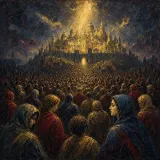
Nehemiah 12 begins with records rather than celebration, placing priests, Levites, and leaders of thanksgiving in a line of service that reaches back to the return with Zerubbabel and Jeshua and forward through later generations. Only after that continuity is established does the wall become a stage for dedication. Levites and singers come in from surrounding settlements, purification prepares ministers, people, gates, and wall, and two great thanksgiving companies move in opposite directions around Jerusalem before meeting at the house of God. Trumpets, instruments, sacrifices, wives, children, and loud singing fill the city with joy that can be heard afar off. Then the chapter returns to storehouses, portions, singers, porters, and daily provision. The great public day is not allowed to become the whole achievement. Dedication is joined to the routines that must keep worship functioning after the music fades.
Central truth
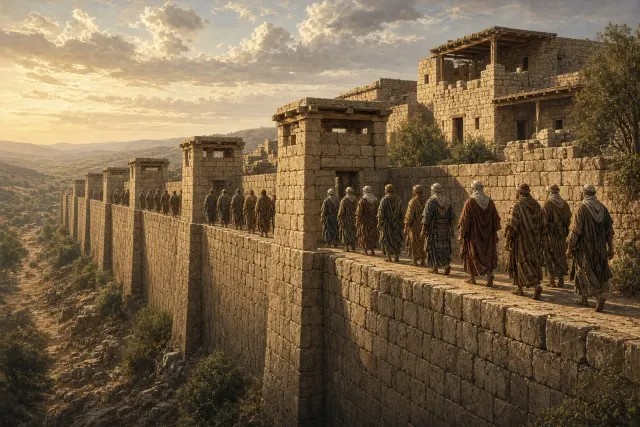
Nehemiah 10:1 to 12:26 records a covenant community organizing its worship, economy, residence, and leadership through named commitments and named people rather than leaving renewal at the level of a public promise. Nehemiah 12:27 to 47 turns the completed wall into a route of public thanksgiving, as two great choirs move in opposite directions and meet at the house of God before the community establishes continuing support for worship.

The study notes have a page of their own
The movement by movement analysis, the words to trace, the verse by verse notes and where readers differ are written for someone studying alone. They are on the Deep Personal Reflections page for this chapter. This page is the lesson.
A chapter-specific teaching brief
These anchors come from this chapter itself. They help a teacher use the Level 1 overview, the Level 2 study, and the Scripture text as one lesson.
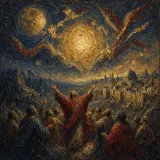
Open with the chapter’s first image
Nehemiah 12:1: “Now these are the priests and the Levites that went up with Zerubbabel the son of Shealtiel, and Jeshua: Seraiah, Jeremiah, Ezra,”
Slow down at the turning point
Nehemiah 12:23: “The sons of Levi, the chief of the fathers, were written in the book of the chronicles, even until the days of Johanan the son of Eliashib.”
Keep this word trail visible
Levites, days, priests, gate, wall, chief
What to explain, in order
Teach the passage in this order. Each step names the verses it rests on, so every point can be shown in the text before it is applied.
Nehemiah 10:1–12:26
Nehemiah 10:1-27
Names on the seal
Begin by connecting back to 9:38: this is the "sure covenant", and here are the names. Nehemiah the Tirshatha signs first, then priests, Levites and chiefs of the people. Read a handful of names rather than the whole list, and point out that some of them, such as Meshullam and Hashabiah, also appear among the builders of chapter 3, though a shared name does not prove the same man. Explain that sealing means attaching a seal as a witness to the document. Teach this first so the class sees that the covenant has real people behind it, not a general mood of renewal.
Nehemiah 10:28-31
The oath and its first terms
Read 10:28: everyone with knowledge and understanding joins, men, women, sons and daughters. They enter "into a curse, and into an oath", which means they call judgment on themselves if they break it. Then three terms. Marriage: no intermarriage with the surrounding peoples, a pledge about keeping the worship of the LORD alone in Israel's homes. Sabbath: no buying from traders on holy days. Seventh year: fields left fallow and debts released, echoing chapter 5. Teach these terms in their covenant setting and do not map them onto modern categories.
Nehemiah 10:32-39
We will not forsake the house of our God
The second half of the covenant is about supporting worship. Explain the third part of a shekel as a yearly temple tax, smaller than the half shekel of Exodus 30:13; the text does not say why. Walk through the wood offering by lot, the firstfruits, firstborn, dough, wine and oil, and the tithes, with the Levites bringing a tenth of the tithe to the storehouse. Show how practical it is: fuel for the altar, food for the priests. End on 10:39, because chapter 13 will show the house forsaken in exactly these ways.
Nehemiah 11:1-2
One in ten, and those who volunteered
Now turn to the city itself. Read 11:1 and connect it to 7:4. The rulers already live in Jerusalem; the rest cast lots for one family in ten to move there. Explain the cost: leaving inherited land and moving into a city still being rebuilt. Then read 11:2: those who volunteer are blessed by the people. Teach this as a turning point. A wall and a covenant are not enough; Jerusalem needs households willing to live inside it, and the community honours those who go.
Nehemiah 11:3-36
Who lived in the holy city
Read a sample of the residents: families of Judah and Benjamin, priests who served in the house, Levites, the leader of thanksgiving, gatekeepers, temple servants, and the king's agent. Explain "valiant men" as capable men, possibly men of standing or warriors. Then skim 11:25-36: the villages where the rest settled, from Beersheba in the south to Benjamin in the north. Teach that the list shows a city given a working community and a land resettled around it. Do not read every name; let the roles carry the lesson.
Nehemiah 12:1-26
Priests and Levites through the generations
Explain that these lists span several generations: the priests and Levites who came with Zerubbabel, the high priests from Jeshua to Jaddua, the heads of priestly families under Joiakim, and the Levites appointed to praise "ward over against ward", in alternating choirs. Point to 12:24, "according to the commandment of David the man of God". Some names and dates are hard to fit together; say so without making it the lesson. End here because the next verses dedicate the wall, and these are the people who will lead it.
Nehemiah 12:27–47
Nehemiah 12:27-30
Gather the singers and make it holy
Begin by setting the scene: the wall is finished, the city has residents, and now it is dedicated. Explain dedication as setting something apart to God with worship. The Levites are fetched from wherever they lived, and the singers come in from their villages. Name the instruments: cymbals, psalteries and harps, string and percussion. Then read 12:30, the purification of priests, Levites, people, gates and wall. Teach this first so learners see that this is not a civic party but worship, prepared with care.
Nehemiah 12:31-37
The first company, going right
Nehemiah brings the leaders up onto the wall, and the first great thanksgiving company sets off to the right toward the dung gate. Read who walks in it: Hoshaiah, half the princes, priests' sons with trumpets, Zechariah of the line of Asaph, musicians with "the musical instruments of David the man of God", and Ezra the scribe at the front. Trace the route past the fountain gate and up the stairs of the city of David to the water gate. Use a simple sketch, and say that the exact route is reconstructed.
Nehemiah 12:38-39
The second company, going the other way
The other company goes "over against them", in the opposite direction, with Nehemiah following and half the people on the wall. Read the places they pass: the tower of the furnaces, the broad wall, the gate of Ephraim, the old gate, the fish gate, the towers of Hananeel and Meah, the sheep gate. Point out that these are the places named in chapter 3, where the builders worked. Teach this to show the people walking in thanksgiving over the very sections they built, with the mocked wall now carrying a choir.
Nehemiah 12:40-43
Meeting in the house of God
The two companies meet and stand in the house of God. Read the priests with trumpets and "the singers sang loud". Then read 12:43 slowly and let the class hear each phrase: great sacrifices, God-given joy, wives and children rejoicing, and the sound carried far off. Explain that "God had made them rejoice": the joy is his gift. Teach this as the high point of the book, and connect it back to 8:10, "the joy of the LORD is your strength", and forward to what follows.
Nehemiah 12:44-47
Storerooms for the portions
Do not stop at the music. Read 12:44: on the same day people are appointed over the storerooms for offerings, firstfruits and tithes, because Judah rejoiced in the priests and Levites who served. Then 12:45-46: singers and gatekeepers serve according to the order of David and Solomon, with songs of praise as in the days of Asaph. Finally 12:47: daily portions. Explain that this is the covenant of 10:35-39 being put into practice. Teach it last, because the next chapter shows what happens when these portions stop.
Where learners get stuck
The misreadings this passage tends to produce, and how to answer each from the text.
Nehemiah 10:1–12:26
"The marriage pledge in 10:30 means people of different races should not marry."
The concern of 10:30 is worship, not race. The Book of Nehemiah links such marriages to turning from the LORD (13:26), and the people of the land here are those outside Israel's covenant worship, the group spoken of in 10:28, where the people include "all they that had separated themselves from the people of the lands unto the law of God". Foreigners who came to worship the LORD, like Ruth, were received. Christian traditions apply this concern to marriage today in different ways; do not settle that here, and never teach it as a racial rule.
"This covenant was a set of rules to earn God's favour."
It comes after the prayer of chapter 9, which rests entirely on God's mercy: "thou art a gracious and merciful God" (9:31). The people make the covenant "because of all this" (9:38), in response to what God has already done. The terms are their way of keeping faith with him, especially in worship and in care for the poor (10:31). Teach the order: mercy first, commitment in answer to it.
"Living in Jerusalem was an honour everyone wanted."
If it were, the lot of 11:1 would not have been needed, and the people would not have blessed "all the men, that willingly offered themselves to dwell at Jerusalem" (11:2). Jerusalem was "large and great: but the people were few therein, and the houses were not builded" (7:4). Moving meant leaving family land and living in an exposed, half built city. The text honours those who chose the harder place. Let learners see the cost, not just the privilege.
"These lists of names and villages are not part of the real message of the book."
The lists show renewal becoming real. A covenant needs signatures (10:1-27); a temple needs wood, grain and tithes (10:32-39); a city needs households (11:1-24); worship needs priests, Levites and singers who can be traced back to Zerubbabel and to David (12:1-26). The Book of Nehemiah thinks faithfulness is made of named people doing particular things. Read selections, and let the names stand for that.
Nehemiah 12:27–47
"The wall was the most important thing, so the dedication was a celebration of the wall."
The wall is dedicated, but the celebration does not stay on it. Both companies walk the wall and end "in the house of God" (12:40), with sacrifices and singing. The music follows "the commandment of David the man of God" (12:24, 12:36), and the purification of 12:30 sets everything apart to God. The wall exists to protect a worshipping people. Teach the dedication as thanksgiving to God for what he did, not as praise for the builders' achievement.
"Joy in worship is just a feeling that comes and goes."
Verse 43 says "God had made them rejoice with great joy". The joy is his gift, and it is expressed in concrete acts: sacrifices, music, and a whole community together. It is also followed by arrangements to keep worship going every day (12:44-47). Joy here is not a passing mood but a response to God's work that shapes how people live and give. Learners who do not feel joyful can still give thanks; the chapter does not measure faith by feelings.
"After such a great day, everything was settled for good."
Chapter 13 begins soon after with problems in the very areas this chapter celebrates: the temple storerooms, the Levites' portions, and the gatekeepers (13:4-13). The joy was real, and the arrangements in 12:44-47 were good. But one day of worship does not secure the next. That is why the chapter ends with storerooms and daily portions. Teach the dedication as a high point to be followed by faithfulness, not as a happy ending.
"Celebrations like this were only for the important men."
Verse 43 says "the wives also and the children rejoiced", and the second company included "the half of the people upon the wall" (12:38). Leaders walk in the procession, but the joy belongs to the whole community, and it is "heard even afar off". The singers came from the villages (12:28-29). Let learners see that thanksgiving in this chapter includes everyone, and that no one is too small or unimportant to rejoice before God.
Learning objectives
- Identify the major covenant commitments in Nehemiah 10.
- Explain what the oath and curse language adds to the agreement.
- Describe how Jerusalem is populated in chapter 11.
- Identify the roles assigned to priests, Levites, singers, gatekeepers, and other residents.
- Explain why the long name lists belong to the covenant renewal section.
- Distinguish clear covenant requirements from details whose historical reconstruction remains uncertain.
- Identify who is gathered for the wall dedication and why.
- Trace the two thanksgiving companies in opposite directions as far as the text permits.
- Explain the purification that precedes the procession.
- Describe where the two companies finally stand.
- Identify what the people do after the processions join.
- Explain how verses 44 to 47 keep the dedication from ending as a one-day spectacle.
Teacher preparation
- Outline the unit: sealers and obligations in chapter 10, Jerusalem residents in chapter 11, priestly and Levitical records in 12:1 to 26.
- Do not automatically equate the third part of a shekel in 10:32 with the half-shekel of Exodus 30.
- Prepare the one-in-ten lot in 11:1 and the voluntary settlers in 11:2. Jerusalem needs residents as well as walls.
- Keep the intermarriage pledge in its covenant setting rather than teaching it as a modern racial category.
- Choose representative names instead of reading every list aloud. Preserve function without turning the lesson into roll call.
- Prepare a simple wall sketch for the two processions, labeling disputed gate and tower locations modestly.
- Read verses 27 to 30 for Levites, singers, instruments, and purification before the procession.
- Note that Ezra goes before one company while Nehemiah follows the other.
- Mark verse 43: wives and children rejoice, and Jerusalem’s joy is heard afar.
- Read verses 44 to 47 so the lesson does not end with music; continuing worship requires organized support.
Evidence and interpretation checks
Explicit
Nehemiah 10:28 to 39 lists commitments on marriage, Sabbath commerce, the seventh year, temple support, offerings, firstborn, firstfruits, and tithes. Verses 27 to 43 describe purification, two thanksgiving companies, music, sacrifice, and joy; verses 44 to 47 organize contributions and portions.
Scripture-supported
These Sabbath, sabbatical, firstfruits, firstborn, and tithe commitments all have Torah background. The passage itself connects singers and Levites with Davidic worship traditions in verses 24, 36, 45, and 46.
Strong inference
The one-in-ten settlement plan addresses Jerusalem’s sparse population noted in 7:4, though individual motives are not given. Walking the wall may publicly answer earlier mockery of its weakness, though dedication and thanksgiving are the stated purposes.
Possible or traditional reading
The third part of a shekel is sometimes explained by changed currency or economic conditions; the text gives no reason. Reconstructions of the two routes differ because exact locations of some gates and towers remain uncertain.
Limit
The lists do not prove equal status or workload and do not resolve every chronological question in the priestly genealogy. The dedication does not guarantee permanent faithfulness. Chapter 13 immediately exposes renewed compromise.
Discussion with answer guidance
1. What obligations follow the list of sealers?
What a good answer contains
Verse 29 is the general vow: to "walk in God's law, which was given by Moses the servant of God, and to observe and do all the commandments of the LORD our Lord". Then the details: no marriage of daughters or sons with "the people of the land" (10:30), no buying goods "on the sabbath day" or holy days, and keeping "the seventh year, and the exaction of every debt" (10:31). A good answer lists all three specifics. A strong answer connects the debt release with chapter 5. A weak answer says they promised to be good.
Show teacher guidance
Verses 28 to 31 name law obedience, marriage boundaries, Sabbath commerce, and seventh-year release.
2. How is temple service supported?
What a good answer contains
By yearly payment and steady giving. The people "charge ourselves yearly with the third part of a shekel" (10:32) for the bread, offerings and festivals (10:33). They cast lots for "the wood offering" (10:34). They bring firstfruits of ground and trees, the firstborn of sons and cattle, dough, wine and oil, and the tithes to the Levites, who bring a tithe of the tithe to the storehouse (10:35-38). The section ends, "we will not forsake the house of our God" (10:39). A good answer sees the planning. A weak answer gives only the tithe.
Show teacher guidance
Verses 32 to 39 name the temple charge, wood, firstfruits, firstborn, tithes, and storage chambers.
3. Why does chapter 11 use lots?
What a good answer contains
Because Jerusalem needed people, and the burden of moving had to fall fairly. Verse 1 says that "the rulers of the people dwelt at Jerusalem: the rest of the people also cast lots, to bring one of ten to dwell in Jerusalem the holy city, and nine parts to dwell in other cities" (11:1). A good answer connects this to 7:4, the large city with few people. A strong answer notes that a lot shares the burden without favouritism and that, in Israel, the lot was received as God's decision (Proverbs 16:33). A weak answer says Jerusalem was too crowded.
Show teacher guidance
Verse 1 says one of ten is to dwell in Jerusalem while nine parts remain elsewhere.
4. Who receives praise in 11:2?
What a good answer contains
Verse 2 says that "the people blessed all the men, that willingly offered themselves to dwell at Jerusalem" (11:2). Some volunteer rather than waiting for the lot. Living in Jerusalem meant leaving family land, living in a city still exposed to danger and rebuilding a home from nothing. A good answer sees the cost of the choice and the community's honour for those who made it. A weak answer assumes life in the capital was a privilege everyone wanted, which the need for a lot suggests it was not.
Show teacher guidance
The people bless those who willingly offer themselves to live in Jerusalem.
5. What roles appear in the Jerusalem lists?
What a good answer contains
Leaders of Judah and Benjamin, including "valiant men" (11:6), priests who "did the work of the house" (11:12), Levites with "the oversight of the outward business of the house of God" (11:16), the leader of thanksgiving in prayer (11:17), porters "that kept the gates" (11:19), Nethinims in Ophel (11:21), singers with a daily portion (11:23), and Pethahiah, the king's agent (11:24). A good answer gives several roles with verses. A weak answer lists only priests.
Show teacher guidance
Find rulers, warriors, priests, Levites, gatekeepers, singers, and temple workers.
6. Why preserve priestly and Levitical generations?
What a good answer contains
Because the community's worship needs to be traced to its beginnings. Chapter 12 records priests and Levites "that went up with Zerubbabel" (12:1), then the high priestly line from Jeshua to Jaddua (12:10-11), and the heads of families in the days of Joiakim (12:12-21). The Levites are set to praise "according to the commandment of David the man of God" (12:24). A good answer sees the continuity of worship from the first return and from David. A weak answer treats the names as filler before the dedication.
Show teacher guidance
They show continuity of worship leadership and prepare for the dedication that follows.
7. Why are Levites sought out?
What a good answer contains
For the dedication: "they sought the Levites out of all their places, to bring them to Jerusalem, to keep the dedication with gladness, both with thanksgivings, and with singing, with cymbals, psalteries, and with harps" (12:27). The singers come in from the villages they had built around Jerusalem (12:28-29). A good answer sees that the Levites and singers are needed because the dedication is an act of worship, with music and thanksgiving at its centre. A weak answer thinks they were brought in to guard the wall.
Show teacher guidance
Verse 27 says they are brought to Jerusalem for dedication with gladness, thanksgiving, singing, and instruments.
8. What happens before anyone walks the wall?
What a good answer contains
Purification: "the priests and the Levites purified themselves, and purified the people, and the gates, and the wall" (12:30). The order matters: first the leaders, then the people, then the stones and gates. A good answer notices that even the wall is set apart to God before anyone walks on it. A strong answer connects this with 3:1, where the priests "sanctified" the Sheep Gate at the start of the building. A weak answer jumps straight to the music.
Show teacher guidance
Verse 30 reports purification of priests, Levites, people, gates, and wall.
9. How are the companies arranged?
What a good answer contains
Nehemiah brings the princes of Judah up onto the wall and appoints "two great companies of them that gave thanks" (12:31). One goes "on the right hand upon the wall toward the dung gate", with half the princes, priests with trumpets and "Ezra the scribe before them" (12:31-36). The other goes "over against them", in the opposite direction, "and I after them, and the half of the people upon the wall" (12:38). A good answer sees two choirs walking the circuit in opposite directions. A weak answer pictures a single procession.
Show teacher guidance
Nehemiah appoints two great thanksgiving companies moving in opposite directions on the wall.
10. Where do they end?
What a good answer contains
"So stood the two companies of them that gave thanks in the house of God" (12:40). The two companies set out in opposite directions, walk the wall, and meet at the temple, where the priests sound trumpets and "the singers sang loud" (12:42). A good answer sees that the whole circuit leads to the house of God, which is the point of the wall. A strong answer notices that the temple, not the wall, is where the celebration comes to rest. A weak answer leaves them standing on the wall.
Show teacher guidance
Verse 40 says both companies stand in the house of God.
11. How does verse 43 describe the celebration?
What a good answer contains
"Also that day they offered great sacrifices, and rejoiced: for God had made them rejoice with great joy: the wives also and the children rejoiced: so that the joy of Jerusalem was heard even afar off" (12:43). The joy is given by God, it includes women and children, and it carries beyond the city. A good answer names all three. A strong answer sets "heard even afar off" beside 4:1-3, where the neighbours had mocked. A weak answer says only that people were happy.
Show teacher guidance
Great sacrifices and rejoicing include wives and children, and the joy is heard afar.
12. What follows the celebration?
What a good answer contains
Ordinary provision. Men are appointed "over the chambers for the treasures, for the offerings, for the firstfruits, and for the tithes" (12:44), because "Judah rejoiced for the priests and for the Levites that waited". The singers and porters keep their duties "according to the commandment of David, and of Solomon his son" (12:45), and all Israel gives the portions "every day his portion" (12:47). A good answer sees that the celebration is followed by plans to sustain worship. A weak answer ends the chapter at 12:43.
Show teacher guidance
Verses 44 to 47 organize storehouses, offerings, firstfruits, tithes, and portions for worship personnel.
Responsible application
Heart and habits
Ask what happens when public commitment gains money, schedules, households, and named responsibilities.
Relationships and community
Use the relocation plan to examine shared burdens that fall unevenly, noting both lots and volunteers.
Renewal needs administration
Sort the covenant terms into worship, economy, calendar, family, and city life.
After the music
Ask what must happen the next day for worship to continue.
Session plans
Two timings of the same lesson. The shorter keeps the reading, the central discussion and one response; the longer gives the confusions and the application their own time.
Nehemiah 10:1–12:26
45 minutes
The sure covenant
Read 9:38 and 10:1-8. Explain sealing and take confusion two.
The first terms
Read 10:28-31. Ask question one and take confusion one.
Supporting worship
Read 10:32-39 and ask question two.
One in ten
Read 11:1-2 with 7:4. Ask questions three and four and take confusion three.
Who lived there
Skim 11:3-24 and ask question five.
Through the generations
Read 12:22-26 and ask question six. Read the key verse together and give out the handout.
90 minutes
Promises with details
Ask the class what makes a promise trustworthy, and list the answers. Point out that details often help.
The sure covenant
Read 9:38 and 10:1-27 in part. Explain sealing and take confusion two.
The first terms
Read 10:28-31 with Exodus 23:10-12 and Deuteronomy 15:1-2. Ask question one and take confusion one.
We will not forsake the house
Read 10:32-39. Ask question two and draw a chart of what went to the priests, the Levites and the storehouse.
One in ten
Read 11:1-2 and 7:4. Ask questions three and four and take confusion three.
Who lived there
Read 11:3-24 in part and skim 11:25-36. Ask question five.
Through the generations
Read 12:1, 12:10-11 and 12:22-26. Ask question six and take confusion four.
Response and handout
Use the application on sorting the covenant terms, read the key verse together, give out the handout and pray.
Nehemiah 12:27–47
45 minutes
Gather the singers
Read 12:27-30 and ask questions one and two.
Two great companies
Read 12:31-39 with a simple sketch of the wall. Ask question three.
Meeting in the house of God
Read 12:40-42 and ask question four. Take confusion one.
Heard afar off
Read 12:43 and ask question five. Take confusion four.
Storerooms
Read 12:44-47 and ask question six. Take confusion three.
Handout
Read the key verse together, give out the handout and sing or pray a thanksgiving.
90 minutes
Celebrating well
Ask the class to describe the best celebration they have been part of and what made it good.
Gather the singers
Read 12:27-30 and 3:1. Ask questions one and two.
Two great companies
Read 12:31-39 and draw both routes. Compare the place names with chapter 3 and ask question three.
Meeting in the house of God
Read 12:40-42 and ask question four. Take confusion one.
Heard afar off
Read 12:43 with 4:1-3 and 8:10. Ask question five and take confusions two and four.
Storerooms and portions
Read 12:44-47 with 10:35-39. Ask question six and take confusion three.
After the music
Use the application on what must happen the next day for worship to continue.
Response and handout
Sing a psalm of thanksgiving or read Psalm 147:1-2, read the key verse together, give out the handout and pray.
Adapting the lesson
Nehemiah 10:1–12:26
Children
Make a big paper scroll and let each child sign it, as the leaders did. Talk about the promises the people made: to rest on God's day, to bring gifts to God's house, to look after one another. Then play a simple lot game with ten paper slips, one marked Jerusalem, and talk about the brave families who moved. Leave out the marriage pledge.
Youth
Ask what promises they have made that came with details, and which were easier to keep. Read 10:28-39 and sort the terms into rest, giving, family and fairness. Spend time on 11:2 and ask who in their lives has volunteered for a hard place. Take the marriage pledge carefully and keep it about faithfulness to God, not about anyone's background.
Adults
Give time to how the covenant gave renewal a shape: calendar, money, family, worship and housing. Discuss what commitments a congregation makes when it renews its life, and how they are kept. Read 10:30 with care and present Christian views of its application fairly without settling them. Some may be in mixed families; make sure no one hears contempt.
One to one
Read 9:38, 10:28-29 and 11:1-2 together. Ask the person whether there is a promise to God they want to make specific. Help them shape it into one or two concrete commitments, as the covenant does in 10:31-39. Then ask where God might be calling them to a harder place, like the volunteers of 11:2, and pray about it.
Nehemiah 12:27–47
Children
Make two lines of children and walk them in opposite directions around the room, singing a simple song of thanks, until they meet at a table set as God's house. Read 12:43 and let them clap or shake simple instruments. Point out that the children in Jerusalem rejoiced too. End by bringing a small gift to the table to show the portions for those who served.
Youth
Ask what makes worship feel alive to them and what makes it feel empty. Read 12:27-43 and notice the planning, purification, music and sacrifice. Then read 12:44-47 and talk about what keeps worship going after a great event: giving, serving and ordinary faithfulness. Let them suggest one way to support those who lead worship.
Adults
Give time to the two routes and to the link with chapter 3: the people give thanks on the sections they built. Discuss how a congregation marks God's faithfulness and then sustains its worship. Read 12:44-47 and ask what practical support worship needs. Some may find celebration hard in a season of grief; acknowledge that joy here is God's gift and not a demand.
One to one
Read 12:27-30 and 12:40-43 together. Ask the person what God has done in their life that they have never stopped to thank him for. Plan a simple act of thanksgiving together, perhaps a psalm read aloud or a gift. Then read 12:44 and ask how they could support someone who serves in worship.
Song and video learning lab
A song or video may interpret, compress, or dramatize the text. Its value becomes clearer when its choices are compared with Scripture.
- Before the media: the exact passage and its central movement.
- During the media: the words, people, events, and emotions the artist emphasizes.
- After the media: what it clarifies, what it leaves out, and what belongs back in the biblical text.
Handout
One page for learners to take home. The print button prints this section alone.
Nehemiah 10:1–12:26
The passage in brief
After their confession, the leaders signed a written covenant, and all the people joined in an oath to keep God's law. They promised not to marry those who did not worship the Lord, not to trade on the Sabbath, to release debts in the seventh year, and to support the temple with money, wood, firstfruits and tithes. They said they would not forsake the house of God. Then one family in ten was chosen to live in Jerusalem, and the people blessed those who volunteered. Lists of priests and Levites follow.
A verse to keep
For the children of Israel and the children of Levi shall bring the offering of the corn, of the new wine, and the oil, unto the chambers, where are the vessels of the sanctuary, and the priests that minister, and the porters, and the singers: and we will not forsake the house of our God.
Nehemiah 10:39 · King James Version
Questions to take home
What three promises do the people make in 10:30-31?
How did the people decide who would live in Jerusalem in 11:1?
Who did the people bless in 11:2, and why?
This week
This week, make one promise to God specific by writing down when and how you will keep it.
Nehemiah 12:27–47
The passage in brief
When the wall was finished, the people dedicated it to God. Levites and singers came from all around with cymbals, harps and songs. The priests purified themselves, the people, the gates and the wall. Nehemiah set two large choirs on the wall, and they walked in opposite directions, giving thanks, until they met at the temple. The people offered sacrifices and rejoiced, and their joy was heard far away. Then they appointed people to look after the gifts for the priests and Levites.
A verse to keep
Also that day they offered great sacrifices, and rejoiced: for God had made them rejoice with great joy: the wives also and the children rejoiced: so that the joy of Jerusalem was heard even afar off.
Nehemiah 12:43 · King James Version
Questions to take home
What did the priests and Levites do in 12:30 before the procession?
Where did the two choirs meet in 12:40?
Who rejoiced in 12:43, and who made them rejoice?
This week
This week, thank God aloud with other people for one thing he has finished in your life.
Music and video connected to the passage
Related media appears when its Scripture reference overlaps this study. Music and video can illuminate a theme while the biblical text remains the foundation.