The big picture
Romans 11 asks the question chapter 10 leaves hanging: has God cast away his people? Paul answers "God forbid" and points first to himself, then to Elijah's overlooked remnant. Israel's present condition therefore includes both grace-preserved belief and real hardening. The argument then refuses to make stumbling the last movement. Gentile salvation has entered the picture, yet Paul's Gentile ministry still aims toward Israel's response. The olive tree makes the warning concrete. Wild branches share a root they did not grow, so Gentile inclusion provides no basis for boasting over Jewish branches. Unbelief can break branches, faith sustains standing, and natural branches can be grafted in again. The mystery of partial hardening and "all Israel shall be saved" remains debated, but Paul states its practical purpose clearly: Gentile conceit must stop. Both groups have known disobedience, both depend on mercy, and the chapter ends with God as debtor to none.
Central truth
Romans 9–11 holds Paul's grief for Israel together with God's freedom in mercy, Israel's stumbling and remnant, Gentile inclusion without boasting, and a final horizon where mercy silences pride.

The study notes have a page of their own
The movement by movement analysis, the words to trace, the verse by verse notes and where readers differ are written for someone studying alone. They are on the Deep Personal Reflections page for this chapter. This page is the lesson.
A chapter-specific teaching brief
These anchors come from this chapter itself. They help a teacher use the Level 1 overview, the Level 2 study, and the Scripture text as one lesson.
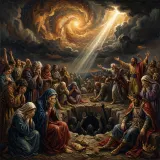
Open with the chapter’s first image
Romans 11:1: “I say then, Hath God cast away his people? God forbid. For I also am an Israelite, of the seed of Abraham, of the tribe of Benjamin.”
Slow down at the turning point
Romans 11:15: “For if the casting away of them be the reconciling of the world, what shall the receiving of them be, but life from the dead?”
Keep this word trail visible
branches, Gentiles, grace, graffed, olive, tree
What to explain, in order
Teach the passage in this order. Each step names the verses it rests on, so every point can be shown in the text before it is applied.
Romans 9:1-5
Grief before argument
Begin where Paul begins, with sorrow. He speaks under oath, in Christ and with the Holy Ghost as witness, and his wish in verse 3 echoes Moses in Exodus 32:32. Read the list of Israel's privileges slowly and treat each as real, from the adoption to Christ himself. Teach this first because the hardest chapters in Romans are written by a man in tears for his own people. Anyone who uses them to look down on the Jewish people has not read verse 2, and this lesson should say so plainly.
Romans 9:6-13
The word has not failed: Isaac and Jacob
State Paul's thesis from verse 6 and then trace his evidence. Not every descendant of Abraham was the child of promise: Isaac was, Ishmael was not. Then Rebecca's twins, chosen before birth, “not of works, but of him that calleth”. Read Genesis 25:23 and Malachi 1:2-3. Explain that “Esau have I hated” uses a Hebrew way of speaking about choosing one over another. Name honestly that traditions read this election in different ways, of individuals to salvation, or of peoples and their roles in God's purpose, and that all agree it rests on God's call, not on works.
Romans 9:14-29
Mercy, hardening, and the potter
Let Paul's own objections set the agenda. Verse 14 asks whether God is unrighteous; verse 19 asks why he still finds fault. Read Exodus 33:19 and 9:16, and note that Exodus also says Pharaoh hardened his own heart. Then read Jeremiah 18:1-10 for the potter, where the image is about God's freedom to act toward a nation. Mark the “What if” of verses 22 and 23 and the words “much longsuffering”. Close with Hosea and Isaiah in verses 25 to 29: God's purpose is to call a people “not of the Jews only, but also of the Gentiles”.
Romans 9:30-10:13
Righteousness by faith, near to everyone
Read 9:30-33 and explain the stumblingstone from Isaiah 8:14 and 28:16: Christ is the stone. Then read 10:1-4 and stress that Paul prays for Israel before he diagnoses. Explain that “the end of the law” can mean its goal or its termination as a way to righteousness, and readers weigh both. Read Deuteronomy 30:11-14 so the class hears what Paul draws on in 10:6-8: the word is near. Finish on verse 12, “there is no difference between the Jew and the Greek”, and verse 13.
Romans 10:14-21
How shall they hear
Write the chain of verses 14 and 15 on the board and read it backward: sent, preach, hear, believe, call. Read Isaiah 52:7, which Paul quotes about the feet of messengers. Then walk through his scriptural witnesses, Isaiah 53:1, Psalm 19:4, Deuteronomy 32:21, Isaiah 65:1-2, and show the picture of verse 21: God holding out his hands all day long to a people who refuse. Teach this before chapter 11 so the class feels God's longing for Israel, not his indifference.
Romans 11:1-24
Not cast away: the remnant and the olive tree
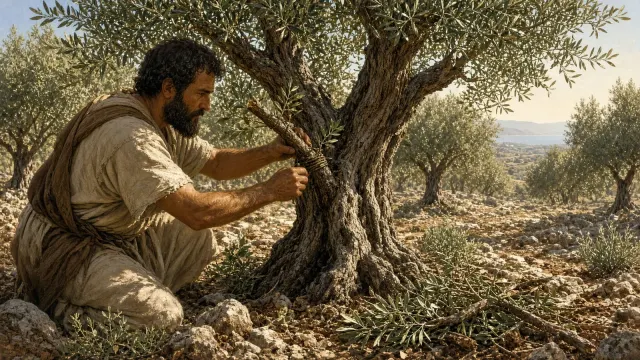
Begin with verse 1: “Hath God cast away his people? God forbid.” Paul offers himself as evidence, an Israelite of Benjamin. Read the Elijah account from 1 Kings 19 and show the remnant chosen by grace. Then sketch the olive tree: the root, natural branches broken off, wild branches grafted in, and natural branches able to be grafted in again. Read Jeremiah 11:16, where Israel is the olive tree. Stress the warnings to Gentile believers in verses 18 to 22 and the hope in verses 23 and 24.
Romans 11:25-36
A mystery, mercy on all, and worship
Explain “mystery” in Paul's sense: something once hidden and now revealed. Read verses 25 to 27 and name the main readings of “all Israel”: the Jewish people as a whole at a future time, the whole people of God from Jews and Gentiles, or the full number of believing Israel through history. Faithful readers hold each. Then read verses 28 to 32 and show that every group ends up receiving mercy. End with the doxology of verses 33 to 36, read aloud together. Paul finishes three hard chapters in worship.
Where learners get stuck
The misreadings this passage tends to produce, and how to answer each from the text.
“God is finished with the Jewish people.”
Paul asks this exact question and answers, “God forbid” (11:1), and again, “God hath not cast away his people which he foreknew” (11:2). Israel's stumbling is not a fall beyond recovery (11:11), God is able to graft them in again (11:23), and they are “beloved for the fathers’ sakes” because “the gifts and calling of God are without repentance” (11:28-29). Christians differ on how Israel and the church relate and on what 11:26 promises, but every view must keep these verses.
“Romans 9 makes God unfair: he chooses some for no reason and then blames the rest.”
Paul raises the objection himself, “Is there unrighteousness with God? God forbid” (9:14), and again in 9:19. He answers with God's mercy and his right as Creator (9:15-21), and with his “much longsuffering” (9:22). Chapter 10 also holds people responsible: “whosoever shall call upon the name of the Lord shall be saved” (10:13), and God stretches out his hands to a people who refuse (10:21). Traditions explain how these fit in different ways; Paul holds both and ends in worship (11:33-36).
“The potter and the clay means God makes people evil.”
The paragraph speaks of God enduring “with much longsuffering the vessels of wrath” (9:22), which is patience, not production of evil. In Exodus, Pharaoh hardened his own heart as well as being hardened. The potter image comes from Jeremiah 18, where God says that if a nation turns from its evil he will relent. Readers differ on how far Paul presses the image, but the text's emphasis is God's freedom to show mercy, “the riches of his glory on the vessels of mercy” (9:23).
“Romans 10:9 means that saying the right words is all it takes.”
Paul joins mouth and heart: “if thou shalt confess with thy mouth the Lord Jesus, and shalt believe in thine heart that God hath raised him from the dead” (10:9). To confess Jesus as Lord is to declare allegiance to him, not to recite a formula. Verse 10 repeats the pairing, and verse 16 speaks of those who “have not all obeyed the gospel”. Words without trust are not what Paul means, and trust that refuses to confess is not either.
“Romans 11:26 gives us a timetable for world events.”
Paul calls this a “mystery” (11:25) and ends the chapter saying God's judgments are unsearchable and his ways “past finding out” (11:33). Readers understand “all Israel” as the Jewish people as a whole in the future, the whole people of God, or the full number of believing Israel. None of these readings gives a political map or a date. The application Paul draws is humility, “lest ye should be wise in your own conceits” (11:25), and worship.
Learning objectives
- Identify Paul's grief and Israel's privileges in Romans 9:1–5.
- Trace Paul's claim that God's word has not failed.
- Explain the contrast between law-pursuit and righteousness by faith.
- Connect hearing, preaching, Scripture, and Israel's resistance in Romans 10.
- Explain remnant and olive-tree imagery in Romans 11.
- Follow Romans 11:25–36 from mystery through mercy to doxology.
Teacher preparation
- Mark Israel, mercy, faith, righteousness, remnant, Gentiles, branches, and all across three chapters.
- Review the Genesis, Exodus, Hosea, Isaiah, Deuteronomy, Psalms, and Elijah texts Paul quotes.
- Prepare an olive-tree sketch with natural, broken, wild, and regrafted branches.
- Keep Paul's anguish and the warning against Gentile arrogance visible throughout.
- Know major views of election and 'all Israel' without pretending the debates are settled.
Evidence and interpretation checks
Explicit
Romans 9:6 says God's word has not failed; 11:1 denies God cast away his people; 11:18 forbids Gentile boasting.
Scripture-supported
Paul repeatedly quotes Genesis, Exodus, Hosea, Isaiah, Joel, Deuteronomy, Psalms, and the Elijah account.
Strong inference
The olive tree makes Gentile inclusion a ground for humility: wild branches depend on a root they did not create.
Possible or traditional reading
'All Israel' in 11:26 is read as future ethnic Israel, the whole people of God, or elect Israel across history.
Limit
These chapters do not authorize contempt for Jews or Gentiles, nor a complete timetable for modern geopolitics.
Discussion with answer guidance
1. What does Paul feel in Romans 9:1–5, and what privileges does he list?
What a good answer contains
Paul begins with grief, under oath: “I have great heaviness and continual sorrow in my heart” (9:2). He would even wish himself “accursed from Christ for my brethren” (9:3). Then he lists what belongs to Israel: “the adoption, and the glory, and the covenants, and the giving of the law, and the service of God, and the promises” (9:4), the fathers, and Christ himself according to the flesh (9:5). A good answer notices the present tense, pertaineth, and that grief comes before argument. A weak answer rushes past it to the debate.
Show teacher guidance
Require great heaviness and continual sorrow, then adoption, glory, covenants, law, service, promises, fathers, and Christ.
2. How does Romans 9:6–24 defend God's unfailing word?
What a good answer contains
Paul's thesis is “Not as though the word of God hath taken none effect. For they are not all Israel, which are of Israel” (9:6). He traces it through Isaac (9:7-9), then Jacob and Esau before their birth, “that the purpose of God according to election might stand, not of works, but of him that calleth” (9:11), then Moses, “I will have mercy on whom I will have mercy” (9:15), Pharaoh (9:17) and the potter (9:21). A good answer follows the objections Paul raises himself in verses 14 and 19. Name that traditions read this election differently.
Show teacher guidance
Trace Isaac, Jacob, Moses, Pharaoh, and potter-clay imagery through Paul's own objections and answers.
3. What contrast closes Romans 9 and opens Romans 10?
What a good answer contains
Romans 9 closes with a contrast: the Gentiles “have attained to righteousness, even the righteousness which is of faith” (9:30), while Israel sought it “not by faith, but as it were by the works of the law” (9:32). Romans 10 opens with prayer, “my heart’s desire and prayer to God for Israel is, that they might be saved” (10:1), and the diagnosis, “a zeal of God, but not according to knowledge” (10:2). A good answer includes 10:4, “Christ is the end of the law for righteousness to every one that believeth”, and notices that Paul prays before he diagnoses.
Show teacher guidance
Compare pursuit through law with righteousness by faith, then zeal with knowledge and submission to God's righteousness.
4. How does Romans 10:8–17 move from near word to hearing?
What a good answer contains
Paul quotes Deuteronomy: “The word is nigh thee, even in thy mouth, and in thy heart” (10:8). Confession and belief go together (10:9-10), and the promise is wide: “whosoever shall call upon the name of the Lord shall be saved” (10:13). Then the chain runs backward: calling needs believing, believing needs hearing, hearing needs a preacher, and preaching needs sending (10:14-15). “So then faith cometh by hearing, and hearing by the word of God” (10:17). A good answer traces every link and asks who is being sent.
Show teacher guidance
Trace heart, mouth, belief, confession, calling, sending, preaching, hearing, and faith.
5. What must Gentile branches remember in Romans 11:16–24?
What a good answer contains
“Boast not against the branches. But if thou boast, thou bearest not the root, but the root thee” (11:18). They stand only by faith: “because of unbelief they were broken off, and thou standest by faith. Be not highminded, but fear” (11:20). Paul says “Behold therefore the goodness and severity of God” (11:22), and he holds out hope, “God is able to graff them in again” (11:23). A good answer sees one tree with Israel's root. A weak answer hears Gentiles replacing Israel and missing the warning.
Show teacher guidance
They are grafted in, do not bear the root, stand by faith, and must not be high-minded.
6. How does Romans 11:25–36 move from mystery to worship?
What a good answer contains
Paul calls it a mystery: “blindness in part is happened to Israel, until the fulness of the Gentiles be come in. And so all Israel shall be saved” (11:25-26). He adds, “the gifts and calling of God are without repentance” (11:29), and “God hath concluded them all in unbelief, that he might have mercy upon all” (11:32). Then he worships: “O the depth of the riches both of the wisdom and knowledge of God” (11:33). A good answer names the readings of “all Israel” fairly and ends where Paul ends, in praise, not in a timetable.
Show teacher guidance
Trace partial blindness, Gentile fullness, Israel, covenant, mercy, then the final questions about God's wisdom.
Responsible application
Grieve before theorizing
Begin Romans 9 with verses 1–5 so election discussion remains framed by Paul's sorrow and Israel's privileges.
Cut boasting off at the branch
Keep Romans 11:17–24 beside every discussion of Gentile inclusion and make the warning against arrogance prominent.
Let mercy finish
End with Romans 11:32–36 so unresolved questions terminate in mercy and God's wisdom, not classroom triumph.
Session plans
Two timings of the same lesson. The shorter keeps the reading, the central discussion and one response; the longer gives the confusions and the application their own time.
45 minutes
Great heaviness
Read 9:1-5. Take question one and let the grief register before any argument.
The word has not failed
Read 9:6-18. Take the first half of question two and confusion two.
The potter
Read 9:19-29. Finish question two and take confusion three.
The word is nigh thee
Read 9:30-10:17. Take questions three and four and confusion four.
The olive tree
Read 11:1-24 with the olive tree sketch. Take question five and confusion one.
Mercy on all
Read 11:25-36. Take question six and confusion five.
Handout and prayer
Read the key verse together, give out the handout, and pray for Israel and the nations as Paul did.
90 minutes
Grief first
Read Exodus 32:30-32, then Romans 9:1-5. Take question one.
Isaac and Jacob
Read Genesis 25:21-23 and Malachi 1:2-3, then Romans 9:6-13. Begin question two and name the traditions' readings.
Is there unrighteousness with God
Read Exodus 33:19, then Romans 9:14-18. Take confusion two.
The potter
Read Jeremiah 18:1-10, then Romans 9:19-29. Finish question two and take confusion three.
The stumblingstone
Read 9:30-10:4 and take question three.
The word is near
Read Deuteronomy 30:11-14, then Romans 10:5-13. Begin question four and take confusion four.
How shall they hear
Read 10:14-21, finish question four, and ask whom the group is sent to.
Not cast away
Read 11:1-24 with the olive tree drawn on the board. Take question five and confusion one.
Mercy upon all
Read 11:25-32. Take question six and confusion five, naming the readings fairly.
The depth of the riches
Read 11:33-36 aloud together, give out the handout, and pray.
Adapting the lesson
Children
Draw a big olive tree with roots and branches, and add paper branches with tape as you read 11:17. Explain that God made a family tree that began with Abraham and that people from every nation can be joined to it by trusting Jesus. Tell them Paul was very sad that many in his own family did not believe, and that he prayed for them. Read 10:13 together. Leave the debates about choosing and all Israel aside.
Youth
Let them ask whether God is fair, and show them that Paul asked first, in 9:14 and 9:19. Do not hurry to tidy answers. Then take 10:14-15 and ask who in their life has never really heard, and who might be sent. If anyone makes a joke at the expense of Jewish people, correct it firmly and kindly with 11:18 and 9:2.
Adults
Present the major views of election in chapter 9 and of all Israel in 11:26 in their strongest form, and resist settling them by force. Remember aloud that these chapters have been misused in history for contempt toward the Jewish people, and that Paul's anguish and 11:18 forbid it. Keep the lesson away from modern politics and news; Paul's own application is humility and worship.
One to one
If the person is troubled by the question am I chosen, do not argue systems; read 10:9 and 10:13 and let the promise speak. If they grieve over family members who do not believe, read 9:1-3 and 10:1 and let them see that Paul prayed through the same sorrow. End by reading 11:33-36 together and praying with them for the people they named.
Song and video learning lab
A song or video may interpret, compress, or dramatize the text. Its value becomes clearer when its choices are compared with Scripture.
- Before the media: the exact passage and its central movement.
- During the media: the words, people, events, and emotions the artist emphasizes.
- After the media: what it clarifies, what it leaves out, and what belongs back in the biblical text.
Handout
One page for learners to take home. The print button prints this section alone.
Romans 9–11
The passage in brief
Paul grieves deeply that many of his own people, Israel, have not believed in Jesus, though God gave them great privileges. He shows that God's word has not failed, because God has always shown mercy freely, by his own choice. Righteousness comes by faith, and everyone who calls on the name of the Lord will be saved, so the good news must be preached. God has not rejected his people. Gentile believers are like branches grafted into an olive tree and must never boast. Paul ends in praise of God's wisdom and mercy.
A verse to keep
For there is no difference between the Jew and the Greek: for the same Lord over all is rich unto all that call upon him. For whosoever shall call upon the name of the Lord shall be saved.
Romans 10:12-13 · King James Version
Questions to take home
How did Paul feel about his own people in 9:1-3, and what did he pray in 10:1?
According to 10:14-15, what has to happen before people can call on the Lord?
Why must the grafted branches not boast in 11:18-20?
This week
Name one person you long to see come to faith, and pray for them by name each day this week.
Music and video connected to the passage
Related media appears when its Scripture reference overlaps this study. Music and video can illuminate a theme while the biblical text remains the foundation.