Places of the Bible

Capernaum

Matthew calls it his own city, and it is also the town he pronounced the heaviest sentence on.

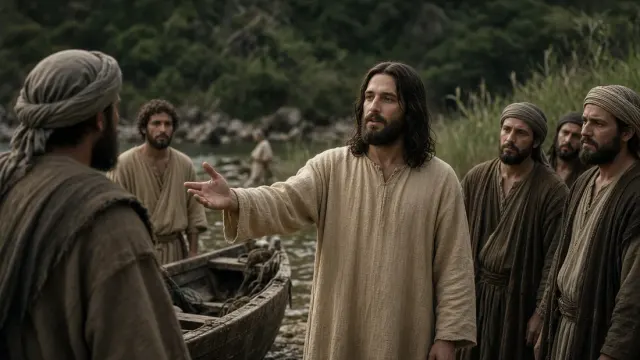
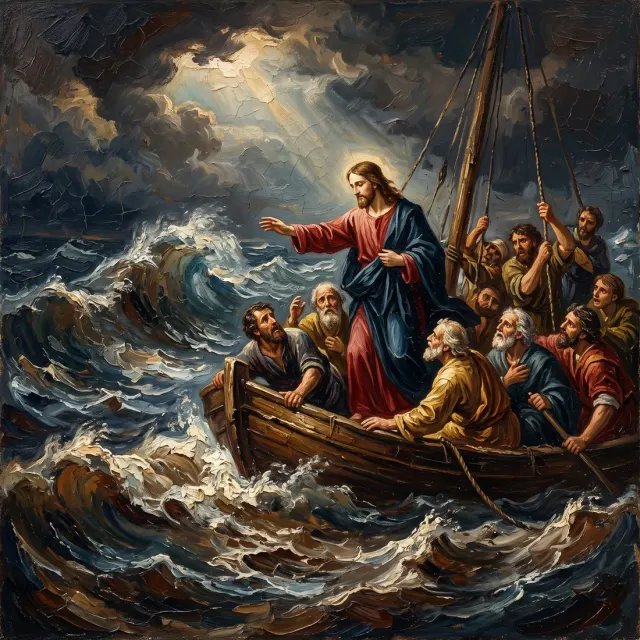
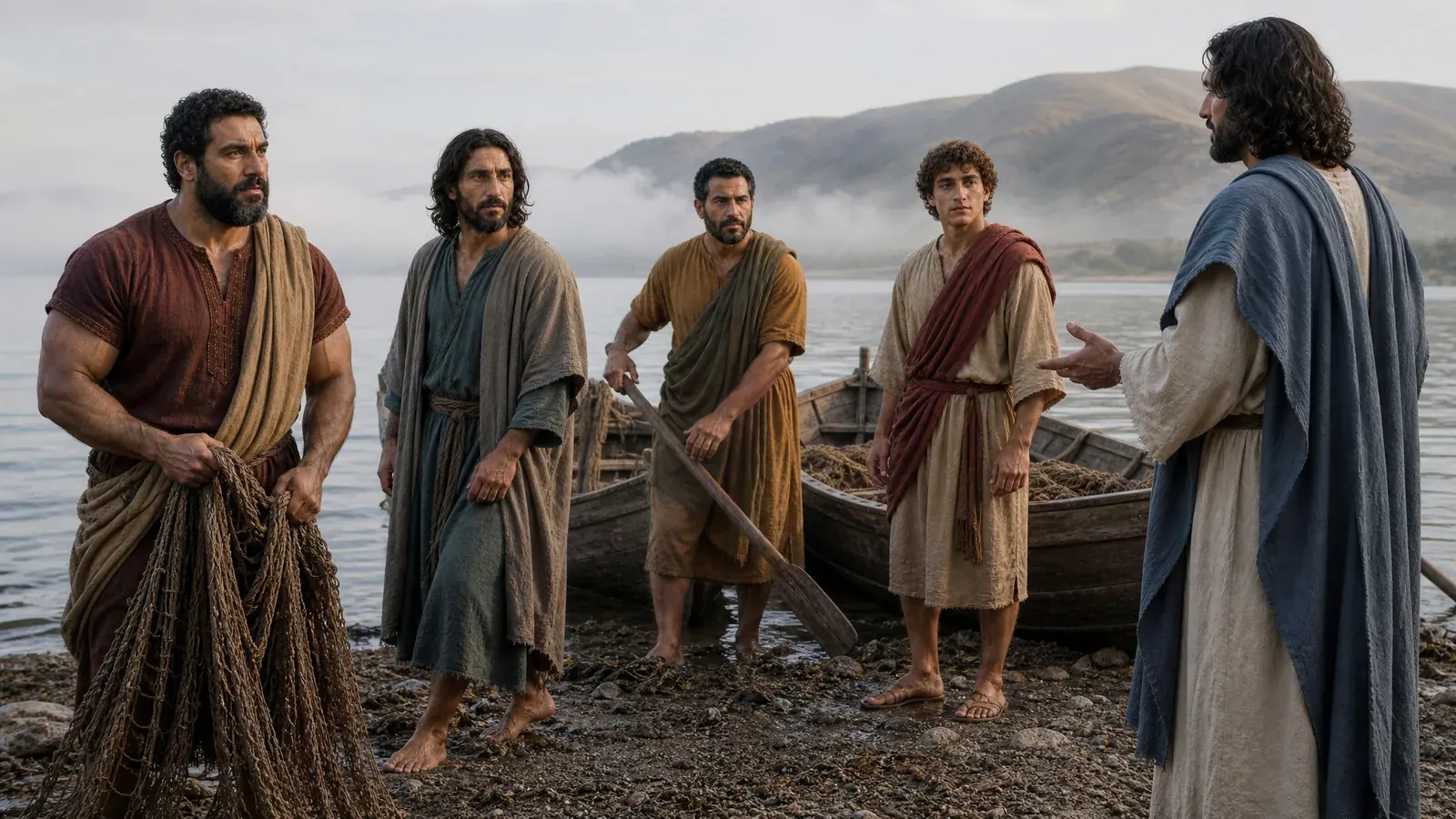
Capernaum is a fishing town on the north shore of the lake, on the road from Damascus to the coast, which is why it has a customs post and a garrison. Peter and Andrew live here, Matthew sits at the toll booth here, and there is a centurion here who built the synagogue. When Matthew 9 says he came into his own city, it means this one, not Nazareth. More of the ministry happens in Capernaum than anywhere else outside Jerusalem.

Where it appearsMark 1 to 2 · Matthew 8 · Matthew 9 · John 6

Scroll down to the account

The movements, in the order the text gives them.

The Account of Capernaum

  1. 01

    Mark 1:21-28

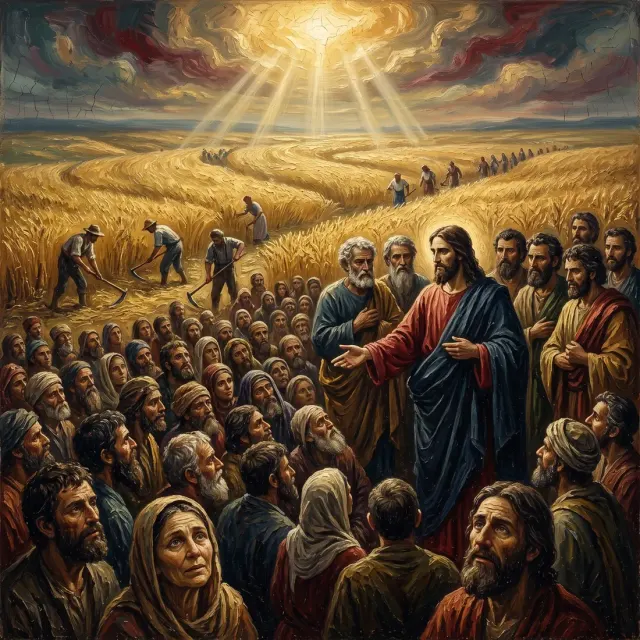
    He taught them as one that had authority

    The first thing the town notices is not the miracle but the manner, and the comparison it reaches for is the scribes.

    The interruption gives the teaching a terrible demonstration. Before the spirit cries out, the congregation has already noticed authority in Jesus' words. After the spirit leaves, that same word, authority, returns in their discussion. The command has done what the teaching sounded capable of doing. This is not a contest in speaking loudly. The loudest voice in the room belongs to the one who has to leave.

    The unclean spirit gets Jesus' identity right: the Holy One of God. That does not make its speech welcome. Accurate identification is not permission to speak, and Jesus neither asks for its testimony nor allows it to set the terms of the encounter. The congregation is still trying to understand what stands before it; the hostile spirit recognizes him and resists him. Knowledge and allegiance are not interchangeable here. Meanwhile, the man is not an illustration discarded after the argument. The command requires the spirit to come out of him. Capernaum hears authoritative teaching, but somebody in that synagogue experiences the authority as release.

    Verse by verse

    1. 1:22

      Authority translates exousia. The same word appears in the congregation's response in verse 27, linking the teaching and the command.

    2. 1:25

      The spirit's title is accurate, but Jesus refuses its speech. Recognition of Jesus' identity does not imply obedience freely offered.

    3. 1:26

      Torn describes a violent convulsion here, not dismemberment. The Greek verb is sparasso.

    Mark 1:21-28

    King James Version · 8 verses

    1:21And they went into Capernaum; and straightway on the sabbath day he entered into the synagogue, and taught.

    1:22And they were astonished at his doctrine: for he taught them as one that had authority, and not as the scribes.

    1:23And there was in their synagogue a man with an unclean spirit; and he cried out,

    1:24Saying, Let us alone; what have we to do with thee, thou Jesus of Nazareth? art thou come to destroy us? I know thee who thou art, the Holy One of God.

    1:25And Jesus rebuked him, saying, Hold thy peace, and come out of him.

    1:26And when the unclean spirit had torn him, and cried with a loud voice, he came out of him.

    1:27And they were all amazed, insomuch that they questioned among themselves, saying, What thing is this? what new doctrine is this? for with authority commandeth he even the unclean spirits, and they do obey him.

    1:28And immediately his fame spread abroad throughout all the region round about Galilee.

    Mark 1:21-28: He taught them as one that had authority
  2. 02

    Mark 2:1-12

    They uncovered the roof where he was

    Four men take a house apart because the door is blocked. The account notices the damage and does not treat it as a problem.

    Four men solve the problem of a crowded doorway by creating an entirely new entrance. The Book of Mark supplies no names for them, but it does preserve the damage to the roof. Their faith has become conspicuously physical. Then Jesus addresses something nobody has carried into the room on a stretcher: the man's sins. The text does not say that a particular sin caused his paralysis. Forgiveness is introduced as a deeper claim, not a medical explanation.

    The scribes recognize the size of that claim. Forgiving sins belongs to God, so this is not a minor disagreement about bedside manners. Jesus' distinction is between what is easier to say, not what is easier to accomplish. An invisible pardon can be announced without immediate visible verification; a command to walk can fail in front of everybody. The healing makes his authority to forgive publicly answerable to the room. The final movement is wonderfully concrete. The object that carried the man into the gathering leaves the gathering carried by him. The roof remains open. The argument does not.

    Verse by verse

    1. 2:1

      The house is not explicitly assigned an owner in this passage. Identifying it as Peter's house is an inference from the surrounding Capernaum episodes.

    2. 2:5

      Their faith includes the group bringing the man; the wording does not require excluding the man himself. No specific sin is identified as the cause of his condition.

    3. 2:9-10

      The question concerns what is easier to say. The visible healing is presented as evidence of the Son of man's authority to forgive.

    Mark 2:1-12

    King James Version · 12 verses

    2:1And again he entered into Capernaum after some days; and it was noised that he was in the house.

    2:2And straightway many were gathered together, insomuch that there was no room to receive them, no, not so much as about the door: and he preached the word unto them.

    2:3And they come unto him, bringing one sick of the palsy, which was borne of four.

    2:4And when they could not come nigh unto him for the press, they uncovered the roof where he was: and when they had broken it up, they let down the bed wherein the sick of the palsy lay.

    2:5When Jesus saw their faith, he said unto the sick of the palsy, Son, thy sins be forgiven thee.

    2:6But there were certain of the scribes sitting there, and reasoning in their hearts,

    2:7Why doth this man thus speak blasphemies? who can forgive sins but God only?

    2:8And immediately when Jesus perceived in his spirit that they so reasoned within themselves, he said unto them, Why reason ye these things in your hearts?

    2:9Whether is it easier to say to the sick of the palsy, Thy sins be forgiven thee; or to say, Arise, and take up thy bed, and walk?

    2:10But that ye may know that the Son of man hath power on earth to forgive sins, (he saith to the sick of the palsy,)

    2:11I say unto thee, Arise, and take up thy bed, and go thy way into thine house.

    2:12And immediately he arose, took up the bed, and went forth before them all; insomuch that they were all amazed, and glorified God, saying, We never saw it on this fashion.

  3. 03

    Matthew 8:5-13

    Speak the word only

    A soldier explains faith using the chain of command, and the verdict on him is I have not found so great faith, no, not in Israel.

    The centurion begins his explanation of authority by saying that he is under it. That small word matters. His orders work because he occupies a place within an effective chain of command; he does not have to follow every soldier down the road to make a command count. He recognizes in Jesus an authority that need not cross his threshold before reaching the sick man. His refusal of a visit is therefore not hesitation about Jesus' power. It is confidence in how far that power reaches.

    The response opens a much larger room than the officer's house. People come from east and west to recline with Israel's patriarchs, while presumed heirs face exclusion. The contrast concerns faith and presumed entitlement, not a declaration that every Israelite is rejected. Abraham, Isaac, and Jacob are still at the table. The officer who considers his own roof unworthy becomes the occasion for announcing unexpected guests at that banquet. Capernaum has already supplied astonishing events; now the astonishing thing is a man's trust. Jesus marvels, and the servant is healed without the promised journey.

    Verse by verse

    1. 8:5

      Luke 7:3-10 describes Jewish elders and friends speaking on the officer's behalf. Matthew presents the exchange directly, without describing those intermediaries.

    2. 8:9

      Under authority precedes soldiers under me. The officer reasons from both his obedience and the effectiveness of commands issued within his position.

    3. 8:11-12

      The banquet includes Abraham, Isaac, and Jacob. The warning against presumed membership should not be rewritten as the rejection of every Jewish person.

    Matthew 8:5-13

    King James Version · 9 verses

    8:5And when Jesus was entered into Capernaum, there came unto him a centurion, beseeching him,

    8:6And saying, Lord, my servant lieth at home sick of the palsy, grievously tormented.

    8:7And Jesus saith unto him, I will come and heal him.

    8:8The centurion answered and said, Lord, I am not worthy that thou shouldest come under my roof: but speak the word only, and my servant shall be healed.

    8:9For I am a man under authority, having soldiers under me: and I say to this man, Go, and he goeth; and to another, Come, and he cometh; and to my servant, Do this, and he doeth it.

    8:10When Jesus heard it, he marvelled, and said to them that followed, Verily I say unto you, I have not found so great faith, no, not in Israel.

    8:11And I say unto you, That many shall come from the east and west, and shall sit down with Abraham, and Isaac, and Jacob, in the kingdom of heaven.

    8:12But the children of the kingdom shall be cast out into outer darkness: there shall be weeping and gnashing of teeth.

    8:13And Jesus said unto the centurion, Go thy way; and as thou hast believed, so be it done unto thee. And his servant was healed in the selfsame hour.

    Matthew 8:5-13: Speak the word only
  4. 04

    Matthew 9:9-13

    He saw a man, named Matthew, sitting at the receipt of custom

    The toll booth is a fixed installation in this town, and calling the man at it means calling him away from a career, not a shift.

    One table is left behind and another becomes controversial. Matthew rises from the place where customs are collected; the next scene puts Jesus at a meal with the very class of people whose company raises objections. The passage does not itemize Matthew's dishonest transactions, so inventing a criminal ledger for him adds evidence the text never supplies. His occupation is stated. So is the immediacy of his response.

    The objection reaches the disciples, but Jesus supplies the answer. A physician's presence among the sick is not an endorsement of sickness; it explains why the physician came. The final word, repentance, keeps the meal from becoming a declaration that nothing needs to change. Yet the defense does not remain a clever comparison. Jesus sends the objectors back to Hosea: I will have mercy, and not sacrifice. Students of Scripture are assigned more reading, and the assignment concerns the treatment of people already sitting in front of them. The argument is made from Israel's own prophet. Mercy is not an imported alternative to Scripture. It is the part of Scripture their objection has failed to reckon with.

    Verse by verse

    1. 9:9

      The receipt of custom is the place of tax or toll collection. The parallel call in Mark 2:14 names Levi, the son of Alphaeus.

    2. 9:12

      The physician comparison explains association with sinners; it does not pronounce sin harmless. The call to repentance follows in the KJV text.

    3. 9:13

      Hosea 6:6 places mercy alongside the knowledge of God. Jesus' appeal is to a prophetic criticism already present within Israel's Scriptures.

    Matthew 9:9-13

    King James Version · 5 verses

    9:9And as Jesus passed forth from thence, he saw a man, named Matthew, sitting at the receipt of custom: and he saith unto him, Follow me. And he arose, and followed him.

    9:10And it came to pass, as Jesus sat at meat in the house, behold, many publicans and sinners came and sat down with him and his disciples.

    9:11And when the Pharisees saw it, they said unto his disciples, Why eateth your Master with publicans and sinners?

    9:12But when Jesus heard that, he said unto them, They that be whole need not a physician, but they that are sick.

    9:13But go ye and learn what that meaneth, I will have mercy, and not sacrifice: for I am not come to call the righteous, but sinners to repentance.

    Matthew 9:9-13: He saw a man, named Matthew, sitting at the receipt of custom
  5. 05

    John 6:66-69

    Will ye also go away

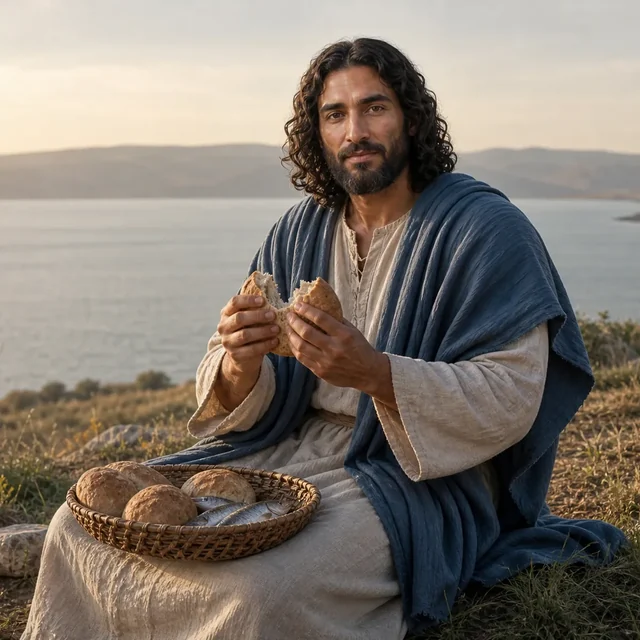
    The synagogue empties after the hardest sermon, and the question he asks the twelve is a real one. Peter answers with another question.

    The people leaving are called disciples. The Book of John does not reserve that word here for the Twelve, and the departure cannot be dismissed as the exit of opponents who had never followed at all. Earlier in the chapter, a crowd wanted to make Jesus king. Now his teaching has made continued company unacceptable to many. Capernaum's synagogue is identified in verse 59 as the setting of the discourse. Proximity to extraordinary events has not made agreement inevitable.

    Peter's answer does not explain every difficult sentence about bread, flesh, and blood. It identifies the speaker as the one whose words carry eternal life. His confession rests on who Jesus is, not on a claim that every difficulty has disappeared. That distinction gives the exchange its weight. Nor does remaining automatically certify the whole inner circle: the next two verses bring Judas into view. Departure exposes one kind of rupture, while a man who stays will betray. The chapter refuses the easy arithmetic in which a smaller crowd must mean a wholly faithful crowd. Peter answers for the Twelve. Jesus knows each one.

    Verse by verse

    1. 6:66

      Disciples is broader than the Twelve in this passage. Many leave, but the text gives neither their number nor a list of their names.

    2. 6:68

      The answer identifies Jesus as the source of life rather than resolving every debated meaning of the bread discourse.

    3. 6:69

      The KJV confession is followed immediately by Jesus' warning about one of the Twelve. John 6:71 identifies the future betrayer as Judas Iscariot.

    John 6:66-69

    King James Version · 4 verses

    6:66From that time many of his disciples went back, and walked no more with him.

    6:67Then said Jesus unto the twelve, Will ye also go away?

    6:68Then Simon Peter answered him, Lord, to whom shall we go? thou hast the words of eternal life.

    6:69And we believe and are sure that thou art that Christ, the Son of the living God.

    John 6:66-69: Will ye also go away

Why it matters

And it is the town with the heaviest verdict. Thou, Capernaum, which art exalted unto heaven, shalt be brought down to hell: for if the mighty works which have been done in thee had been done in Sodom, it would have remained until this day. The reasoning is not that the town was wicked. It is that the town saw everything and stayed the same. The synagogue discourse in John 6 happens here too, and it is the sermon that empties the room: from that time many of his disciples went back, and walked no more with him.

9 songs

The music

Every song in the catalogue whose passage falls inside these chapters.

  1. Mark 1:40-45

    Moved with Compassion

    Play here
    Open song pageRead lyrics
  2. Mark 1:21-28

    With Authority

    Play here
    Open song pageRead lyrics
  3. Mark 2:13-17

    I Came Not to Call the Righteous

    Play here
    Open song pageRead lyrics
  4. Mark 2:23-3:6

    Lord of the Sabbath

    Play here
    Open song pageRead lyrics
  5. Mark 2:1-12

    Through the Roof

    Play here
    Open song pageRead lyrics
  6. Matthew 8:5-13

    Speak the Word Only

  7. Matthew 9:1-8; Mark 2:1-12; Luke 5:17-26

    Arise and Walk

  8. Matthew 9:9-13

    I Will Have Mercy

  9. John 6:22-71

    The Bread of Life

    Play here
    Open song pageRead lyrics

Nearby

All the places

Report an error on this page