The big picture
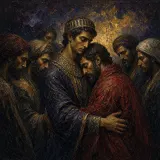
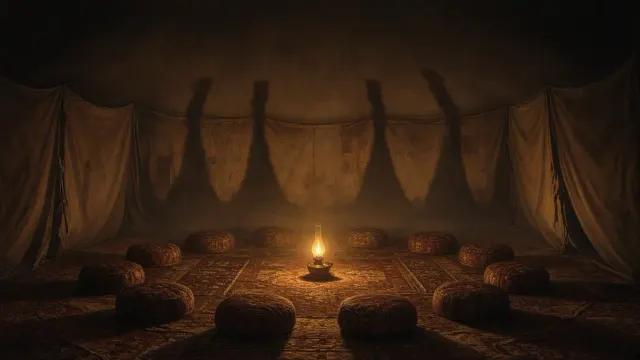
Jacob, also called Israel, is near death in Egypt, where his family moved during famine. His twelve sons gather around him. Their families will become the tribes of Israel, the people descended from Jacob. Jacob now speaks about each son's future and character. Some receive words of honour. Others hear the results of earlier wrongs. His words also reach beyond the men in the room to their descendants. The chapter ends with Jacob naming his burial place in Canaan, his family's earlier homeland, and then dying.
In this chapter
- Reuben Simeon and Levi Rebuked Genesis 49:1-7
Jacob calls his sons together and says he will tell them what lies ahead.
- Judah Receives Words of Rule Genesis 49:8-21
Jacob next speaks to Judah.
- Joseph Is Blessed and Jacob Dies Genesis 49:22-33
Jacob gives Joseph a long blessing.
Central truth
Jacob's final words link the sons' past actions and character with the future of the tribes that will come from them.
Scripture beside the summary
Genesis · King James Version · 33Genesis 49:1-7
Reuben Simeon and Levi Rebuked
Jacob calls his sons together and says he will tell them what lies ahead. He starts with Reuben, his firstborn. Reuben once held the highest family rank. Jacob says he will not keep that place because he violated his father's bed. Jacob then speaks to Simeon and Levi together. He condemns the violence they used in anger. Their descendants will be divided and scattered among Israel. Birth order does not protect these sons from the results of what they did. Jacob's words connect past conduct with future standing in the family.
In everyday life
A retiring shop owner names the next leaders in front of his adult children. His oldest son once broke a serious trust, so he loses the top job. Two brothers also lose influence because they answered conflict with reckless violence. Past conduct affects future responsibility. Jacob goes further because his words also concern whole family lines.
Notice
Genesis 49:4 Reuben is still the firstborn, but Jacob says he will not excel. His place at birth remains real, yet it no longer guarantees first rank.
Genesis 49:1-7
King James Version1And Jacob called unto his sons, and said, Gather yourselves together, that I may tell you that which shall befall you in the last days.
2Gather yourselves together, and hear, ye sons of Jacob; and hearken unto Israel your father.
3Reuben, thou art my firstborn, my might, and the beginning of my strength, the excellency of dignity, and the excellency of power:
4Unstable as water, thou shalt not excel; because thou wentest up to thy father’s bed; then defiledst thou it: he went up to my couch.
5Simeon and Levi are brethren; instruments of cruelty are in their habitations.
6O my soul, come not thou into their secret; unto their assembly, mine honour, be not thou united: for in their anger they slew a man, and in their selfwill they digged down a wall.
7Cursed be their anger, for it was fierce; and their wrath, for it was cruel: I will divide them in Jacob, and scatter them in Israel.
Genesis 49:8-21
Judah Receives Words of Rule
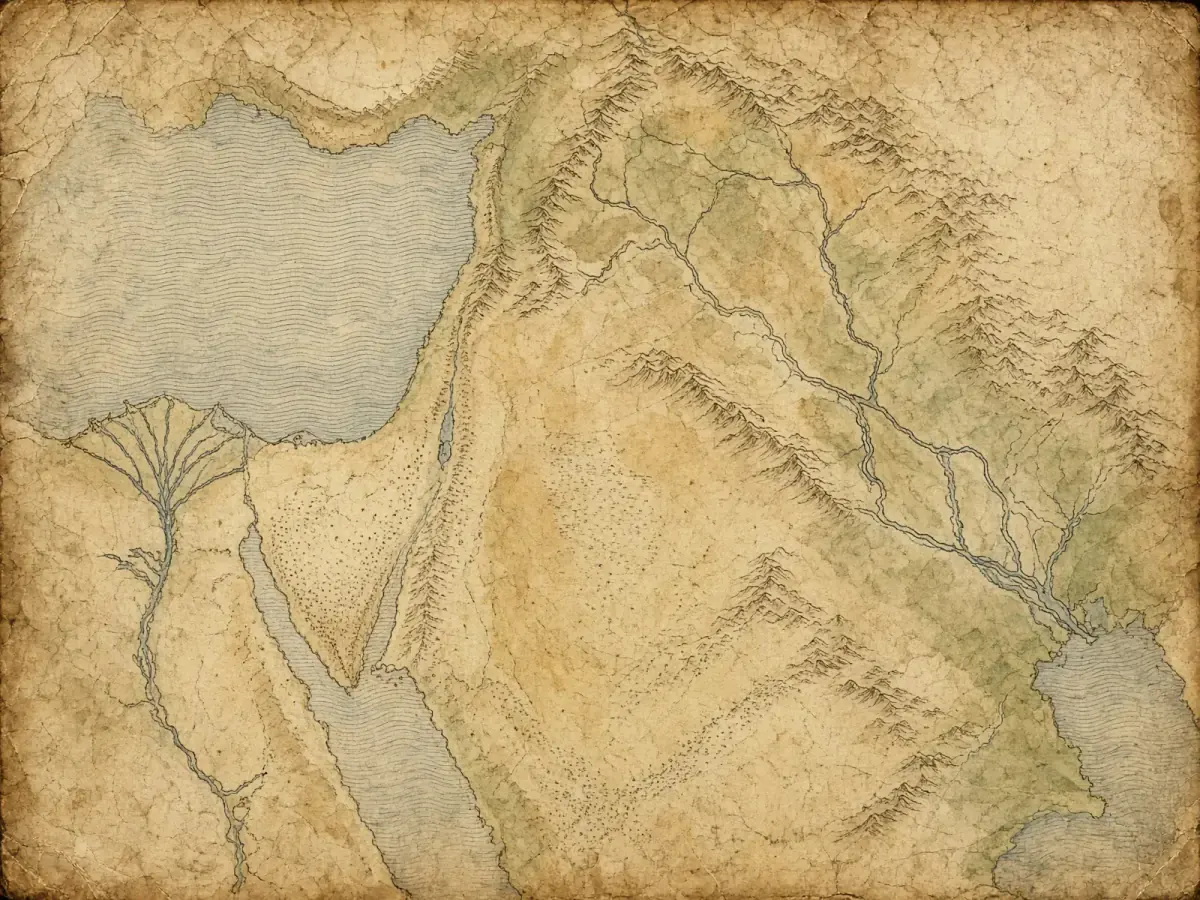
Jacob next speaks to Judah. He says Judah's brothers will praise him, and he links Judah with victory and rule. A sceptre, a sign of royal power, will remain with Judah's line. Verse 10 includes Shiloh, a term whose exact meaning is disputed. Many Christians understand it as pointing to a coming ruler. Jacob then speaks about Zebulun, Issachar, Dan, Gad, Asher and Naphtali. He gives each son a different picture of the future. The images involve trade, labour, judging, conflict, food and freedom. In the middle of these sayings, Jacob says he waits for the LORD's salvation.
In everyday life
A county fire chief assigns different crews to different jobs. One crew leads the response. Another protects a road. Another moves supplies, while another handles food and water. The roles are not equal because the needs are different. Jacob also gives different futures to different sons. Unlike the fire plan, his words reach into generations not yet born.
Notice
Genesis 49:10 Judah is the first son here tied to an enduring line of rule. That gives his blessing a different weight from the sayings around it.
Genesis 49:8-21
King James Version8Judah, thou art he whom thy brethren shall praise: thy hand shall be in the neck of thine enemies; thy father’s children shall bow down before thee.
9Judah is a lion’s whelp: from the prey, my son, thou art gone up: he stooped down, he couched as a lion, and as an old lion; who shall rouse him up?
10The sceptre shall not depart from Judah, nor a lawgiver from between his feet, until Shiloh come; and unto him shall the gathering of the people be.
11Binding his foal unto the vine, and his ass’s colt unto the choice vine; he washed his garments in wine, and his clothes in the blood of grapes:
12His eyes shall be red with wine, and his teeth white with milk.
13Zebulun shall dwell at the haven of the sea; and he shall be for an haven of ships; and his border shall be unto Zidon.
14Issachar is a strong ass couching down between two burdens:
15And he saw that rest was good, and the land that it was pleasant; and bowed his shoulder to bear, and became a servant unto tribute.
16Dan shall judge his people, as one of the tribes of Israel.
17Dan shall be a serpent by the way, an adder in the path, that biteth the horse heels, so that his rider shall fall backward.
18I have waited for thy salvation, O LORD.
19Gad, a troop shall overcome him: but he shall overcome at the last.
20Out of Asher his bread shall be fat, and he shall yield royal dainties.
21Naphtali is a hind let loose: he giveth goodly words.
Genesis 49:22-33
Joseph Is Blessed and Jacob Dies
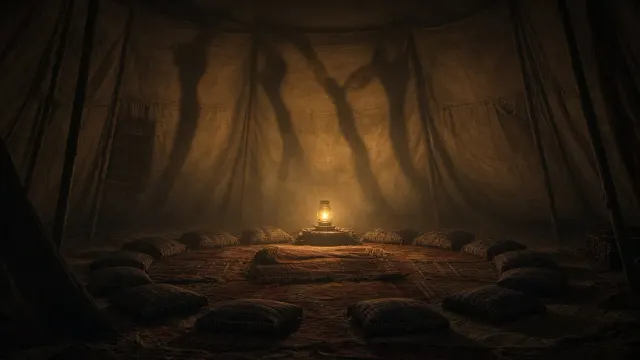
Jacob gives Joseph a long blessing. He compares Joseph to a fruitful branch beside water. Enemies attacked Joseph, but they did not break him. Jacob says Joseph's strength came from the God of Jacob. He asks for rich blessing on Joseph and his descendants. Benjamin, Jacob's youngest son, is then compared to a fierce wolf. Jacob identifies all his sons with the twelve tribes of Israel. He then gives burial orders. He wants to lie in the cave at Machpelah in Canaan. Abraham, Sarah, Isaac, Rebekah and Leah are buried there. Jacob finishes speaking, draws his feet into the bed, and dies.
In everyday life
An elderly mother calls her grown children to her bedside. She praises one son's endurance and gives clear funeral wishes. She names the old family cemetery where earlier generations are buried. Her children write down the details because they want to carry them out. Jacob's burial request carries added weight because it ties him to Canaan and his family's future there.
Notice
Genesis 49:29 Jacob does not ask to stay buried in Egypt, where the family now lives. He directs his sons back to the family burial place in Canaan.
Genesis 49:22-33
King James Version22Joseph is a fruitful bough, even a fruitful bough by a well; whose branches run over the wall:
23The archers have sorely grieved him, and shot at him, and hated him:
24But his bow abode in strength, and the arms of his hands were made strong by the hands of the mighty God of Jacob; (from thence is the shepherd, the stone of Israel:)
25Even by the God of thy father, who shall help thee; and by the Almighty, who shall bless thee with blessings of heaven above, blessings of the deep that lieth under, blessings of the breasts, and of the womb:
26The blessings of thy father have prevailed above the blessings of my progenitors unto the utmost bound of the everlasting hills: they shall be on the head of Joseph, and on the crown of the head of him that was separate from his brethren.
27Benjamin shall ravin as a wolf: in the morning he shall devour the prey, and at night he shall divide the spoil.
28All these are the twelve tribes of Israel: and this is it that their father spake unto them, and blessed them; every one according to his blessing he blessed them.
29And he charged them, and said unto them, I am to be gathered unto my people: bury me with my fathers in the cave that is in the field of Ephron the Hittite,
30In the cave that is in the field of Machpelah, which is before Mamre, in the land of Canaan, which Abraham bought with the field of Ephron the Hittite for a possession of a buryingplace.
31There they buried Abraham and Sarah his wife; there they buried Isaac and Rebekah his wife; and there I buried Leah.
32The purchase of the field and of the cave that is therein was from the children of Heth.
33And when Jacob had made an end of commanding his sons, he gathered up his feet into the bed, and yielded up the ghost, and was gathered unto his people.
Details worth noticing
The opening image
Genesis 49:1 begins with “And Jacob called unto his sons, and said, Gather yourselves together, that I may tell you that which shall befall you in the last days.”
Where the chapter turns
Genesis 49:10 forms a natural hinge: “The sceptre shall not depart from Judah, nor a lawgiver from between his feet, until Shiloh come; and unto him shall the gathering of the people be.”
The final note
Genesis 49:33 leaves the reader with “And when Jacob had made an end of commanding his sons, he gathered up his feet into the bed, and yielded up the ghost, and was gathered unto his people.”
A word trail through the chapter
The words blessings, Israel, Jacob, father, field, people help reveal the chapter’s repeated concerns.
KJV words made clear
- sceptre
- A ruler's staff, used as a sign of royal power.
- Shiloh
- A hard term with a disputed meaning, often understood by Christians as pointing to a coming ruler.
- hind
- A female deer, used here as a picture of freedom and quick movement.
- ravin
- To seize or tear prey like a hungry animal.
- yielded up the ghost
- An older English phrase meaning that a person died.
Music and video connected to the passage
Related media appears when its Scripture reference overlaps this study. Music and video can illuminate a theme while the biblical text remains the foundation.