The big picture
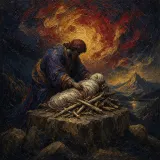
Ahaz reverses the direction of the reign almost immediately. He adopts the worship associated with Israel's kings, multiplies high places, and burns his children in the fire. Defeat follows on several fronts, reaching soldiers, royal officials, territory, and huge numbers of captives. Yet the chapter's most striking mercy appears in Samaria, where the victors are confronted by Oded. The prophet distinguishes Judah's judgment from Israel's right to do whatever it pleases. Northern leaders accept the rebuke, clothe and feed the captives with the very spoil taken from them, carry the weak, and return them to their brethren. Ahaz responds to his own distress in the opposite direction. He pays Assyria for help that does not strengthen him, then interprets Syrian success as a reason to worship Syrian gods. Finally he cuts apart temple vessels, shuts the doors of the LORD's house, and fills Jerusalem and Judah with rival altars. The northern captors hear correction and reverse course. The king of Judah hears distress and goes further into the same rebellion.
In this chapter
- A King's Departure Becomes His People's Captivity 2 Chronicles 28:1-8
Ahaz's rejection of the LORD spreads through geography and family before it spreads through military loss.
- A Victory Is Not Permission to Enslave 2 Chronicles 28:9-11
Oded meets the victorious northern army with a distinction military success could easily erase.
- The Spoil Becomes Clothing for the Prisoners 2 Chronicles 28:12-15
Four named leaders of Ephraim stand against their own returning army and accept Oded's charge.
- The Requested Helper Adds to the Distress 2 Chronicles 28:16-21
Ahaz faces genuine pressure from Edomites and Philistines, so his appeal to Assyria is not made in an imaginary crisis.
- One Temple Shut, Altars at Every Corner 2 Chronicles 28:22-27
The phrase "in the time of his distress" might prepare for repentance, but the next words reverse that expectation: Ahaz trespasses yet more.

Scripture beside the summary
2 Chronicles · King James Version · 272 Chronicles 28:1-8
A King's Departure Becomes His People's Captivity
Ahaz's rejection of the LORD spreads through geography and family before it spreads through military loss. He worships Baalim, burns incense in the valley of Hinnom, uses high places, hills, and green trees, and burns his children in the fire. The Book of 2 Chronicles places those practices beside the nations Israel was meant to be distinct from. Then defeat arrives from Syria and Israel. The damage reaches far beyond the king's own body: named men close to the throne are killed, one hundred twenty thousand Judean soldiers fall in a day, and two hundred thousand women, sons, and daughters are carried toward Samaria. The chapter calls these captives the northerners' "brethren," a word that becomes morally important before the next section. Even in verse 5, while describing judgment, the LORD is still called Ahaz's God. The king's apostasy has not made the covenant irrelevant to the explanation. His departure becomes public catastrophe, and the population bears consequences that expose the reach of royal unfaithfulness.
Deep dive
The opening moves outward from the king's allegiance into the places he uses for worship: the valley of Hinnom, high places, hills, and green trees. His children are among those consumed by the practices he adopts. The comparison with the nations expelled before Israel places his conduct against the very distinction Israel was meant to maintain. Royal descent from David is named, but it does not make his actions David-like.
Verse 5 still calls the LORD "his God" while describing Ahaz's defeat. His departure has not made the covenant relationship irrelevant to the account's explanation. The losses then widen from named members of the royal circle to a huge company of women, sons, and daughters. Those taken by the northern army are called their captors' brethren. That word is not decorative. It identifies the relationship the victors are violating and prepares Oded's objection to treating people of Judah as a supply of slaves.
Words to trace: Israel, LORD, burnt, children, king, carried
Verse-by-verse path
- 2 Chronicles 28:1
No mother is named for Ahaz, here or in 2 Kings 16:2. The numbers are hard: twenty at accession and sixteen years’ reign, yet Hezekiah is twenty-five when he succeeds (29:1), which would make Ahaz a father at eleven. Co-regencies or a copying error in one figure are the usual explanations.
- 2 Chronicles 28:2
“Molten images” are masekhot, figures cast in metal, the word used for Aaron’s “molten calf” in Exodus 32:4. “The ways of the kings of Israel” is the phrase used of Jehoram in 21:6, the first king of Judah to import the north’s worship.
- 2 Chronicles 28:3
The valley of the son of Hinnom, Ge-Hinnom, gave its name to Gehenna, the later word for hell, because of what was done here. 2 Kings 16:3 says he “made his son to pass through the fire”; Chronicles has “children”, plural. The law forbade it outright (Leviticus 18:21, Deuteronomy 18:10).
- 2 Chronicles 28:4
“Under every green tree” is the phrase of Deuteronomy 12:2, the places the nations served their gods and which Israel was told to destroy. Ahaz does not add a shrine; he makes the whole landscape a place of worship.
- 2 Chronicles 28:5
Kings and Isaiah 7 say Rezin of Syria and Pekah of Israel came up together against Jerusalem and could not take it. The Book of 2 Chronicles presents two separate defeats, one by each king, and says nothing of a siege. The captives taken to Damascus are never heard of again.
- 2 Chronicles 28:6
Isaiah will not use Pekah’s name; he calls him “the son of Remaliah” (Isaiah 7:4–9), a dismissive way of naming a usurper. A hundred and twenty thousand dead “in one day” is the largest single loss Judah suffers in the book.
- 2 Chronicles 28:7
Zichri kills three men of the inner court. Maaseiah “the king’s son” may be a prince or an official with that title, since Ahaz was young. Azrikam ran the palace. Elkanah was “next to the king”, mishneh, second in rank, the title Mordecai later holds (Esther 10:3).
- 2 Chronicles 28:8
The captives are women and children; the fighting men had died in verse 6. Two hundred thousand would have emptied whole districts of Judah. They are taken north to Samaria, and the spoil with them.
2 Chronicles 28:1-8
King James Version1Ahaz was twenty years old when he began to reign, and he reigned sixteen years in Jerusalem: but he did not that which was right in the sight of the LORD, like David his father:
2For he walked in the ways of the kings of Israel, and made also molten images for Baalim.
3Moreover he burnt incense in the valley of the son of Hinnom, and burnt his children in the fire, after the abominations of the heathen whom the LORD had cast out before the children of Israel.
4He sacrificed also and burnt incense in the high places, and on the hills, and under every green tree.
5Wherefore the LORD his God delivered him into the hand of the king of Syria; and they smote him, and carried away a great multitude of them captives, and brought them to Damascus. And he was also delivered into the hand of the king of Israel, who smote him with a great slaughter.
6For Pekah the son of Remaliah slew in Judah an hundred and twenty thousand in one day, which were all valiant men; because they had forsaken the LORD God of their fathers.
7And Zichri, a mighty man of Ephraim, slew Maaseiah the king’s son, and Azrikam the governor of the house, and Elkanah that was next to the king.
8And the children of Israel carried away captive of their brethren two hundred thousand, women, sons, and daughters, and took also away much spoil from them, and brought the spoil to Samaria.
2 Chronicles 28:9-11
A Victory Is Not Permission to Enslave
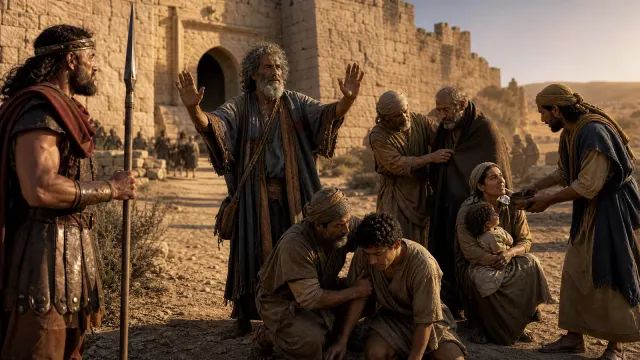
Oded meets the victorious northern army with a distinction military success could easily erase. Yes, the LORD delivered Judah into Israel's hand. No, that does not mean Israel's rage, slaughter, and planned enslavement are therefore righteous. The prophet says their violence reaches "up unto heaven" and turns the victors' attention from the guilt of the defeated to sins already present among themselves. That is the sting of the warning. A people used as an instrument of judgment are still accountable for what they do with the power victory has placed in their hands. The captives are called brethren, so conquest has not dissolved the relationship that makes enslavement especially offensive. Oded's demanded response is concrete: send them back. He does not ask for a speech acknowledging that perhaps the campaign became excessive. The people in chains must be released. The scene refuses the easy logic that success proves moral permission. A victory can be real and the victors can still stand under fierce divine wrath.
Deep dive
The prophet of the LORD is found at Samaria. After repeated accounts of northern corruption, his presence and message prevent the north from being treated as a place without a prophetic witness. Oded acknowledges that the LORD delivered Judah into Israel's hand. He then describes the army's killing as rage reaching heaven. The two claims stand together: being an instrument in Judah's defeat does not place every action of the victorious force beyond judgment.
His warning also changes the direction of attention. The army is looking at captives it intends to keep; Oded names the sins of the captors themselves. The proposed enslavement would add to existing guilt, and divine wrath now concerns Israel. Calling the prisoners brethren recalls a bond that military success has not dissolved. The required response is concrete, the return of the captives, rather than a ceremonial acknowledgment that the campaign may have gone too far.
Words to trace: LORD, Judah, bondmen, bondwomen, brethren, captive
Verse-by-verse path
- 2 Chronicles 28:9
Oded shares his name with the father of Azariah, who met Asa’s returning army in 15:1–2. Prophets in Chronicles often meet an army on its way home: Azariah, Jehu son of Hanani (19:2), and now Oded, who is the only one to meet the army of the north.
- 2 Chronicles 28:10
“Keep under” is kavash, to subdue, the word Jeremiah uses for masters who took back their freed slaves and “brought them into subjection” (Jeremiah 34:11). Leviticus 25:46 forbade Israelites to rule over their brothers “with rigour”. Oded’s question turns the charge back on the victors.
- 2 Chronicles 28:11
“Deliver the captives again” is literally “send back”, the verb shuv. Oded’s demand is short and practical: undo the capture. “Fierce wrath” is haron af, the burning of anger, the strongest phrase for God’s anger that Hebrew has.
2 Chronicles 28:9-11
King James Version9But a prophet of the LORD was there, whose name was Oded: and he went out before the host that came to Samaria, and said unto them, Behold, because the LORD God of your fathers was wroth with Judah, he hath delivered them into your hand, and ye have slain them in a rage that reacheth up unto heaven.
10And now ye purpose to keep under the children of Judah and Jerusalem for bondmen and bondwomen unto you: but are there not with you, even with you, sins against the LORD your God?
11Now hear me therefore, and deliver the captives again, which ye have taken captive of your brethren: for the fierce wrath of the LORD is upon you.
2 Chronicles 28:12-15
The Spoil Becomes Clothing for the Prisoners
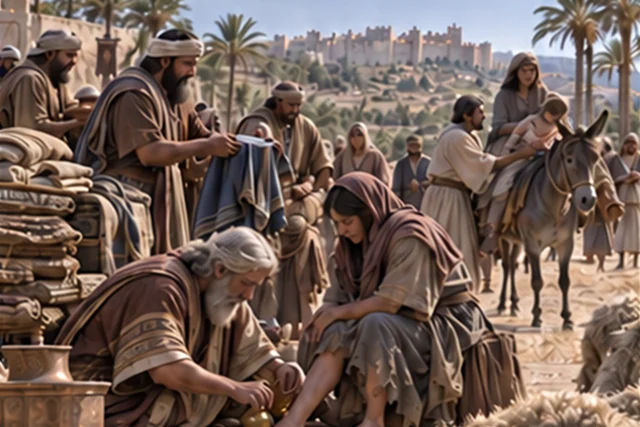
Four named leaders of Ephraim stand against their own returning army and accept Oded's charge. Their language is remarkable because it does not hide behind Judah's guilt. Israel already has trespass enough, they say, and bringing in the captives would add to it. The armed men yield, leaving both prisoners and spoil before the leaders and congregation. Then release becomes something more substantial than removing chains. The captives are clothed from the spoil, shod, fed, given drink, anointed, and, when too weak to walk, carried on asses to Jericho. The goods taken in conquest become material for undoing the deprivation conquest produced. The Book of 2 Chronicles lingers over those practical acts because mercy here has weight, fabric, food, oil, and transportation. In a chapter dominated by Ahaz's refusal to turn, northern Israelites hear a prophetic rebuke and actually change direction. They do not merely feel differently about the captives. They return them to their brethren in a condition fit to travel and live.
Deep dive
The named leaders stand against their own returning force. Their language accepts the charge instead of transferring all blame to Judah: Israel already has guilt enough. The armed men then leave both captives and spoil before the princes and congregation. The encounter stops short of another battle because the force yields to the warning and the public resistance of its leaders.
The treatment that follows is carefully itemized. Clothing and shoes come from the spoil; food, drink, and anointing address the captives' condition; those too weak to travel are carried on asses. Release does not mean abandonment beside the road. They are brought to Jericho and returned to their brethren before the escorts go back to Samaria. The goods taken in conquest now help undo the captives' deprivation. Within a chapter dominated by Ahaz's refusal to turn, these northern men hear a rebuke and change what they are doing. The contrast is enacted through garments, provisions, and transport, not left as a general statement about mercy.
Words to trace: captives, spoil, trespass, already, Amasa, anointed
Verse-by-verse path
- 2 Chronicles 28:12
Four heads of Ephraim are named, with their fathers. One of them is Jehizkiah, the same name in Hebrew as Hezekiah, the king who will reopen the temple in the next chapter. They stand up against their own army at the city’s edge.
- 2 Chronicles 28:13
The word ashmah, guilt or trespass, is said three times in this one speech. The leaders count their own nation’s guilt as already great and refuse to add to it. Their words agree with Oded’s almost clause for clause.
- 2 Chronicles 28:14
“Armed men” is haluts, the word for soldiers stripped for action. The army gives up both prisoners and plunder to the civil leaders and the assembly, a rare moment in Scripture when soldiers surrender their spoil because of a prophet’s word.
- 2 Chronicles 28:15
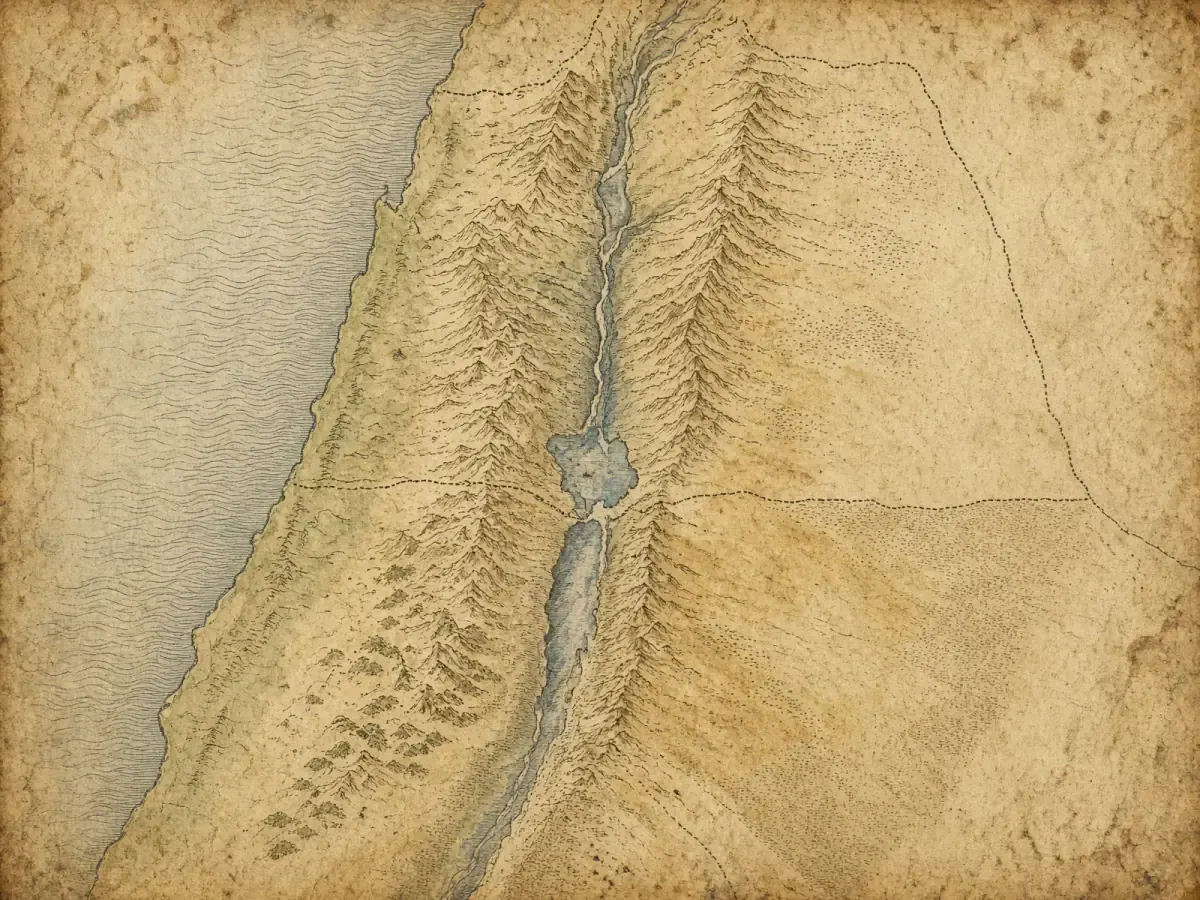
“Expressed by name” means designated for the task. Jericho is called “the city of palm trees”, as in Deuteronomy 34:3. Many readers have heard in this scene the source of Jesus’ Samaritan in Luke 10:30–35: oil, a donkey, the road to Jericho, and help from the north.
2 Chronicles 28:12-15
King James Version12Then certain of the heads of the children of Ephraim, Azariah the son of Johanan, Berechiah the son of Meshillemoth, and Jehizkiah the son of Shallum, and Amasa the son of Hadlai, stood up against them that came from the war,
13And said unto them, Ye shall not bring in the captives hither: for whereas we have offended against the LORD already, ye intend to add more to our sins and to our trespass: for our trespass is great, and there is fierce wrath against Israel.
14So the armed men left the captives and the spoil before the princes and all the congregation.
15And the men which were expressed by name rose up, and took the captives, and with the spoil clothed all that were naked among them, and arrayed them, and shod them, and gave them to eat and to drink, and anointed them, and carried all the feeble of them upon asses, and brought them to Jericho, the city of palm trees, to their brethren: then they returned to Samaria.
2 Chronicles 28:16-21
The Requested Helper Adds to the Distress
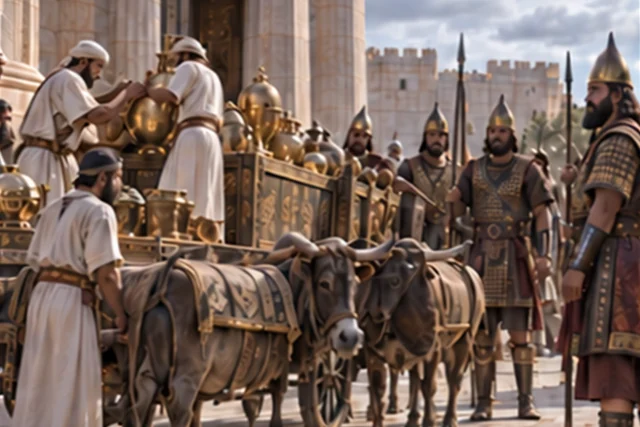
Ahaz faces genuine pressure from Edomites and Philistines, so his appeal to Assyria is not made in an imaginary crisis. Cities are lost, captives are taken, and enemies settle in Judean territory. Yet the Book of 2 Chronicles explains Judah's exposure through Ahaz's transgression, using the vivid phrase that he "made Judah naked." The image lands just after the northern leaders have clothed Judean prisoners. Ahaz tries to reverse his weakness by purchasing outside strength. Treasure comes out of the house of the LORD, the royal house, and the princes and is sent to the Assyrian king. The text then repeats the result in almost stubborn terms: the Assyrian distressed him, "but strengthened him not," and despite the payment "he helped him not." Arrival is not rescue, and tribute is not proof that the transaction succeeded. Ahaz has stripped resources from Judah's central institutions to secure help, but the helper he requested becomes another source of distress rather than the strengthening he sought.
Deep dive
The Edomite and Philistine attacks show Judah's vulnerability on more than one side. Ahaz's appeal to Assyria therefore occurs within actual military pressure, not an invented crisis. Yet the Book of 2 Chronicles describes that exposure as the result of his transgression. Its phrase that he made Judah naked gives the nation's condition a bodily image, shortly after the northern leaders have clothed Judean captives.
The passage repeatedly denies the result Ahaz sought. The Assyrian king distresses him rather than strengthening him; the payment does not secure help. The resources come from the LORD's house, the king's house, and the princes, so the appeal draws upon the kingdom's religious and governing institutions together. This is the account's assessment of the intervention's effect on Judah. An arrival by the requested power and the payment of tribute are not equated with the rescue for which the payment was made.
Words to trace: king, Judah, Ahaz, Assyria, LORD, villages
Verse-by-verse path
- 2 Chronicles 28:16
Isaiah had told Ahaz not to fear the two kings and offered him a sign; Ahaz refused to ask one (Isaiah 7:4–12) and sent to Assyria instead. The plural “kings of Assyria” is unusual; 2 Kings 16:7 has the singular.
- 2 Chronicles 28:17
“Again” marks the return of an old enemy. 2 Kings 16:6 says that in these years Elath, the port Uzziah had rebuilt (26:2), was lost, and the Edomites settled there “unto this day”. The captives taken by Edom are not rescued.
- 2 Chronicles 28:18
Six towns fall in the lowland and the Negev. Beth-shemesh, Ajalon and Shocho have all appeared before in the book; Timnah is the town where Samson took a Philistine wife (Judges 14:1), and Gimzo, modern Jimzu near Lod, appears only here. Uzziah’s gains of 26:6 are reversed, and the Philistines settle in.
- 2 Chronicles 28:19
“Made Judah naked” uses para, to let loose or let run wild, the verb of Exodus 32:25, where the people “were naked; for Aaron had made them naked” at the golden calf. The King James catches the link. Judah is stripped of restraint as well as of defence.
- 2 Chronicles 28:20
Tilgath-pilneser is Tiglath-pileser III of Assyria, whose annals list “Jehoahaz of Judah”, Ahaz’s full name, among the kings who paid him tribute. 2 Kings 16:9 says he did take Damascus and kill Rezin. The Book of 2 Chronicles omits that benefit and records only the pressure.
- 2 Chronicles 28:21
“Took away a portion” is halaq, to divide up or strip. 2 Kings 16:8 calls the payment a shohad, a bribe. Even the princes’ houses are emptied, so the nobles pay for the king’s policy as well.
2 Chronicles 28:16-21
King James Version16At that time did king Ahaz send unto the kings of Assyria to help him.
17For again the Edomites had come and smitten Judah, and carried away captives.
18The Philistines also had invaded the cities of the low country, and of the south of Judah, and had taken Beth-shemesh, and Ajalon, and Gederoth, and Shocho with the villages thereof, and Timnah with the villages thereof, Gimzo also and the villages thereof: and they dwelt there.
19For the LORD brought Judah low because of Ahaz king of Israel; for he made Judah naked, and transgressed sore against the LORD.
20And Tilgath-pilneser king of Assyria came unto him, and distressed him, but strengthened him not.
21For Ahaz took away a portion out of the house of the LORD, and out of the house of the king, and of the princes, and gave it unto the king of Assyria: but he helped him not.
2 Chronicles 28:22-27
One Temple Shut, Altars at Every Corner
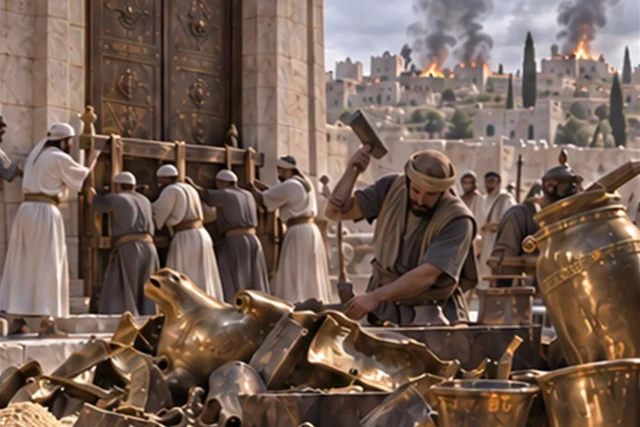
The phrase "in the time of his distress" might prepare for repentance, but the next words reverse that expectation: Ahaz trespasses yet more. He interprets Syrian victory as evidence that Syria's gods must be effective and begins sacrificing to them, even though the Book of 2 Chronicles has already explained Judah's defeat in terms of the LORD's judgment. Ahaz reads the same crisis through a different theology and follows it to ruin. His final arrangement of worship becomes almost spatially aggressive. The vessels of God's house are cut apart, the temple doors are shut, and meanwhile altars appear at every corner of Jerusalem and high places throughout Judah's cities. Religion has not disappeared. It has multiplied everywhere except in the house the king has closed. His burial continues the chapter's negative assessment: he is placed in Jerusalem but not in the royal sepulchres. Then Hezekiah succeeds him, and the next chapter will begin with one concrete reversal of Ahaz's policy: the shut doors are opened again.
Deep dive
The pointed identification "this is that king Ahaz" fixes attention on his response to adversity. Distress has not humbled him. He reasons that the gods of Syria helped its kings and therefore might help him. That explanation competes directly with verse 5, where the LORD's judgment accounts for Judah's defeat. Ahaz reads the same defeat as evidence for transferring his worship elsewhere. The Book of 2 Chronicles gives the outcome plainly: the adopted gods bring ruin, not the assistance he expects.
The final religious geography is deliberately crowded. Temple vessels are cut apart and its doors are shut, but altars appear in every corner of Jerusalem and high places throughout Judah's cities. Worship has not become scarce; it has been redirected while the LORD's house is closed. Ahaz is buried in Jerusalem but excluded from the royal sepulchres. His son Hezekiah will begin the next chapter by opening the very doors his father shut, making the change of reign visible in a single physical action.
Words to trace: Ahaz, gods, house, Israel, kings, LORD
Verse-by-verse path
- 2 Chronicles 28:22
“In the time of his distress” uses the same Hebrew as Manasseh’s turning point in 33:12, “when he was in affliction, he besought the LORD.” Distress drives one king back to God and the other further away. “This is that king Ahaz” is the book pointing a finger.
- 2 Chronicles 28:23
2 Kings 16:10–16 says Ahaz saw an altar at Damascus while meeting Tiglath-pileser there, copied it and put it in the temple court. The Book of 2 Chronicles goes further and says he sacrificed to Damascus’s gods. “Ruin” is from kashal, to stumble: the gods trip him up.
- 2 Chronicles 28:24
Kings says Ahaz took the bronze sea off its oxen and cut the panels from the laver stands (2 Kings 16:17), likely to pay tribute. Only Chronicles says he shut the temple doors, which 29:7 explains: the lamps went out and incense ceased. The altars go up “in every corner” instead.
- 2 Chronicles 28:25
“Provoked to anger” is kaas, the vocabulary of Deuteronomy 32:16 and 21, where Israel provokes God with strange gods. High places are set up in every town, the very reverse of the reforms of Asa and Jehoshaphat.
- 2 Chronicles 28:26
Other records of Ahaz survive in 2 Kings 16 and Isaiah 7: the Damascus altar, the meeting with Isaiah at the conduit of the upper pool, and the sundial called “the dial of Ahaz” on which the shadow went back for Hezekiah (Isaiah 38:8).
- 2 Chronicles 28:27
Isaiah 14:28 dates an oracle “in the year that king Ahaz died.” He is buried in Jerusalem but not in the royal tombs, the third king refused them after Jehoram and Joash. The book calls them “the kings of Israel”, and Hezekiah’s reign will bring north and south to one Passover.
2 Chronicles 28:22-27
King James Version22And in the time of his distress did he trespass yet more against the LORD: this is that king Ahaz.
23For he sacrificed unto the gods of Damascus, which smote him: and he said, Because the gods of the kings of Syria help them, therefore will I sacrifice to them, that they may help me. But they were the ruin of him, and of all Israel.
24And Ahaz gathered together the vessels of the house of God, and cut in pieces the vessels of the house of God, and shut up the doors of the house of the LORD, and he made him altars in every corner of Jerusalem.
25And in every several city of Judah he made high places to burn incense unto other gods, and provoked to anger the LORD God of his fathers.
26Now the rest of his acts and of all his ways, first and last, behold, they are written in the book of the kings of Judah and Israel.
27And Ahaz slept with his fathers, and they buried him in the city, even in Jerusalem: but they brought him not into the sepulchres of the kings of Israel: and Hezekiah his son reigned in his stead.
Questions to keep in mind while reading
- Track who acts, who speaks, who is affected, and what changes.
- Notice repeated promises, failures, rescues, and consequences.
- Do not assume the account approves every action that is reported.
Text first
Where readers differ
The chapter summary begins with what the passage says and how its parts fit together. It does not assume one denomination has already settled every question. Where a conclusion depends on a tradition, literary theory, or historical reconstruction, that dependence is named openly.
The KJV text is presented first. Interpretive conclusions are labeled, and differences are introduced only when they help a reader understand why serious communities do not always reach the same answer.
Comparative interpretive notes for this chapter are in preparation. Until reviewed notes are ready, this page separates the KJV text from summary and application without claiming that serious readers agree on every question.
Questions beneath the surface
- What account of God, human freedom, responsibility, and the good life emerges from 2 Chronicles 28?
- Which tension does the chapter refuse to resolve quickly?
- What changes when the chapter is read as part of the whole canon rather than as an isolated moral lesson?
- Where might a sincere reader confuse a familiar tradition with something the text states directly?
Questions for serious personal contemplation
These open-ended questions make room for tension, honest response, prayer, and conclusions that remain accountable to the chapter.
Observe without rushing
What part of 2 Chronicles 28 makes you stop, feel unsettled, or feel surprised, and why?
Which detail in the passage would be easiest to overlook? How does that detail change your understanding?
Where do you see tension between what happens and this focus: 2 Chronicles 28 develops its own movement around LORD, Israel, Judah, king, Ahaz?
What important question does the passage leave open instead of resolving quickly?
Examine your inner life honestly
Which person, response, fear, or desire in the passage feels most like your own life right now?
What assumption about God, other people, or yourself does this text challenge?
Which part would you rather soften, avoid, or explain away too quickly? What might that reaction reveal?
If this Scripture could ask you one direct question, what do you think it would ask?
Respond with wisdom and courage
What do you need to remember, confess, grieve, thank God for, or trust after reading this passage?
How might another faithful person read this situation differently without ignoring the text?
What obedient response would be costly, uncomfortable, or slow, yet still faithful to Scripture?
What question will you carry into prayer this week, and which verses will you keep in front of you?
Music and video connected to the passage
Related media appears when its Scripture reference overlaps this study. Music and video can illuminate a theme while the biblical text remains the foundation.