The big picture
2 Chronicles 36 accelerates through Judah's final kings as foreign powers gain control over both throne and temple. The people install Jehoahaz, but Egypt removes him after three months, taxes the land, renames his brother, and carries the deposed king away. Babylon then takes over the pattern. Kings are bound or deported, temple vessels move east, and Zedekiah's reign adds resistance to Jeremiah, a broken oath, a hardened heart, and a polluted sanctuary. The chapter widens responsibility beyond the palace to chief priests and people, then pauses to explain why prophetic warnings kept coming: the LORD sent messengers repeatedly "because he had compassion on his people, and on his dwelling place." Their rejection reaches a point described as having no remedy. Jerusalem falls, the house burns, survivors serve in Babylon, and the land finally keeps its sabbaths during desolation. Yet fulfilled prophecy explains both ruin and return. Cyrus is stirred to authorize rebuilding, and the last words direct the exiles toward Jerusalem.
Central truth
Judah's persistent rejection of compassionate warnings ends in Jerusalem's destruction and exile, yet the Lord stirs Cyrus to reopen the way for his people to return and rebuild the temple.

The study notes have a page of their own
The movement by movement analysis, the words to trace, the verse by verse notes and where readers differ are written for someone studying alone. They are on the Deep Personal Reflections page for this chapter. This page is the lesson.
A chapter-specific teaching brief
These anchors come from this chapter itself. They help a teacher use the Level 1 overview, the Level 2 study, and the Scripture text as one lesson.
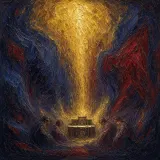
Open with the chapter’s first image
2 Chronicles 36:1: “Then the people of the land took Jehoahaz the son of Josiah, and made him king in his father’s stead in Jerusalem.”
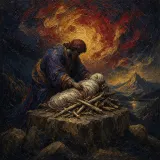
Slow down at the turning point
2 Chronicles 36:8: “Now the rest of the acts of Jehoiakim, and his abominations which he did, and that which was found in him, behold, they are written in the book of the…”
Keep this word trail visible
LORD, king, Jerusalem, house, Babylon, years
What to explain, in order
Teach the passage in this order. Each step names the verses it rests on, so every point can be shown in the text before it is applied.
2 Chronicles 36:1-10
Kings appointed by others
Move quickly through the four last kings, because the text does. Jehoahaz reigns three months and is taken to Egypt. Eliakim is renamed Jehoiakim by Pharaoh and bound by Nebuchadnezzar. Jehoiachin reigns three months and ten days. Zedekiah is made king by Babylon. Point out the verbs: put down, made, turned his name, carried, brought. Explain that renaming showed ownership. Teach this first so the class feels how far Judah has fallen from the days when God set Solomon on his throne (9:8).
2 Chronicles 36:11-14
King, priests and people together
Slow down for Zedekiah. He would not humble himself before Jeremiah, the reverse of Josiah's tender heart in 34:27, and he broke an oath sworn by God. Explain "stiffened his neck" as the stubbornness of an ox refusing the yoke. Then read 36:14: the chief priests and the people join in, and the temple itself is polluted. Teach this step to show that the fall is shared, not the fault of one bad king, while noting that children, the poor and the faithful remnant suffered with the guilty.
2 Chronicles 36:15-16
Compassion and no remedy
These two verses are the theological heart of the chapter. Read 36:15 slowly and stop on "because he had compassion". The prophets were sent early and often out of love, Jeremiah and Ezekiel among them. Then read 36:16: mocking, despising, misusing, until "there was no remedy". Explain that the phrase does not mean God stopped being able to save; it means the time of warning ran out. Teach this before the destruction so the class understands it as the end of long patience.
2 Chronicles 36:17-20
The house burned
Read the destruction plainly and with restraint. The Chaldeans kill young and old; the vessels and treasures go to Babylon; the house of God is burned and the walls broken. Do not linger on 36:17. Remind the class of the cloud and fire that filled this house in 5:14 and 7:1, and of God's warning in 7:19-22 that it could become "an astonishment". Read 36:20: servants in Babylon "until the reign of the kingdom of Persia". That last phrase is a hint of hope.
2 Chronicles 36:21
The land keeps its sabbaths
Read 36:21 beside Leviticus 25:1-5 and 26:34-35. Explain that God's law required the land to rest every seventh year, and that the Book of 2 Chronicles sees the exile as the land receiving the rest it was denied. Mention Jeremiah 25:11-12 and 29:10 for the seventy years. Keep this short and clear. Do not attempt date arithmetic; the point is that the exile happened within God's word and purpose, not outside it.
2 Chronicles 36:22-23
Cyrus and an open door
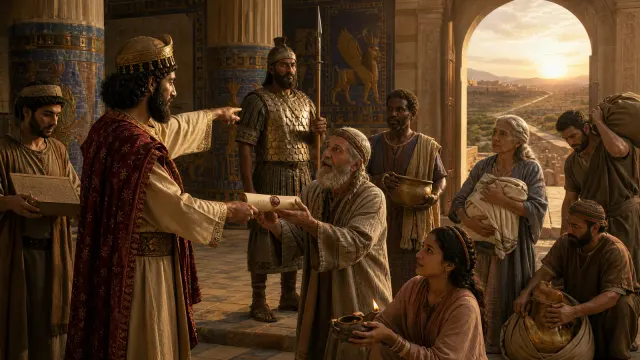
End with the surprise. The LORD stirs the spirit of a Persian king, and Cyrus proclaims that God has charged him to build a house in Jerusalem. Explain that Isaiah 44:28 and 45:1 name Cyrus. Read the last words aloud: "let him go up". Point out that the Hebrew Bible traditionally ends here, on the word go up, and that Ezra 1:1-3 repeats the decree and continues. Teach this last so the class leaves with hope and with work still to do.
Where learners get stuck
The misreadings this passage tends to produce, and how to answer each from the text.
"The exile happened because God gave up on his people."
Read 36:15: God sent messengers "rising up betimes, and sending; because he had compassion on his people". The judgement came after long mercy, "till there was no remedy" (36:16), and the book ends with God stirring Cyrus to open the way home (36:22-23). The exile is discipline within the covenant, not abandonment, and the chapter does not end in the ashes.
"Everyone who suffered in the fall of Jerusalem must have deserved it personally."
Verse 36:14 says the chief priests and the people sinned greatly, and 36:17 says the Chaldeans spared neither young nor old. Children and the faithful, such as Jeremiah, suffered with the guilty. The text describes a shared national judgement; it does not assign the same guilt to every sufferer. Teach this with care for learners who have lived through war or displacement.
"Cyrus was a believer, since he talks about the LORD God of heaven."
Cyrus speaks of the LORD because God stirred his spirit (36:22), and his decree serves God's purpose. But the text does not say he worshipped the LORD alone, and Isaiah 45:4-5 says of him, "thou hast not known me". God used a foreign king for his people's good. Teach that God rules over rulers who do not know him, without claiming more than the text says.
"This chapter is a prophecy about the fall of a modern nation."
Verse 36:21 explains the exile of Judah as the fulfilment of Jeremiah's word and of the covenant warnings in Leviticus 26. It describes a specific history, Jerusalem's fall to Babylon and the return under Cyrus. Learners may draw lessons about how God deals with persistent refusal, but mapping the chapter onto any current nation adds what the text does not say. Keep politics out of the room.
Learning objectives
- Trace the final kings through Egyptian and Babylonian control.
- Identify the shared responsibility described before the fall.
- Explain why repeated prophetic messages express compassion.
- Connect the exile with the land's sabbath rest.
- Identify what the Lord initiates through Cyrus.
- Distinguish permission to rebuild from completed restoration.
Teacher preparation
- Read 36:1–23 after Josiah's reign; prepare a timeline distinguishing the deportations.
- Flag Jehoiachin's eight years in 36:9 beside eighteen in 2 Kings 24:8; acknowledge the difficulty.
- Explain betimes as early or diligently, and stiffened his neck as stubborn resistance.
- Read Jeremiah 25:11–12 and Leviticus 26:34–35 before discussing seventy years and sabbaths; avoid unsupported calendar arithmetic.
- Explain the destruction soberly; avoid reenactments, ethnic blame, or personal disclosures.
Evidence and interpretation checks
Explicit
Establish from 36:14–16 that leaders and people reject repeated messengers, and from 36:22–23 that the Lord stirs Cyrus to authorize rebuilding.
Scripture-supported
Connect the fulfilled warning in 36:21 with Jeremiah 25:11–12 and Leviticus 26:34–35; the Book of 2 Chronicles itself names prophetic fulfilment and sabbath rest.
Strong inference
Infer from the move from no remedy in 36:16 to the stirred spirit in 36:22 that irreversible judgment on that rebellion does not cancel every future act of mercy.
Possible or traditional reading
Present attempts to calculate an exact start and end for the seventy years in 36:21 as chronological reconstructions; this verse does not supply the calendar dates needed to settle them.
Limit
State that 36:23 records an invitation and commission, not a finished temple, universal participation in return, or a complete account of Cyrus's personal faith.
Discussion with answer guidance
1. How do the final kings lose the ability to determine Judah's future?
What a good answer contains
Foreign powers now make and unmake Judah's kings. "And the king of Egypt put him down at Jerusalem, and condemned the land in an hundred talents of silver and a talent of gold" (36:3), and then made Eliakim king and "turned his name to Jehoiakim" (36:4). Egypt deposes one king, taxes the land, installs another and renames him. Then Nebuchadnezzar binds Jehoiakim "in fetters, to carry him to Babylon" (36:6), takes Jehoiachin (36:10), and "made Zedekiah his brother king". A good answer traces Egypt and then Babylon taking control. A weak answer lists names without seeing the loss of independence.
Show teacher guidance
Trace Egypt's royal appointments in 36:3–4 and Babylon's interventions in 36:6–10.
2. Does the Book of 2 Chronicles blame only one bad king?
What a good answer contains
No. Zedekiah "humbled not himself before Jeremiah the prophet speaking from the mouth of the LORD" (36:12), broke his oath to Nebuchadnezzar, and "stiffened his neck, and hardened his heart" (36:13). "Moreover all the chief of the priests, and the people, transgressed very much after all the abominations of the heathen; and polluted the house of the LORD" (36:14). Then "they mocked the messengers of God" (36:16). A strong answer names king, priests and people together. A weak answer blames only Zedekiah, or treats every sufferer as equally guilty.
Show teacher guidance
Read 36:12–16: Zedekiah, chief priests, and people participate in refusal and pollution. Avoid assigning identical personal guilt to every sufferer.
3. Why does 36:15 call God's repeated prophetic warnings compassion before Jerusalem's destruction?
What a good answer contains
Because the warnings came from God's love. "And the LORD God of their fathers sent to them by his messengers, rising up betimes, and sending; because he had compassion on his people, and on his dwelling place" (36:15). The phrase rising up betimes means early and again and again. "But they mocked the messengers of God, and despised his words, and misused his prophets, until the wrath of the LORD arose against his people, till there was no remedy" (36:16). A good answer sees compassion in the sending and the refusal that exhausted it. A weak answer reads the prophets as threats only.
Show teacher guidance
Use 36:15: God's compassion for his people and dwelling motivates the messengers. Read the mocking response in 36:16 before the destruction.
4. What happens to Solomon's once-glorious temple when Babylon captures Jerusalem?
What a good answer contains
Everything is taken or destroyed. "And all the vessels of the house of God, great and small, and the treasures of the house of the LORD" go to Babylon (36:18). "And they burnt the house of God, and brake down the wall of Jerusalem, and burnt all the palaces thereof with fire" (36:19). Survivors become servants in Babylon (36:20). A good answer names the vessels, the burning, the walls and the exile, and remembers the glory of 7:1-3. A weak answer either hurries past the loss or dwells on the violence of 36:17 for effect.
Show teacher guidance
Identify removed vessels, burned buildings, broken walls, and exile in 36:18–20. Allow the losses their weight without sensational detail.
5. Why does the land's rest enter an account of political defeat?
What a good answer contains
Because the Book of 2 Chronicles reads the exile as God's word being kept. It was "To fulfil the word of the LORD by the mouth of Jeremiah, until the land had enjoyed her sabbaths: for as long as she lay desolate she kept sabbath, to fulfil threescore and ten years" (36:21). This echoes Leviticus 26:34-35, where a disobedient people loses the land and the land rests. A strong answer sees covenant, not only military defeat. A weak answer builds elaborate date calculations on the seventy years that the verse does not ask for.
Show teacher guidance
Read 36:21 beside Leviticus 26:34–35: the exile is interpreted within covenant obligations, not only military strength. Do not turn the verse into unsupported date calculations.
6. Who starts the final movement toward rebuilding, and what remains undone?
What a good answer contains
The LORD does. The text says "the LORD stirred up the spirit of Cyrus king of Persia, that he made a proclamation" (36:22). Cyrus says the LORD God of heaven "hath charged me to build him an house in Jerusalem" and asks, "Who is there among you of all his people? The LORD his God be with him, and let him go up" (36:23). The book ends on an invitation, mid-movement. A good answer sees the door opened and the work still ahead, which the Book of Ezra takes up. A weak answer treats Cyrus's decree as the rebuilding itself.
Show teacher guidance
Use 36:22–23: the Lord stirs Cyrus, Cyrus proclaims permission, and people are invited to go. The doors reopen; the rebuilding work still lies ahead.
Responsible application
Heart and habits
Compare a fictional institution's first ignored warning with its later habit of ridiculing every correction; identify where a different response was still possible.
Relationships and community
Ask a fictional community to distinguish honest acknowledgment of shared failures from blanket blame assigned to all displaced or suffering people.
Hope with work still ahead
Draft practical steps after a fictional community receives rebuilding permission; distinguish opportunity from completed recovery.
Session plans
Two timings of the same lesson. The shorter keeps the reading, the central discussion and one response; the longer gives the confusions and the application their own time.
45 minutes
Kings appointed by others
Read 36:1-10. Ask question one.
King, priests and people
Read 36:11-14. Ask question two and take confusion two.
Compassion and no remedy
Read 36:15-16 twice. Ask question three and take confusion one.
The house burned and the land at rest
Read 36:17-21. Ask questions four and five, with 7:1-3 read first.
Cyrus
Read 36:22-23 and Ezra 1:1-3. Ask question six and take confusion three.
Handout
Read the key verse together, give out the handout, and pray for the ears to hear God's warnings as mercy.
90 minutes
Warnings ignored
Ask learners to think of a warning sign, on a road or a medicine bottle, that people ignore. Talk about why.
Kings appointed by others
Read 36:1-10 and set it beside 9:8. Ask question one.
King, priests and people
Read 36:11-14 and Jeremiah 38:17-20. Ask question two and take confusion two.
Compassion and no remedy
Read 36:15-16 and Jeremiah 25:3-4. Ask question three and take confusion one.
The house burned
Read 7:1-3 and 7:19-22, then 36:17-20. Ask question four.
The land keeps its sabbaths
Read 36:21 with Leviticus 26:34-35 and Jeremiah 29:10. Ask question five.
Cyrus and an open door
Read 36:22-23, Isaiah 45:1-4 and Ezra 1:1-3. Ask question six and take confusions three and four.
Application
Draft the practical steps from the third application, after a fictional community receives permission to rebuild.
Handout and prayer
Read the key verse together and pray for those who are far from home, and for hearts open to God's warnings.
Adapting the lesson
Children
Show the temple model from earlier lessons and gently remove pieces as you tell how the people stopped listening to God's messengers and the temple was lost. Do not describe the killing. Then bring out a new letter from king Cyrus that says, go up and build, and let the children carry the pieces back. End on God keeping his people even far from home.
Youth
Ask how many times a parent or coach warns before consequences come. Read 36:15-16 and talk about warnings as love. Let them notice that the book ends with an invitation, and ask what they would have done when Cyrus's letter came. Keep any talk of current wars or nations out of it and stay with the text.
Adults
Give time to 36:15-16 as a summary of God's patience, to the shared responsibility of 36:14, and to the theology of the land's sabbaths. Discuss how communities hear or mock correction. Read Ezra 1 to show the book's open ending. Be aware of members who have lived through war, exile or migration, and let them hear hope rather than blame.
One to one
Read 36:15-16 and 36:22-23 together. Ask the person whether they have ignored warnings that came from someone who cared for them. If they feel exiled from God or from home, let 36:22-23 speak: God opens doors again. Do not tell them their losses are punishment, and point them to the next step, as Cyrus's letter does.
Song and video learning lab
A song or video may interpret, compress, or dramatize the text. Its value becomes clearer when its choices are compared with Scripture.
- Before the media: the exact passage and its central movement.
- During the media: the words, people, events, and emotions the artist emphasizes.
- After the media: what it clarifies, what it leaves out, and what belongs back in the biblical text.
Handout
One page for learners to take home. The print button prints this section alone.
2 Chronicles 36:1–23
The passage in brief
After Josiah, Judah's last kings are appointed and removed by Egypt and Babylon. King, priests and people refuse to listen to God's prophets, though God sent them again and again because he had compassion on his people. They mock the messengers until there is no remedy. Babylon burns the temple, breaks down the walls, and takes the survivors captive. The land rests for seventy years, as Jeremiah said. Then the LORD stirs Cyrus king of Persia to proclaim that God's people may go up and rebuild his house.
A verse to keep
And the LORD God of their fathers sent to them by his messengers, rising up betimes, and sending; because he had compassion on his people, and on his dwelling place:
2 Chronicles 36:15 · King James Version
Questions to take home
Why did God keep sending messengers to his people (36:15)?
What happened to the temple Solomon built (36:18-19)?
What did Cyrus proclaim in 36:23?
This week
Think of one warning someone has given you out of care, and thank them this week, then act on it.
Music and video connected to the passage
Related media appears when its Scripture reference overlaps this study. Music and video can illuminate a theme while the biblical text remains the foundation.