The big picture
Mark 10 keeps asking what people hold, receive, leave, or request as Jesus moves toward Jerusalem. A test about divorce sends Jesus back from legal permission to creation. Children are blocked by the disciples and then welcomed into Jesus' arms as he speaks of receiving the kingdom. A man with great possessions runs up seeking eternal life and leaves grieving when the answer reaches what he cannot release. Peter then asks, in effect, what leaving everything means for the disciples, and Jesus includes persecution in the promised return. The road to Jerusalem becomes explicit, along with another detailed prediction of suffering. James and John still ask for honored seats. Jesus answers with service and the Son of man's life given as a ransom for many. The chapter closes with Bartimaeus asking not for rank but sight, receiving it, and joining Jesus on the road.
Central truth
Mark 10 confronts attempts to manage marriage, children, wealth, rank, and access to Jesus, repeatedly overturning status assumptions before presenting the Son of man as the one who serves and gives his life a ransom for many and Bartimaeus as one who sees enough to follow.
The study notes have a page of their own
The movement by movement analysis, the words to trace, the verse by verse notes and where readers differ are written for someone studying alone. They are on the Deep Personal Reflections page for this chapter. This page is the lesson.
A chapter-specific teaching brief
These anchors come from this chapter itself. They help a teacher use the Level 1 overview, the Level 2 study, and the Scripture text as one lesson.
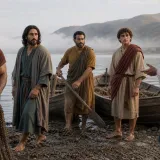
Open with the chapter’s first image
Mark 10:1: “And he arose from thence, and cometh into the coasts of Judæa by the farther side of Jordan: and the people resort unto him again; and, as he was wont, he…”
Slow down at the turning point
Mark 10:26: “And they were astonished out of measure, saying among themselves, Who then can be saved?”
Keep this word trail visible
Jesus, children, disciples, kingdom, baptized, began
What to explain, in order
Teach the passage in this order. Each step names the verses it rests on, so every point can be shown in the text before it is applied.
Mark 10:1-12
Marriage from the beginning
Begin in Judea beyond the Jordan, in Herod's territory, where John was killed for speaking about marriage. The question is a test. Explain the bill of divorcement in Deuteronomy 24:1-4 as a protection that regulated a reality, not a command to divorce. Jesus returns to Genesis. Then in private he says that remarriage after divorce is adultery. Teach carefully: Christian traditions differ on how they apply this, including Matthew 19:9 and 1 Corinthians 7:15. Let the text speak, with deep pastoral care.
Mark 10:13-16
Receive the kingdom as a child
Now the children, placed right after marriage. Explain that children had no standing; the disciples think Jesus is too important for them. His anger is directed at the disciples. Explain receiving the kingdom as a little child: not innocence, but dependence and receiving a gift without claim to have earned it. Teach this second because it sets the pattern for the next scene, where a man who has everything tries to inherit what can only be received.
Mark 10:17-27
The rich man and the eye of the needle
A man runs and kneels, which shows his eagerness. He calls Jesus good, and Jesus points him to God. Explain that Jesus lists commandments about neighbours. The man claims to have kept them. Then the key phrase, Jesus looked at him and loved him, and the one thing he lacks. Explain the camel and needle as deliberate impossibility, not a gate in Jerusalem. Teach this third, because the disciples' astonishment leads to the answer that only God can save.
Mark 10:28-31
What the disciples left
Peter says, we have left all. Jesus promises a hundredfold now, in this time: houses, brothers, sisters, mothers, children, lands, with persecutions, and eternal life to come. Explain that the new family of 3:35 is the hundredfold, not a promise of wealth. Note that fathers are missing from what is received, perhaps because God is the Father. Notice too the words with persecutions. Teach it here because it answers the rich man's sadness.
Mark 10:32-45
The third prediction and the ransom
Jesus walks ahead to Jerusalem and the disciples are afraid. The third prediction gives detail: condemnation, Gentiles, mocking, scourging, spitting, death, rising. Then James and John ask for the best seats. Explain the cup and baptism as images of suffering. The ten are indignant. Jesus contrasts Gentile rulers with his followers and then speaks verse 45. Explain ransom as the price paid to free a slave or captive. This is the key verse of the chapter and perhaps of the book.
Mark 10:46-52
Bartimaeus follows in the way
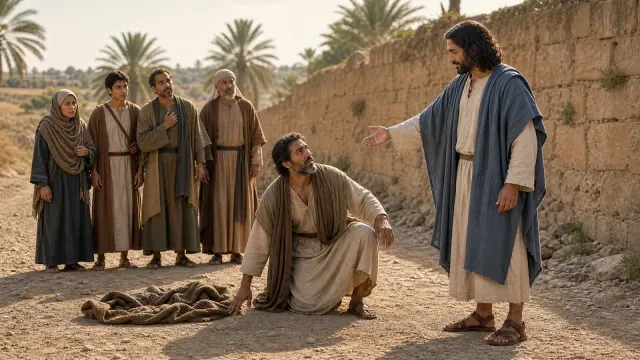
Close at Jericho, the last stop before Jerusalem. A blind beggar calls Jesus Son of David. The crowd tries to silence him, but Jesus stands still and calls him. Explain the question, “What wilt thou that I should do unto thee?”, which Jesus asked James and John in verse 36. Their answer was status; his is sight. Teach this last, because the man who sees follows Jesus in the way, toward Jerusalem and the cross.
Where learners get stuck
The misreadings this passage tends to produce, and how to answer each from the text.
“Jesus says divorced people are condemned, so there is no place for them in the church.”
Jesus speaks of God's design in creation and of the seriousness of breaking a marriage (10:6-12). He does not say the divorced cannot be forgiven, and the whole Gospel offers forgiveness to sinners (2:17). Traditions differ on remarriage. Teach the ideal honestly and welcome the divorced warmly. Never use this passage to keep anyone in danger; abuse must be reported and victims protected.
“Children are innocent, so that is why the kingdom belongs to them.”
Jesus says “of such is the kingdom of God” (10:14) and that it must be received “as a little child” (10:15). The point is not that children are sinless but that they receive without claiming to deserve. A child cannot earn a place. This sits beside the rich man who asks what he must do to inherit. The kingdom is received as a gift.
“Jesus wants everyone to sell all they have.”
Jesus speaks to this man, whom he loved, and names his “one thing” (10:21). Elsewhere disciples keep homes, such as Peter's in 1:29. But the passage warns all hearers about riches (10:23-25), and the call to follow is costly for everyone. Ask each learner what their one thing might be, rather than turning the verse into a single rule for all.
“If I give things up for Jesus, he will make me rich in this life.”
Verse 30 promises a hundredfold “with persecutions”, and the houses and family are the new community of believers. The disciples who heard it gained no wealth and many suffered. The verse promises belonging, family and eternal life, not material prosperity. Do not let anyone use it as an investment formula.
Learning objectives
- Explain how Jesus answers the divorce question by moving from Moses’ concession to the creation pattern he cites.
- Describe what Jesus says and does when disciples rebuke those bringing children to him.
- Trace the rich man’s question, Jesus’ response, the man’s sorrow, and the disciples’ astonishment.
- Explain the promise and warning attached to leaving possessions and relationships for Jesus and the gospel.
- Compare James and John’s request for places of glory with Jesus’ definition of greatness and service.
- Show how Bartimaeus addresses Jesus, persists despite rebuke, receives sight, and follows him in the way.
Teacher preparation
- Read Genesis 1:27 and 2:24 because Jesus cites the creation pattern in Mark 10:6–8. Keep the discussion centered on his answer rather than on every modern legal question about marriage.
- Prepare a concise explanation of the certificate of divorcement in Deuteronomy 24:1–4. Jesus says Moses wrote the precept because of hardness of heart, then points behind the concession to creation.
- Review the King James use of 'suffer' in verse 14, meaning allow or permit. Make sure younger readers do not hear it as an instruction that children must experience pain.
- Plan to distinguish the rich man’s many possessions from a blanket statement that ownership itself is condemned. Jesus addresses this man directly and then teaches broadly about the difficulty riches create.
- Locate Jericho and remember that Bartimaeus appears as Jesus is going out of the city toward the final approach to Jerusalem. His following 'in the way' closes the chapter with movement as well as restored sight.
Evidence and interpretation checks
Explicit
Mark 10:6–9 cites creation in answering the divorce question; verses 14–16 command that children be allowed to come and state that God’s kingdom must be received like a little child; verses 21–27 address wealth; verse 45 states Jesus’ serving and ransom purpose.
Scripture-supported
Genesis 1:27 and 2:24 stand directly behind Jesus’ words on male and female becoming one flesh. Deuteronomy 24 supplies the Mosaic concession discussed by the Pharisees.
Strong inference
Bartimaeus functions as a positive contrast to earlier misunderstandings about sight and discipleship. Once he receives sight, Mark says he follows Jesus in the way, just as Jesus is heading toward Jerusalem and the cross he has repeatedly predicted.
Possible or traditional reading
The camel and needle saying has prompted theories about a small city gate called the Needle’s Eye. There is no solid need for that explanation in Mark. The saying works as an image of human impossibility, clarified by verse 27.
Limit
Mark 10 does not answer every pastoral circumstance involving divorce, wealth, family obligations, or church leadership. Teach the claims Jesus makes here, then distinguish later application from what the passage itself explicitly settles.
Discussion with answer guidance
1. Why does Jesus move from Moses’ divorce provision to creation in verses 5–9?
What a good answer contains
The Pharisees cite Moses: “Moses suffered to write a bill of divorcement” (10:4). Jesus answers that “For the hardness of your heart he wrote you this precept” (10:5), then goes back further: “from the beginning of the creation God made them male and female” (10:6), quoting Genesis 1:27 and 2:24. A strong answer keeps both moves. Moses' provision regulated a broken situation; creation shows God's design, ending with “What therefore God hath joined together, let not man put asunder” (10:9).
Show teacher guidance
He identifies hardness of heart as the reason for the Mosaic precept and then cites the beginning of creation to state male-female union and one flesh. Keep both parts of his answer.
2. What do the disciples do when children are brought to Jesus, and how does he respond?
What a good answer contains
People bring young children “that he should touch them”, and the disciples rebuke them (10:13). Jesus “was much displeased”, the only time Mark uses that strong word of him, and says, “Suffer the little children to come unto me, and forbid them not: for of such is the kingdom of God” (10:14). He teaches that the kingdom must be received as a child, then takes them in his arms and blesses them (10:16). A good answer notices both his anger and his tenderness.
Show teacher guidance
Verses 13–16 say they rebuke those bringing children; Jesus is much displeased, commands that the children be allowed to come, teaches about receiving the kingdom, takes them in his arms, and blesses them.
3. What one demand leaves the rich man grieved?
What a good answer contains
Jesus, “beholding him loved him”, and said, “One thing thou lackest: go thy way, sell whatsoever thou hast, and give to the poor, and thou shalt have treasure in heaven: and come, take up the cross, and follow me” (10:21). Verse 22 says he went away grieved, “for he had great possessions”. A strong answer sees that the demand touches the one thing he will not let go, and that it is spoken in love. A weak answer makes it a rule for every person regardless of what holds them.
Show teacher guidance
Verse 21 says Jesus tells him to sell what he has, give to the poor, treasure in heaven, take up the cross, and follow. Verse 22 identifies many possessions as the reason he goes away grieved.
4. Why are the disciples astonished when Jesus speaks about riches?
What a good answer contains
Jesus says, “How hardly shall they that have riches enter into the kingdom of God” (10:23). The disciples are astonished, since wealth was often seen as a sign of God's blessing. He repeats it and adds the camel and the needle (10:25). They ask, “Who then can be saved?” (10:26). His answer: “With men it is impossible, but not with God: for with God all things are possible” (10:27). A good answer sees that salvation is God's gift, not human achievement, rich or poor.
Show teacher guidance
Use verses 23–27. Jesus intensifies rather than softens the difficulty and concludes that what is impossible with men is possible with God.
5. What does Jesus say James and John do not understand about their request?
What a good answer contains
Jesus says, “Ye know not what ye ask: can ye drink of the cup that I drink of? and be baptized with the baptism that I am baptized with?” (10:38). The cup and baptism point to his suffering and death. They want glory without the path to it. He tells them they will share his suffering, but the seats are not his to give (10:39-40). A strong answer notes that this follows the third and most detailed prediction of his death (10:33-34).
Show teacher guidance
Verses 35–40 move from desired seats in glory to the cup Jesus drinks and baptism he undergoes. They ask for status without grasping the suffering bound to Jesus’ path.
6. What details make Bartimaeus more than a healing footnote at the chapter’s end?
What a good answer contains
Bartimaeus calls Jesus “thou Son of David”, a royal title no one has yet used in Mark (10:47). When many tell him to be quiet, “he cried the more a great deal” (10:48). Called, he throws away his garment, perhaps his only possession, and comes. He asks clearly, “Lord, that I might receive my sight” (10:51), and after healing he “followed Jesus in the way” (10:52). A good answer contrasts him with the rich man who went away, and with James and John's request.
Show teacher guidance
He repeatedly calls Jesus Son of David, refuses to be silenced, casts away his garment, asks specifically for sight, is told his faith has made him whole, and follows Jesus in the way.
Responsible application
Heart and habits
Ask the class to identify where possession, rank, or gatekeeping prevents someone in the chapter from receiving Jesus’ teaching on its own terms.
Relationships and community
Compare how the disciples treat children, one another in the rank dispute, and Bartimaeus. Ask what kind of community Jesus’ servant definition in verses 42–45 would produce.
Earned by this passage
Place the rich man and Bartimaeus side by side. One leaves sorrowful after being told to follow; the other receives sight and follows in the way. Ask what Mark makes visible through the contrast.
Session plans
Two timings of the same lesson. The shorter keeps the reading, the central discussion and one response; the longer gives the confusions and the application their own time.
45 minutes
Read the chapter
Read 10:1-52 aloud in sections, and ask the class to note each request made to Jesus.
Marriage
Read 10:1-12. Take question one and confusion one, gently and briefly.
The children
Read 10:13-16. Take question two and confusion two.
The rich man
Read 10:17-31. Take questions three and four and confusion three.
The ransom and the beggar
Read 10:32-52. Take questions five and six. Read verse 45 together twice.
Response and handout
Ask each person to name, privately, their one thing. Read the key verse together, give out the sheet and pray.
90 minutes
What would you ask for
Ask the group: if Jesus asked what you want him to do for you, what would you say. Hold the answers.
From the beginning
Read 10:1-12 with Genesis 2:24 and Deuteronomy 24:1-4. Take question one and confusion one, with great pastoral care.
Let the children come
Read 10:13-16. Take question two and confusion two.
One thing thou lackest
Read 10:17-31. Take questions three and four and confusions three and four.
The cup and the ransom
Read 10:32-45 with Isaiah 53:10-12. Take question five. Spend time on verse 45.
Bartimaeus
Read 10:46-52. Take question six and compare the two answers to the same question in 10:36 and 10:51.
Return to the question
Return to the opening answers and ask how the chapter changes what they would ask.
Handout and prayer
Read the key verse together, hand out the sheet, and pray.
Adapting the lesson
Children
Make the children's scene the centre. Let them hear that Jesus was cross with the disciples for sending children away, and then took them in his arms. Act out Bartimaeus shouting and the crowd saying hush. For the rich man, use a toy he will not let go. Do not teach about divorce to children, and never ask about their parents' marriages.
Youth
Let them wrestle with the rich man: what is the one thing that would be hardest to give up. Talk about James and John wanting to be important. Read verse 45 and ask what serving looks like at school or online. On divorce, many young people have divorced parents; keep the teaching gentle and never imply blame on children of divorce.
Adults
Treat 10:1-12 with care. Some in the room are divorced, some remarried, some in hard marriages. Present Jesus' teaching faithfully and say plainly that traditions differ on remarriage, and that the church welcomes and protects. Spend time on verse 45 and the ransom. Let wealthier adults hear verses 23-27 without defensiveness.
One to one
Begin with Jesus' question, What wilt thou that I should do unto thee. If marriage or divorce is painful for them, listen first and do not lecture. If money is a hold on them, read the rich man's account slowly, noting that Jesus loved him. Close with Bartimaeus, who received sight and followed.
Song and video learning lab
A song or video may interpret, compress, or dramatize the text. Its value becomes clearer when its choices are compared with Scripture.
- Before the media: the exact passage and its central movement.
- During the media: the words, people, events, and emotions the artist emphasizes.
- After the media: what it clarifies, what it leaves out, and what belongs back in the biblical text.
Handout
One page for learners to take home. The print button prints this section alone.
Mark 10
The passage in brief
Jesus teaches that God made marriage from the beginning to join a man and woman as one. He welcomes children and blesses them, saying the kingdom must be received like a child. A rich man asks how to inherit eternal life, but goes away sad when Jesus tells him to give to the poor and follow him. Jesus predicts his death a third time, and teaches that he came to serve and to give his life as a ransom for many. Blind Bartimaeus cries out, is healed, and follows Jesus.
A verse to keep
For even the Son of man came not to be ministered unto, but to minister, and to give his life a ransom for many.
Mark 10:45 · King James Version
Questions to take home
What did Jesus do when the disciples tried to keep the children away (10:13-16)?
Why did the rich man go away sad (10:21-22)?
What does verse 45 say Jesus came to do?
This week
Do one act of hidden service this week for someone who cannot repay you, remembering verse 45.
Music and video connected to the passage
Related media appears when its Scripture reference overlaps this study. Music and video can illuminate a theme while the biblical text remains the foundation.