The big picture
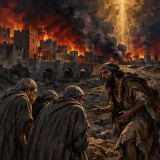
Certain elders come to inquire of the LORD, but the answer becomes a prosecution of the history their question leaves untouched. Ezekiel begins in Egypt, where Israel already resists the command to abandon idols, then follows the same rebellion through the wilderness and into the land. Each generation receives instruction and each is addressed for its own conduct, yet the old pattern keeps returning. God's restraint repeatedly preserves the people for his name's sake without erasing judgment. The difficult reference to statutes that are not good belongs to that judicial setting, not to a reversal of the life-giving statutes praised earlier. The present elders are finally brought inside the charge. A future gathering is promised, but it includes another wilderness, examination, covenant obligation, and the removal of rebels. The chapter ends with a burning forest while the audience complains about Ezekiel's use of parables.
In this chapter
- The Account Starts Before the Escape from Egypt Ezekiel 20:1-9
The elders arrive to inquire of the LORD, but Ezekiel never records their question.
- Good Statutes and a Profaned Sign Ezekiel 20:10-17
The wilderness does not begin with a hostile gift.
- The Children Receive a Different Command, Then Repeat the Refusal Ezekiel 20:18-24
The children receive their own command before they receive their own verdict.
- The Difficult Gift of Statutes That Do Not Give Life Ezekiel 20:25-26
These two verses are difficult precisely because Ezekiel has already called God’s statutes life-giving.
- The Elders Are Not Outside the History They Hear Ezekiel 20:27-32
The historical review finally closes the distance between the fathers and the elders sitting in front of Ezekiel.
- A Gathering That Includes a Wilderness Ezekiel 20:33-38
The promised gathering sounds like an exodus until Ezekiel adds fury, a wilderness, examination, and a rod.
- The Accepted Offering Includes the People Themselves Ezekiel 20:39-44
Mixed worship is the target of the opening challenge.
- The Forest Burns While the Audience Debates the Form Ezekiel 20:45-49
After forty-four verses of historical indictment, Ezekiel turns south and sees a forest burning.

Scripture beside the summary
Ezekiel · King James Version · 49Ezekiel 20:1-9
The Account Starts Before the Escape from Egypt
The elders arrive to inquire of the LORD, but Ezekiel never records their question. God answers the posture behind it by making them hear a history of rebellion that begins earlier than a comfortable national memory might prefer. Israel is already chosen, known, and promised a land while still in Egypt, yet the people refuse to cast away Egyptian idols. The first threatened outpouring of wrath therefore belongs before the exodus, not after it. Deliverance does not prove that the delivered people had been consistently faithful. God says he acted for his name’s sake before the nations who had seen him identify himself with Israel. That explanation shifts the center of the account. Rescue is real, but it is not a medal Israel can present as evidence of its own innocence. The elders came seeking an answer and instead receive the opening count in a case against their community.
Deep dive
The date and the elders' arrival give the speech a concrete setting, but the content of their question is not recorded. Instead, God contests their approach and directs Ezekiel to make their fathers' abominations known. The answer begins further back than a comfortable national account might begin. Israel is chosen, addressed, and promised a land while still in Egypt, yet it refuses the command to abandon Egyptian idols. The problem is not introduced as a defect acquired only after freedom.
The first threatened outpouring of wrath therefore also belongs to Egypt. Israel's departure happens because God acts for his name's sake before the nations among whom he has made himself known. That explanation will recur through the chapter. It does not deny the reality of rescue; it denies that rescue can be cited as proof of the rescued people's consistent faithfulness. The history is being told as a case brought against the elders' community. Its selection of events follows that purpose rather than attempting to repeat the whole account of the exodus.
Words to trace: LORD, Egypt, land, abominations, hand, Israel
Verse-by-verse path
- Ezekiel 20:1
The date is August 591 BC, eleven months after 8:1. The tenth day of the fifth month is also the day Jeremiah 52:12 gives for the burning of the temple five years later, a coincidence of calendar the book does not remark on. This is the third time elders sit before Ezekiel (8:1; 14:1).
- Ezekiel 20:2
The reply comes at once, before anything the elders asked is written down. Each time elders have sat before Ezekiel, the visit has turned into an examination of the visitors, and this word does the same at far greater length.
- Ezekiel 20:3
“Enquire” is darash, to seek an oracle from God through a prophet. The refusal is sworn with “As I live”. The book later reverses it for a restored people: “I will yet for this be enquired of by the house of Israel” (36:37).
- Ezekiel 20:4
The doubled question works as a command, “Judge them!”, putting Ezekiel in the role of prosecutor. The same doubled form returns in 22:2 and 23:36. His task is not to give the elders an answer but to read them their family record.
- Ezekiel 20:5
“Chose” is bachar, the verb Deuteronomy uses for God’s choice of Israel (Deuteronomy 7:6), and this is the only place Ezekiel uses it of the nation. The raised hand is an oath, and Exodus 6:8 uses the same idiom in Egypt: the land “concerning the which I did swear”, literally lifted up my hand.
- Ezekiel 20:6
“Espied” is tur, the verb for the twelve spies searching out Canaan (Numbers 13:2, 16–17). Here God did the scouting himself before any spy set out. “The glory of all lands” uses tsevi, beauty or ornament, the word Daniel uses for “the pleasant land” and “the glorious land” (Daniel 8:9; 11:16).
- Ezekiel 20:7
Exodus records no command in Egypt to give up Egyptian gods, but Joshua 24:14 assumes one: “put away the gods which your fathers served... in Egypt.” “Abominations of his eyes” are detestable things a man fixes his gaze on, what he looks to with longing.
- Ezekiel 20:8
Exodus 6:9 says the people “hearkened not unto Moses for anguish of spirit”; Ezekiel reads that refusal as rebellion and reveals a threat of wrath in Egypt the book of Exodus never mentions. “Accomplish” is kalleh, to spend to the last, anger poured out until nothing is left.
- Ezekiel 20:9
The Egyptians saw what God did so that they would know him: “the Egyptians shall know that I am the LORD” (Exodus 7:5). Abandoning Israel in Egypt would have profaned that name before the very watchers. “For my name’s sake” appears here for the first of four times in the chapter.
Ezekiel 20:1-9
King James Version1And it came to pass in the seventh year, in the fifth month, the tenth day of the month, that certain of the elders of Israel came to enquire of the LORD, and sat before me.
2Then came the word of the LORD unto me, saying,
3Son of man, speak unto the elders of Israel, and say unto them, Thus saith the Lord GOD; Are ye come to enquire of me? As I live, saith the Lord GOD, I will not be enquired of by you.
4Wilt thou judge them, son of man, wilt thou judge them? cause them to know the abominations of their fathers:
5And say unto them, Thus saith the Lord GOD; In the day when I chose Israel, and lifted up mine hand unto the seed of the house of Jacob, and made myself known unto them in the land of Egypt, when I lifted up mine hand unto them, saying, I am the LORD your God;
6In the day that I lifted up mine hand unto them, to bring them forth of the land of Egypt into a land that I had espied for them, flowing with milk and honey, which is the glory of all lands:
7Then said I unto them, Cast ye away every man the abominations of his eyes, and defile not yourselves with the idols of Egypt: I am the LORD your God.
8But they rebelled against me, and would not hearken unto me: they did not every man cast away the abominations of their eyes, neither did they forsake the idols of Egypt: then I said, I will pour out my fury upon them, to accomplish my anger against them in the midst of the land of Egypt.
9But I wrought for my name’s sake, that it should not be polluted before the heathen, among whom they were, in whose sight I made myself known unto them, in bringing them forth out of the land of Egypt.
Ezekiel 20:10-17
Good Statutes and a Profaned Sign
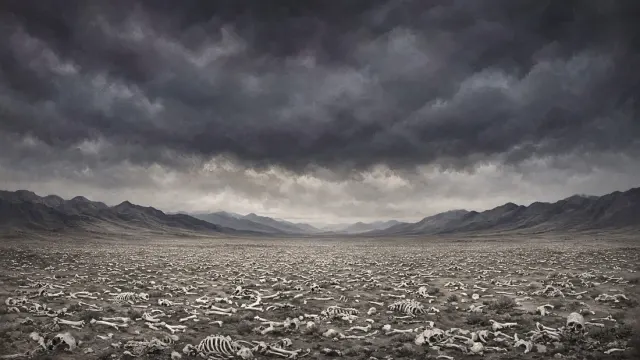
The wilderness does not begin with a hostile gift. God gives statutes connected with life and sabbaths meant to function as a sign that he sanctifies Israel. That positive description is important because the chapter will later speak of statutes that are not good. Ezekiel first makes clear what God’s own instruction was for. Israel responds by despising the judgments, profaning the sabbaths, and directing its heart toward idols. Yet threatened destruction does not become total destruction. God restrains his hand for his name’s sake, while still swearing that the rebellious generation will not enter the promised land. Preservation and judgment therefore occupy the same passage. Being spared from annihilation is not the same thing as being acquitted. The people survive the wilderness, but their exclusion still stands, and the sabbath sign they were given has become another place where their allegiance is exposed.
Deep dive
The statutes are described positively before the rebellion against them is described. They belong to life, and the sabbaths function as a sign that the Lord sanctifies Israel. That last clause keeps the sign from being merely a cultural badge. It identifies a relationship and its divine source. The later reference to statutes that are not good must be read against this explicit characterization, not used to retroactively make these gifts malicious.
The repeated sequence distinguishes restraint from acquittal. God refrains from consuming Israel for his name's sake, but the oath excluding the rebellious generation from the land still stands. The people have despised judgments and polluted sabbaths because their hearts have followed idols. The chapter thus connects outward violation to inward allegiance without making one replace the other. The final statement that God's eye spared them is not a claim that no judgment occurred. It explains why the judgment did not become the end of the people. Exclusion and preservation occupy the same account.
Words to trace: wilderness, judgments, polluted, sabbaths, statutes, despised
Verse-by-verse path
- Ezekiel 20:10
The whole exodus, plagues and sea crossing included, is compressed into one verse of two verbs. The destination named is not the promised land but the wilderness, which is where the rest of the history will be tried.
- Ezekiel 20:11
“Statutes” are chuqqot, from a verb meaning to engrave, fixed decrees; “judgments” are mishpatim, rulings for cases. Deuteronomy 4:1 pairs them in the same way. “Shewed” is literally “made known”, the same verb as God making himself known in verse 5.
- Ezekiel 20:12
Ezekiel quotes Exodus 31:13 almost exactly: “it is a sign between me and you... that ye may know that I am the LORD that doth sanctify you.” The plural “sabbaths” may include the festival rests as well as the weekly day.
- Ezekiel 20:13
“Greatly polluted” has instances behind it: people went out to gather manna on the seventh day (Exodus 16:27), and a man gathering sticks on the sabbath was stoned (Numbers 15:32–36). The fury is threatened “to consume them”, from the verb kalah, to finish off.
- Ezekiel 20:14
The refrain repeats verse 9 but shortens it. Moses had argued exactly this at Kadesh, when God threatened to destroy the people: the Egyptians “shall hear it”, and the nations would say the LORD could not bring them in (Numbers 14:13–16).
- Ezekiel 20:15
The oath of exclusion is the one in Numbers 14:28–30, where God swears by his own life that the carcases of that generation will fall in the wilderness. Psalm 95:11 remembers the same oath: “Unto whom I sware in my wrath that they should not enter into my rest.”
- Ezekiel 20:16
The acts are listed first, judgments despised, statutes ignored, sabbaths profaned, and the cause last: “their heart went after their idols.” At Sinai, within weeks of the covenant, the golden calf (Exodus 32) showed where that heart was pointing.
- Ezekiel 20:17
“Make an end” is kalah, the verb of “to consume them” in verse 13. The threatened finishing off does not happen. The first word, “Nevertheless”, carries the whole surprise of the verse: the generation dies in the wilderness, but the people as a whole are not ended.
Ezekiel 20:10-17
King James Version10Wherefore I caused them to go forth out of the land of Egypt, and brought them into the wilderness.
11And I gave them my statutes, and shewed them my judgments, which if a man do, he shall even live in them.
12Moreover also I gave them my sabbaths, to be a sign between me and them, that they might know that I am the LORD that sanctify them.
13But the house of Israel rebelled against me in the wilderness: they walked not in my statutes, and they despised my judgments, which if a man do, he shall even live in them; and my sabbaths they greatly polluted: then I said, I would pour out my fury upon them in the wilderness, to consume them.
14But I wrought for my name’s sake, that it should not be polluted before the heathen, in whose sight I brought them out.
15Yet also I lifted up my hand unto them in the wilderness, that I would not bring them into the land which I had given them, flowing with milk and honey, which is the glory of all lands;
16Because they despised my judgments, and walked not in my statutes, but polluted my sabbaths: for their heart went after their idols.
17Nevertheless mine eye spared them from destroying them, neither did I make an end of them in the wilderness.
Ezekiel 20:18-24
The Children Receive a Different Command, Then Repeat the Refusal
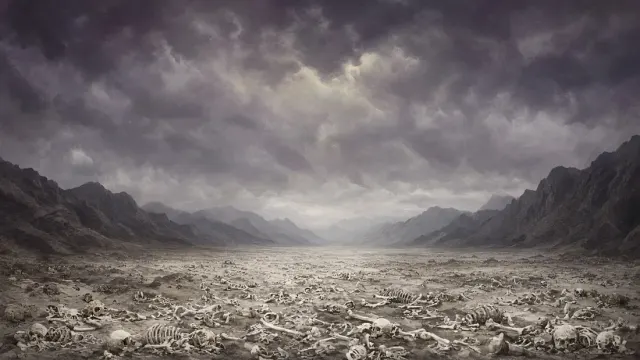
The children receive their own command before they receive their own verdict. God explicitly tells them not to walk in their fathers’ statutes, not to follow their idols, and instead to keep his judgments and hallow his sabbaths. The family pattern is therefore not treated as destiny. A different road is placed in front of the next generation. What makes the indictment severe is that they choose the old road anyway. They repeat the profaning of sabbaths and the refusal of God’s instruction, so continuity in guilt comes through repeated conduct rather than genealogy alone. Again God withdraws his hand for his name’s sake, and again restraint does not erase consequence. This time the oath looks ahead to scattering among the nations. Ezekiel’s exiled audience is being told that its displacement did not appear from nowhere. The behavior changed generations less than the faces carrying it.
Deep dive
The children are not simply blamed for being their fathers' children. They are addressed separately and told not to walk in their fathers' statutes or defile themselves with their idols. God's statutes stand opposite the inherited pattern. This distinction gives the historical indictment a point of contact with chapter 18: continuity in guilt is established by repeated conduct, not merely by a shared genealogy.
The children nevertheless repeat the rebellion, including the profaning of sabbaths. The refrain concerning God's name returns, but so does the raised hand of an oath. Earlier the oath concerned exclusion from the land; here it announces dispersion among nations and countries. The exile of Ezekiel's hearers is thereby set within the covenant history rather than treated as an inexplicable interruption of it. The repetition is not filler. It exposes the persistence of an allegiance that survives a change of generation, a fresh command, and another act of divine restraint. The community's past keeps returning because its conduct keeps returning.
Words to trace: judgments, statutes, polluted, sabbaths, wilderness, children
Verse-by-verse path
- Ezekiel 20:18
“Statutes of your fathers” uses the very word God uses for his own statutes, but now for inherited custom. The second generation is addressed on its own, in the wilderness, before it has done anything, and told plainly which inheritance to refuse.
- Ezekiel 20:19
“I am the LORD your God” is the preface of the Ten Commandments (Exodus 20:2). Three verbs follow, walk, keep and do, the same chain Deuteronomy 5:1 uses to call the second generation: “learn them, and keep, and do them.”
- Ezekiel 20:20
“Hallow” is the verb of the sabbath command, “to keep it holy” (Exodus 20:8). In verse 12 God is the one who sanctifies Israel; here Israel is told to sanctify the sabbaths. The same root runs both ways across the sign.
- Ezekiel 20:21
The second generation’s great apostasy came at the very end of the forty years, at Shittim, when the people joined themselves to Baal-peor (Numbers 25). “Notwithstanding” marks that they had been given a fresh command in verses 18 to 20 and refused it anyway.
- Ezekiel 20:22
“Withdrew mine hand” is literally “turned back my hand”, a hand raised to strike and lowered. Lamentations 2:8 describes the reverse for Jerusalem’s fall: “he hath not withdrawn his hand from destroying.” The mercy of the wilderness is the thing that was not repeated in 586.
- Ezekiel 20:23
Psalm 106:26–27 says the same: God “lifted up his hand against them, to overthrow them in the wilderness: to overthrow their seed also among the nations, and to scatter them in the lands.” Leviticus 26:33 had written the threat of scattering into the covenant itself before Israel entered the land.
- Ezekiel 20:24
The eye is Ezekiel’s organ of idolatry, as in verse 7. Numbers 15:39 had given the tassels on garments so that Israel would not follow “your own eyes, after which ye use to go a whoring”. The idols here are “their fathers’”, so this generation looked back at the habits of the one that died.
Ezekiel 20:18-24
King James Version18But I said unto their children in the wilderness, Walk ye not in the statutes of your fathers, neither observe their judgments, nor defile yourselves with their idols:
19I am the LORD your God; walk in my statutes, and keep my judgments, and do them;
20And hallow my sabbaths; and they shall be a sign between me and you, that ye may know that I am the LORD your God.
21Notwithstanding the children rebelled against me: they walked not in my statutes, neither kept my judgments to do them, which if a man do, he shall even live in them; they polluted my sabbaths: then I said, I would pour out my fury upon them, to accomplish my anger against them in the wilderness.
22Nevertheless I withdrew mine hand, and wrought for my name’s sake, that it should not be polluted in the sight of the heathen, in whose sight I brought them forth.
23I lifted up mine hand unto them also in the wilderness, that I would scatter them among the heathen, and disperse them through the countries;
24Because they had not executed my judgments, but had despised my statutes, and had polluted my sabbaths, and their eyes were after their fathers’ idols.
Ezekiel 20:25-26
The Difficult Gift of Statutes That Do Not Give Life
These two verses are difficult precisely because Ezekiel has already called God’s statutes life-giving. Now God says he gave statutes “that were not good” and describes pollution through offerings in which the firstborn pass through fire. The reversal cannot simply mean that the earlier good commands secretly became evil. A destructive form of worship is in view, and the language belongs to judgment. One reading hears God handing the people over to the idolatrous practices they insisted on choosing. Another connects the words with a horrifying distortion of the law concerning the firstborn, turning dedication into child sacrifice where sons were meant to be redeemed. Ezekiel does not explain every link in the process. What he does not allow is a harmless reading. The statutes here lead to desolation, not life, and the pollution is part of a judicial exposure meant to end in recognition of the LORD.
Deep dive
The repeated word "statutes" now carries a disturbing reversal. God says that he gave "statutes that were not good," followed by a statement that he polluted the people through their gifts. The language deliberately contrasts with the statutes associated with life earlier in the chapter. The immediate example concerns the offering of the firstborn through fire, so the problem is not merely that ordinary obedience has become burdensome. A destructive form of worship is in view.
One interpretation, represented by Ellicott, understands a judicial handing over to the idolatrous customs the people have chosen. Another, developed in the Cambridge commentary, connects the passage with a destructive extension of the firstborn law: the requirement that the firstborn belong to God is perverted into child sacrifice. Exodus 13:12–13 distinguishes the dedication of animals from the redemption of sons, so this reading identifies a distortion rather than the straightforward performance of that command.
The text's direct attribution to God remains difficult under either explanation. Reducing "I gave" to an unnoticed accident removes the announced judgment, while treating the statement as approval of child sacrifice contradicts its description of pollution and desolation. Ezekiel does not explain the complete process by which these destructive statutes came to govern the people. He does state their judicial character and their opposition to the life associated with the earlier instruction.
Words to trace: caused, desolate, fire, gave, gifts, good
Verse-by-verse path
- Ezekiel 20:25
The Hebrew for “statutes” here takes a masculine form, chuqqim, the form used of “the statutes of your fathers” in verse 18, while God’s own statutes throughout the chapter are the feminine chuqqot. The grammar quietly aligns these “not good” statutes with the fathers’ customs rather than with the law of verse 11.
- Ezekiel 20:26
“Gifts” are offerings. Micah 6:7 shows the question was live in Judah: “shall I give my firstborn for my transgression, the fruit of my body for the sin of my soul?” The final purpose clause, “that they might know”, puts even this pollution inside the chapter’s aim of recognition.
Ezekiel 20:25-26
King James Version25Wherefore I gave them also statutes that were not good, and judgments whereby they should not live;
26And I polluted them in their own gifts, in that they caused to pass through the fire all that openeth the womb, that I might make them desolate, to the end that they might know that I am the LORD.
Ezekiel 20:27-32
The Elders Are Not Outside the History They Hear
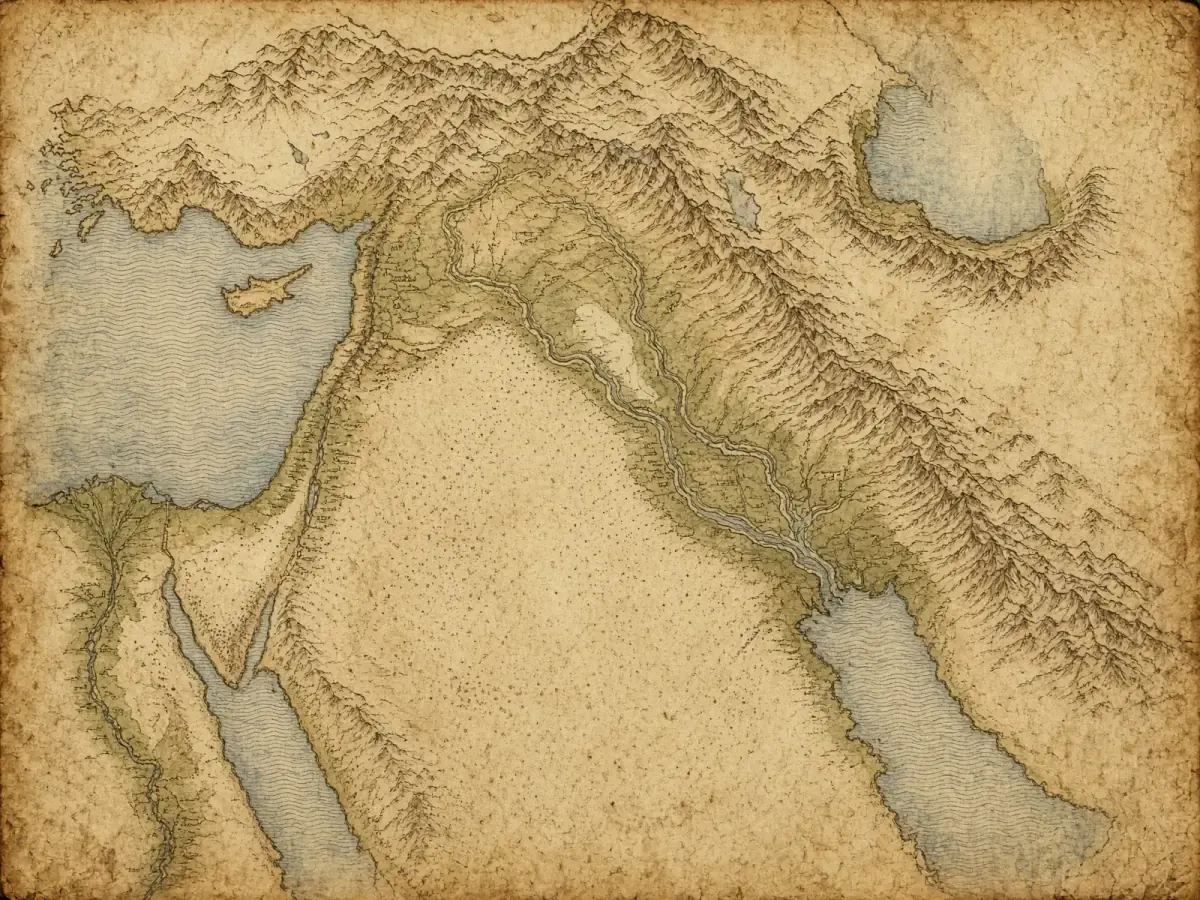
The historical review finally closes the distance between the fathers and the elders sitting in front of Ezekiel. High hills and thick trees in the land became sites of worship that provoked the God who had given the land, and the name Bamah lingers “unto this day.” Then the speech turns from “they” to “ye.” The present generation is still offering gifts, still serving idols, and still passing sons through fire. These elders are not detached scholars asking what went wrong long ago. Their own practices belong inside the history they are hearing. That is why the refusal to be inquired of returns. Verse 32 then blocks another escape route. Israel cannot simply decide to become like the surrounding nations, serve wood and stone, and thereby dissolve the covenant claim that makes the indictment uncomfortable. Assimilation will not make the obligation vanish. The relationship they want to evade still names them.
Deep dive
Arrival in the promised land does not end the pattern. High hills and thick trees become places for offerings that provoke the God who gave the land. The gifts and the location are both misused. The name "Bamah" points to the high place, and the phrase about its persistence to the present links the old practice with the elders' own setting. The history has not remained safely behind them.
The address then turns directly to what the present generation is doing, including making sons pass through fire. The refusal to be inquired of is repeated because the original difficulty has now been exposed. These are not detached observers seeking advice about the errors of their ancestors. Their own offerings continue the defilement the speech has traced.
Verse 32 closes another possible exit: becoming like the surrounding peoples in the service of wood and stone. The proposed assimilation would dissolve the distinctive obligation that has made the history so uncomfortable. God declares that this intention will not stand. The covenant people cannot make the charge disappear by deciding that the covenant no longer concerns them.
Words to trace: house, Israel, Lord, enquired, fathers, high
Verse-by-verse path
- Ezekiel 20:27
“Blasphemed” is giddef, reviled, the verb Numbers 15:30 uses of the one who sins with a high hand and “reproacheth the LORD”. “Yet in this” means “still further in this”: what follows is added to the whole wilderness record, not a new start.
- Ezekiel 20:28
Deuteronomy 12:2 commanded Israel to destroy worship sites “upon the high mountains, and upon the hills, and under every green tree”; the settled nation did the opposite. “Offering” here is qorban, the word behind Corban in Mark 7:11. “Provocation of their offering” means gifts that angered the one they were supposed to please.
- Ezekiel 20:29
The question is a pun in Hebrew: mah habbamah asher attem habba’im, “what is the high place, bamah, where you go, ba’im?” Bamah is being mocked as a place people merely “go to”. The name had become an ordinary word for a shrine “unto this day”.
- Ezekiel 20:30
The question expects the answer yes. Its sting is “after the manner of your fathers”: the exiles in Egypt told Jeremiah they would keep burning incense to the queen of heaven “as we have done, we, and our fathers” (Jeremiah 44:17). Ancestral custom was their defence.
- Ezekiel 20:31
“Even unto this day” brings child sacrifice into the present tense. Whether exiles in Babylon still practised it or the charge covers the nation still in Judah is not stated; the address is to the house of Israel. The sworn refusal of verse 3 is repeated, framing everything between as the reason for it.
- Ezekiel 20:32
Deuteronomy threatened exile as a curse in exactly these words: “there ye shall serve gods, the work of men’s hands, wood and stone” (Deuteronomy 4:28; 28:64). The exiles now propose it as a plan. “Cometh into your mind” is literally “goes up upon your spirit”, a private intention spoken aloud.
Ezekiel 20:27-32
King James Version27Therefore, son of man, speak unto the house of Israel, and say unto them, Thus saith the Lord GOD; Yet in this your fathers have blasphemed me, in that they have committed a trespass against me.
28For when I had brought them into the land, for the which I lifted up mine hand to give it to them, then they saw every high hill, and all the thick trees, and they offered there their sacrifices, and there they presented the provocation of their offering: there also they made their sweet savour, and poured out there their drink offerings.
29Then I said unto them, What is the high place whereunto ye go? And the name thereof is called Bamah unto this day.
30Wherefore say unto the house of Israel, Thus saith the Lord GOD; Are ye polluted after the manner of your fathers? and commit ye whoredom after their abominations?
31For when ye offer your gifts, when ye make your sons to pass through the fire, ye pollute yourselves with all your idols, even unto this day: and shall I be enquired of by you, O house of Israel? As I live, saith the Lord GOD, I will not be enquired of by you.
32And that which cometh into your mind shall not be at all, that ye say, We will be as the heathen, as the families of the countries, to serve wood and stone.
Ezekiel 20:33-38
A Gathering That Includes a Wilderness
The promised gathering sounds like an exodus until Ezekiel adds fury, a wilderness, examination, and a rod. God will bring the scattered people out from the nations, but the movement is not a simple trip from captivity to home. The “wilderness of the people” becomes a place where he pleads with them face to face, recalling the earlier generation that also left bondage only to meet covenant judgment in the wilderness. Passing under the rod pictures a flock being counted and examined. The goal is the bond of the covenant, not release from covenant obligation. Most sharply, some rebels will be brought out of the countries where they sojourn yet still not enter the land of Israel. Leaving exile and completing restoration are not the same event. Ezekiel’s future gathering therefore includes separation. The return addresses the rebellion that earlier deliverance had not erased.
Deep dive
The language of a mighty hand and an outstretched arm sounds like deliverance, but the accompanying fury prevents an easy reading of this gathering as uncomplicated return. God will rule over the people who have proposed becoming like the nations. The future does not consist of their choosing a less demanding national identity. Divine kingship answers the attempt to escape covenant allegiance.
The wilderness of the peoples recalls the earlier wilderness while placing the scattered community under a fresh confrontation. God will plead with them face to face, language of judgment, and make them pass under the rod. The image suggests a flock counted and examined as it passes beneath a shepherd's staff. Bringing the people into the bond of the covenant includes distinguishing those who rebel against it.
That distinction is stated with particular sharpness: some will be brought out of the country where they sojourn but will not enter Israel's land. Leaving exile and completing restoration are not made identical. The new gathering repeats enough of the earlier exodus to expose the same issue, but its announced purpose includes purging the rebellion that the earlier generations continued.
Words to trace: LORD, face, fury, hand, land, mighty
Verse-by-verse path
- Ezekiel 20:33
“A mighty hand, and... a stretched out arm” is the exodus formula of Deuteronomy 4:34 and 26:8. Ezekiel adds a third phrase, “fury poured out”, which no exodus text contains. “I will rule” is emlokh, “I will be king”, and it is the one place in the book where God says it of himself.
- Ezekiel 20:34
The same triple phrase is repeated, fury included. The first exodus brought one people out of one land; this gathering is “out of the countries”, plural, from wherever they have been scattered. The verbs of gathering echo the promise of Deuteronomy 30:3–4.
- Ezekiel 20:35
“The wilderness of the people” is probably the desert between Mesopotamia and the land, which returning exiles had to cross. “Face to face” is the Sinai phrase: “The LORD talked with you face to face in the mount” (Deuteronomy 5:4). The new exodus has its own Sinai, and it is a courtroom.
- Ezekiel 20:36
The precedent is Kadesh, where the first generation was tried and sentenced to die in the desert while their children entered (Numbers 14:26–35). “The wilderness of the land of Egypt” is Sinai, the desert on Egypt’s border that the first generation never escaped.
- Ezekiel 20:37
A shepherd counted animals as they passed under his staff, and Leviticus 27:32 uses the phrase for tithing the herd: “whatsoever passeth under the rod, the tenth shall be holy.” “Bond” is masoret, a word found only here, probably a fetter or binding; the Greek reads it “by number”.
- Ezekiel 20:38
“Purge out” is barar, to sift or sort out as clean from refuse. “The country where they sojourn” uses the word for the patriarchs’ land of sojourning, “the land wherein thou art a stranger” (Genesis 17:8). Like the Kadesh generation, the rebels will leave exile and still never cross in.
Ezekiel 20:33-38
King James Version33As I live, saith the Lord GOD, surely with a mighty hand, and with a stretched out arm, and with fury poured out, will I rule over you:
34And I will bring you out from the people, and will gather you out of the countries wherein ye are scattered, with a mighty hand, and with a stretched out arm, and with fury poured out.
35And I will bring you into the wilderness of the people, and there will I plead with you face to face.
36Like as I pleaded with your fathers in the wilderness of the land of Egypt, so will I plead with you, saith the Lord GOD.
37And I will cause you to pass under the rod, and I will bring you into the bond of the covenant:
38And I will purge out from among you the rebels, and them that transgress against me: I will bring them forth out of the country where they sojourn, and they shall not enter into the land of Israel: and ye shall know that I am the LORD.
Ezekiel 20:39-44
The Accepted Offering Includes the People Themselves
Mixed worship is the target of the opening challenge. God will not accept gifts offered in a way that joins his holy name to idols. The contrast is his holy mountain, where worship, offerings, and acceptance belong together rather than being split between competing allegiances. Then the wording becomes personal: God says, “I will accept you.” The restored people themselves stand inside the image of an accepted sweet savor. Yet restoration does not erase memory. In the land they will remember the ways by which they were defiled and will loathe what they did. That shame follows acceptance instead of earning it. The chapter therefore closes its long historical prosecution without claiming the past was harmless or pretending the future depends on Israel producing a better record than the one just recited. The governing refrain returns one last time. God acts for his name’s sake, not according to the corrupt ways that the speech has exposed.
Deep dive
The instruction to serve idols in verse 39 must be heard within the refusal of mixed allegiance. It is not a sudden commendation of the idolatry condemned throughout the speech. God rejects the profaning of his name by gifts joined to idols. The holy mountain then supplies the contrast to the high hills of the preceding indictment: service, offerings, and acceptance are brought together in the relationship the present worship has violated.
The wording of acceptance reaches beyond the offerings to the people. God will accept them with their sweet savor and be sanctified in them before the nations. The nations that appeared earlier as witnesses to restraint now witness a restored relation. The promised return therefore concerns God's name as well as Israel's location.
The people will remember their defiled conduct in the land to which they are brought. Memory follows restoration here rather than being erased by it, and self-loathing concerns the evils committed, not a denial that God has accepted the people. The final explanation returns to the chapter's governing refrain: God acts for his name's sake, not according to their corrupt doings. The future cannot be read as a favorable verdict upon the very past this speech has exposed.
Words to trace: Israel, LORD, holy, house, accept, doings
Verse-by-verse path
- Ezekiel 20:39
The command is sarcasm, like Amos 4:4, “Come to Bethel, and transgress.” Go on, then, serve your idols. What God forbids is the mixture: gifts brought to him from the same hands that serve idols, which profanes “my holy name”.
- Ezekiel 20:40
“Require” is darash, the verb of “enquire” in verses 1, 3 and 31. God refused to be sought by the elders, but on his holy mountain he will seek their offerings. “All of them in the land” leaves no tribe out: north and south are one house again.
- Ezekiel 20:41
God being “sanctified in you before the heathen” is a thread through the rest of the book (28:25; 36:23; 38:16; 39:27): his holiness shown publicly by what he does with Israel. It answers verse 9, where the concern was his name being profaned before the same watching nations.
- Ezekiel 20:42
This is the seventh time the chapter mentions God’s lifted hand, the gesture of oath (verses 5, 6, 15, 23, 28, 42). The oaths have sworn a land, then excluded a generation, then threatened scattering. This last one returns to the first promise, made to the fathers.
- Ezekiel 20:43
“Lothe yourselves in your own sight” is literally “loathe your faces”, and the phrase occurs also in 6:9 and 36:31. The place of this remembering is “there”, in the land, after the return. The shame comes when they are safe, not as the price of getting home.
- Ezekiel 20:44
“Corrupt doings” uses the verb shachat, the word of Genesis 6:12, “all flesh had corrupted his way”. This is the last of the four “for my name’s sake” statements, and the only one that says outright what God is not acting by: their record.
Ezekiel 20:39-44
King James Version39As for you, O house of Israel, thus saith the Lord GOD; Go ye, serve ye every one his idols, and hereafter also, if ye will not hearken unto me: but pollute ye my holy name no more with your gifts, and with your idols.
40For in mine holy mountain, in the mountain of the height of Israel, saith the Lord GOD, there shall all the house of Israel, all of them in the land, serve me: there will I accept them, and there will I require your offerings, and the firstfruits of your oblations, with all your holy things.
41I will accept you with your sweet savour, when I bring you out from the people, and gather you out of the countries wherein ye have been scattered; and I will be sanctified in you before the heathen.
42And ye shall know that I am the LORD, when I shall bring you into the land of Israel, into the country for the which I lifted up mine hand to give it to your fathers.
43And there shall ye remember your ways, and all your doings, wherein ye have been defiled; and ye shall lothe yourselves in your own sight for all your evils that ye have committed.
44And ye shall know that I am the LORD, when I have wrought with you for my name’s sake, not according to your wicked ways, nor according to your corrupt doings, O ye house of Israel, saith the Lord GOD.
Ezekiel 20:45-49
The Forest Burns While the Audience Debates the Form
After forty-four verses of historical indictment, Ezekiel turns south and sees a forest burning. Green tree and dry tree go together into a fire that will not be quenched, and the sweep runs from south to north. The image is broad enough to unsettle the ordinary distinctions by which someone might assume the blaze will stop at a safer class of tree. But the most revealing line comes after the fire. Ezekiel reports that his hearers respond, “Doth he not speak parables?” Their attention lands on his form of speech when the warning is meant to land on them. The next chapter will answer that maneuver by naming Jerusalem, the holy places, and the land, then replacing the fire with a sword. The audience can complain about imagery, but the judgment will not remain comfortably figurative merely because they prefer to discuss Ezekiel’s manner of speaking.
Deep dive
The final oracle changes from historical indictment to a burning forest. Both green and dry trees are consumed, and the fire's reach extends from south to north. The image announces a devastation that ordinary distinctions between combustible and flourishing trees cannot contain. Its point is the sweep of the judgment, not a lesson in forestry. All flesh will recognize the one who has kindled it.
Ezekiel's closing complaint shifts attention from the image to its reception. His hearers describe him as a speaker of parables. The book does not quote a careful request for clarification; it records a response that can keep the force of the warning at a distance by making its form the subject. The next chapter answers by naming Jerusalem and the sanctuaries and exchanging the forest's fire for a sword. The connection matters across the chapter boundary. The impending judgment will not remain concealed merely because the audience prefers to discuss Ezekiel's manner of speaking.
Words to trace: LORD, south, word, forest, quenched, tree
Verse-by-verse path
- Ezekiel 20:45
The Hebrew Bible begins chapter 21 here, so its chapter 20 ends at verse 44 and its chapter 21 has five more verses than the English. The English division follows the Greek and Latin, which attach the burning forest to the end of this chapter.
- Ezekiel 20:46
Three different Hebrew words for south are used in one verse: teman, darom and negev. “Drop thy word” is to let speech drip, a verb for prophesying, as in Amos 7:16, “drop not thy word against the house of Isaac”. Babylon lies east, but the invaders came down on Judah from the north, so Judah was to the south of their route.
- Ezekiel 20:47
The Negeb was dry scrubland, not forest, so the forest is a figure for Judah. “Flaming flame” doubles two fire words, lahevet shalhevet; shalhevet is the word in the Song of Solomon 8:6 for love’s “most vehement flame”. “All faces” means every surface, scorched.
- Ezekiel 20:48
“All flesh” is all humankind. The fire will be recognised as God’s kindling, not as an accident of war. “It shall not be quenched” repeats the end of verse 47, and Jeremiah 17:27 had used the same words of a fire in Jerusalem’s gates.
- Ezekiel 20:49
“Ah Lord GOD!” is ahah, the cry of protest Ezekiel has used before (4:14; 9:8; 11:13). “Speak parables” is literally “make meshalim”: the people who coined proverbs in 12:22 and 18:2 now dismiss the prophet as a maker of proverbs, a man of figures and nothing more.
Ezekiel 20:45-49
King James Version45Moreover the word of the LORD came unto me, saying,
46Son of man, set thy face toward the south, and drop thy word toward the south, and prophesy against the forest of the south field;
47And say to the forest of the south, Hear the word of the LORD; Thus saith the Lord GOD; Behold, I will kindle a fire in thee, and it shall devour every green tree in thee, and every dry tree: the flaming flame shall not be quenched, and all faces from the south to the north shall be burned therein.
48And all flesh shall see that I the LORD have kindled it: it shall not be quenched.
49Then said I, Ah Lord GOD! they say of me, Doth he not speak parables?
Questions to keep in mind while reading
- Identify the historical crisis, covenant failure, warning, and promised hope.
- Distinguish the prophet’s immediate audience from later biblical connections.
- Do not turn present-day headlines into confident fulfillment claims without textual evidence.
Text first
Where readers differ
The chapter summary begins with what the passage says and how its parts fit together. It does not assume one denomination has already settled every question. Where a conclusion depends on a tradition, literary theory, or historical reconstruction, that dependence is named openly.
The KJV text is presented first. Interpretive conclusions are labeled, and differences are introduced only when they help a reader understand why serious communities do not always reach the same answer.
Comparative interpretive notes for this chapter are in preparation. Until reviewed notes are ready, this page separates the KJV text from summary and application without claiming that serious readers agree on every question.
Questions beneath the surface
- What account of God, human freedom, responsibility, and the good life emerges from Ezekiel 20?
- Which tension does the chapter refuse to resolve quickly?
- What changes when the chapter is read as part of the whole canon rather than as an isolated moral lesson?
- Where might a sincere reader confuse a familiar tradition with something the text states directly?
Questions for serious personal contemplation
These open-ended questions make room for tension, honest response, prayer, and conclusions that remain accountable to the chapter.
Observe without rushing
What part of Ezekiel 20 makes you stop, feel unsettled, or feel surprised, and why?
Which detail in the passage would be easiest to overlook? How does that detail change your understanding?
Where do you see tension between what happens and this focus: Ezekiel 20 develops its own movement around LORD, Israel, land, hand, wilderness?
What important question does the passage leave open instead of resolving quickly?
Examine your inner life honestly
Which person, response, fear, or desire in the passage feels most like your own life right now?
What assumption about God, other people, or yourself does this text challenge?
Which part would you rather soften, avoid, or explain away too quickly? What might that reaction reveal?
If this Scripture could ask you one direct question, what do you think it would ask?
Respond with wisdom and courage
What do you need to remember, confess, grieve, thank God for, or trust after reading this passage?
How might another faithful person read this situation differently without ignoring the text?
What obedient response would be costly, uncomfortable, or slow, yet still faithful to Scripture?
What question will you carry into prayer this week, and which verses will you keep in front of you?
Music and video connected to the passage
Related media appears when its Scripture reference overlaps this study. Music and video can illuminate a theme while the biblical text remains the foundation.