The big picture
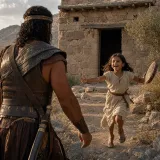
Judges 18 scales Micah’s private disorder up to the level of a tribe. Danite spies seeking territory stop at Micah’s shrine, recognize the hired Levite, and receive his assurance that their way is before the LORD. They then identify Laish as wealthy, quiet, secure, and isolated. Six hundred armed men return, steal Micah’s images and ephod, and offer the Levite a promotion from serving one household to serving an entire tribe. He is glad to go. Micah protests until superior force silences him. The Danites then destroy Laish, rebuild the city as Dan, and establish the stolen image with a hereditary priesthood. The chapter closes by setting this rival worship beside the house of God at Shiloh. Military success and expanded religious status never correct the compromised foundation.
In this chapter
- Spies Receive Reassurance at a Compromised Shrine Judges 18:1-10
Dan’s search for territory brings five spies to Micah’s house, where they recognize the Levite and ask him for divine guidance.
- Armed Visitors Take the Objects and Recruit the Priest Judges 18:11-20
Six hundred armed Danites stand at the entrance while the five spies enter Micah’s house and remove the graven image, molten image, ephod, and teraphim.
- Micah Is Silenced, and Laish Is Destroyed Judges 18:21-31
Micah gathers neighbors and chases the Danites, only to discover that possession belongs to whoever is stronger.

Scripture beside the summary
Judges · King James Version · 31Judges 18:1-10
Spies Receive Reassurance at a Compromised Shrine
Dan’s search for territory brings five spies to Micah’s house, where they recognize the Levite and ask him for divine guidance. The irony is already thick. The priest serves in a compromised private shrine, yet his favorable answer is treated as reassurance that their journey stands before the LORD. The spies then find Laish, a community described as quiet, secure, prosperous, and isolated from allies. Those qualities become arguments for conquest because the people look easy to overpower. Judges reports the spies saying that God has given the land into their hands, but the chapter supplies no fresh divine command endorsing what follows. The gap matters. A favorable oracle from a hired priest and an opportunity created by another community’s vulnerability can both feel providential to those who want the result. Neither, by itself, resolves the moral disorder already surrounding the mission.
Deep dive
The repeated statement that Dan has not received its inheritance does not erase Joshua’s earlier territorial allotment; it describes failure to possess it. The spies seek direction from a priest installed in an unauthorized household shrine. His favorable answer is reported, but the chapter does not supply a fresh word from the LORD endorsing the later theft and attack.
Laish is evaluated for vulnerability. Its people live quietly, lack a nearby ally, and possess resources. The spies transform peaceful conditions into an argument for conquest. Readers should notice the moral perspective of those being observed, not only the ambition of the armed tribe. Opportunity and lack of resistance are not by themselves evidence of divine approval.
Words to trace: land, Micah, brethren, days, Eshtaol, five
Verse-by-verse path
- Judges 18:1
Dan had been allotted land on the coastal plain west of Benjamin (Joshua 19:40–48), but Judges 1:34 records that the Amorites forced them into the hills and would not let them come down. “Fallen unto them” is the language of the lot. The land was assigned; the tribe never took it.
- Judges 18:2
Five men mirror the twelve spies of Numbers 13, and Moses’ words “search the land” are echoed. They come from Zorah and Eshtaol, Samson’s home ground, so the tribe that produced him is still squeezed into those same few towns. Lodging with Micah is a matter of convenience on the road north.
- Judges 18:3
“They knew the voice” may mean they recognised the Levite personally, or that they caught a southern accent or the chant of a priest at work. Their three rapid questions, who, what and what, sound more like an interrogation than a greeting.
- Judges 18:4
“Thus and thus” is the Levite summarising his contract without detail. The one verb that matters is “hired”, sakar, the word for wages paid to a labourer. He describes his priesthood as employment, in his own words.
- Judges 18:5
They ask him to “ask of God”, the normal phrase for seeking an oracle, probably by the ephod. The Danites do not question the shrine or the priest; they want only a favourable answer about their journey.
- Judges 18:6
“Before the LORD is your way” is carefully built. It can mean the LORD watches over the journey with favour, or simply that it is under his eye, which is true of every journey. Whether he consulted anything is never said.
- Judges 18:7
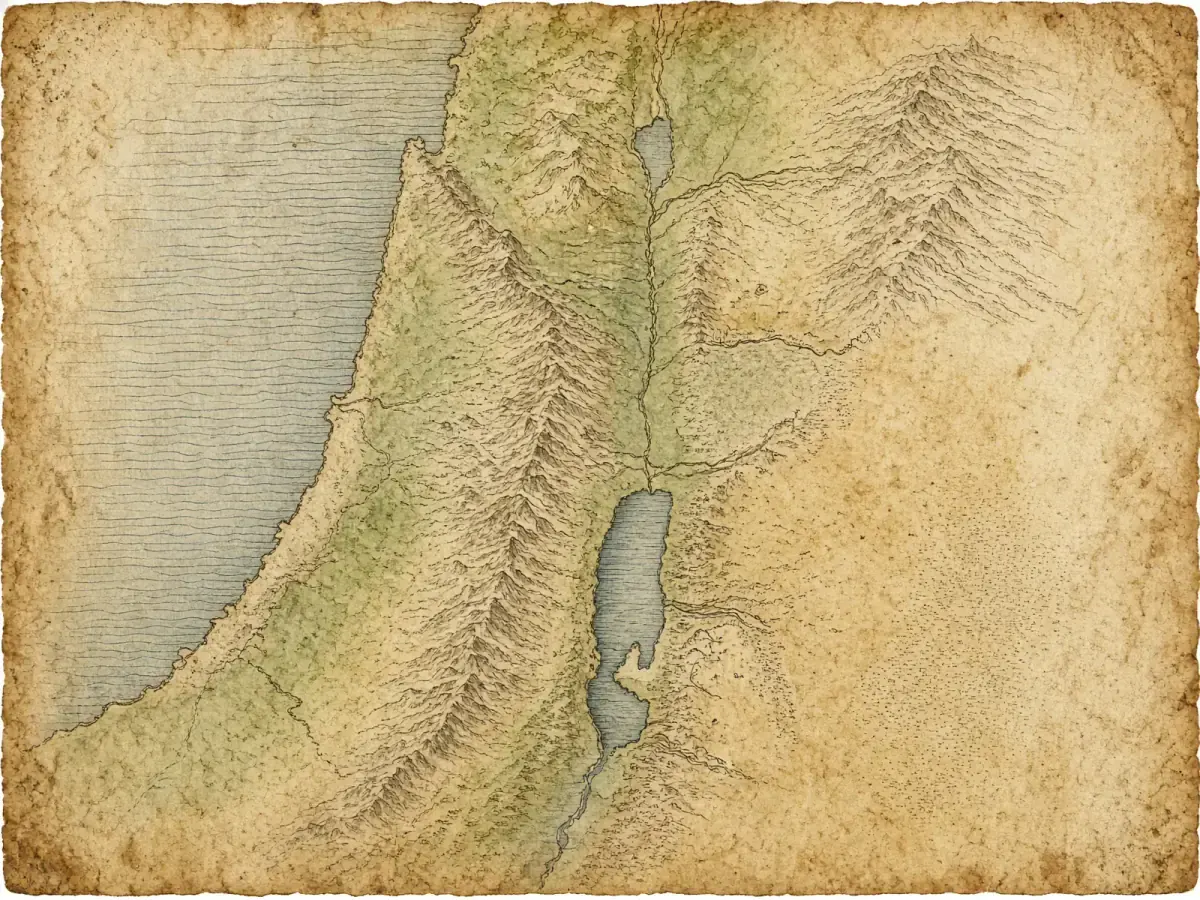
Laish lay at the far north, near the springs of the Jordan below Mount Hermon. Living “after the manner of the Zidonians” means like Phoenicians, a trading people, unwarlike and unwalled. “No magistrate” is literally “no one possessing restraint”, no ruler to hold anyone back. Isolation is their only defence, and it is no defence.
- Judges 18:8
The question from home is short: literally, “What, you?”. The spies’ report will do all the talking. Zorah and Eshtaol are named a second time, the returning point of the mission.
- Judges 18:9
Their report echoes Caleb and Joshua in Numbers 14:7, “The land… is an exceeding good land”, but it is urged against a people who had done Israel no harm and lay outside the promised boundaries as Joshua drew them. “Be not slothful” turns conquest into a matter of energy.
- Judges 18:10
“God hath given it into your hands” is the holy war formula, spoken by the spies, not by God. “A large land” is literally “broad on both hands”, and “no want of any thing” echoes Deuteronomy 8:9, the description of Canaan itself. The Danites describe Laish as a second promised land.
Judges 18:1-10
King James Version1In those days there was no king in Israel: and in those days the tribe of the Danites sought them an inheritance to dwell in; for unto that day all their inheritance had not fallen unto them among the tribes of Israel.
2And the children of Dan sent of their family five men from their coasts, men of valour, from Zorah, and from Eshtaol, to spy out the land, and to search it; and they said unto them, Go, search the land: who when they came to mount Ephraim, to the house of Micah, they lodged there.
3When they were by the house of Micah, they knew the voice of the young man the Levite: and they turned in thither, and said unto him, Who brought thee hither? and what makest thou in this place? and what hast thou here?
4And he said unto them, Thus and thus dealeth Micah with me, and hath hired me, and I am his priest.
5And they said unto him, Ask counsel, we pray thee, of God, that we may know whether our way which we go shall be prosperous.
6And the priest said unto them, Go in peace: before the LORD is your way wherein ye go.
7Then the five men departed, and came to Laish, and saw the people that were therein, how they dwelt careless, after the manner of the Zidonians, quiet and secure; and there was no magistrate in the land, that might put them to shame in any thing; and they were far from the Zidonians, and had no business with any man.
8And they came unto their brethren to Zorah and Eshtaol: and their brethren said unto them, What say ye?
9And they said, Arise, that we may go up against them: for we have seen the land, and, behold, it is very good: and are ye still? be not slothful to go, and to enter to possess the land.
10When ye go, ye shall come unto a people secure, and to a large land: for God hath given it into your hands; a place where there is no want of any thing that is in the earth.
Judges 18:11-20
Armed Visitors Take the Objects and Recruit the Priest
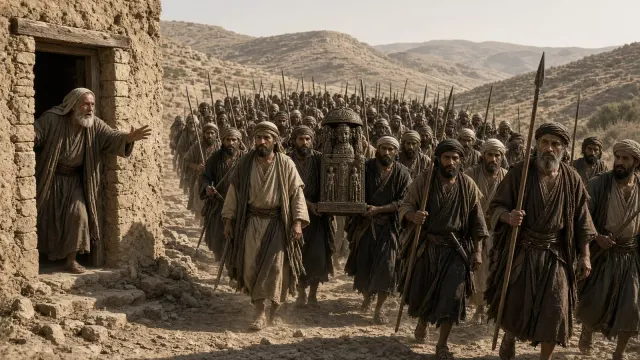
Six hundred armed Danites stand at the entrance while the five spies enter Micah’s house and remove the graven image, molten image, ephod, and teraphim. The show of force makes the theft almost administrative. When the Levite asks what they are doing, they silence him and offer a promotion: why serve one household when he can be father and priest to an entire tribe? His heart is glad. The objects he had been paid to serve become portable assets, and he carries them into a larger institution without any indication that scale has corrected their origin. The scene is almost a parody of religious advancement. A priest changes allegiance because the audience is bigger, stolen objects gain prestige because a tribe owns them, and armed strength secures the transition. Judges exposes how easily status, reach, and religious language can travel together without bringing faithfulness with them.
Deep dive
The theft unfolds beside a show of force. The armed men stand at the gate while the five spies remove each object. When the Levite asks what they are doing, they silence him and appeal to advancement: is it better to serve one household or an entire tribe? His glad response reveals how readily vocation is traded for scale and prestige.
The Danites are stealing objects that should not have been made or used in the first place. Their possession does not purify them. The scene exposes religious competition in which image, vestment, household gods, and priest are treated as transferable assets. Growth in audience and institutional reach does not prove that a ministry’s foundation is faithful.
Words to trace: image, house, priest, ephod, teraphim, appointed
Verse-by-verse path
- Judges 18:11
Six hundred armed men are a small force for a tribe. The same figure is the number of Benjamite survivors in 20:47, and the number Saul and David will later command. The whole migrating clan follows behind them, as verse 21 shows.
- Judges 18:12
Kirjath-jearim, “town of forests”, is a few miles west of Jerusalem, where the ark will rest for twenty years in 1 Samuel 7:2. Mahaneh-dan means “camp of Dan”; the same name marks the place where the Spirit first moved Samson in 13:25, though that is set between Zorah and Eshtaol.
- Judges 18:13
The route north runs along the spine of the hill country, and Micah’s house lies directly on it. The spies’ earlier stop was chance; this one is planned.
- Judges 18:14
The spies list the objects before they say anything about plans, as a merchant lists stock. “Consider what ye have to do” is a hint, not an order; no one needs to say the word steal.
- Judges 18:15
“Saluted him” is literally “asked him of peace”, a formal greeting, the same words as “Go in peace” in verse 6. The house is called the Levite’s and Micah’s in one breath, and both names are about to lose it.
- Judges 18:16
Six hundred armed men block the gateway, the only way in or out of the house compound. No violence is needed; their presence is the threat.
- Judges 18:17
The priest stands with the soldiers at the gate while the five go inside, so he is kept out of the way, or keeps himself out of it. The four objects are listed again, in a different order, the way an inventory is checked twice.
- Judges 18:18
“Carved image” is the same pesel as the graven image, and the fourth listing of the set in five verses. The priest’s question, “What do ye?”, is the only protest he makes, three words in Hebrew.
- Judges 18:19
“Lay thine hand upon thy mouth” is the gesture of silence before a superior, the one Job makes before God (Job 40:4). They offer him Micah’s own words, “a father and a priest”, and then improve the terms: a tribe and a family in Israel instead of one man’s house.
- Judges 18:20
“The priest’s heart was glad” is the same phrase used of a merry heart at a feast (19:6). He takes the objects himself and walks “in the midst of the people”, the safest place in a column on the move, protected on every side.
Judges 18:11-20
King James Version11And there went from thence of the family of the Danites, out of Zorah and out of Eshtaol, six hundred men appointed with weapons of war.
12And they went up, and pitched in Kirjath-jearim, in Judah: wherefore they called that place Mahaneh-dan unto this day: behold, it is behind Kirjath-jearim.
13And they passed thence unto mount Ephraim, and came unto the house of Micah.
14Then answered the five men that went to spy out the country of Laish, and said unto their brethren, Do ye know that there is in these houses an ephod, and teraphim, and a graven image, and a molten image? now therefore consider what ye have to do.
15And they turned thitherward, and came to the house of the young man the Levite, even unto the house of Micah, and saluted him.
16And the six hundred men appointed with their weapons of war, which were of the children of Dan, stood by the entering of the gate.
17And the five men that went to spy out the land went up, and came in thither, and took the graven image, and the ephod, and the teraphim, and the molten image: and the priest stood in the entering of the gate with the six hundred men that were appointed with weapons of war.
18And these went into Micah’s house, and fetched the carved image, the ephod, and the teraphim, and the molten image. Then said the priest unto them, What do ye?
19And they said unto him, Hold thy peace, lay thine hand upon thy mouth, and go with us, and be to us a father and a priest: is it better for thee to be a priest unto the house of one man, or that thou be a priest unto a tribe and a family in Israel?
20And the priest’s heart was glad, and he took the ephod, and the teraphim, and the graven image, and went in the midst of the people.
Judges 18:21-31
Micah Is Silenced, and Laish Is Destroyed
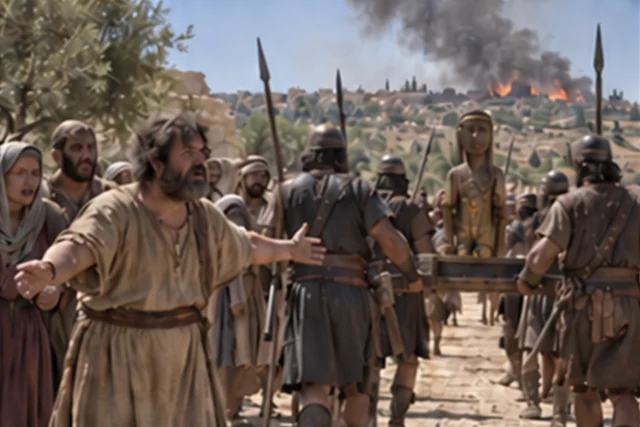
Micah gathers neighbors and chases the Danites, only to discover that possession belongs to whoever is stronger. His protest contains its own indictment: “Ye have taken away my gods which I made.” A god that can be manufactured, stolen, carried away, and protected by armed men has already exposed the fragility of the religion built around it. The Danites threaten Micah until he retreats, then continue toward Laish. The city had been described as quiet and secure, not as an attacker. Dan destroys it, burns it, rebuilds it under a new name, and installs Micah’s image with a hereditary priesthood. The final note deliberately sets this worship beside the house of God at Shiloh. Tribal identity, military success, a recognized priestly line, and a permanent city do not remove the disorder. The stolen shrine simply becomes larger and lasts longer.
Deep dive
Micah’s cry, “Ye have taken away my gods which I made,” exposes the fragility of manufactured religion. Gods that can be made, stolen, carried, and guarded by weapons cannot provide secure hope. Yet the Danites do not learn from that contradiction. Greater strength lets them keep what they took, and Micah’s inability to resist becomes their practical justification.
Laish’s people are struck and their city burned, even though the narrative described them as quiet and secure rather than as attackers. The closing contrast with God’s house at Shiloh underscores Dan’s rival worship. The mention of captivity projects the consequences forward. Tribal identity, military success, and inherited priesthood do not prevent long-term corruption when worship is founded on violence and images.
Words to trace: children, city, house, Micah, name, turned
Verse-by-verse path
- Judges 18:21
Little ones, cattle and carriage go in front because the danger is expected from behind. “Carriage” in 1611 means what is carried, the baggage, not a vehicle. A whole clan is migrating, not just an army.
- Judges 18:22
Micah raises his neighbours, the men of “the houses near”, a village posse, and they catch up with a column slowed by children and livestock.
- Judges 18:23
“What aileth thee?” is a taunt, literally “What is to you?”, the tone of men who know exactly what the matter is. The Danites turn their faces, and nothing more; they do not stop walking.
- Judges 18:24
“My gods which I made” gives the case away in four words. He lists the gods and the priest together as things taken, and ends with a question of despair: “What have I more?”. He had trusted his shrine to make the LORD do him good (17:13).
- Judges 18:25
“Angry fellows” is literally “men bitter of soul”, the phrase Hushai uses of David and his men in 2 Samuel 17:8, “chafed in their minds”, like a bear robbed of her whelps. The threat is courteous in form: they only warn Micah of what their companions might do.
- Judges 18:26
The whole encounter ends in a single sentence, “too strong for him”. There is no appeal, no court and no judge to turn to, which is the point the chapter keeps making about those days.
- Judges 18:27
Laish is struck “with the edge of the sword”, the phrase of total war used of the conquest under Joshua. The people are described a third time as quiet and secure, as the Book of Judges makes sure the reader knows who these victims were.
- Judges 18:28
Beth-rehob was an Aramean district in the north (2 Samuel 10:6). “No deliverer” uses the word for a saviour, moshia, the title Judges gives its own judges (3:9). Israel had deliverers raised for it; Laish had none.
- Judges 18:29
The city takes the tribe’s name, and the tribe takes its name from Dan, son of Jacob by Bilhah (Genesis 30:6). Dan becomes Israel’s northern boundary in the phrase “from Dan even to Beersheba” (20:1), and later the site of Jeroboam’s golden calf (1 Kings 12:29).
- Judges 18:30
The Levite is finally named: Jonathan, grandson of Gershom, and Gershom was the son of Moses (Exodus 2:22). The Hebrew text has a raised letter nun inserted into Moses’ name to make it read Manasseh, an old scribal device to spare Moses the shame of an idolatrous grandson. “The captivity of the land” likely means the Assyrian deportations of 733–722 BC.
- Judges 18:31
Shiloh, far to the south in the hills of Ephraim, held the house of God and the ark all this time. Dan kept its own image for as long as Shiloh stood. The chapter’s last word sets two sanctuaries side by side and leaves the comparison to the reader.
Judges 18:21-31
King James Version21So they turned and departed, and put the little ones and the cattle and the carriage before them.
22And when they were a good way from the house of Micah, the men that were in the houses near to Micah’s house were gathered together, and overtook the children of Dan.
23And they cried unto the children of Dan. And they turned their faces, and said unto Micah, What aileth thee, that thou comest with such a company?
24And he said, Ye have taken away my gods which I made, and the priest, and ye are gone away: and what have I more? and what is this that ye say unto me, What aileth thee?
25And the children of Dan said unto him, Let not thy voice be heard among us, lest angry fellows run upon thee, and thou lose thy life, with the lives of thy household.
26And the children of Dan went their way: and when Micah saw that they were too strong for him, he turned and went back unto his house.
27And they took the things which Micah had made, and the priest which he had, and came unto Laish, unto a people that were at quiet and secure: and they smote them with the edge of the sword, and burnt the city with fire.
28And there was no deliverer, because it was far from Zidon, and they had no business with any man; and it was in the valley that lieth by Beth-rehob. And they built a city, and dwelt therein.
29And they called the name of the city Dan, after the name of Dan their father, who was born unto Israel: howbeit the name of the city was Laish at the first.
30And the children of Dan set up the graven image: and Jonathan, the son of Gershom, the son of Manasseh, he and his sons were priests to the tribe of Dan until the day of the captivity of the land.
31And they set them up Micah’s graven image, which he made, all the time that the house of God was in Shiloh.
Questions to keep in mind while reading
- Track who acts, who speaks, who is affected, and what changes.
- Notice repeated promises, failures, rescues, and consequences.
- Do not assume the account approves every action that is reported.
Text first
Where readers differ
The chapter summary begins with what the passage says and how its parts fit together. It does not assume one denomination has already settled every question. Where a conclusion depends on a tradition, literary theory, or historical reconstruction, that dependence is named openly.
The KJV text is presented first. Interpretive conclusions are labeled, and differences are introduced only when they help a reader understand why serious communities do not always reach the same answer.
Comparative interpretive notes for this chapter are in preparation. Until reviewed notes are ready, this page separates the KJV text from summary and application without claiming that serious readers agree on every question.
Questions beneath the surface
- What account of God, human freedom, responsibility, and the good life emerges from Judges 18?
- Which tension does the chapter refuse to resolve quickly?
- What changes when the chapter is read as part of the whole canon rather than as an isolated moral lesson?
- Where might a sincere reader confuse a familiar tradition with something the text states directly?
Questions for serious personal contemplation
These open-ended questions make room for tension, honest response, prayer, and conclusions that remain accountable to the chapter.
Observe without rushing
What part of Judges 18 makes you stop, feel unsettled, or feel surprised, and why?
Which detail in the passage would be easiest to overlook? How does that detail change your understanding?
Where do you see tension between what happens and this focus: Judges 18 develops its own movement around house, image, Micah, priest, land?
What important question does the passage leave open instead of resolving quickly?
Examine your inner life honestly
Which person, response, fear, or desire in the passage feels most like your own life right now?
What assumption about God, other people, or yourself does this text challenge?
Which part would you rather soften, avoid, or explain away too quickly? What might that reaction reveal?
If this Scripture could ask you one direct question, what do you think it would ask?
Respond with wisdom and courage
What do you need to remember, confess, grieve, thank God for, or trust after reading this passage?
How might another faithful person read this situation differently without ignoring the text?
What obedient response would be costly, uncomfortable, or slow, yet still faithful to Scripture?
What question will you carry into prayer this week, and which verses will you keep in front of you?
Music and video connected to the passage
Related media appears when its Scripture reference overlaps this study. Music and video can illuminate a theme while the biblical text remains the foundation.