
El panorama
Génesis 28 abre con “And Isaac called Jacob, and blessed him, and charged him, and said unto him, Thou shalt…”, cambia cerca del versículo 11 con “And he lighted upon a certain place, and tarried there all night, because the sun was…” y termina con “And this stone, which I have set for a pillar, shall be God’s house: and of all that…”. Estos puntos trazan el movimiento propio del capítulo desde su inicio hasta su conclusión.
Las Escrituras junto al resumen
Génesis · Versión King James · 22Génesis 28:1-8
Versículos 1–8: Isaac called Jacob, and blessed him, and charged him, and said unto him…
Génesis 28:1–8 abre con “And Isaac called Jacob, and blessed him, and charged him, and said unto him, Thou shalt not take…” y llega a “And Esau seeing that the daughters of Canaan pleased not Isaac his father;” en su último versículo. Ese recorrido desarrolla Jacob arrebata, huye, lucha y regresa. Por medio de la pérdida y la gracia, el engañador recibe un nombre nuevo y se convierte en padre de una nación.
Estudio profundo
Génesis 28:1–8 forma una unidad literaria. Abre con “And Isaac called Jacob, and blessed him, and charged him, and said unto him, Thou shalt not…”, gira cerca del versículo 4 con “And give thee the blessing of Abraham, to thee, and to thy seed with thee; that thou mayest…” y llega a “And Esau seeing that the daughters of Canaan pleased not Isaac his father;”. El narrador crea significado mediante quien inicia cada acción, quien responde, lo que cambia y las consecuencias que permanecen. Una acción narrada no es automáticamente una acción aprobada. Como control textual, el pasaje fuente KJV contiene 1 marcadores de discurso, 0 preguntas, 0 contrastes y 2 versículos que nombran al LORD o a Dios. Esos rasgos también pueden compararse con una traducción bíblica fiable en español.
Cada observación se relaciona con el enfoque de la lección, Jacob arrebata, huye, lucha y regresa. Por medio de la pérdida y la gracia, el engañador recibe un nombre nuevo y se convierte en padre de una nación. Algunas afirmaciones son directas, otras reúnen varios versículos y otras deben permanecer identificadas como interpretación.
Los nombres o términos que sostienen la escena son Jacob, Isaac, Padan, Canaan, Esau, Abraham. El giro más cercano al centro aparece en el versículo 4: “And give thee the blessing of Abraham, to thee, and to thy seed with thee; that thou mayest inherit the land wherein thou art a…” Ese detalle ayuda a distinguir el punto de partida de lo que ocurre después.
Recorrido versículo por versículo
- Genesis 28:1
“And Isaac called Jacob, and blessed him, and charged him, and said unto him, Thou shalt not take a wife of the…” El mandato no se entiende solo por el verbo. El destinatario, el propósito y su lugar dentro del pacto o argumento definen la responsabilidad.
- Genesis 28:2
“Arise, go to Padan-aram, to the house of Bethuel thy mother’s father; and take thee a wife from thence of the…” Nombrar a Arise y Bethuel mantiene el relato unido a personas o lugares concretos. Sigue dónde reaparece el nombre y qué cambia a su alrededor.
- Genesis 28:3
“And God Almighty bless thee, and make thee fruitful, and multiply thee, that thou mayest be a multitude of people;” El lenguaje de promesa, bendición o pacto necesita su destinatario y alcance. Esos detalles impiden separar del contexto una palabra personal de la historia.
- Genesis 28:4
“And give thee the blessing of Abraham, to thee, and to thy seed with thee; that thou mayest inherit the land wherein…” El lenguaje de promesa, bendición o pacto necesita su destinatario y alcance. Esos detalles impiden separar del contexto una palabra personal de la historia.
- Genesis 28:5
“And Isaac sent away Jacob: and he went to Padan-aram unto Laban, son of Bethuel the Syrian, the brother of Rebekah…” Nombrar a Jacob y Bethuel mantiene el relato unido a personas o lugares concretos. Sigue dónde reaparece el nombre y qué cambia a su alrededor.
- Genesis 28:6
“When Esau saw that Isaac had blessed Jacob, and sent him away to Padan-aram, to take him a wife from thence; and that…” El mandato no se entiende solo por el verbo. El destinatario, el propósito y su lugar dentro del pacto o argumento definen la responsabilidad.
- Genesis 28:7
“And that Jacob obeyed his father and his mother, and was gone to Padan-aram;” Nombrar a Jacob y Padan mantiene el relato unido a personas o lugares concretos. Sigue dónde reaparece el nombre y qué cambia a su alrededor.
- Genesis 28:8
“And Esau seeing that the daughters of Canaan pleased not Isaac his father;” Nombrar a Canaan y Esau mantiene el relato unido a personas o lugares concretos. Sigue dónde reaparece el nombre y qué cambia a su alrededor.
Génesis 28:1-8
Versión King James1And Isaac called Jacob, and blessed him, and charged him, and said unto him, Thou shalt not take a wife of the daughters of Canaan.
2Arise, go to Padan-aram, to the house of Bethuel thy mother’s father; and take thee a wife from thence of the daughters of Laban thy mother’s brother.
3And God Almighty bless thee, and make thee fruitful, and multiply thee, that thou mayest be a multitude of people;
4And give thee the blessing of Abraham, to thee, and to thy seed with thee; that thou mayest inherit the land wherein thou art a stranger, which God gave unto Abraham.
5And Isaac sent away Jacob: and he went to Padan-aram unto Laban, son of Bethuel the Syrian, the brother of Rebekah, Jacob’s and Esau’s mother.
6When Esau saw that Isaac had blessed Jacob, and sent him away to Padan-aram, to take him a wife from thence; and that as he blessed him he gave him a charge, saying, Thou shalt not take a wife of the daughters of Canaan;
7And that Jacob obeyed his father and his mother, and was gone to Padan-aram;
8And Esau seeing that the daughters of Canaan pleased not Isaac his father;
Génesis 28:9-16
Versículos 9–16: Went Esau unto Ishmael, and took unto the wives which he had Mahalath…
Génesis 28:9–16 abre con “Then went Esau unto Ishmael, and took unto the wives which he had Mahalath the daughter of…” y llega a “And Jacob awaked out of his sleep, and he said, Surely the LORD is in this place; and I knew it…” en su último versículo. Ese recorrido desarrolla Jacob arrebata, huye, lucha y regresa. Por medio de la pérdida y la gracia, el engañador recibe un nombre nuevo y se convierte en padre de una nación.
Estudio profundo
Génesis 28:9–16 forma una unidad literaria. Abre con “Then went Esau unto Ishmael, and took unto the wives which he had Mahalath the daughter of…”, gira cerca del versículo 12 con “And he dreamed, and behold a ladder set up on the earth, and the top of it reached to…” y llega a “And Jacob awaked out of his sleep, and he said, Surely the LORD is in this place; and I knew…”. El narrador crea significado mediante quien inicia cada acción, quien responde, lo que cambia y las consecuencias que permanecen. Una acción narrada no es automáticamente una acción aprobada. Como control textual, el pasaje fuente KJV contiene 2 marcadores de discurso, 0 preguntas, 0 contrastes y 3 versículos que nombran al LORD o a Dios. Esos rasgos también pueden compararse con una traducción bíblica fiable en español.
Cada observación se relaciona con el enfoque de la lección, Jacob arrebata, huye, lucha y regresa. Por medio de la pérdida y la gracia, el engañador recibe un nombre nuevo y se convierte en padre de una nación. Algunas afirmaciones son directas, otras reúnen varios versículos y otras deben permanecer identificadas como interpretación.
Los nombres o términos que sostienen la escena son God, Abraham, Ishmael, Jacob, Beer, Esau. El giro más cercano al centro aparece en el versículo 9: “Then went Esau unto Ishmael, and took unto the wives which he had Mahalath the daughter of Ishmael Abraham’s son, the sister of…” Ese detalle ayuda a distinguir el punto de partida de lo que ocurre después.
Recorrido versículo por versículo
- Genesis 28:9
“Then went Esau unto Ishmael, and took unto the wives which he had Mahalath the daughter of Ishmael Abraham’s son, the…” Nombrar a Ishmael y Abraham mantiene el relato unido a personas o lugares concretos. Sigue dónde reaparece el nombre y qué cambia a su alrededor.
- Genesis 28:10
“And Jacob went out from Beer-sheba, and went toward Haran.” Nombrar a Beer y Haran mantiene el relato unido a personas o lugares concretos. Sigue dónde reaparece el nombre y qué cambia a su alrededor.
- Genesis 28:11
“And he lighted upon a certain place, and tarried there all night, because the sun was set; and he took of the stones…” Los términos propios de esta línea incluyen place, certain, lighted. Su relación con los versículos 10 y 12 permite comprobar su función dentro del pasaje.
- Genesis 28:12
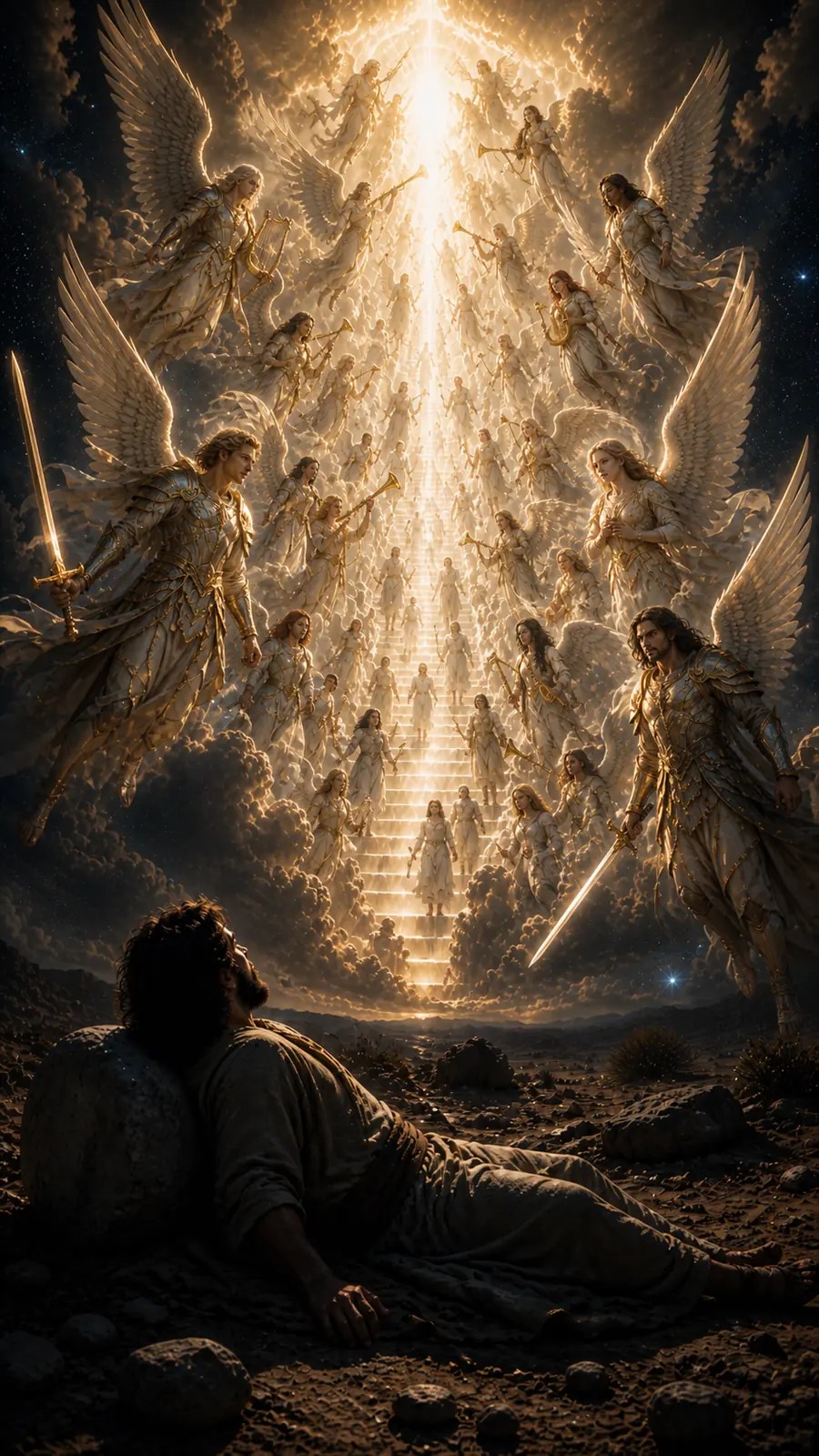
“And he dreamed, and behold a ladder set up on the earth, and the top of it reached to heaven: and behold the angels of…” El versículo nombra a God en vez de dejar la acción sin una fuente. Observa si la línea siguiente continúa, responde o contrasta esa acción.
- Genesis 28:13
“And, behold, the LORD stood above it, and said, I am the LORD God of Abraham thy father, and the God of Isaac: the…” Nombrar a Abraham mantiene el relato unido a personas o lugares concretos. Sigue dónde reaparece el nombre y qué cambia a su alrededor.
- Genesis 28:14
“And thy seed shall be as the dust of the earth, and thou shalt spread abroad to the west, and to the east, and to the…” El mandato no se entiende solo por el verbo. El destinatario, el propósito y su lugar dentro del pacto o argumento definen la responsabilidad.
- Genesis 28:15
“And, behold, I am with thee, and will keep thee in all places whither thou goest, and will bring thee again into this…” Los términos propios de esta línea incluyen goest, keep, land. Su relación con los versículos 14 y 16 permite comprobar su función dentro del pasaje.
- Genesis 28:16
“And Jacob awaked out of his sleep, and he said, Surely the LORD is in this place; and I knew it not.” Nombrar a Jacob y Surely mantiene el relato unido a personas o lugares concretos. Sigue dónde reaparece el nombre y qué cambia a su alrededor.
Génesis 28:9-16
Versión King James9Then went Esau unto Ishmael, and took unto the wives which he had Mahalath the daughter of Ishmael Abraham’s son, the sister of Nebajoth, to be his wife.
10And Jacob went out from Beer-sheba, and went toward Haran.
11And he lighted upon a certain place, and tarried there all night, because the sun was set; and he took of the stones of that place, and put them for his pillows, and lay down in that place to sleep.
12And he dreamed, and behold a ladder set up on the earth, and the top of it reached to heaven: and behold the angels of God ascending and descending on it.
13And, behold, the LORD stood above it, and said, I am the LORD God of Abraham thy father, and the God of Isaac: the land whereon thou liest, to thee will I give it, and to thy seed;
14And thy seed shall be as the dust of the earth, and thou shalt spread abroad to the west, and to the east, and to the north, and to the south: and in thee and in thy seed shall all the families of the earth be blessed.
15And, behold, I am with thee, and will keep thee in all places whither thou goest, and will bring thee again into this land; for I will not leave thee, until I have done that which I have spoken to thee of.
16And Jacob awaked out of his sleep, and he said, Surely the LORD is in this place; and I knew it not.
Génesis 28:17-22
Versículos 17–22: He was afraid, and said, How dreadful is this place! this is none other…
Génesis 28:17–22 abre con “And he was afraid, and said, How dreadful is this place! this is none other but the house of…” y llega a “And this stone, which I have set for a pillar, shall be God’s house: and of all that thou shalt…” en su último versículo. Ese recorrido desarrolla Jacob arrebata, huye, lucha y regresa. Por medio de la pérdida y la gracia, el engañador recibe un nombre nuevo y se convierte en padre de una nación.
Estudio profundo
Génesis 28:17–22 forma una unidad literaria. Abre con “And he was afraid, and said, How dreadful is this place! this is none other but the house of…”, gira cerca del versículo 19 con “And he called the name of that place Beth-el: but the name of that city was called Luz at…” y llega a “And this stone, which I have set for a pillar, shall be God’s house: and of all that thou…”. El narrador crea significado mediante quien inicia cada acción, quien responde, lo que cambia y las consecuencias que permanecen. Una acción narrada no es automáticamente una acción aprobada. Como control textual, el pasaje fuente KJV contiene 2 marcadores de discurso, 0 preguntas, 2 contrastes y 4 versículos que nombran al LORD o a Dios. Esos rasgos también pueden compararse con una traducción bíblica fiable en español.
Cada observación se relaciona con el enfoque de la lección, Jacob arrebata, huye, lucha y regresa. Por medio de la pérdida y la gracia, el engañador recibe un nombre nuevo y se convierte en padre de una nación. Algunas afirmaciones son directas, otras reúnen varios versículos y otras deben permanecer identificadas como interpretación.
Los nombres o términos que sostienen la escena son God, Jacob, Beth, Luz. El giro más cercano al centro aparece en el versículo 19: “And he called the name of that place Beth-el: but the name of that city was called Luz at the first.” Ese detalle ayuda a distinguir el punto de partida de lo que ocurre después.
Recorrido versículo por versículo
- Genesis 28:17
“And he was afraid, and said, How dreadful is this place! this is none other but the house of God, and this is the gate…” El versículo nombra a God en vez de dejar la acción sin una fuente. Observa si la línea siguiente continúa, responde o contrasta esa acción.
- Genesis 28:18
“And Jacob rose up early in the morning, and took the stone that he had put for his pillows, and set it up for a…” Nombrar a Jacob mantiene el relato unido a personas o lugares concretos. Sigue dónde reaparece el nombre y qué cambia a su alrededor.
- Genesis 28:19
“And he called the name of that place Beth-el: but the name of that city was called Luz at the first.” Nombrar a Beth y Luz mantiene el relato unido a personas o lugares concretos. Sigue dónde reaparece el nombre y qué cambia a su alrededor.
- Genesis 28:20
“And Jacob vowed a vow, saying, If God will be with me, and will keep me in this way that I go, and will give me bread…” Nombrar a Jacob mantiene el relato unido a personas o lugares concretos. Sigue dónde reaparece el nombre y qué cambia a su alrededor.
- Genesis 28:21
“So that I come again to my father’s house in peace; then shall the LORD be my God:” Esta línea aporta una razón, un resultado o una conclusión. Debe permanecer unida a la afirmación o acción que le da sentido.
- Genesis 28:22
“And this stone, which I have set for a pillar, shall be God’s house: and of all that thou shalt give me I will surely…” El mandato no se entiende solo por el verbo. El destinatario, el propósito y su lugar dentro del pacto o argumento definen la responsabilidad.
Génesis 28:17-22
Versión King James17And he was afraid, and said, How dreadful is this place! this is none other but the house of God, and this is the gate of heaven.
18And Jacob rose up early in the morning, and took the stone that he had put for his pillows, and set it up for a pillar, and poured oil upon the top of it.
19And he called the name of that place Beth-el: but the name of that city was called Luz at the first.
20And Jacob vowed a vow, saying, If God will be with me, and will keep me in this way that I go, and will give me bread to eat, and raiment to put on,
21So that I come again to my father’s house in peace; then shall the LORD be my God:
22And this stone, which I have set for a pillar, shall be God’s house: and of all that thou shalt give me I will surely give the tenth unto thee.
Preguntas para mantener presentes durante la lectura
- Sigue quién actúa, quién habla, quién resulta afectado y qué cambia.
- Observa promesas, fracasos, rescates y consecuencias repetidas.
- No supongas que el narrador aprueba cada acción que relata.
Primero el texto
Donde difieren los lectores
El resumen comienza con lo que dice el pasaje y cómo se relacionan sus partes. No supone que una denominación ya haya resuelto cada pregunta. Toda dependencia de una tradición, teoría literaria o reconstrucción histórica se identifica con claridad.
El texto KJV aparece primero. Las conclusiones interpretativas se identifican, y las diferencias se presentan cuando ayudan a explicar por qué las comunidades serias no siempre llegan a la misma respuesta.
Las notas interpretativas comparativas de este capítulo están en preparación. Hasta que las notas revisadas estén listas, esta página separa el texto KJV del resumen y la aplicación sin afirmar que todos los lectores serios coinciden en cada cuestión.
Preguntas bajo la superficie
- ¿Qué parte de Génesis 28 te detiene, te incomoda o te sorprende, y por qué?
- ¿Qué detalle del pasaje sería fácil pasar por alto? ¿Cómo cambia ese detalle tu comprensión?
- ¿Dónde ves tensión entre lo que ocurre y este enfoque: Génesis 28?
- ¿Qué pregunta importante deja abierta el pasaje en lugar de resolverla rápidamente?
Preguntas para una reflexión personal seria
Estas preguntas son deliberadamente abiertas. Permanece con la tensión del pasaje, responde con sinceridad y vuelve a la Escritura antes de llegar a una conclusión.
Observa sin apresurarte
¿Qué parte de Génesis 28 te detiene, te incomoda o te sorprende, y por qué?
¿Qué detalle del pasaje sería fácil pasar por alto? ¿Cómo cambia ese detalle tu comprensión?
¿Dónde ves tensión entre lo que ocurre y este enfoque: Jacob arrebata, huye, lucha y regresa. Por medio de la pérdida y la gracia, el engañador recibe un nombre nuevo y se convierte en padre de una nación.?
¿Qué pregunta importante deja abierta el pasaje en lugar de resolverla rápidamente?
Examina tu interior con sinceridad
¿Con qué persona, respuesta, temor o deseo del pasaje te identificas más en este momento?
¿Qué suposición tuya acerca de Dios, de otras personas o de ti mismo pone a prueba este texto?
¿Qué parte preferirías suavizar, evitar o explicar demasiado rápido? ¿Qué podría revelar esa reacción?
Si esta Escritura pudiera hacerte una pregunta directa, ¿cuál crees que sería?
Responde con sabiduría y valor
¿Qué necesitarías recordar, confesar, lamentar, agradecer o confiar después de leer este pasaje?
¿Cómo podría otra persona fiel leer esta situación de manera diferente sin ignorar el texto?
¿Qué respuesta obediente sería costosa, incómoda o lenta, pero todavía fiel a la Escritura?
¿Qué pregunta llevarás a la oración esta semana y qué versículos mantendrás delante de ti?