The big picture
Jerusalem's entire past is retold as the life of a woman who forgets that everything impressive about her came after rescue. The Book of Ezekiel begins the allegory with an abandoned infant in blood, given life before she possesses beauty, wealth, or status. Covenant, washing, clothing, jewelry, food, and a crown then create the splendor for which she becomes known, and the text immediately says whose comeliness made that beauty possible. The betrayal is therefore traced through the gifts themselves. Garments, silver, gold, oil, incense, food, children, public worship, and foreign relationships are all redirected. Jerusalem even pays the lovers she pursues, only to have those same alliances become agents of exposure and destruction. The comparison with Samaria and Sodom destroys the city's habit of judging others from a position of assumed superiority. Yet "Nevertheless" opens the final movement. God remembers the covenant Jerusalem forgot and promises an everlasting covenant that leaves the restored city ashamed rather than boastful.
In this chapter
- Life Before There Is Anything to Offer Ezekiel 16:1-7
Jerusalem's account begins before Jerusalem has anything impressive to claim.
- Adornment That Remains a Gift Ezekiel 16:8-14
A second passing changes the allegory from rescue to covenant.
- The Inventory of Gifts Becomes an Inventory of Betrayal Ezekiel 16:15-22
The betrayal begins not with ugliness but with misplaced ownership of beauty.
- An Alliance Market in Which Jerusalem Pays Ezekiel 16:23-34
The scale of the allegory expands from high places in every street to Egypt, Assyria, and Chaldea.
- The Gifts Are Stripped Away Ezekiel 16:35-43
The former lovers are gathered back into the allegory, but now as agents of exposure and destruction.
- The Sisters Jerusalem Cannot Dismiss Ezekiel 16:44-52
Jerusalem is forced into a family it would rather use as a warning about other people.
- Restoration Without the Old Superiority Ezekiel 16:53-59
The mention of restored fortunes for Sodom, Samaria, and Jerusalem makes this one of the chapter's more difficult turns.
- God Remembers What Jerusalem Forgot Ezekiel 16:60-63
"Nevertheless" turns the chapter without denying a single charge that came before it.
Scripture beside the summary
Ezekiel · King James Version · 63Ezekiel 16:1-7
Life Before There Is Anything to Offer
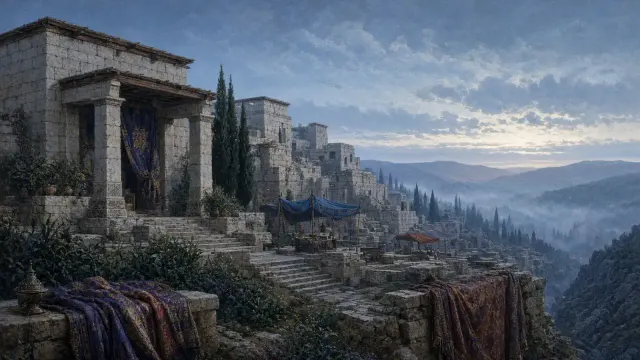
Jerusalem's account begins before Jerusalem has anything impressive to claim. The city is pictured as a newborn abandoned in the open field, without the basic acts of care normally given an infant. The Book of Ezekiel uses Amorite and Hittite parentage polemically to strip away automatic pride in origin, not to suggest that ancestry itself makes a child guilty. The infant has done nothing to earn either abandonment or rescue. Into that helplessness comes the repeated command, "Live." Growth follows the intervention rather than causing it. The child matures, develops beauty, and reaches adulthood, yet the section still ends with nakedness. That sequence matters for everything that follows. Jerusalem's later splendor cannot honestly be treated as self-created when the account has already established life as something given before beauty, wealth, covenant standing, or political importance existed to recommend the city.
Deep dive
The address names Jerusalem before the allegory begins, so the city remains the subject throughout its changing ages and circumstances. Calling its father an Amorite and its mother a Hittite overturns a claim to an automatically distinguished origin. These are polemical parents within the city's account, not an explanation that ancestry itself makes a human being guilty. The child in the field has not earned abandonment by doing anything. The neglect is described through the ordinary acts of care that no one performs: cutting the cord, washing, salting, and wrapping.
The repeated command to live arrives while the child is still in blood. There is no achievement to reward and no beauty yet offered as a reason for rescue. Growth follows the intervention rather than causing it. That order becomes crucial when Jerusalem later trusts in its beauty as though it originated with itself. Even after the child has grown, the description still ends in nakedness. Survival and maturity have not yet become the adorned standing described in the next movement. The allegory takes time to establish dependence before it exposes the city's refusal to remember it.
Words to trace: wast, blood, born, field, Jerusalem, Live
Verse-by-verse path
- Ezekiel 16:1
Sixty-three verses long, this is the longest chapter in the Book of Ezekiel, and it is one continuous oracle. The King James “Again” renders a plain Hebrew “and”, linking it to the vine of chapter 15: there Jerusalem was burnt wood, and here she becomes a woman with a life history.
- Ezekiel 16:2
“Cause to know” is causative: Ezekiel is to make the city face its record, not simply inform it. The Mishnah (Megillah 4:10) records Rabbi Eliezer ruling that this chapter must not be read aloud as a prophetic lesson in the synagogue, so raw did its language sound.
- Ezekiel 16:3
Jerusalem really was Canaanite before it was Israelite: David took it from the Jebusites (2 Samuel 5:6–9). The Amarna letters of the fourteenth century BC preserve notes from its king Abdi-Heba, whose name honours the Hurrian goddess Hebat, so a mixed Amorite and northern pedigree for the old city is not pure invective.
- Ezekiel 16:4
Four acts of birth care are listed and each is denied. The cord was cut, the baby washed, rubbed with salt and bound tight in cloths; salting newborns is attested in the ancient world and survived in parts of the Near East into modern times. “To supple thee” guesses at a rare Hebrew word, probably meaning to cleanse.
- Ezekiel 16:5
“None eye pitied thee” uses the phrase Ezekiel has so far kept for God’s refusal to spare (5:11; 7:4; 8:18; 9:10). Here it is human eyes that looked and felt nothing. Exposure of unwanted infants in the open was practised across the ancient world, and “to the lothing of thy person” means she was treated as something abhorrent.
- Ezekiel 16:6
The line is doubled in the Hebrew; the Greek translation drops the repetition. “In thy blood, live” is recited to this day at the Jewish rite of circumcision, and the Passover Haggadah quotes this verse, reading the blood as Israel’s blood in Egypt. The command is given while the child is still unwashed.
- Ezekiel 16:7
“Multiply as the bud of the field” is literally “I made thee a myriad, like the growth of the field”. “Excellent ornaments” translates “the ornament of ornaments”, most likely the full beauty of womanhood that the next clauses describe. The pair “naked and bare” returns in verses 22 and 39 and in 23:29.
Ezekiel 16:1-7
King James Version1Again the word of the LORD came unto me, saying,
2Son of man, cause Jerusalem to know her abominations,
3And say, Thus saith the Lord GOD unto Jerusalem; Thy birth and thy nativity is of the land of Canaan; thy father was an Amorite, and thy mother an Hittite.
4And as for thy nativity, in the day thou wast born thy navel was not cut, neither wast thou washed in water to supple thee; thou wast not salted at all, nor swaddled at all.
5None eye pitied thee, to do any of these unto thee, to have compassion upon thee; but thou wast cast out in the open field, to the lothing of thy person, in the day that thou wast born.
6And when I passed by thee, and saw thee polluted in thine own blood, I said unto thee when thou wast in thy blood, Live; yea, I said unto thee when thou wast in thy blood, Live.
7I have caused thee to multiply as the bud of the field, and thou hast increased and waxen great, and thou art come to excellent ornaments: thy breasts are fashioned, and thine hair is grown, whereas thou wast naked and bare.
Ezekiel 16:8-14
Adornment That Remains a Gift
A second passing changes the allegory from rescue to covenant. The abandoned child has matured, and the language becomes marital: a skirt covers nakedness, an oath is sworn, and Jerusalem becomes God's by covenant. Only then does the inventory of splendor begin. The Book of Ezekiel piles gift upon gift with deliberate care: washing, oil, embroidered clothing, fine materials, jewelry, a crown, rich food, beauty, and royal prosperity. That long list is not decorative excess. Later sections will return to these same possessions as evidence when Jerusalem redirects them. For now, the crucial explanation comes at the height of the city's renown. Its beauty is "perfect through my comeliness, which I had put upon thee." The city really is beautiful and prominent among the nations, but the text contests the idea that it generated that status independently. The splendor is genuine precisely as received splendor.

Deep dive
The second passing is distinct from the first: the abandoned infant has reached maturity, and the language now becomes marital. Spreading a skirt over the woman, swearing an oath, and entering a covenant establish a relationship before the inventory of gifts unfolds. The account then moves through washing, anointing, fine clothing, ornaments, food, and a crown. Its accumulation is purposeful. Jerusalem's later misuse of these things will not be an abstract betrayal but the redirection of gifts that have already been carefully named.
The description of beauty contains its own explanation. Jerusalem becomes renowned because of the comeliness God has put upon it. The city really is adorned; the text does not pretend that its splendor was imaginary. What it contests is ownership of the achievement. The phrase about prospering into a kingdom also keeps the personification attached to the city's public life. This is not merely a private marriage drama. The image accounts for Jerusalem's status among nations and identifies that standing as received before the city begins treating it as self-created and self-sustaining.
Words to trace: fine, beautiful, broidered, covered, decked, didst
Verse-by-verse path
- Ezekiel 16:8
A man spreading the corner of his garment over a woman claimed her in marriage: Ruth asks Boaz, “spread therefore thy skirt over thine handmaid” (Ruth 3:9), and the Hebrew kanaf is the same. “The time of love” means she was of age to marry. Oath and covenant make it a wedding, and “thou becamest mine” is its vow.
- Ezekiel 16:9
“Throughly” is simply the 1611 spelling of thoroughly. The blood is still there from verse 6, and only now is it washed. Bathing and anointing were bridal preparation: Esther’s year of oils and spices before she went to the king (Esther 2:12) is the same custom on a royal scale.
- Ezekiel 16:10
Embroidered work (riqmah) and the leather called tachash are both tabernacle materials (Exodus 26:36; 26:14), and fine linen, shesh, dressed the priests. The bride is clothed in the fabrics of the sanctuary. “Silk”, meshi, occurs only here and in verse 13, and its exact meaning is uncertain.
- Ezekiel 16:11
The Hebrew for “chain” is ravid, the gold necklace Pharaoh put on Joseph (Genesis 41:42). Bracelets were among the first gifts Abraham’s servant gave Rebekah at the well (Genesis 24:22). The jewellery is the jewellery of a bride brought into a great house.
- Ezekiel 16:12
“A jewel on thy forehead” is in Hebrew a nezem on the nose, a nose ring; the King James moved it upward. It is the same ornament the servant put on Rebekah’s face (Genesis 24:47). The crown, ‘ateret tif’arah, a crown of splendour, lifts her from bride to queen.
- Ezekiel 16:13
Fine flour and oil are grain offering ingredients (Leviticus 2:1), but honey was barred from the altar (Leviticus 2:11), so this is a royal table, not a sacrifice. “Prosper into a kingdom” is the one clause where the allegory openly names the monarchy of David and his house.
- Ezekiel 16:14
“Perfect” is kalil, complete, the word Ezekiel will use of Tyre, “perfect in beauty” (27:3; 28:12). Lamentations 2:15 reports passers-by mocking the ruined Jerusalem: “Is this the city that men call The perfection of beauty?” “Renown” is shem, name: her name spread because of what was put on her.
Ezekiel 16:8-14
King James Version8Now when I passed by thee, and looked upon thee, behold, thy time was the time of love; and I spread my skirt over thee, and covered thy nakedness: yea, I sware unto thee, and entered into a covenant with thee, saith the Lord GOD, and thou becamest mine.
9Then washed I thee with water; yea, I throughly washed away thy blood from thee, and I anointed thee with oil.
10I clothed thee also with broidered work, and shod thee with badgers’ skin, and I girded thee about with fine linen, and I covered thee with silk.
11I decked thee also with ornaments, and I put bracelets upon thy hands, and a chain on thy neck.
12And I put a jewel on thy forehead, and earrings in thine ears, and a beautiful crown upon thine head.
13Thus wast thou decked with gold and silver; and thy raiment was of fine linen, and silk, and broidered work; thou didst eat fine flour, and honey, and oil: and thou wast exceeding beautiful, and thou didst prosper into a kingdom.
14And thy renown went forth among the heathen for thy beauty: for it was perfect through my comeliness, which I had put upon thee, saith the Lord GOD.
Ezekiel 16:15-22
The Inventory of Gifts Becomes an Inventory of Betrayal
The betrayal begins not with ugliness but with misplaced ownership of beauty. Jerusalem trusts in what it has become and treats renown as though it proved independence from the giver who made that renown possible. The Book of Ezekiel then reopens the gift inventory almost item by item. Garments decorate high places, gold and silver become images, embroidered clothing covers them, oil and incense are redirected, and the food once given for Jerusalem's nourishment becomes an offering elsewhere. The children intensify the charge beyond misuse of property. They are described as God's children and are sacrificed, making them victims within the accusation rather than possessions the city may legitimately spend. The section ends where the whole failure began: Jerusalem "hast not remembered" the days of nakedness and blood. Forgetting is not a lapse in nostalgia. It is the erasure of dependence that makes every redirected gift look self-owned.

Deep dive
The turn begins with trust in beauty. Renown, which has just been explained as a gift, becomes the basis for acting independently of the giver. The repeated possessions sharpen the indictment: garments become the decoration of high places, gold and silver become images, embroidered clothing covers them, and oil, incense, and food are set before them. The earlier inventory has not been discarded by the writing. It is being brought back item by item as evidence.
The children make the charge more severe than the misuse of expensive objects. They are described as born to God and then sacrificed to the idols, so the allegory itself distinguishes them from possessions that the city may dispose of. They are victims within the accusation, not additional parties to Jerusalem's betrayal. The repeated language of belonging sharpens the horror: the city destroys children whom God calls his own. The accusation names the violation without making their individual lives another catalogue of the city's possessions.
The closing return to nakedness and blood identifies the failure of memory beneath these acts. Jerusalem has not remembered the days of its youth. That does not mean forgetting a decorative detail from the opening. It means erasing the dependence on which the entire account rests. The city uses what it received while refusing the relationship that explains its possession of it.
Words to trace: didst, garments, harlot, playedst, taken, wast
Verse-by-verse path
- Ezekiel 16:15
“Every one that passed by” turns the verb of verses 6 and 8 around: God passed by and rescued her; now she offers herself to every passer-by. “His it was” renders two obscure Hebrew words, lo yehi, perhaps “let it be his”, and many scholars suspect the text has been damaged.
- Ezekiel 16:16
The word for “divers colours” means patched or spotted, the root Laban’s speckled sheep bear in Genesis 30:32. Josiah’s purge found women in the temple weaving hangings for the Asherah (2 Kings 23:7), which may be the practice meant. The closing clause is obscure in the Hebrew; the King James reads it as “this must never be”.
- Ezekiel 16:17
“My gold and my silver” insists on ownership. Hosea 2:8 had already charged Israel with spending on Baal the silver and gold God gave her. “Images of men” is literally images of a male, whether male gods or, as some think, phallic figures; the Hebrew does not settle which.
- Ezekiel 16:18
Idols were dressed: Jeremiah 10:9 describes gods clothed in blue and purple by craftsmen. The embroidered garments of verse 10 now cover wooden and metal figures. “Mine incense” is qetoret, the word used for the sanctuary’s own blended incense in Exodus 30.
- Ezekiel 16:19
“Meat” in 1611 meant food of any kind. The phrase “sweet savour”, reach nichoach, is the language of accepted sacrifice from Noah onward (Genesis 8:21), and Ezekiel has already used it of offerings made under every green tree (6:13). The closing “thus it was” is flat record: it happened.
- Ezekiel 16:20
“Borne unto me” names the children as God’s before they were ever the city’s. “To be devoured” is literally “to eat”, the idols pictured as feeding. The valley of Hinnom’s Topheth, where children were burned (Jeremiah 7:31; 2 Kings 23:10), lay just below the city walls.
- Ezekiel 16:21
“Pass through the fire” is the technical phrase of Deuteronomy 18:10 and of the reigns of Ahaz and Manasseh (2 Kings 16:3; 21:6). By adding “slain”, shachat, the verb for slaughtering sacrificial animals, Ezekiel closes any argument that the rite stopped short of death.
- Ezekiel 16:22
Memory is the chapter’s hinge: “remembered” returns in verses 43, 60, 61 and 63. The last words repeat verse 6 and verse 7, “naked and bare” and “polluted in thy blood”, so the city’s forgotten beginning is quoted back to her in her own original terms.
Ezekiel 16:15-22
King James Version15But thou didst trust in thine own beauty, and playedst the harlot because of thy renown, and pouredst out thy fornications on every one that passed by; his it was.
16And of thy garments thou didst take, and deckedst thy high places with divers colours, and playedst the harlot thereupon: the like things shall not come, neither shall it be so.
17Thou hast also taken thy fair jewels of my gold and of my silver, which I had given thee, and madest to thyself images of men, and didst commit whoredom with them,
18And tookest thy broidered garments, and coveredst them: and thou hast set mine oil and mine incense before them.
19My meat also which I gave thee, fine flour, and oil, and honey, wherewith I fed thee, thou hast even set it before them for a sweet savour: and thus it was, saith the Lord GOD.
20Moreover thou hast taken thy sons and thy daughters, whom thou hast borne unto me, and these hast thou sacrificed unto them to be devoured. Is this of thy whoredoms a small matter,
21That thou hast slain my children, and delivered them to cause them to pass through the fire for them?
22And in all thine abominations and thy whoredoms thou hast not remembered the days of thy youth, when thou wast naked and bare, and wast polluted in thy blood.
Ezekiel 16:23-34
An Alliance Market in Which Jerusalem Pays
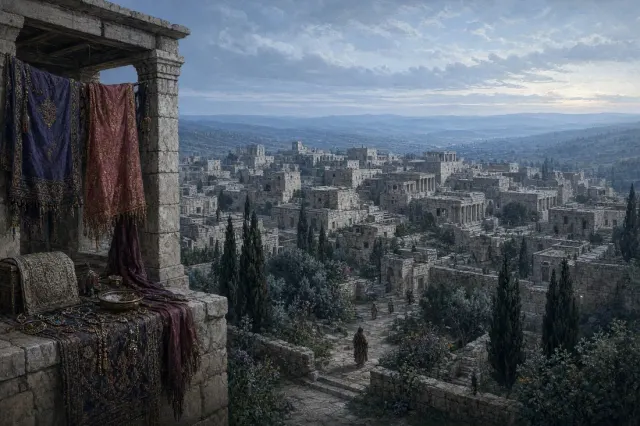
The scale of the allegory expands from high places in every street to Egypt, Assyria, and Chaldea. The Book of Ezekiel uses the language of sexual betrayal to hold religious unfaithfulness and foreign political dependence inside one accusation. The repeated problem is appetite without satisfaction. New alliances accumulate, but none becomes enough. Even the daughters of the Philistines, presented as hostile to Jerusalem, are said to be ashamed of the city's conduct, beginning the collapse of Jerusalem's assumption that everyone else is the obvious moral inferior. Then the economic logic of prostitution is reversed. Instead of receiving gifts, Jerusalem pays and rewards the lovers it seeks. The point is not to provide a social account of sex work. It is the exposure of costly eagerness. Jerusalem spends itself to secure relationships that do not satisfy and that will not ultimately save it. The city loses both fidelity and the advantage it imagined those alliances would purchase.
Deep dive
The movement from every street to Egypt, Assyria, and Chaldea enlarges the scale of the betrayal. The high places are publicly established, while the named foreign powers expose the national dimension of the marriage image. Religious unfaithfulness and international dependence are intertwined in the accusation. Repeated dissatisfaction prevents any alliance from looking like a settled solution. The city adds partners without obtaining what the pursuit promises.
The Philistine women, themselves presented as hostile to Jerusalem, are said to be ashamed of its conduct. That comparison anticipates the later confrontation with Samaria and Sodom: Jerusalem cannot retain the privilege of defining everyone else as the obvious inferior. The language then reverses the expected exchange in prostitution. Other prostitutes receive payment, but Jerusalem gives gifts and rewards to attract its lovers. The point is not to provide a social account of sex work. It is to expose the city's costly eagerness to secure relationships that do not satisfy it. By the end of the comparison, Jerusalem has surrendered both fidelity and the supposed advantage for which it bargained.
Words to trace: place, whoredoms, high, built, contrary, eminent
Verse-by-verse path
- Ezekiel 16:23
The sentence breaks off for the parenthesis, and the King James keeps the break with brackets. “Woe” is rare in Ezekiel, a handful of uses in forty-eight chapters, and this is the only place he doubles it. It comes after the charge of child sacrifice, which is where the cry belongs.
- Ezekiel 16:24
“Eminent place” is gav, a mound or vaulted platform, and “high place” here is ramah, a raised shrine, not the usual bamah. Both were built in the streets and squares of the city itself, not on distant hilltops, which is the new element: idolatry had moved into public thoroughfares.
- Ezekiel 16:25
“Made thy beauty to be abhorred” uses the verb behind to‘evah, abomination: her beauty became an abomination. “The head of the way” is where a road begins or forks, the busiest point of traffic. “Opened thy feet” is a blunt euphemism the King James translates without softening.
- Ezekiel 16:26
“Great of flesh” is a coarse sexual image, and the allegory names the political fact beneath it. Judah repeatedly looked to Egypt for rescue from Mesopotamian powers: Isaiah 30 and 31 condemn it under Hezekiah, and Ezekiel 17:15 will condemn Zedekiah for sending to Pharaoh.
- Ezekiel 16:27
“Ordinary food” is choq, a fixed allowance, the same idea as the food a husband owed a wife in Exodus 21:10. Sennacherib’s annals record that in 701 BC he cut away Judean towns and gave them to the Philistine kings of Ashdod, Ekron and Gaza, a literal handing over of her portion to the Philistines.
- Ezekiel 16:28
Ahaz bought Assyrian help from Tiglath-pileser with temple silver and then copied the altar he saw at Damascus into the temple (2 Kings 16:7–16). “Unsatiable” is the chapter’s charge in one word: each alliance led to another without bringing the security it promised.
- Ezekiel 16:29
“Canaan” was also the Hebrew word for trader, and the King James translates the same phrase in 17:4 as “a land of traffick”. Here it may mean the trading land of Chaldea. Hezekiah welcomed the Babylonian envoys of Merodach-baladan and showed them his treasury (2 Kings 20:12–19).
- Ezekiel 16:30
The word for “heart”, libbah, is unusual, and a cognate in Akkadian meaning rage has led some scholars to translate “How furious I am with you”. “Imperious whorish woman” renders a phrase using shallatet, domineering, from the root that later gave the word sultan.
- Ezekiel 16:31
The shrine language of verses 24 and 25 is repeated almost exactly. The twist is at the end: a prostitute works for payment, and Jerusalem “scornest hire”. What made her different from the women of the trade is that she refused the fee, which the next verses explain.
- Ezekiel 16:32
“Instead of her husband” is literally “under her husband”, the phrase for a wife still bound to him; it is the wording of the jealousy ordeal law in Numbers 5:19 and 29. The verse is an exclamation rather than a charge, one line of disbelief in the middle of the list.
- Ezekiel 16:33
The two Hebrew words for a prostitute’s fee here, neden and nedeh, occur nowhere else. The history behind it is expensive: Ahaz sent temple silver and gold to Assyria (2 Kings 16:8), and Hezekiah stripped the gold from the temple doors to pay Sennacherib (2 Kings 18:14–16).
- Ezekiel 16:34
“Contrary” is hefekh, an overturning, and it frames the verse at both ends. The usual order of the trade is reversed: no one pursues her, and she pays rather than being paid. Judah bought allies who never came to her side when she was attacked.
Ezekiel 16:23-34
King James Version23And it came to pass after all thy wickedness, (woe, woe unto thee! saith the Lord GOD;)
24That thou hast also built unto thee an eminent place, and hast made thee an high place in every street.
25Thou hast built thy high place at every head of the way, and hast made thy beauty to be abhorred, and hast opened thy feet to every one that passed by, and multiplied thy whoredoms.
26Thou hast also committed fornication with the Egyptians thy neighbours, great of flesh; and hast increased thy whoredoms, to provoke me to anger.
27Behold, therefore I have stretched out my hand over thee, and have diminished thine ordinary food, and delivered thee unto the will of them that hate thee, the daughters of the Philistines, which are ashamed of thy lewd way.
28Thou hast played the whore also with the Assyrians, because thou wast unsatiable; yea, thou hast played the harlot with them, and yet couldest not be satisfied.
29Thou hast moreover multiplied thy fornication in the land of Canaan unto Chaldea; and yet thou wast not satisfied herewith.
30How weak is thine heart, saith the Lord GOD, seeing thou doest all these things, the work of an imperious whorish woman;
31In that thou buildest thine eminent place in the head of every way, and makest thine high place in every street; and hast not been as an harlot, in that thou scornest hire;
32But as a wife that committeth adultery, which taketh strangers instead of her husband!
33They give gifts to all whores: but thou givest thy gifts to all thy lovers, and hirest them, that they may come unto thee on every side for thy whoredom.
34And the contrary is in thee from other women in thy whoredoms, whereas none followeth thee to commit whoredoms: and in that thou givest a reward, and no reward is given unto thee, therefore thou art contrary.
Ezekiel 16:35-43
The Gifts Are Stripped Away
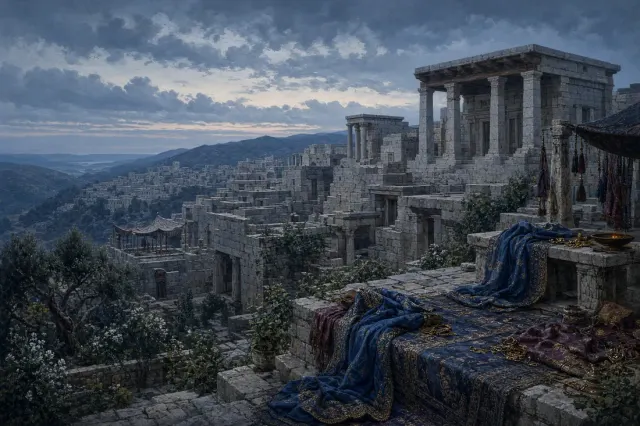
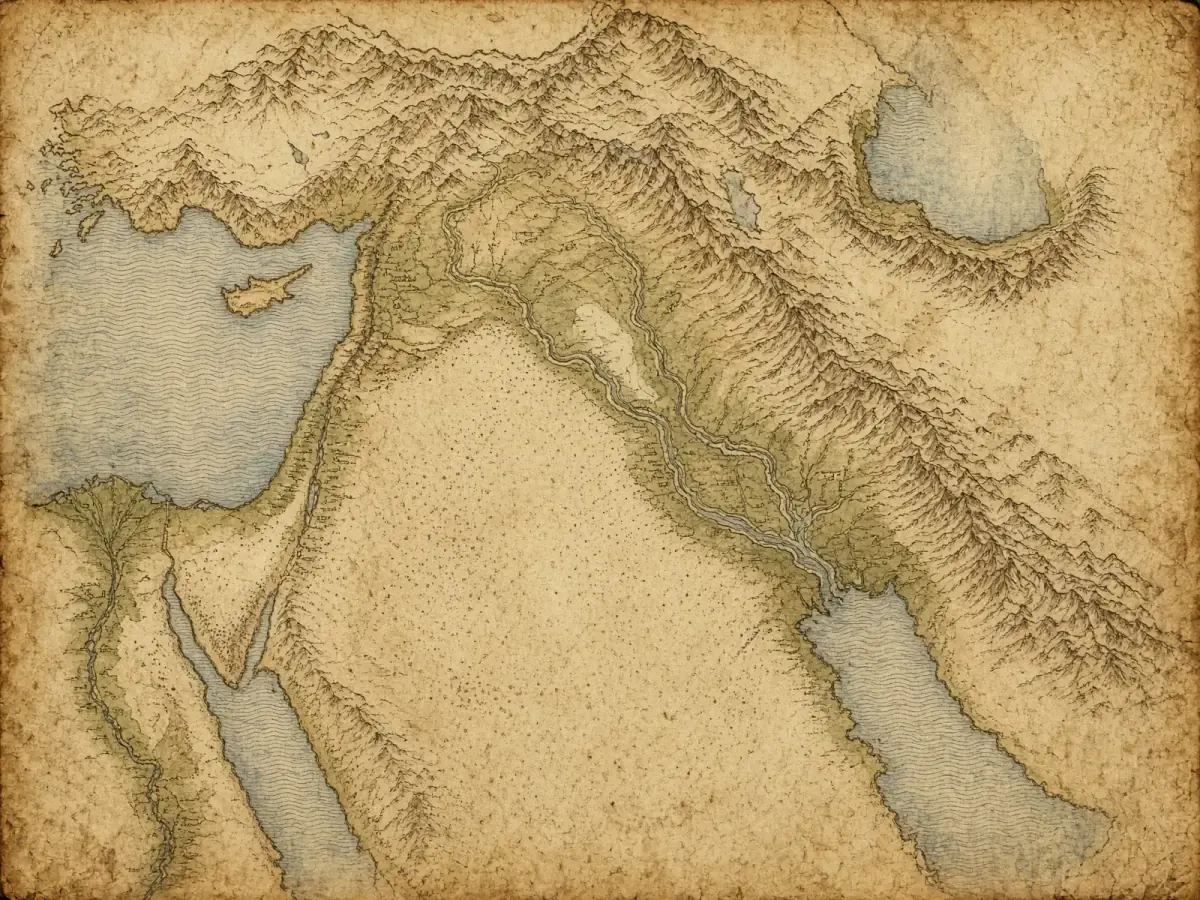
The former lovers are gathered back into the allegory, but now as agents of exposure and destruction. Nearly every gift named earlier is reversed. Clothing is stripped away, jewels are taken, high places are torn down, houses burn, and Jerusalem is left naked again. The Book of Ezekiel keeps the city personification tied to concrete devastation through stones, swords, ruined buildings, and public overthrow. This is not a private domestic instruction disguised as prophecy. It is judgment on Jerusalem expressed through the covenant-marriage imagery established earlier. The reversal of adornment is therefore more than literary neatness. It shows how little control the city has over the powers to which it attached itself. Verse 43 again names the forgotten youth as the root failure. Jerusalem used the gifts of that relationship while refusing to remember the rescue and covenant that explained why it possessed them. The judgment answers both betrayal and bloodshed.
Deep dive
The same people who were sought as lovers are gathered against the city. The announcement reverses nearly every element of its earlier splendor: clothing is removed, ornaments are taken, high places are broken down, houses are burned, and nakedness returns. This is the destructive counterpart to the long inventory of gifts. The wealth that made the city appear secure cannot control those to whom it has attached itself.
The language combines judgments associated with adultery and bloodshed with the violence of a city's overthrow. The subject remains Jerusalem, and the actions describe its violent overthrow rather than instructions for husbands. Stones, swords, and burning houses keep the devastation of the city visible within the female personification. The language does not allow the reversal of its splendour to remain an elegant literary pattern. Nakedness returns through the concrete destruction of bodies, buildings, and the places where the betrayal had been practised.
The cessation of jealousy comes after the announced destruction, not because the betrayal has been declared trivial. Verse 43 returns once more to the forgotten youth. The judgment is connected to remembered acts and a broken relationship, while Jerusalem's own failure has been to remember neither the relationship nor the rescue that began it.
Words to trace: blood, LORD, nakedness, abominations, break, fury
Verse-by-verse path
- Ezekiel 16:35
The address changes from narration to summons. “O harlot, hear” is the call to a defendant to stand for sentence, and the next verses follow the court pattern of the prophets: “because” for the charge in verse 36, then “therefore” for the sentence from verse 37.
- Ezekiel 16:36
“Filthiness” is nechoshet, which elsewhere means bronze or copper. Many take it here as “your money was poured out”, the payments of verses 33 and 34; others as a bodily discharge. Either way, the charge sheet ends with the children, whose blood makes the case more than adultery.
- Ezekiel 16:37
Public stripping was an ancient penalty for an adulterous wife, echoed in Hosea 2:3, 10, and Nahum 3:5 turns the same threat on Nineveh. Here God gathers not only the lovers but “them that thou hast hated”, so friends and enemies both watch. Babylon was once courted (verse 29) and is now the executioner.
- Ezekiel 16:38
Two capital crimes stand together: adultery (Leviticus 20:10) and bloodshed (Genesis 9:6), matching the two counts of verse 36, whoredom and the children’s blood. “Jealousy” is qin’ah, the zeal of the “jealous God” of Exodus 20:5, the anger of a partner betrayed.
- Ezekiel 16:39
Every gift is reversed in order: the shrines of verses 24 and 25 are thrown down, the clothes of verse 10 and jewels of verses 11 and 12 are stripped, and she ends “naked and bare”, exactly as in verse 7 before the covenant. The sentence returns her to the field.
- Ezekiel 16:40
“Company” is qahal, an assembly, the body that carried out a stoning. Deuteronomy 22:21–24 prescribes stoning for adultery. The swords belong to siege warfare, not to a court, so the verse blends a legal execution with the storming of a city; “thrust thee through” means hacked to pieces.
- Ezekiel 16:41
In 586 BC Nebuzaradan “burnt the house of the LORD, and the king’s house, and all the houses of Jerusalem” (2 Kings 25:9). “Many women” are the nations as onlookers. “Thou also shalt give no hire any more” ends the paying of verse 33: there will be nothing left to pay with.
- Ezekiel 16:42
“Make my fury to rest” is a verb Ezekiel uses for anger reaching its end point (5:13; 21:17; 24:13). The verse is striking for promising that the fury will stop, the jealousy go, and God “be quiet”. Judgment in this chapter has a limit set by its own completion.
- Ezekiel 16:43
“Fretted me” means made me tremble with anger. The last clause is difficult: the King James reads a prohibition, but many modern translations take it as a question, “Did you not commit lewdness on top of all your abominations?” “Recompense thy way upon thine head” is Ezekiel’s idiom for conduct returning on the one who did it (9:10; 11:21).
Ezekiel 16:35-43
King James Version35Wherefore, O harlot, hear the word of the LORD:
36Thus saith the Lord GOD; Because thy filthiness was poured out, and thy nakedness discovered through thy whoredoms with thy lovers, and with all the idols of thy abominations, and by the blood of thy children, which thou didst give unto them;
37Behold, therefore I will gather all thy lovers, with whom thou hast taken pleasure, and all them that thou hast loved, with all them that thou hast hated; I will even gather them round about against thee, and will discover thy nakedness unto them, that they may see all thy nakedness.
38And I will judge thee, as women that break wedlock and shed blood are judged; and I will give thee blood in fury and jealousy.
39And I will also give thee into their hand, and they shall throw down thine eminent place, and shall break down thy high places: they shall strip thee also of thy clothes, and shall take thy fair jewels, and leave thee naked and bare.
40They shall also bring up a company against thee, and they shall stone thee with stones, and thrust thee through with their swords.
41And they shall burn thine houses with fire, and execute judgments upon thee in the sight of many women: and I will cause thee to cease from playing the harlot, and thou also shalt give no hire any more.
42So will I make my fury toward thee to rest, and my jealousy shall depart from thee, and I will be quiet, and will be no more angry.
43Because thou hast not remembered the days of thy youth, but hast fretted me in all these things; behold, therefore I also will recompense thy way upon thine head, saith the Lord GOD: and thou shalt not commit this lewdness above all thine abominations.
Ezekiel 16:44-52
The Sisters Jerusalem Cannot Dismiss
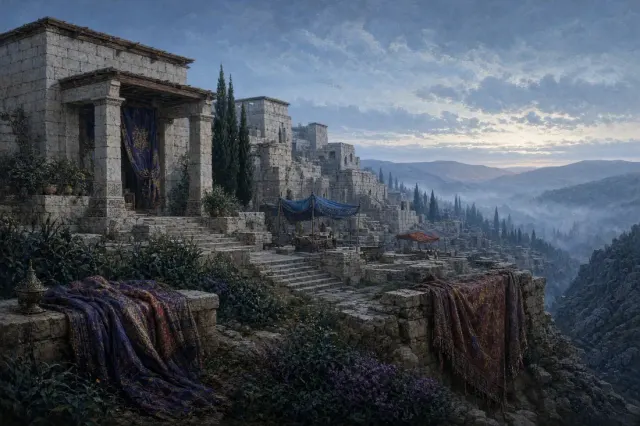
Jerusalem is forced into a family it would rather use as a warning about other people. Samaria becomes the elder sister and Sodom the younger, while the old proverb about mother and daughter returns the chapter to its opening parentage. The Book of Ezekiel makes the comparison humiliating on purpose: Jerusalem's conduct has been so corrupt that its sisters appear righteous beside it. That is a relative judgment, not an acquittal of Samaria or Sodom. The description of Sodom is especially concrete. Pride, abundant food, prosperous ease, failure to strengthen the poor and needy, haughtiness, and abomination all belong to the indictment. Ezekiel does not reduce Sodom to one offense or reconstruct every act behind the word "abomination." The point here is Jerusalem. A city that judged its sisters from a position of pride now has its own behavior placed beside theirs and loses the privilege of treating comparison as self-exoneration.
Deep dive
The proverb about mother and daughter brings the opening parentage back into view. The family expands to include Samaria and Sodom, with their dependent communities described as daughters. Jerusalem is forced into kinship with the very places it might prefer to cite as examples of someone else's failure. The argument is comparative: its conduct has made theirs appear righteous by contrast. It does not pronounce their conduct innocent.
The account of Sodom is notably concrete. Pride, abundant food, and prosperous ease stand beside the failure to strengthen the hand of the poor and needy. Verse 50 adds haughtiness and abomination. Ezekiel's indictment therefore includes social neglect within the description of a city often reduced to a single association. The account in Genesis 19 remains a distinct passage; Ezekiel does not explain the unspecified abomination here. His explicit list includes the ease that leaves a poor neighbour unsupported. Its immediate purpose is to dismantle Jerusalem's confidence that naming Sodom settles the question of comparative guilt. The city making the comparison is required to bear its own shame.
Words to trace: daughters, sister, sisters, abominations, committed, hand
Verse-by-verse path
- Ezekiel 16:44
The proverb is two Hebrew words, ke’immah bittah, “like mother, her daughter”. Ezekiel takes a lively interest in popular sayings and quotes others at 12:22 and 18:2, usually to overturn them. This one he turns into a charge sheet that everyone can repeat.
- Ezekiel 16:45
The pedigree of verse 3 comes back reversed, mother Hittite first, and “your” is now plural: the sisters share the same parents. Loathing husband and children names both halves of the case: abandoning God and giving the children to the fire, a pattern the chapter lays at the door of all three sisters.
- Ezekiel 16:46
Facing east, as Hebrew orientation did, the left hand is north and the right hand south. Samaria lay north of Jerusalem and Sodom to the south-east by the Dead Sea. “Elder” and “younger” are literally greater and smaller: Samaria had been the larger kingdom. The “daughters” are each city’s dependent towns.
- Ezekiel 16:47
“As if that were a very little thing” renders a rare phrase that can also mean “within a little while”: it took Jerusalem no time to outdo them. Either way the verse denies that Jerusalem merely copied her sisters. She did not follow their ways; she went beyond them.
- Ezekiel 16:48
“As I live” is God swearing by his own life. The Book of Ezekiel uses that oath sixteen times, more than any other book. Placing Sodom on the more innocent side of a comparison was about the most offensive thing a prophet could say in Jerusalem.
- Ezekiel 16:49
Genesis 13:10 had described Sodom’s plain as “well watered every where... even as the garden of the LORD”, the source of its fulness of bread. “Strengthen the hand” is the gesture of support Leviticus 25:35 commands toward a brother who has become poor. Idleness here is careless, untroubled ease.
- Ezekiel 16:50
“As I saw good” is literally “when I saw”, an echo of Genesis 18:21, where the LORD says he will go down to Sodom “and see”. “Abomination” here is singular, to‘evah, and the verse does not spell it out. “Haughty” is the same pride of verse 49 now shown in conduct.
- Ezekiel 16:51
Samaria had fallen more than a century earlier, in 722 BC, and Judah had read that as a verdict on the north. Jeremiah 3:11 had already said something similar: “backsliding Israel hath justified herself more than treacherous Judah.” “Justified” means made them look righteous by comparison.
- Ezekiel 16:52
“Which hast judged” uses the verb palal, to arbitrate or intervene, the root of the Hebrew word for prayer. Jerusalem sat as judge over her sisters, and her own conduct became their best defence. “Bear thy shame” appears twice, bracketing the verdict “they are more righteous than thou”.
Ezekiel 16:44-52
King James Version44Behold, every one that useth proverbs shall use this proverb against thee, saying, As is the mother, so is her daughter.
45Thou art thy mother’s daughter, that lotheth her husband and her children; and thou art the sister of thy sisters, which lothed their husbands and their children: your mother was an Hittite, and your father an Amorite.
46And thine elder sister is Samaria, she and her daughters that dwell at thy left hand: and thy younger sister, that dwelleth at thy right hand, is Sodom and her daughters.
47Yet hast thou not walked after their ways, nor done after their abominations: but, as if that were a very little thing, thou wast corrupted more than they in all thy ways.
48As I live, saith the Lord GOD, Sodom thy sister hath not done, she nor her daughters, as thou hast done, thou and thy daughters.
49Behold, this was the iniquity of thy sister Sodom, pride, fulness of bread, and abundance of idleness was in her and in her daughters, neither did she strengthen the hand of the poor and needy.
50And they were haughty, and committed abomination before me: therefore I took them away as I saw good.
51Neither hath Samaria committed half of thy sins; but thou hast multiplied thine abominations more than they, and hast justified thy sisters in all thine abominations which thou hast done.
52Thou also, which hast judged thy sisters, bear thine own shame for thy sins that thou hast committed more abominable than they: they are more righteous than thou: yea, be thou confounded also, and bear thy shame, in that thou hast justified thy sisters.
Ezekiel 16:53-59
Restoration Without the Old Superiority
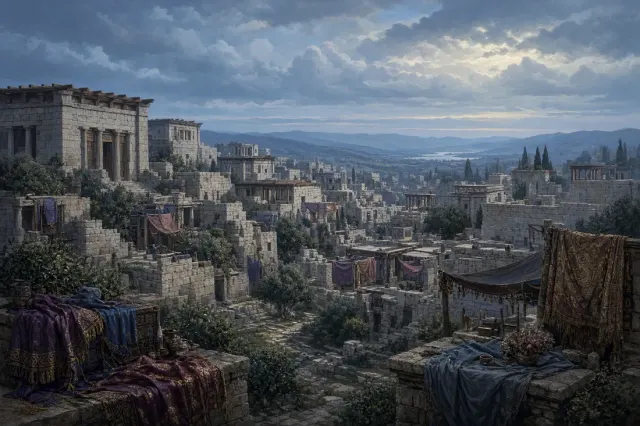
The mention of restored fortunes for Sodom, Samaria, and Jerusalem makes this one of the chapter's more difficult turns. The Book of Ezekiel ties Jerusalem's future to the sisters it once despised, so any restoration must dismantle the city's old superiority rather than quietly reinstall it. The KJV wording has supported more than one interpretation, including an impossible comparison and a genuine reversal of fortunes for all three communities. The passage does not supply a mechanism, timetable, or full scheme by which every detail is resolved. What it repeats without ambiguity is Jerusalem's shame. Sodom was scarcely worth mentioning during the city's pride, but exposure has changed the terms of comparison. Jerusalem must now receive its own future "in the midst of" those sisters. The section then grounds the crisis where the allegory has been heading all along: Jerusalem despised the oath and broke the covenant.
Deep dive
The inclusion of Sodom makes these verses genuinely difficult. The KJV's "When I shall bring again" has been read in two principal ways. Ellicott understands an impossible comparison: Jerusalem's former standing will return when Sodom's does. The Cambridge commentary instead understands a promise to reverse the fortunes of all three communities. On the latter reading, Sodom can signify a restoration beyond the familiar return of Judean exiles; the passage does not describe its mechanism or timetable. Neither a detailed reconstruction of Sodom nor a complete scheme of the afterlife is supplied here.
What the paragraph states repeatedly is Jerusalem's shame in relation to its sisters. The city cannot receive a future while simply carrying its old superiority into it. Sodom was not a subject Jerusalem took seriously during its pride, but exposure has altered the terms of comparison. Verse 59 then grounds the sentence in the despised oath and broken covenant. The shift to an everlasting covenant in the next section must be read across that indictment, not used to pretend that the breaking of the earlier relationship has been overlooked.
Words to trace: daughters, captivity, estate, former, return, Sodom
Verse-by-verse path
- Ezekiel 16:53
“Bring again their captivity” is shuv shevut, the idiom of restoring fortunes (Deuteronomy 30:3). Sodom’s daughters would be the other cities of the plain named in Genesis 14:2, Gomorrah, Admah, Zeboiim and Zoar. Jerusalem is named last, and her restoration comes “in the midst of them”, not ahead of them.
- Ezekiel 16:54
“A comfort unto them” is sharp irony: Jerusalem consoles her sisters simply by being worse than they were. The verb is nacham, to comfort, the word of Isaiah 40:1, here in a bitter sense. Her shame and their consolation arrive together.
- Ezekiel 16:55
“Former estate” is said three times, once for each sister, in the same order as verse 53: Sodom, Samaria, Jerusalem. The repetition is deliberate, and it gives Jerusalem no separate clause of her own; she returns on the same terms as the cities she despised.
- Ezekiel 16:56
Literally, Sodom was “not a report in thy mouth”. The phrase can mean Jerusalem never spoke of her at all, or spoke of her only as a byword, a name to shudder at. Either way it describes the complacency of a city sure that it was nothing like Sodom.
- Ezekiel 16:57
Where the King James has “Syria”, many Hebrew manuscripts and the Syriac read Edom. The two names differ by one letter, since daleth and resh look alike in Hebrew script. Edom’s gloating over Jerusalem’s fall is remembered in Psalm 137:7 and Obadiah 11–14, which suits the reading.
- Ezekiel 16:58
The verb is perfect tense, “thou hast borne”, speaking of the punishment as already carried. The King James prints “saith the LORD”, the shorter form of the formula, where Ezekiel almost always says “saith the Lord GOD”. It closes the sisters section before the covenant turn.
- Ezekiel 16:59
The oath, ‘alah, is the sworn curse attached to a covenant, joined to it in Deuteronomy 29:12–14. Ezekiel pairs the same two words in 17:16–19 of Zedekiah breaking his oath to Nebuchadnezzar. God’s “deal with thee as thou hast done” is the principle of verse 43 once more.
Ezekiel 16:53-59
King James Version53When I shall bring again their captivity, the captivity of Sodom and her daughters, and the captivity of Samaria and her daughters, then will I bring again the captivity of thy captives in the midst of them:
54That thou mayest bear thine own shame, and mayest be confounded in all that thou hast done, in that thou art a comfort unto them.
55When thy sisters, Sodom and her daughters, shall return to their former estate, and Samaria and her daughters shall return to their former estate, then thou and thy daughters shall return to your former estate.
56For thy sister Sodom was not mentioned by thy mouth in the day of thy pride,
57Before thy wickedness was discovered, as at the time of thy reproach of the daughters of Syria, and all that are round about her, the daughters of the Philistines, which despise thee round about.
58Thou hast borne thy lewdness and thine abominations, saith the LORD.
59For thus saith the Lord GOD; I will even deal with thee as thou hast done, which hast despised the oath in breaking the covenant.
Ezekiel 16:60-63
God Remembers What Jerusalem Forgot
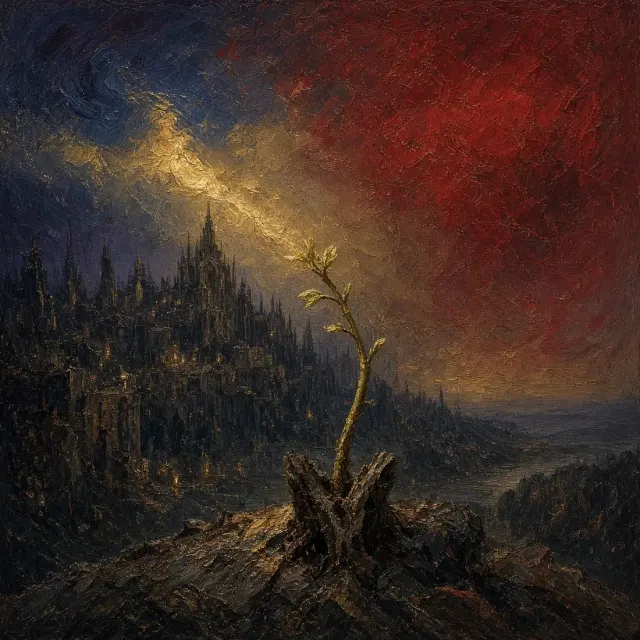
"Nevertheless" turns the chapter without denying a single charge that came before it. Jerusalem has forgotten its youth, broken covenant, shed blood, misused gifts, and lost the moral superiority it claimed over its sisters. Yet the Book of Ezekiel now makes God's memory decisive: "I will remember my covenant with thee." The future is grounded in the remembrance of the one Jerusalem forgot, not in a successful defense mounted by the city. An everlasting covenant follows, along with Jerusalem's own remembering and shame. Even the reception of the sisters is said to occur "not by thy covenant," refusing to let the city treat the enlarged future as an entitlement produced by its performance. Shame therefore follows reconciliation rather than purchasing it. The final silence is the end of self-justifying speech. Jerusalem's restored future does not rewrite the past as innocent. It leaves boasting with nowhere to stand.
Deep dive
The decisive word is "Nevertheless." The indictment has reached covenant-breaking, yet God speaks of remembering the covenant made in Jerusalem's youth. Earlier, the city repeatedly failed to remember that beginning. Now the future rests on the remembrance of the one it forgot. The promised everlasting covenant is therefore not presented as a reward for a successful defense by Jerusalem. The city has no such defense at the end of this account.
The sisters will be received as daughters, but "not by thy covenant." The phrase denies Jerusalem an entitlement to claim this enlarged relation on the strength of its own covenant performance. God gives what the city cannot establish for itself. Remembering its conduct and being ashamed follow within that changed relationship. Shame is not a payment that forces the promise into existence; it is the end of boasting once the promise is understood.
The final silence is likewise specific. Jerusalem will no longer open its mouth in the self-justification associated with its shame when God is pacified toward it concerning what it has done. The chapter does not finish by declaring the actions insignificant or the losses unreal. It finishes with divine reconciliation and a city unable to claim that its future proves the innocence or superiority of its past.
Words to trace: covenant, remember, establish, LORD, ashamed, confounded
Verse-by-verse path
- Ezekiel 16:60
“The days of thy youth” are the covenant of verse 8, most naturally Sinai. An everlasting covenant, berit ‘olam, is what God made with Noah (Genesis 9:16) and Abraham (Genesis 17:7), and Ezekiel returns to it in 37:26 as a covenant of peace. Jerusalem’s forgetting (verse 22) is met by God’s remembering.
- Ezekiel 16:61
The sisters change rank: Samaria, the elder, and Sodom are given to Jerusalem as daughters, the word verse 46 used for dependent towns. The honour is real, but it arrives with shame attached, and it comes on God’s initiative, not as the reward of her own covenant keeping.
- Ezekiel 16:62
“Establish my covenant” is heqim berit, the phrase used for the covenants with Noah (Genesis 9:9–11) and Abraham (Genesis 17:7). Throughout the book, “ye shall know that I am the LORD” has come through judgment. Here the knowing comes through the covenant renewed.
- Ezekiel 16:63
“When I am pacified” is kapper, the verb of atonement in Leviticus, with God as subject: “when I make atonement for thee”. “Open thy mouth” uses a noun, pitchon peh, found again only in 29:21, where it is Ezekiel whose mouth is opened. Here the mouth that boasted stays shut.
Ezekiel 16:60-63
King James Version60Nevertheless I will remember my covenant with thee in the days of thy youth, and I will establish unto thee an everlasting covenant.
61Then thou shalt remember thy ways, and be ashamed, when thou shalt receive thy sisters, thine elder and thy younger: and I will give them unto thee for daughters, but not by thy covenant.
62And I will establish my covenant with thee; and thou shalt know that I am the LORD:
63That thou mayest remember, and be confounded, and never open thy mouth any more because of thy shame, when I am pacified toward thee for all that thou hast done, saith the Lord GOD.
Questions to keep in mind while reading
- Identify the historical crisis, covenant failure, warning, and promised hope.
- Distinguish the prophet’s immediate audience from later biblical connections.
- Do not turn present-day headlines into confident fulfillment claims without textual evidence.
Text first
Where readers differ
The chapter summary begins with what the passage says and how its parts fit together. It does not assume one denomination has already settled every question. Where a conclusion depends on a tradition, literary theory, or historical reconstruction, that dependence is named openly.
The KJV text is presented first. Interpretive conclusions are labeled, and differences are introduced only when they help a reader understand why serious communities do not always reach the same answer.
Comparative interpretive notes for this chapter are in preparation. Until reviewed notes are ready, this page separates the KJV text from summary and application without claiming that serious readers agree on every question.
Questions beneath the surface
- What account of God, human freedom, responsibility, and the good life emerges from Ezekiel 16?
- Which tension does the chapter refuse to resolve quickly?
- What changes when the chapter is read as part of the whole canon rather than as an isolated moral lesson?
- Where might a sincere reader confuse a familiar tradition with something the text states directly?
Questions for serious personal contemplation
These open-ended questions make room for tension, honest response, prayer, and conclusions that remain accountable to the chapter.
Observe without rushing
What part of Ezekiel 16 makes you stop, feel unsettled, or feel surprised, and why?
Which detail in the passage would be easiest to overlook? How does that detail change your understanding?
Where do you see tension between what happens and this focus: Ezekiel 16 develops its own movement around daughters, LORD, wast, abominations, blood?
What important question does the passage leave open instead of resolving quickly?
Examine your inner life honestly
Which person, response, fear, or desire in the passage feels most like your own life right now?
What assumption about God, other people, or yourself does this text challenge?
Which part would you rather soften, avoid, or explain away too quickly? What might that reaction reveal?
If this Scripture could ask you one direct question, what do you think it would ask?
Respond with wisdom and courage
What do you need to remember, confess, grieve, thank God for, or trust after reading this passage?
How might another faithful person read this situation differently without ignoring the text?
What obedient response would be costly, uncomfortable, or slow, yet still faithful to Scripture?
What question will you carry into prayer this week, and which verses will you keep in front of you?
Music and video connected to the passage
Related media appears when its Scripture reference overlaps this study. Music and video can illuminate a theme while the biblical text remains the foundation.