The big picture
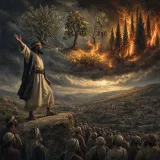
Judges 9 is the book’s anti-deliverer chapter. Abimelech does not answer a divine call or rescue Israel from an oppressor. He builds power through family loyalty in Shechem, money from Baal-berith’s temple, hired followers, and the murder of his brothers on one stone. Jotham escapes and answers with a fable in which productive trees refuse rule while the bramble accepts a crown and threatens fire. Three years later, the alliance turns inward exactly as the warning anticipated. Treachery, boasting, ambush, and revenge consume Shechem, and Abimelech burns people in a tower after destroying the city. At Thebez he tries the same tactic, but an unnamed woman drops a millstone on his head. His final concern for reputation cannot prevent Judges from identifying both his wickedness and the judgment that overtakes him.
In this chapter
- Seventy Brothers Are Exchanged for One Violent Ruler Judges 9:1-21
Abimelech offers Shechem a brutally simple political choice: many sons of Jerubbaal or one ruler who is “your bone and your flesh.” Kinship wins the argument.
- Treachery Turns Inward and Consumes Shechem Judges 9:22-49
Three years of rule give Abimelech’s kingship the appearance of stability, but Judges identifies the fracture as judgment on the blood shed at Ophrah.
- A Millstone Ends Abimelech’s Claim to Greatness Judges 9:50-57
At Thebez, Abimelech seems ready to repeat the method that destroyed Shechem’s tower.

Scripture beside the summary
Judges · King James Version · 57Judges 9:1-21
Seventy Brothers Are Exchanged for One Violent Ruler
Abimelech offers Shechem a brutally simple political choice: many sons of Jerubbaal or one ruler who is “your bone and your flesh.” Kinship wins the argument. Money from Baal-berith’s temple finances hired followers, and Gideon’s sons are murdered on one stone. Only Jotham escapes. From Mount Gerizim he answers the coronation with a fable that exposes what kind of ruler Shechem has chosen. Olive, fig, and vine refuse to abandon useful fruitfulness merely to wave over the trees. The bramble accepts and immediately offers impossible shade backed by a threat of fire. Jotham then turns the image toward Shechem itself. If the city has acted truly, let ruler and city rejoice together. If not, fire will move in both directions. The alliance is introduced as mutual betrayal waiting for enough time to ignite.
Deep dive
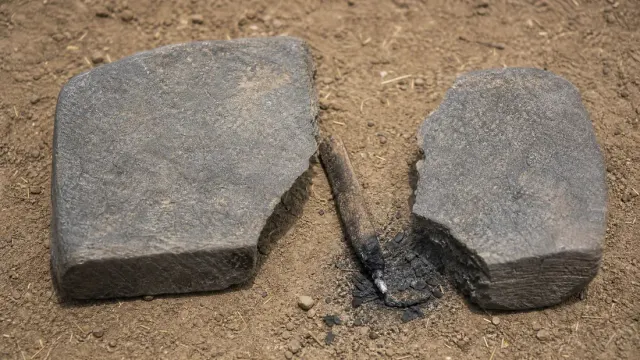
Abimelech is not introduced as a deliverer raised by the LORD. He manufactures power through kinship rhetoric, temple money, paid violence, and mass murder. The repeated phrase “one stone” gives the killing a deliberate, public character. Shechem’s leaders are not passive victims at the beginning; they finance and recognize the ruler whose violence will later reach them.
Jotham’s fable contrasts fruitful service with grasping rule. Olive, fig, and vine refuse to abandon their productive gifts merely to wave over the trees, while the bramble offers thin shade and threatens consuming fire. Jotham applies the account conditionally, asking whether Shechem acted truly and sincerely. His conclusion predicts mutual destruction if their covenant with Abimelech rests on betrayal.
Words to trace: Abimelech, house, Shechem, trees, Jerubbaal, reign
Verse-by-verse path
- Judges 9:1
Abimelech goes not to his father’s house at Ophrah but to his mother’s kin at Shechem, “the house of his mother’s father”. The concubine of 8:31 had stayed with her own people, and her son now draws on that Shechemite clan as his power base.
- Judges 9:2
“The men of Shechem” is baale Shechem, the landholding citizens, literally “the lords of Shechem”, a word that sounds like the god they worshipped. “Your bone and your flesh” is kinship language: Laban said it to Jacob (Genesis 29:14), and the tribes will say it to David at Hebron (2 Samuel 5:1).
- Judges 9:3
Deuteronomy 17:15 required that Israel’s king be “one from among thy brethren”, not a stranger. The Shechemites reason the same way in reverse: “He is our brother”, by his Canaanite mother. The criterion of the king law is used to choose a Canaanite city’s own man.
- Judges 9:4
Seventy pieces of silver for seventy brothers: one piece per life. The money comes from the treasury of Baal-berith, the covenant god of 8:33. “Vain and light persons” are empty and reckless men, like the “vain men” who will gather round Jephthah (11:3).
- Judges 9:5
“Upon one stone” suggests slaughter on an altar like stone; Saul later had a great stone rolled up for slaughtering animals properly (1 Samuel 14:33–34). One son escapes by hiding, as the infant Joash was hidden from Athaliah’s massacre of the royal family (2 Kings 11:2).
- Judges 9:6
“The plain of the pillar” is “the oak of the standing stone”, very likely the great stone Joshua set up under the oak at Shechem as a witness to the covenant (Joshua 24:26). Abimelech is crowned beside the stone that witnessed Israel’s promise to serve the LORD. Beth-millo, “the house of the fill”, was probably the city’s fortified citadel.
- Judges 9:7
Mount Gerizim was the mountain of blessing in the covenant ceremony (Deuteronomy 11:29; 27:12). Jotham pronounces a curse from it. “That God may hearken unto you” makes his hearing conditional: listen to me, if you want to be heard.
- Judges 9:8
This is the first fable in the Bible; the only other is Jehoash’s parable of the thistle and the cedar (2 Kings 14:9). “Anoint a king” is also the first mention of anointing a king in Scripture, placed in the mouths of trees.
- Judges 9:9
“Fatness” is the olive’s rich oil, used for lamps, for offerings and for anointing priests and kings. The tree whose oil makes kings would have to give up the oil to become one. “Promoted over” is literally “to sway over”, to wave above the others.
- Judges 9:10
The trees speak to the fig in the feminine, “come thou”, since the Hebrew nouns are feminine. Each man sitting “under his vine and under his fig tree” became the Bible’s picture of settled peace (1 Kings 4:25; Micah 4:4).
- Judges 9:11
Figs were a staple, dried and pressed into cakes; Abigail brought David “two hundred cakes of figs” (1 Samuel 25:18). “Sweetness” is motek. The fig, like the olive, will not trade its usefulness for a throne.
- Judges 9:12
The vine was the image Israel’s poets used for Israel itself: “Thou hast brought a vine out of Egypt” (Psalm 80:8), and Isaiah’s song of the vineyard (Isaiah 5:1–7). The third and last of the fruitful trees is asked.
- Judges 9:13
Wine was poured out as a drink offering “of a sweet savour unto the LORD” (Numbers 15:7), and Psalm 104:15 praises “wine that maketh glad the heart of man”. “Cheereth God and man” sums up both uses in one line.
- Judges 9:14
The bramble is atad, a thornbush, the plant that gave its name to “the threshingfloor of Atad” where Jacob was mourned (Genesis 50:10). It bears no fruit and gives no timber, and “all the trees” together choose it.
- Judges 9:15
“Put your trust in my shadow” is the language used of God: “in the shadow of thy wings will I make my refuge” (Psalm 57:1). A thornbush casts almost no shade. Dry brambles are where brush fires start, and fire in thorns can spread to the greatest trees, the cedars of Lebanon.
- Judges 9:16
“Truly and sincerely” is emet and tamim, the very pair Joshua used at Shechem: “serve him in sincerity and in truth” (Joshua 24:14). Jotham measures Shechem by the covenant words spoken in the same city.
- Judges 9:17
“Adventured his life far” is literally “threw his life away in front”, cast it out before him. The King James brackets verses 17–18 as an aside in which Jotham interrupts his own condition to remind them what his father did.
- Judges 9:18
“The son of his maidservant” is Jotham’s own description; 8:31 had called Abimelech’s mother a concubine, not a slave. The insult sharpens the charge: Shechem traded seventy lawful sons for the son of a servant because “he is your brother”.
- Judges 9:19
The conditional blessing and curse recall the ceremony held between Gerizim and Ebal, where blessings and curses were pronounced over the people (Deuteronomy 27–28). Jotham stands on the same slope and sets two outcomes before Shechem.
- Judges 9:20
Fire is to go both ways: from Abimelech to Shechem, and from Shechem to Abimelech. Beth-millo is named twice, as if the citadel were a party to the crime. The second half of this curse is the one the rest of the chapter will take longest to fulfil.
- Judges 9:21
Jotham’s name means “the LORD is perfect” or “whole”, built on tam, the root of tamim, the “sincerely” of his own speech. Beer means simply “a well”; its location is unknown. The youngest son, like David later, survives the house’s disaster.
Judges 9:1-21
King James Version1And Abimelech the son of Jerubbaal went to Shechem unto his mother’s brethren, and communed with them, and with all the family of the house of his mother’s father, saying,
2Speak, I pray you, in the ears of all the men of Shechem, Whether is better for you, either that all the sons of Jerubbaal, which are threescore and ten persons, reign over you, or that one reign over you? remember also that I am your bone and your flesh.
3And his mother’s brethren spake of him in the ears of all the men of Shechem all these words: and their hearts inclined to follow Abimelech; for they said, He is our brother.
4And they gave him threescore and ten pieces of silver out of the house of Baal-berith, wherewith Abimelech hired vain and light persons, which followed him.
5And he went unto his father’s house at Ophrah, and slew his brethren the sons of Jerubbaal, being threescore and ten persons, upon one stone: notwithstanding yet Jotham the youngest son of Jerubbaal was left; for he hid himself.
6And all the men of Shechem gathered together, and all the house of Millo, and went, and made Abimelech king, by the plain of the pillar that was in Shechem.
7And when they told it to Jotham, he went and stood in the top of mount Gerizim, and lifted up his voice, and cried, and said unto them, Hearken unto me, ye men of Shechem, that God may hearken unto you.
8The trees went forth on a time to anoint a king over them; and they said unto the olive tree, Reign thou over us.
9But the olive tree said unto them, Should I leave my fatness, wherewith by me they honour God and man, and go to be promoted over the trees?
10And the trees said to the fig tree, Come thou, and reign over us.
11But the fig tree said unto them, Should I forsake my sweetness, and my good fruit, and go to be promoted over the trees?
12Then said the trees unto the vine, Come thou, and reign over us.
13And the vine said unto them, Should I leave my wine, which cheereth God and man, and go to be promoted over the trees?
14Then said all the trees unto the bramble, Come thou, and reign over us.
15And the bramble said unto the trees, If in truth ye anoint me king over you, then come and put your trust in my shadow: and if not, let fire come out of the bramble, and devour the cedars of Lebanon.
16Now therefore, if ye have done truly and sincerely, in that ye have made Abimelech king, and if ye have dealt well with Jerubbaal and his house, and have done unto him according to the deserving of his hands;
17(For my father fought for you, and adventured his life far, and delivered you out of the hand of Midian:
18And ye are risen up against my father’s house this day, and have slain his sons, threescore and ten persons, upon one stone, and have made Abimelech, the son of his maidservant, king over the men of Shechem, because he is your brother;)
19If ye then have dealt truly and sincerely with Jerubbaal and with his house this day, then rejoice ye in Abimelech, and let him also rejoice in you:
20But if not, let fire come out from Abimelech, and devour the men of Shechem, and the house of Millo; and let fire come out from the men of Shechem, and from the house of Millo, and devour Abimelech.
21And Jotham ran away, and fled, and went to Beer, and dwelt there, for fear of Abimelech his brother.
Judges 9:22-49
Treachery Turns Inward and Consumes Shechem
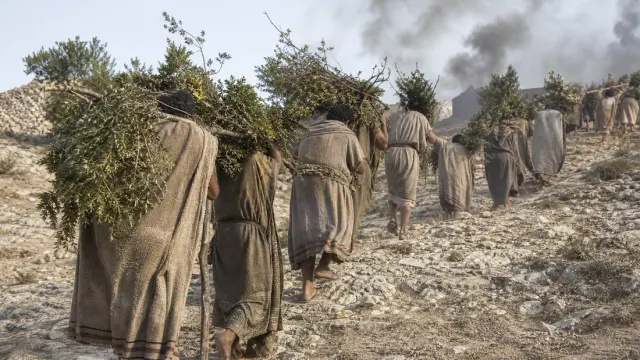
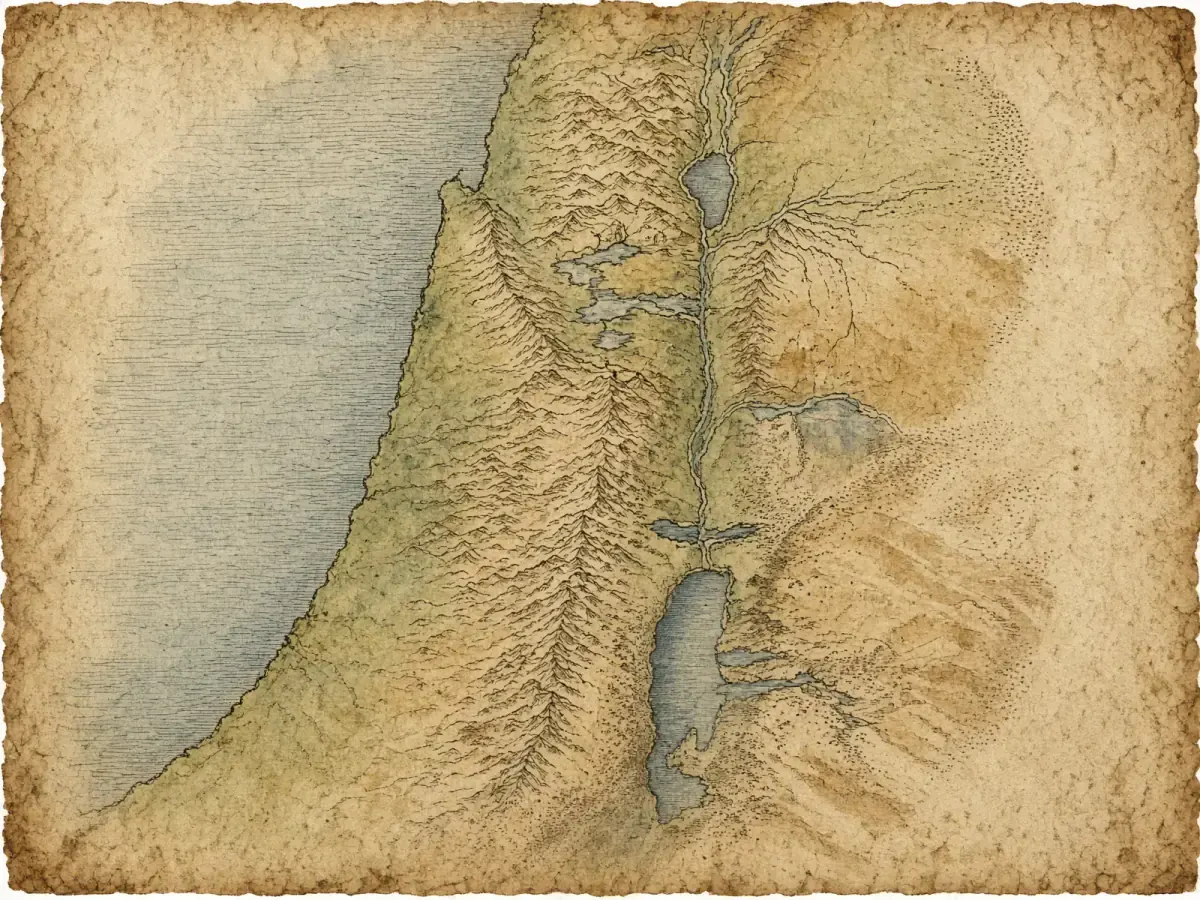
Three years of rule give Abimelech’s kingship the appearance of stability, but Judges identifies the fracture as judgment on the blood shed at Ophrah. Hostility grows between Abimelech and Shechem, robbers occupy the roads, Gaal boasts at a festival, Zebul sends secret warning, and ambush follows. The political order founded through conspiracy now reproduces conspiracy inside itself. Abimelech does not merely defeat a challenger. He turns on the city that helped make him king, destroys it, kills its inhabitants, and sows the ground with salt. People who retreat into the tower of Shechem discover that refuge cannot hold against a ruler who brings branches and fire to the entrance. Jotham’s bramble image has become literal. Power created by treating lives as disposable eventually treats former allies as disposable too, and the city that financed violence is consumed by it.
Deep dive
Verse 23 interprets the fracture as judgment: God sends an evil spirit between Abimelech and Shechem so the blood of Gideon’s sons returns upon those responsible. The chapter then traces this judgment through human boasting, secret messages, ambush, fear, and escalating retaliation. Divine judgment does not make the participants innocent; it gives their self-destructive treachery a moral frame.
Abimelech’s destruction of Shechem exceeds the removal of a rival. He captures the city, kills its people, ruins the site, and burns about a thousand men and women in the tower. The bramble’s promised fire has become literal within the account. Political power founded on disposable lives ultimately treats former allies as disposable too. The text exposes rather than romanticizes such kingship.
Words to trace: Abimelech, people, Shechem, city, Gaal, Zebul
Verse-by-verse path
- Judges 9:22
“Reigned” here is vayyasar, “ruled as a prince”, not the usual word for reigning as king. “Over Israel” is a large claim for a ruler crowned in one city; Israelites evidently followed him (verse 55). The first man called king in Israel lasts three years.
- Judges 9:23
The same phrase is used of Saul: “an evil spirit from the LORD troubled him” (1 Samuel 16:14). “Dealt treacherously” is bagad, to betray, the word for breaking faith. The men who helped Abimelech betray his brothers now betray him.
- Judges 9:24
Numbers 35:33 had laid down the principle: “the land cannot be cleansed of the blood that is shed therein, but by the blood of him that shed it.” The blood of the seventy is to fall on the killer and on those who paid him.
- Judges 9:25
Shechem lay in the pass between Ebal and Gerizim, on the main north south road. Men lying in ambush on the heights to rob travellers would ruin trade and the tolls a ruler collected, an inference about why the robbery was reported to Abimelech.
- Judges 9:26
Gaal son of Ebed can be read as “loathing, son of a slave”, perhaps a name the writer gave or preserved with scorn; some manuscripts read Eber for Ebed. He arrives with his brothers, a clan leader offering Shechem a new champion.
- Judges 9:27
“Made merry” is hillulim, a festival of praise, the word used in Leviticus 19:24 for the fruit of the fourth year, “holy to praise the LORD withal”. Here the harvest thanksgiving is held in the house of their god, with curses for Abimelech over the wine.
- Judges 9:28
“Who is Abimelech?” is the scornful question of Pharaoh, “Who is the LORD?” (Exodus 5:2), and of Nabal, “Who is David?” (1 Samuel 25:10). Gaal appeals to “the men of Hamor the father of Shechem”, the old Canaanite ruling family of Genesis 34:2, against the half Israelite son of Jerubbaal.
- Judges 9:29
“Would to God” is the Hebrew idiom “who will give”. “Increase thine army, and come out” is shouted at a man who is not there; the Greek reads it as “and I would say to Abimelech”. It is a boast made safely at a feast.
- Judges 9:30
Zebul is “the ruler of the city”, sar ha-ir, Abimelech’s governor in Shechem. His name means something like “exalted” or “prince”, the word found in Baal-zebul. He hears the boast and his anger burns, but he says nothing to Gaal yet.
- Judges 9:31
“Privily” translates betormah, a word found only here. It may mean “with deceit”, or it may be a place name, “in Tormah”, possibly the Arumah of verse 41 where Abimelech was staying.
- Judges 9:32
Zebul supplies the whole plan: move by night, lie in wait in the field, strike at sunrise. The ruler’s own governor designs the ambush against the city he governs.
- Judges 9:33
“As thou shalt find occasion” is literally “as thy hand shall find”, the phrase Samuel uses when he anoints Saul, “do as occasion serve thee” (1 Samuel 10:7), and Ecclesiastes 9:10, “Whatsoever thy hand findeth to do, do it with thy might.”
- Judges 9:34
“Four companies” is literally “four heads”, the Hebrew for divisions of troops. Abimelech rose by night, as Gideon his father did against Midian, and with the same kind of divided force.
- Judges 9:35
The gate was where a city’s elders sat and where a ruler showed himself. Gaal stands there at the entrance just as Abimelech’s men rise from hiding. The two meet at the place where the city decided who held power.
- Judges 9:36
“Shadow” is tsel, the word the bramble used when it offered its “shadow” to the trees (verse 15). Zebul mocks Gaal’s eyesight: those are only shadows on the mountains. The bramble’s shadow is real after all, and it is coming down the hill.
- Judges 9:37
“The middle of the land” is literally “the navel of the land”, tabbur ha-arets, a hill near Shechem; Ezekiel 38:12 uses the phrase of Israel, and later tradition applied it to Jerusalem. “The plain of Meonenim” is “the diviners’ oak”, a tree where soothsayers gave oracles.
- Judges 9:38
“Where is now thy mouth?” turns Gaal’s own words at the feast against him, as Gideon quoted Succoth’s taunt back to its princes (8:15). Zebul drops his pretence: this is the man you despised.
- Judges 9:39
“Went out before” is the phrase for leading an army into battle; the elders later ask Samuel for a king who will “go out before us, and fight our battles” (1 Samuel 8:20). Gaal gets the command he boasted he wanted.
- Judges 9:40
The rout ends where Gaal had stood boasting: “even unto the entering of the gate”. The wounded lie along the road between the field and the city he had promised to defend.
- Judges 9:41
Arumah, perhaps modern el-Orme southeast of Shechem, was Abimelech’s residence: he ruled Shechem from outside. Zebul, still inside, expels Gaal and his brothers. The city now has neither its new champion nor any peace with its ruler.
- Judges 9:42
The people go out to the fields the next morning, apparently thinking the trouble over once Gaal was gone. Someone again reports it to Abimelech, as someone had reported the robberies in verse 25.
- Judges 9:43
Three companies was his father’s tactic at the Midianite camp (7:16). Abimelech turns it on farmers going out to work their own fields, the townspeople of the city that crowned him.
- Judges 9:44
Abimelech’s own company seizes the gate so that no one can get back into the city, while the other two companies kill those caught outside. The gate where Gaal boasted and where Zebul watched is now held against the city.
- Judges 9:45
Sowing a destroyed city with salt was a symbolic curse on its future, not an attempt to poison the soil; Moses had pictured a cursed land of “brimstone, and salt, and burning” (Deuteronomy 29:23). Excavations at Tell Balata show a destruction of Shechem in roughly this period.
- Judges 9:46
The god here is El-berith, “God of the covenant”, the same deity as Baal-berith of 8:33 and 9:4. “Hold” is tseriach, an inner chamber or stronghold, a word found elsewhere only in 1 Samuel 13:6. The temple whose silver hired Abimelech’s killers becomes the refuge he burns.
- Judges 9:47
Excavators at Tell Balata uncovered a massive “fortress temple” with walls some five metres thick, which many connect with the tower of Shechem and the house of El-berith. Whether the tower was part of the city or a separate stronghold is debated.
- Judges 9:48
Mount Zalmon, “the dark mountain”, perhaps for its woods, appears again in Psalm 68:14, “it was white as snow in Salmon”. The axe is qardom, the woodsman’s axe. Abimelech carries the branch on his own shoulder, like a king leading by example in the worst sense.
- Judges 9:49
Here the first half of Jotham’s curse comes true: fire comes out from Abimelech and devours the men of Shechem (verse 20). About a thousand men and women die in the stronghold of their god. The bramble has set the cedars alight.
Judges 9:22-49
King James Version22When Abimelech had reigned three years over Israel,
23Then God sent an evil spirit between Abimelech and the men of Shechem; and the men of Shechem dealt treacherously with Abimelech:
24That the cruelty done to the threescore and ten sons of Jerubbaal might come, and their blood be laid upon Abimelech their brother, which slew them; and upon the men of Shechem, which aided him in the killing of his brethren.
25And the men of Shechem set liers in wait for him in the top of the mountains, and they robbed all that came along that way by them: and it was told Abimelech.
26And Gaal the son of Ebed came with his brethren, and went over to Shechem: and the men of Shechem put their confidence in him.
27And they went out into the fields, and gathered their vineyards, and trode the grapes, and made merry, and went into the house of their god, and did eat and drink, and cursed Abimelech.
28And Gaal the son of Ebed said, Who is Abimelech, and who is Shechem, that we should serve him? is not he the son of Jerubbaal? and Zebul his officer? serve the men of Hamor the father of Shechem: for why should we serve him?
29And would to God this people were under my hand! then would I remove Abimelech. And he said to Abimelech, Increase thine army, and come out.
30And when Zebul the ruler of the city heard the words of Gaal the son of Ebed, his anger was kindled.
31And he sent messengers unto Abimelech privily, saying, Behold, Gaal the son of Ebed and his brethren be come to Shechem; and, behold, they fortify the city against thee.
32Now therefore up by night, thou and the people that is with thee, and lie in wait in the field:
33And it shall be, that in the morning, as soon as the sun is up, thou shalt rise early, and set upon the city: and, behold, when he and the people that is with him come out against thee, then mayest thou do to them as thou shalt find occasion.
34And Abimelech rose up, and all the people that were with him, by night, and they laid wait against Shechem in four companies.
35And Gaal the son of Ebed went out, and stood in the entering of the gate of the city: and Abimelech rose up, and the people that were with him, from lying in wait.
36And when Gaal saw the people, he said to Zebul, Behold, there come people down from the top of the mountains. And Zebul said unto him, Thou seest the shadow of the mountains as if they were men.
37And Gaal spake again and said, See there come people down by the middle of the land, and another company come along by the plain of Meonenim.
38Then said Zebul unto him, Where is now thy mouth, wherewith thou saidst, Who is Abimelech, that we should serve him? is not this the people that thou hast despised? go out, I pray now, and fight with them.
39And Gaal went out before the men of Shechem, and fought with Abimelech.
40And Abimelech chased him, and he fled before him, and many were overthrown and wounded, even unto the entering of the gate.
41And Abimelech dwelt at Arumah: and Zebul thrust out Gaal and his brethren, that they should not dwell in Shechem.
42And it came to pass on the morrow, that the people went out into the field; and they told Abimelech.
43And he took the people, and divided them into three companies, and laid wait in the field, and looked, and, behold, the people were come forth out of the city; and he rose up against them, and smote them.
44And Abimelech, and the company that was with him, rushed forward, and stood in the entering of the gate of the city: and the two other companies ran upon all the people that were in the fields, and slew them.
45And Abimelech fought against the city all that day; and he took the city, and slew the people that was therein, and beat down the city, and sowed it with salt.
46And when all the men of the tower of Shechem heard that, they entered into an hold of the house of the god Berith.
47And it was told Abimelech, that all the men of the tower of Shechem were gathered together.
48And Abimelech gat him up to mount Zalmon, he and all the people that were with him; and Abimelech took an axe in his hand, and cut down a bough from the trees, and took it, and laid it on his shoulder, and said unto the people that were with him, What ye have seen me do, make haste, and do as I have done.
49And all the people likewise cut down every man his bough, and followed Abimelech, and put them to the hold, and set the hold on fire upon them; so that all the men of the tower of Shechem died also, about a thousand men and women.
Judges 9:50-57
A Millstone Ends Abimelech’s Claim to Greatness
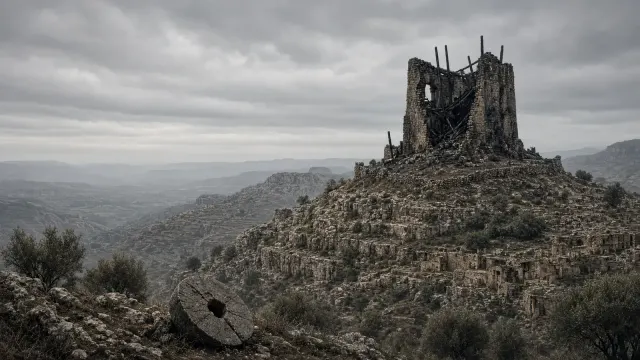
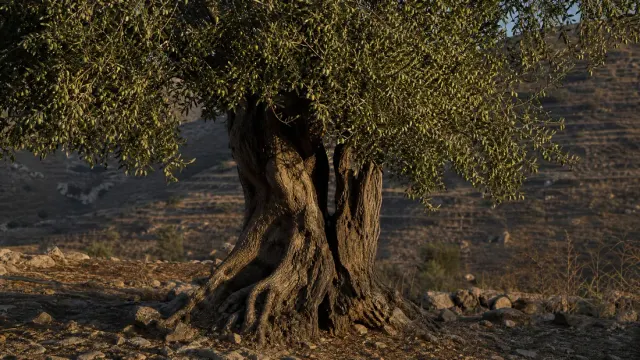
At Thebez, Abimelech seems ready to repeat the method that destroyed Shechem’s tower. Men and women take refuge in a stronghold, he approaches the door to burn it, and then the pattern breaks from above. An unnamed woman drops a piece of millstone onto his head and crushes his skull. Even while dying, Abimelech remains preoccupied with the account others will tell. He asks his armor bearer to kill him so it cannot be said that a woman slew him. The sword changes the last physical action but cannot change the Book of Judges’s memory of what happened. The closing verses remove any ambiguity about the chapter’s moral frame. God renders Abimelech’s wickedness upon him, the evil of Shechem returns upon its people, and Jotham’s curse reaches its conclusion after years in which violent kingship appeared to prosper.
Deep dive
Abimelech tries to repeat the tower burning, but the pattern breaks when an unnamed woman uses an ordinary household implement from above. Even while dying, he is concerned with the account others will tell about his masculinity and honor. His servant’s sword cannot erase the Book of Judges’s account, and later Scripture still remembers the woman’s decisive action.
The closing verses provide the chapter’s theological assessment. God recompenses Abimelech’s wickedness against his father and brings the evil of Shechem’s men upon them; Jotham’s curse comes to pass. This conclusion does not celebrate every horror along the way. It declares that violence secured by conspiracy is not beyond judgment, even when it appears stable for several years.
Words to trace: Abimelech, tower, city, Thebez, woman, young
Verse-by-verse path
- Judges 9:50
Thebez is usually placed at modern Tubas, about ten miles northeast of Shechem; it may have joined the revolt. Joab later names the town in a message to David about the danger of fighting too near a wall (2 Samuel 11:21).
- Judges 9:51
“A strong tower” is migdal oz, the phrase of Proverbs 18:10: “The name of the LORD is a strong tower: the righteous runneth into it, and is safe.” The people of Thebez run to their tower and climb to its roof.
- Judges 9:52
He tries the same method that worked at Shechem, fire at the door. Joab’s later warning to his officers names the error: “wherefore approached ye so nigh unto the city when ye did fight? knew ye not that they would shoot from the wall?” (2 Samuel 11:20).
- Judges 9:53
The piece of millstone is literally “a rider stone”, the upper stone of a hand mill that women pushed back and forth every day to grind grain. “All to brake” is 1611 English for “broke completely”. The weapon is from a kitchen, and the hand is a woman’s.
- Judges 9:54
Saul will die the same way, asking his armourbearer to kill him “lest these uncircumcised come and thrust me through, and abuse me” (1 Samuel 31:4). Saul’s armourbearer refused; Abimelech’s young man obeys.
- Judges 9:55
“The men of Israel” were following Abimelech; he had Israelite troops as well as Shechemites. With him dead, they simply go home: the kingdom he built did not survive the afternoon of his death.
- Judges 9:56
“Rendered” is heshiv, returned, the word for bringing something back on the one who did it. Psalm 7:16 puts it as a rule: “His mischief shall return upon his own head.” The crime is named as one against his father, not only his brothers.
- Judges 9:57
The chapter ends with the name of the one survivor, “Jotham the son of Jerubbaal”, and the word “curse”. Proverbs 26:2 says “the curse causeless shall not come”; this curse had a cause, and it came.
Judges 9:50-57
King James Version50Then went Abimelech to Thebez, and encamped against Thebez, and took it.
51But there was a strong tower within the city, and thither fled all the men and women, and all they of the city, and shut it to them, and gat them up to the top of the tower.
52And Abimelech came unto the tower, and fought against it, and went hard unto the door of the tower to burn it with fire.
53And a certain woman cast a piece of a millstone upon Abimelech’s head, and all to brake his skull.
54Then he called hastily unto the young man his armourbearer, and said unto him, Draw thy sword, and slay me, that men say not of me, A woman slew him. And his young man thrust him through, and he died.
55And when the men of Israel saw that Abimelech was dead, they departed every man unto his place.
56Thus God rendered the wickedness of Abimelech, which he did unto his father, in slaying his seventy brethren:
57And all the evil of the men of Shechem did God render upon their heads: and upon them came the curse of Jotham the son of Jerubbaal.
Questions to keep in mind while reading
- Track who acts, who speaks, who is affected, and what changes.
- Notice repeated promises, failures, rescues, and consequences.
- Do not assume the account approves every action that is reported.
Text first
Where readers differ
The chapter summary begins with what the passage says and how its parts fit together. It does not assume one denomination has already settled every question. Where a conclusion depends on a tradition, literary theory, or historical reconstruction, that dependence is named openly.
The KJV text is presented first. Interpretive conclusions are labeled, and differences are introduced only when they help a reader understand why serious communities do not always reach the same answer.
Comparative interpretive notes for this chapter are in preparation. Until reviewed notes are ready, this page separates the KJV text from summary and application without claiming that serious readers agree on every question.
Questions beneath the surface
- What account of God, human freedom, responsibility, and the good life emerges from Judges 9?
- Which tension does the chapter refuse to resolve quickly?
- What changes when the chapter is read as part of the whole canon rather than as an isolated moral lesson?
- Where might a sincere reader confuse a familiar tradition with something the text states directly?
Questions for serious personal contemplation
These open-ended questions make room for tension, honest response, prayer, and conclusions that remain accountable to the chapter.
Observe without rushing
What part of Judges 9 makes you stop, feel unsettled, or feel surprised, and why?
Which detail in the passage would be easiest to overlook? How does that detail change your understanding?
Where do you see tension between what happens and this focus: Judges 9 develops its own movement around Abimelech, Shechem, people, city, house?
What important question does the passage leave open instead of resolving quickly?
Examine your inner life honestly
Which person, response, fear, or desire in the passage feels most like your own life right now?
What assumption about God, other people, or yourself does this text challenge?
Which part would you rather soften, avoid, or explain away too quickly? What might that reaction reveal?
If this Scripture could ask you one direct question, what do you think it would ask?
Respond with wisdom and courage
What do you need to remember, confess, grieve, thank God for, or trust after reading this passage?
How might another faithful person read this situation differently without ignoring the text?
What obedient response would be costly, uncomfortable, or slow, yet still faithful to Scripture?
What question will you carry into prayer this week, and which verses will you keep in front of you?
Music and video connected to the passage
Related media appears when its Scripture reference overlaps this study. Music and video can illuminate a theme while the biblical text remains the foundation.