The big picture
The Book of Luke 9 gives the disciples authority and then spends the rest of the chapter showing how much authority can be exercised before understanding catches up. The Twelve travel light, preach, heal, and return, only to be told to feed a crowd they cannot supply from their own resources. Peter correctly names Jesus as God's Christ, but the title is immediately defined by rejection, death, resurrection, and a cross carried by followers. On the mountain, glory appears, yet Moses and Elias speak about the departure Jesus will accomplish at Jerusalem. Back below, failed deliverance, confusion about suffering, an argument over greatness, and an attempt to police another exorcist expose how quickly the disciples can witness power without grasping its shape. Then Jesus sets his face toward Jerusalem. A Samaritan village refuses him, but the answer is another village, not fire from heaven. The final three encounters strip following of comfortable delays. Glory, suffering, mission, and misunderstanding now travel the same road.
Central truth
Luke 9 turns the disciples from observers into participants, then repeatedly corrects their understanding of power and glory as Jesus feeds the crowd, receives Peter’s confession, foretells His suffering, is revealed in glory, and deliberately sets His face toward Jerusalem.

The study notes have a page of their own
The movement by movement analysis, the words to trace, the verse by verse notes and where readers differ are written for someone studying alone. They are on the Deep Personal Reflections page for this chapter. This page is the lesson.
A chapter-specific teaching brief
These anchors come from this chapter itself. They help a teacher use the Level 1 overview, the Level 2 study, and the Scripture text as one lesson.
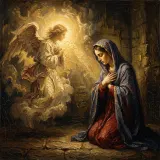
Open with the chapter’s first image
Luke 9:1: “Then he called his twelve disciples together, and gave them power and authority over all devils, and to cure diseases.”
Slow down at the turning point
Luke 9:32: “But Peter and they that were with him were heavy with sleep: and when they were awake, they saw his glory, and the two men that stood with him.”
Keep this word trail visible
Jesus, disciples, John, Elias, kingdom, child
What to explain, in order
Teach the passage in this order. Each step names the verses it rests on, so every point can be shown in the text before it is applied.
Luke 9:1-9
The twelve sent, and Herod perplexed
Begin with the first mission. The twelve, who have been watching, are now given power and sent to do what Jesus has done. Teach the travel instructions as training in dependence. Then the scene shifts to Herod, who has heard the rumours: John raised, Elijah appeared, an old prophet risen. Read his question, "who is this, of whom I hear such things?" Teach this first because it sets the question that runs through the chapter. Herod asks it in fear; Peter will answer it in 9:20, and the Father in 9:35.
Luke 9:10-17
Five loaves in the disciples' hands
The apostles return and Jesus takes them aside to Bethsaida, but the crowds follow and he receives them. Teach the conversation as the heart of the scene: send them away, give ye them to eat, we have only five loaves and two fish. Explain that five thousand men means more people in all, with women and children. Show Jesus' actions, taking, blessing, breaking and giving, which recur at the Last Supper (22:19) and at Emmaus (24:30). Teach the twelve baskets: one for each disciple who doubted, and a sign of abundance.
Luke 9:18-27
The Christ of God and the cross
Jesus is praying again when he asks who people say he is. Teach the two questions: the crowd's view and "whom say ye that I am?" Peter answers "The Christ of God". Then teach the turn: Jesus forbids them to announce it and speaks of suffering, rejection, death and resurrection. Then the call to everyone, and explain "take up his cross daily": a cross was carried by a condemned man to his execution, so it means dying to self, every day. Teach 9:24-25 as the logic of discipleship: the life saved by holding on is lost.
Luke 9:28-36
Glory on the mountain
About eight days later Jesus takes Peter, James and John up to pray. As he prays his face changes and his clothing becomes dazzling. Moses and Elijah appear, representing the law and the prophets, and they speak of his departure. Peter, half awake, suggests three shelters, "not knowing what he said". Explain tabernacles as tents, perhaps recalling the Feast of Tabernacles. Then the cloud and the voice. Teach the command "hear him" as the point: Jesus is greater than Moses and Elijah, and his word about the cross must be heard.
Luke 9:37-50
Down the mountain, back to failure
The next day a father begs for his only son, tormented by a spirit that the disciples could not cast out. Describe the boy's suffering briefly and without detail; some learners may have children with seizures. Jesus heals him and gives him back to his father. Then the second prediction, hidden from them, and their argument about greatness. Teach Jesus' answer with a child: welcome the least and you welcome me. Then John's complaint about the outsider. Teach this step to show that the glory on the mountain did not cure the disciples' pride.
Luke 9:51-62
Face set toward Jerusalem
Teach 9:51 as the hinge of the Gospel. Then the Samaritan village refuses him because he is heading for Jerusalem, and James and John want fire like Elijah's in 2 Kings 1. Jesus rebukes them. Then three would-be followers. Explain the hard sayings without softening them: the Son of man has no home, the kingdom outranks even the duty of burial, and the ploughman must look ahead. Teach these as the cost of following one who has set his face to the cross, and note that Luke does not say whether any of the three followed.
Where learners get stuck
The misreadings this passage tends to produce, and how to answer each from the text.
"The feeding of the five thousand happened because people shared their lunches."
The text says the disciples had "no more but five loaves and two fishes" (9:13) for about five thousand men (9:14), that Jesus blessed and broke them, and that they "did eat, and were all filled" with twelve baskets left over (9:17). Nothing is said about hidden food. The Book of Luke presents a miracle that shows who Jesus is, which is why Peter's confession follows straight after. Teach the miracle as written, and let the lesson about sharing come through the disciples, who hand out what Jesus gives.
"Taking up my cross means putting up with an annoying problem."
In 9:23 the cross is linked to denying oneself and following Jesus, and in 9:22 Jesus has just spoken of his own death. A cross was an instrument of execution, so taking it up means choosing to give up one's own way for his sake, "daily". It is not a name for an illness or a difficult relative. Teach the phrase as active surrender to Jesus, and help learners see that it also leads to life (9:24).
"Let the dead bury their dead means Jesus did not care about families."
The saying in 9:60 is shocking on purpose, and should not be softened. But the same Jesus restores a son to his mother (7:15) and a daughter to her parents (8:55). The man in 9:59 may have meant he would follow after his father's death, which could be years away. Jesus' point is that the kingdom comes first, before every other duty. Teach it as a call to priority, not contempt for family, and be gentle with anyone recently bereaved.
"Anyone not in our church is against us."
John forbids a man casting out devils in Jesus' name "because he followeth not with us" (9:49), and Jesus says "Forbid him not: for he that is not against us is for us" (9:50). The disciples are corrected for guarding their group's privilege. Teach humility toward other believers who serve Jesus differently, without suggesting that truth does not matter. In 11:23 Jesus gives the other side: whoever is not with him is against him, so the line is drawn at Jesus himself, not at our group.
Learning objectives
- Describe the authority and restrictions Jesus gives the twelve when sending them in Luke 9:1–6.
- Explain how the feeding of the five thousand moves from the disciples’ proposed dismissal of the crowd to Jesus’ command, 'Give ye them to eat.'
- State Peter’s confession in verse 20 and connect it to Jesus’ immediate prediction of rejection, death, and resurrection.
- Explain the cost language of denying self and taking up the cross daily in verses 23–26.
- Identify Moses, Elijah, the cloud, and the heavenly voice in the Transfiguration and explain what Luke says they discuss with Jesus.
- Trace the repeated misunderstandings of the disciples after the mountain, especially arguments about greatness, exclusiveness, retaliation, and the cost of following.
Teacher preparation
- Review the mission instructions in 9:1–6 carefully.
- Prepare the arithmetic of the feeding scene only far enough to clarify the scale: five loaves, two fishes, about five thousand men, groups of fifty, twelve baskets remaining.
- Read Daniel 7:13–14 and note the Son of man language, then keep Luke’s own passion prediction in verses 22 and 44 central.
- Read Exodus 24 and 34 as background for mountain, cloud, glory, and Moses.
- Prepare to explain the KJV phrase 'stedfastly set his face' in verse 51 as resolute purpose.
Evidence and interpretation checks
Explicit
Luke 9:20 explicitly records Peter’s confession that Jesus is 'The Christ of God,' followed immediately in verse 22 by Jesus’ prediction that the Son of man must suffer, be rejected, be killed, and be raised the third day.
Scripture-supported
Luke 9:28–36 directly identifies Moses and Elijah, says they appear in glory, and reports that they speak with Jesus about His decease to be accomplished at Jerusalem.
Strong inference
Because the disciples argue over greatness shortly after seeing Jesus’ glory and later want to forbid another worker and call down fire on Samaritans, Luke strongly presents the post-mountain scenes as exposure of how much they still misunderstand about Jesus’ mission.
Possible or traditional reading
Some manuscripts and translations vary in wording at Luke 9:55–56 concerning Jesus’ rebuke of James and John.
Limit
Luke does not explain how the five loaves and two fishes multiply, does not describe Jesus’ appearance in detail during the Transfiguration beyond the altered countenance and glistering raiment, and does not identify the unnamed would-be followers at the chapter’s end.
Discussion with answer guidance
1. What are the twelve sent to do, and what are they told not to carry in verses 1–6?
What a good answer contains
Jesus gives them "power and authority over all devils, and to cure diseases" (9:1) and sends them "to preach the kingdom of God, and to heal the sick" (9:2). They are to take "neither staves, nor scrip, neither bread, neither money; neither have two coats apiece" (9:3), to stay in the house that receives them, and to shake off the dust where they are refused (9:5). Explain scrip as a traveller's bag. A strong answer sees why: they must depend on God and on the hospitality of those who welcome the message. A weak answer turns the travel rules into a permanent rule for all ministry, which 22:35-36 later changes.
Show teacher guidance
They are sent to preach the kingdom of God and heal, with power and authority over devils and diseases.
2. Why does Jesus tell the disciples, 'Give ye them to eat,' after they suggest sending the crowd away?
What a good answer contains
The disciples want to send the people away to find food and lodging (9:12). Jesus says "Give ye them to eat" (9:13), which forces them to count what they have, "no more but five loaves and two fishes", and to see it is not enough. Then he organises the crowd, blesses, breaks and gives "to the disciples to set before the multitude" (9:16). A good answer sees that Jesus makes them participants: the bread passes through their hands. They "were all filled", with twelve baskets left (9:17). A weak answer sees only a miracle and misses the training of the twelve.
Show teacher guidance
Let verses 12–17 carry the answer.
3. What happens immediately after Peter calls Jesus 'The Christ of God'?
What a good answer contains
Jesus "straitly charged them, and commanded them to tell no man that thing" (9:21), and then explains: "The Son of man must suffer many things, and be rejected of the elders and chief priests and scribes, and be slain, and be raised the third day" (9:22). Then he calls all to "deny himself, and take up his cross daily, and follow me" (9:23). A strong answer sees that the confession is right but incomplete: Peter knows who Jesus is but not yet what kind of Christ he will be. A weak answer skips the suffering and goes straight to glory.
Show teacher guidance
Jesus charges them not to announce it, then defines the road ahead through suffering, rejection, death, and resurrection.
4. What are Moses and Elijah discussing with Jesus in verse 31?
What a good answer contains
They "spake of his decease which he should accomplish at Jerusalem" (9:31). Explain that the word behind decease is exodus, departure, so Jesus' death is pictured as a new exodus, a great act of deliverance like the one Moses led. A good answer notes the setting: in the middle of glory the conversation is about his death, and the verb is accomplish, as if his death is a work he will complete. Then the Father's voice adds "This is my beloved Son: hear him" (9:35). A weak answer imagines they discussed his glory and misses the cross at the centre of the mountain.
Show teacher guidance
They speak of His 'decease' to be accomplished at Jerusalem.
5. What do the disciples get wrong after the Transfiguration?
What a good answer contains
Several things. The disciples could not heal the boy: "I besought thy disciples to cast him out; and they could not" (9:40). They do not understand his second prediction of betrayal (9:44-45). They argue "which of them should be greatest" (9:46). John forbids another exorcist "because he followeth not with us" (9:49). James and John want "fire to come down from heaven" on a Samaritan village (9:54). A strong answer sees the pattern: they have seen glory but still think in terms of power, rank and revenge. Jesus corrects each with a child, a word of welcome, and a rebuke.
Show teacher guidance
They fail to deal with the afflicted boy, dispute who is greatest, try to stop someone casting out devils because he is not with their group, and want judgment on a Samaritan village.
6. What changes at verse 51?
What a good answer contains
The direction of the whole Gospel changes: "when the time was come that he should be received up, he stedfastly set his face to go to Jerusalem" (9:51). From here until chapter 19 Jesus is travelling towards the city. A good answer explains "received up" as his ascension, which includes his death and resurrection, and "stedfastly set his face" as firm resolve, echoing Isaiah 50:7. A weak answer treats the verse as a travel note and misses that Jesus deliberately walks towards the suffering he has foretold.
Show teacher guidance
Jesus resolutely sets His face to go to Jerusalem as the time approaches for Him to be received up.
Responsible application
Heart and habits
Use Peter’s confession followed by Jesus’ correction to examine the difference between using a correct title and accepting what that title means on Jesus’ terms.
Relationships and community
Compare the greatness argument, the attempt to stop an outsider, and the anger at the Samaritan village.
Glory points toward Jerusalem
Place the Transfiguration beside verse 51.
Session plans
Two timings of the same lesson. The shorter keeps the reading, the central discussion and one response; the longer gives the confusions and the application their own time.
45 minutes
Sent out
Read 9:1-9 and ask question one. Write Herod's question on the board.
Five loaves
Read 9:10-17 and ask question two. Take confusion one.
Who do you say
Read 9:18-27 and ask question three. Take confusion two.
The Transfiguration
Read 9:28-36 and ask question four.
Failures
Read 9:37-56 and ask question five.
Face to Jerusalem
Read 9:51 and 9:57-62. Ask question six and take confusion three.
Handout
Read the key verse together, give out the sheet, and pray for courage to follow Jesus.
90 minutes
Who is this
Ask the group how they would answer Herod's question in one sentence. Then read 9:1-9 and ask question one.
The feeding
Read 9:10-17. Ask question two, take confusion one, and compare the actions of 9:16 with 22:19 and 24:30.
Confession and cross
Read 9:18-27. Ask question three and take confusion two. Let each learner write what denying themselves might mean this week.
Glory and exodus
Read 9:28-36 with Exodus 24:15-18 and Deuteronomy 18:15. Ask question four.
The disciples' failures
Read 9:37-56. Ask question five. Take confusion four and read 2 Kings 1:9-12 beside 9:54.
The cost
Read 9:57-62 and ask question six. Take confusion three with care for anyone grieving.
Application and prayer
Use the application on following Jesus. In pairs, learners name one thing that makes them look back from the plough. Read the key verse together, give out the sheet and pray.
Adapting the lesson
Children
Use five bread rolls and two paper fish to show the meal for five thousand, and let children pass pieces round like the disciples did. For the mountain, show a picture of light shining and tell them God said, this is my Son, listen to him. Then sit a small child in the middle and say Jesus said whoever welcomes a child like this welcomes him. Leave out the hard sayings about burial.
Youth
Ask them to answer Jesus' question privately: who do you say I am? Then read 9:23-25 and ask what it costs to follow Jesus at their age. Discuss the disciples arguing about who was greatest right after seeing glory, and ask why that happens. Let them talk honestly about the hard sayings in 9:57-62 without forcing agreement.
Adults
Give time to Peter's confession and the immediate turn to suffering. Study the Transfiguration with its links to Moses at Sinai, Elijah at Horeb, and the exodus language of 9:31. Discuss 9:51 as the turning point of the Gospel. Let the hard sayings of discipleship confront comfortable faith, and consider what looking back means in midlife and later.
One to one
Ask the person, gently, who they say Jesus is. Listen. Then read 9:23 together and ask what following him daily would look like for them now. If they feel like the disciples who could not help the boy, read 9:41-42: Jesus takes over where they failed. Pray that they would hear him, as the Father commanded.
Song and video learning lab
A song or video may interpret, compress, or dramatize the text. Its value becomes clearer when its choices are compared with Scripture.
- Before the media: the exact passage and its central movement.
- During the media: the words, people, events, and emotions the artist emphasizes.
- After the media: what it clarifies, what it leaves out, and what belongs back in the biblical text.
Handout
One page for learners to take home. The print button prints this section alone.
Luke 9
The passage in brief
Jesus sent the twelve to preach and heal. He fed five thousand men with five loaves and two fish. When Peter said Jesus was the Christ of God, Jesus said he must suffer, die and rise, and that his followers must take up their cross daily. On a mountain his face shone, Moses and Elijah spoke with him about his death, and God said, This is my beloved Son: hear him. The disciples still argued about who was greatest. Then Jesus set his face to go to Jerusalem.
A verse to keep
And he said to them all, If any man will come after me, let him deny himself, and take up his cross daily, and follow me.
Luke 9:23 · King James Version
Questions to take home
What did the disciples do with the bread Jesus blessed (9:16)?
What did Peter answer when Jesus asked who he was (9:20)?
What did the voice from the cloud say (9:35)?
This week
Write down one way you can deny yourself for Jesus' sake each day this week, and do it.
Music and video connected to the passage
Related media appears when its Scripture reference overlaps this study. Music and video can illuminate a theme while the biblical text remains the foundation.