The big picture
Amaziah's reign opens with a measured act of justice. He executes the servants who killed his father but does not kill their children, explicitly following the law of Moses. That restraint sits beside a qualified positive evaluation and a military success over Edom. Success then becomes the setting for overreach. Amaziah challenges Joash of Israel, ignores a humiliating fable warning him to stay home, and loses at Bethshemesh. Jerusalem's wall is breached, temple and palace treasure are taken, and hostages go north. Amaziah survives the rival king by fifteen years but eventually dies after a conspiracy reaches him at Lachish. Judah installs the young Azariah and continues. The northern half of the chapter then makes another important distinction: Jeroboam son of Joash remains under the Book of 2 Kings' condemnation for continuing Jeroboam's sins, yet he restores Israel's borders according to the word spoken through Jonah. The reason given is Israel's bitter affliction. National mercy does not require a flattering verdict on the ruler through whom it comes.
In this chapter
- The Children Are Not Executed with Their Fathers 2 Kings 14:1-7
Amaziah's punishment of his father's killers could easily have become a dynastic purge, especially after chapters filled with entire households being eliminated.
- The Thistle Sends a Marriage Proposal 2 Kings 14:8-14
Joash of Israel answers Amaziah's challenge with one of the Book of 2 Kings' most efficient pieces of royal mockery.
- Surviving the Rival, Not the Conspiracy 2 Kings 14:15-22
Amaziah's defeat does not end his reign on the battlefield.
- The Borders Grow While the Verdict Does Not Improve 2 Kings 14:23-29
This Jeroboam is the son of Joash, not the earlier Jeroboam son of Nebat whose worship system still defines the northern kingdom's negative standard.
Scripture beside the summary
2 Kings · King James Version · 292 Kings 14:1-7
The Children Are Not Executed with Their Fathers
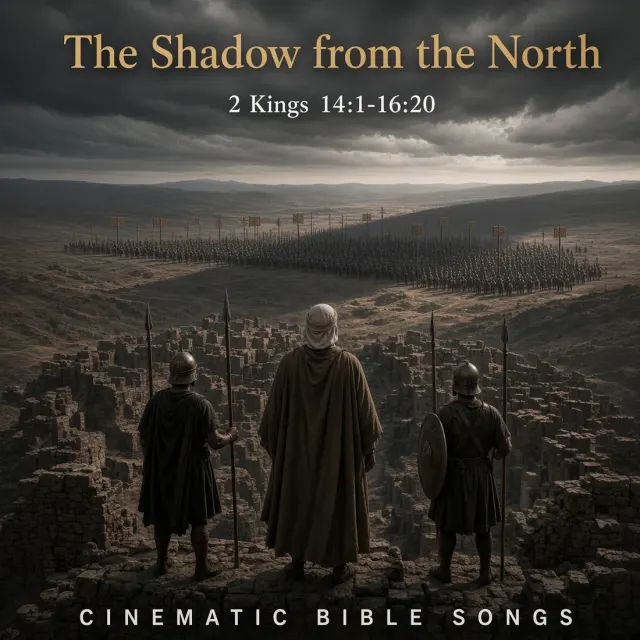
Amaziah's punishment of his father's killers could easily have become a dynastic purge, especially after chapters filled with entire households being eliminated. Instead The Book of 2 Kings stops to state what he does not do. The children of the assassins are spared because the law of Moses says parents and children are not to be executed for one another's crimes. The Book of 2 Kings even quotes the principle, making the legal reason explicit rather than leaving the restraint to personality or political calculation. Amaziah therefore consolidates his throne and punishes murder without treating family connection as transferable guilt. His broader evaluation remains qualified. He does what is right, though not like David, and the high places continue. The legal limit is genuine without turning his whole reign into an ideal. Then comes victory over Edom and the capture of Selah. That success sets up the chapter's next question. A king who has just shown restraint in punishment will soon have to decide whether he can show similar restraint after military triumph.
Deep dive
After the repeated destruction of royal households, the decision not to execute the assassins' children is a striking restraint. The book does not leave the reason to conjecture. It explicitly names the law of Moses and the rule in Deuteronomy 24:16 that responsibility for a capital offense is not transferred between parents and children. Amaziah establishes his position and punishes the killers, but consolidating the throne does not become permission to eliminate everyone related to them.
The assessment of the king is positive without placing him alongside David in every respect. He follows his father's example, and the high places remain. Those qualifications keep the legal restraint from becoming a declaration that the entire reign is exemplary. The victory over Edom then supplies the immediate setting for his next decision. Taking Selah and giving it a new name display the successful exercise of royal force. The chapter will now test whether that success remains bounded, as the punishment of the assassins was, or becomes a reason to attempt more than the kingdom can sustain.
Words to trace: children, death, father, Joash, king, slew
Verse-by-verse path
- 2 Kings 14:1
For a few years two kings named Joash rule at once, one in Samaria and one in Jerusalem, and the King James spells the northern one both Joash and Jehoash within this single chapter. Amaziah's own name means the LORD is strong, a claim his reign will test.
- 2 Kings 14:2
The Judean opening always names the king's mother, Jehoaddan here, while the northern notices never name one. In Judah the queen mother held a recognised place at court, which is why the record keeps her name beside the years.
- 2 Kings 14:3
David is the yardstick, and Amaziah is measured against his own father instead. That is faint praise: Joash did right while Jehoiada the priest guided him (12:2), and his reign ended in a palace murder.
- 2 Kings 14:4
“Howbeit” is the same reservation made of Joash in 12:3, word for word. The high places were local hilltop altars, often used for the LORD rather than for idols, and no king removes them until Hezekiah (18:4).
- 2 Kings 14:5
He waits until the kingdom is “confirmed in his hand” before acting. The killers were court officials, Jozachar and Jehozabad (12:21), men with standing, and a new king of twenty five could not move against them until his own position was secure.
- 2 Kings 14:6
The book names a written “book of the law of Moses” that a king could consult and obey, generations before Josiah's men find such a book in the temple (22:8). The closing clause, every man for his own sin, is the principle Ezekiel 18:20 later builds a whole chapter on.
- 2 Kings 14:7
The Valley of Salt, south of the Dead Sea, is where David's army had already beaten Edom (2 Samuel 8:13). Selah simply means rock. Renaming a captured stronghold declared ownership, and “unto this day” shows the name still stood when the record was written.
2 Kings 14:1-7
King James Version1In the second year of Joash son of Jehoahaz king of Israel reigned Amaziah the son of Joash king of Judah.
2He was twenty and five years old when he began to reign, and reigned twenty and nine years in Jerusalem. And his mother’s name was Jehoaddan of Jerusalem.
3And he did that which was right in the sight of the LORD, yet not like David his father: he did according to all things as Joash his father did.
4Howbeit the high places were not taken away: as yet the people did sacrifice and burnt incense on the high places.
5And it came to pass, as soon as the kingdom was confirmed in his hand, that he slew his servants which had slain the king his father.
6But the children of the murderers he slew not: according unto that which is written in the book of the law of Moses, wherein the LORD commanded, saying, The fathers shall not be put to death for the children, nor the children be put to death for the fathers; but every man shall be put to death for his own sin.
7He slew of Edom in the valley of salt ten thousand, and took Selah by war, and called the name of it Joktheel unto this day.
2 Kings 14:8-14
The Thistle Sends a Marriage Proposal
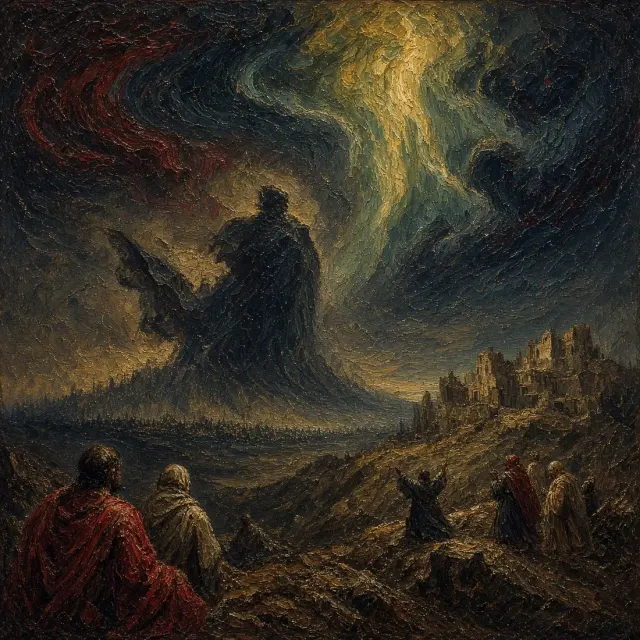
Joash of Israel answers Amaziah's challenge with one of the Book of 2 Kings' most efficient pieces of royal mockery. A thistle in Lebanon proposes a marriage alliance with a cedar, but a wild beast steps on the thistle before the cedar needs to do anything. The image is intentionally insulting, and Joash immediately explains the insult: Amaziah has beaten Edom, his heart has been lifted up, and he should enjoy the victory at home rather than drag Judah into needless danger. The fable is Joash's rhetoric, not an objective scale drawing of the two kingdoms, but the battle gives his warning hard consequences. Amaziah refuses to listen. Judah flees at Bethshemesh, the king is captured, and Joash reaches Jerusalem. Four hundred cubits of wall are broken down. Temple and palace treasures leave the city, and hostages go with them. One ruler's desire to "look one another in the face" has opened his capital to an enemy. The previous victory over Edom now looks less like preparation for greatness than the event that made overconfidence possible.
Deep dive
Joash's fable punctures Amaziah's challenge before the armies meet. A thistle proposes a marriage alliance with a cedar, but a passing animal tramples the thistle before the cedar even needs to answer. The proposed family arrangement is grand; the thistle's encounter with a hoof is considerably less so. This is the Israelite king's deliberately belittling picture of the balance between them, not a neutral description of both kingdoms.
Joash then makes the accusation explicit: victory over Edom has lifted Amaziah's heart. The coming battle supplies the concrete consequence of ignoring the warning. Judah's troops flee, Amaziah is captured, and the northern king breaks down four hundred cubits of Jerusalem's wall. A challenge issued by one king becomes exposure for his capital and loss for his people.
The temple and palace treasures are taken, along with hostages. The attacker this time is Israel's king, not Hazael. The two kingdoms share an ancestral history and the name of the LORD, but that relationship does not prevent the northern army from stripping the southern sanctuary. Amaziah sought a confrontation beyond Edom; the result reaches inside Jerusalem.
Words to trace: king, Judah, Amaziah, Israel, Jehoash, Lebanon
Verse-by-verse path
- 2 Kings 14:8
“Look one another in the face” sounds like an invitation to talk; it is a challenge to battle. The Second Book of Chronicles supplies a motive Kings leaves out: hired Israelite troops, sent home unused, had plundered Judah's towns on the way (2 Chronicles 25:13).
- 2 Kings 14:9
The only other plant fable in the Old Testament is Jotham's in Judges 9, also aimed at a man with inflated ambitions. “In Lebanon” is said of all three characters, so the cedar, the thistle and the beast share one landscape, and only one of them is trampled.
- 2 Kings 14:10
In 1611 “meddle” meant to engage in fighting, not merely to interfere. “Glory of this” means boast of it all you like. The final words widen the risk from Amaziah to “Judah with thee”, which is exactly who pays.
- 2 Kings 14:11
“Which belongeth to Judah” is there because another Beth-shemesh lay in Naphtali (Joshua 19:38). This one guarded a valley west of Jerusalem, so the northern army fought on Judah's own soil. It was the town where the ark came back from the Philistines (1 Samuel 6).
- 2 Kings 14:12
“Every man to their tents” is the old phrase for an army dissolving, kept from the days when Israel lived in tents. It is the same cry that broke the kingdom in two under Rehoboam (1 Kings 12:16).
- 2 Kings 14:13
At the moment of capture the full pedigree is spelled out: son of Jehoash, son of Ahaziah. A king of David's line stands in the hands of Jehu's grandson. The gate of Ephraim to the corner gate was the city's northern wall, some two hundred yards of it.
- 2 Kings 14:14
Joash of Judah had already emptied these treasuries once to buy off Hazael (12:18), so what was taken may have been modest. The word for hostages, literally sons of pledges, occurs only here and in the parallel at 2 Chronicles 25:24.
2 Kings 14:8-14
King James Version8Then Amaziah sent messengers to Jehoash, the son of Jehoahaz son of Jehu, king of Israel, saying, Come, let us look one another in the face.
9And Jehoash the king of Israel sent to Amaziah king of Judah, saying, The thistle that was in Lebanon sent to the cedar that was in Lebanon, saying, Give thy daughter to my son to wife: and there passed by a wild beast that was in Lebanon, and trode down the thistle.
10Thou hast indeed smitten Edom, and thine heart hath lifted thee up: glory of this, and tarry at home: for why shouldest thou meddle to thy hurt, that thou shouldest fall, even thou, and Judah with thee?
11But Amaziah would not hear. Therefore Jehoash king of Israel went up; and he and Amaziah king of Judah looked one another in the face at Beth-shemesh, which belongeth to Judah.
12And Judah was put to the worse before Israel; and they fled every man to their tents.
13And Jehoash king of Israel took Amaziah king of Judah, the son of Jehoash the son of Ahaziah, at Beth-shemesh, and came to Jerusalem, and brake down the wall of Jerusalem from the gate of Ephraim unto the corner gate, four hundred cubits.
14And he took all the gold and silver, and all the vessels that were found in the house of the LORD, and in the treasures of the king’s house, and hostages, and returned to Samaria.
2 Kings 14:15-22
Surviving the Rival, Not the Conspiracy
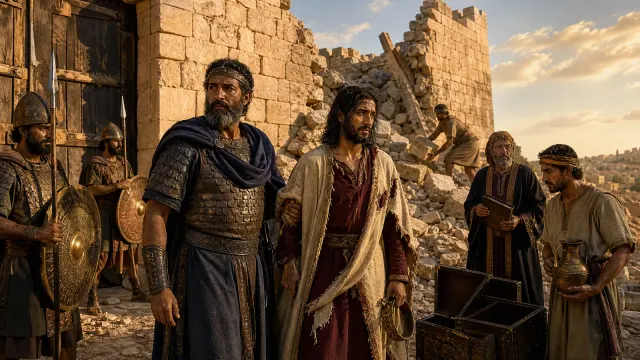
Amaziah's defeat does not end his reign on the battlefield. That distinction matters because royal humiliation and dynastic extinction are not the same event. Joash of Israel dies first, and Amaziah continues fifteen more years. The Book of 2 Kings leaves both facts visible: Judah suffered a serious defeat, and its king still remained on the throne long afterward. The eventual end comes through conspiracy rather than foreign conquest. Amaziah flees Jerusalem to Lachish, but the conspirators pursue and kill him there. His body is carried back on horses and buried in Jerusalem with his fathers. The passage does not disclose motives for the conspiracy, so the silence should not be filled with imagined speeches or political manifestos. Then the people place sixteen-year-old Azariah on the throne. His rebuilding of Elath gives the closing verses a modest note of recovery after both military loss and assassination. Judah's record does not freeze at Bethshemesh. The kingdom moves through defeat, additional years, conspiracy, burial, a young successor, and another act of territorial restoration.
Deep dive
The paired death notices distinguish military defeat from the immediate end of a reign. Amaziah survives Joash by fifteen years. His capture has not meant that the northern king simply annexes Judah or abolishes its dynasty. Yet continued years on the throne do not erase the defeat already described. The book preserves both the humiliation and the duration of the surviving reign.
When the conspiracy comes, Amaziah escapes Jerusalem but is pursued to Lachish and killed there. His body is brought back on horses for burial. The account supplies movement and outcome, not the conspirators' speeches or an explanation of their motives. The people then make Azariah king at sixteen. His recovery and rebuilding of Elath extend the account beyond the previous king's loss, although the notice remains brief. The kingdom is neither frozen permanently at the defeat of Beth-shemesh nor released from the pattern of royal vulnerability. It continues through burial, a new accession, and a limited recovery at its southern edge.
Words to trace: Judah, king, Amaziah, fathers, Israel, Jehoash
Verse-by-verse path
- 2 Kings 14:15
This closing notice for Jehoash has already been given, nearly word for word, at 13:12. It is repeated so that his death can be placed after the battle with Amaziah and his son Jeroboam brought onto the stage.
- 2 Kings 14:16
The kings of Jehu's house lie in the royal tombs of Samaria, the city Omri founded, alongside the dynasty Jehu wiped out. In 13:13 the same succession was worded “Jeroboam sat upon his throne”; here it takes the standard form.
- 2 Kings 14:17
Judah's defeated king outlives his conqueror by fifteen years. The figure fits the chronology: Jeroboam began in Amaziah's fifteenth year (verse 23), and Amaziah reigned twenty nine years in all.
- 2 Kings 14:18
The book of the chronicles of the kings of Judah is a lost court record, cited as a source, not the biblical Books of Chronicles, which were written centuries later and draw on Kings.
- 2 Kings 14:19
Lachish was Judah's second city, a fortress in the lowland about thirty miles southwest of Jerusalem. Amaziah is the second king running to be killed by his own people; his father Joash died the same way (12:20).
- 2 Kings 14:20
Whoever killed him did not deny him a royal grave. The body came home on horses, likely on a litter between them, and went into the tombs of the city of David like any king who died in his bed.
- 2 Kings 14:21
“All the people of Judah” act again, as they did in crowning the boy Joash (11:14) and as they will for Josiah (21:24). Azariah is the same king called Uzziah elsewhere (15:13; Isaiah 6:1), a sixteen year old taking a throne twice stained with blood.
- 2 Kings 14:22
Elath sat on the Gulf of Aqaba, Judah's gateway to Red Sea trade, near Solomon's port of Ezion-geber (1 Kings 9:26). Recovering it follows from Amaziah's Edom campaign. Judah will lose it again under Ahaz (16:6).
2 Kings 14:15-22
King James Version15Now the rest of the acts of Jehoash which he did, and his might, and how he fought with Amaziah king of Judah, are they not written in the book of the chronicles of the kings of Israel?
16And Jehoash slept with his fathers, and was buried in Samaria with the kings of Israel; and Jeroboam his son reigned in his stead.
17And Amaziah the son of Joash king of Judah lived after the death of Jehoash son of Jehoahaz king of Israel fifteen years.
18And the rest of the acts of Amaziah, are they not written in the book of the chronicles of the kings of Judah?
19Now they made a conspiracy against him in Jerusalem: and he fled to Lachish; but they sent after him to Lachish, and slew him there.
20And they brought him on horses: and he was buried at Jerusalem with his fathers in the city of David.
21And all the people of Judah took Azariah, which was sixteen years old, and made him king instead of his father Amaziah.
22He built Elath, and restored it to Judah, after that the king slept with his fathers.
2 Kings 14:23-29
The Borders Grow While the Verdict Does Not Improve
This Jeroboam is the son of Joash, not the earlier Jeroboam son of Nebat whose worship system still defines the northern kingdom's negative standard. That shared name lets the evaluation sting twice: a later Jeroboam continues the sins of the first. Yet his reign also restores Israel's border according to a word of the LORD spoken through Jonah son of Amittai. The Book of 2 Kings does not consider those statements contradictory because the reason for territorial recovery is not a sudden moral approval of the king. The LORD sees that Israel's affliction is "very bitter," that no effective helper remains, and that the people's name has not been decreed for erasure. Mercy therefore arrives through a ruler who still receives an unfavorable religious verdict. Jonah's role here is narrowly stated as prophet of the border restoration; the Nineveh account is not imported into the notice. Forty-one years of reign occupy only a few verses because selection, not duration, determines space. The central distinction is exact: Jeroboam can be an instrument of deliverance without becoming the Book of 2 Kings' model of faithful kingship.
Deep dive
This Jeroboam is the son of Joash, not Jeroboam the son of Nebat who established the northern kingdom's enduring worship pattern. The name therefore appears on both sides of the assessment: a later Jeroboam continues the sins of the earlier one. His territorial success does not remove that sentence. The Book of 2 Kings can acknowledge restored boundaries while maintaining its criticism of the king through whom they are restored.
Jonah son of Amittai is named as the prophet of the restoration. Here his role is a promise concerning Israel's border; the book does not insert the Nineveh account into this brief notice. The stated reason for deliverance is severe affliction and the absence of another helper. The LORD has not declared Israel's name erased from under heaven, so the kingdom receives help through this king.
Forty-one years of rule receive less space than several individual encounters with Elisha. That difference reflects the book's selection, not a claim that the reign contained little activity. The royal records hold further military details. Here the essential distinction is between a people receiving mercy and a ruler receiving moral approval.
Words to trace: Israel, Jeroboam, LORD, Joash, Hamath, hand
Verse-by-verse path
- 2 Kings 14:23
Forty one years makes Jeroboam son of Joash the longest reigning king of the northern kingdom. The whole reign will receive seven verses.
- 2 Kings 14:24
Two Jeroboams stand in one verse, the second convicted of following the first. The son of Nebat is by now shorthand for the calf shrines at Bethel and Dan, and no northern king ever breaks with them.
- 2 Kings 14:25
From the entering of Hamath in the north to the sea of the plain, the Dead Sea, are the limits Solomon's feast was drawn from (1 Kings 8:65). Jonah appears nowhere else outside his own book; Gath-hepher was a village of Zebulun (Joshua 19:13), close to later Nazareth.
- 2 Kings 14:26
“None shut up, nor any left” is an old pairing that covers everyone, whether confined or free; Deuteronomy 32:36 uses it of the moment God sees his people's strength gone. The phrase is borrowed from there almost exactly.
- 2 Kings 14:27
To blot out a name from under heaven is Sinai language: God said it of Israel after the golden calf (Deuteronomy 9:14). Here he did not say it, yet. The verb “saved” makes Jeroboam the unnamed “saviour” promised in 13:5.
- 2 Kings 14:28
Damascus had been Aram's capital and Israel's oppressor through the Hazael years, so recovering it is a sharp reversal. “Which belonged to Judah” is obscure in the Hebrew; many read it as lands once held under David (2 Samuel 8:6).
- 2 Kings 14:29
Zachariah is Jehu's great great grandson. The LORD promised Jehu four generations on the throne (10:30): Jehoahaz, Joash, Jeroboam, and now Zachariah, the last. A reader counting knows what the next chapter holds.
2 Kings 14:23-29
King James Version23In the fifteenth year of Amaziah the son of Joash king of Judah Jeroboam the son of Joash king of Israel began to reign in Samaria, and reigned forty and one years.
24And he did that which was evil in the sight of the LORD: he departed not from all the sins of Jeroboam the son of Nebat, who made Israel to sin.
25He restored the coast of Israel from the entering of Hamath unto the sea of the plain, according to the word of the LORD God of Israel, which he spake by the hand of his servant Jonah, the son of Amittai, the prophet, which was of Gath-hepher.
26For the LORD saw the affliction of Israel, that it was very bitter: for there was not any shut up, nor any left, nor any helper for Israel.
27And the LORD said not that he would blot out the name of Israel from under heaven: but he saved them by the hand of Jeroboam the son of Joash.
28Now the rest of the acts of Jeroboam, and all that he did, and his might, how he warred, and how he recovered Damascus, and Hamath, which belonged to Judah, for Israel, are they not written in the book of the chronicles of the kings of Israel?
29And Jeroboam slept with his fathers, even with the kings of Israel; and Zachariah his son reigned in his stead.
Questions to keep in mind while reading
- Track who acts, who speaks, who is affected, and what changes.
- Notice repeated promises, failures, rescues, and consequences.
- Do not assume the account approves every action that is reported.
Text first
Where readers differ
The chapter summary begins with what the passage says and how its parts fit together. It does not assume one denomination has already settled every question. Where a conclusion depends on a tradition, literary theory, or historical reconstruction, that dependence is named openly.
The KJV text is presented first. Interpretive conclusions are labeled, and differences are introduced only when they help a reader understand why serious communities do not always reach the same answer.
Comparative interpretive notes for this chapter are in preparation. Until reviewed notes are ready, this page separates the KJV text from summary and application without claiming that serious readers agree on every question.
Questions beneath the surface
- What account of God, human freedom, responsibility, and the good life emerges from 2 Kings 14?
- Which tension does the chapter refuse to resolve quickly?
- What changes when the chapter is read as part of the whole canon rather than as an isolated moral lesson?
- Where might a sincere reader confuse a familiar tradition with something the text states directly?
Questions for serious personal contemplation
These open-ended questions make room for tension, honest response, prayer, and conclusions that remain accountable to the chapter.
Observe without rushing
What part of 2 Kings 14 makes you stop, feel unsettled, or feel surprised, and why?
Which detail in the passage would be easiest to overlook? How does that detail change your understanding?
Where do you see tension between what happens and this focus: 2 Kings 14 develops its own movement around Israel, king, Judah, Amaziah, Jehoash?
What important question does the passage leave open instead of resolving quickly?
Examine your inner life honestly
Which person, response, fear, or desire in the passage feels most like your own life right now?
What assumption about God, other people, or yourself does this text challenge?
Which part would you rather soften, avoid, or explain away too quickly? What might that reaction reveal?
If this Scripture could ask you one direct question, what do you think it would ask?
Respond with wisdom and courage
What do you need to remember, confess, grieve, thank God for, or trust after reading this passage?
How might another faithful person read this situation differently without ignoring the text?
What obedient response would be costly, uncomfortable, or slow, yet still faithful to Scripture?
What question will you carry into prayer this week, and which verses will you keep in front of you?
Music and video connected to the passage
Related media appears when its Scripture reference overlaps this study. Music and video can illuminate a theme while the biblical text remains the foundation.