
The big picture
Leviticus 25 places agriculture, property, poverty, and service under long rhythms of rest and return. Every seventh year the land keeps a Sabbath, suspending ordinary cultivation while its spontaneous produce remains available for people and animals. Seven such cycles lead to Jubilee, when liberty is proclaimed and ancestral possession returns, which means land prices must reflect the number of harvests remaining rather than an imagined permanent transfer. The chapter answers the obvious food question with a promised sixth-year abundance and then gives the property rules their foundation: "the land is mine." Redemption protects a poor Israelite's threatened holding and freedom, but not every asset or servant follows the same rule. Walled-city houses, village houses, Levitical property, Israelite debt service, and foreign slaves are treated differently. The chapter limits permanent loss within Israel while also explicitly permitting hereditary foreign slavery, a boundary that must remain visible rather than being softened into universal release.
In this chapter
- The Soil Receives a Sabbath Too Leviticus 25:1-7
The Sabbath principle reaches the soil itself.
- The Sale Is Priced by Harvests Remaining Leviticus 25:8-17
Jubilee changes the meaning of a land sale before Jubilee ever arrives.
- The Question of Food Receives an Answer Leviticus 25:18-24
Leviticus does not ignore the most obvious objection to a year without sowing: "What shall we eat the seventh year?" The answer is not that hunger is imaginary or that agriculture has nothing to do with food.
- A Field, a Town House, and a Levitical House Differ Leviticus 25:25-34
A field, a house in a walled city, a village house, and Levitical property do not all behave the same way at Jubilee.
- Release for an Israelite Is Not Universal Abolition Leviticus 25:35-46
The protection of a poor Israelite begins before he is sold into service.
- A Change of Master Does Not Remove the Israelite’s Right of Redemption Leviticus 25:47-55
Economic positions can reverse inside the land.


Scripture beside the summary
Leviticus · King James Version · 55Leviticus 25:1-7
The Soil Receives a Sabbath Too
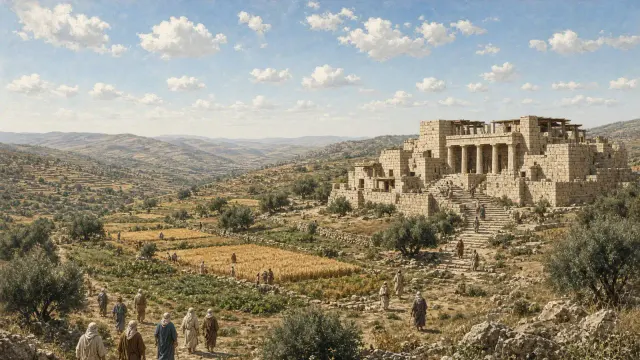
The Sabbath principle reaches the soil itself. Six years of sowing, pruning, and ordinary harvest are followed by a seventh in which the land is said to keep "a sabbath unto the LORD." The point is not that nothing may grow or that the year's produce becomes forbidden. Leviticus suspends normal cultivation and the landholder's regular harvesting regime while still allowing the increase to become food. That food is named for a remarkably wide circle: the owner, male and female servants, hired workers, resident strangers, cattle, and wild animals. The year therefore changes the practical meaning of possession. The field still has an owner, but the owner does not exercise the same productive claim over it during the Sabbath year. Leviticus presents this as sacred time for the land, not as a merely agricultural technique. The coming verses will answer the economic anxiety directly instead of pretending that a year without ordinary farming has no cost.
Deep dive
The command is addressed to Israel, but the land itself is said to keep a Sabbath to the LORD. Rest is no longer only a weekly interruption in human labor; it is written into the longer rhythm of the soil. Six years of sowing and pruning are followed by a year in which those normal productive actions cease.
The ban on ordinary reaping and gathering stands beside permission to eat the year’s produce. The ground is not required to produce nothing, and every plant that grows is not declared untouchable. Rather, normal cultivation and the owner’s regular harvesting regime are suspended, while the increase is made available for food.
The list of beneficiaries reaches beyond the landholder to male and female servants, hired workers, resident strangers, cattle, and wild animals. The year changes the relationship between possession and access. Its stated identity is a Sabbath for the LORD, not merely a technique recommended for increasing a later yield. The chapter will answer the problem of provision directly instead of pretending that a year without ordinary farming raises no practical concern.
Words to trace: land, sabbath, LORD, field, gather, meat
Verse-by-verse path
- Leviticus 25:1
In mount Sinai names the place for the first time since 7:38. Rashi asked what the sabbatical year has to do with Mount Sinai, and his question, mah inyan shemittah etsel har Sinai, became a Hebrew idiom for two things with no obvious connection. His answer: every law, general and detailed, came from Sinai.
- Leviticus 25:2
The land is the subject of the verb: the land shall keep a sabbath, shavtah. The land rests as a person rests. 2 Chronicles 36:21 reads the seventy years of exile as the land at last enjoying the sabbaths it had been denied.
- Leviticus 25:3
Six years to sow and to prune: the pruning verb is zamar, which has a homonym meaning to sing. Six years of full work set up the seventh, just as six days set up the sabbath in 23:3.
- Leviticus 25:4
A sabbath for the LORD: the year belongs to God, not to the farmer. The older law in Exodus 23:10–11 gave the fallow year a different reason, that the poor of thy people may eat, and what they leave the beasts of the field shall eat.
- Leviticus 25:5
That which groweth of its own accord is safiach, grain that springs up from seed dropped in last year’s harvest. The vine undressed is literally thy Nazirite vine, nazir: left unpruned like the uncut hair of a Nazirite (Numbers 6:5).
- Leviticus 25:6
The sabbath of the land shall be meat means the produce of the rest year is food for all. The list is personal: thee, thy servant, thy maid, thy hired servant, thy stranger, each with a possessive, as though the owner is reminded who belongs to his household.
- Leviticus 25:7
Thy cattle are the domestic animals; the beast that are in thy land is chayyah, the wild animals. For one year the fence between the farm and the wild comes down, and both eat from the same fields.
Leviticus 25:1-7
King James Version1And the LORD spake unto Moses in mount Sinai, saying,
2Speak unto the children of Israel, and say unto them, When ye come into the land which I give you, then shall the land keep a sabbath unto the LORD.
3Six years thou shalt sow thy field, and six years thou shalt prune thy vineyard, and gather in the fruit thereof;
4But in the seventh year shall be a sabbath of rest unto the land, a sabbath for the LORD: thou shalt neither sow thy field, nor prune thy vineyard.
5That which groweth of its own accord of thy harvest thou shalt not reap, neither gather the grapes of thy vine undressed: for it is a year of rest unto the land.
6And the sabbath of the land shall be meat for you; for thee, and for thy servant, and for thy maid, and for thy hired servant, and for thy stranger that sojourneth with thee,
7And for thy cattle, and for the beast that are in thy land, shall all the increase thereof be meat.
Leviticus 25:8-17
The Sale Is Priced by Harvests Remaining
Jubilee changes the meaning of a land sale before Jubilee ever arrives. After seven cycles of seven years, the trumpet sounds on the Day of Atonement and the fiftieth year is hallowed as a time of liberty, return to family, and return to possession. But the law reaches backward into every earlier transaction because the price must be based on the number of fruitful years remaining until that return. Many harvests justify a larger price; few harvests require a smaller one. Verse 16 makes the logic explicit: the transaction concerns years of produce, not an unlimited title that can ignore the ancestral holding's return. The prohibition on oppression therefore has arithmetic attached to it. A buyer or seller cannot pretend Jubilee matters only when convenient. Leviticus joins sacred calendar and market value in a concrete way: the number of harvests left before the trumpet sounds determines what the sale is actually worth.

Deep dive
The trumpet sounds on the Day of Atonement, joining the proclamation of return to a day already set apart for cleansing before the LORD. The fiftieth year is hallowed, ordinary agricultural work is restricted, and return to possession and family is declared. Jubilee is given a place in the calendar rather than left as a possible act of generosity by an unusually accommodating purchaser.
Its effect begins before the trumpet sounds. A transaction must account for how many fruitful years remain until the return. Many years mean a larger price; few mean a smaller one. Verse 16 makes the underlying distinction explicit: what is being sold is a number of years of produce. The buyer does not receive an unlimited claim that can be priced as though the ancestral holding will never revert.
The prohibition on oppressing one another belongs directly to that calculation. A person cannot ignore the coming return when charging the price and then appeal to the return only when it becomes convenient. The law binds worship, calendar, and exchange together in a concrete way: the number of remaining harvests affects what the transaction is actually worth.
Words to trace: years, jubile, number, seven, return, sell
Verse-by-verse path
- Leviticus 25:8
Number seven sabbaths of years repeats the counting of 23:15, where seven sabbaths of days led to Pentecost. Here seven sabbaths of years lead to the fiftieth. The Hebrew says the days of the seven sabbaths of years, as if a lifetime were being measured in weeks.
- Leviticus 25:9
Jubile comes from yovel, ram’s horn, the word used for the trumpets of rams’ horns at Jericho (Joshua 6:4). The English spelling was later influenced by Latin jubilare, to shout for joy, a different root. Trumpet here is shofar teru‘ah, the horn of blasting.
- Leviticus 25:10
Proclaim liberty throughout all the land unto all the inhabitants thereof is cast on the Liberty Bell in Philadelphia. Liberty is deror, release, the word of Isaiah 61:1, to proclaim liberty to the captives, which Jesus read in the synagogue at Nazareth (Luke 4:18–19).
- Leviticus 25:11
No sowing or reaping in the fiftieth year means two fallow years together, the forty-ninth being already a sabbath year. Some interpreters therefore count the fiftieth as the first year of the next cycle; others think the jubilee was the forty-ninth itself. The text does not resolve it.
- Leviticus 25:12
Ye shall eat the increase thereof out of the field: straight from the field, not from what has been harvested and stored. The rabbis read it as permission to eat what grows where it grows, but not to gather it into barns as in a normal year.
- Leviticus 25:13
Return, shuv, is the chapter’s central verb, used of people, families and fields. This short verse states the whole jubilee in one sentence, and every rule that follows is an application of it.
- Leviticus 25:14
The Mishnah (Bava Metzia 4:3) built its law of overcharging on this verse: a sale priced more than one sixth above the market value could be undone. Neighbour’s hand pictures the transaction as a hand-to-hand exchange between people who know each other.
- Leviticus 25:15
The count runs forward from the last jubilee. The buyer is buying the number of years of the fruits, the harvests, so the price is set by what the land will yield until it returns.
- Leviticus 25:16
Years of the fruits are harvest years, so the rabbis deducted the sabbath years, which yield no crop, from the count. What is sold is literally a number of harvests, mispar tevu’oth. The sale is in effect a lease measured in crops.
- Leviticus 25:17
Ye shall not oppress one another is said a second time, after verse 14. The Talmud (Bava Metzia 58b) read the first as wronging by money and this one as wronging by words, since it adds thou shalt fear thy God: a hurt only God can see.
Leviticus 25:8-17
King James Version8And thou shalt number seven sabbaths of years unto thee, seven times seven years; and the space of the seven sabbaths of years shall be unto thee forty and nine years.
9Then shalt thou cause the trumpet of the jubile to sound on the tenth day of the seventh month, in the day of atonement shall ye make the trumpet sound throughout all your land.
10And ye shall hallow the fiftieth year, and proclaim liberty throughout all the land unto all the inhabitants thereof: it shall be a jubile unto you; and ye shall return every man unto his possession, and ye shall return every man unto his family.
11A jubile shall that fiftieth year be unto you: ye shall not sow, neither reap that which groweth of itself in it, nor gather the grapes in it of thy vine undressed.
12For it is the jubile; it shall be holy unto you: ye shall eat the increase thereof out of the field.
13In the year of this jubile ye shall return every man unto his possession.
14And if thou sell ought unto thy neighbour, or buyest ought of thy neighbour’s hand, ye shall not oppress one another:
15According to the number of years after the jubile thou shalt buy of thy neighbour, and according unto the number of years of the fruits he shall sell unto thee:
16According to the multitude of years thou shalt increase the price thereof, and according to the fewness of years thou shalt diminish the price of it: for according to the number of the years of the fruits doth he sell unto thee.
17Ye shall not therefore oppress one another; but thou shalt fear thy God: for I am the LORD your God.
Leviticus 25:18-24
The Question of Food Receives an Answer
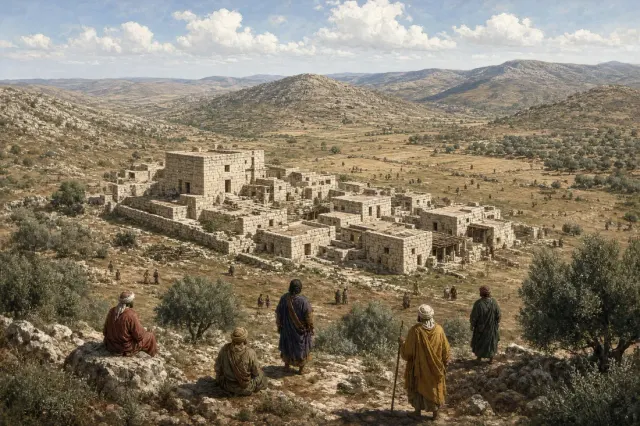
Leviticus does not ignore the most obvious objection to a year without sowing: "What shall we eat the seventh year?" The answer is not that hunger is imaginary or that agriculture has nothing to do with food. The LORD promises a sixth-year yield sufficient to carry the people through the uncultivated period until later crops are available. The provision belongs specifically to the covenant arrangement being described, not to a general claim that anyone can stop farming and expect the same result. Then the chapter states the principle beneath the property rules: "the land is mine." Israel possesses the land while remaining "strangers and sojourners" with its ultimate owner. That declaration places a ceiling on what a human sale can mean. Use, produce, and possession can change hands for a time, but the prior claim of the LORD prevents ancestral land from becoming permanently alienated. Redemption is not an optional kindness added afterward; it grows out of that ownership structure.
Deep dive
The chapter anticipates the obvious difficulty. A command not to sow or gather in the normal way leaves a household facing the question of what it will eat. The response is a promised blessing upon the sixth year, producing enough for three years, with old stores sustaining the people until the later crop comes in. The law does not answer the concern by claiming that hunger is imaginary or that planting has no relation to food.
The promise is embedded in the call to keep the statutes and dwell securely in the land. It belongs to the covenantal arrangement being described, not to an unrestricted prediction about every person who happens to stop farming.
Verse 23 then states the foundation of the property rules: the land is the LORD’s, and Israel lives as strangers and sojourners with him. The people receiving possession are themselves placed in a dependent relationship to its ultimate owner. That declaration explains why redemption must remain available. Human transactions can transfer use and income, but they do not erase the prior claim that limits what anyone is able to sell forever.
Words to trace: land, year, fruit, dwell, safety, blessing
Verse-by-verse path
- Leviticus 25:18
In safety is lavetach, securely, without fear. The promise is spelled out in 26:5, ye shall dwell in your land safely. Doing the statutes and keeping the judgments is tied to living in the land without threat.
- Leviticus 25:19
The land shall yield her fruit: the land is feminine, and in Hebrew she gives her fruit as a mother gives birth. Eat your fill is lasova‘, to satisfaction. 26:4 repeats the promise, the land shall yield her increase.
- Leviticus 25:20
What shall we eat the seventh year? The law puts the objection in Israel’s own mouth. The manna followed the same pattern: a double portion on the sixth day so that no one gathered on the seventh (Exodus 16:22, 29).
- Leviticus 25:21
I will command my blessing: the blessing is ordered like a servant. Psalm 133:3 uses the same phrase, there the LORD commanded the blessing. Three years means the sixth year’s crop must feed the sixth, seventh and eighth until the next harvest comes in.
- Leviticus 25:22
Sowing in the eighth year means harvest only in the ninth. The farming year began in autumn with sowing, and the grain was reaped the next spring, so the sixth year’s crop must stretch across the gap.
- Leviticus 25:23
For ever is litsmituth, in perpetuity, beyond recall, a word found only here and in verse 30. Strangers and sojourners is what Abraham called himself when he bought a grave in Canaan (Genesis 23:4), and what David confessed before God (1 Chronicles 29:15; Psalm 39:12).
- Leviticus 25:24
Redemption is ge’ullah, the right to buy back. The one who does it is the go’el, the kinsman redeemer. Every sale of land in Israel carries this right with it: the land of your possession cannot be sold without it.
Leviticus 25:18-24
King James Version18Wherefore ye shall do my statutes, and keep my judgments, and do them; and ye shall dwell in the land in safety.
19And the land shall yield her fruit, and ye shall eat your fill, and dwell therein in safety.
20And if ye shall say, What shall we eat the seventh year? behold, we shall not sow, nor gather in our increase:
21Then I will command my blessing upon you in the sixth year, and it shall bring forth fruit for three years.
22And ye shall sow the eighth year, and eat yet of old fruit until the ninth year; until her fruits come in ye shall eat of the old store.
23The land shall not be sold for ever: for the land is mine; for ye are strangers and sojourners with me.
24And in all the land of your possession ye shall grant a redemption for the land.
Leviticus 25:25-34
A Field, a Town House, and a Levitical House Differ
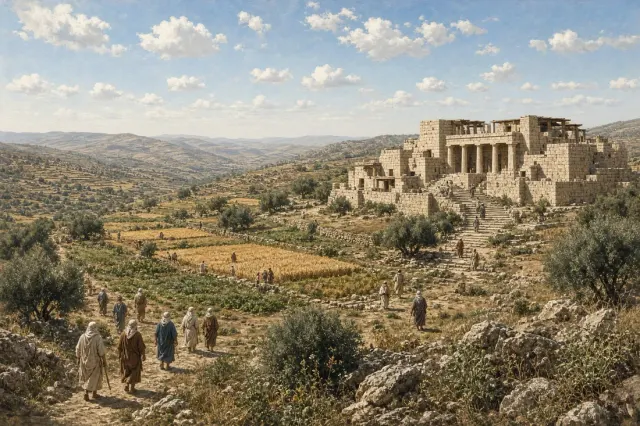
A field, a house in a walled city, a village house, and Levitical property do not all behave the same way at Jubilee. An ancestral field sold because of poverty may be redeemed by kin or later by the original holder, and if no redemption occurs it returns in the Jubilee year. A house inside a walled city follows a much shorter clock: after one year without redemption, it becomes the buyer's enduring possession and does not go out at Jubilee. Village houses are treated more like fields, while Levitical houses receive continuing redemption protection and their pastureland cannot be permanently sold. These differences prevent the chapter from becoming a slogan about every asset being universally reset. The law distinguishes property by type and by its role in sustaining a community. A wall can therefore have legal significance, and Levitical holdings receive their own protection because they function as that tribe's possession among Israel.
Deep dive
The first provision responds to poverty rather than treating the sale as a neutral change of preference. A near relative may redeem the land, or the original holder may do so after recovering the means. The price accounts for the years already used by the purchaser. Even when no redemption becomes possible, the Jubilee supplies a stated endpoint to the loss of possession.
A dwelling in a walled city follows another rule. It may be redeemed within a year, but afterward it becomes the purchaser’s enduring property and does not revert at Jubilee. An unwalled village house is instead counted with the countryside and follows the field’s pattern. A wall therefore matters legally, not merely architecturally.
The Levitical towns are a further exception. Their houses remain redeemable and are subject to Jubilee return because those holdings are the Levites’ possession among Israel. The surrounding pastureland may not be sold. The chapter is not announcing that every asset changes hands in one universal reset. It distinguishes the kinds of property and the communities whose ongoing support depends upon them, then assigns each its own limits.
Words to trace: possession, redeem, sold, jubile, year, cities
Verse-by-verse path
- Leviticus 25:25
Waxen poor is yamukh, to sink low. When Jeremiah’s cousin came to sell his field in Anathoth, he said, the right of redemption is thine; buy it (Jeremiah 32:7–8). Boaz acts as this kind of redeemer for Naomi’s field in Ruth 4:4–6.
- Leviticus 25:26
Where no kinsman can step in, the seller himself may redeem it if he becomes able. The Hebrew for himself be able is his hand reaches and he finds enough, as if the man has recovered his feet since the sale.
- Leviticus 25:27
Restore the overplus is ha‘odef, the surplus. The seller pays back only the value of the years still left, having already given the buyer the harvests he used. The calculation is fair to both sides.
- Leviticus 25:28
It shall go out uses yatsa’, the verb for a Hebrew slave going out free in the seventh year (Exodus 21:2) and for Israel going out of Egypt. The field is released as a person is released.
- Leviticus 25:29
Within a whole year is literally days shall be his redemption; yamim, days, often means a full year, as in 1 Samuel 1:3, where Elkanah went up yearly. A walled city was a place of trade and craft, not farmland.
- Leviticus 25:30
Established for ever uses litsmituth, the word of verse 23, but here the permanent sale is allowed. The Mishnah (Arakhin 9:6) lists which cities were walled in Joshua’s day, since only those counted under this rule.
- Leviticus 25:31
Villages is chatserim, open settlements, the same word as the courts of the tabernacle, meaning enclosures. Without walls, they belong to the countryside and its fields, and they return at the jubilee like farmland.
- Leviticus 25:32
The Levites received no tribal territory, only forty-eight cities with their pastures (Numbers 35:7). May redeem at any time is literally an everlasting redemption, ge’ullath ‘olam. Their houses are their only land, so the walled-city rule does not apply to them.
- Leviticus 25:33
The Hebrew is difficult: it reads if one of the Levites redeems, and the King James’s if a man purchase of the Levites smooths it. The Latin Vulgate adds a negative. The sense is clear enough: Levitical houses always come back to the Levites at the jubilee.
- Leviticus 25:34
Suburbs in 1611 meant the land around a town, not residential streets. The Hebrew migrash, from garash, to drive out, means pasture where the cattle were driven. Numbers 35:4–5 measures it at a thousand cubits from the walls.
Leviticus 25:25-34
King James Version25If thy brother be waxen poor, and hath sold away some of his possession, and if any of his kin come to redeem it, then shall he redeem that which his brother sold.
26And if the man have none to redeem it, and himself be able to redeem it;
27Then let him count the years of the sale thereof, and restore the overplus unto the man to whom he sold it; that he may return unto his possession.
28But if he be not able to restore it to him, then that which is sold shall remain in the hand of him that hath bought it until the year of jubile: and in the jubile it shall go out, and he shall return unto his possession.
29And if a man sell a dwelling house in a walled city, then he may redeem it within a whole year after it is sold; within a full year may he redeem it.
30And if it be not redeemed within the space of a full year, then the house that is in the walled city shall be established for ever to him that bought it throughout his generations: it shall not go out in the jubile.
31But the houses of the villages which have no wall round about them shall be counted as the fields of the country: they may be redeemed, and they shall go out in the jubile.
32Notwithstanding the cities of the Levites, and the houses of the cities of their possession, may the Levites redeem at any time.
33And if a man purchase of the Levites, then the house that was sold, and the city of his possession, shall go out in the year of jubile: for the houses of the cities of the Levites are their possession among the children of Israel.
34But the field of the suburbs of their cities may not be sold; for it is their perpetual possession.
Leviticus 25:35-46
Release for an Israelite Is Not Universal Abolition
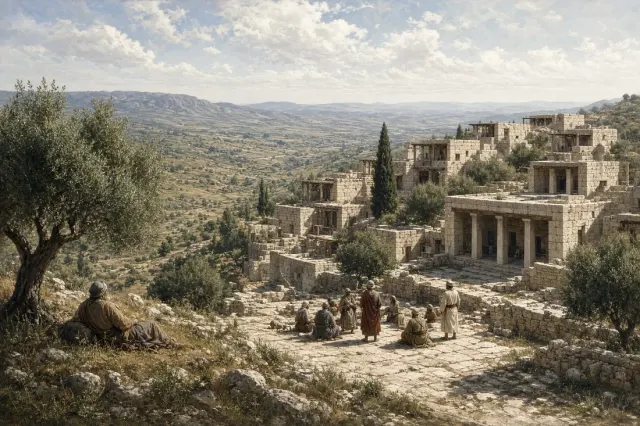
The protection of a poor Israelite begins before he is sold into service. Leviticus forbids turning emergency support into profit through interest or increase and states the aim plainly: the struggling person is to live alongside the community. If an Israelite nevertheless enters service through poverty, he must not be treated as a bondslave, must not be ruled with rigor, and leaves at Jubilee with his children to return to family and ancestral possession. The stated reason is the LORD's prior claim on Israelites brought out of Egypt. Then the text draws a line that cannot be erased. Foreign men and women may be purchased as slaves, including from resident foreign families, and may be inherited by the owner's children as a continuing possession. They do not receive the same Jubilee release in these verses. Leviticus therefore limits the permanent enslavement of fellow Israelites while explicitly permitting hereditary slavery for another group. The protection is real, and so is its unequal boundary.
Deep dive
The sequence begins before sale into service. A failing neighbor is to be supported so that he can continue living among the people. The KJV expressly includes the stranger or sojourner in its rendering of the support clause. Money and food must not be lent to the needy person for increase. The aim stated twice is that the person may live alongside the community, rather than having the emergency become a means of extracting further gain.
If an Israelite is nevertheless sold into service, he must not be treated as a bondslave. His standing is compared with a hired worker or sojourner, and at Jubilee he leaves with his children and returns to his family possession. Ruthless rule is forbidden. The stated reason is the LORD’s prior claim upon the Israelites whom he brought out of Egypt.
Verses 44–46 then make an explicit distinction. Foreign men and women may be bought as slaves, including people from resident foreign families, and may be inherited by the owner’s children as a continuing possession. The text does not give them the same Jubilee release it gives the Israelite. Calling every form of service here merely voluntary employment would conceal that difference. The chapter limits the permanent loss of Israelite freedom while permitting hereditary slavery for another group. Both the protection and its unequal boundary belong to the law as written. The broad proclamation of liberty in verse 10 stands beside a narrower set of release rights in these instructions.
Words to trace: bondmen, children, land, brother, possession, bondmaids
Verse-by-verse path
- Leviticus 25:35
Fallen in decay is literally his hand falters, matah yado. Relieve him is hechezakta bo, take hold of him, strengthen him. Maimonides placed the highest form of charity here: to strengthen a man before he falls, with a loan or work, so he need not ask.
- Leviticus 25:36
Usury is neshekh, from nashakh, to bite, as a snake bites; increase is tarbith, growth. Psalm 15:5 counts among the righteous him that putteth not out his money to usury, and Ezekiel 18:8 lists it among the marks of a just man.
- Leviticus 25:37
Money lent for usury and victuals lent for increase: the two words of verse 36 are matched to two kinds of loan, coin and food. Lending grain in winter to be repaid with extra at harvest is forbidden. Deuteronomy 23:20 allows interest from a foreigner.
- Leviticus 25:38
To give you the land of Canaan, and to be your God combines two promises first made to Abraham together (Genesis 17:8). The ban on interest is signed with the Exodus: a God who freed a nation of debtors from Egypt forbids them to exploit each other.
- Leviticus 25:39
Bondservant is literally the service of a slave, ‘avodath ‘eved. The man may be sold to a fellow Israelite through poverty, but the work must not be slave’s work. Exodus 21:2 releases a Hebrew servant after six years, and how the two laws fit together is long debated.
- Leviticus 25:40
As an hired servant, and as a sojourner, sakhir and toshav, the same pair of 22:10. He is to be treated as a worker living with the family, not as property. Rabbinic law made the six-year rule and the jubilee rule work together by releasing him at whichever came first.
- Leviticus 25:41
He and his children go out together, back to his family and to the possession of his fathers. Naboth refused the king’s offer in the same words: the LORD forbid it me, that I should give the inheritance of my fathers unto thee (1 Kings 21:3).
- Leviticus 25:42
My servants is ‘avadai, the same word as servant of the LORD, the title of Moses. Sold as bondmen is literally a slave’s sale, mimkereth ‘aved: the auction of a slave. An Israelite already has a master and cannot be sold like property.
- Leviticus 25:43
With rigour is befarekh, the word of Exodus 1:13–14, where the Egyptians made the children of Israel to serve with rigour. The Hebrew master must not repeat on his brother what Egypt did to the nation.
- Leviticus 25:44
The Hebrew word ‘eved serves for Israelite and foreign servant alike; what differs is origin, not vocabulary. The heathen round about are goyim, the surrounding nations. Which thou shalt have assumes the institution already exists and regulates it.
- Leviticus 25:45
The children of the strangers are toshavim, foreign residents. Which they begat in your land means that birth inside Israel’s land does not change the family’s foreign status under this law. They shall be your possession uses ’achuzzah, the word for landholding.
- Leviticus 25:46
Take them as an inheritance uses the verb for inheriting land, hithnachaltem, so these servants pass down like property. The verse then turns on its final clause, but over your brethren the children of Israel, restating the limit of verse 43.
Leviticus 25:35-46
King James Version35And if thy brother be waxen poor, and fallen in decay with thee; then thou shalt relieve him: yea, though he be a stranger, or a sojourner; that he may live with thee.
36Take thou no usury of him, or increase: but fear thy God; that thy brother may live with thee.
37Thou shalt not give him thy money upon usury, nor lend him thy victuals for increase.
38I am the LORD your God, which brought you forth out of the land of Egypt, to give you the land of Canaan, and to be your God.
39And if thy brother that dwelleth by thee be waxen poor, and be sold unto thee; thou shalt not compel him to serve as a bondservant:
40But as an hired servant, and as a sojourner, he shall be with thee, and shall serve thee unto the year of jubile:
41And then shall he depart from thee, both he and his children with him, and shall return unto his own family, and unto the possession of his fathers shall he return.
42For they are my servants, which I brought forth out of the land of Egypt: they shall not be sold as bondmen.
43Thou shalt not rule over him with rigour; but shalt fear thy God.
44Both thy bondmen, and thy bondmaids, which thou shalt have, shall be of the heathen that are round about you; of them shall ye buy bondmen and bondmaids.
45Moreover of the children of the strangers that do sojourn among you, of them shall ye buy, and of their families that are with you, which they begat in your land: and they shall be your possession.
46And ye shall take them as an inheritance for your children after you, to inherit them for a possession; they shall be your bondmen for ever: but over your brethren the children of Israel, ye shall not rule one over another with rigour.
Leviticus 25:47-55
A Change of Master Does Not Remove the Israelite’s Right of Redemption
Economic positions can reverse inside the land. Leviticus imagines a resident foreigner becoming wealthy while an Israelite neighbor becomes poor enough to sell himself into that household. The Israelite's new master does not erase the right of redemption. Brothers, uncles, cousins, other near kin, or the man himself may buy out the remaining service, and the price is calculated according to the years left until Jubilee at the rate of hired labor. The arithmetic recognizes the purchaser's remaining claim while preventing that claim from becoming limitless. The surrounding community also has a role, because the foreign master is forbidden to rule with rigor "in thy sight." If no one redeems the man, Jubilee still ends the arrangement and releases him and his children. The closing reason repeats the chapter's deepest claim: the children of Israel are already the LORD's servants because he brought them out of Egypt, so another master's ownership cannot become absolute.
Deep dive
The relative economic positions can reverse: a stranger becomes wealthy while an Israelite becomes poor and sells himself into that household. The law does not assume that every resident foreigner is dependent or every Israelite prosperous. It follows the impoverished Israelite into this different arrangement and preserves a right of redemption.
The possible redeemers are named through the family, and self-redemption remains possible if the man later acquires the means. The price is calculated according to the years remaining until Jubilee and the rate of hired service. That arithmetic protects the purchaser’s stated remaining interest while preventing an unlimited price from erasing the possibility of release. Ruthless treatment is also prohibited "in thy sight", making the surrounding community relevant to how the man is treated.
If no redemption takes place, he and his children still leave at Jubilee. The closing declaration repeats that the Israelites are the LORD’s servants because he brought them from Egypt. Their sale cannot permanently transfer away that prior belonging. The chapter has prescribed how this arrangement is to function; it has not yet narrated an occasion on which a Jubilee was actually observed.
Words to trace: years, redeem, year, jubile, price, bought
Verse-by-verse path
- Leviticus 25:47
The stock of the stranger’s family is ‘eqer, an offshoot or descendant, a word found only here. The case imagines the reverse of verse 39: a foreign resident grows rich, and an Israelite sells himself into his household.
- Leviticus 25:48
One of his brethren may redeem him: the duty of go’el passes to kin. The same word becomes a title of God, thy redeemer, the Holy One of Israel (Isaiah 41:14), borrowed from exactly this household duty.
- Leviticus 25:49
Uncle, then cousin, then any near kinsman: the list has an order. In Ruth 3:12 Boaz says, there is a kinsman nearer than I, because the right passed by degrees. Himself last: the man may buy his own freedom if he prospers.
- Leviticus 25:50
He shall reckon with him that bought him: the account is settled between the buyer and the one bought. The rate is that of an hired servant, so the man’s remaining years are valued as wages, not as the price of a possession.
- Leviticus 25:51
The Talmud (Kiddushin 20a) reasoned that the calculation favours the servant: if his value has risen since the sale, he still redeems at the old price; if it has fallen, he pays the lower. Many years behind means many still to run.
- Leviticus 25:52
Count with him uses chishev, the verb that in 17:4 imputed blood to the man who killed an animal outside the tabernacle. Here the same verb does the arithmetic of freedom: few years left, a small price.
- Leviticus 25:53
A yearly hired servant is sekhir shanah, a labourer hired by the year. Isaiah 16:14 uses the term for an exact span, within three years, as the years of an hireling, a term that would not be allowed to run a day over.
- Leviticus 25:54
In these years may be read by these means, bi’elleh, that is, if none of the forms of redemption just described is used. Even then the jubilee sets him free, and his children leave with him.
- Leviticus 25:55
For unto me is ki li, the same emphatic opening as verse 23, ki li ha’arets, for the land is mine. The chapter makes two claims of ownership, over the land and over the people, and they are put in exactly the same words.
Leviticus 25:47-55
King James Version47And if a sojourner or stranger wax rich by thee, and thy brother that dwelleth by him wax poor, and sell himself unto the stranger or sojourner by thee, or to the stock of the stranger’s family:
48After that he is sold he may be redeemed again; one of his brethren may redeem him:
49Either his uncle, or his uncle’s son, may redeem him, or any that is nigh of kin unto him of his family may redeem him; or if he be able, he may redeem himself.
50And he shall reckon with him that bought him from the year that he was sold to him unto the year of jubile: and the price of his sale shall be according unto the number of years, according to the time of an hired servant shall it be with him.
51If there be yet many years behind, according unto them he shall give again the price of his redemption out of the money that he was bought for.
52And if there remain but few years unto the year of jubile, then he shall count with him, and according unto his years shall he give him again the price of his redemption.
53And as a yearly hired servant shall he be with him: and the other shall not rule with rigour over him in thy sight.
54And if he be not redeemed in these years, then he shall go out in the year of jubile, both he, and his children with him.
55For unto me the children of Israel are servants; they are my servants whom I brought forth out of the land of Egypt: I am the LORD your God.
Questions to keep in mind while reading
- Identify the people addressed and the covenant setting.
- Distinguish rescue, worship, holiness, justice, and community responsibility.
- Read commands in their literary and covenant context before making a modern application.
Text first
Where readers differ
The chapter summary begins with what the passage says and how its parts fit together. It does not assume one denomination has already settled every question. Where a conclusion depends on a tradition, literary theory, or historical reconstruction, that dependence is named openly.
The KJV text is presented first. Interpretive conclusions are labeled, and differences are introduced only when they help a reader understand why serious communities do not always reach the same answer.
Comparative interpretive notes for this chapter are in preparation. Until reviewed notes are ready, this page separates the KJV text from summary and application without claiming that serious readers agree on every question.
Questions beneath the surface
- What account of God, human freedom, responsibility, and the good life emerges from Leviticus 25?
- Which tension does the chapter refuse to resolve quickly?
- What changes when the chapter is read as part of the whole canon rather than as an isolated moral lesson?
- Where might a sincere reader confuse a familiar tradition with something the text states directly?
Questions for serious personal contemplation
These open-ended questions make room for tension, honest response, prayer, and conclusions that remain accountable to the chapter.
Observe without rushing
What part of Leviticus 25 makes you stop, feel unsettled, or feel surprised, and why?
Which detail in the passage would be easiest to overlook? How does that detail change your understanding?
Where do you see tension between what happens and this focus: Fields resting in the sabbatical year, returned family land, released debt servants, and Jubilee restoration?
What important question does the passage leave open instead of resolving quickly?
Examine your inner life honestly
Which person, response, fear, or desire in the passage feels most like your own life right now?
What assumption about God, other people, or yourself does this text challenge?
Which part would you rather soften, avoid, or explain away too quickly? What might that reaction reveal?
If this Scripture could ask you one direct question, what do you think it would ask?
Respond with wisdom and courage
What do you need to remember, confess, grieve, thank God for, or trust after reading this passage?
How might another faithful person read this situation differently without ignoring the text?
What obedient response would be costly, uncomfortable, or slow, yet still faithful to Scripture?
What question will you carry into prayer this week, and which verses will you keep in front of you?
Music and video connected to the passage
Related media appears when its Scripture reference overlaps this study. Music and video can illuminate a theme while the biblical text remains the foundation.