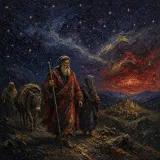
The big picture
Sarah dies at 127, and Abraham mourns. The chapter gives extended attention to a legal purchase because the promised family still lives among others in a land it does not possess. A grave becomes its first explicitly purchased holding in this narrative.
Central truth
Abraham mourns Sarah and, while remaining a sojourner in the promised land, purchases a publicly witnessed burial possession at Machpelah with weighed silver and clearly stated boundaries.
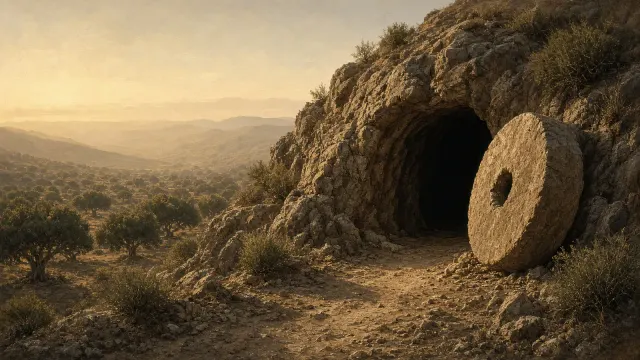
The study notes have a page of their own
The movement by movement analysis, the words to trace, the verse by verse notes and where readers differ are written for someone studying alone. They are on the Deep Personal Reflections page for this chapter. This page is the lesson.
A chapter-specific teaching brief
These anchors come from this chapter itself. They help a teacher use the Level 1 overview, the Level 2 study, and the Scripture text as one lesson.
Open with the chapter’s first image
Genesis 23:1: “And Sarah was an hundred and seven and twenty years old: these were the years of the life of Sarah.”
Slow down at the turning point
Genesis 23:15: “My lord, hearken unto me: the land is worth four hundred shekels of silver; what is that betwixt me and thee? bury therefore thy dead.”
Keep this word trail visible
Abraham, dead, Ephron, field, Heth, bury
What to explain, in order
Teach the passage in this order. Each step names the verses it rests on, so every point can be shown in the text before it is applied.
Genesis 23:1-2
Start with Sarah, her years and her grief
Open with the only woman in the Bible whose age at death is given: "an hundred and seven and twenty years". Let that honour her. Then read 23:2 and pause on the two verbs: Abraham came "to mourn for Sarah, and to weep for her". Explain that Hebron is also called Kirjath-arba, and that Abraham has been living near there, at Mamre, since 13:18. Teach the grief first because the whole negotiation that follows is an expression of it: everything Abraham does in this chapter is to give Sarah a lasting resting place.
Genesis 23:3-6
A stranger asks for a possession
Abraham stands and speaks. Explain the two words of 23:4: a stranger, a resident foreigner, and a sojourner, a temporary dweller. In the land God promised him, he holds no property. Note the key word, possession, which means a holding that belongs to him by right. The sons of Heth answer generously and with honour, calling him "a mighty prince". Teach this exchange before the bargaining because it sets up the tension: hosts who would let him use their tombs, and a guest who needs ground of his own in this land.
Genesis 23:7-16
Courtesy and a full price
Read 23:7-16 aloud, ideally with three voices, and let learners hear the courtesy: bowing, my lord, hear me. Explain that this is the polite form of a public negotiation. Abraham asks for a cave and offers full price; Ephron answers by offering the whole field as a gift; Abraham insists on paying; Ephron names four hundred shekels, a high price, while saying it is nothing between friends. Explain "current money with the merchant" as silver of accepted weight. Teach the process carefully, because the care Abraham takes is the point.
Genesis 23:17-20
Made sure before witnesses
Now read the deed. Field, cave, trees, borders, all "made sure" to Abraham in the presence of everyone who passed through the gate. Explain that this is legal language, the kind of record that would settle a later dispute. Then read 23:19, the burial itself, and 23:20, which repeats the transfer. Point ahead: Abraham will be buried here (25:9), and Isaac, Rebekah, Leah and Jacob after him (49:29-32; 50:13). The plot bought for one grave becomes the family's lasting claim in Canaan, a first piece of a promise still mostly unfulfilled.
Where learners get stuck
The misreadings this passage tends to produce, and how to answer each from the text.
"Abraham should not have grieved so openly, since he had faith."
Genesis records the grief without any hint of rebuke: he came "to mourn for Sarah, and to weep for her" (23:2). The same Abraham trusted God on Moriah in chapter 22. Faith and tears belong together here, as they do when Jesus weeps at Lazarus's tomb in John 11:35 and when Paul says believers grieve, though not "as others which have no hope" (1 Thessalonians 4:13). Let grieving learners hear that weeping is not a failure of faith.
"Ephron was generous and gave the land for free, and Abraham was rude to refuse."
Ephron's offer in 23:11 is the courteous opening of a public negotiation, and he later names a full price of four hundred shekels (23:15). Abraham's insistence on paying (23:13) is not rudeness; it secures a title no one can later revoke as a mere favour. Both men act with formal politeness, and the deal is fair and witnessed. Avoid painting Ephron as a villain or as a saint; the text shows a proper transaction between respected neighbours.
"This chapter is only about real estate and has nothing to teach."
The chapter sits between the promise sworn in 22:16-18 and the search for a wife in chapter 24. It shows the first legal foothold of Abraham's family in the land promised in 12:7 and 17:8, and it is a burial ground, a sign of hope that the promise reaches beyond death. Hebrews 11:13-16 draws out that hope. Help learners see that practical care, paid in full and witnessed, can be an act of faith and love.
"Since God promised Abraham the whole land, he should have just taken it."
God's promise in 15:13-16 itself says the land would come to his descendants later, after four generations. Abraham does not seize anything; he asks, bows (23:7, 12), and pays a full price before witnesses (23:16). Stephen notes in Acts 7:5 that God gave Abraham "none inheritance in it, no, not so much as to set his foot on", only a promise. The patriarch lives honestly with his neighbours while he waits for God, which is the posture the chapter teaches.
Learning objectives
- Identify the place and age recorded at Sarah's death.
- Distinguish mourning from the practical burial arrangements that follow.
- Compare Abraham's self-description with his neighbors' honorific description.
- Trace the negotiation from cave request to field purchase.
- Identify payment, witnesses, and the property included.
- Explain the burial possession within the still-unfolding land promise.
Teacher preparation
- Read Genesis 13:14–18 and 25:9–10 to place the purchase between the land promise and Abraham's later burial.
- Identify Kirjatharba as Hebron using 23:2; show Machpelah near Mamre without inventing an excavation reconstruction.
- Explain "sepulchre" as tomb, "audience" as those hearing, and "made sure" as firmly established possession.
- Keep the four hundred shekels as the stated weight of silver; do not calculate a speculative modern purchase price.
- Prepare a respectful tone for grief; the chapter's legal detail must not turn Sarah's death into an accounting joke.
Evidence and interpretation checks
Explicit
Locate Genesis 23:16–20: Abraham pays the named silver, the field and cave become his possession publicly, and Sarah is buried there.
Scripture-supported
Use Genesis 25:9–10 to confirm that Abraham is later buried with Sarah in the purchased field, not in an unrelated burial site.
Strong inference
Compare Genesis 23:4 and 17–20 with 13:15: the secure burial holding appears as a limited tangible possession within the larger promise.
Possible or traditional reading
Treat readings of Ephron's offer in Genesis 23:11 as bargaining courtesy or a sincere gift proposal as interpretations; private intent is not reported.
Limit
State that Genesis 23:15–16 supplies no market comparison proving fraud, no modern currency conversion, and no rule forbidding believers to mourn.
Discussion with answer guidance
1. What does Abraham do before discussing property?
What a good answer contains
He grieves. "Abraham came to mourn for Sarah, and to weep for her" (23:2), and only then "stood up from before his dead" (23:3) to speak to the sons of Heth. The order matters: weeping comes first and business second, and the business is itself an act of love for her. A good answer names both verbs, mourn and weep, and notices that the man of faith from chapter 22 is allowed to weep openly. A weak answer hurries past verse 2 to the negotiation as if grief were a delay.
Show teacher guidance
Read verses 1–3. He mourns and weeps for Sarah; practical arrangements do not cancel the chapter's explicit grief.
2. How do Abraham and the sons of Heth describe his position differently?
What a good answer contains
Abraham calls himself "a stranger and a sojourner with you" (23:4), a man without a burial place of his own in the land promised to him. The sons of Heth answer, "thou art a mighty prince among us" (23:6), and offer him the choice of their tombs. Both descriptions are true: Abraham is honoured and wealthy, yet he owns nothing. A strong answer sees that the sons of Heth offer use of their graves, while Abraham asks for "a possession", something that is legally his.
Show teacher guidance
Compare "stranger and a sojourner" in verse 4 with "mighty prince" in verse 6. Honor and lack of a burial possession coexist.
3. What does Abraham initially request from Ephron?
What a good answer contains
He asks the people to intercede with Ephron "That he may give me the cave of Machpelah, which he hath, which is in the end of his field" (23:9), and he adds at once, "for as much money as it is worth he shall give it me". From the start Abraham asks to buy at full value; he never asks for a gift. A good answer catches both details: a cave at the edge of a field, and the full price. A weak answer assumes Abraham accepted charity and then changed his mind.
Show teacher guidance
Read verses 8–9 for the cave at the field's end and payment of its worth. Do not begin with a free transfer already accepted.
4. How does Abraham's request for Machpelah's cave become a purchase of the field?
What a good answer contains
Ephron replies publicly with more than was asked: "the field give I thee, and the cave that is therein" (23:11). Abraham then speaks of paying "money for the field" (23:13). The request for a cave has become the purchase of the whole field with the cave in it, a larger and more secure holding. Ephron names the value, "four hundred shekels of silver", with the courtly "what is that betwixt me and thee?" (23:15). The strong answer notes that Abraham accepts the larger terms and pays without bargaining.
Show teacher guidance
Trace cave and field in verses 9–13. Abraham's final payment concerns the field with the cave rather than just an unspecified grave.
5. Why name the witnesses, trees, and borders?
What a good answer contains
Because a gift can be taken back and an unwitnessed deal can be denied. Abraham weighs out the silver "in the audience of the sons of Heth" (23:16), and the field, the cave "and all the trees that were in the field, that were in all the borders round about" are "made sure" to him before all who went in at the city gate (23:17-18). The city gate was where legal business was done. A good answer explains that each named detail closes a door to future dispute, so Abraham's descendants will own this ground beyond question.
Show teacher guidance
Read verses 16–18. These details establish the transaction and what belongs within it; the legal precision is doing meaningful work.
6. What kind of land possession closes the chapter?
What a good answer contains
The field and cave are made sure as "a possession of a buryingplace" (23:20). After all the promises of land in 12:7, 13:15 and 17:8, the first piece of Canaan Abraham owns is a grave. Hebrews 11:13 says of the patriarchs that they "died in faith, not having received the promises, but having seen them afar off". A good answer keeps that distance in view and also sees the hope: Abraham buries Sarah in the land of promise, not back in Haran, as a sign that he expects God to keep his word to their descendants.
Show teacher guidance
Use verses 19–20: a burial possession, not a palace or conquered territory. Let the distance between vast promise and one graveside remain visible.
Responsible application
Heart and habits
Ask learners to assess a fictional claim that visible grief proves weak faith, using Abraham's mourning rather than anyone's bereavement.
Relationships and community
Design practical support for a fictional grieving household that offers help without demanding emotional disclosure or quick recovery.
Clear and honorable dealings
Draft a fictional agreement naming the asset, payment, and witnesses; explain why clarity can serve care rather than oppose it.
Session plans
Two timings of the same lesson. The shorter keeps the reading, the central discussion and one response; the longer gives the confusions and the application their own time.
45 minutes
Sarah's years
Read 23:1-2 aloud. Take question one and give a moment of quiet for those who are grieving.
A stranger and a prince
Read 23:3-9. Take questions two and three, writing the words stranger, sojourner and possession on the board.
The negotiation
Read 23:10-16 with three readers. Take question four and confusion two on whether Ephron's offer was a real gift.
Made sure
Read 23:17-20. Take questions five and six, then Hebrews 11:13 for the distance between promise and grave.
Response and handout
Ask learners to name one practical act of care they can do for someone grieving. Read the key verse and close in prayer.
90 minutes
Opening
Ask the group what a grave can say about hope. Note their answers to return to at the end.
Mourning
Read 23:1-2. Take question one and confusion one, reading John 11:35 and 1 Thessalonians 4:13.
Stranger, prince and possession
Read 23:3-9. Take questions two and three and look back at the land promises in 12:7, 15:13-16 and 17:8.
The public deal
Read 23:10-16 with three voices. Take question four and confusion two, and explain current money with the merchant.
The deed
Read 23:17-20. Take question five, then read 25:9 and 49:29-32 to show who else is buried at Machpelah.
Promise and patience
Take question six and confusions three and four, reading Acts 7:5 and Hebrews 11:13-16.
Application
Work through the practical care application, listing concrete tasks that help a grieving household.
Handout and prayer
Read the key verse together, return to the opening answers, and pray for the bereaved.
Adapting the lesson
Children
Children may have lost a grandparent or a pet, so be gentle and invite them to tell a happy memory if they wish. Explain that Abraham cried because he loved Sarah, and that it is fine to cry. Show a small box and a coin bag to act out paying for the cave and field. Keep the message simple: Abraham took care of Sarah even after she died, and God's promise did not stop.
Youth
Youth may not have thought much about death and burial, so frame the chapter around love that does practical things. Let them act out the negotiation with polite phrases and notice how careful Abraham is to pay in full. Ask why owning a grave in the promised land might matter for a family waiting on God. Allow anyone who is grieving to step back from discussion.
Adults
Adults can explore the legal and cultural world of the gate, the shekels and the deed, and the theology of a promised land first owned as a grave. Discuss Hebrews 11:13-16 and the way the patriarchs lived as strangers. Many adults are caring for aging parents or have buried spouses; make room for those realities, and speak about practical care, wills and funerals without pressing anyone to share.
One to one
If the person is grieving, read 23:1-2 slowly and let them talk about the one they lost before anything else. Show that Abraham's faith did not stop his tears. If they face practical decisions after a death, walk through how Abraham handled his with patience and honesty. Pray with them and offer to help with one concrete task.
Song and video learning lab
A song or video may interpret, compress, or dramatize the text. Its value becomes clearer when its choices are compared with Scripture.
- Before the media: the exact passage and its central movement.
- During the media: the words, people, events, and emotions the artist emphasizes.
- After the media: what it clarifies, what it leaves out, and what belongs back in the biblical text.
Handout
One page for learners to take home. The print button prints this section alone.
Genesis 23:1-20
The passage in brief
Sarah dies at Hebron at the age of one hundred and twenty seven, and Abraham mourns and weeps for her. He is a foreigner in Canaan and owns no land, so he asks the local people for a place to bury her. He insists on paying full price for the cave of Machpelah and its field. The sale is made in public before witnesses, and Abraham buries Sarah there, in the land God promised to give his family.
A verse to keep
I am a stranger and a sojourner with you: give me a possession of a buryingplace with you, that I may bury my dead out of my sight.
Genesis 23:4 · King James Version
Questions to take home
What does Abraham do in 23:2 before he begins to negotiate?
Why does Abraham insist on paying for the field?
What does it mean that his first land in Canaan was a grave?
This week
Do one practical, careful thing this week for someone who is grieving, and do it in full.
Music and video connected to the passage
Related media appears when its Scripture reference overlaps this study. Music and video can illuminate a theme while the biblical text remains the foundation.