The big picture
Isaiah 41 stages a courtroom in which the nations and their gods are asked to explain events, announce what comes next, or do anything effective enough to justify their claims. The contrast repeatedly slips from courtroom to workshop. Frightened people encourage one another, craftsmen cooperate, and the resulting image must be nailed down so it will not move. Between those scenes, Israel hears a radically different set of verbs: chosen, taken, strengthened, helped, upheld, and held by the hand. The Book of Isaiah does not conceal Jacob's weakness. It calls him a worm, then makes that disproportion the starting point for becoming a sharp threshing instrument. It begins with poor people whose tongues fail for thirst, then fills their wilderness with rivers, pools, and trees. By the end, the idols still cannot produce a witness. Divine agency has been displayed in history, in sustaining the weak, and in making a desert live, while the manufactured rivals remain eloquent only through their makers.
In this chapter
- A Courtroom Summons Leads to the Workshop Isaiah 41:1-7
The islands are told to be silent and then invited to speak, the rhythm of a hearing in which claims will be tested rather than merely shouted down.
- Chosen Does Not Mean Discarded Isaiah 41:8-13
"But thou" turns sharply away from the nations and their manufactured security.
- From a Worm to a Threshing Instrument Isaiah 41:14-16
Calling Jacob a "worm" does not flatter hidden strength.
- The Thirsty Are Heard Before the Landscape Changes Isaiah 41:17-20
The first image is not a forest but a tongue failing from thirst.
- The Images Cannot Supply a Witness Isaiah 41:21-29
The courtroom reopens with an exact challenge.

Scripture beside the summary
Isaiah · King James Version · 29Isaiah 41:1-7
A Courtroom Summons Leads to the Workshop
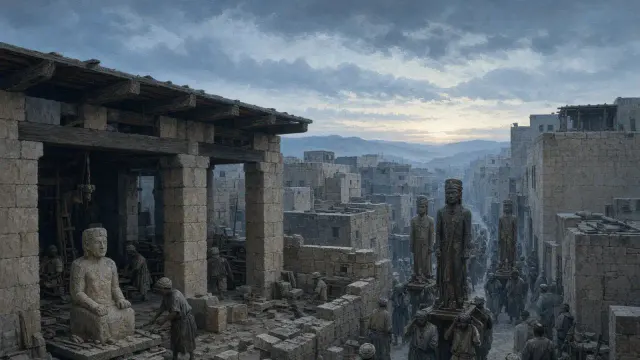
The islands are told to be silent and then invited to speak, the rhythm of a hearing in which claims will be tested rather than merely shouted down. The first question concerns the figure raised from the east and the power behind his victories. Isaiah does not name him here, which is why the focus stays on who called and directed him. The nations respond not with an explanation but with fear and mutual encouragement. That cooperation leads into a workshop where carpenter and goldsmith reassure one another until the finished image is fastened with nails. The humor lies in the sequence. The supposed source of stability has to be stabilized by its makers. The Book of Isaiah has just identified the LORD as "the first, and with the last." Against that independent agency stands an object whose existence depends on a chain of workers. The hearing begins by asking not who looks impressive, but who actually accounts for events.
Deep dive
The islands are first told to be silent and then invited to speak. This is the order of a hearing, not a refusal to consider a competing claim. The question concerns the person raised from the east and the power directing his victories. The conqueror is unnamed here. Many interpreters identify Cyrus in light of Isaiah 44:28–45:1; others have understood Abraham, whose name appears in verse 8. The passage's immediate emphasis falls on who raised and directed the figure, before the book supplies Cyrus's name explicitly.
The nations' response moves from fear to mutual encouragement among craftsmen. Their speech sounds reassuring, but its outcome is a manufactured image fastened with nails. The joke is in the sequence, not an added insult: the supposed source of steadiness must first be steadied by its makers. Verse 4 has named the LORD as present at the beginning and with the last. Verses 6–7 answer with a production process in which each worker depends on another. The contrast concerns independent divine agency against objects assembled through human cooperation.
Words to trace: near, gave, afraid, anvil, beginning, brother
Verse-by-verse path
- Isaiah 41:1
“Renew their strength” is exactly the phrase of 40:31, yachalifu koach. There it was the gift to those who wait on the LORD; here the islands are told, with some irony, to muster what strength they can for the hearing. “Judgment” is mishpat, here a trial at law, with both parties summoned before the bench.
- Isaiah 41:2
The Hebrew speaks of one “whom righteousness calls to its foot”, which the King James turns into “the righteous man”. To be called to someone’s foot is to follow at his heels as a servant does. Cyrus came out of Anshan in Persia, due east of Babylon, and toppled Media, Lydia and Babylon in little more than a decade.
- Isaiah 41:3
“Passed safely” is beshalom, unscathed, untouched. “By the way that he had not gone with his feet” is either a road no one had trodden before or a speed so great his feet hardly touched it. Cyrus’s campaigns ran from the Aegean coast of Lydia to the Iranian plateau.
- Isaiah 41:4
“I am he”, ani hu, becomes one of the signatures of these chapters, returning in 43:10, 43:13, 46:4 and 48:12. The claim to be first and with the last is spelled out in 44:6, “I am the first, and I am the last; and beside me there is no God.”
- Isaiah 41:5
In Hebrew “saw” and “feared” are near twins, vayir’u and vayira’u, so the coastlands’ reaction is a pun: to see him is to fear him. “Drew near, and came” answers the summons of verse 1, but they come to court frightened, and their next move is to find reassurance in each other.
- Isaiah 41:6
“Be of good courage” is chazaq, be strong. The same root turns up in the next verse, where the idol is “fastened” with nails, vayechazqehu, strengthened. The craftsmen strengthen one another and then strengthen the god, the one thing in the room that cannot strengthen anybody.
- Isaiah 41:7
“Sodering” is the 1611 spelling of soldering. Two metalworkers are named, the one who beats with a hammer and the one who strikes the anvil. “It is ready” is literally “it is good”, tov, the verdict God pronounced over creation in Genesis 1, now pronounced by a smith over a joint.
Isaiah 41:1-7
King James Version1Keep silence before me, O islands; and let the people renew their strength: let them come near; then let them speak: let us come near together to judgment.
2Who raised up the righteous man from the east, called him to his foot, gave the nations before him, and made him rule over kings? he gave them as the dust to his sword, and as driven stubble to his bow.
3He pursued them, and passed safely; even by the way that he had not gone with his feet.
4Who hath wrought and done it, calling the generations from the beginning? I the LORD, the first, and with the last; I am he.
5The isles saw it, and feared; the ends of the earth were afraid, drew near, and came.
6They helped every one his neighbour; and every one said to his brother, Be of good courage.
7So the carpenter encouraged the goldsmith, and he that smootheth with the hammer him that smote the anvil, saying, It is ready for the sodering: and he fastened it with nails, that it should not be moved.
Isaiah 41:8-13
Chosen Does Not Mean Discarded
"But thou" turns sharply away from the nations and their manufactured security. Israel is named as servant, Jacob as chosen, and Abraham as friend, so the promise of help is anchored in a remembered relationship rather than dropped into the chapter as an anonymous slogan. Displacement has not rewritten that identity into rejection. The LORD says directly, "I have chosen thee, and not cast thee away." Then the verbs accumulate: strengthen, help, uphold, hold. Verse 10 pictures the divine right hand supporting Israel; verse 13 pictures God holding Israel's own right hand. The Book of Isaiah moves from authority to touch without giving up either. Enemies fade, but the crucial opposite of their disappearance is continuing presence. Israel is not told to manufacture a means of security the way the craftsmen do. The promise rests in the one who chose, took hold, and refuses to let exile become the final definition of the people.

Deep dive
"But thou" turns from the nations' workshops to Israel. The servant is explicitly named as Jacob, the seed of Abraham, and the calling reaches back beyond the present danger. The phrase "not cast thee away" addresses the possible meaning of displacement: suffering and scattering have not annulled the choice described here. The promise of help is therefore attached to a particular covenant identity, not issued as an isolated slogan with no named recipient.
The repeated commitments gather force through their verbs: strengthen, help, uphold, and hold. In verse 10 the LORD's righteous right hand supports Israel; in verse 13 he holds Israel's own right hand. The movement from powerful support to personal grasp keeps the language both authoritative and close. The enemies' disappearance is set against this continuing presence. Isaiah does not describe Israel assembling the means to make the promise work. The central action belongs to the God who identifies himself, takes hold, and says that abandonment is not the final explanation of Israel's condition.
Words to trace: chosen, Fear, hand, help, nothing, right
Verse-by-verse path
- Isaiah 41:8
“Abraham my friend” is literally “Abraham who loved me”. 2 Chronicles 20:7 calls him God’s friend for ever, and James 2:23 repeats it. Arabic still calls Abraham al-Khalil, the Friend, and the city of Hebron, where he is buried, takes that name. Here, for the first time in this half of the book, Israel is called “my servant”.
- Isaiah 41:9
Abraham was called out of Ur of the Chaldees (Genesis 11:31), the very land where the exiles now sit. “Chief men” is atsilim, which more likely means the far corners or edges. The God who took Abraham from the ends of the earth has not dropped his descendants at the same ends.
- Isaiah 41:10
“Be not dismayed” is tishta, from a verb meaning to gaze about: to keep glancing around in alarm. Three promises follow, each opened in Hebrew with a strengthening particle: I will strengthen, yea help, yea uphold. The right hand of righteousness is the hand that does what is right by those it holds.
- Isaiah 41:11
Four words for enemies are used in verses 11 and 12: the incensed, those who strive, those who contend, and those who war. “They that strive with thee” is literally “the men of thy lawsuit”, the courtroom language of the chapter. “Ashamed and confounded” means exposed and brought to nothing, their case lost in public.
- Isaiah 41:12
The picture is of looking round for your opponents and finding the benches empty. Psalm 37:36 says the same of the wicked: “I sought him, but he could not be found.” The enemies are not described being defeated in battle; they simply cease to be there.
- Isaiah 41:13
“Hold thy right hand” uses the verb the LORD will use of Cyrus in 45:1, “whose right hand I have holden”. The Persian conqueror and the weak servant are held by the same grip, one to do a task and the other to be kept safe. 42:6 repeats the promise to the servant: “will hold thine hand.”
Isaiah 41:8-13
King James Version8But thou, Israel, art my servant, Jacob whom I have chosen, the seed of Abraham my friend.
9Thou whom I have taken from the ends of the earth, and called thee from the chief men thereof, and said unto thee, Thou art my servant; I have chosen thee, and not cast thee away.
10Fear thou not; for I am with thee: be not dismayed; for I am thy God: I will strengthen thee; yea, I will help thee; yea, I will uphold thee with the right hand of my righteousness.
11Behold, all they that were incensed against thee shall be ashamed and confounded: they shall be as nothing; and they that strive with thee shall perish.
12Thou shalt seek them, and shalt not find them, even them that contended with thee: they that war against thee shall be as nothing, and as a thing of nought.
13For I the LORD thy God will hold thy right hand, saying unto thee, Fear not; I will help thee.
Isaiah 41:14-16
From a Worm to a Threshing Instrument
Calling Jacob a "worm" does not flatter hidden strength. A worm has no plausible contest with mountains, and that absurd mismatch is exactly what makes the next image work. The LORD promises to make Jacob a new threshing instrument with sharp teeth, able to crush mountains until they are chaff and let the wind carry them away. The Book of Isaiah does not reveal that the weak servant was secretly formidable all along. The transformation comes from the helper, Redeemer, and Holy One named before the new capacity appears. That order protects the image from becoming self-congratulation. Even after the mountains are reduced, Jacob's final action is rejoicing in the LORD, not admiring independent power. The agricultural violence describes reversal, not a general permission slip for aggression. Extreme weakness is placed beside effective action so the source of the difference cannot be missed.

Deep dive
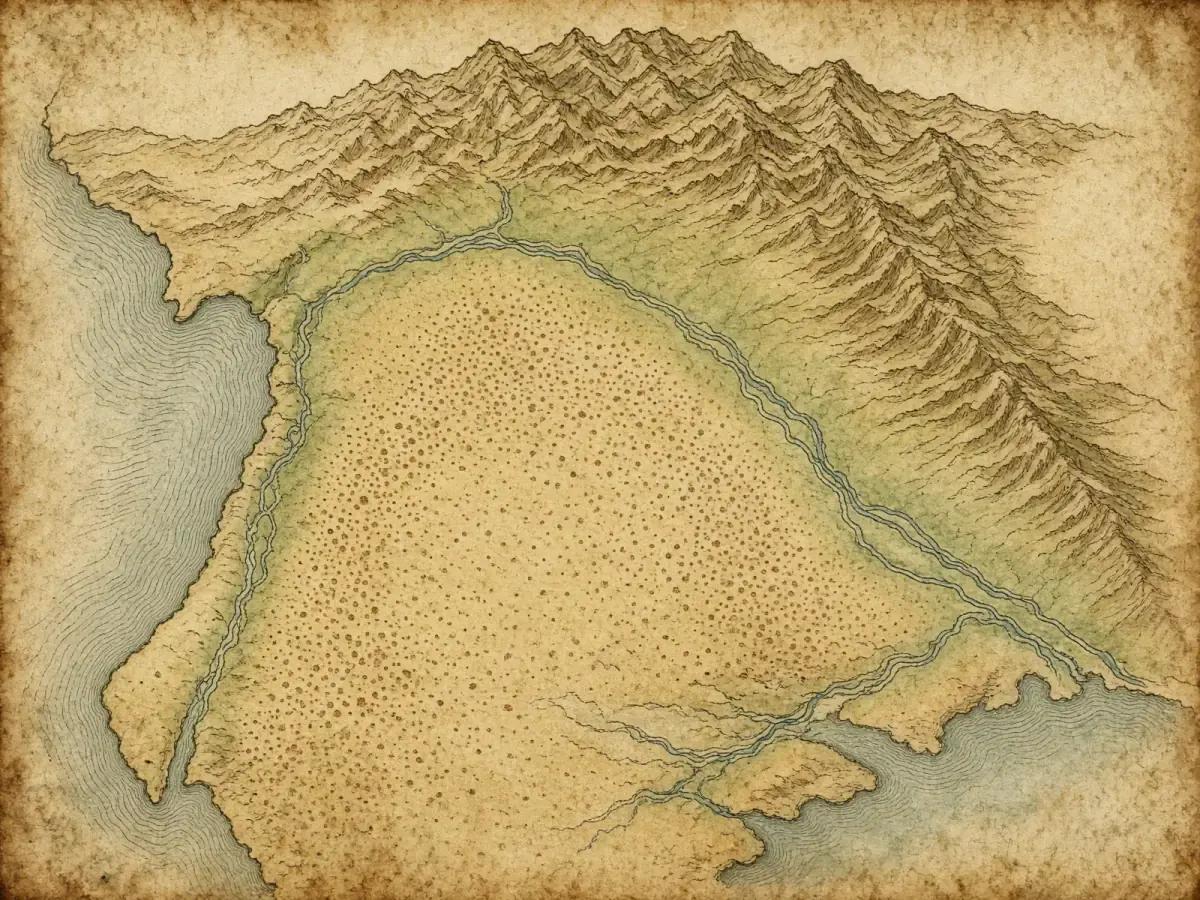
The address "worm Jacob" brings vulnerability into the promise rather than disguising it. A worm has no obvious capacity to contend with mountains. That disproportion makes the following transformation intelligible: Jacob becomes a new, sharp threshing instrument with teeth. The image borrows agricultural force to describe the reduction of what seemed immovable into something as light as chaff. It is not a sudden revelation that Jacob had been secretly formidable all along.
The LORD names himself as helper, redeemer, and Holy One of Israel before the transformation is announced. The source of the new capacity is therefore kept distinct from the weakness being addressed. The concluding action also matters. After threshing and scattering, Jacob rejoices in the LORD rather than treating the outcome as evidence of independent greatness. The passage's movement is from extreme smallness to effective action, then to an explicit identification of the one responsible. Its violent agricultural imagery belongs to that reversal and should not be converted into a general license for aggression.
Words to trace: Israel, Holy, LORD, beat, carry, chaff
Verse-by-verse path
- Isaiah 41:14
“Worm” is tola’at, the scarlet worm from which crimson dye was made, the word of Psalm 22:6, “I am a worm, and no man.” “Men of Israel” is metei yisrael, “few men”, the phrase Deuteronomy 26:5 uses of Jacob going down to Egypt “with a few”. Here the LORD is first called Israel’s redeemer, go’el.
- Isaiah 41:15
The threshing sledge, morag, was a heavy wooden board studded underneath with sharp stones or iron and dragged by oxen over the sheaves. Araunah gave David his sledges for firewood (2 Samuel 24:22), and Amos 1:3 condemns Damascus for threshing Gilead with iron ones. “Having teeth” is literally having mouths, double edged.
- Isaiah 41:16
Winnowing followed threshing: the crushed grain was tossed into the air with a fork, and the wind blew the chaff away while the heavier kernels fell. The mountains are treated as mere chaff, carried off by the same whirlwind that took the rulers’ stubble in 40:24. What is left on the floor is joy.
Isaiah 41:14-16
King James Version14Fear not, thou worm Jacob, and ye men of Israel; I will help thee, saith the LORD, and thy redeemer, the Holy One of Israel.
15Behold, I will make thee a new sharp threshing instrument having teeth: thou shalt thresh the mountains, and beat them small, and shalt make the hills as chaff.
16Thou shalt fan them, and the wind shall carry them away, and the whirlwind shall scatter them: and thou shalt rejoice in the LORD, and shalt glory in the Holy One of Israel.
Isaiah 41:17-20
The Thirsty Are Heard Before the Landscape Changes
The first image is not a forest but a tongue failing from thirst. Poor and needy people search for water and find none. Before Isaiah describes a changed landscape, the LORD says he hears them and will not forsake them. Only then do rivers open on heights, fountains appear in valleys, pools fill the wilderness, and springs rise from dry ground. The list of trees is almost excessive in its abundance, as if the desert cannot stop producing what it lacked. The Book of Isaiah ties that abundance to recognition through four verbs: see, know, consider, understand. The changed country becomes evidence of whose hand has acted. That matters within a chapter about rival claims to divine agency. The LORD's work is not confined to the rise and fall of conquerors. It appears just as decisively in provision that answers a failing tongue and makes an impossible landscape capable of sustaining life.

Deep dive
The scene begins with a failing tongue, not with a grand landscape. Poor and needy people seek water and find none. The LORD's answer is first relational: he hears and does not forsake them. Only then do rivers open on heights and springs appear in valleys. That sequence prevents the transformed environment from becoming a spectacle detached from the people whose need occasioned it.
The list of trees fills the wilderness with a diversity it did not possess. Isaiah piles the names together rather than stopping to explain each species, and the effect is abundance where survival had been doubtful. Verse 20 states the intended recognition through four verbs: see, know, consider, and understand. The changed landscape is evidence of the LORD's hand and creative work. The courtroom question of the chapter's opening thus receives a tangible counterpart. Divine agency is displayed not only in the movement of conquerors but also in provision that allows the vulnerable to live.
Words to trace: tree, water, Israel, LORD, wilderness, cedar
Verse-by-verse path
- Isaiah 41:17
Israel’s first water crisis in the wilderness came at Rephidim, where “there was no water for the people to drink” (Exodus 17:1). “Faileth” is nashattah, is parched, dried out. “Will not forsake them” is the promise Moses gave before the Jordan crossing: “he will not fail thee, nor forsake thee” (Deuteronomy 31:6).
- Isaiah 41:18
“High places” here are shephayim, the bare wind-swept heights where, in Jeremiah 3:21, Israel weeps; water does not run on a hilltop. Psalm 107:35 has almost the same words: “He turneth the wilderness into a standing water, and dry ground into watersprings.”
- Isaiah 41:19
Seven trees are planted, a complete grove. The shittah is the acacia, the one tree on the list that actually grows in the desert, and the wood of the ark (Exodus 25:10). The myrtle is hadas, from which Esther’s Hebrew name Hadassah comes. The “oil tree” may be the wild olive; the “box tree” is probably a cypress.
- Isaiah 41:20
“Consider” is literally “lay it to heart”. The word “together” comes back, as in 40:5, so the lesson is learned by everyone at once. The verse closes with bara, create, the verb of Genesis 1:1: the new grove in the desert is spoken of as a work of creation.
Isaiah 41:17-20
King James Version17When the poor and needy seek water, and there is none, and their tongue faileth for thirst, I the LORD will hear them, I the God of Israel will not forsake them.
18I will open rivers in high places, and fountains in the midst of the valleys: I will make the wilderness a pool of water, and the dry land springs of water.
19I will plant in the wilderness the cedar, the shittah tree, and the myrtle, and the oil tree; I will set in the desert the fir tree, and the pine, and the box tree together:
20That they may see, and know, and consider, and understand together, that the hand of the LORD hath done this, and the Holy One of Israel hath created it.
Isaiah 41:21-29
The Images Cannot Supply a Witness
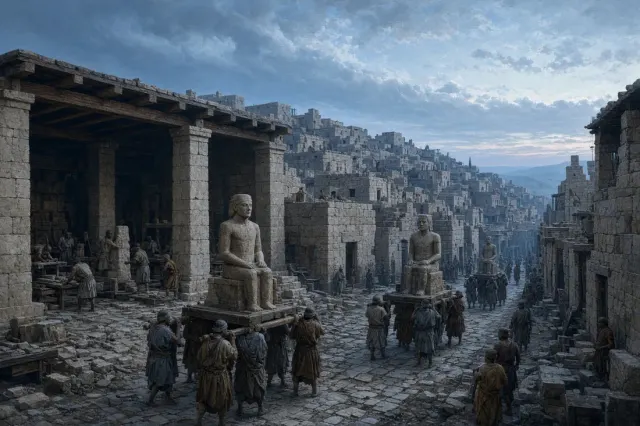
The courtroom reopens with an exact challenge. Produce a case. Bring strong reasons. Explain former events in a way that makes their outcome intelligible, announce what is coming, or at least do something effective enough to make observers take notice. The Book of Isaiah tests deity against knowledge, purpose, and action rather than against decoration or reputation. The LORD then speaks of raising a ruler who tramples princes like clay, while the rival gods provide no counselor, declaration, or answer. Good tidings for Jerusalem emerge inside that contrast. What matters is not a detailed map of the ruler's route from every direction named in the oracle, but the claim that the event has been announced before it happens. At the close, the images are called wind and confusion. Their makers have spoken throughout these chapters; the objects themselves still have not supplied a single witness capable of explaining or accomplishing what they are trusted to do.
Deep dive
The trial resumes with a demand for a case and strong reasons. The images are asked to declare what is coming or to explain the course of earlier events so that their outcome can be understood. Even effective action of any kind is invited in verse 23. This is more exact than a general sneer at foreign religion. The claim to deity is tested against knowledge, intelligible purpose, and the capacity to act.
The LORD then speaks of raising a figure from the north and the sunrise who treads rulers like clay. The conjunction of directions need not be turned into a detailed itinerary that Isaiah does not give. The issue is that the LORD announces an event while the rivals supply neither counselor nor answer. Good tidings for Jerusalem appear amid that contrast. The chapter closes by calling the images wind and confusion, a judgment on their inability to perform the role claimed for them. The courtroom has heard much about their makers and nothing effective from the objects themselves.
Words to trace: know, shew, good, nothing, abomination, answer
Verse-by-verse path
- Isaiah 41:21
“King of Jacob” occurs only here in the Bible. “Strong reasons” is atsumotechem, your mighty arguments, possibly your defences. “Produce your cause” is the call to present a case at law. The LORD opens the hearing as both litigant and king.
- Isaiah 41:22
“The former things” is rishonot, a term that becomes a thread: 42:9, 43:9, 43:18, 46:9 and 48:3. The demand has two parts, to explain the past so its end makes sense, and to predict the future. A god who can do neither has nothing to say about history at all.
- Isaiah 41:23
“Do good, or do evil” is an idiom meaning do anything at all. Jeremiah uses it of idols in almost the same words: “they cannot do evil, neither also is it in them to do good” (Jeremiah 10:5). “That we may be dismayed” concedes that even a frightening act would count as evidence.
- Isaiah 41:24
“An abomination” is to’evah, the word Deuteronomy uses for idolatry and forbidden rites. The verdict falls on the chooser, not only on the idol. Psalm 115:8 makes the same point about makers and worshippers: “They that make them are like unto them.”
- Isaiah 41:25
“Morter” is chomer, wet clay, trampled underfoot by potters and brickmakers to work it soft, the everyday labour of Babylon’s brickyards. Whether Cyrus “shall call upon my name” in a full sense is left open; 45:4 says “thou hast not known me”, and Ezra 1:2 has his decree name “the LORD God of heaven”.
- Isaiah 41:26
“He is righteous” is tsaddiq in the sense of a verdict: “he is right”, “correct”. The prediction is the test, and whoever foretold it wins the case. Three denials follow, none shows, none declares, none hears, and the last one turns on the rivals: nobody has ever heard them say a thing.
- Isaiah 41:27
The Hebrew is clipped to the point of obscurity, “First to Zion: behold, behold them”, and the King James supplies words to make a sentence. The bringer of good tidings is now masculine, mevasser, where in 40:9 the herald was a woman; 52:7 will praise the feet of this messenger on the mountains.
- Isaiah 41:28
“There was no man” comes back twice later in the book, when the LORD looks for someone to act against injustice: “he saw that there was no man, and wondered that there was no intercessor” (59:16; compare 63:5). Here the search is among the idols and their counsellors, and it turns up nobody who can answer a word.
- Isaiah 41:29
“Vanity” is aven, emptiness or trouble, the word Hosea twists into Beth-aven, “house of nothing”, as a name for Bethel (Hosea 4:15). “Molten images” are nesakhim, poured things, from the same verb as a drink offering poured out. Wind and tohu, air and formlessness, are all they amount to.
Isaiah 41:21-29
King James Version21Produce your cause, saith the LORD; bring forth your strong reasons, saith the King of Jacob.
22Let them bring them forth, and shew us what shall happen: let them shew the former things, what they be, that we may consider them, and know the latter end of them; or declare us things for to come.
23Shew the things that are to come hereafter, that we may know that ye are gods: yea, do good, or do evil, that we may be dismayed, and behold it together.
24Behold, ye are of nothing, and your work of nought: an abomination is he that chooseth you.
25I have raised up one from the north, and he shall come: from the rising of the sun shall he call upon my name: and he shall come upon princes as upon morter, and as the potter treadeth clay.
26Who hath declared from the beginning, that we may know? and beforetime, that we may say, He is righteous? yea, there is none that sheweth, yea, there is none that declareth, yea, there is none that heareth your words.
27The first shall say to Zion, Behold, behold them: and I will give to Jerusalem one that bringeth good tidings.
28For I beheld, and there was no man; even among them, and there was no counsellor, that, when I asked of them, could answer a word.
29Behold, they are all vanity; their works are nothing: their molten images are wind and confusion.
Questions to keep in mind while reading
- Identify the historical crisis, covenant failure, warning, and promised hope.
- Distinguish the prophet’s immediate audience from later biblical connections.
- Do not turn present-day headlines into confident fulfillment claims without textual evidence.
Text first
Where readers differ
The chapter summary begins with what the passage says and how its parts fit together. It does not assume one denomination has already settled every question. Where a conclusion depends on a tradition, literary theory, or historical reconstruction, that dependence is named openly.
The KJV text is presented first. Interpretive conclusions are labeled, and differences are introduced only when they help a reader understand why serious communities do not always reach the same answer.
Comparative interpretive notes for this chapter are in preparation. Until reviewed notes are ready, this page separates the KJV text from summary and application without claiming that serious readers agree on every question.
Questions beneath the surface
- What account of God, human freedom, responsibility, and the good life emerges from Isaiah 41?
- Which tension does the chapter refuse to resolve quickly?
- What changes when the chapter is read as part of the whole canon rather than as an isolated moral lesson?
- Where might a sincere reader confuse a familiar tradition with something the text states directly?
Questions for serious personal contemplation
These open-ended questions make room for tension, honest response, prayer, and conclusions that remain accountable to the chapter.
Observe without rushing
What part of Isaiah 41 makes you stop, feel unsettled, or feel surprised, and why?
Which detail in the passage would be easiest to overlook? How does that detail change your understanding?
Where do you see tension between what happens and this focus: Isaiah 41 develops its own movement around LORD, Israel, know, nothing, tree?
What important question does the passage leave open instead of resolving quickly?
Examine your inner life honestly
Which person, response, fear, or desire in the passage feels most like your own life right now?
What assumption about God, other people, or yourself does this text challenge?
Which part would you rather soften, avoid, or explain away too quickly? What might that reaction reveal?
If this Scripture could ask you one direct question, what do you think it would ask?
Respond with wisdom and courage
What do you need to remember, confess, grieve, thank God for, or trust after reading this passage?
How might another faithful person read this situation differently without ignoring the text?
What obedient response would be costly, uncomfortable, or slow, yet still faithful to Scripture?
What question will you carry into prayer this week, and which verses will you keep in front of you?
Music and video connected to the passage
Related media appears when its Scripture reference overlaps this study. Music and video can illuminate a theme while the biblical text remains the foundation.