The big picture
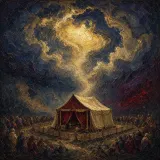
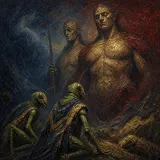
Numbers 14 turns the scouts' divided report into a national refusal. The congregation weeps, wishes for death, fears for its children, and proposes choosing a captain to return to Egypt. Joshua and Caleb defend the land and the LORD's presence, but the crowd moves toward stoning them until divine glory interrupts. Moses then intercedes when the LORD threatens destruction, asking that divine power be shown through the mercy already declared in the LORD's own character. Pardon is granted, yet the counted generation is barred from the land and sentenced to die during forty years in the wilderness, while the children feared as prey are promised entry. The scouts who brought the evil report die by plague. Finally, the people confess and attempt to advance anyway. Because the command has changed, their eager ascent is another act of disobedience, and without Moses or the ark they are defeated.
In this chapter
- The Fear for the Children Becomes an Argument for Egypt Numbers 14:1-4
The scouts' fear becomes the congregation's policy.
- The Land Does Not Devour Those Whom the LORD Brings in Numbers 14:5-10
Moses and Aaron fall on their faces while Joshua and Caleb tear their clothes and answer the report.
- Moses Asks for Power Expressed in Mercy Numbers 14:11-19
When the LORD proposes pestilence, disinheritance, and a new nation from Moses, Moses does not defend the congregation by denying its guilt.
- Pardon Is Spoken, and Exclusion Remains Numbers 14:20-25
The LORD says, "I have pardoned according to thy word," and in the next breath bars the repeatedly rebellious generation from the land.
- The Opening Census Becomes the Boundary of a Sentence Numbers 14:26-35
The opening census becomes the measuring line of judgment.
- The Scouts’ Deaths Are Not the Same Timetable as the Generation’s Numbers 14:36-38
The scouts who spread the evil report do not simply blend into the slower wilderness sentence.
- An Early Start Cannot Reverse Yesterday’s Refusal Numbers 14:39-45
The people mourn, confess that they have sinned, rise early, and announce that they are ready to go up after all.

Scripture beside the summary
Numbers · King James Version · 45Numbers 14:1-4
The Fear for the Children Becomes an Argument for Egypt
The scouts' fear becomes the congregation's policy. After a night of crying, the people wish they had died in Egypt or in the wilderness and accuse the LORD of bringing them to the land so that their wives and children will become prey. Their fear is not only for themselves. They imagine a future in which the promised journey destroys the next generation. Then they propose the solution: appoint another captain and return to Egypt. The exodus is now something they are willing to reverse deliberately. Chapter 11 had remembered Egypt through food; here Egypt becomes a destination again under replacement leadership. Their own words prepare the chapter's coming reversals. They ask for death in the wilderness, and the wilderness will indeed become the grave of the numbered generation. They fear their children will be lost, and those very children will be the ones promised entrance into the land their parents now reject.
Deep dive
The scouts’ description becomes a communal decision. Mourning through the night moves into accusations against Moses, Aaron, and the LORD’s purpose in bringing them to the land. The people predict that their wives and children will become prey. Their stated concern is therefore not simply personal survival; it includes a future they believe the promised journey will destroy.
The proposed solution reverses the exodus. They will appoint a captain and return to Egypt. Chapter 11 remembered Egypt through its food; here the congregation proposes returning there under replacement leadership. The wishes for death in Egypt or the wilderness also matter later, because the sentence will answer the words they have spoken. Their speech supplies two of the chapter’s coming reversals: the wilderness death they request, and the children whom they fear losing but whom the LORD promises to bring into the land.
Words to trace: Egypt, children, congregation, died, land, return
Verse-by-verse path
- Numbers 14:1
“Lifted up their voice” is the full-throated cry of public mourning. The Talmud (Taanit 29a) ties this night to the ninth of Av, the date on which both Temples later fell: “you wept for nothing, and I will fix for you a weeping for generations.”
- Numbers 14:2
“Murmured” is lun, the verb of grumbling from Exodus 15–17, and it runs through this chapter until the sentence in verses 27–36 is built from it. “Would God” translates lu, “if only”: a wish, with two places offered for the death they want.
- Numbers 14:3
“Prey” is baz, plunder, what a raiding army carries off, women and children taken as spoil. The accusation names the LORD directly for the first time in this crisis: it is he who has brought them here to fall.
- Numbers 14:4
“Make a captain” is literally “let us give a head”, rosh, the word that described the twelve scouts in 13:3. Nehemiah 9:17 remembers the proposal as though it were carried out: they “appointed a captain to return to their bondage”.
Numbers 14:1-4
King James Version1And all the congregation lifted up their voice, and cried; and the people wept that night.
2And all the children of Israel murmured against Moses and against Aaron: and the whole congregation said unto them, Would God that we had died in the land of Egypt! or would God we had died in this wilderness!
3And wherefore hath the LORD brought us unto this land, to fall by the sword, that our wives and our children should be a prey? were it not better for us to return into Egypt?
4And they said one to another, Let us make a captain, and let us return into Egypt.
Numbers 14:5-10
The Land Does Not Devour Those Whom the LORD Brings in
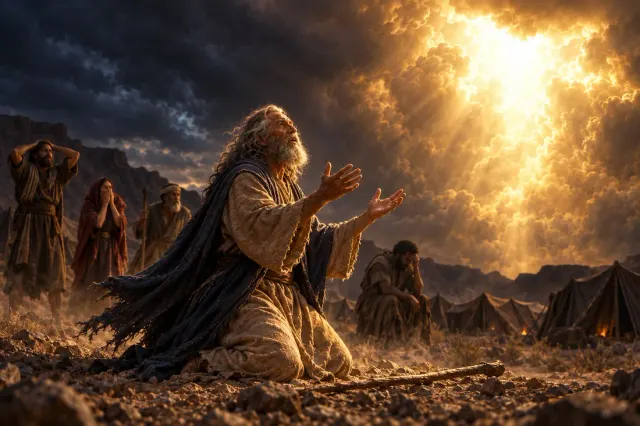
Moses and Aaron fall on their faces while Joshua and Caleb tear their clothes and answer the report. They do not deny the land's goodness or the existence of threatening inhabitants. They challenge the conclusion that those facts make entry impossible. Their confidence rests on the LORD bringing Israel in, giving the land, remaining with them, and removing the opponents' defense. The image "they are bread for us" deliberately reverses the earlier claim that the land eats its inhabitants. The question is not who can consume whom by natural strength alone. Joshua and Caleb frame the congregation's refusal as rebellion against the LORD and its fear as a failure to reckon with his presence. The crowd's answer is not another argument but a call to stone them. At that point the glory of the LORD appears at the tabernacle. Human debate has reached the point where the minority witnesses are in physical danger, and divine presence interrupts the attempted violence.
Deep dive
Moses and Aaron fall on their faces, while Joshua and Caleb tear their clothes and address the assembly. The two scouts share the evidence of the land’s goodness but refuse the opposing conclusion about it. Their argument rests on the LORD bringing Israel in and giving it to them. They name rebellion against him as the issue, not a failure to notice the strength of the inhabitants.
The image of the inhabitants as bread answers the earlier description of a land that eats its people. The direction of consumption is reversed in their speech: the opponents are not the irresistible consumers imagined by the discouraging report. This is not Joshua and Caleb asserting that Israel possesses unlimited power in itself; they immediately connect their confidence with the LORD’s presence and the removal of the inhabitants’ defense. The congregation’s response is to call for stones. The appearance of divine glory interrupts a scene that argument alone has not resolved.
Words to trace: land, LORD, children, congregation, Israel, fear
Verse-by-verse path
- Numbers 14:5
Falling on the face is the posture Moses and Aaron take again when Korah gathers the crowd in 16:4 and 16:22, and at Meribah in 20:6. Here it is done “before all the assembly”, in full view of the people calling for another leader.
- Numbers 14:6
Rending the clothes is the gesture of grief and horror, as Jacob tore his for Joseph in Genesis 37:34. In 13:30 Caleb spoke alone; now Joshua is named first beside him, and the two scouts stand against the other ten.
- Numbers 14:7
“Exceeding good” is tovah meod meod, “very, very good”, with the word doubled. The two scouts answer the “evil report” of 13:32 with the plainest opposite the language allows: the land they walked through is good.
- Numbers 14:8
“Delight in us” is chafets, to take pleasure in, so everything hangs on the LORD’s favour, not Israel’s strength. “Give it us” repeats the LORD’s own words in 13:2, “which I give”, and milk and honey is named for the third time in two chapters.
- Numbers 14:9
“Their defence” is literally “their shade”, tsillam, the protection a shadow gives in desert heat. Psalm 121:5 uses the same image, “the LORD is thy shade”. The shade over Canaan has gone; the one over Israel is the LORD with them.
- Numbers 14:10
Stoning was execution by the whole community, every hand taking part. The glory of the LORD appears at the tent of meeting, as it will again when Korah’s crowd gathers in 16:19 and 16:42 and at the waters of Meribah in 20:6.
Numbers 14:5-10
King James Version5Then Moses and Aaron fell on their faces before all the assembly of the congregation of the children of Israel.
6And Joshua the son of Nun, and Caleb the son of Jephunneh, which were of them that searched the land, rent their clothes:
7And they spake unto all the company of the children of Israel, saying, The land, which we passed through to search it, is an exceeding good land.
8If the LORD delight in us, then he will bring us into this land, and give it us; a land which floweth with milk and honey.
9Only rebel not ye against the LORD, neither fear ye the people of the land; for they are bread for us: their defence is departed from them, and the LORD is with us: fear them not.
10But all the congregation bade stone them with stones. And the glory of the LORD appeared in the tabernacle of the congregation before all the children of Israel.
Numbers 14:11-19
Moses Asks for Power Expressed in Mercy
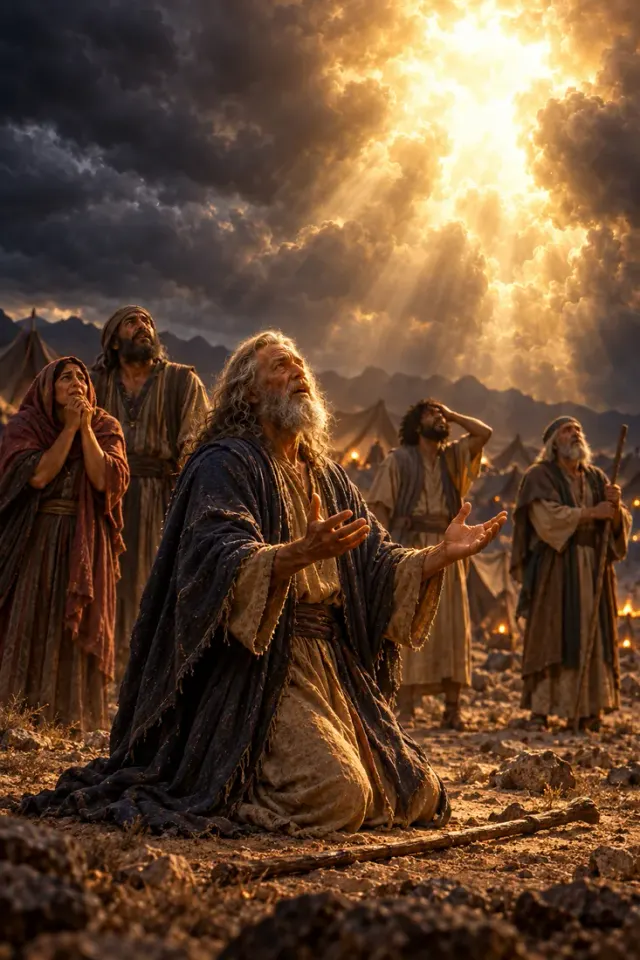
When the LORD proposes pestilence, disinheritance, and a new nation from Moses, Moses does not defend the congregation by denying its guilt. He argues from the LORD's name among the nations and from the LORD's own declared character. Egypt and Canaan have heard that the LORD brought Israel out, goes with them in cloud and fire, and is present among them. If the people are destroyed together, the nations will interpret the result as inability to complete the promise. Then Moses asks for divine power to be great and immediately describes that power through longsuffering, mercy, forgiveness, and judgment. The greatness he seeks is not a larger blow against Israel's enemies but the exercise of mercy already proclaimed. His appeal does not turn forgiveness into denial. He repeats that guilt is real even while asking that it not become the extinction of the people. The rejected leader intercedes for the congregation that wanted another captain.
Deep dive
Moses does not answer by denying the offense. His first appeal concerns what Egypt and the inhabitants of the land will say if the delivered people are destroyed together: they will interpret the outcome as inability to complete the journey. The cloud, the fire, and the LORD’s known presence among Israel are part of his argument. Destruction of the congregation would have a meaning beyond the immediate dispute in the camp.
His next appeal gives particular force to the word power. He asks for the Lord’s power to be great and then recalls the description of longsuffering, mercy, forgiveness, and judgment. The greatness he seeks is not a new display of military force against Canaan. It is the exercise of the mercy the LORD has already declared. Moses includes the refusal simply to clear the guilty, so his petition does not depend on pretending that forgiveness makes the wrong unreal.
The final request connects the present crisis with forgiveness already shown since Egypt. No private struggle over the offer of becoming a greater nation is supplied; the book records the intercession he actually makes. The people who proposed another captain are being defended by the servant they rejected. His argument keeps their wrongdoing visible while asking that it not become the end of the people as a whole.
Words to trace: LORD, people, iniquity, beseech, cloud, face
Verse-by-verse path
- Numbers 14:11
“Provoke” is naats, to spurn or despise, used again in verse 23 and in 16:30. “Believe” is heemin, the verb of Genesis 15:6, where Abram “believed in the LORD”. The doubled “how long” asks for a limit the LORD says has already been passed.
- Numbers 14:12
“Disinherit” is horish, to dispossess, the verb usually used for driving out the Canaanites: the LORD proposes to do to Israel what Israel was sent to do. The offer to make a nation of Moses repeats Exodus 32:10, after the golden calf.
- Numbers 14:13
The Hebrew here is broken and hard to construe, which the KJV smooths with a parenthesis. The first word of Moses’ answer is Egypt: the place the people wanted to return to is the first audience he names.
- Numbers 14:14
“Face to face” here is literally “eye to eye”, ayin beayin, a phrase found elsewhere only in Isaiah 52:8. Moses assumes the news of the exodus has already reached Canaan, as Rahab later confirms in Joshua 2:10: “we have heard how the LORD dried up the water of the Red sea”.
- Numbers 14:15
“As one man” means at a single stroke, the whole people struck down together. “The fame of thee” is shimakha, what has been heard of thee, from the verb of hearing: the nations have heard, and the question is what they will say next.
- Numbers 14:16
The word Moses puts in the nations’ mouths is inability, from yakhol, the verb the scouts used in 13:31: “We be not able.” The people said they could not take the land; the nations would say the LORD could not bring them in.
- Numbers 14:17
“My Lord” is Adonai, not the divine name. In Hebrew scrolls the first letter of “be great”, yigdal, is written oversized, one of the few enlarged letters of the Masoretic text. “As thou hast spoken” points back to the words of Exodus 34.
- Numbers 14:18
Moses quotes Exodus 34:6–7 but shortens it. He leaves out “merciful and gracious”, “abundant in goodness and truth” and “keeping mercy for thousands”, and he keeps the clause about visiting iniquity. What he quotes is the part that fits a people already guilty.
- Numbers 14:19
“Pardon” is salach, a forgiveness the Old Testament ascribes to God alone. The second verb, “hast forgiven”, is nasa, to lift or carry, sin borne away. “From Egypt even until now” makes the whole journey a record of pardons already given.
Numbers 14:11-19
King James Version11And the LORD said unto Moses, How long will this people provoke me? and how long will it be ere they believe me, for all the signs which I have shewed among them?
12I will smite them with the pestilence, and disinherit them, and will make of thee a greater nation and mightier than they.
13And Moses said unto the LORD, Then the Egyptians shall hear it, (for thou broughtest up this people in thy might from among them;)
14And they will tell it to the inhabitants of this land: for they have heard that thou LORD art among this people, that thou LORD art seen face to face, and that thy cloud standeth over them, and that thou goest before them, by day time in a pillar of a cloud, and in a pillar of fire by night.
15Now if thou shalt kill all this people as one man, then the nations which have heard the fame of thee will speak, saying,
16Because the LORD was not able to bring this people into the land which he sware unto them, therefore he hath slain them in the wilderness.
17And now, I beseech thee, let the power of my Lord be great, according as thou hast spoken, saying,
18The LORD is longsuffering, and of great mercy, forgiving iniquity and transgression, and by no means clearing the guilty, visiting the iniquity of the fathers upon the children unto the third and fourth generation.
19Pardon, I beseech thee, the iniquity of this people according unto the greatness of thy mercy, and as thou hast forgiven this people, from Egypt even until now.
Numbers 14:20-25
Pardon Is Spoken, and Exclusion Remains
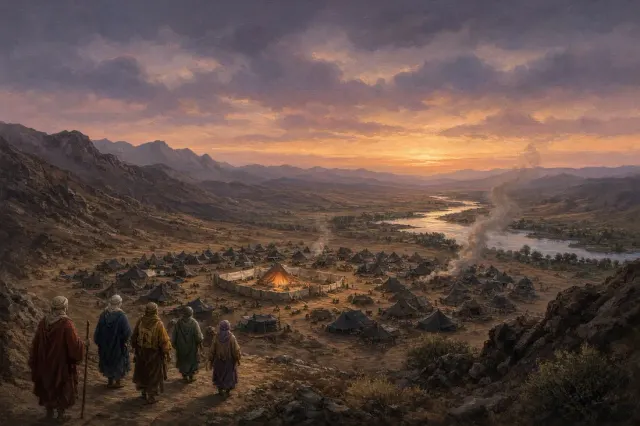
The LORD says, "I have pardoned according to thy word," and in the next breath bars the repeatedly rebellious generation from the land. Numbers refuses to make pardon and consequence mutually exclusive. The people will not be annihilated as one body, but those who have seen the signs and continued to test the LORD will not enter the promised land. Caleb is singled out for another spirit and for following fully, with possession promised to his seed. Joshua will be named with him shortly. The reference to ten provocations stresses repetition, but the chapter does not supply a numbered list of ten events and later reconstructions differ. Most important for the next action, the command changes. Israel is told to turn toward the wilderness by the Red Sea. From this point forward, marching into Canaan cannot be defended merely by quoting yesterday's command to go up. Obedience must answer the command that now governs the journey.

Deep dive
The declaration of pardon is followed immediately by a sentence of exclusion. The congregation is not destroyed at once as a single body, but the men who have seen the LORD’s glory and signs and repeatedly refused his voice will not enter the land. The passage presents both statements without treating one as a cancellation of the other. Mercy preserves the people’s continuing existence; it does not restore this generation’s forfeited entry.
The reference to ten provocations emphasizes the repeated character of the refusal. The chapter does not provide a numbered list identifying ten episodes, and reconstructions differ. Caleb is singled out for another spirit and for following fully, with possession promised to his descendants. Joshua will also be explicitly excepted in verse 30. The immediate command is now to turn back toward the wilderness. From this point onward, trying to advance cannot simply be classified as obedience to the earlier instruction. The command governing the next movement has changed.
Words to trace: glory, land, LORD, wilderness, Amalekites, Caleb
Verse-by-verse path
- Numbers 14:20
“According to thy word” answers Moses in his own terms. The line “I have pardoned according to thy word” is recited in the synagogue on the eve of the Day of Atonement, after Moses’ plea of the verse before.
- Numbers 14:21
“As truly as I live” is the oath chai ani, God swearing by his own life, the first time Scripture puts that oath in his mouth. Habakkuk 2:14 takes up the second half: “the earth shall be filled with the knowledge of the glory of the LORD”.
- Numbers 14:22
“Tempted” is nissah, to put to the test, the verb that named Massah in Exodus 17:7, where they “tempted the LORD, saying, Is the LORD among us, or not?” “Seen my glory” is exact: the glory had just appeared before them all in verse 10.
- Numbers 14:23
“Surely they shall not see” is an oath formula in the Hebrew, literally “if they shall see”, a curse left unfinished and meaning certainly not. “Provoked” is the naats of verse 11 again. Deuteronomy 1:35 repeats the oath when Moses retells it.
- Numbers 14:24
“Followed me fully” is literally “filled after me”, an idiom used again of Caleb and Joshua in 32:12, and in 1 Kings 11:6 of David, whom Solomon did not match. “Whereinto he went” is Hebron, which Joshua 14:13–14 gives to Caleb.
- Numbers 14:25
The bracketed note, Amalekites and Canaanites “in the valley”, sets up verses 43–45, where the same peoples come down from “that hill”. “The way of the Red sea” here is probably the road toward the Gulf of Aqaba, south and east, away from Canaan.
Numbers 14:20-25
King James Version20And the LORD said, I have pardoned according to thy word:
21But as truly as I live, all the earth shall be filled with the glory of the LORD.
22Because all those men which have seen my glory, and my miracles, which I did in Egypt and in the wilderness, and have tempted me now these ten times, and have not hearkened to my voice;
23Surely they shall not see the land which I sware unto their fathers, neither shall any of them that provoked me see it:
24But my servant Caleb, because he had another spirit with him, and hath followed me fully, him will I bring into the land whereinto he went; and his seed shall possess it.
25(Now the Amalekites and the Canaanites dwelt in the valley.) To morrow turn you, and get you into the wilderness by the way of the Red sea.
Numbers 14:26-35
The Opening Census Becomes the Boundary of a Sentence
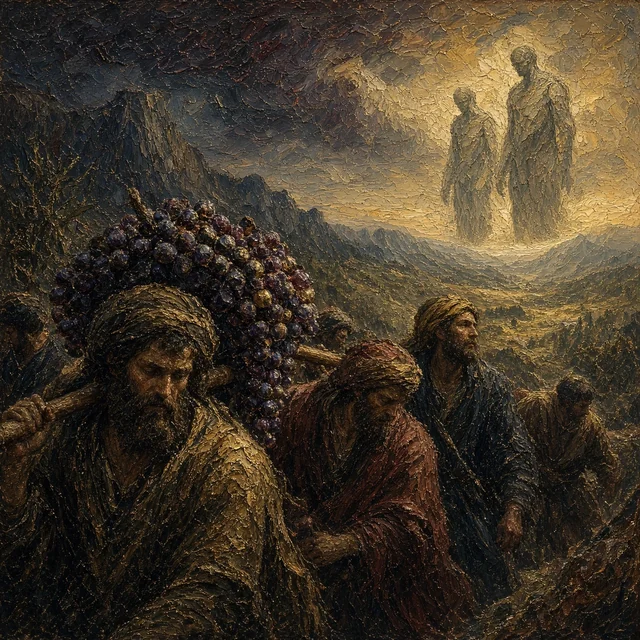
The opening census becomes the measuring line of judgment. Those numbered from twenty years old and upward who murmured against the LORD will die in the wilderness, with Caleb and Joshua as named exceptions. The army once counted for entry is now the generation excluded from entry. Their own wish to die in the wilderness comes back to them almost word for word. The children receive the opposite future from the one their parents feared. The little ones said to be destined as prey will be brought into the land and will know what their parents despised. They still bear the long wilderness consequence of the older generation's refusal, so the chapter does not pretend their lives are untouched by it. Yet their destination is different. The forty days of reconnaissance become forty years of wandering, one year for each day, turning what had been a travel duration into the calendar of a generation's sentence.
Deep dive
The sentence returns to the register at the book’s beginning: those numbered from twenty years old and upward who have murmured against the LORD. The census that organized an approaching campaign now identifies the generation excluded from its destination, with Caleb and Joshua named as exceptions. Their own wish to die in the wilderness is echoed in the announced outcome. The detail gives the opening numbers a weight they did not yet carry when they were first recorded.
The children receive a different future from the one their parents predicted. Those described as prospective prey will know the land their parents despised. They still endure the wilderness delay and the consequences of the older generation’s refusal; they are not removed from its effects. But they are not assigned the same final exclusion. The text carefully holds shared consequences and distinct destinations together.
The forty days of exploration are set against forty years, one day for a year. The KJV’s "breach of promise" at the end of verse 34 is a difficult rendering: some commentators understand the withholding of covenant blessing, while others understand the Hebrew noun tenuah as opposition or withdrawal. Neither reading permits the next generation’s explicit promise of entry to disappear. The passage announces judgment on this refusal, not the abandonment of the land as Israel’s promised destination.
Words to trace: wilderness, bear, carcases, forty, land, LORD
Verse-by-verse path
- Numbers 14:26
A second speech, now to Moses and Aaron together, the two who fell on their faces in verse 5. The first speech, to Moses alone, gave the verdict; this one gives its terms to be told to the people.
- Numbers 14:27
The opening is elliptical in Hebrew, literally “How long for this evil congregation”, and the KJV supplies “shall I bear with”. The murmuring is named three times in one verse; “murmurings”, telunot, is the word Exodus 16:7–12 used over the manna.
- Numbers 14:28
“In mine ears” answers the complaint that was “evil in the ears of the LORD” in 11:1 and “in the ears of the LORD” in 11:18. The oath chai ani of verse 21 is sworn a second time, now over the people’s sentence.
- Numbers 14:29
“Carcases” is pegarim, corpses, the harsh word for bodies fallen where they lay. “Numbered” is paqad, the verb of the census in chapter 1. When the second census is taken in 26:64, the book checks the sentence: not one man of the first count remained.
- Numbers 14:30
“Doubtless ye shall not come” is the same oath form as verse 23, “if ye come”. “Sware” is literally “lifted up my hand”, the gesture of oath-taking, as in Exodus 6:8. Caleb is named first here, where Joshua led in verse 6.
- Numbers 14:31
“Little ones” is taf, the children too young to march, the dependants of the camp. “Despised” is maas, rejected as worthless. Deuteronomy 1:39 adds that these children “had no knowledge between good and evil”, too young to share the refusal.
- Numbers 14:32
The pronoun is emphatic in Hebrew, “but you”, set against the children of verse 31. The verse repeats verse 29’s fallen carcases almost exactly, and the doubled sentence leaves no room for exceptions beyond the two already named.
- Numbers 14:33
“Wander” is literally “be shepherds”, roim, a generation living as herders on desert pasture. “Whoredoms” is zenut, faithlessness, the covenant pictured as a betrayed marriage. Counted from the exodus, the forty years leave thirty-eight still to run, as Deuteronomy 2:14 reckons them.
- Numbers 14:34
The reckoning of a day for a year returns in Ezekiel 4:6, where the prophet lies on his side forty days for Judah: “I have appointed thee each day for a year.” Forty days of looking are paid for in forty years of not entering.
- Numbers 14:35
“Gathered together” is noadim, met by appointment, from the root of the tent of meeting, ohel moed: the congregation has assembled, but against God. “Consumed” is tamam, to be finished or completed, a sentence that runs until the generation is spent.
Numbers 14:26-35
King James Version26And the LORD spake unto Moses and unto Aaron, saying,
27How long shall I bear with this evil congregation, which murmur against me? I have heard the murmurings of the children of Israel, which they murmur against me.
28Say unto them, As truly as I live, saith the LORD, as ye have spoken in mine ears, so will I do to you:
29Your carcases shall fall in this wilderness; and all that were numbered of you, according to your whole number, from twenty years old and upward, which have murmured against me,
30Doubtless ye shall not come into the land, concerning which I sware to make you dwell therein, save Caleb the son of Jephunneh, and Joshua the son of Nun.
31But your little ones, which ye said should be a prey, them will I bring in, and they shall know the land which ye have despised.
32But as for you, your carcases, they shall fall in this wilderness.
33And your children shall wander in the wilderness forty years, and bear your whoredoms, until your carcases be wasted in the wilderness.
34After the number of the days in which ye searched the land, even forty days, each day for a year, shall ye bear your iniquities, even forty years, and ye shall know my breach of promise.
35I the LORD have said, I will surely do it unto all this evil congregation, that are gathered together against me: in this wilderness they shall be consumed, and there they shall die.
Numbers 14:36-38
The Scouts’ Deaths Are Not the Same Timetable as the Generation’s
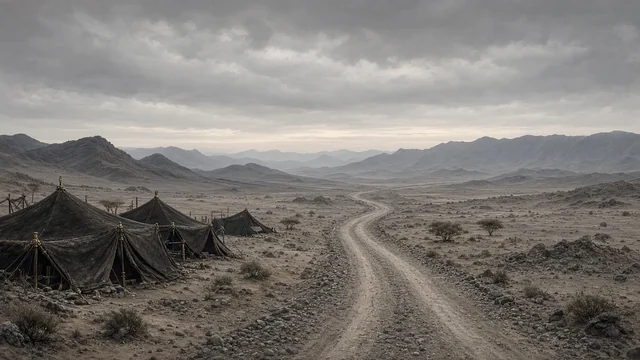
The scouts who spread the evil report do not simply blend into the slower wilderness sentence. They die by plague before the LORD, while Joshua and Caleb remain alive. Numbers therefore distinguishes an immediate judgment on the men who drove the report from the generation-wide sentence that will unfold across the wilderness years. The chapter also returns to the report's effect: these men made the congregation murmur by bringing slander against the land. Joshua and Caleb had walked the same route, seen the same fruit, heard the same names, and stood before the same cities. Their survival makes the division within the expedition visible again. The issue was never that entering Canaan exposed someone to corrupting information that the stay-at-home congregation escaped. All twelve shared the evidence. The difference lay in what they said that evidence meant and how their words directed the people who listened to them.
Deep dive
The book separates an immediate judgment from the long wilderness sentence. The scouts who brought the evil report die by a plague before the LORD; the larger generation’s deaths are to unfold during the wilderness years. Collapsing the two events into one undifferentiated disaster would remove a distinction the chapter deliberately makes.
The description also returns to the report’s effect. These men made the congregation murmur by bringing a slander upon the land. Joshua and Caleb belonged to the same expedition, but they are explicitly distinguished in survival as they were in testimony. The division is therefore not between those who inspected Canaan and those who stayed in camp. It is between opposing responses by members of the commissioned group. Their common access to the evidence did not produce a common account of what Israel should do next.
Words to trace: land, search, bringing, Caleb, congregation, died
Verse-by-verse path
- Numbers 14:36
The Hebrew verb is causative: these men made the whole congregation murmur. The verse opens on their commission, “which Moses sent”, and closes on what they did with it, the same slander of 13:32.
- Numbers 14:37
“Plague” is maggefah, a stroke or blow, the word for the plagues after Korah in 16:48 and at Baal-peor in 25:9. “Before the LORD” places their death in his presence, perhaps at the tent itself. Their names from chapter 13 are not repeated.
- Numbers 14:38
“Lived still” is a single Hebrew verb, chayu, “they lived”. Of the twelve who walked the land, two remain, and 26:65 names the same two as the only men left from the whole first count.
Numbers 14:36-38
King James Version36And the men, which Moses sent to search the land, who returned, and made all the congregation to murmur against him, by bringing up a slander upon the land,
37Even those men that did bring up the evil report upon the land, died by the plague before the LORD.
38But Joshua the son of Nun, and Caleb the son of Jephunneh, which were of the men that went to search the land, lived still.
Numbers 14:39-45
An Early Start Cannot Reverse Yesterday’s Refusal
The people mourn, confess that they have sinned, rise early, and announce that they are ready to go up after all. Numbers gives them credit for saying the right thing about their sin without treating the next action as obedient. Moses calls the ascent another transgression because the governing command has changed. Israel was told to turn back toward the wilderness. Going forward now is no more obedient than refusing to go forward before. The ark and Moses remain in the camp, creating a concrete contrast with the ordered departure of chapter 10, where movement occurred under divine direction with the sanctuary's signs present. Here energy, remorse, and an early start do not create authorization. The Amalekites and Canaanites descend and defeat the force as far as Hormah. The chapter ends with a hard distinction: acknowledging yesterday's wrong does not make today's self-chosen correction the command of the LORD.
Deep dive
The people now rise early and announce their readiness to go to the promised place. They also acknowledge that they have sinned. The account does not ignore either statement, yet Moses identifies their present movement as another transgression. The earlier command to enter cannot be detached from the new command to turn toward the wilderness. Their proposed correction repeats the deeper problem of determining the movement for themselves.
The ark and Moses remain in camp, a concrete contrast with the ordered departure of chapter 10. Their absence does not merely lower the expedition’s morale; it marks that this advance is not the commanded march the people previously refused. Amalekites and Canaanites descend and defeat them. The chapter ends with the defeat, not with the morning’s confident announcement.
Hebrews 3:16–19 later returns to the generation whose bodies fell in the wilderness and identifies unbelief as the reason they did not enter. That reading accords with the sequence here: the decisive failure is not a shortage of physical effort. At the end, the people are exerting themselves in the wrong direction under a command they still will not follow. Activity and acknowledgment of wrongdoing do not, in this account, establish that the next action is obedient.
Words to trace: LORD, Moses, Amalekites, Canaanites, hill, camp
Verse-by-verse path
- Numbers 14:39
“Mourned greatly” is hitabbelu, the verb of mourning for the dead: the people grieve as though they were already buried. The report comes through Moses as “these sayings”, the two speeches of verses 20–35.
- Numbers 14:40
Rising early is the first thing in the chapter the people do willingly. The hill country they had refused in 13:17 is now where they climb. “Lo, we be here” is hinnennu, the plural of Abraham’s hineni, “here am I”, a readiness offered a day too late.
- Numbers 14:41
“Transgress” is avar, to cross over, the verb of passing through: they are crossing the command itself. “Prosper” is tsalach, to succeed, the word Genesis 39:3 uses when the LORD made all Joseph did “to prosper in his hand”.
- Numbers 14:42
“The LORD is not among you” answers verse 14, where Moses told God the nations knew “that thou LORD art among this people”. The presence that was the reason to enter is now the reason not to go.
- Numbers 14:43
“Fall by the sword” is exactly the fate the people feared in verse 3, now warned of for the opposite choice. “Turned away” is shavtem, from shuv, the verb of “return into Egypt” in verse 3: they have turned back after all.
- Numbers 14:44
“Presumed” is yapilu, a rare verb, perhaps “swelled up” or “were heedless”, whose root appears again only in Habakkuk 2:4, “his soul which is lifted up”. The Hebrew has them climb “to the top of the mountain”, the same words as verse 40.
- Numbers 14:45
“Discomfited” is katat, to beat to pieces. Hormah means “devoted” or “destruction”, from cherem; in 21:3 Israel devotes the same region and the name is explained. Deuteronomy 1:44 says the pursuers chased them “as bees do”.
Numbers 14:39-45
King James Version39And Moses told these sayings unto all the children of Israel: and the people mourned greatly.
40And they rose up early in the morning, and gat them up into the top of the mountain, saying, Lo, we be here, and will go up unto the place which the LORD hath promised: for we have sinned.
41And Moses said, Wherefore now do ye transgress the commandment of the LORD? but it shall not prosper.
42Go not up, for the LORD is not among you; that ye be not smitten before your enemies.
43For the Amalekites and the Canaanites are there before you, and ye shall fall by the sword: because ye are turned away from the LORD, therefore the LORD will not be with you.
44But they presumed to go up unto the hill top: nevertheless the ark of the covenant of the LORD, and Moses, departed not out of the camp.
45Then the Amalekites came down, and the Canaanites which dwelt in that hill, and smote them, and discomfited them, even unto Hormah.
Questions to keep in mind while reading
- Identify the people addressed and the covenant setting.
- Distinguish rescue, worship, holiness, justice, and community responsibility.
- Read commands in their literary and covenant context before making a modern application.
Text first
Where readers differ
The chapter summary begins with what the passage says and how its parts fit together. It does not assume one denomination has already settled every question. Where a conclusion depends on a tradition, literary theory, or historical reconstruction, that dependence is named openly.
The KJV text is presented first. Interpretive conclusions are labeled, and differences are introduced only when they help a reader understand why serious communities do not always reach the same answer.
Comparative interpretive notes for this chapter are in preparation. Until reviewed notes are ready, this page separates the KJV text from summary and application without claiming that serious readers agree on every question.
Questions beneath the surface
- What account of God, human freedom, responsibility, and the good life emerges from Numbers 14?
- Which tension does the chapter refuse to resolve quickly?
- What changes when the chapter is read as part of the whole canon rather than as an isolated moral lesson?
- Where might a sincere reader confuse a familiar tradition with something the text states directly?
Questions for serious personal contemplation
These open-ended questions make room for tension, honest response, prayer, and conclusions that remain accountable to the chapter.
Observe without rushing
What part of Numbers 14 makes you stop, feel unsettled, or feel surprised, and why?
Which detail in the passage would be easiest to overlook? How does that detail change your understanding?
Where do you see tension between what happens and this focus: Numbers 14 develops its own movement around LORD, land, people, children, Moses?
What important question does the passage leave open instead of resolving quickly?
Examine your inner life honestly
Which person, response, fear, or desire in the passage feels most like your own life right now?
What assumption about God, other people, or yourself does this text challenge?
Which part would you rather soften, avoid, or explain away too quickly? What might that reaction reveal?
If this Scripture could ask you one direct question, what do you think it would ask?
Respond with wisdom and courage
What do you need to remember, confess, grieve, thank God for, or trust after reading this passage?
How might another faithful person read this situation differently without ignoring the text?
What obedient response would be costly, uncomfortable, or slow, yet still faithful to Scripture?
What question will you carry into prayer this week, and which verses will you keep in front of you?
Music and video connected to the passage
Related media appears when its Scripture reference overlaps this study. Music and video can illuminate a theme while the biblical text remains the foundation.