The big picture
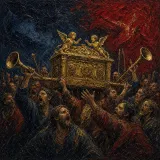
Absalom does not seize Jerusalem first; he works on Israel's imagination at the gate. He gives every petitioner the same flattering verdict, laments the justice they supposedly cannot reach, and turns personal warmth into political capital until the book says he has "stole the hearts" of Israel. David answers the resulting revolt by leaving Jerusalem rather than making the city absorb the first blow. The flight strips kingship down to loyalties that cannot be staged. Ittai, the recent foreign arrival, refuses permission to leave. David sends the ark back instead of carrying it as proof that God must restore him. He then prays that Ahithophel's counsel be defeated, and Hushai appears at the summit as a practical answer taking human form. By the time Absalom enters Jerusalem, David's crown is absent from the city, but his network of faithfulness is already inside it.
In this chapter
- A Verdict Offered Before the Other Side Is Heard 2 Samuel 15:1-6
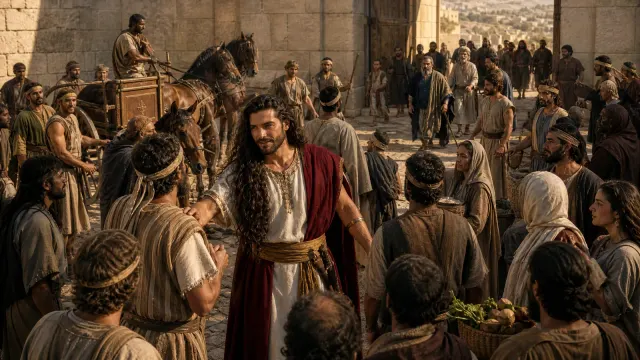
Absalom's most effective campaign office is not a throne room but the road to the gate.
- A Vow Supplies Cover for a Claim to the Throne 2 Samuel 15:7-12
The stated purpose of Absalom's trip is religious, and that makes the deception sharper.
- Leaving the City Rather Than Making It the Battlefield 2 Samuel 15:13-18
The report David receives is about hearts before it is about armies: Israel's allegiance has shifted toward Absalom.
- The Newcomer Who Will Not Leave 2 Samuel 15:19-23
David gives Ittai every reasonable excuse to leave.
- The Ark Goes Back While David Keeps Walking 2 Samuel 15:24-29
The ark could have transformed David's retreat into a procession that looked sacred and secure.
- A Prayer Receives the Shape of a Returning Friend 2 Samuel 15:30-37
The ascent of Olivet looks nothing like a royal departure.

Scripture beside the summary
2 Samuel · King James Version · 372 Samuel 15:1-6
A Verdict Offered Before the Other Side Is Heard
Absalom's most effective campaign office is not a throne room but the road to the gate. Chariots, horses, and fifty runners create the royal silhouette, yet the real work happens when he intercepts petitioners before their cases reach the king. He can tell each man, "thy matters are good and right," because the other side has not been heard. That is the point. The verdict comes before judgment, and the complaint about access to justice comes packaged with the flattering suggestion that Absalom would fix it personally. Even his refusal to receive obeisance at a distance is politically useful. He takes the petitioner by the hand and kisses him, turning hierarchy into apparent intimacy. The Book of 2 Samuel names the result with unusual precision: Absalom steals hearts. Whatever genuine frustrations may have existed, the passage shows how he converts them into loyalty to himself.

Deep dive
Chariots, horses, and fifty runners give Absalom an imposing public approach, but his most effective position is beside the route to judgment. He rises early and intercepts men bringing disputes. The claim that their matters are good and right comes before any recorded hearing of the opposing parties. His attention feels individual while his answer is repeatable: the petition is valid, the present arrangements fail, and Absalom would provide justice.
He then closes the social distance physically. When a man approaches to bow, Absalom takes him and kisses him. The gesture offers recognition rather than requiring deference, while remaining part of a campaign for authority. The book's summary is precise: he steals the hearts of Israel. That description does not require declaring every complaint about the administration imaginary. It identifies the use Absalom makes of the complaints and the loyalty he transfers toward himself.
Words to trace: Absalom, Israel, king, judgment, cause, chariots
Verse-by-verse path
- 2 Samuel 15:1
Chariots, horses and men running ahead are exactly what Samuel warned a king would take Israel’s sons for: “some shall run before his chariots” (1 Samuel 8:11). Adonijah will stage the same display when he reaches for the throne (1 Kings 1:5). Absalom dresses for the part first.
- 2 Samuel 15:2
The city gate was where cases were heard (Ruth 4:1). Absalom rises early to be there before the king’s officials. His question, “Of what city art thou?”, sorts the petitioners, and the answer he wants is “one of the tribes of Israel”, the north, not Judah.
- 2 Samuel 15:3
“Good and right” is his verdict before the other party has spoken. “No man deputed of the king to hear thee” may point at a real gap as the kingdom grew, much as Moses once needed judges under him (Exodus 18); Absalom turns that gap into a grievance against his father.
- 2 Samuel 15:4
“Oh that I were made judge” is literally “who will make me judge?” It echoes the challenge thrown at the young Moses, “Who made thee a prince and a judge over us?” (Exodus 2:14), turned inside out into a wish.
- 2 Samuel 15:5
“Took him” is the verb for taking hold, used of Amnon seizing Tamar (13:11), here turned into a show of warmth. A prince lifting a man from the ground before he can bow and kissing him was unexpected, and remembered.
- 2 Samuel 15:6
“Stole the hearts” is an idiom for deceiving; Jacob “stole away unawares” from Laban, literally stole Laban’s heart (Genesis 31:20). The heart in Hebrew is the seat of judgment as well as feeling, so what Absalom steals is Israel’s mind as well as its affection.
2 Samuel 15:1-6
King James Version1And it came to pass after this, that Absalom prepared him chariots and horses, and fifty men to run before him.
2And Absalom rose up early, and stood beside the way of the gate: and it was so, that when any man that had a controversy came to the king for judgment, then Absalom called unto him, and said, Of what city art thou? And he said, Thy servant is of one of the tribes of Israel.
3And Absalom said unto him, See, thy matters are good and right; but there is no man deputed of the king to hear thee.
4Absalom said moreover, Oh that I were made judge in the land, that every man which hath any suit or cause might come unto me, and I would do him justice!
5And it was so, that when any man came nigh to him to do him obeisance, he put forth his hand, and took him, and kissed him.
6And on this manner did Absalom to all Israel that came to the king for judgment: so Absalom stole the hearts of the men of Israel.
2 Samuel 15:7-12
A Vow Supplies Cover for a Claim to the Throne
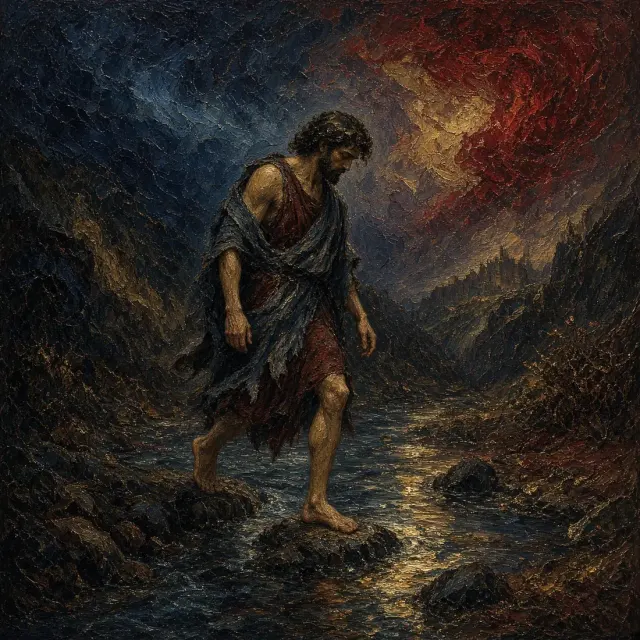
The stated purpose of Absalom's trip is religious, and that makes the deception sharper. He asks permission to go to Hebron to pay a vow made while he was in Geshur, and David sends him with "Go in peace." Under that peaceful authorization sits a coordinated proclamation of kingship. The trumpet will sound, messengers across Israel will announce that Absalom reigns, and Hebron, the city where David first ruled, becomes the launching point of the competing claim. Two hundred men travel with Absalom "in their simplicity." The Book of 2 Samuel explicitly protects them from being swept into the conspiracy merely because their bodies make the gathering look impressive. Ahithophel's arrival, however, adds real weight. The passage carefully separates unsuspecting guests, deliberate organizers, and growing public support. It also leaves the KJV's "forty years" difficulty visible rather than forcing a chronology the text itself does not explain.
Deep dive
The KJV reads "forty years" at the opening of this section. The figure creates a chronological difficulty if counted from Absalom's preceding return or activity. Ellicott's note identifies four years in the Syriac, many Vulgate witnesses, and Josephus; Poole's commentary discusses retaining forty and reckoning from an earlier starting point. The passage does not identify such a starting point. The difficulty should remain visible rather than turning into forty additional years inside David's forty-year reign.
Absalom's stated purpose is worship in fulfillment of a vow made in Geshur. David sends him away in peace, but the messengers distributed through Israel have another purpose: they are to announce his reign at the trumpet signal. Hebron, where David first ruled, becomes the launch point of the competing claim. The two hundred invited men are explicitly said to know nothing of the plan. Their presence must not be used as proof of willing complicity simply because Absalom benefits from their company.
Ahithophel's arrival adds weight to the conspiracy, and the people with Absalom continue to increase. The account distinguishes the plotters, the unsuspecting guests, and the growing support instead of giving everyone at Hebron one intention. David authorized a journey represented as fulfillment of a vow; the permission is not an endorsement of what the journey was designed to accomplish.
Words to trace: Absalom, Hebron, LORD, Jerusalem, king, vowed
Verse-by-verse path
- 2 Samuel 15:7
Hebron was where Absalom was born (3:2–3) and where David was first made king (2:4). A vow paid there would look like piety; a proclamation made there would look like history repeating itself.
- 2 Samuel 15:8
The vow copies Jacob’s at Bethel: if God brings me back to my father’s house in peace, then the LORD shall be my God (Genesis 28:20–21). “Serve the LORD” here means offer sacrifice. Absalom borrows the words of a returning exile.
- 2 Samuel 15:9
“Go in peace” are the last words David speaks to Absalom in the book. The son goes with the father’s blessing, and the word shalom sits in the name Absalom, “father of peace”.
- 2 Samuel 15:10
“Spies” is meraggelim, the word for the men Moses sent into Canaan (Numbers 13) and Joshua sent to Jericho (Joshua 2:1). The ram’s horn was the signal at a coronation (1 Kings 1:34). “Absalom reigneth” is the coronation shout, “Absalom is king”.
- 2 Samuel 15:11
“That were called” is the word for guests invited to a sacrificial feast, like those “bidden” to Samuel’s meal at Ramah (1 Samuel 9:13). Two hundred men of Jerusalem walking out with the prince would make the court look as though it was already with him.
- 2 Samuel 15:12
Giloh was a town in the hills of Judah near Hebron (Joshua 15:51). Absalom sends for the counsellor during the sacrifices, when the feast gave a gathering its cover, as Adonijah’s sacrifice would (1 Kings 1:9). “Conspiracy” is qesher, a knot, men bound together.
2 Samuel 15:7-12
King James Version7And it came to pass after forty years, that Absalom said unto the king, I pray thee, let me go and pay my vow, which I have vowed unto the LORD, in Hebron.
8For thy servant vowed a vow while I abode at Geshur in Syria, saying, If the LORD shall bring me again indeed to Jerusalem, then I will serve the LORD.
9And the king said unto him, Go in peace. So he arose, and went to Hebron.
10But Absalom sent spies throughout all the tribes of Israel, saying, As soon as ye hear the sound of the trumpet, then ye shall say, Absalom reigneth in Hebron.
11And with Absalom went two hundred men out of Jerusalem, that were called; and they went in their simplicity, and they knew not any thing.
12And Absalom sent for Ahithophel the Gilonite, David’s counsellor, from his city, even from Giloh, while he offered sacrifices. And the conspiracy was strong; for the people increased continually with Absalom.
2 Samuel 15:13-18
Leaving the City Rather Than Making It the Battlefield
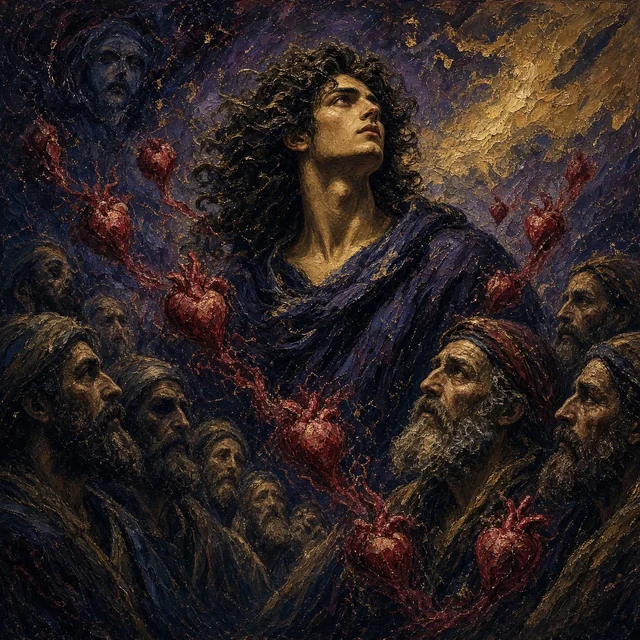
The report David receives is about hearts before it is about armies: Israel's allegiance has shifted toward Absalom. His answer is immediate departure. That can look like surrender if the focus stays only on the palace, but David names another concern himself. If Absalom overtakes them suddenly, Jerusalem may be struck with the sword. The king therefore refuses to make possession of the capital worth a first round of bloodshed inside it. As the company leaves, the Book of 2 Samuel slows down enough to show the scale of displacement. Household members, servants, Cherethites, Pelethites, and six hundred Gittites move past the king. Ten concubines remain to keep the house, a practical line here that will become grievous later. The flight is not just one man's escape. A political collapse is becoming the movement of an entire household and its attached communities toward uncertainty.
Deep dive
The messenger's report concerns Israel's hearts, echoing the work Absalom has been doing at the gate. David's response is urgency. He fears being overtaken and the city being struck, so he orders departure rather than immediately defending the palace. His servants commit themselves to his decision. The flight is therefore not described only as personal escape; David expressly includes the danger to Jerusalem in his stated reason for going.
The procession passes the king as he pauses at its edge. Household members, servants, and named military groups become visible one group at a time. Among the notices is the decision to leave ten concubines to keep the house. Their remaining presence may look like a practical detail here, but chapter 16 will make it grievously consequential. The book records them before Absalom reaches the roof, preventing their later treatment from appearing as an incident involving people who had no prior place in the account.
Words to trace: king, servants, Absalom, David, passed, appoint
Verse-by-verse path
- 2 Samuel 15:13
“The hearts of the men of Israel are after Absalom” uses the phrase of 2:10, where the house of Judah “followed” David, literally were after him. The same idiom that made David king of Judah now reports his loss of Israel.
- 2 Samuel 15:14
Jerusalem was a fortress David had taken from people who thought it could not fall (5:6). He does not trust it to hold against his own people, and he chooses the open country he knew from years of flight. “Suddenly” is haste: he has no time to wait for news.
- 2 Samuel 15:15
The servants answer with the courtier’s blank cheque: whatever the king chooses. “Appoint” is the verb for choosing, the same one David used of the LORD choosing him over Saul (6:21). On this day the king’s choice is to leave.
- 2 Samuel 15:16
The ten concubines left to keep the house will be taken by Absalom on the palace roof (16:22), and afterwards David will shut them up “unto the day of their death” (20:3). They are named here, as the king walks out, before any of that has happened.
- 2 Samuel 15:17
“A place that was far off” is probably a proper name, Beth-merhak, “the far house”, the last building on the edge of the city. The king halts there to watch his people pass.
- 2 Samuel 15:18
Six hundred Gittites is the same number of men who went with David to Gath when he fled from Saul (1 Samuel 27:2). The Cherethites and Pelethites, the foreign guard, pass first. The men closest to the king in his flight are mostly not Israelites.
2 Samuel 15:13-18
King James Version13And there came a messenger to David, saying, The hearts of the men of Israel are after Absalom.
14And David said unto all his servants that were with him at Jerusalem, Arise, and let us flee; for we shall not else escape from Absalom: make speed to depart, lest he overtake us suddenly, and bring evil upon us, and smite the city with the edge of the sword.
15And the king’s servants said unto the king, Behold, thy servants are ready to do whatsoever my lord the king shall appoint.
16And the king went forth, and all his household after him. And the king left ten women, which were concubines, to keep the house.
17And the king went forth, and all the people after him, and tarried in a place that was far off.
18And all his servants passed on beside him; and all the Cherethites, and all the Pelethites, and all the Gittites, six hundred men which came after him from Gath, passed on before the king.
2 Samuel 15:19-23
The Newcomer Who Will Not Leave
David gives Ittai every reasonable excuse to leave. The Gittite is a stranger, an exile, and newly arrived. David cannot even promise a destination, only that he is going "whither I may." Loyalty here is not rewarded with a secure appointment or a functioning court. It means following a displaced king toward the wilderness with no guarantee that Jerusalem will ever be recovered. Ittai's answer therefore lands with unusual force: where David is, in life or in death, he will be there also. The contrast is hard to miss. David's own son has drawn Israel away, while a man from Gath, with no long claim on the kingdom, refuses release from service. The Book of 2 Samuel does not turn that contrast into a rule about foreigners and Israelites. It simply lets the loyalties in this moment stand. Ittai's men and their little ones cross too, making faithfulness a family burden as well as a soldier's oath.
Deep dive
David calls Ittai a stranger and an exile and emphasizes how recently he has arrived. He offers him a return rather than making hospitality into a debt payable through immediate hardship. David cannot promise a destination or a secure court; he says he will go where he may. The invitation to leave is therefore concrete. Remaining with him means joining uncertainty, not merely retaining a place in a functioning royal household.
Ittai answers with an oath of continued presence in life or death. His origin in Gath places this commitment beside the rebellion of David's own son and the wavering of Israelites. The contrast is about the loyalties recorded in the scene, not a claim that nationality reliably predicts faithfulness. His men and the little ones with him cross together. The departure includes families whose movement gives the king's crisis a scale larger than the decisions of military leaders.
Words to trace: king, Ittai, passed, LORD, Gittite, liveth
Verse-by-verse path
- 2 Samuel 15:19
Ittai’s name may mean “with me”. David tells him to go back and “abide with the king”, meaning Absalom. He already uses the title for the son who has taken his throne. “Stranger” is nokhri, a foreigner, and “exile” one driven from his own home.
- 2 Samuel 15:20
“Go up and down” is to wander, the verb behind Cain’s sentence, “a fugitive and a vagabond” (Genesis 4:12). David has nothing to offer but wandering. “Mercy and truth be with thee” asks God to give Ittai the reward the king can no longer pay.
- 2 Samuel 15:21
Ittai’s oath echoes Ruth, another foreigner, to Naomi: where you go I will go, where you die I will die (Ruth 1:16–17). He swears by the LORD first and by the king second, and names death before life.
- 2 Samuel 15:22
“Pass over” is ‘avar, to cross, and the verb comes again and again in these verses: servants cross, the Gittites cross, the people cross, the king crosses. The little ones cross too; Ittai brings his whole household into exile.
- 2 Samuel 15:23
The Kidron is the valley between Jerusalem and the Mount of Olives; Jesus crosses it with his disciples on the night of his arrest (John 18:1). “All the country wept” gives the land a voice. The road leads east toward the wilderness and the Jordan.
2 Samuel 15:19-23
King James Version19Then said the king to Ittai the Gittite, Wherefore goest thou also with us? return to thy place, and abide with the king: for thou art a stranger, and also an exile.
20Whereas thou camest but yesterday, should I this day make thee go up and down with us? seeing I go whither I may, return thou, and take back thy brethren: mercy and truth be with thee.
21And Ittai answered the king, and said, As the LORD liveth, and as my lord the king liveth, surely in what place my lord the king shall be, whether in death or life, even there also will thy servant be.
22And David said to Ittai, Go and pass over. And Ittai the Gittite passed over, and all his men, and all the little ones that were with him.
23And all the country wept with a loud voice, and all the people passed over: the king also himself passed over the brook Kidron, and all the people passed over, toward the way of the wilderness.
2 Samuel 15:24-29
The Ark Goes Back While David Keeps Walking
The ark could have transformed David's retreat into a procession that looked sacred and secure. He refuses that use of it. Zadok and the Levites bring the ark out, but David sends it back to Jerusalem and leaves his own return open to the LORD's decision. He may see the ark and its habitation again, or he may hear, in effect, that the LORD has no delight in him. That uncertainty is not weakness added by a commentator; David says it himself. At the same time, he does not confuse surrender to divine judgment with passivity. The priests remain in the city, their sons can carry intelligence, and David will wait near the wilderness until news comes. The Book of 2 Samuel therefore places reverence and practical planning in the same decision. David will not use the ark as leverage on God, but he will use faithful people as messengers while he waits to learn what restoration, if any, is still open to him.
Deep dive
The priests arrive with the ark, which could have remained at the center of a departing royal procession. David instead orders it returned to the city. He does not treat its presence beside him as an object that can secure victory or require the LORD to endorse his position. His words hold two possibilities open: he may be brought back to see its dwelling, or the LORD may not delight in him. The uncertainty is expressed by David himself, not imposed on the scene from outside.
Sending the ark back does not mean abandoning communication or refusing practical help. The priests remain in the city, and their sons can carry news while David waits near the wilderness crossing. Worship and planning are not set against one another. David relinquishes physical possession of the ark while retaining a network of people who can act. The king who brought it into Jerusalem amid celebration now refuses to remove it simply to make his flight look divinely secured.
Words to trace: Zadok, Abiathar, city, king, Ahimaaz, back
Verse-by-verse path
- 2 Samuel 15:24
This time the ark is carried properly, by Levites, the lesson of 6:13. “Abiathar went up” may mean he offered sacrifices, since “go up” is also the verb for a burnt offering. They set it down and wait until the whole city has gone past.
- 2 Samuel 15:25
“His habitation” is naveh, the word for a pasture or dwelling, the same used for the sheepcote David was taken from (7:8). David speaks of the ark’s house, not his own. His return is conditional: “if I shall find favour”.
- 2 Samuel 15:26
“Delight” is chafets, the word Samuel used when he asked whether the LORD delights in sacrifices as much as in obeying (1 Samuel 15:22). “Here am I” is hinneni, the answer of Abraham and of the boy Samuel, spoken by a king leaving his city.
- 2 Samuel 15:27
“Art not thou a seer?” may mean “do you see?”, do you understand what I need. A seer, ro’eh, was the old title for a prophet (1 Samuel 9:9). The two sons, Ahimaaz and Jonathan, are the runners who will carry the news.
- 2 Samuel 15:28
The Hebrew consonants read “fords of the wilderness”, the crossings of the Jordan; the margin reads “plains”. Either way, David will wait at the last point before the river, where a message can still reach him.
- 2 Samuel 15:29
The ark goes back and stays for the whole revolt. The two priests remain in the city as David’s men, which gives Absalom the ark and David the priests.
2 Samuel 15:24-29
King James Version24And lo Zadok also, and all the Levites were with him, bearing the ark of the covenant of God: and they set down the ark of God; and Abiathar went up, until all the people had done passing out of the city.
25And the king said unto Zadok, Carry back the ark of God into the city: if I shall find favour in the eyes of the LORD, he will bring me again, and shew me both it, and his habitation:
26But if he thus say, I have no delight in thee; behold, here am I, let him do to me as seemeth good unto him.
27The king said also unto Zadok the priest, Art not thou a seer? return into the city in peace, and your two sons with you, Ahimaaz thy son, and Jonathan the son of Abiathar.
28See, I will tarry in the plain of the wilderness, until there come word from you to certify me.
29Zadok therefore and Abiathar carried the ark of God again to Jerusalem: and they tarried there.
2 Samuel 15:30-37
A Prayer Receives the Shape of a Returning Friend
The ascent of Olivet looks nothing like a royal departure. David climbs barefoot, head covered, weeping, while the people with him mirror the same mourning. Then the danger acquires a name: Ahithophel, whose counsel carries enormous weight, has joined Absalom. David's prayer is correspondingly specific. He asks that Ahithophel's counsel be turned to foolishness, not because the man is already foolish, but because his wisdom in the wrong service is dangerous. At the summit, Hushai appears in torn clothing and dust. David does not keep the grieving friend beside him for comfort. He sends him back into Jerusalem to frustrate Ahithophel and to pass intelligence through Zadok, Abiathar, and their sons. The Book of 2 Samuel places prayer and means side by side without treating them as rivals. Hushai enters the city just as Absalom arrives, so the next contest begins under the surface of apparently loyal speech.
Deep dive
Covered head, bare feet, and weeping replace the outward signs of royal security. The people accompanying David mirror his mourning. News of Ahithophel's allegiance makes the danger more precise, and David prays that the counselor's advice become foolishness. The request does not claim that Ahithophel lacks ability. It recognizes how dangerous that ability has become when placed at Absalom's disposal.
Hushai meets David at the summit with torn clothing and earth on his head. David sends him back rather than adding him to the company in flight. His task is to counter Ahithophel and pass information through the priests. The answer to the prayer is not yet complete, but the account places an actionable means beside it. Hushai enters Jerusalem as Absalom arrives. The closing simultaneity puts the next contest inside the city, where allegiance will be hidden beneath apparently loyal words.
Words to trace: David, Absalom, Ahithophel, head, servant, Abiathar
Verse-by-verse path
- 2 Samuel 15:30
This is the first time the Mount of Olives is named in the Bible, “the ascent of the olives”. A covered head and bare feet were signs of mourning and humiliation (Isaiah 20:2). The procession that danced the ark up to Zion (6:15) now climbs the opposite hill weeping.
- 2 Samuel 15:31
“Foolishness” is the verb Isaiah uses when the LORD “maketh their knowledge foolish” (Isaiah 44:25). David prays against the one man whose advice, the book says, was valued “as if a man had enquired at the oracle of God” (16:23).
- 2 Samuel 15:32
The summit was evidently a place of worship. Hushai is an Archite, of a clan on the border of Ephraim and Benjamin (Joshua 16:2), so he is not from Judah, which makes him believable to a prince courting the north. His torn coat and dust are the mourner’s signs.
- 2 Samuel 15:33
“A burden” is massa, a load to carry. Hushai may have been too old for a march through the wilderness; David has better use for him in the city.
- 2 Samuel 15:34
David writes Hushai’s lines for him, word by word, as Joab wrote the woman of Tekoa’s (14:3). The formula “I have been thy father’s servant… so will I now also be thy servant” is true enough in its words to be spoken without blushing.
- 2 Samuel 15:35
Hushai is to report everything he hears “out of the king’s house”, meaning Absalom’s court. The priests become the middle link: the counsellor listens, the priests pass it on.
- 2 Samuel 15:36
Ahimaaz and Jonathan are the runners at the end of the chain. They will hide in a well at Bahurim with a covering spread over its mouth (17:18–19). The whole intelligence network is laid out before a single message is sent.
- 2 Samuel 15:37
“David’s friend” was an official title, the king’s companion (1 Chronicles 27:33). Hushai enters the city at the same moment Absalom does, the Hebrew placing the two arrivals side by side in one line.
2 Samuel 15:30-37
King James Version30And David went up by the ascent of mount Olivet, and wept as he went up, and had his head covered, and he went barefoot: and all the people that was with him covered every man his head, and they went up, weeping as they went up.
31And one told David, saying, Ahithophel is among the conspirators with Absalom. And David said, O LORD, I pray thee, turn the counsel of Ahithophel into foolishness.
32And it came to pass, that when David was come to the top of the mount, where he worshipped God, behold, Hushai the Archite came to meet him with his coat rent, and earth upon his head:
33Unto whom David said, If thou passest on with me, then thou shalt be a burden unto me:
34But if thou return to the city, and say unto Absalom, I will be thy servant, O king; as I have been thy father’s servant hitherto, so will I now also be thy servant: then mayest thou for me defeat the counsel of Ahithophel.
35And hast thou not there with thee Zadok and Abiathar the priests? therefore it shall be, that what thing soever thou shalt hear out of the king’s house, thou shalt tell it to Zadok and Abiathar the priests.
36Behold, they have there with them their two sons, Ahimaaz Zadok’s son, and Jonathan Abiathar’s son; and by them ye shall send unto me every thing that ye can hear.
37So Hushai David’s friend came into the city, and Absalom came into Jerusalem.
Questions to keep in mind while reading
- Track who acts, who speaks, who is affected, and what changes.
- Notice repeated promises, failures, rescues, and consequences.
- Do not assume the account approves every action that is reported.
Text first
Where readers differ
The chapter summary begins with what the passage says and how its parts fit together. It does not assume one denomination has already settled every question. Where a conclusion depends on a tradition, literary theory, or historical reconstruction, that dependence is named openly.
The KJV text is presented first. Interpretive conclusions are labeled, and differences are introduced only when they help a reader understand why serious communities do not always reach the same answer.
Comparative interpretive notes for this chapter are in preparation. Until reviewed notes are ready, this page separates the KJV text from summary and application without claiming that serious readers agree on every question.
Questions beneath the surface
- What account of God, human freedom, responsibility, and the good life emerges from 2 Samuel 15?
- Which tension does the chapter refuse to resolve quickly?
- What changes when the chapter is read as part of the whole canon rather than as an isolated moral lesson?
- Where might a sincere reader confuse a familiar tradition with something the text states directly?
Questions for serious personal contemplation
These open-ended questions make room for tension, honest response, prayer, and conclusions that remain accountable to the chapter.
Observe without rushing
What part of 2 Samuel 15 makes you stop, feel unsettled, or feel surprised, and why?
Which detail in the passage would be easiest to overlook? How does that detail change your understanding?
Where do you see tension between what happens and this focus: 2 Samuel 15 develops its own movement around king, Absalom, LORD, city, David?
What important question does the passage leave open instead of resolving quickly?
Examine your inner life honestly
Which person, response, fear, or desire in the passage feels most like your own life right now?
What assumption about God, other people, or yourself does this text challenge?
Which part would you rather soften, avoid, or explain away too quickly? What might that reaction reveal?
If this Scripture could ask you one direct question, what do you think it would ask?
Respond with wisdom and courage
What do you need to remember, confess, grieve, thank God for, or trust after reading this passage?
How might another faithful person read this situation differently without ignoring the text?
What obedient response would be costly, uncomfortable, or slow, yet still faithful to Scripture?
What question will you carry into prayer this week, and which verses will you keep in front of you?
Music and video connected to the passage
Related media appears when its Scripture reference overlaps this study. Music and video can illuminate a theme while the biblical text remains the foundation.