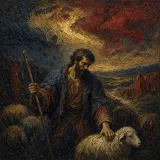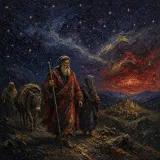
The big picture
Jacob reaches his relatives and falls in love with Rachel. Seven years of labor lead to a wedding, but Laban substitutes Leah. The deceiver experiences deception, while the sisters become caught in a household organized by unequal affection.
In this chapter
- Arrival at the Well Genesis 29:1-14
Jacob meets shepherds, sees Rachel approaching with Laban's flock and helps water the animals.
- Years of Service and a Substituted Bride Genesis 29:15-30
Jacob agrees to serve seven years for Rachel.
- The Lord Sees Leah Genesis 29:31-35
The narrative turns from Jacob's preference to Leah's suffering.
Scripture beside the summary
Genesis · King James Version · 35Genesis 29:1-14
Arrival at the Well
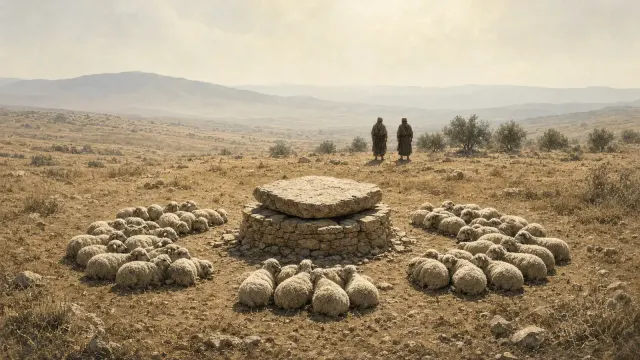
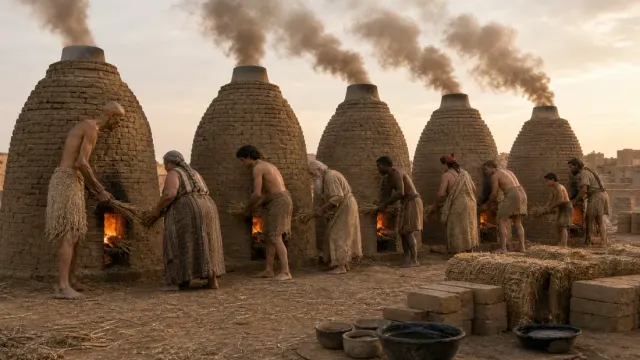
Jacob meets shepherds, sees Rachel approaching with Laban's flock and helps water the animals. Recognition brings him into his mother's family. The well encounter recalls earlier family meetings while beginning a distinct account of labor, love and conflict.
Deep dive
The conversation narrows the distance to Jacob's destination in stages: the shepherds are from Haran, they know Laban, he is well, and his daughter is approaching. The account lets the family connection arrive through ordinary questions and answers rather than another dream. Jacob has scarcely introduced himself before offering instructions about the shepherds' working day. Their answer explains the local arrangement: the flocks gather before the stone is moved.
When Rachel arrives, Jacob rolls the stone away and waters her father's sheep. Genesis repeats the relationship to Laban several times, making the encounter more than a meeting with a beautiful stranger. He has reached the household to which he was sent. His kiss and tears, followed by Rachel's run to tell her father, make that recognition visible without requiring speculation about everything he thinks.
Laban's declaration that Jacob is his bone and flesh sounds like secure belonging. Within a month, however, the vocabulary will shift to service and wages. Kinship is real, but it will not keep the household's dealings from becoming business. The warmth of the welcome and the negotiations that follow belong to the same home.
Words to trace: Jacob, Laban, sheep, mouth, Rachel, stone
Verse-by-verse path
- Genesis 29:1
“Went on his journey” is literally “lifted up his feet”, an idiom found nowhere else in the Old Testament. Rashi took it to mean that after Bethel his heart was light and his feet with it. The land of the people of the east is the region of the upper Euphrates, where Haran lay.
- Genesis 29:2
The Hebrew opens three clauses in a row with “behold”, and the scene arrives as Jacob sees it: a well, three flocks lying by it, a great stone on its mouth. A stone that size was a lock; no one could draw water without the others there to help lift it.
- Genesis 29:3
The verbs here are habitual. The verse describes what the shepherds usually did, day after day, not what happened this afternoon, and it explains the custom before Jacob arrives to break it.
- Genesis 29:4
“My brethren” is Jacob’s courtesy to strangers. “Of Haran are we” tells him in three words that the month-long journey is over. Haran is where Terah, Abraham’s father, died (11:32), and where Abraham started from.
- Genesis 29:5
Laban is called “the son of Nahor” though he is Nahor’s grandson, the son of Bethuel. The shepherds would know the family by its head, the way a clan is known by its founder. Their reply is two words: we know.
- Genesis 29:6
“Is he well?” is literally “is there peace to him?”, hashalom lo. Joseph asks his brothers the same question about Jacob in 43:27, “Is your father well?” The answer comes with a turn: Rachel “cometh”, a participle, is arriving as they speak.
- Genesis 29:7
“High day” means broad daylight, hours before the flocks would normally be brought in. Jacob, a shepherd by upbringing, tells strangers how to do their work. Some readers suspect he wanted them gone before Rachel reached the well; the text only gives his advice.
- Genesis 29:8
“We cannot” is a matter of agreement, not strength: the stone is moved when every flock has come, so that the water is shared fairly. The shepherds describe the rule that Jacob is about to ignore.
- Genesis 29:9
Rachel “kept” the sheep: she was a shepherdess, as the seven daughters of the priest of Midian are when Moses meets them at a well in Exodus 2:16. Her name means ewe. She is doing a working shepherd’s job, not passing by.
- Genesis 29:10
“Rolled” is galal. When Jacob leaves Laban twenty years later, the two of them pile stones into a heap, gal, and call it Galeed (31:46–47). His time in Laban’s country starts with a stone rolled away and ends with a heap of stones set up between them.
- Genesis 29:11
Scholars have noted that the Hebrew for “watered” in verse 10, vayyashq, and “kissed” here, vayyishaq, are written with the same consonants. He weeps aloud, at the end of a journey made alone, before he has said who he is.
- Genesis 29:12
“Her father’s brother” means kinsman, since Jacob is Laban’s nephew. He gives Rachel the relationship her father would recognise first, then names his mother, not his father. Rachel runs home as Rebekah once ran home from the same kind of meeting in 24:28.
- Genesis 29:13
Laban runs, embraces and kisses, the same eagerness he showed on seeing the gold in 24:29–30. A midrash has him embrace Jacob to feel for jewels and kiss him to check his mouth for pearls, reading chapter 24 back into this. “All these things” is left unspecified; whether Jacob told of Esau we are not told.
- Genesis 29:14
“My bone and my flesh” is Adam’s phrase for Eve in 2:23, and Israel’s tribes use it to David in 2 Samuel 5:1: “we are thy bone and thy flesh.” “The space of a month” is literally a month of days. After that, family becomes business.
Genesis 29:1-14
King James Version1Then Jacob went on his journey, and came into the land of the people of the east.
2And he looked, and behold a well in the field, and, lo, there were three flocks of sheep lying by it; for out of that well they watered the flocks: and a great stone was upon the well’s mouth.
3And thither were all the flocks gathered: and they rolled the stone from the well’s mouth, and watered the sheep, and put the stone again upon the well’s mouth in his place.
4And Jacob said unto them, My brethren, whence be ye? And they said, Of Haran are we.
5And he said unto them, Know ye Laban the son of Nahor? And they said, We know him.
6And he said unto them, Is he well? And they said, He is well: and, behold, Rachel his daughter cometh with the sheep.
7And he said, Lo, it is yet high day, neither is it time that the cattle should be gathered together: water ye the sheep, and go and feed them.
8And they said, We cannot, until all the flocks be gathered together, and till they roll the stone from the well’s mouth; then we water the sheep.
9And while he yet spake with them, Rachel came with her father’s sheep: for she kept them.
10And it came to pass, when Jacob saw Rachel the daughter of Laban his mother’s brother, and the sheep of Laban his mother’s brother, that Jacob went near, and rolled the stone from the well’s mouth, and watered the flock of Laban his mother’s brother.
11And Jacob kissed Rachel, and lifted up his voice, and wept.
12And Jacob told Rachel that he was her father’s brother, and that he was Rebekah’s son: and she ran and told her father.
13And it came to pass, when Laban heard the tidings of Jacob his sister’s son, that he ran to meet him, and embraced him, and kissed him, and brought him to his house. And he told Laban all these things.
14And Laban said to him, Surely thou art my bone and my flesh. And he abode with him the space of a month.
Genesis 29:15-30
Years of Service and a Substituted Bride
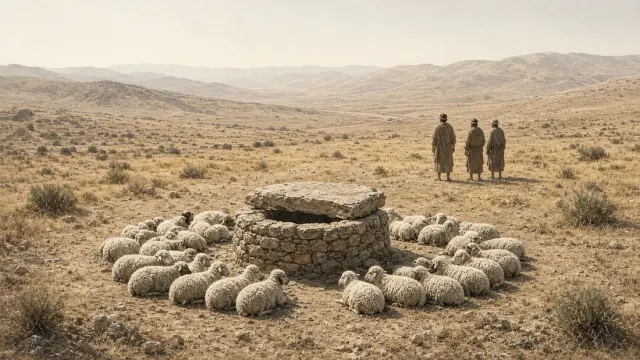
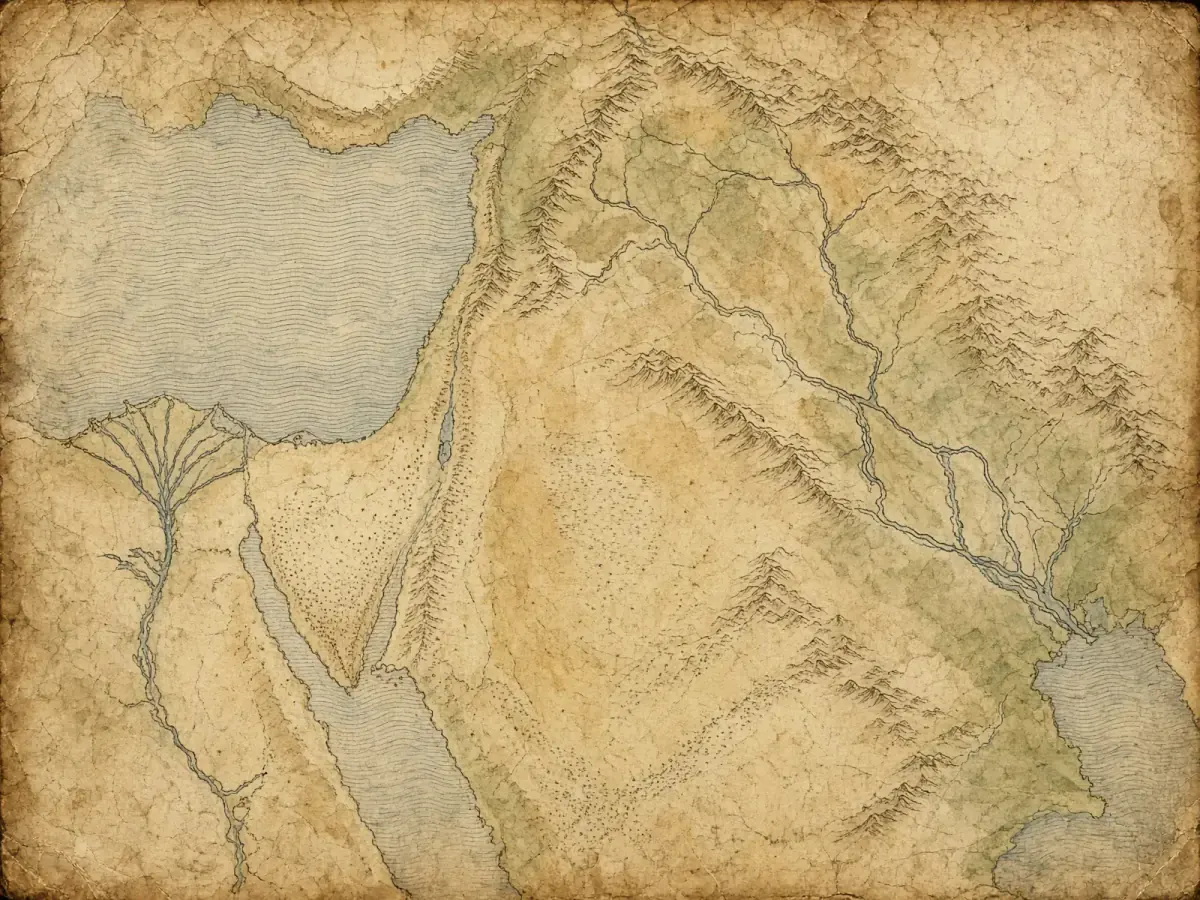
Jacob agrees to serve seven years for Rachel. At the wedding Laban gives Leah instead and appeals to the local custom of marrying the older daughter first. Jacob completes Leah's wedding week, receives Rachel and undertakes another seven years of service.
Deep dive
Laban raises wages as a reasonable question about unpaid work between relatives. Jacob's answer names Rachel, the younger daughter, with unusual precision. The arrangement is not merely for a wife from the family; the woman and her place among the sisters are specified. Laban responds that Jacob is preferable to another man and invites him to remain. Those words will acquire a harder edge when the wedding arrives.
The Hebrew rak behind Leah's "tender" eyes can describe softness, delicacy, or weakness. The brief description has therefore been understood in different ways, and it does not justify a confident portrait of Leah as unattractive or disabled. Rachel's beauty and Jacob's love are stated; Leah's entire appearance is not.
The seven years seem to Jacob like a few days because he loves Rachel. That is Genesis' own explanation of his experience, not a sentiment added to soften the work. The phrase also recalls Rebekah's proposed "few days" of absence in 27:44. What was supposed to be a short stay has become years of labour, and affection makes those years feel brief before Laban makes them costly again.
Jacob asks for the wife for whom the agreed days have been fulfilled. Laban gathers the men of the place for a feast, but the public celebration does not guarantee that the private agreement is being honoured. In the evening Laban brings Leah. The account supplies the substitution and its discovery, not a detailed explanation of how every opportunity for recognition was prevented.
The short announcement "behold, it was Leah" gives the morning its force. Jacob now asks the sort of question his own actions provoked in the previous household: what has been done to him, and why has he been deceived. There is no need to imagine that he explicitly remembers Isaac's darkened room. The placement of the two episodes already makes the reversal available.
Leah is not allowed a speech in this transaction. Laban acts, Jacob discovers, and Jacob protests. Her presence should not be mistaken for evidence that Genesis has explained her degree of agreement or her private feelings. The next verses will disclose the resulting imbalance in the marriage, and the chapter's final movement will finally give her words rather than only a place in someone else's bargain.
Laban's defence is that the younger daughter is not given before the firstborn in his country. It is useful information to provide before seven years of labour, rather than the morning after a wedding. More seriously, the particular words strike the central issue of Jacob's own family: the younger and the firstborn. The man who benefited from an older sibling's displacement now encounters a firstborn claim that works against him.
Laban does not offer to undo the substitution. He uses it as the basis for a new arrangement. Jacob must complete Leah's week, receive Rachel, and undertake another seven years of service. The sequence matters: Rachel is given after the wedding week, not withheld until those additional seven years have passed. The service is a further obligation arising from the second marriage.
The final sentence measures the result in affection as well as labour. Jacob loves Rachel more than Leah. Laban has obtained the work and placed both daughters in the household, but equal marital status has not produced equal love. The chapter turns immediately to the woman left on the disadvantaged side of that distinction.
Words to trace: Rachel, Jacob, Laban, Leah, name, serve, daughter, beguiled, days, evening, gave, seven, week
Verse-by-verse path
- Genesis 29:15
“For nought” is chinnam, free, without reason, the word the adversary uses in Job 1:9: “Doth Job fear God for nought?” “Wages”, maskoreth, will return as a grievance in 31:7, when Jacob says Laban changed his wages ten times.
- Genesis 29:16
Rachel means ewe, and Leah may come from a word for cow, related to an Akkadian term for a wild cow, a derivation some scholars favour and others doubt. Both daughters of a sheep-farmer would then carry the names of livestock. Genesis introduces them by age, elder and younger, the order that will decide the wedding.
- Genesis 29:17
“Beautiful and well favoured” is literally beautiful of form and beautiful of appearance. Exactly the same double phrase is used of Rachel’s son Joseph, “a goodly person, and well favoured” (39:6).
- Genesis 29:18
Jacob had nothing to give for a bride, so he offers his labour as the bride-price. Seven years of a skilled herdsman’s work is worth far more than the fifty shekels that Deuteronomy 22:29 later sets as a bride’s price; the comparison is only a rough guide, but the offer was generous.
- Genesis 29:19
Laban never says yes and never says Rachel’s name. “It is better that I give her to thee, than... to another man” is a comparison, not a promise, and “her” is a pronoun that will soon be made to mean someone else.
- Genesis 29:20
The prophet Hosea reaches back to this verse: “Israel served for a wife, and for a wife he kept sheep” (Hosea 12:12). “Served” is the same verb, avad, that marks the whole chapter. The love explains why the time went quickly, not why it was fair.
- Genesis 29:21
“Give me” is havah, a blunt imperative. Rachel will use the same word to Jacob in 30:1, “Give me children, or else I die”. Jacob’s speech here is plain to the point of crudeness, and he names his wife by her claim on him, not by her name.
- Genesis 29:22
The feast, mishteh, is literally a drinking. Laban gathers “all the men of the place”, the whole community as witnesses to the marriage. Some readers think the drinking helped the deception; Genesis does not say how much Jacob drank.
- Genesis 29:23
“In the evening” the bride is brought in the dark. A midrash in Genesis Rabbah has Jacob call “Rachel” through the night and Leah answer; in the morning, when he calls her a deceiver, she replies: did not your father call you Esau, and you answered? It is a later reading, but it names exactly the echo.
- Genesis 29:24
The note about Zilpah interrupts the wedding night like a clause in a contract. A maid given with a daughter was part of her dowry and stayed hers. Zilpah will bear Gad and Asher in 30:9–13.
- Genesis 29:25
“Did not I serve with thee?” uses avad, serve, the word that has run through this chapter. The oracle over Jacob’s birth said “the elder shall serve the younger” (25:23), and Isaac’s blessing said “let people serve thee” (27:29). The blessed younger brother is spending his years serving.
- Genesis 29:26
“In our country” is literally “in our place”, bimqomenu, the word Jacob used of Bethel (28:16–17). Laban says “firstborn”, bekhirah, a rare feminine form, when he could simply have said “elder” as in verse 16. He chooses the word that would sting.
- Genesis 29:27
“Her week” is the seven days of wedding feasting, the span of Samson’s wedding feast in Judges 14:12. Laban speaks of Rachel as “this also”, zot, without her name, and adds seven more years in the same breath.
- Genesis 29:28
The later law forbids exactly this marriage: “Neither shalt thou take a wife to her sister, to vex her... in her life time” (Leviticus 18:18). Genesis records it without comment, and the next two chapters show the rivalry the law would name.
- Genesis 29:29
Bilhah is given to Rachel as Zilpah was to Leah, the two sisters provided in parallel. Bilhah will bear Dan and Naphtali for Rachel (30:3–8), and Reuben will later lie with her (35:22).
- Genesis 29:30
The Hebrew has an unexpected “also”: he loved also Rachel, more than Leah. “Seven other years” brings Jacob’s service for his two wives to fourteen, and he adds six more for the flocks, twenty years in all (31:41).
Genesis 29:15-30
King James Version15And Laban said unto Jacob, Because thou art my brother, shouldest thou therefore serve me for nought? tell me, what shall thy wages be?
16And Laban had two daughters: the name of the elder was Leah, and the name of the younger was Rachel.
17Leah was tender eyed; but Rachel was beautiful and well favoured.
18And Jacob loved Rachel; and said, I will serve thee seven years for Rachel thy younger daughter.
19And Laban said, It is better that I give her to thee, than that I should give her to another man: abide with me.
20And Jacob served seven years for Rachel; and they seemed unto him but a few days, for the love he had to her.
21And Jacob said unto Laban, Give me my wife, for my days are fulfilled, that I may go in unto her.
22And Laban gathered together all the men of the place, and made a feast.
23And it came to pass in the evening, that he took Leah his daughter, and brought her to him; and he went in unto her.
24And Laban gave unto his daughter Leah Zilpah his maid for an handmaid.
25And it came to pass, that in the morning, behold, it was Leah: and he said to Laban, What is this thou hast done unto me? did not I serve with thee for Rachel? wherefore then hast thou beguiled me?
26And Laban said, It must not be so done in our country, to give the younger before the firstborn.
27Fulfil her week, and we will give thee this also for the service which thou shalt serve with me yet seven other years.
28And Jacob did so, and fulfilled her week: and he gave him Rachel his daughter to wife also.
29And Laban gave to Rachel his daughter Bilhah his handmaid to be her maid.
30And he went in also unto Rachel, and he loved also Rachel more than Leah, and served with him yet seven other years.
Genesis 29:31-35
The Lord Sees Leah
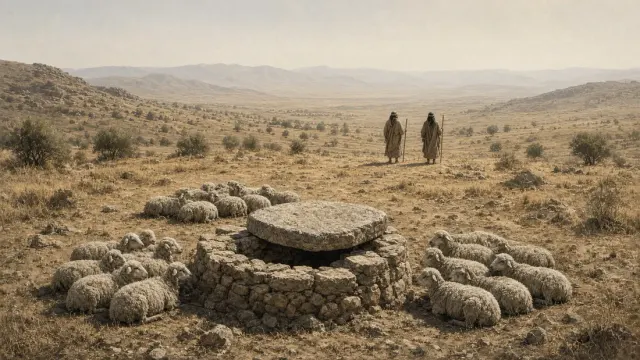
The narrative turns from Jacob's preference to Leah's suffering. She bears Reuben, Simeon, Levi and Judah, naming the children in ways that reveal longing, hurt and finally praise. Her experience is not a disposable obstacle in a romance about Jacob and Rachel.
Deep dive
The LORD's seeing answers a condition the household has already created. Verse 30 describes greater love for Rachel; verse 31 calls Leah "hated." The second term should not be erased, though the first helps establish the comparison in which it operates. Leah is the wife without her husband's equal affection, and the account takes that deprivation seriously.
Each naming speech does more than identify a child. Reuben's birth is linked to Leah's affliction and her hope for love. Simeon's name accompanies her claim that God has heard her rejection. With Levi, she hopes that bearing three sons will bind Jacob to her. These are Leah's expressed expectations, not reports that Jacob has actually changed. The repeated hope makes the absence of any reported answering affection increasingly noticeable.
At Judah's birth, her words turn to praising the LORD without adding another prediction about Jacob's response. That is a change in the naming speech; it is not proof that every longing has been permanently resolved. Genesis 30 will show the rivalry continuing. For this moment, however, the unloved wife is no longer only the subject of a marriage negotiation. Her own words give the ending its shape.
Words to trace: bare, conceived, LORD, name, hated, husband
Verse-by-verse path
- Genesis 29:31
“Opened her womb” is said of God only twice in Genesis, here for Leah and for Rachel in 30:22. Rachel joins Sarah (11:30) and Rebekah (25:21) as the third generation’s barren, beloved wife, while the unloved wife bears.
- Genesis 29:32
Reuben sounds like “see, a son”, re’u ben, but Leah explains it by another phrase, ra’ah be-onyi, “he hath looked upon my affliction”. The word for affliction, oni, is the one God uses at the bush: “I have surely seen the affliction of my people” (Exodus 3:7).
- Genesis 29:33
Simeon comes from shama, to hear, the verb in Ishmael’s name, “God hears”, given to Hagar in 16:11. Leah uses the word “hated” a second time, now of what God has heard. She names the grievance aloud each time she names a son.
- Genesis 29:34
Levi is linked with lavah, to join or attach. The same pun returns in Numbers 18:2–4, where the Levites are to be “joined” to Aaron. Unlike the others, the naming here is impersonal, “was his name called”, and a later tradition cited by Rashi says an angel gave it.
- Genesis 29:35
Judah is linked with yadah, to praise or give thanks. Jacob will play on the same word in his blessing: “Judah, thou art he whom thy brethren shall praise” (49:8). From this fourth son comes David’s line. “Left bearing” means she stopped for a time; she bears again in 30:17.
Genesis 29:31-35
King James Version31And when the LORD saw that Leah was hated, he opened her womb: but Rachel was barren.
32And Leah conceived, and bare a son, and she called his name Reuben: for she said, Surely the LORD hath looked upon my affliction; now therefore my husband will love me.
33And she conceived again, and bare a son; and said, Because the LORD hath heard that I was hated, he hath therefore given me this son also: and she called his name Simeon.
34And she conceived again, and bare a son; and said, Now this time will my husband be joined unto me, because I have born him three sons: therefore was his name called Levi.
35And she conceived again, and bare a son: and she said, Now will I praise the LORD: therefore she called his name Judah; and left bearing.
Questions to keep in mind while reading
- Track who acts, who speaks, who is affected, and what changes.
- Notice repeated promises, failures, rescues, and consequences.
- Do not assume the account approves every action that is reported.
Text first
Where readers differ
The chapter summary begins with what the passage says and how its parts fit together. It does not assume one denomination has already settled every question. Where a conclusion depends on a tradition, literary theory, or historical reconstruction, that dependence is named openly.
The KJV text is presented first. Interpretive conclusions are labeled, and differences are introduced only when they help a reader understand why serious communities do not always reach the same answer.
Does Genesis endorse every family arrangement it describes?
No. Polygamy, concubinage, enslavement, favoritism and inheritance disputes are narrated with their consequences. The fact that an ancestor participates in a practice is not a command for later readers. Genesis repeatedly exposes pain and injustice within the chosen household.
Keep the creation account's shared human dignity in view. Hear Leah's longing, Hagar's affliction, Rebekah's decision, Tamar's claim and the silence around Dinah's own response. Where the Book of Genesis does not record a person's consent or thoughts, do not invent them.
Genesis 1:27 · Genesis 16:6 · Genesis 24:58 · Genesis 29:31-35 · Genesis 34:1-31 · Genesis 38:26
Questions beneath the surface
- What account of God, human freedom, responsibility, and the good life emerges from Genesis 29?
- Which tension does the chapter refuse to resolve quickly, especially around family, deception, power and vulnerability?
- What changes when the chapter is read as part of the whole canon rather than as an isolated moral lesson?
- Where might a sincere reader confuse a familiar tradition with something the text states directly?
Questions for serious personal contemplation
These open-ended questions make room for tension, honest response, prayer, and conclusions that remain accountable to the chapter.
Observe without rushing
What part of Genesis 29 makes you stop, feel unsettled, or feel surprised, and why?
Which detail in the passage would be easiest to overlook? How does that detail change your understanding?
Where do you see tension between what happens and this focus: Love, deception and an overlooked woman?
What important question does the passage leave open instead of resolving quickly?
Examine your inner life honestly
Which person, response, fear, or desire in the passage feels most like your own life right now?
What assumption about God, other people, or yourself does this text challenge?
Which part would you rather soften, avoid, or explain away too quickly? What might that reaction reveal?
If this Scripture could ask you one direct question, what do you think it would ask?
Respond with wisdom and courage
What do you need to remember, confess, grieve, thank God for, or trust after reading this passage?
How might another faithful person read this situation differently without ignoring the text?
What obedient response would be costly, uncomfortable, or slow, yet still faithful to Scripture?
What question will you carry into prayer this week, and which verses will you keep in front of you?
Music and video connected to the passage
Related media appears when its Scripture reference overlaps this study. Music and video can illuminate a theme while the biblical text remains the foundation.