The big picture
Chapter 60 of the Book of Isaiah imagines Zion filled with arrivals, but the chapter carefully identifies the source of the light drawing them. The city shines because the glory of the LORD rises upon it, not because it discovers brightness hidden in its own resources. Nations and kings move toward that light, and the abstract promise quickly becomes crowded with returning children, camels, flocks, ships, silver, gold, timber, builders, and rulers. Former relationships of power are reversed as foreigners rebuild and kings serve, while open gates signal changed conditions rather than careless exposure. Yet the vision refuses to stop at better materials. Gold replaces brass, but peace and righteousness also replace the old character of officials. Violence disappears from the city’s soundscape. Finally even sun and moon cease to define its illumination, because the LORD himself is everlasting light. The people are his planting and handiwork, and their growth occurs on the timetable of the one who made them shine.
In this chapter
- The City Shines with a Light It Did Not Manufacture Isaiah 60:1-3
“Arise, shine” follows the announcement “thy light is come.” That order matters.
- The Horizon Fills with Children, Caravans, and Ships Isaiah 60:4-9
The first treasure named is not gold.
- Gates Stay Open Because the Direction of Power Has Changed Isaiah 60:10-14
Foreigners build Zion’s walls and kings minister to her, while the LORD explicitly interprets the reversal: “in my wrath I smote thee, but in my favour have I had mercy on thee.” The gates therefore remain open day and night.
- Better Materials Are Not Enough Without Different Officials Isaiah 60:15-18
Forsakenness and hatred are answered first with enduring public joy, then with provision from nations and kings.
- The Ending of Mourning Is Pictured as a Light Without Sunset Isaiah 60:19-20
The vision passes beyond every imported treasure and every rebuilt wall to its deepest claim about light.
- The Small Beginning Does Not Set the Final Size Isaiah 60:21-22
The chapter ends by describing the inhabitants themselves as part of the LORD’s workmanship.
Scripture beside the summary
Isaiah · King James Version · 22Isaiah 60:1-3
The City Shines with a Light It Did Not Manufacture
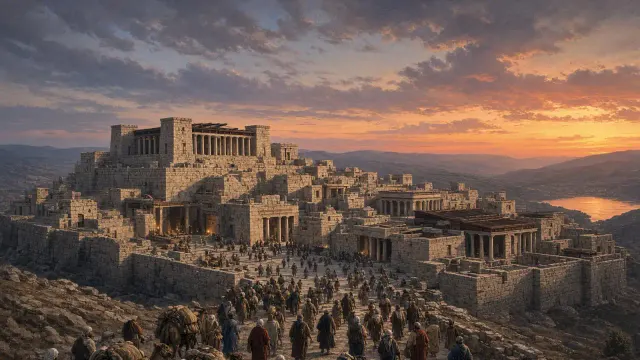
“Arise, shine” follows the announcement “thy light is come.” That order matters. Zion is not commanded to manufacture glory out of depletion, nor to pretend darkness has disappeared everywhere. Gross darkness still covers peoples and earth, but the LORD rises upon the city and his glory becomes visible there. Source and recipient remain distinct. The city shines because it receives a presence. Then the Book of Isaiah refuses to leave the nations as mere dark scenery that makes Zion look brighter by contrast. They move. Gentiles come to the light, and kings to the brightness of the rising. The glory rests particularly upon Zion while its attraction reaches beyond Zion’s existing population. Those two facts shape the rest of the chapter. What begins as a statement about light will gain bodies, roads, animals, ships, gates, rulers, and cargo. The city’s brightness is not a private possession but the visible location of a glory that draws others toward its source.
Deep dive
The command to arise follows the promise that the light has come. Zion is not instructed to produce glory out of its own diminished resources. The LORD rises upon the city, and his glory becomes visible there. The distinction between source and recipient governs the entire vision: the city shines because of the presence it receives.
The darkness covering earth and peoples provides the contrast in which that brightness is seen. Yet the nations are not left merely as a dark background against which Zion looks impressive. They move toward the light, with kings drawn into the same movement. The opening therefore combines particularity and reach. The glory is located upon Zion, but its visible purpose extends beyond Zion's existing inhabitants. What follows will give that movement bodies, cargo, names, roads, and gates, turning a declaration about light into a crowded account of arrival.
Words to trace: arise, darkness, glory, light, LORD, brightness
Verse-by-verse path
- Isaiah 60:1
Both imperatives are feminine: Zion is addressed as a woman, as in 52:2, where she was told to shake herself from the dust and arise. “Is risen” is zarach, the verb for the sun coming up, which gives the Hebrew word for the east. The light is announced as already here before she is told to stand in it.
- Isaiah 60:2
“Gross darkness” is araphel, the thick cloud of Sinai, “the thick darkness where God was” (Exodus 20:21). The picture recalls the ninth plague, when darkness lay over Egypt yet “all the children of Israel had light in their dwellings” (Exodus 10:23). The verb for the LORD arising is the sunrise verb again.
- Isaiah 60:3
“Thy rising” takes the sunrise verb used of the LORD in verses 1 and 2 and makes it Zion’s: the dawn that broke upon her is now called her own dawn. “Brightness”, nogah, is the glow of the sky as the light comes on. The Gentiles, goyim, are simply the nations, the peoples outside Israel.
Isaiah 60:1-3
King James Version1Arise, shine; for thy light is come, and the glory of the LORD is risen upon thee.
2For, behold, the darkness shall cover the earth, and gross darkness the people: but the LORD shall arise upon thee, and his glory shall be seen upon thee.
3And the Gentiles shall come to thy light, and kings to the brightness of thy rising.
Isaiah 60:4-9
The Horizon Fills with Children, Caravans, and Ships
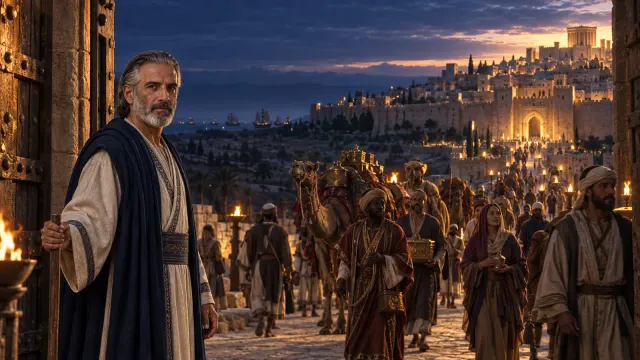
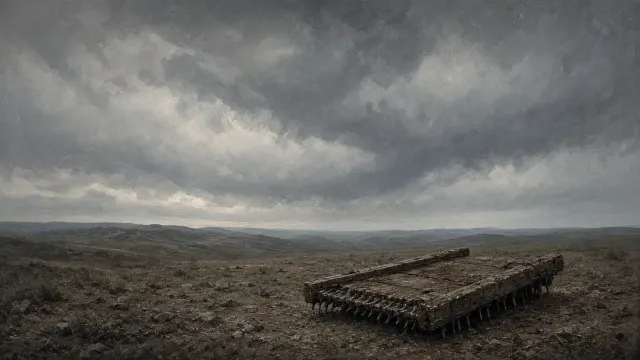
The first treasure named is not gold. It is people. Sons come from far away, daughters are carried close, and Zion’s own heart is described as trembling and enlarging at the sight. Only then does the Book of Isaiah fill the horizon with abundance from sea and land: camels from Midian and Ephah, travelers from Sheba, gold, incense, Kedar’s flocks, Nebaioth’s rams, and ships associated with Tarshish. The scene is almost noisy with movement. Yet the cargo is repeatedly directed toward worship. Praise of the LORD accompanies the gifts, animals come with acceptance at the altar, and the house of divine glory is itself glorified. Even the ships carry returning children along with silver and gold. Wealth does not replace the household; it arrives in service of a restored people and worship. The sea, often a source of menace in the imagery of the Book of Isaiah, now becomes a roadway. What once separated distant places helps bring the children home.
Deep dive
The first arrivals named are sons and daughters. Wealth follows, but the restoration begins with the household the city had lost. The heart's trembling and enlargement are stated in verse 5 rather than supplied as an imagined reaction. The scene is then filled with camels, gold, incense, flocks, and rams. The named peoples and places give the procession breadth, while praise and acceptance at the altar identify the purpose toward which the gifts move.
The cloudlike movement and doves returning to their openings lead into the ships of Tarshish bringing children from far away. The sea, which had often supplied Isaiah with images of menace, now carries the means of return. Silver and gold come with the people, not in place of them. The explanation again rests on the LORD having glorified Zion. These are not disconnected trophies of a city's newfound purchasing power. The traffic answers a divine action, and its cargo serves the restored household and the house of God's glory.
Words to trace: gold, LORD, sons, abundance, acceptance, altar
Verse-by-verse path
- Isaiah 60:4
The first half repeats 49:18 word for word, where the bereaved mother Zion was told to look up and see her children gathering. “Nursed at thy side” is literally “carried on the hip”, the way a small child rides on an adult; 66:12 returns to the picture of children “borne upon her sides”.
- Isaiah 60:5
“Flow together” reads a verb that also means to beam with joy, as in Psalm 34:5, “they looked unto him, and were lightened”; most modern versions have “be radiant”. “Forces” is chayil, which can mean an army but here, as in verse 11, means wealth. The heart that trembles and widens is a pulse racing with excitement.
- Isaiah 60:6
Ephah was a son of Midian in Genesis 25:4, so the two names are a father’s tribe and his son’s. Sheba in south Arabia was the land of the queen who brought Solomon gold and spices (1 Kings 10:2). This gold and incense, with the kings of verse 3, fed the later tradition that the Magi of Matthew 2:11 were kings.
- Isaiah 60:7
Nebaioth and Kedar are Ishmael’s first two sons in Genesis 25:13, and their flocks are the herds of the desert Arab tribes. “Minister” is sharat, the verb for priestly service, so the rams themselves serve at the altar. “Acceptance” is ratson again, the favour that the self-regarding fast of 58:5 failed to win.
- Isaiah 60:8
The “windows” are arubbot, the openings of a dovecote, the same word as the windows of heaven opened at the flood (Genesis 7:11). Doves at dusk fly straight for home. The question lets Zion see a white cloud on the horizon before she knows what it is; the next verse names ships.
- Isaiah 60:9
The ships of Tarshish were the great ocean-going merchantmen, named for a far western port, probably Tartessus in Spain. In 2:16 they stood among the proud things the day of the LORD would bring low, and in 23:1 they were told to howl over Tyre. Here they lead the fleet, and their cargo is Zion’s children.
Isaiah 60:4-9
King James Version4Lift up thine eyes round about, and see: all they gather themselves together, they come to thee: thy sons shall come from far, and thy daughters shall be nursed at thy side.
5Then thou shalt see, and flow together, and thine heart shall fear, and be enlarged; because the abundance of the sea shall be converted unto thee, the forces of the Gentiles shall come unto thee.
6The multitude of camels shall cover thee, the dromedaries of Midian and Ephah; all they from Sheba shall come: they shall bring gold and incense; and they shall shew forth the praises of the LORD.
7All the flocks of Kedar shall be gathered together unto thee, the rams of Nebaioth shall minister unto thee: they shall come up with acceptance on mine altar, and I will glorify the house of my glory.
8Who are these that fly as a cloud, and as the doves to their windows?
9Surely the isles shall wait for me, and the ships of Tarshish first, to bring thy sons from far, their silver and their gold with them, unto the name of the LORD thy God, and to the Holy One of Israel, because he hath glorified thee.
Isaiah 60:10-14
Gates Stay Open Because the Direction of Power Has Changed
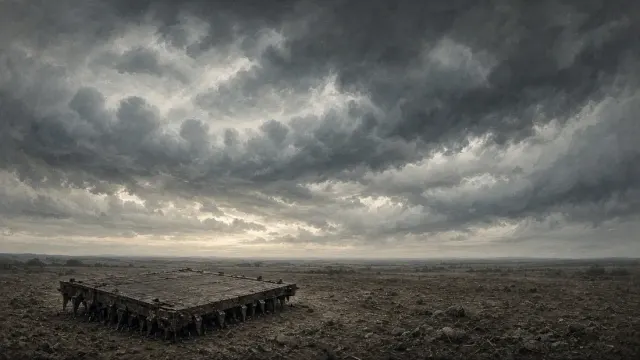
Foreigners build Zion’s walls and kings minister to her, while the LORD explicitly interprets the reversal: “in my wrath I smote thee, but in my favour have I had mercy on thee.” The gates therefore remain open day and night. In this vision, an open gate is not evidence that the city has forgotten danger. It shows that the direction of power has changed. Resources and rulers now enter to serve the place that had been desolate. The passage also retains a hard judgmental edge. Nations refusing the new order face ruin, while Lebanon’s trees beautify the sanctuary and descendants of former afflicters bow. The Book of Isaiah does not flatten the scene into a picture of all parties occupying exactly the same status after restoration. Reversal is part of the promise. The final name explains why the city receives this recognition: “The city of the LORD, The Zion of the Holy One of Israel.” The honor is anchored in belonging, not in independent imperial success.
Deep dive
Foreigners build walls and kings minister to the city. The LORD's statement about wrath and favor makes the transition explicit: the city that was struck is now receiving mercy. Gates remain open day and night so that the incoming resources and rulers can enter. In the logic of the vision, an open gate is not careless exposure to an unchanged threat but evidence that the relationship between the city and the approaching powers has been reversed.
The warning that a nation refusing this service will perish gives the scene a sharp judgmental boundary. The passage is not simply describing equal parties enjoying unrestricted exchange. Lebanon's trees beautify the sanctuary, and descendants of former afflicters bow before the city. The name they acknowledge, the city of the LORD and Zion of Israel's Holy One, explains the honor in the passage's own terms. Their earlier contempt has been publicly contradicted. The vision's welcome, wealth, and hierarchy must be kept together rather than smoothing away the clauses that make its reversal severe.
Words to trace: feet, kings, place, sons, tree, afflicted
Verse-by-verse path
- Isaiah 60:10
The contrast of wrath and favour restates 54:8, “In a little wrath I hid my face from thee for a moment; but with everlasting kindness will I have mercy on thee.” “Minister” is the priestly verb of verse 7 again, now used of kings. In the event it was Persian kings who paid for the rebuilt temple (Ezra 6:8).
- Isaiah 60:11
City gates were normally shut at dusk, as Jericho closed its gate at dark (Joshua 2:5) and Nehemiah ordered Jerusalem’s kept shut until the sun was hot (Nehemiah 7:3). “Their kings may be brought” uses a verb for being led, which may picture a royal procession or rulers led in like captives.
- Isaiah 60:12
“Utterly wasted” doubles the verb charav, the root of the “old waste places” that Zion’s children rebuild in 58:12; the ruin once hers now waits for the refusers. The verse runs in prose rhythm rather than the chapter’s poetry, and many commentators regard it as an expansion that spells out the reversal.
- Isaiah 60:13
The three trees are the trio planted in the desert in 41:19; the identifications are uncertain, and “box” may be a kind of cypress. Solomon built the first temple with timber brought down from Lebanon (1 Kings 5:6). “The place of my feet” is the sanctuary as God’s footstool, as David calls the ark in 1 Chronicles 28:2.
- Isaiah 60:14
Bowing at the soles of the feet goes beyond a bow of greeting; it is full prostration, the posture of 49:23, where kings lick up the dust of Zion’s feet. “The Holy One of Israel” is the Book of Isaiah’s own title for God, used about twenty-five times in this book and only a handful of times in the rest of the Old Testament.
Isaiah 60:10-14
King James Version10And the sons of strangers shall build up thy walls, and their kings shall minister unto thee: for in my wrath I smote thee, but in my favour have I had mercy on thee.
11Therefore thy gates shall be open continually; they shall not be shut day nor night; that men may bring unto thee the forces of the Gentiles, and that their kings may be brought.
12For the nation and kingdom that will not serve thee shall perish; yea, those nations shall be utterly wasted.
13The glory of Lebanon shall come unto thee, the fir tree, the pine tree, and the box together, to beautify the place of my sanctuary; and I will make the place of my feet glorious.
14The sons also of them that afflicted thee shall come bending unto thee; and all they that despised thee shall bow themselves down at the soles of thy feet; and they shall call thee, The city of the LORD, The Zion of the Holy One of Israel.
Isaiah 60:15-18
Better Materials Are Not Enough Without Different Officials
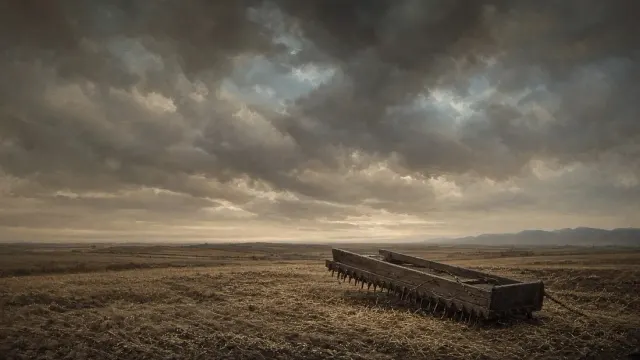
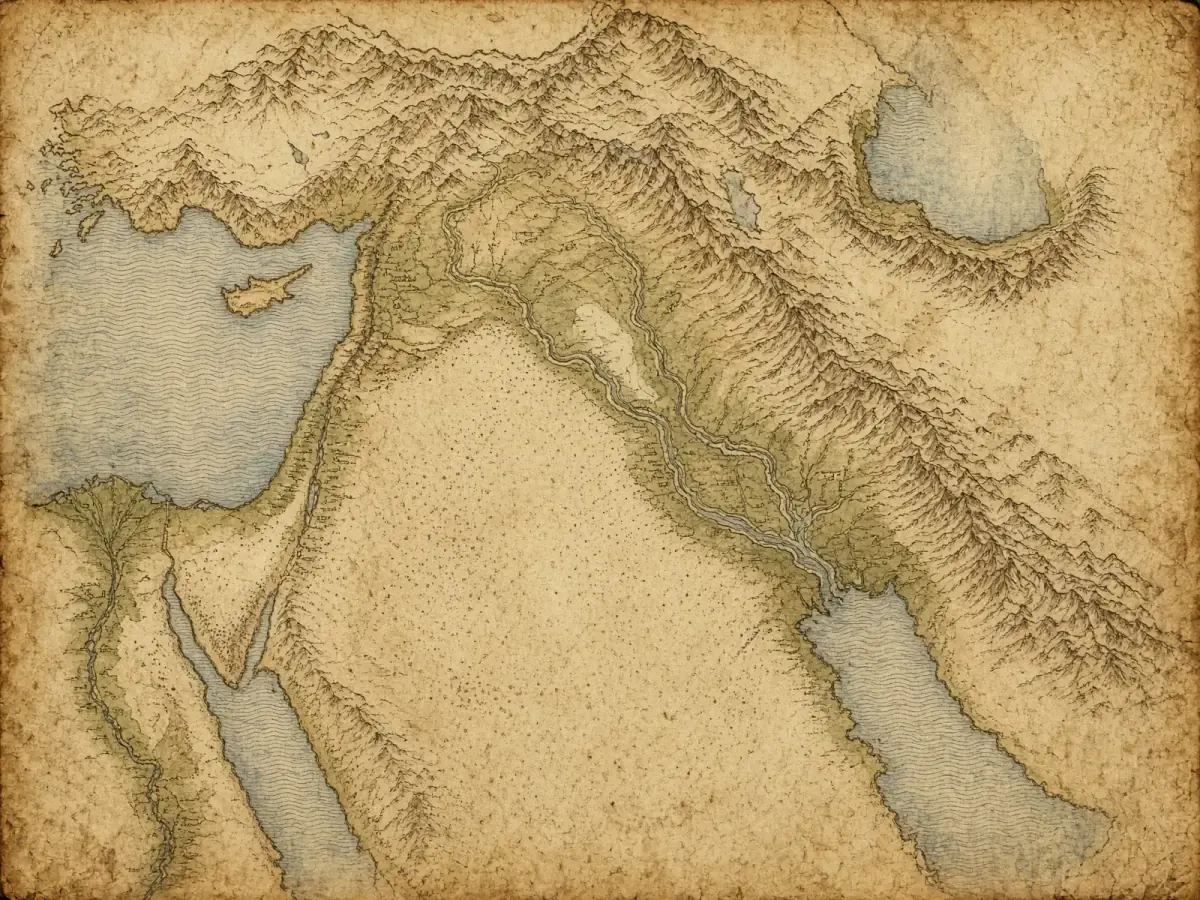
Forsakenness and hatred are answered first with enduring public joy, then with provision from nations and kings. The nursing imagery reverses dependence: powers that once threatened the city’s existence now sustain it. Yet the stated lesson is not that Zion has become self-sufficient through international wealth. She will know the LORD as Savior, Redeemer, and the mighty One of Jacob. Even the material upgrades serve that recognition. Brass becomes gold, iron becomes silver, wood becomes brass, stone becomes iron. Then the Book of Isaiah makes the deeper improvement. Officials become “peace” and exactors “righteousness.” A city built with expensive materials but governed by the same predatory order would not fulfill the vision. Violence, wasting, and destruction cease to define what can be heard within the borders. Walls and gates themselves receive names, Salvation and Praise. The movement is from better construction to better government to a different civic soundscape. Restoration changes what the city contains, how it is ruled, and what ordinary life inside it feels like.
Deep dive
Forsakenness and hatred are replaced by an enduring excellence and joy extending through generations. The nursing imagery presents the nations and kings as sources of provision for the city rather than threats to its survival. The promised recognition is again of the LORD as Savior and Redeemer. The city's restored resources are evidence of his action, not a new reason to forget its source.
The sequence of exchanged materials raises value and strength: gold for brass, silver for iron, and stronger materials in place of wood and stone. Then the improvement reaches the city's administration. Officers become peace and exactors righteousness. A rebuilt city with unchanged predatory government would not satisfy the promise being made. Violence, waste, and destruction cease to define its public life, and the walls and gates receive the names Salvation and Praise. The vision moves from what the city is built with to what it is governed by and what can be heard within it.
Words to trace: brass, iron, suck, borders, breast, call
Verse-by-verse path
- Isaiah 60:15
“Hated” is the word used of the unloved wife, as Leah was “hated” beside Rachel (Genesis 29:31); with “forsaken” it pictures Zion as a rejected bride, the image 62:4 will reverse. “No man went through thee” describes empty roads, the deserted ways of Lamentations 1:4. “Excellency” is pride in a good sense, a city worth boasting of.
- Isaiah 60:16
The image is deliberately startling: kings with breasts, nursing a city. It develops 49:23, “kings shall be thy nursing fathers”. The closing title, “the mighty One of Jacob”, comes from Jacob’s own blessing on Joseph in Genesis 49:24, and the whole last line repeats 49:26 almost word for word.
- Isaiah 60:17
The exchange runs Solomon’s decline backward. After Shishak carried off the golden shields, Rehoboam “made in their stead brasen shields” (1 Kings 14:27); now brass gives way to gold. “Exactors” are nogesim, the taskmasters of Exodus 5, the same verb the fasters were accused of in 58:3.
- Isaiah 60:18
“Wasting and destruction” were in the people’s paths in 59:7; the same rhyming pair is now silenced. Jerusalem’s real gates bore working names, the Sheep Gate, the Fish Gate, the Dung Gate (Nehemiah 3:1–14). Walls named Salvation fulfil the song of 26:1: “salvation will God appoint for walls and bulwarks”.
Isaiah 60:15-18
King James Version15Whereas thou hast been forsaken and hated, so that no man went through thee, I will make thee an eternal excellency, a joy of many generations.
16Thou shalt also suck the milk of the Gentiles, and shalt suck the breast of kings: and thou shalt know that I the LORD am thy Saviour and thy Redeemer, the mighty One of Jacob.
17For brass I will bring gold, and for iron I will bring silver, and for wood brass, and for stones iron: I will also make thy officers peace, and thine exactors righteousness.
18Violence shall no more be heard in thy land, wasting nor destruction within thy borders; but thou shalt call thy walls Salvation, and thy gates Praise.
Isaiah 60:19-20
The Ending of Mourning Is Pictured as a Light Without Sunset
The vision passes beyond every imported treasure and every rebuilt wall to its deepest claim about light. Sun and moon no longer provide Zion’s defining brightness because the LORD himself becomes “an everlasting light” and God becomes the city’s glory. The Book of Isaiah is not merely extending daylight or promising unusually favorable weather. Ordinary celestial cycles are inadequate to describe the permanence in view. The sun no longer goes down and the moon no longer withdraws because the light that matters does not depend on either one. Then the image is interpreted through grief: “the days of thy mourning shall be ended.” The ending of mourning is placed beside the ending of sunset. Darkness had repeatedly served the Book of Isaiah as the environment of fear, blindness, and loss; here the return of shadows no longer governs the city’s experience. The final glory is therefore not the gold, the kings, or the open gates. It is the presence that does not withdraw.

Deep dive
The vision reaches beyond bright streets or abundant treasure. Sun and moon no longer provide the city's defining light, because the LORD himself is its everlasting illumination and God its glory. The language does not merely extend daylight by a few hours. It removes the withdrawal that accompanies the ordinary cycle of light and darkness.
The end of mourning is placed directly beside the sun that no longer goes down. The imagery joins an unending divine presence to a condition in which the city's grief no longer returns with the shadows. Revelation 21:23–26 draws on this passage when describing the New Jerusalem, the light of God and the Lamb, the nations walking by that light, and gates that are not shut. Isaiah's city has already been made precious and populous, but those gifts are not the final explanation of its future. Its lasting glory is the LORD who does not withdraw.
Words to trace: light, everlasting, LORD, moon, brightness, days
Verse-by-verse path
- Isaiah 60:19
Genesis 1:15 set the sun and moon in the sky “to give light upon the earth”, and this verse reuses that verb to say they will no longer be needed for it. Isaiah 24:23 had already shamed the sun and moon when the LORD reigns in Zion. “Glory” here is tiferet, splendour, the word of verse 7’s “house of my glory”.
- Isaiah 60:20
“Withdraw itself” is the verb asaph, to be gathered in, used of the moon waning like a harvest taken off the field. It is the root of the rear guard in 58:8 and of the dead being “gathered unto his people” (Genesis 25:8). “Ended” is shalem, completed: mourning has served its full term and is over.
Isaiah 60:19-20
King James Version19The sun shall be no more thy light by day; neither for brightness shall the moon give light unto thee: but the LORD shall be unto thee an everlasting light, and thy God thy glory.
20Thy sun shall no more go down; neither shall thy moon withdraw itself: for the LORD shall be thine everlasting light, and the days of thy mourning shall be ended.
Isaiah 60:21-22
The Small Beginning Does Not Set the Final Size
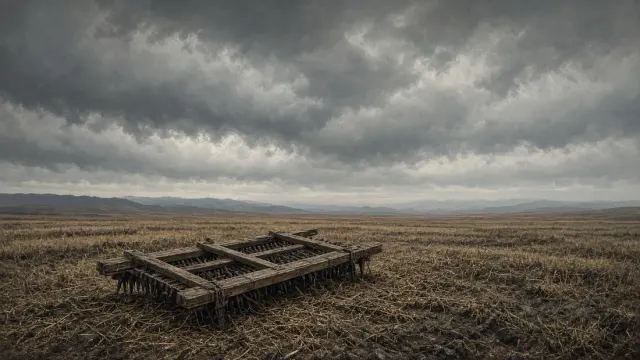
The chapter ends by describing the inhabitants themselves as part of the LORD’s workmanship. They are righteous, inherit the land, and are called “the branch of my planting” and “the work of my hands.” The purpose is stated plainly: that he may be glorified. Zion’s future cannot therefore be detached from the one whose light began the chapter and whose action has filled every section since. Then the Book of Isaiah returns to one of his favorite reversals of scale. A little one becomes a thousand, and a small one a strong nation. Present littleness is not treated as a reliable forecast. Yet the last phrase resists turning the promise into a schedule controlled by human impatience. “I the LORD will hasten it in his time.” Haste and appointed time belong together. When the time arrives, the growth is not sluggish; until then, the timing remains with the one who gives the increase. Scale and schedule end in the same hands.
Deep dive
The inhabitants are described as righteous and as inheriting the land forever. Their identity is then explained through planting and workmanship: they are the branch the LORD has planted and the work of his hands. The purpose of glorifying him prevents the city's future from being detached from the maker whose light began the chapter. The promise concerns a renewed people as well as an enduring place.
The little one becoming a thousand and the small one a strong nation return to a familiar Isaianic contrast between present littleness and promised increase. The final pairing of haste and appointed time is deliberate. The LORD will bring the event swiftly when its time arrives; haste does not mean that the timing has been handed over to the impatience of the hearer. The chapter ends with both scale and timing located in the same divine agency. Neither the community's current size nor the apparent slowness of the promise supplies the final measure of what it will become.
Words to trace: become, branch, glorified, hands, hasten, inherit
Verse-by-verse path
- Isaiah 60:21
“Branch” is netser, the shoot that springs from Jesse’s stump in 11:1. Here the whole righteous people is that planted shoot. The phrase “that I may be glorified” returns in the next chapter almost unchanged, where the mourners become “trees of righteousness, the planting of the LORD” (61:3).
- Isaiah 60:22
The Hebrew elef, “a thousand”, is also the word for a clan within a tribe, as when Gideon says his “family is poor in Manasseh” (Judges 6:15). Either way the least grows into a people. The book has already pointed to Abraham as the pattern: “I called him alone, and blessed him, and increased him” (51:2).
Isaiah 60:21-22
King James Version21Thy people also shall be all righteous: they shall inherit the land for ever, the branch of my planting, the work of my hands, that I may be glorified.
22A little one shall become a thousand, and a small one a strong nation: I the LORD will hasten it in his time.
Questions to keep in mind while reading
- Identify the historical crisis, covenant failure, warning, and promised hope.
- Distinguish the prophet’s immediate audience from later biblical connections.
- Do not turn present-day headlines into confident fulfillment claims without textual evidence.
Text first
Where readers differ
The chapter summary begins with what the passage says and how its parts fit together. It does not assume one denomination has already settled every question. Where a conclusion depends on a tradition, literary theory, or historical reconstruction, that dependence is named openly.
The KJV text is presented first. Interpretive conclusions are labeled, and differences are introduced only when they help a reader understand why serious communities do not always reach the same answer.
Comparative interpretive notes for this chapter are in preparation. Until reviewed notes are ready, this page separates the KJV text from summary and application without claiming that serious readers agree on every question.
Questions beneath the surface
- What account of God, human freedom, responsibility, and the good life emerges from Isaiah 60?
- Which tension does the chapter refuse to resolve quickly?
- What changes when the chapter is read as part of the whole canon rather than as an isolated moral lesson?
- Where might a sincere reader confuse a familiar tradition with something the text states directly?
Questions for serious personal contemplation
These open-ended questions make room for tension, honest response, prayer, and conclusions that remain accountable to the chapter.
Observe without rushing
What part of Isaiah 60 makes you stop, feel unsettled, or feel surprised, and why?
Which detail in the passage would be easiest to overlook? How does that detail change your understanding?
Where do you see tension between what happens and this focus: Isaiah 60 develops its own movement around LORD, light, glory, Gentiles, kings?
What important question does the passage leave open instead of resolving quickly?
Examine your inner life honestly
Which person, response, fear, or desire in the passage feels most like your own life right now?
What assumption about God, other people, or yourself does this text challenge?
Which part would you rather soften, avoid, or explain away too quickly? What might that reaction reveal?
If this Scripture could ask you one direct question, what do you think it would ask?
Respond with wisdom and courage
What do you need to remember, confess, grieve, thank God for, or trust after reading this passage?
How might another faithful person read this situation differently without ignoring the text?
What obedient response would be costly, uncomfortable, or slow, yet still faithful to Scripture?
What question will you carry into prayer this week, and which verses will you keep in front of you?
Music and video connected to the passage
Related media appears when its Scripture reference overlaps this study. Music and video can illuminate a theme while the biblical text remains the foundation.