
The big picture
Matthew 27 keeps placing declarations of Jesus’ innocence beside decisions that move his execution forward. Judas confesses “innocent blood,” Pilate knows envy is involved, Pilate’s wife calls Jesus just, and the governor himself asks what evil he has done, yet the chapter still moves from hearing to scourging and crucifixion. Royal language follows Jesus into the abuse: robe, crown, kneeling, accusation, and repeated mockery all call him king while attempting to empty the title of meaning. At his death, the scale changes. Darkness falls, the veil tears, the earth shakes, rocks split, and graves open. The centurion and those with him respond in fear, while the women remain as witnesses. Joseph then gives Jesus his own new tomb. The chapter ends with the stone sealed and a watch set because Jesus’ opponents remember his resurrection prediction well enough to fear what might be said next.
Central truth
The Book of Matthew presents Jesus delivered to crucifixion despite repeated declarations of his innocence, while returned betrayal money, Barabbas’s release, and royal mockery expose the contrast between human claims and the actions taken against him. Jesus dies amid darkness and a cry of abandonment, the temple veil is torn, witnesses respond, and his body is placed in Joseph’s identifiable tomb before opponents secure it against the resurrection claim they remember.
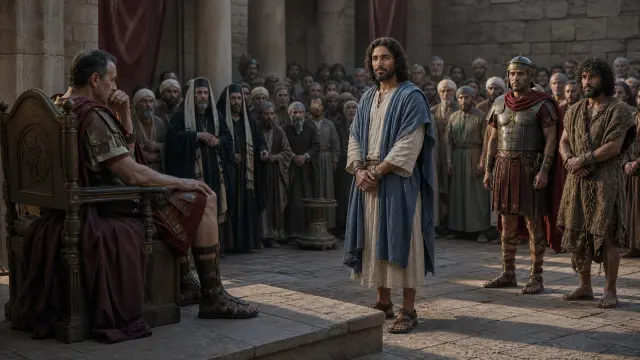

The study notes have a page of their own
The movement by movement analysis, the words to trace, the verse by verse notes and where readers differ are written for someone studying alone. They are on the Deep Personal Reflections page for this chapter. This page is the lesson.
A chapter-specific teaching brief
These anchors come from this chapter itself. They help a teacher use the Level 1 overview, the Level 2 study, and the Scripture text as one lesson.
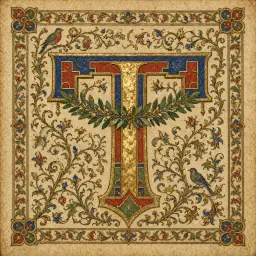
Open with the chapter’s first image
Matthew 27:1: “When the morning was come, all the chief priests and elders of the people took counsel against Jesus to put him to death:”
Slow down at the turning point
Matthew 27:38: “Then were there two thieves crucified with him, one on the right hand, and another on the left.”
Keep this word trail visible
JESUS, Pilate, took, governor, chief, priests
What to explain, in order
Teach the passage in this order. Each step names the verses it rests on, so every point can be shown in the text before it is applied.
Matthew 27:1–44
Matthew 27:1-10
Judas and the price of blood
Start in the morning, as the council hands Jesus to Pilate, because only the Roman governor could carry out an execution. Then Matthew turns to Judas. Explain "repented himself" as regret, a change of feeling, and note that he goes to the priests rather than to Jesus. Read his death with great gentleness; some learners will have lost someone to suicide, so say nothing that speculates about his eternal state and offer help after class. Explain the potter's field and the prophecy, which joins Zechariah 11:12-13 with Jeremiah's field purchase (Jeremiah 32), and is named after Jeremiah.
Matthew 27:11-14
Art thou the King of the Jews
Explain that Pilate's question is political: a king of the Jews would be a rival to Caesar. Jesus answers "Thou sayest", affirming it without explaining it, as he did before Caiaphas. Then he is silent before the accusations, and "the governor marvelled greatly". Connect this to Isaiah 53:7 again. Teach this step briefly but clearly, because the charge of being King of the Jews runs through the rest of the unit, from Pilate's question to the soldiers' mockery to the sign over the cross.
Matthew 27:15-26
Barabbas, Pilate's wife and the washed hands
Describe the custom and the choice. Explain "notable" as notorious. Read the message from Pilate's wife; Matthew alone records it, and with Judas' words it makes a second witness to Jesus as a "just man". Then the persuasion of the crowd, the demand, and the handwashing. Now 27:25. Read it, then say plainly what it is: the cry of one crowd on one morning, stirred up by its leaders. It is never a curse on the Jewish people, and the church's use of it against Jews has been a terrible sin. Jesus' blood in this Gospel is shed "for the remission of sins" (26:28).
Matthew 27:27-31
The mock coronation
Explain the common hall as the governor's headquarters, and the whole band as a cohort of soldiers, hundreds of men. Name the objects and what they parody: robe, crown, sceptre, kneeling, the royal greeting. Keep the physical detail to the text's own few words and do not add more. Teach that Matthew wants the reader to see the truth through the cruelty: this really is the King. Then "led him away to crucify him", which turns the scene toward Golgotha.
Matthew 27:32-38
Golgotha
Explain Golgotha as an Aramaic word for skull, the place's name, not necessarily its appearance. Explain the wine mixed with gall as a bitter drink, possibly meant to dull pain, which Jesus refuses after tasting (compare Psalm 69:21). Matthew states the crucifixion in four words and no more, and you should follow his restraint. Point out the fulfilment of Psalm 22:18 in the dividing of the garments, the soldiers watching, the written charge and the two thieves at his right and left, the places James and John had asked for in 20:21.
Matthew 27:39-44
Save thyself
Group the mockers as Matthew does: passers-by, chief priests with scribes and elders, and the thieves. Explain "wagging their heads" from Psalm 22:7 and the taunt "He trusted in God; let him deliver him now" from Psalm 22:8. Show the class how the whole scene is lit by Psalm 22, which Jesus will quote in 27:46. Teach this last because the taunts gather up the chapter's question, whether this is the Son of God and King of Israel, and leave it for the next unit to answer.
Matthew 27:45–66
Matthew 27:45-49
Darkness and the cry
Explain the hours: from the sixth to the ninth hour is roughly noon to three in the afternoon. Darkness in Scripture often signals judgement, as in Amos 8:9 and the plague of Exodus 10:22. Then read the cry in both languages, as Matthew gives it, and open Psalm 22. Explain that Christians have understood this forsakenness in different ways, as Jesus bearing the judgement on sin, as the full depth of human abandonment, or both, and that the psalm itself begins in anguish and ends in praise. Teach it reverently and without hurry.
Matthew 27:50-53
He yielded up the ghost
Point out the wording: Jesus "cried again with a loud voice" and "yielded up the ghost", which means he gave up his spirit. Matthew describes a death that Jesus himself gives. Then the signs. Explain the veil as the great curtain in the temple, most likely the one before the holy of holies, and that its tearing "from the top to the bottom" suggests an act of God. Readers see in it the end of the old separation or the judgement on the temple, often both. Then the earthquake and the raised saints, taught in Matthew's own sequence.
Matthew 27:54-56
The centurion and the women
Explain a centurion as a Roman officer over about a hundred soldiers. He and his men are the ones who carried out the execution, and they are the first in Matthew to confess Jesus as Son of God after his death. Set their words beside the taunt of 27:40. Then turn to the women. Name them as Matthew does, including the mother of Zebedee's children who once asked for thrones (20:20). Teach this step as the turn from mockery to witness, and note that the women will be the first witnesses of the resurrection.
Matthew 27:57-61
Joseph's tomb
Explain that the evening brought the start of the Sabbath, so burial had to be quick. Joseph is a rich disciple, which recalls Isaiah 53:9, "with the rich in his death" in the King James wording of that verse. Walk through the burial carefully: request, permission, linen, a new rock-cut tomb, a great stone rolled across the door. Matthew's precision is evidence; he wants the reader to know Jesus was truly dead and truly buried in a known place. End with the two Marys watching, because their watching makes them reliable witnesses on the third day.
Matthew 27:62-66
The seal and the watch
Explain "the day of the preparation" as the Friday before the Sabbath, so this visit is on the Sabbath itself. The leaders call Jesus "that deceiver" and fear "the last error" more than the first. Explain the watch as a guard of soldiers and the seal as a cord fixed to the stone with wax or clay, so any tampering would show. Pilate's reply, "make it as sure as ye can", may carry a dry edge. Teach this last because it sets the stage for chapter 28: every human precaution against a resurrection is now in place.
Where learners get stuck
The misreadings this passage tends to produce, and how to answer each from the text.
Matthew 27:1–44
"The Jews killed Jesus, because they said his blood be on us and on our children."
Matthew records the words of a crowd "persuaded" by the chief priests and elders (27:20) on one morning in Jerusalem. Jesus, his mother, his disciples and the women at the cross were Jewish, and the sentence was carried out by the Roman governor and his soldiers. Christians have used 27:25 to blame Jewish people across centuries, with terrible results; that is a sin, not a reading. In Matthew, Jesus' blood is "shed for many for the remission of sins" (26:28), offered for all, including those who called for it.
"Pilate washed his hands, so he was not to blame."
He had the authority, and he "delivered him to be crucified" (27:26) after scourging him. His wife warned him (27:19), and he knew "that for envy they had delivered him" (27:18). Washing hands before a crowd changes nothing about his verdict. The church's creeds remember that Jesus suffered under Pontius Pilate. Matthew shows several parties responsible, and none of them escapes by a gesture.
"Judas repented, so he must have been forgiven, or he killed himself, so he must be lost."
Matthew says Judas "repented himself" and confessed betraying "the innocent blood" (27:3-4), then went and hanged himself (27:5). He does not tell us Judas' final state, and the lesson should not claim to. Use this moment to say gently that anyone in despair should speak to someone at once, and that Jesus received Peter after his denial. Offer support privately if anyone is affected.
"Jesus could not come down from the cross, so the mockers were right."
Jesus had said he could call "more than twelve legions of angels" (26:53). He stays on the cross because he came "to give his life a ransom for many" (20:28). The mockers say "himself he cannot save" (27:42), and the irony is that in saving others he will not save himself. The resurrection in chapter 28 shows who had the power.
Matthew 27:45–66
"When Jesus said my God, why hast thou forsaken me, he had lost his faith."
He still says "My God, my God" (27:46). He is praying, using the opening of Psalm 22, a psalm of a righteous sufferer that ends in trust and in the nations turning to the LORD (Psalm 22:27-28). The anguish is real, and so is the faith. Christians explain the depth of the forsakenness in different ways, but none of them reads it as unbelief. People who feel abandoned by God can hear that Jesus prayed these words.
"The tearing of the veil means God rejected the Jewish people."
Matthew reports the sign in 27:51 without explaining it. Readers see in it access to God opened through Jesus' death (compare Hebrews 10:19-20) or judgement on the temple Jesus said would fall (24:2), or both. Neither reading makes it a rejection of a people. Jesus' first followers, including the women at the cross and Joseph who buried him, were Jewish.
"The saints came out of their graves on Friday and walked around Jerusalem."
Read the wording carefully: the graves "were opened" at Jesus' death, and the saints "came out of the graves after his resurrection" (27:52-53). Jesus is the first to rise. Matthew gives only these two verses, and the lesson should not add more. Their purpose in the passage is to show that Jesus' death and resurrection break the power of death.
"The disciples probably did steal the body, since the leaders said they would."
The leaders state a fear, "lest his disciples come by night, and steal him away" (27:64), and take steps to prevent it: a seal and a guard (27:66). The disciples, meanwhile, had "forsook him, and fled" (26:56). Matthew presents the theft claim as the leaders' worry and later as a report they pay soldiers to spread (28:12-15). The guard and the seal make the empty tomb harder to explain away, not easier.
Learning objectives
- Trace the returned silver and the purchase of the field.
- Describe the choice placed before the crowd.
- Distinguish Pilate’s innocence claim from his actual decision.
- Identify the royal elements used in the soldiers’ mockery.
- Describe Simon’s compelled role on the way to crucifixion.
- Explain the demand that Jesus save himself in light of his announced mission.
- Connect Jesus’ cry with the opening of Psalm 22.
- Identify the reported signs without collapsing their locations.
- Preserve the timing stated for the saints’ emergence.
- Describe the responses of the centurion and the watching women.
- Trace Joseph’s burial actions and the women’s position.
- Explain the next day’s request for a sealed and guarded tomb.
Teacher preparation
- Read Matthew 27:1–44 beside 26:14–16 and 20:28; connect silver, betrayal, and announced self-giving.
- Compare Zechariah 11:12–13 and Jeremiah 19:1–13; retain Matthew 27:9’s attribution to Jeremy.
- Mark declarations about innocence in 27:4, 19, and 24 alongside the decision in verse 26.
- Discuss Judas’s death soberly, without method details, mental-health speculation, or treating self-destruction as inevitable after failure.
- Retain Matthew’s scarlet robe, Pilate’s unnamed wife, compelled Simon, and two mocking thieves; label other-Gospel comparisons.
- Trace Matthew 27:45–28:15 through death, evening burial, next-day guarding, and resurrection morning.
- Read Psalm 22:1 and 22–31; do not use the ending’s hope to cancel the opening lament.
- Gloss yielded up the ghost as died, rent in twain as torn in two, and sepulchre as tomb.
- Mark cross, temple, graves, and Joseph’s tomb separately; these events are not one observer’s single view.
- Mark after his resurrection in 27:53; avoid graphic imagery and requests for bereavement disclosures.
Evidence and interpretation checks
Explicit
Locate Judas’s confession, Pilate’s wife’s message, the sentencing action, and the written charge in Matthew 27:4, 19, 26, and 37. Locate darkness, the translated cry, death, and the veil torn from top to bottom in Matthew 27:45–51.
Scripture-supported
Compare Matthew 27:35 with Psalm 22:18; the KJV explicitly connects the distribution of clothing and casting lots with Scripture. Compare Matthew 27:46 with Psalm 22:1; the cry’s scriptural source does not make its expressed anguish unreal.
Strong inference
Set Matthew 27:24 beside 26; infer that the handwashing gesture does not remove Pilate from the action, since he releases Barabbas and delivers Jesus for crucifixion. Follow the women from Matthew 27:55–56 to 61 and 28:1; infer continuity of witness between death, burial, and the later visit.
Possible or traditional reading
Present a combined allusion to Zechariah 11:12–13 and Jeremiah’s potter imagery as one proposed explanation of Matthew 27:9–10; Matthew does not explain the attribution itself. Present the torn veil in Matthew 27:51 as opening access to God in light of Hebrews 10:19–22 as a theological reading; Matthew reports the sign without providing that full explanation.
Limit
State that Matthew 27:25 records the crowd’s words, not a divine decree of inherited guilt against all Jewish people or their later descendants. State that Matthew 27:52–53 gives neither the saints’ names nor number or later lives, and explicitly places their emergence after Jesus’ resurrection.
Discussion with answer guidance
1. What happens when Judas returns the silver and calls the betrayed blood innocent?
What a good answer contains
When Judas sees that Jesus is condemned he "repented himself" and brings back the silver, saying "I have sinned in that I have betrayed the innocent blood" (27:3-4). The leaders answer "What is that to us? see thou to that". He throws the money into the temple and hangs himself (27:5). The priests will not put "the price of blood" in the treasury and buy the potter's field instead (27:6-7). A good answer notes that Judas' confession is the first testimony in the chapter to Jesus' innocence, and that it finds no help from those who paid him. Handle his death with great care.
Show teacher guidance
Follow 27:3–10: the leaders reject his appeal and later buy a burial field because they regard the money as blood money. Returning the payment does not undo the proceeding already underway.
2. How does the choice between Barabbas and Jesus develop?
What a good answer contains
Pilate offers a custom of releasing one prisoner and sets "a notable prisoner, called Barabbas" beside "Jesus which is called Christ" (27:16-17), knowing "that for envy they had delivered him" (27:18). Then "the chief priests and elders persuaded the multitude" (27:20), and the cry grows: "Let him be crucified", then "they cried out the more" (27:22-23). A good answer names who persuaded whom and keeps the scene to this crowd on this morning. It also notes that a guilty man goes free while the innocent one is condemned, a picture many have seen of what the cross does.
Show teacher guidance
Read 27:15–23: Pilate offers the choice, the chief priests and elders persuade the crowd, and the demand for crucifixion grows. Do not expand this particular crowd into every inhabitant or every later generation.
3. Does Pilate’s handwashing match what he does next?
What a good answer contains
No. Pilate washes his hands and says "I am innocent of the blood of this just person: see ye to it" (27:24), echoing the priests' own words to Judas in 27:4. Then he releases Barabbas, scourges Jesus, and "he delivered him to be crucified" (27:26). His wife had warned him to have "nothing to do with that just man" (27:19). A good answer sees that the governor who alone has power to crucify cannot wash off his responsibility with water. Matthew lets the gesture stand beside the verdict so the reader can see the gap.
Show teacher guidance
Compare 27:24–26. He claims innocence but authorizes the actions leading to crucifixion; include his wife’s warning in verse 19. Do not treat a symbolic disclaimer as an acquittal or withdrawal from responsibility.
4. Which objects make the soldiers’ mockery specifically royal?
What a good answer contains
The soldiers dress him as a king to mock one: "a scarlet robe" for royal purple, "a crown of thorns" for a crown, "a reed in his right hand" for a sceptre, then they bow the knee and hail him as King of the Jews (27:28-29). Then they spit and strike him with the reed (27:30). A good answer sees the irony Matthew intends: every mocking gesture tells the truth about him, and the charge above the cross reads "THIS IS JESUS THE KING OF THE JEWS" (27:37). Keep the description of the abuse brief and plain.
Show teacher guidance
Identify the scarlet robe, thorn crown, reed, bowed knees, and address in 27:27–31. Compare the charge above the cross in verse 37; distinguish mock homage from sincere recognition.
5. What does Matthew say about Simon of Cyrene’s involvement?
What a good answer contains
Only what verse 32 says: "they found a man of Cyrene, Simon by name: him they compelled to bear his cross". Cyrene was in North Africa, and Simon may have been in Jerusalem for the feast. He did not volunteer; he was made to carry it. A good answer notices that the soldiers' compulsion puts a stranger in the very place Jesus described for disciples in 16:24, carrying a cross behind him. It does not invent Simon's feelings or later faith; Matthew tells neither.
Show teacher guidance
Use 27:32: he is found and compelled to carry the cross. The verse gives neither a voluntary offer nor an account of his later beliefs; do not invent either to improve the illustration.
6. Why is the demand to save himself more than an ordinary insult?
What a good answer contains
Because it is the temptation of 4:3 and 4:6 again: "If thou be the Son of God". The passers-by say "save thyself" and "come down from the cross" (27:40), and the chief priests say "He saved others; himself he cannot save" (27:42). They mean it as scorn, and they say a truth they do not see: he will not save himself, because he came "to give his life a ransom for many" (20:28). A good answer reads the taunts through Jesus' own words and notes that Matthew's verdict on his power comes in 28:18.
Show teacher guidance
Read 27:39–44 beside 20:28 and 26:28. The mockers equate kingship with escape, while Jesus has described giving his life for others; their words are not Matthew’s final assessment of his power.
7. What does Jesus cry, and how do some bystanders misunderstand him?
What a good answer contains
At the ninth hour Jesus cries "with a loud voice", "Eli, Eli, lama sabachthani? that is to say, My God, my God, why hast thou forsaken me?" (27:46). These are the first words of Psalm 22, the psalm the mockers have been quoting without knowing it. Some bystanders hear "Eli" and say "This man calleth for Elias" (27:47), and the rest wait to see "whether Elias will come to save him" (27:49). A good answer takes the cry as real anguish addressed to "My God", still a cry of trust, and notes that the psalm moves toward deliverance. A weak answer treats it as a performance or skips it.
Show teacher guidance
Read 27:46–49 alongside Psalm 22:1. Distinguish the address to God from the suggestion that he calls Elijah; do not turn a genuine cry of anguish into a merely theatrical quotation.
8. Which signs are reported when Jesus dies, and who is said to observe what?
What a good answer contains
Jesus cries again and "yielded up the ghost" (27:50). Then "the veil of the temple was rent in twain from the top to the bottom", the earth quakes and the rocks split, and the graves are opened (27:51-52). The centurion and those with him "saw the earthquake, and those things that were done" and "feared greatly" (27:54). A good answer keeps each sign with its stated observers: the veil is reported by Matthew, the earthquake is what the soldiers saw. A weak answer has the centurion looking into the temple from the hill, which the text does not say.
Show teacher guidance
Read 27:50–54: the veil tears, the earth quakes, and graves open. The centurion’s group sees the earthquake and events there; Matthew does not say they look from Golgotha into the temple.
9. Why must the words after his resurrection remain on a timeline of verses 52–53?
What a good answer contains
Because Matthew says the graves opened at Jesus' death, and the saints "came out of the graves after his resurrection, and went into the holy city, and appeared unto many" (27:53). Jesus rises first. A good answer keeps that order, notes that this is reported only in Matthew, and does not add names, numbers or later lives the text does not give. It explains "slept" as the Bible's gentle word for the death of believers. Readers discuss how to understand this brief report; the lesson should simply let it point to the resurrection that comes first.
Show teacher guidance
Preserve the order of emergence into the holy city. Do not depict saints in Jerusalem before Jesus rises or invent their names or later lives.
10. How do the centurion’s confession and the women’s presence differ from the earlier mockery?
What a good answer contains
The mockers said "If thou be the Son of God, come down from the cross" (27:40). The centurion and his men, watching the same death, say "Truly this was the Son of God" (27:54). The very words of the taunt become a confession on the lips of Gentile soldiers. The women, "beholding afar off", have followed from Galilee "ministering unto him" (27:55), and Matthew names three (27:56). A good answer sees two kinds of faithful witness where the disciples are absent: confession by outsiders and faithful presence by the women.
Show teacher guidance
Compare 27:54–56 with 39–44. Identify fear, recognition, and the women’s continuing attendance; do not invent a later conversion biography for every soldier.
11. What details make the burial a particular placement rather than an unspecified disappearance?
What a good answer contains
Joseph is named, "a rich man of Arimathæa", and "Jesus' disciple" (27:57). He asks Pilate for the body and receives it (27:58), wraps it "in a clean linen cloth" (27:59), and lays it "in his own new tomb, which he had hewn out in the rock", rolling "a great stone to the door" (27:60). Mary Magdalene and the other Mary sit opposite (27:61). A good answer sees that Matthew establishes a real body, a known tomb and witnesses who know where it is. That matters for chapter 28, when the same women come to the same tomb.
Show teacher guidance
Trace Joseph’s request, clean linen, his own new rock-hewn tomb, the great stone, and the two women opposite in 27:57–61. Do not add another Gospel’s burial companion as though Matthew names him.
12. Why do the leaders request a guard on the following day?
What a good answer contains
On the day after the preparation, the chief priests and Pharisees tell Pilate "we remember that that deceiver said, while he was yet alive, After three days I will rise again" (27:63). They fear the disciples will "steal him away" and claim he is risen (27:64). Pilate gives them a watch, and they seal the stone (27:65-66). A good answer notices the irony: the enemies remember Jesus' promise better than the scattered disciples do. It attributes "deceiver" to them, not to Matthew, and sees that the seal and guard make the coming empty tomb harder to explain away.
Show teacher guidance
Read 27:62–66: they recall the resurrection prediction and fear a theft claim. Attribute deceiver to their speech; distinguish their stated suspicion from evidence that the disciples planned theft.
Responsible application
Heart and habits
Ask a fictional decision-maker to distinguish a public disclaimer from responsibility, using Pilate’s actions.
Relationships and community
Correct an invented accusation transferring the crowd’s words to an entire people; identify the actual participants.
Read mockery without endorsing it
Explain one taunt through Jesus’ prior teaching without reenacting humiliation.
Preserve the stated sequence
Correct a timeline placing guards at the initial burial or saints in Jerusalem before Jesus’ resurrection.
Session plans
Two timings of the same lesson. The shorter keeps the reading, the central discussion and one response; the longer gives the confusions and the application their own time.
Matthew 27:1–44
45 minutes
Judas
Read 27:1-10 gently. Take question one and confusion three, with care for anyone affected by suicide.
Before Pilate
Read 27:11-14 and note Jesus' silence.
Barabbas and the crowd
Read 27:15-26. Take questions two and three and confusions one and two. Say clearly what 27:25 is and is not.
The King mocked
Read 27:27-38 without adding detail. Take questions four and five.
Save thyself
Read 27:39-44 with Psalm 22:7-8. Take question six and confusion four.
Handout and silence
Read the key verse slowly, keep a minute of silence and close in prayer.
90 minutes
Opening
Read Psalm 22:1-8 aloud with no comment and tell the group to listen for it in the passage.
Judas and the field
Read 27:1-10 with Zechariah 11:12-13. Take question one and confusion three gently, and have help on hand afterward.
The governor's question
Read 27:11-14 with Isaiah 53:7.
The choice
Read 27:15-26. Take questions two and three and confusions one and two. Give 27:25 the time it needs and name its misuse plainly.
Robe, crown and reed
Read 27:27-31. Take question four. List the royal objects and what they mock.
Golgotha
Read 27:32-38 with Psalm 22:18 and 20:21. Take question five.
The taunts
Read 27:39-44 with Psalm 22:7-8 and 4:3-6. Take question six and confusion four.
Application and prayer
In pairs, take the application on correcting an accusation against a whole people. Read the key verse and pray.
Matthew 27:45–66
45 minutes
The cry
Read Psalm 22:1 and then 27:45-49. Take question one and confusion one.
The veil and the graves
Read 27:50-53. Take questions two and three and confusion three.
Truly this was the Son of God
Read 27:54-56 and then 27:40 again. Take question four.
The burial
Read 27:57-61 and take question five. List each detail Matthew gives.
The guard
Read 27:62-66. Take question six and confusion four.
Handout
Read the key verse together and close quietly in prayer.
90 minutes
Opening
Read all of Psalm 22 aloud. Ask the group where the psalm begins and where it ends.
Darkness and the cry
Read 27:45-49 with Amos 8:9. Take question one and confusion one. Allow silence.
The death and the signs
Read 27:50-53 with Exodus 26:31-33 and Hebrews 10:19-20. Take questions two and three and confusions two and three.
Confession and presence
Read 27:54-56. Take question four. Ask who was absent and who was present.
Laid in the tomb
Read 27:57-61 with Isaiah 53:9. Take question five and draw a simple plan of the tomb and stone.
Sealed and guarded
Read 27:62-66 and 28:11-15. Take question six and confusion four.
Application
Use the application on caring for a bereaved household, drawing on Joseph and the women.
Handout and prayer
Read the key verse together and pray for any in the group who feel forsaken.
Adapting the lesson
Matthew 27:1–44
Children
Keep this simple and gentle. Say that Jesus was taken to a ruler named Pilate, who knew Jesus had done nothing wrong but let him be put on a cross anyway. Do not describe the beating, the thorns pressed on, or the nails. Leave out how Judas died. Say that Jesus chose to stay on the cross because he loved people, and that the next part of the account is very good news.
Youth
Ask who is responsible for Jesus' death in this chapter, and let them list everyone Matthew names: Judas, the priests, the crowd, Pilate, the soldiers. Then read 26:28 and ask whom Jesus' blood was shed for. Name the history of blaming Jewish people with 27:25 and why it is wrong. Treat Judas' death with care and make sure everyone knows where to get help.
Adults
Read the passage with Psalm 22, Isaiah 53 and Zechariah 11 open. Give real time to 27:25 and the history of its misuse, and let the group see that Matthew distributes responsibility among many and that the cross is for all. Discuss Pilate's handwashing as a picture of how adults try to keep clean hands while letting wrong happen. Watch for anyone affected by Judas' end.
One to one
Ask which person in the chapter they find themselves most like: Judas with his regret, Pilate washing his hands, Simon made to carry the cross, or the mocking crowd. Read 26:28 as the answer to all of them. If they have known someone who took their own life, listen first and offer care; do not rush to explanations.
Matthew 27:45–66
Children
Turn the lights low and say it became dark in the middle of the day. Say that Jesus prayed a sad prayer from the Psalms and then died, and that the soldier watching said, Truly this was the Son of God. Do not describe his suffering in detail. Show a rock and say Jesus' friend Joseph laid him in a tomb with a big stone, and promise the children that the next lesson is the happiest part.
Youth
Ask whether they have ever felt that God was far away, and read 27:46 as words Jesus himself prayed. Let them notice that the Roman soldiers and the women, not the twelve, are the witnesses at the end. Discuss the guard and the seal: why would enemies take such trouble over a dead man. Keep the tone reverent rather than dramatic.
Adults
Give the cry of dereliction careful attention, with Psalm 22 read whole and the main ways Christians understand it set out fairly. Explain the veil with Exodus 26 and Hebrews 10. Spend time on Joseph, a disciple who risked his standing to bury Jesus, and on the women's quiet faithfulness. Ask what the guard and seal contribute to the case for the resurrection.
One to one
If the person is grieving or feels abandoned by God, read 27:46 slowly and tell them Jesus has prayed this before them. Do not hurry them to resurrection. If they are a hidden believer like Joseph, read 27:57-58 and ask what it would mean to come forward. Close by reading Psalm 22:24 together.
Song and video learning lab
A song or video may interpret, compress, or dramatize the text. Its value becomes clearer when its choices are compared with Scripture.
- Before the media: the exact passage and its central movement.
- During the media: the words, people, events, and emotions the artist emphasizes.
- After the media: what it clarifies, what it leaves out, and what belongs back in the biblical text.
Handout
One page for learners to take home. The print button prints this section alone.
Matthew 27:1–44
The passage in brief
In the morning the leaders hand Jesus to Pilate. Judas regrets his betrayal, returns the silver, and dies. Pilate asks if Jesus is King of the Jews and offers to release him or Barabbas. Persuaded by their leaders, the crowd asks for Barabbas and for Jesus to be crucified. Pilate washes his hands but hands Jesus over. Soldiers mock him with a robe and a crown of thorns. Simon of Cyrene is made to carry the cross, and Jesus is crucified between two thieves while people mock him.
A verse to keep
And set up over his head his accusation written, THIS IS JESUS THE KING OF THE JEWS.
Matthew 27:37 · King James Version
Questions to take home
What did Judas say about Jesus in 27:4?
What did Pilate's wife call Jesus in 27:19?
Why do you think Jesus did not come down from the cross when they mocked him in 27:40-42?
This week
Read Psalm 22 this week and mark each line that Matthew 27 brings to mind.
Matthew 27:45–66
The passage in brief
Darkness covers the land for three hours. Jesus cries out the opening words of Psalm 22, My God, my God, why have you forsaken me, and then gives up his spirit. The temple veil tears from top to bottom, the earth shakes and graves open. The Roman centurion says, Truly this was the Son of God, while women who followed Jesus watch from a distance. Joseph of Arimathea buries Jesus in his own new tomb, and the next day the leaders seal the stone and set a guard.
A verse to keep
Now when the centurion, and they that were with him, watching Jesus, saw the earthquake, and those things that were done, they feared greatly, saying, Truly this was the Son of God.
Matthew 27:54 · King James Version
Questions to take home
What psalm did Jesus pray in 27:46, and how does that psalm end?
What did the centurion say in 27:54, and how is it different from the mocking of 27:40?
Who saw where Jesus was buried, according to 27:61?
This week
Read Psalm 22 from beginning to end this week and notice where it turns from anguish to praise.
Music and video connected to the passage
Related media appears when its Scripture reference overlaps this study. Music and video can illuminate a theme while the biblical text remains the foundation.
 Sealed until the Third DayMatthew 27:57-66Listen to related music →
 The Veil Was TornMatthew 27:27-56Listen to related music →
 A Stone at the DoorMatthew 27:57-66; Mark 15:42-47; Luke 23:50-56; John 19:38-42Listen to related music →
 It Is FinishedMatthew 27:32-56; Mark 15:21-41; Luke 23:26-49; John 19:16-37Listen to related music →