
The big picture
Deuteronomy 28 is built like a reversal machine. The blessings begin with city and field, children and livestock, basket and store, coming in and going out, then expand to victory, rain, lending, and national distinction. When the curses arrive, they deliberately revisit the same places and turn each one inside out. The basket empties, the sky closes, enemies reverse the sevenfold flight, houses and vineyards are begun but not enjoyed, children are carried away, and labor continues without its expected fruit. As the chapter darkens, siege enters the household and destroys bonds that ordinary life should protect. Scattering among nations brings no rest, and the final image reverses the exodus itself by sending Israel back toward Egypt and an unwanted bondage. Yet the chapter’s terror is not random. It systematically dismantles the life the covenant had described as blessing. The long list works because the reader has already been shown, in detail, exactly what is being lost.
In this chapter
- Blessing Reaches the Basket and the Journey Deuteronomy 28:1-6
The blessing begins with a condition: Israel must hear diligently and do the commandments.
- The Sky Itself Is Named as the Treasury Deuteronomy 28:7-14
Victory is pictured as an enemy arriving by one way and fleeing by seven, but military success is only one piece of the blessing.
- The Same Places Receive the Opposite Word Deuteronomy 28:15-24
The curse section deliberately walks back through the opening blessing and changes the sign on every door.
- The Unfinished House and Vineyard Return as Losses Deuteronomy 28:25-37
The earlier image of the enemy fleeing seven ways is reversed so thoroughly that Israel now flees seven ways and is scattered.
- Labour Continues While Enjoyment Disappears Deuteronomy 28:38-48
This part of the curse is especially cruel because the work continues.
- The Siege Reaches the Most Private Bonds Deuteronomy 28:49-57
A distant nation arrives with speed, an unfamiliar language, and no regard for old or young.
- The Exodus Is Reversed, but This Is Not the Final Chapter Deuteronomy 28:58-68
The final section refuses to let the long catalogue sound complete.


Scripture beside the summary
Deuteronomy · King James Version · 68Deuteronomy 28:1-6
Blessing Reaches the Basket and the Journey
The blessing begins with a condition: Israel must hear diligently and do the commandments. Only then do the blessings “overtake” the people, an image that gives them motion and will later be reused for the curses. City and field form one pair, coming in and going out another, and between them sit children, crops, cattle, sheep, basket, and store. The scope is intentionally ordinary. National elevation is not separated from the contents of the household’s food supply. The same God who can set a people high among nations is named in relation to grain, animals, birth, and daily movement. Those details also prepare the structure of the chapter. They are not a decorative list of pleasant things that can be forgotten once the language becomes grander. The curse section will return to the same categories and reverse them, so the opening blessing quietly defines what later judgment is going to dismantle.

Deep dive
The chapter begins with a condition, not with a detached prediction of success. Hearing diligently and doing the commandments frame what follows. The blessings are then described as overtaking Israel, giving them movement toward the people rather than presenting them merely as possessions waiting at the end of human effort. That unusual image will return when the curses, too, are said to overtake.
City and field, coming in and going out, frame the whole range of ordinary existence. Between those pairs stand children, crops, livestock, basket, and store. The blessing is not confined to a royal household or a sanctuary treasury. It reaches where food is produced, carried, and prepared. The language allows national distinction and the contents of a household basket to appear in the same movement without treating one as too grand or the other as too small.
These opening objects need to remain in view through the chapter. They are not an interchangeable list of pleasant things. The following curses will repeat them with the direction reversed, so the reader encounters the threatened loss of a life already described in detail. The same breadth that gives the blessing its fullness will make the later dismantling unmistakable.
Words to trace: Blessed, fruit, LORD, hearken, voice, basket
Verse-by-verse path
- Deuteronomy 28:1
“Hearken diligently” is a doubled verb, hearing thou shalt hear. “On high” is elyon, the word that as a title means the Most High (32:8), so the promise lifts Israel with a word usually reserved for God. The verse picks up 26:19, “high above all nations”, and makes it conditional.
- Deuteronomy 28:2
“Overtake” is nasag, the verb of pursuers catching up: Laban overtook Jacob (Genesis 31:25), and the Egyptians overtook Israel at the sea (Exodus 14:9). Here the pursuers are blessings, and Israel cannot outrun them.
- Deuteronomy 28:3
City and field are the two settings of the cases in 22:23–27, and together they mean everywhere a person could be. The first blessing is a place, not a possession: wherever Israel stands, it stands blessed.
- Deuteronomy 28:4
“Kine” is the old plural of cow. “Flocks of thy sheep” translates ashterot tsonekha, where the word for the young of the flock is the same as the name of Ashtoreth, the Canaanite goddess of fertility. The blessing of increase is credited to the LORD in the very vocabulary Canaan used for its goddess.
- Deuteronomy 28:5
The basket is the tene of 26:2, the one carried to the sanctuary with firstfruits. “Store” is misheret, the kneading trough, the same vessel Israel carried out of Egypt bound up in their clothes (Exodus 12:34). The blessing reaches the bowl where the dough is made.
- Deuteronomy 28:6
Coming in and going out is Hebrew for the whole of a working life. Moses uses it of himself at a hundred and twenty: “I can no more go out and come in” (31:2). Psalm 121:8 turns it into a closing benediction.
Deuteronomy 28:1-6
King James Version1And it shall come to pass, if thou shalt hearken diligently unto the voice of the LORD thy God, to observe and to do all his commandments which I command thee this day, that the LORD thy God will set thee on high above all nations of the earth:
2And all these blessings shall come on thee, and overtake thee, if thou shalt hearken unto the voice of the LORD thy God.
3Blessed shalt thou be in the city, and blessed shalt thou be in the field.
4Blessed shall be the fruit of thy body, and the fruit of thy ground, and the fruit of thy cattle, the increase of thy kine, and the flocks of thy sheep.
5Blessed shall be thy basket and thy store.
6Blessed shalt thou be when thou comest in, and blessed shalt thou be when thou goest out.
Deuteronomy 28:7-14
The Sky Itself Is Named as the Treasury
Victory is pictured as an enemy arriving by one way and fleeing by seven, but military success is only one piece of the blessing. Storehouses, work, cattle, children, crops, and especially rain all remain central. Heaven is called the LORD’s “good treasure,” opened to give rain in season. That phrase makes the farmer’s dependence visible even while the chapter blesses “all the work of thine hand.” Labor matters, but the worker cannot open the sky. Israel’s public identity as a holy people likewise sits inside repeated conditions of hearing and obedience. Other nations will see that Israel is called by the LORD’s name, while economic strength appears in lending rather than borrowing and being the head rather than the tail. Those images will later reverse too. The section therefore refuses to make abundance a self-standing guarantee. Its material promises remain attached to covenant allegiance all the way through the warning not to turn toward other gods.

Deep dive
The enemy that advances by one route flees by seven, a picture of a unified attack breaking into dispersal. Yet military victory does not occupy the whole promise. Storehouses, the work of the hand, and the timing of rain follow it. The LORD's "good treasure" is identified as heaven, from which the land receives water. A full storehouse below depends upon a treasury no farmer can open by himself.
The promise to establish Israel as a holy people places the material provisions inside a named relationship. Other peoples will see that Israel is called by the LORD's name and will fear. The distinction is therefore public, but it is not described as evidence that Israel's resources make it independent of God. The section keeps returning to hearing, keeping, and walking in the commandments.
Lending rather than borrowing, and being the head rather than the tail, complete the picture of strength. Those images will also reverse later in the chapter. Verse 14 then closes the blessing with allegiance: no turning aside to serve other gods. The repeated condition prevents the economic language from becoming a free-standing assurance of wealth separated from the covenant being declared. The chapter itself supplies the terms under which its promises are spoken.
Words to trace: LORD, command, fruit, hand, land, bless
Verse-by-verse path
- Deuteronomy 28:7
“Smitten before thy face” reverses the warning at Hormah, where Moses told the people “lest ye be smitten before your enemies” (1:42) and they were. “Rise up against thee” is a single word, qamim, the risers, those who stand up to attack.
- Deuteronomy 28:8
God does not simply give the blessing; he commands it, as though sending a servant (compare Leviticus 25:21, “I will command my blessing upon you in the sixth year”). “Storehouses” is asamim, a word found only here and in Proverbs 3:10, “So shall thy barns be filled with plenty”.
- Deuteronomy 28:9
“As he hath sworn” points back to Sinai, where Israel was to be “an holy nation” (Exodus 19:6). The condition is written into the oath: God establishes the holy people, and the people keep the commandments and walk in his ways. Neither half stands alone in this verse.
- Deuteronomy 28:10
Literally, “the name of the LORD is called over thee”, a formula of ownership. Solomon uses it of the temple (1 Kings 8:43), and Joab uses it of a conquered city, asking David to come and take Rabbah “lest I take the city, and it be called after my name” (2 Samuel 12:28).
- Deuteronomy 28:11
“Plenteous in goods” is literally “make thee abound for good”. The three fruits of verse 4 return in a new order, body, cattle, ground, and are placed in “the land which the LORD sware unto thy fathers”, so the abundance is tied to the old promise, not to the soil’s own merit.
- Deuteronomy 28:12
“In his season” refers to the two rains of 11:14, the early rain of autumn that softens the ground for sowing and the latter rain of spring that fills the grain. The Book of Kings will show the treasury shut: no rain for three years in Ahab’s reign (1 Kings 17:1).
- Deuteronomy 28:13
Isaiah 9:14–15 takes up this pair and turns it into a sharp gloss: “The ancient and honourable, he is the head; and the prophet that teacheth lies, he is the tail.” Here the head leads and the tail follows; the promise is that Israel will lead.
- Deuteronomy 28:14
“To the right hand, or to the left” is Deuteronomy’s image for a straight road (5:32; 17:11, 20), and the Book of Joshua opens with it again (Joshua 1:7). The blessings end not on wealth but on the first commandment: no other gods.
Deuteronomy 28:7-14
King James Version7The LORD shall cause thine enemies that rise up against thee to be smitten before thy face: they shall come out against thee one way, and flee before thee seven ways.
8The LORD shall command the blessing upon thee in thy storehouses, and in all that thou settest thine hand unto; and he shall bless thee in the land which the LORD thy God giveth thee.
9The LORD shall establish thee an holy people unto himself, as he hath sworn unto thee, if thou shalt keep the commandments of the LORD thy God, and walk in his ways.
10And all people of the earth shall see that thou art called by the name of the LORD; and they shall be afraid of thee.
11And the LORD shall make thee plenteous in goods, in the fruit of thy body, and in the fruit of thy cattle, and in the fruit of thy ground, in the land which the LORD sware unto thy fathers to give thee.
12The LORD shall open unto thee his good treasure, the heaven to give the rain unto thy land in his season, and to bless all the work of thine hand: and thou shalt lend unto many nations, and thou shalt not borrow.
13And the LORD shall make thee the head, and not the tail; and thou shalt be above only, and thou shalt not be beneath; if that thou hearken unto the commandments of the LORD thy God, which I command thee this day, to observe and to do them:
14And thou shalt not go aside from any of the words which I command thee this day, to the right hand, or to the left, to go after other gods to serve them.
Deuteronomy 28:15-24
The Same Places Receive the Opposite Word
The curse section deliberately walks back through the opening blessing and changes the sign on every door. City and field, basket and store, children and crops, livestock, coming in and going out all receive the opposite word. That repetition is the point. Judgment does not arrive as an unrelated disaster pasted onto a different subject. The same life once described as flourishing is now described as collapsing because Israel refuses to hear and do. Disease and frustrated labor then push the reversal into body and work. The KJV’s names for ancient illnesses should not be treated as exact modern diagnoses, but their role in the chapter is unmistakable: the body cannot sustain ordinary life, and the land stops rewarding cultivation. Finally, heaven becomes brass and earth iron. The earlier open treasury of rain has become an unyielding sky over unresponsive ground, with dust descending where water should have come.

Deep dive
The reversal begins almost word for word. City and field, basket and store, offspring and produce, coming in and going out receive the opposite declaration. This is not a new subject arriving after the blessings. It is the same life described under a different covenantal outcome, introduced by the refusal to hear and do. The curses, like the blessings, are pictured as overtaking the people.
The list expands from household and harvest into bodily affliction and frustrated work. Its names for sickness belong to the KJV's rendering of ancient terms and do not identify a modern clinical diagnosis in every instance. Their function in the passage is clear: the body cannot sustain its usual work, and the land does not respond with its promised yield. The repeated movement toward destruction prevents these from sounding like isolated inconveniences.
The heavens of brass and earth of iron turn the earlier open treasury into a closed world. The images convey an unyielding sky and unproductive ground; rain itself becomes powder and dust. The language does not merely announce that the weather will be unpleasant. It reverses the exchange on which cultivated life depends. What should descend to make the soil fruitful instead adds to its barrenness, leaving the people between a sky that will not give and a ground that will not yield.
Words to trace: Cursed, LORD, land, destroyed, fruit, goest
Verse-by-verse path
- Deuteronomy 28:15
Verse 15 mirrors verse 1 nearly clause for clause, then turns. The proportions are telling: the blessings take fourteen verses, the curses fifty four. The Book of Deuteronomy gives the warning nearly four times the space of the promise.
- Deuteronomy 28:16
The six curses of verses 16–19 answer the six blessings of verses 3–6, but not in the same order. City and field come first again, as though the curse begins by walking over the same ground the blessing did.
- Deuteronomy 28:17
In the blessings the basket came after the children and the crops; here it comes straight after the city and field. The kneading trough, the store of verse 5, is the first thing lost: the reversal starts at the bread.
- Deuteronomy 28:18
This list is one item shorter than verse 4. The “fruit of thy cattle” has dropped out, though the kine and sheep remain. The order also shifts: in the curses, children and crops are named after basket and store.
- Deuteronomy 28:19
The last of the mirror curses has nothing new in it; it is verse 6 with one word changed. From verse 20 on, the curses stop echoing the blessings and begin to add, which is where the chapter becomes its own.
- Deuteronomy 28:20
Three nouns: cursing, vexation and rebuke. “Vexation” is mehumah, the panic God sends on enemies to rout them, promised against the Canaanites in 7:23. “Rebuke” is a word found only here. In the last clause the speaker becomes God himself: “whereby thou hast forsaken me”.
- Deuteronomy 28:21
“Pestilence” is dever, the plague that fell on Egypt’s livestock in the fifth plague (Exodus 9:3, the “murrain”). “Cleave” is dabaq, the verb of loyalty in 4:4 and 10:20, “to him shalt thou cleave”. The people who would not cling to God have a disease cling to them.
- Deuteronomy 28:22
Seven afflictions, the number of completeness. “Sword” may be read with a vowel change as “drought”, which suits the farming list and is how many modern versions take it. “Blasting” and “mildew” are grain diseases, scorch and rust, named together in Solomon’s prayer (1 Kings 8:37) and in Amos 4:9.
- Deuteronomy 28:23
Leviticus 26:19 uses the same two metals the other way round: “I will make your heaven as iron, and your earth as brass.” Either way the sky gives nothing and the ground takes nothing in. Metal neither rains nor grows.
- Deuteronomy 28:24
The picture is of the hot east wind, the sirocco, which fills the air with fine dust and can blow for days. What falls from the sky is not water but the same dust that already covers the ground. “Until thou be destroyed” begins to recur like a drumbeat through these verses.
Deuteronomy 28:15-24
King James Version15But it shall come to pass, if thou wilt not hearken unto the voice of the LORD thy God, to observe to do all his commandments and his statutes which I command thee this day; that all these curses shall come upon thee, and overtake thee:
16Cursed shalt thou be in the city, and cursed shalt thou be in the field.
17Cursed shall be thy basket and thy store.
18Cursed shall be the fruit of thy body, and the fruit of thy land, the increase of thy kine, and the flocks of thy sheep.
19Cursed shalt thou be when thou comest in, and cursed shalt thou be when thou goest out.
20The LORD shall send upon thee cursing, vexation, and rebuke, in all that thou settest thine hand unto for to do, until thou be destroyed, and until thou perish quickly; because of the wickedness of thy doings, whereby thou hast forsaken me.
21The LORD shall make the pestilence cleave unto thee, until he have consumed thee from off the land, whither thou goest to possess it.
22The LORD shall smite thee with a consumption, and with a fever, and with an inflammation, and with an extreme burning, and with the sword, and with blasting, and with mildew; and they shall pursue thee until thou perish.
23And thy heaven that is over thy head shall be brass, and the earth that is under thee shall be iron.
24The LORD shall make the rain of thy land powder and dust: from heaven shall it come down upon thee, until thou be destroyed.
Deuteronomy 28:25-37
The Unfinished House and Vineyard Return as Losses
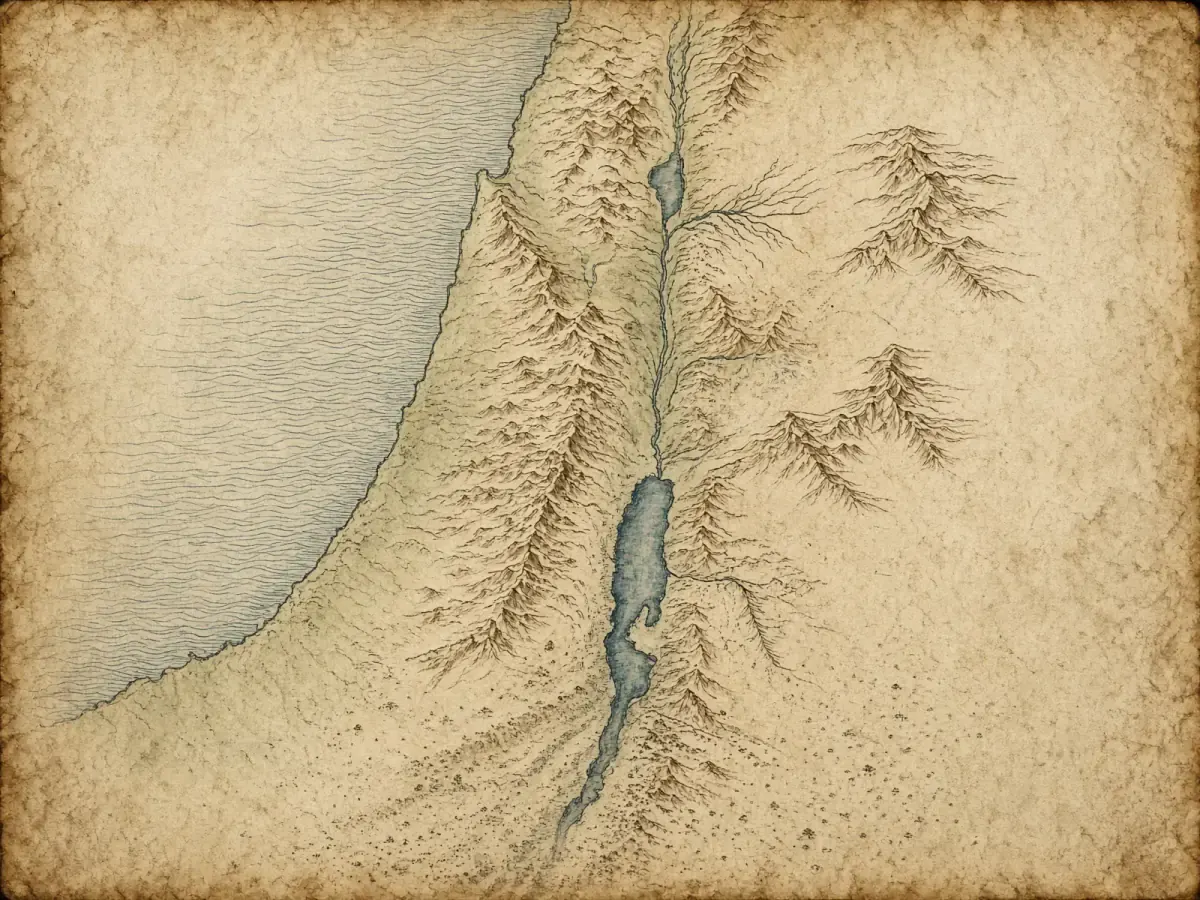
The earlier image of the enemy fleeing seven ways is reversed so thoroughly that Israel now flees seven ways and is scattered. Defeat is followed by bodies left without anyone to drive off birds and beasts, making military collapse also a collapse of ordinary care. Then the chapter returns to the very house, vineyard, and betrothed woman that chapter 20 had protected by releasing a man from battle. Here each beginning is severed from the person who expected to enjoy it. A house is built but not inhabited, a vineyard planted but not gathered, a marriage begun but violated by another. Livestock is taken, children are carried away, and produce goes to an unknown nation while the sufferer watches without power to intervene. Even the king is swept into exile. Royal office does not stand outside the covenant’s consequences, and Israel’s public visibility becomes a byword rather than the honored recognition promised in the blessing.
Deep dive
The enemy's earlier flight by seven ways returns as Israel's own scattering. The corpses that birds and beasts consume have no one to drive the creatures away, a detail that makes defeat also a collapse of ordinary human care. The following language repeatedly joins sight with helplessness: losses occur before the sufferer's eyes, while no rescuer intervenes. Possessing eyes does not mean possessing power to change what they see.
Verse 30 recalls chapter 20 with particular precision. The betrothed woman, new house, and planted vineyard that once justified release from battle now become the very things their intended possessor cannot enjoy. That connection gives the curse a human scale. The loss is not merely a smaller national total; it is the severing of a particular person's relation to a future already begun. Children carried away and produce eaten by strangers extend the same pattern.
The king is carried into exile along with the people. The office cannot stand outside the consequences named for the community. There the people serve gods of wood and stone, a reversal that is both displacement and religious degradation within the chapter's own terms. Becoming a proverb and byword further reverses the earlier public recognition of the LORD's name. The nations still notice Israel, but the meaning attached to that visibility has changed.
Words to trace: LORD, eyes, smite, astonishment, botch, earth
Verse-by-verse path
- Deuteronomy 28:25
“Removed” is zaavah, a horror, something to shudder at. Jeremiah borrowed the phrase for Judah’s fate at least four times, “to be removed into all kingdoms of the earth” (Jeremiah 15:4; 24:9; 29:18; 34:17), which shows how closely the prophets read this chapter.
- Deuteronomy 28:26
“Fray” is old English for frighten. The one person in the Old Testament who does fray the birds away is Rizpah, who sat on a rock from harvest to rain guarding the bodies of her hanged sons, and let neither bird nor beast touch them (2 Samuel 21:10). Jeremiah 7:33 quotes this verse almost exactly.
- Deuteronomy 28:27
“The botch of Egypt” is shechin, the boils of the sixth plague (Exodus 9:9). “Emerods”, tumours or swellings, are what struck the Philistines when they kept the ark (1 Samuel 5:6), after which they sent back golden models of them. The plagues once aimed at Israel’s enemies are here aimed at Israel.
- Deuteronomy 28:28
The same three words, madness, blindness and astonishment, are used in Zechariah 12:4 of the horses and riders that come against Jerusalem. In Deuteronomy they fall on Israel; in Zechariah they are turned back on Jerusalem’s attackers.
- Deuteronomy 28:29
A blind man gropes whether it is day or night; this is a sighted man groping in full daylight. Isaiah 59:10 describes the same condition as confession: “We grope for the wall like the blind... we stumble at noonday as in the night.”
- Deuteronomy 28:30
Behind the King James “lie with her” the written Hebrew has a coarser verb, and the scribes who fixed the reading tradition marked it to be read aloud as the ordinary word for lying with. The three frustrations are the three exemptions from battle in 20:5–7, in reverse order.
- Deuteronomy 28:31
The law of 22:1–4 required an Israelite to bring back a neighbour’s straying ox and ass. Here the ox is killed and the ass seized before the owner’s face, and “shall not be restored”, using the same verb of return. The neighbourly duty has no one left to keep it.
- Deuteronomy 28:32
“Fail with longing” is kalot, to waste away: eyes that wear themselves out watching the road. “No might in thine hand” is an idiom, literally “not to the power of thine hand”, which Laban used the other way when he told Jacob “It is in the power of my hand to do you hurt” (Genesis 31:29).
- Deuteronomy 28:33
The two verbs, oppressed and crushed, are the pair Amos flings at the wealthy women of Samaria, the cows of Bashan, “which oppress the poor, which crush the needy” (Amos 4:1). The nation that oppressed its own poor is threatened with the same treatment at foreign hands.
- Deuteronomy 28:34
“Mad” is meshugga, the word Achish uses when David feigns madness at Gath (1 Samuel 21:15), and the root of the Yiddish meshuggah. Here no disease causes it. The cause is watching: “the sight of thine eyes”.
- Deuteronomy 28:35
The phrase “sore botch” and the range “from the sole of thy foot unto the top of thy head” are the words Job 2:7 uses when Satan strikes Job. A curse of the covenant falls, in that book, on a man who had done nothing to earn it.
- Deuteronomy 28:36
“Thy king which thou shalt set over thee” echoes the king law, “thou shalt in any wise set him king over thee” (17:15), written before Israel had any king. Jehoiachin and Zedekiah were both carried to Babylon (2 Kings 24:15; 25:7), and Manasseh before them in chains (2 Chronicles 33:11).
- Deuteronomy 28:37
Astonishment, proverb and byword are shammah, mashal and sheninah. God used the second and third words to Solomon at the temple’s dedication: “Israel shall be a proverb and a byword among all people” (1 Kings 9:7). A byword is a name people use to make a point about ruin.
Deuteronomy 28:25-37
King James Version25The LORD shall cause thee to be smitten before thine enemies: thou shalt go out one way against them, and flee seven ways before them: and shalt be removed into all the kingdoms of the earth.
26And thy carcase shall be meat unto all fowls of the air, and unto the beasts of the earth, and no man shall fray them away.
27The LORD will smite thee with the botch of Egypt, and with the emerods, and with the scab, and with the itch, whereof thou canst not be healed.
28The LORD shall smite thee with madness, and blindness, and astonishment of heart:
29And thou shalt grope at noonday, as the blind gropeth in darkness, and thou shalt not prosper in thy ways: and thou shalt be only oppressed and spoiled evermore, and no man shall save thee.
30Thou shalt betroth a wife, and another man shall lie with her: thou shalt build an house, and thou shalt not dwell therein: thou shalt plant a vineyard, and shalt not gather the grapes thereof.
31Thine ox shall be slain before thine eyes, and thou shalt not eat thereof: thine ass shall be violently taken away from before thy face, and shall not be restored to thee: thy sheep shall be given unto thine enemies, and thou shalt have none to rescue them.
32Thy sons and thy daughters shall be given unto another people, and thine eyes shall look, and fail with longing for them all the day long: and there shall be no might in thine hand.
33The fruit of thy land, and all thy labours, shall a nation which thou knowest not eat up; and thou shalt be only oppressed and crushed alway:
34So that thou shalt be mad for the sight of thine eyes which thou shalt see.
35The LORD shall smite thee in the knees, and in the legs, with a sore botch that cannot be healed, from the sole of thy foot unto the top of thy head.
36The LORD shall bring thee, and thy king which thou shalt set over thee, unto a nation which neither thou nor thy fathers have known; and there shalt thou serve other gods, wood and stone.
37And thou shalt become an astonishment, a proverb, and a byword, among all nations whither the LORD shall lead thee.
Deuteronomy 28:38-48
Labour Continues While Enjoyment Disappears
This part of the curse is especially cruel because the work continues. Seed still goes into the field, vines are planted and dressed, olive trees cover the land, and sons and daughters are born. The collapse comes between effort and enjoyment. Locusts, worms, failed fruit, and captivity cut the line that normally runs from labor to result. The resident stranger then rises while Israel sinks, reversing the chapter’s earlier language of lending, borrowing, head, and tail. That reversal does not cancel Deuteronomy’s commands to treat strangers justly. It describes Israel’s own expected position being overturned under the curse. The reason given is also striking: abundance had not produced service to the LORD with joy and gladness, so service now takes another form under enemies, marked by hunger, thirst, nakedness, and want. The iron yoke turns a social reversal into something the body can feel.
Deep dive
These verses do not describe a population that simply stops working. Seed is carried out, vineyards are planted and tended, and olive trees remain in the territory. The disaster lies in the break between labour and its result. Insects, failed yield, and captivity prevent the workers and parents from receiving what those beginnings would ordinarily promise. Effort remains visible while enjoyment is removed.
The resident stranger's rise and Israel's descent reverse the head-and-tail and lender-and-borrower language of the blessing. The contrast concerns a change of position under the curse; it does not revoke the book's commands to feed the stranger or judge his case fairly. The same social world is being shown with Israel's expected place overturned. The curses become a sign and wonder rather than the blessing becoming evidence of the LORD's favour.
The reason in verses 47–48 turns on two kinds of service. Israel did not serve the LORD with joy and gladness amid abundance; it will serve enemies amid hunger, thirst, nakedness, and want. The iron yoke makes that exchange bodily. The former plenty is not condemned as inherently evil. The passage condemns a response to the giver within plenty, then describes dependence upon hostile masters when plenty is gone.
Words to trace: LORD, consume, destroyed, fruit, gather, lend
Verse-by-verse path
- Deuteronomy 28:38
Haggai 1:6 describes this curse already in force among the returned exiles: “Ye have sown much, and bring in little.” The locust, arbeh, is the insect of the eighth plague (Exodus 10:4), which ate every green thing in Egypt.
- Deuteronomy 28:39
“Dress” is avad, to work or serve, the verb of Genesis 2:15, where the man is put in the garden “to dress it and to keep it”. “Worms” is tolaat, the grub that bred in hoarded manna (Exodus 16:20). The vinedresser does the work of Eden and gets the worm.
- Deuteronomy 28:40
“Coasts” in 1611 meant borders or territory, not seashore; olive trees fill the land to its edges. Oil was daily grooming; to go unanointed was the sign of mourning (2 Samuel 14:2). “Cast his fruit” means the olives drop before they ripen.
- Deuteronomy 28:41
Literally “they shall not be to thee”: born to you, but not yours. The children appear in a run of crops, between the olive and the locust, as another harvest reaped by someone else. Lamentations 1:5 records it done: “her children are gone into captivity before the enemy.”
- Deuteronomy 28:42
The insect here is not the arbeh of verse 38 but tselatsal, a rare, whirring word, perhaps a cricket or a swarm locust. “Consume” is yarash, to possess, the verb Israel uses for taking the land. The insect takes possession of the trees as Israel took possession of Canaan.
- Deuteronomy 28:43
The stranger is the ger, the resident alien Israel was told to protect. The Hebrew doubles the direction words: “higher and higher” for him, “lower and lower” for Israel. The protected guest overtakes the host, so the law’s care for him becomes the measure of Israel’s fall.
- Deuteronomy 28:44
Verses 12 and 13 are compressed and reversed in one line: the lender becomes the borrower, the head the tail. Proverbs 22:7 names what that means in practice: “the borrower is servant to the lender.”
- Deuteronomy 28:45
“Pursue” and “overtake” together are the verbs Pharaoh boasted with at the sea: “I will pursue, I will overtake” (Exodus 15:9). Egypt’s threat against Israel becomes the curses’ threat. The verse sums up the section and gives its reason again, not hearkening.
- Deuteronomy 28:46
“A sign and a wonder”, ot and mofet, are the words used for the plagues on Egypt (6:22; 4:34). Israel is threatened with becoming, in its own land, what Egypt became: a public demonstration of God’s judgment. “For ever” applies it to the descendants.
- Deuteronomy 28:47
“For the abundance of all things” is merov kol. The next verse answers it with choser kol, “want of all things”. The reason for the curse is framed as a failure of joy, not only of obedience: plenty was given and received without gladness.
- Deuteronomy 28:48
When the prophet Hananiah broke the wooden yoke Jeremiah wore, God answered: “Thou hast broken the yokes of wood; but thou shalt make for them yokes of iron” (Jeremiah 28:13). The iron yoke of this verse is the one Jeremiah announced for Babylon’s subjects.
Deuteronomy 28:38-48
King James Version38Thou shalt carry much seed out into the field, and shalt gather but little in; for the locust shall consume it.
39Thou shalt plant vineyards, and dress them, but shalt neither drink of the wine, nor gather the grapes; for the worms shall eat them.
40Thou shalt have olive trees throughout all thy coasts, but thou shalt not anoint thyself with the oil; for thine olive shall cast his fruit.
41Thou shalt beget sons and daughters, but thou shalt not enjoy them; for they shall go into captivity.
42All thy trees and fruit of thy land shall the locust consume.
43The stranger that is within thee shall get up above thee very high; and thou shalt come down very low.
44He shall lend to thee, and thou shalt not lend to him: he shall be the head, and thou shalt be the tail.
45Moreover all these curses shall come upon thee, and shall pursue thee, and overtake thee, till thou be destroyed; because thou hearkenedst not unto the voice of the LORD thy God, to keep his commandments and his statutes which he commanded thee:
46And they shall be upon thee for a sign and for a wonder, and upon thy seed for ever.
47Because thou servedst not the LORD thy God with joyfulness, and with gladness of heart, for the abundance of all things;
48Therefore shalt thou serve thine enemies which the LORD shall send against thee, in hunger, and in thirst, and in nakedness, and in want of all things: and he shall put a yoke of iron upon thy neck, until he have destroyed thee.
Deuteronomy 28:49-57
The Siege Reaches the Most Private Bonds
A distant nation arrives with speed, an unfamiliar language, and no regard for old or young. Deuteronomy does not name that nation in these verses, even though later interpreters have connected the description with historical invaders. The passage’s focus is what the enemy does: consumes the land’s produce, strips away cattle and grain, and brings down walls that Israel trusted. Then the siege passes through the city defenses and into the family itself. Hunger becomes so severe that parents consume their own children and even withhold the flesh from the people closest to them. The man and woman are both described through former tenderness and delicacy, making the descent more horrific. Social refinement and domestic affection cannot survive the pressure the curse describes. Lamentations later echoes this horror during Jerusalem’s destruction. The passage needs no extra detail from imagination. Its own movement from walls to household bonds is already devastating.
Deep dive
The approaching nation is characterized through speed, distance, an unfamiliar language, and disregard for age. It is not named in these verses. Later readers have connected the description with more than one invading power, but attaching a single name here as though Moses supplies it would narrow what the text actually says. Its attention is on the enemy's ability to consume the produce and bring down the high walls in which Israel trusts.
The siege then moves the catastrophe from walls to families. The man described as tender and delicate refuses to share with those closest to him, and the woman whose foot scarcely touches the ground is driven into equally appalling secrecy. The contrast between former delicacy and present starvation is part of the passage's force. Social refinement and domestic closeness no longer hold the household together under the pressure described.
The cannibalism is stated plainly and needs no invented detail to become more dreadful. The repeated language of siege and distress identifies the conditions in which these acts occur. Lamentations 4:10 later describes compassionate women cooking their own children during Jerusalem's destruction, a direct thematic return to this threatened collapse. Deuteronomy's movement is exacting: the land that should feed households becomes a place where the bonds meant to protect children are broken by hunger.
Words to trace: gates, children, distress, fruit, land, LORD
Verse-by-verse path
- Deuteronomy 28:49
Habakkuk 1:8 describes the Chaldeans in this verse’s terms: “they shall fly as the eagle that hasteth to eat.” Jeremiah 5:15 echoes the language: “a nation whose language thou knowest not, neither understandest what they say.” The enemy cannot be pleaded with, because it cannot be spoken to.
- Deuteronomy 28:50
“Fierce countenance” is az panim, hard of face. Daniel 8:23 uses the same phrase for a king who will stand up in the latter days. Lamentations 5:12 records the fulfilment in Jerusalem: “the faces of elders were not honoured.”
- Deuteronomy 28:51
Corn, wine and oil are the triad the book promised to bless (7:13; 11:14): grain, new wine, fresh oil. The same three are here listed as what the enemy leaves none of. The list of kine and sheep repeats verse 4 word for word.
- Deuteronomy 28:52
At Kadesh the spies had reported cities “great and walled up to heaven” (1:28), and fear of them kept Israel out of the land. The Book of Joshua will soon show Jericho’s wall falling (Joshua 6:20). Here the walls are Israel’s own, trusted and falling. “Besiege thee in all thy gates” is said twice.
- Deuteronomy 28:53
“The fruit of thine own body” is the phrase of the first blessing in verse 4. “Siege and straitness”, matsor and matsoq, is a rhyming pair repeated in verses 55 and 57. In 2 Kings 6:28–29 two women of Samaria under siege agree to eat their sons, and one keeps the bargain.
- Deuteronomy 28:54
“Tender” and “very delicate” describe a man used to comfort. “His eye shall be evil” is the idiom of stinginess from 15:9, the evil eye toward a poor brother before the year of release. The grudging eye once turned on a neighbour’s loan is turned on his own wife and children.
- Deuteronomy 28:55
The verse explains the evil eye of verse 54: he shares nothing because nothing else is left. “In all thy gates” widens the siege to every town. Deuteronomy’s meals were always shared, with Levite and stranger at the table; this one is eaten alone.
- Deuteronomy 28:56
Isaiah 47:1 addresses Babylon’s daughter in this verse’s words: “thou shalt no more be called tender and delicate.” The woman who would not set the sole of her foot on the ground reverses 11:24, where every place the sole of Israel’s foot trod was promised to them.
- Deuteronomy 28:57
“Her young one” is shilyah, a word found only here, meaning the afterbirth; many modern versions translate it so. The verse lists the birth itself, then the children yet to be born. “Secretly” returns: in the siege, as in the curses of chapter 27, the worst acts are hidden ones.
Deuteronomy 28:49-57
King James Version49The LORD shall bring a nation against thee from far, from the end of the earth, as swift as the eagle flieth; a nation whose tongue thou shalt not understand;
50A nation of fierce countenance, which shall not regard the person of the old, nor shew favour to the young:
51And he shall eat the fruit of thy cattle, and the fruit of thy land, until thou be destroyed: which also shall not leave thee either corn, wine, or oil, or the increase of thy kine, or flocks of thy sheep, until he have destroyed thee.
52And he shall besiege thee in all thy gates, until thy high and fenced walls come down, wherein thou trustedst, throughout all thy land: and he shall besiege thee in all thy gates throughout all thy land, which the LORD thy God hath given thee.
53And thou shalt eat the fruit of thine own body, the flesh of thy sons and of thy daughters, which the LORD thy God hath given thee, in the siege, and in the straitness, wherewith thine enemies shall distress thee:
54So that the man that is tender among you, and very delicate, his eye shall be evil toward his brother, and toward the wife of his bosom, and toward the remnant of his children which he shall leave:
55So that he will not give to any of them of the flesh of his children whom he shall eat: because he hath nothing left him in the siege, and in the straitness, wherewith thine enemies shall distress thee in all thy gates.
56The tender and delicate woman among you, which would not adventure to set the sole of her foot upon the ground for delicateness and tenderness, her eye shall be evil toward the husband of her bosom, and toward her son, and toward her daughter,
57And toward her young one that cometh out from between her feet, and toward her children which she shall bear: for she shall eat them for want of all things secretly in the siege and straitness, wherewith thine enemy shall distress thee in thy gates.
Deuteronomy 28:58-68
The Exodus Is Reversed, but This Is Not the Final Chapter
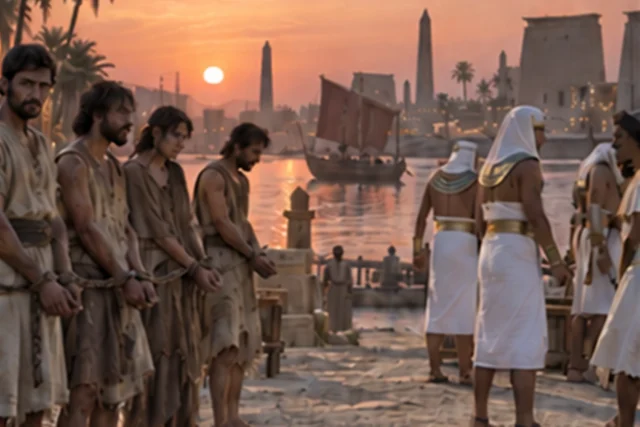
The final section refuses to let the long catalogue sound complete. Diseases and plagues not even written in the book are added to the threat, while a people once compared with the stars become few. Scattering among the nations offers no escape. The displaced population finds no rest for the foot, no stable confidence in life, and no hour of the day it actually wants to inhabit. Morning wishes for evening, and evening for morning. Then Egypt returns as the last reversal. The exodus route is symbolically undone as Israel is sent back toward the place from which it was delivered, now seeking sale into bondage without even finding a buyer. The image is not comic relief or accidental escape from slavery. It deepens the abandonment. Yet Deuteronomy itself continues beyond chapter 28, and later chapters speak of gathering after scattering. That later hope should not dilute this warning, but it keeps this terrible ending from being mistaken for the book’s final sentence.
Deep dive
The reference to diseases not written in the book prevents the long list from sounding exhaustive. The stated breach is failure to observe the words and fear the LORD's glorious name. The people once numerous as the stars become few. Verse 63 uses severe language about the LORD rejoicing to destroy as he formerly rejoiced to do good; the text does not disguise the judgment as an impersonal accident.
Scattering does not provide relief. The displaced people find neither ease nor rest for the foot, and the uncertainty spreads into the rhythm of morning and evening. Day is wished away in favour of night, and night in favour of day. The repeated movement is not toward a place of refuge but toward the inability to feel secure in any place or hour.
Egypt supplies the last reversal. The direction of the exodus is undone, and the people offer themselves for bondage without even finding a buyer. That closing absence is not presented as a happy escape from slavery; it intensifies the picture of abandonment. Yet chapter 28 is not where Deuteronomy ends. Chapter 30 will name gathering after scattering and the LORD again rejoicing to do good. That later turn must not soften these curses, but neither should the curses be treated as the book's last possible word about Israel.
Words to trace: LORD, fear, plagues, book, continuance, Egypt
Verse-by-verse path
- Deuteronomy 28:58
For the first time the chapter calls itself writing: “the words of this law that are written in this book.” The King James sets THE LORD THY GOD in capitals here as the name itself, the “glorious and fearful” name the people are to fear.
- Deuteronomy 28:59
“Wonderful” is hifla, to make extraordinary, the root of the wonders God did for Israel in Egypt (Exodus 15:11). “Of long continuance” translates neemanot, literally faithful or reliable, from the root of Amen: plagues as dependable as God’s promises.
- Deuteronomy 28:60
In 7:15 Moses had promised the obedient that the LORD would put “none of the evil diseases of Egypt” on them, and in Exodus 15:26 God said “I will put none of these diseases upon thee... for I am the LORD that healeth thee.” Here the promise is reversed.
- Deuteronomy 28:61
“The book of this law” is sefer hattorah, the phrase Hilkiah the priest uses when he finds the scroll in the temple in Josiah’s reign (2 Kings 22:8). When Josiah heard the curses read, he tore his clothes (22:11).
- Deuteronomy 28:62
Moses had said in 10:22 that seventy went down into Egypt and “now the LORD thy God hath made thee as the stars of heaven for multitude”, the promise to Abraham (Genesis 15:5). The same words are here reversed. “Few in number” is the phrase of 26:5, the father who went down “with a few”.
- Deuteronomy 28:63
“Plucked” is nasach, to tear out by the roots. Proverbs 2:22 uses it: “the transgressors shall be rooted out of it.” The land Israel was planted in (Exodus 15:17, “plant them in the mountain of thine inheritance”) can pull its planting out again.
- Deuteronomy 28:64
“From the one end of the earth even unto the other” is the span of 4:32, where Moses challenged Israel to ask across the whole world whether anything like Sinai had ever happened. The same horizons now measure the scattering. Gods of wood and stone are those of 4:28, “which neither see, nor hear”.
- Deuteronomy 28:65
“Neither shall the sole of thy foot have rest” repeats the words used of Noah’s dove, which “found no rest for the sole of her foot” and came back to the ark (Genesis 8:9). The dove had an ark to return to. Here the trembling heart has none.
- Deuteronomy 28:66
Literally, “thy life shall be hung up before thee”, dangling in front of you like something on a hook. The picture is of a life that is present but can be taken down at any moment.
- Deuteronomy 28:67
“Would God” is mi yitten, literally “who will give”, the Hebrew idiom for an unanswerable wish. Job 7:4 is the same sleepless longing: “When I lie down, I say, When shall I arise, and the night be gone?” Each part of the day is dreaded, so each wishes for the other.
- Deuteronomy 28:68
The king law (17:16) forbade causing the people “to return to Egypt”, and Exodus 14:13 had promised of the Egyptians, “ye shall see them again no more for ever.” After Jerusalem fell in AD 70, Josephus records that many captives were sent to Egypt to labour (Jewish War 6.418). The ships are the new detail: the return is by sea.
Deuteronomy 28:58-68
King James Version58If thou wilt not observe to do all the words of this law that are written in this book, that thou mayest fear this glorious and fearful name, THE LORD THY GOD;
59Then the LORD will make thy plagues wonderful, and the plagues of thy seed, even great plagues, and of long continuance, and sore sicknesses, and of long continuance.
60Moreover he will bring upon thee all the diseases of Egypt, which thou wast afraid of; and they shall cleave unto thee.
61Also every sickness, and every plague, which is not written in the book of this law, them will the LORD bring upon thee, until thou be destroyed.
62And ye shall be left few in number, whereas ye were as the stars of heaven for multitude; because thou wouldest not obey the voice of the LORD thy God.
63And it shall come to pass, that as the LORD rejoiced over you to do you good, and to multiply you; so the LORD will rejoice over you to destroy you, and to bring you to nought; and ye shall be plucked from off the land whither thou goest to possess it.
64And the LORD shall scatter thee among all people, from the one end of the earth even unto the other; and there thou shalt serve other gods, which neither thou nor thy fathers have known, even wood and stone.
65And among these nations shalt thou find no ease, neither shall the sole of thy foot have rest: but the LORD shall give thee there a trembling heart, and failing of eyes, and sorrow of mind:
66And thy life shall hang in doubt before thee; and thou shalt fear day and night, and shalt have none assurance of thy life:
67In the morning thou shalt say, Would God it were even! and at even thou shalt say, Would God it were morning! for the fear of thine heart wherewith thou shalt fear, and for the sight of thine eyes which thou shalt see.
68And the LORD shall bring thee into Egypt again with ships, by the way whereof I spake unto thee, Thou shalt see it no more again: and there ye shall be sold unto your enemies for bondmen and bondwomen, and no man shall buy you.
Questions to keep in mind while reading
- Identify the people addressed and the covenant setting.
- Distinguish rescue, worship, holiness, justice, and community responsibility.
- Read commands in their literary and covenant context before making a modern application.
Text first
Where readers differ
The chapter summary begins with what the passage says and how its parts fit together. It does not assume one denomination has already settled every question. Where a conclusion depends on a tradition, literary theory, or historical reconstruction, that dependence is named openly.
The KJV text is presented first. Interpretive conclusions are labeled, and differences are introduced only when they help a reader understand why serious communities do not always reach the same answer.
Comparative interpretive notes for this chapter are in preparation. Until reviewed notes are ready, this page separates the KJV text from summary and application without claiming that serious readers agree on every question.
Questions beneath the surface
- What account of God, human freedom, responsibility, and the good life emerges from Deuteronomy 28?
- Which tension does the chapter refuse to resolve quickly?
- What changes when the chapter is read as part of the whole canon rather than as an isolated moral lesson?
- Where might a sincere reader confuse a familiar tradition with something the text states directly?
Questions for serious personal contemplation
These open-ended questions make room for tension, honest response, prayer, and conclusions that remain accountable to the chapter.
Observe without rushing
What part of Deuteronomy 28 makes you stop, feel unsettled, or feel surprised, and why?
Which detail in the passage would be easiest to overlook? How does that detail change your understanding?
Where do you see tension between what happens and this focus: Deuteronomy 28 develops its own movement around LORD, fruit, land, destroyed, earth?
What important question does the passage leave open instead of resolving quickly?
Examine your inner life honestly
Which person, response, fear, or desire in the passage feels most like your own life right now?
What assumption about God, other people, or yourself does this text challenge?
Which part would you rather soften, avoid, or explain away too quickly? What might that reaction reveal?
If this Scripture could ask you one direct question, what do you think it would ask?
Respond with wisdom and courage
What do you need to remember, confess, grieve, thank God for, or trust after reading this passage?
How might another faithful person read this situation differently without ignoring the text?
What obedient response would be costly, uncomfortable, or slow, yet still faithful to Scripture?
What question will you carry into prayer this week, and which verses will you keep in front of you?
Music and video connected to the passage
Related media appears when its Scripture reference overlaps this study. Music and video can illuminate a theme while the biblical text remains the foundation.