The big picture
Isaac faces famine, receives the ancestral promise and repeats his father's deception about his wife. Prosperity then leads to conflict over water. His account combines inherited blessing with inherited patterns of fear.
In this chapter
- Promise and a Familiar Deception Genesis 26:1-11
God tells Isaac to remain in the land and renews the promises made to Abraham.
- Conflict Over Water Genesis 26:12-22
Isaac prospers, and envy leads to obstruction and expulsion.
- Assurance and an Oath Genesis 26:23-35
At Beersheba God reassures Isaac, who builds an altar and calls on the Lord.

Scripture beside the summary
Genesis · King James Version · 35Genesis 26:1-11
Promise and a Familiar Deception
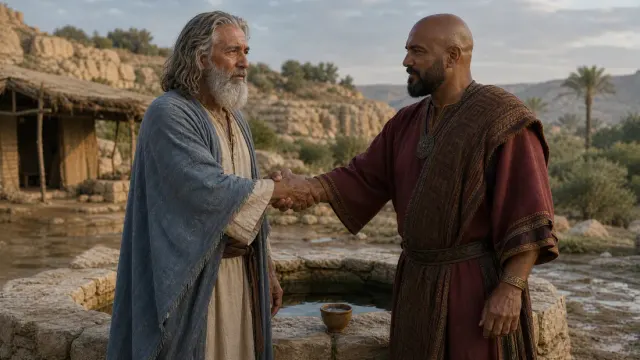
God tells Isaac to remain in the land and renews the promises made to Abraham. Isaac calls Rebekah his sister because he fears for his life. Abimelech discovers the truth and publicly protects the couple, again exposing the ancestor's deceptive assumptions about outsiders.
Deep dive
Genesis carefully distinguishes this famine from the earlier one in Abraham's lifetime. Isaac is not merely appearing inside his father's account; the same land now presents a fresh crisis to a new generation. The instruction not to go down into Egypt places a limit on his response. Remaining is not evidence that the famine is minor. It is the particular course God gives him while the famine is real.
The speech holds present residence and future possession apart. Isaac must "sojourn" in the countries that God promises to give his descendants. He has an assurance of inheritance, not an announcement that every field and well already belongs to him without dispute. The language of stars, descendants, and blessing for all nations also prevents the chapter from shrinking into one prosperous household's fortunes. Abraham's obedience is explicitly remembered, but Isaac himself is addressed and promised God's presence. The inheritance passes through a family; the divine speech does not remain secondhand.
The KJV's "sporting" describes conduct that makes the marriage plain to Abimelech. Genesis supplies neither a detailed scene nor a reason to supply one. The point is recognition: a king looking through a window discovers what Isaac's public explanation concealed. Isaac's answer confirms that fear, rather than a divine instruction, produced the disguise.
Abimelech's rebuke changes the direction of the danger. Isaac has been considering what the local men might do to him; the king considers the guilt an unwitting man might incur because of Isaac. The supposed protection has exposed Rebekah and the community to another risk. Abimelech then issues a prohibition protecting both husband and wife. The ruler of the place Isaac feared becomes the speaker who publicly guards the marriage. God's promise at the chapter's opening has not made Isaac incapable of fear, nor does Genesis treat the promise as an endorsement of his chosen concealment.
Words to trace: seed, Abraham, land, countries, famine, Gerar, wife, Abimelech, Isaac, lest, people, place
Verse-by-verse path
- Genesis 26:1
Abimelech was the king of Gerar in Abraham’s day too (20:2), and Phichol reappears in verse 26, so the names may be royal titles or family names. Calling him king of the Philistines is debated, since the Philistines of later history arrived around 1200 BC; some scholars call it an updating of the name, others an earlier Aegean group.
- Genesis 26:2
This is the first time the LORD is said to appear to Isaac. Abraham went down to Egypt in his famine (12:10) and Jacob will die there, but Isaac is told to stay, and he is the one patriarch who never leaves the land of Canaan in his life.
- Genesis 26:3
“I will be with thee” is spoken here for the first time in Scripture. Its Hebrew, ehyeh immakh, is the phrase God gives Moses at the bush in Exodus 3:12, just before the name “I AM”, ehyeh. “All these countries” is plural, the territories of the several peoples then living there.
- Genesis 26:4
The blessing of the nations repeats 22:18 word for word, and both use a reflexive form of the verb, the nations “shall bless themselves” by your seed. In 12:3, 18:18 and 28:14 the form is the passive, “be blessed”. Translators have long argued over whether the difference means anything.
- Genesis 26:5
Charge, commandments, statutes, laws: mishmereth, mitsvot, chuqqot, torot, the vocabulary of Deuteronomy (compare Deuteronomy 11:1), applied to a man who lived before Sinai. The Mishnah draws the conclusion that Abraham kept the whole law before it was given; Genesis itself only lists the words.
- Genesis 26:6
Three Hebrew words, and they are the obedience: he stays. Gerar lay in the western Negev near Gaza, probably at Tel Haror, so staying meant living under a foreign king in a famine rather than going down to Egypt’s river.
- Genesis 26:7
“Fair to look upon” are the words used of Rebekah at the well in 24:16. If the twins were already born, the pretence would have been hard to keep, so many readers place this episode before chapter 25’s births; Genesis arranges by subject here, not by date.
- Genesis 26:8
“Sporting” is metsacheq, a play on Isaac’s own name, Yitschaq, he laughs. The same verb was Ishmael’s “mocking” in 21:9 and how Lot’s sons-in-law heard him in 19:14. It took “a long time” for the pretence to fail, and it failed through a window, not a confession.
- Genesis 26:9
Isaac gives a bare reason, “Lest I die for her.” Abraham, caught the same way in 20:11–12, offered two excuses, that there was no fear of God in the place and that Sarah really was his half-sister. Isaac has no half-truth to fall back on; Rebekah is not his sister in any sense.
- Genesis 26:10
“Lightly” in 1611 means almost or easily: kimat, nearly. “Guiltiness” is asham, the word for the guilt offering in Leviticus 5. “What is this thou hast done?” is the question God put to Eve in 3:13 and Pharaoh put to Abram in 12:18.
- Genesis 26:11
“Shall surely be put to death” is mot yumat, the formula of Israel’s later law codes, as in Exodus 21:12. The king’s protection extends to the wife as well as the husband: “this man or his wife”. Isaac’s fear is answered by the man he feared.
Genesis 26:1-11
King James Version1And there was a famine in the land, beside the first famine that was in the days of Abraham. And Isaac went unto Abimelech king of the Philistines unto Gerar.
2And the LORD appeared unto him, and said, Go not down into Egypt; dwell in the land which I shall tell thee of:
3Sojourn in this land, and I will be with thee, and will bless thee; for unto thee, and unto thy seed, I will give all these countries, and I will perform the oath which I sware unto Abraham thy father;
4And I will make thy seed to multiply as the stars of heaven, and will give unto thy seed all these countries; and in thy seed shall all the nations of the earth be blessed;
5Because that Abraham obeyed my voice, and kept my charge, my commandments, my statutes, and my laws.
6And Isaac dwelt in Gerar:
7And the men of the place asked him of his wife; and he said, She is my sister: for he feared to say, She is my wife; lest, said he, the men of the place should kill me for Rebekah; because she was fair to look upon.
8And it came to pass, when he had been there a long time, that Abimelech king of the Philistines looked out at a window, and saw, and, behold, Isaac was sporting with Rebekah his wife.
9And Abimelech called Isaac, and said, Behold, of a surety she is thy wife: and how saidst thou, She is my sister? And Isaac said unto him, Because I said, Lest I die for her.
10And Abimelech said, What is this thou hast done unto us? one of the people might lightly have lien with thy wife, and thou shouldest have brought guiltiness upon us.
11And Abimelech charged all his people, saying, He that toucheth this man or his wife shall surely be put to death.
Genesis 26:12-22
Conflict Over Water
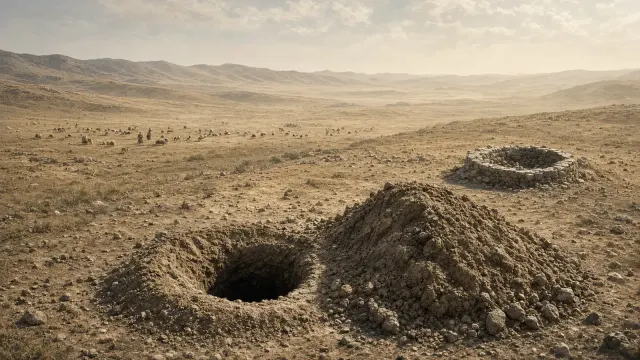
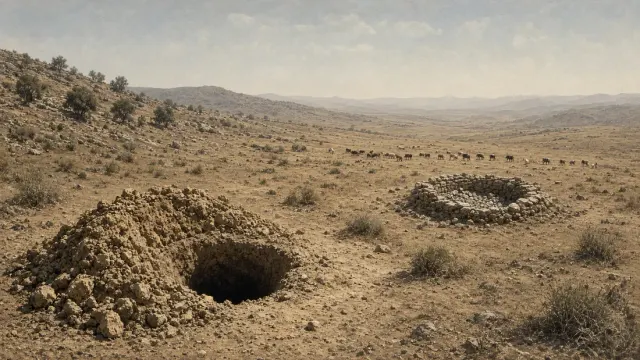
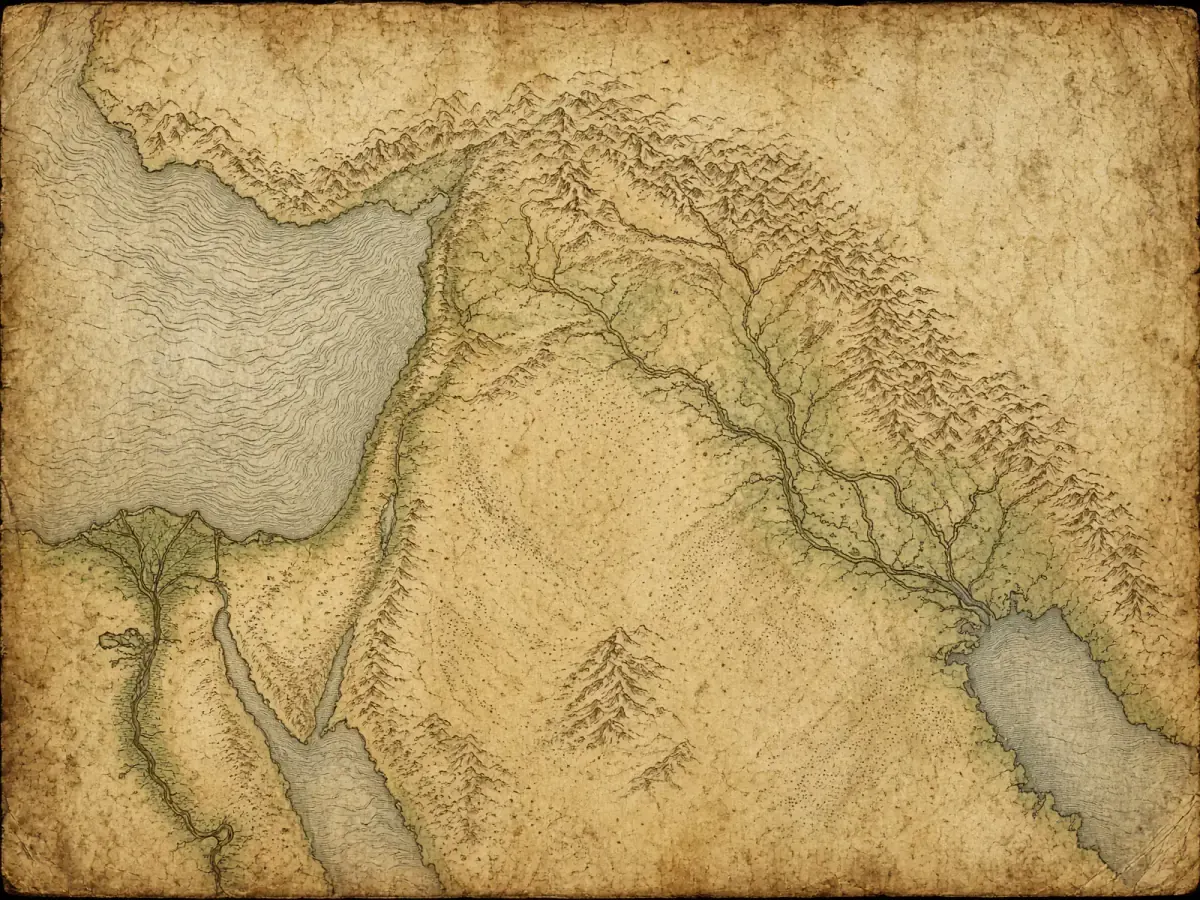
Isaac prospers, and envy leads to obstruction and expulsion. He reopens wells associated with Abraham, then faces disputes over new wells. Moving from Esek and Sitnah to Rehoboth, he recognizes room to live without continuing the immediate conflict.
Deep dive
The account moves from a hundredfold harvest to a demand that Isaac leave. Prosperity is not followed by automatic acceptance. Abimelech's explanation, that Isaac has become too mighty, makes the difficulty concrete: the successful guest is now treated as a threat. Stopped wells attack the means by which a household and its animals can remain in the land. This is more than an argument over courtesy.
Isaac restores the names Abraham gave his wells, preserving continuity with his father rather than presenting every excavation as a new beginning. Yet inherited names do not settle present claims. The herdsmen of Gerar contest the first new supply and then another, while Isaac moves and digs again. Genesis records the repetition without announcing that he is weak or describing a military option he refuses.
At Rehoboth the decisive difference is not that water has suddenly become valuable. Water mattered at every stop. The difference is that nobody contends for this well. Isaac credits the LORD with making room, and links that room to fruitfulness. The promise of land is being lived out through a succession of very practical problems, one watering place at a time.
Words to trace: digged, Isaac, well, Abraham, father, name
Verse-by-verse path
- Genesis 26:12
Isaac is the only patriarch recorded sowing a crop, which semi-nomads did in good ground. The Hebrew says a hundred “measures”, shearim; the Greek read the same consonants with other vowels as seorim, barley, a hundredfold of barley. Both readings mean a harvest far beyond the ordinary.
- Genesis 26:13
The Hebrew hammers one root, gadal, three times: the man became great, and went on becoming great, until he was very great. The King James keeps the rhythm with waxed, grew and became. The growth is described before its cause is named in verse 14.
- Genesis 26:14
“Store of servants” is avuddah, a household of servants, the word used of Job’s “very great household” in Job 1:3. “Envied” is qana, the jealousy Rachel feels for Leah in 30:1 and Joseph’s brothers feel for him in 37:11.
- Genesis 26:15
Stopping wells was an act of war in a dry country; Israel stops the wells of Moab in 2 Kings 3:25. These were Abraham’s wells, the ones over which he made a treaty with the earlier Abimelech at Beersheba (21:25–30). Filling them with earth made the land unlivable without a fight.
- Genesis 26:16
“Mightier than we” is atsamta, the word Pharaoh uses when he fears Israel in Exodus 1:9: “more and mightier than we”. The first king to send away a patriarch’s family for being too strong is this one. Isaac goes without argument.
- Genesis 26:17
The valley of Gerar is a nachal, a wadi, a watercourse dry for most of the year where water could still be found by digging beneath the bed. Isaac moves out of the town but not out of the king’s country.
- Genesis 26:18
“After the death of Abraham” dates the damage. The treaty the earlier Abimelech swore with Abraham in 21:23 was to cover “my son, nor with my son’s son”, and once Abraham died it was ignored. The Hebrew for “digged again” is literally he returned and dug.
- Genesis 26:19
“Springing water” is mayim chayyim, living water, water that flows from a spring rather than collecting in a cistern. It is the phrase Jeremiah uses of God as “the fountain of living waters” (Jeremiah 2:13). Finding it in a wadi bed was a real prize.
- Genesis 26:20
Esek means strife or contention, and this is its only appearance. The herdsmen of Gerar do not claim the land, only the water: “The water is ours.” Isaac names the well after the quarrel and leaves it to them.
- Genesis 26:21
Sitnah means hostility or accusation, from the root of satan, adversary; the word is used of a written accusation in Ezra 4:6. The names grow sharper, strife and then enmity, and Isaac moves again without a word recorded.
- Genesis 26:22
Rehoboth means broad places, open room, and Isaac explains it with the same root: the LORD “hath made room”, hirchiv. The psalmist uses it in Psalm 4:1, “thou hast enlarged me when I was in distress.” “Fruitful” is the word of the first blessing in 1:28.
Genesis 26:12-22
King James Version12Then Isaac sowed in that land, and received in the same year an hundredfold: and the LORD blessed him.
13And the man waxed great, and went forward, and grew until he became very great:
14For he had possession of flocks, and possession of herds, and great store of servants: and the Philistines envied him.
15For all the wells which his father’s servants had digged in the days of Abraham his father, the Philistines had stopped them, and filled them with earth.
16And Abimelech said unto Isaac, Go from us; for thou art much mightier than we.
17And Isaac departed thence, and pitched his tent in the valley of Gerar, and dwelt there.
18And Isaac digged again the wells of water, which they had digged in the days of Abraham his father; for the Philistines had stopped them after the death of Abraham: and he called their names after the names by which his father had called them.
19And Isaac’s servants digged in the valley, and found there a well of springing water.
20And the herdmen of Gerar did strive with Isaac’s herdmen, saying, The water is ours: and he called the name of the well Esek; because they strove with him.
21And they digged another well, and strove for that also: and he called the name of it Sitnah.
22And he removed from thence, and digged another well; and for that they strove not: and he called the name of it Rehoboth; and he said, For now the LORD hath made room for us, and we shall be fruitful in the land.
Genesis 26:23-35
Assurance and an Oath
At Beersheba God reassures Isaac, who builds an altar and calls on the Lord. Abimelech seeks a treaty after recognizing God's presence with him. A new well is reported. The closing notice of Esau's marriages introduces further grief within the household.
Deep dive
The assurance comes "the same night" Isaac reaches Beersheba. God names himself in relation to Abraham, but the reassurance is addressed to Isaac: fear need not determine what comes next. That timing matters. Abimelech has not yet arrived to acknowledge Isaac's standing. The divine affirmation precedes the diplomatic one.
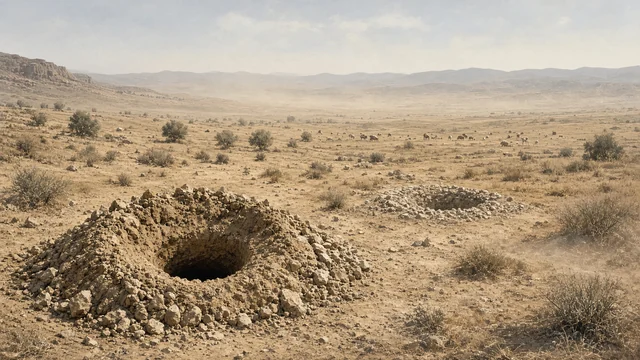
Verse 25 gives three actions in a compact sequence: Isaac builds an altar, pitches his tent, and has his servants dig a well. Worship does not remove the need for shelter and water, and the practical work does not displace worship. The chapter has already made clear that a well can become a point of conflict. Digging another is therefore not a decorative closing detail. Isaac is making a place to live under a promise that still requires daily habitation. Abraham's name remains in God's speech, but the altar, tent, and work here belong to Isaac's own response.
Isaac does not pretend the earlier expulsion was a friendly visit that simply ran its course. His opening words name hatred and dismissal. The delegation answers by declaring that it has plainly seen the LORD with him, then describes its own behaviour as "nothing but good." That is a remarkably comfortable description of telling someone to leave. Genesis places the claim beside Isaac's objection rather than silently adopting the visitors' version.
The covenant is nevertheless made. Isaac provides a feast, both sides swear, and the departure is now explicitly peaceful. Acknowledgement of God's blessing produces a negotiated boundary, not Isaac's absorption into Abimelech's authority. On the same day, the servants report water. The well and the oath bring together the chapter's two recurring needs: a supply for life and enough peace to use it.
The naming of Beersheba also recalls the well-and-oath account in Genesis 21:22–32. Genesis does not stop to explain every detail of the relationship between these naming notices. Here its placement binds Isaac's settlement to his father's earlier presence without erasing the fresh agreement Isaac has just made.
After wells, harvests, and treaties, two marriages occupy the final lines. Their effect is not left for an interpreter to invent: Genesis calls them a "grief of mind" to Isaac and Rebekah. For once, the parents who favour different sons are named together in a shared response.
The notice prepares the next chapter's concern about Jacob's marriage and departure. It also limits the appearance of a completely settled ending. Isaac has found water and secured an oath, but those achievements do not resolve his family's difficulties. The household through which the promise continues is prosperous, protected, and troubled at the same time.
Words to trace: LORD, Abraham, Abraham’s, altar, appeared, Beer, betwixt, Isaac, peace, Abimelech, Ahuzzath, daughter, Hittite, Bashemath, Beeri, Elon, Esau
Verse-by-verse path
- Genesis 26:23
Beersheba was Abraham’s home after the mountain in Moriah (22:19) and the place of his well treaty. Isaac goes back to the one well whose ownership was sworn to, and moves out of Philistine country.
- Genesis 26:24
“My servant Abraham” is the first time in Scripture God calls anyone “my servant”; the title will belong later to Moses, David and Job. “Fear not” was said to Abram in 15:1. The promise is given “for my servant Abraham’s sake”, blessing carried over from one life into the next.
- Genesis 26:25
“Called upon the name of the LORD” is what Abraham did at Bethel (12:8) and at Beersheba itself (21:33). The verb for digging changes here, from chaphar in verses 15 to 22 to karah, a word that also means to buy or to bargain; the change may be only variety.
- Genesis 26:26
Ahuzzath is called “one of his friends”, probably a court title, like Zabud “the king’s friend” in 1 Kings 4:5. Phichol has the name of the army commander who came with the earlier Abimelech in 21:22. Three men of rank come to a man they expelled.
- Genesis 26:27
“Hate” is sana, a strong word, and Isaac uses it to their faces; it is the sharpest thing he says in Genesis. He asks them the question they came prepared to answer, which lets them speak first.
- Genesis 26:28
“We saw certainly” is a doubled verb, “seeing we saw”. The phrase “betwixt us, even betwixt us and thee” repeats itself the way treaty language does, careful to name both parties. The Philistines call God by his name, the LORD, as Laban did.
- Genesis 26:29
“As we have not touched thee” answers the royal order of verse 11: whoever touches this man shall die. They say they sent Isaac away “in peace”, which verse 16 described otherwise. “The blessed of the LORD” is what Laban called the servant in 24:31.
- Genesis 26:30
The feast, mishteh, is named from the verb to drink. Eating together sealed agreements, as Jacob and Laban eat on the heap of witness in 31:54. Isaac feeds the men who stopped his father’s wells.
- Genesis 26:31
“Betimes” means early. “Sware one to another” is literally “a man to his brother”. The verse ends with the phrase they used in verse 29, “in peace”; this time it is Isaac who sends them away, and the words are true.
- Genesis 26:32
The well is the one begun in verse 25, and the report arrives “the same day” as the treaty. The Hebrew message is two words, matsanu mayim, we found water.
- Genesis 26:33
Shebah sounds like both the number seven and the word for oath. The Greek translators chose the second and named the well “Oath”. “Unto this day” is the note of a later writer for whom the city was still standing.
- Genesis 26:34
Esau marries at forty, the age at which his father married Rebekah (25:20), so the two marriages are set side by side. The names differ in 36:2–3, where Esau’s wives are Adah daughter of Elon, Aholibamah and Bashemath daughter of Ishmael; no one has fully reconciled the two lists.
- Genesis 26:35
“Grief of mind” is morat ruach, bitterness of spirit. Rebekah picks up the complaint in 27:46, “I am weary of my life because of the daughters of Heth”, and uses it to send Jacob away, so these two verses set up the whole next move.
Genesis 26:23-35
King James Version23And he went up from thence to Beer-sheba.
24And the LORD appeared unto him the same night, and said, I am the God of Abraham thy father: fear not, for I am with thee, and will bless thee, and multiply thy seed for my servant Abraham’s sake.
25And he builded an altar there, and called upon the name of the LORD, and pitched his tent there: and there Isaac’s servants digged a well.
26Then Abimelech went to him from Gerar, and Ahuzzath one of his friends, and Phichol the chief captain of his army.
27And Isaac said unto them, Wherefore come ye to me, seeing ye hate me, and have sent me away from you?
28And they said, We saw certainly that the LORD was with thee: and we said, Let there be now an oath betwixt us, even betwixt us and thee, and let us make a covenant with thee;
29That thou wilt do us no hurt, as we have not touched thee, and as we have done unto thee nothing but good, and have sent thee away in peace: thou art now the blessed of the LORD.
30And he made them a feast, and they did eat and drink.
31And they rose up betimes in the morning, and sware one to another: and Isaac sent them away, and they departed from him in peace.
32And it came to pass the same day, that Isaac’s servants came, and told him concerning the well which they had digged, and said unto him, We have found water.
33And he called it Shebah: therefore the name of the city is Beer-sheba unto this day.
34And Esau was forty years old when he took to wife Judith the daughter of Beeri the Hittite, and Bashemath the daughter of Elon the Hittite:
35Which were a grief of mind unto Isaac and to Rebekah.
Questions to keep in mind while reading
- Track who acts, who speaks, who is affected, and what changes.
- Notice repeated promises, failures, rescues, and consequences.
- Do not assume the account approves every action that is reported.
Text first
Where readers differ
The chapter summary begins with what the passage says and how its parts fit together. It does not assume one denomination has already settled every question. Where a conclusion depends on a tradition, literary theory, or historical reconstruction, that dependence is named openly.
The KJV text is presented first. Interpretive conclusions are labeled, and differences are introduced only when they help a reader understand why serious communities do not always reach the same answer.
Isaac's abundant harvest is part of this particular covenant narrative. It should not be marketed as a guaranteed financial return for faith or giving.
Questions beneath the surface
- What account of God, human freedom, responsibility, and the good life emerges from Genesis 26?
- Which tension does the chapter refuse to resolve quickly, especially around peace, land, promise?
- What changes when the chapter is read as part of the whole canon rather than as an isolated moral lesson?
- Where might a sincere reader confuse a familiar tradition with something the text states directly?
Questions for serious personal contemplation
These open-ended questions make room for tension, honest response, prayer, and conclusions that remain accountable to the chapter.
Observe without rushing
What part of Genesis 26 makes you stop, feel unsettled, or feel surprised, and why?
Which detail in the passage would be easiest to overlook? How does that detail change your understanding?
Where do you see tension between what happens and this focus: Isaac, disputed wells and room to live?
What important question does the passage leave open instead of resolving quickly?
Examine your inner life honestly
Which person, response, fear, or desire in the passage feels most like your own life right now?
What assumption about God, other people, or yourself does this text challenge?
Which part would you rather soften, avoid, or explain away too quickly? What might that reaction reveal?
If this Scripture could ask you one direct question, what do you think it would ask?
Respond with wisdom and courage
What do you need to remember, confess, grieve, thank God for, or trust after reading this passage?
How might another faithful person read this situation differently without ignoring the text?
What obedient response would be costly, uncomfortable, or slow, yet still faithful to Scripture?
What question will you carry into prayer this week, and which verses will you keep in front of you?
Music and video connected to the passage
Related media appears when its Scripture reference overlaps this study. Music and video can illuminate a theme while the biblical text remains the foundation.