The big picture
The longest chapter in this opening portion of Numbers is deliberately repetitive. Israel's leaders first provide wagons and oxen for the tabernacle's transport, and the distribution follows the actual burdens of Gershon, Merari, and Kohath rather than a rule of equal equipment. Then each tribal prince receives one full day and one full entry for the altar's dedication. The gifts are identical, but the givers are not collapsed into a single line. Only after twelve named presentations does Numbers total the silver, gold, and sacrificial animals. The accounting closes with a different kind of event. Moses enters the tabernacle and hears the voice speaking from above the mercy seat. After a chapter crowded with objects that can be weighed and counted, the final reality is a voice that cannot be entered on the inventory.
In this chapter
- The Wagons Follow the Work Numbers 7:1-9
The chapter reaches back to the day the tabernacle was erected and anointed, reminding the reader that Numbers is arranging related material rather than advancing one day at a time.
- The First Day Establishes the Pattern Numbers 7:10-17
Nahshon of Judah establishes the pattern for the twelve-day dedication.
- The Same Gift, Five More Named Givers Numbers 7:18-47
Issachar, Zebulun, Reuben, Simeon, and Gad follow in the same sequence as the eastern and southern camp divisions, and each man brings exactly the gift Nahshon brought.
- The Smaller Tribes Are Not Reduced to a Footnote Numbers 7:48-83
The western and northern camps complete the dedication through Ephraim, Manasseh, Benjamin, Dan, Asher, and Naphtali.
- The Total Comes After the Names Numbers 7:84-88
Only after all twelve princes have been named does Numbers finally behave like an accountant and add everything up.
- After the Inventory, a Voice Numbers 7:89
After eighty-eight verses of wagons, oxen, silver, gold, flour, incense, and sacrificial animals, Numbers ends the chapter with something no scale can register.
Scripture beside the summary
Numbers · King James Version · 89Numbers 7:1-9
The Wagons Follow the Work
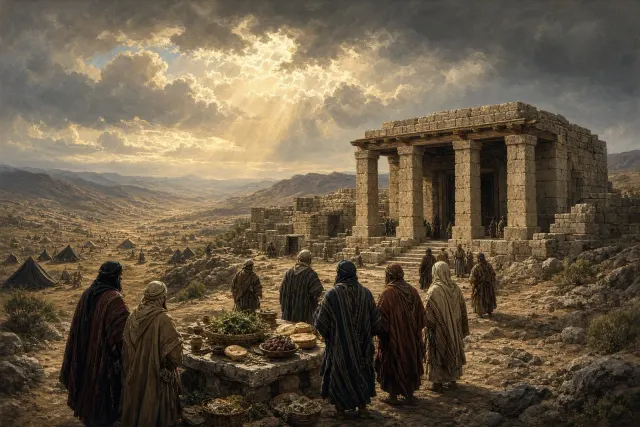
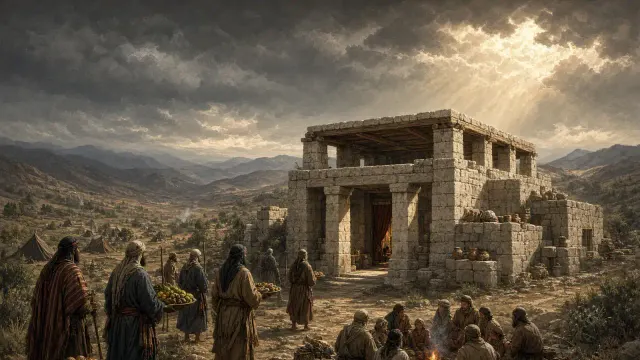
The chapter reaches back to the day the tabernacle was erected and anointed, reminding the reader that Numbers is arranging related material rather than advancing one day at a time. The tribal leaders bring six covered wagons and twelve oxen, and Moses distributes them according to the work already assigned. Gershon receives two wagons and four oxen for the fabric burdens. Merari receives twice as much transport for the heavy framework. Kohath receives none because the sanctuary furnishings under its charge are to be carried on the shoulders. Equal tribes do not require identical tools when the tasks are different. The distribution would look lopsided only if the burdens were ignored. Numbers lets the work explain the equipment. What appears at first like uneven generosity becomes careful fit: transport is not a prize shared by quota but a provision matched to what each family must actually move when the camp sets out.
Deep dive
The opening returns to the day Moses finished setting up and anointing the tabernacle. Exodus 40:17 dates its erection to the first day of the first month of the second year, earlier than the census date at the beginning of Numbers. The book is arranging related material, not claiming that every chapter advances to the next day. The leaders now appearing with gifts are the same representatives associated with the census.
Six covered wagons and twelve oxen are divided unevenly for a stated reason. Gershon receives two wagons and four oxen; Merari receives four wagons and eight oxen. Kohath receives none, because its holy burdens are to be carried on the shoulders. The distribution follows the work, not a rule that every family must receive matching equipment. Merari’s framework requires a different provision from Kohath’s furnishings. The apparent unfairness disappears when the chapter’s own explanation is allowed to govern the arithmetic.
Words to trace: service, gave, oxen, wagons, Moses, princes
Verse-by-verse path
- Numbers 7:1
“Fully set up” is kallot, “finished”, the verb of Genesis 2:2, where God ended his work, and of Exodus 40:33, “So Moses finished the work.” The anointing of the tabernacle and altar is described in Leviticus 8:10–11. The date is a month before the census of chapter 1.
- Numbers 7:2
The princes are identified three ways: heads of fathers’ houses, princes of the tribes, and those “over them that were numbered”, the men who stood beside Moses in the census. Rashi, following the midrash, made them the Hebrew officers beaten by Pharaoh’s taskmasters in Exodus 5:14.
- Numbers 7:3
“Covered wagons” is eglot tsav; tsav is rare, and Isaiah 66:20 uses it for “litters”, so these may have been canopied carts. Six wagons for twelve princes means each pair shared one, while each gave an ox of his own.
- Numbers 7:4
The princes brought the wagons before any command had been given. The LORD’s instruction comes afterward, to accept what they had offered on their own initiative.
- Numbers 7:5
“Take it of them” approves the gift after the fact. The wagons are put to the Levites’ service “according to his service”, so the gift of the princes is converted at once into the needs of the work.
- Numbers 7:6
Moses himself distributes the carts. The verse is a bare record of transfer, from the tribes’ leaders to the tribe that would carry the sanctuary.
- Numbers 7:7
Two wagons and four oxen give a yoke of two oxen to each cart. The Gershonites’ curtains and skins were bulky but relatively light.
- Numbers 7:8
Merari receives two thirds of the transport, four wagons and eight oxen, for boards, bars, pillars and sockets. Ithamar, who supervised Merari’s loads in 4:33, supervises the carts as well.
- Numbers 7:9
When David finally brought the ark to Jerusalem, “the children of the Levites bare the ark of God upon their shoulders with the staves thereon, as Moses commanded” (1 Chronicles 15:15). His earlier attempt with a cart had ended in Uzzah’s death.
Numbers 7:1-9
King James Version1And it came to pass on the day that Moses had fully set up the tabernacle, and had anointed it, and sanctified it, and all the instruments thereof, both the altar and all the vessels thereof, and had anointed them, and sanctified them;
2That the princes of Israel, heads of the house of their fathers, who were the princes of the tribes, and were over them that were numbered, offered:
3And they brought their offering before the LORD, six covered wagons, and twelve oxen; a wagon for two of the princes, and for each one an ox: and they brought them before the tabernacle.
4And the LORD spake unto Moses, saying,
5Take it of them, that they may be to do the service of the tabernacle of the congregation; and thou shalt give them unto the Levites, to every man according to his service.
6And Moses took the wagons and the oxen, and gave them unto the Levites.
7Two wagons and four oxen he gave unto the sons of Gershon, according to their service:
8And four wagons and eight oxen he gave unto the sons of Merari, according unto their service, under the hand of Ithamar the son of Aaron the priest.
9But unto the sons of Kohath he gave none: because the service of the sanctuary belonging unto them was that they should bear upon their shoulders.
Numbers 7:10-17
The First Day Establishes the Pattern
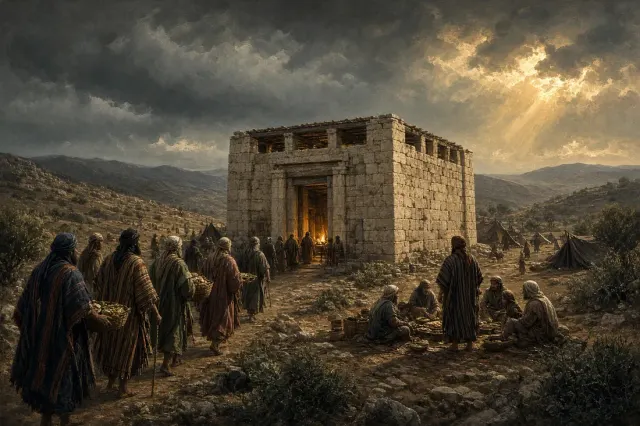
Nahshon of Judah establishes the pattern for the twelve-day dedication. His presentation includes silver vessels filled with fine flour and oil, a gold spoon with incense, and animals for burnt, sin, and peace offerings. The chapter does not make dedication a single symbolic gesture. Grain, incense, atonement, worship, and fellowship offerings all appear in the one carefully specified gift. The weights are exact: a 130-shekel charger, a seventy-shekel bowl, and a ten-shekel gold spoon. Those numbers will repeat eleven more times. Judah goes first, matching its first place in the marching order, but the entry is not written as a winning performance that the later tribes must beat. It is a template. Numbers gives the first giver a name, a father, a tribe, a day, and a complete accounting, preparing the reader to notice that every later giver will receive the same attention.
Deep dive
The LORD directs that the princes bring their dedication offerings one per day. Judah’s leader begins, matching the tribe’s leading place in the camp arrangement. The presentation includes a silver charger and bowl, a gold spoon containing incense, and animals for burnt, sin, and peace offerings. Dedication is therefore not represented solely by handsome vessels or by one kind of sacrifice. Grain, incense, atonement, and the larger sacrificial presentation all have their places.
The weights establish the pattern that will recur: 130 shekels for the charger, seventy for the bowl, and ten for the gold spoon. The chapter does not ask the first contributor to stand for all the others and then dismiss the remaining eleven with a collective acknowledgment. This first full entry prepares for eleven more. Its precision belongs to a record of named participation, not merely to a calculation of the value deposited at the sanctuary.
Words to trace: offering, altar, first, five, offered, shekels
Verse-by-verse path
- Numbers 7:10
“Dedicating” is chanukkah, and the phrase “dedication of the altar” gave its name to the later festival of Hanukkah, which marked the rededication of the temple altar in 164 BC. The princes’ gifts are brought “before the altar”, which is the thing being dedicated.
- Numbers 7:11
“Each prince on his day” is in Hebrew doubled: “one prince for a day, one prince for a day”. The instruction to spread the gifts over twelve days comes from the LORD, not from the princes.
- Numbers 7:12
Nahshon is the only one of the twelve not called “prince” in his heading; the other eleven carry the title. The rabbis suggested the title was withheld from the first so that he would not grow proud of going first.
- Numbers 7:13
“Meat offering” is the grain offering of Leviticus 2; in 1611 “meat” meant food of any kind. “Charger” is qe’arah, a deep dish or platter, the word used for the dishes on the table of showbread (Exodus 25:29).
- Numbers 7:14
“Spoon” translates kaf, the palm of the hand: a small hollow pan shaped like a cupped palm. It holds incense, not flour, and it is the only gold in the gift.
- Numbers 7:15
The burnt offering (olah, “that which goes up”) was burned whole on the altar (Leviticus 1:9). A “young bullock” is literally “a bull, son of the herd”, and the three animals rise in size from lamb to ram to bull.
- Numbers 7:16
Leviticus 4:22–23 prescribes exactly this animal, a male kid of the goats, for the sin offering of a ruler, and the word there for ruler is nasi, the same word as “prince” here. Each prince brings the offering assigned to his rank.
- Numbers 7:17
Seventeen of the twenty-one animals are peace offerings, eaten by the offerers after the fat was burned. The entry closes with Nahshon’s name again, “this was the offering of Nahshon”, so each gift is framed by its giver at both ends.
Numbers 7:10-17
King James Version10And the princes offered for dedicating of the altar in the day that it was anointed, even the princes offered their offering before the altar.
11And the LORD said unto Moses, They shall offer their offering, each prince on his day, for the dedicating of the altar.
12And he that offered his offering the first day was Nahshon the son of Amminadab, of the tribe of Judah:
13And his offering was one silver charger, the weight thereof was an hundred and thirty shekels, one silver bowl of seventy shekels, after the shekel of the sanctuary; both of them were full of fine flour mingled with oil for a meat offering:
14One spoon of ten shekels of gold, full of incense:
15One young bullock, one ram, one lamb of the first year, for a burnt offering:
16One kid of the goats for a sin offering:
17And for a sacrifice of peace offerings, two oxen, five rams, five he goats, five lambs of the first year: this was the offering of Nahshon the son of Amminadab.
Numbers 7:18-47
The Same Gift, Five More Named Givers
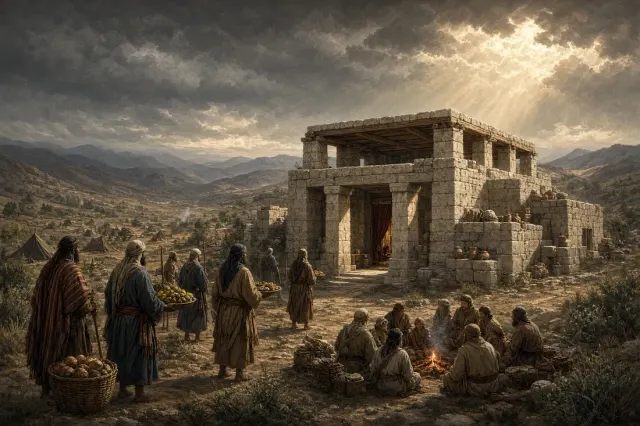
Issachar, Zebulun, Reuben, Simeon, and Gad follow in the same sequence as the eastern and southern camp divisions, and each man brings exactly the gift Nahshon brought. The repetition is so complete that a modern editor would be tempted to write, "the next five did likewise," and move on. Numbers does not. Nethaneel, Eliab, Elizur, Shelumiel, and Eliasaph each receive a day, a name, and a full inventory. The lack of variation becomes part of the meaning. No prince enlarges the bowl, adds an animal, or turns matching dedication into competition. The offerings are identical while the acts of presentation remain individual. That distinction preserves both equality of the gift and identity of the giver. The sequence is not filler around a total that could have been given once. It is the record of named tribal representatives taking their appointed turns before the altar.
Deep dive
The order follows the eastern and southern camp groups of chapter 2. Issachar and Zebulun complete Judah’s division; Reuben, Simeon, and Gad follow. The repeated offerings are thus attached to a recognizable organization rather than arranged at random. Each leader’s name, father’s name, tribe, and day locate his contribution within the congregation.
The repetition is conspicuous because the gifts are identical. No larger bowl appears on day six to improve on day one. The book gives each named presentation its own space without describing a competition among the princes or supplying motives for their matching gifts. A modern inventory could abbreviate the sequence considerably, but abbreviation would remove the feature the chapter keeps preserving: these are separate acts of presentation by particular tribal representatives. The offering is repeated; the identity of the giver is not interchangeable.
Words to trace: offering, five, shekels, first, full, goats
Verse-by-verse path
- Numbers 7:18
A midrash held that Issachar, a tribe known for learning (1 Chronicles 12:32), had advised the other princes to bring these gifts. The King James “did offer” renders the verb the Hebrew repeats in the following verse.
- Numbers 7:19
Only Nethaneel’s gift opens “He offered for his offering”, repeating the verb; the other eleven read “His offering was”. Rashi noticed the difference and drew a lesson from it; the text itself leaves it unexplained.
- Numbers 7:20
The King James word order changes for the second day: “spoon of gold of ten shekels” where the first read “spoon of ten shekels of gold”. The Hebrew is the same in both places. Ten shekels of gold weighed about 115 grams.
- Numbers 7:21
“Lamb of the first year” is literally “son of its year”, an animal less than a year old. It is the smallest and youngest of the three burnt offering animals.
- Numbers 7:22
“Kid of the goats” is se’ir izzim. Se’ir means “hairy one”, and in the plural the same word names the goat idols that Leviticus 17:7 forbids, translated there as “devils”.
- Numbers 7:23
“He goats” is attudim, full-grown bucks. The word is also used of leaders: Isaiah 14:9 calls the dead kings “the chief ones of the earth”, literally the he goats, and Jeremiah 50:8 tells the exiles to go out “as the he goats before the flocks”.
- Numbers 7:24
From the third day on, the headings read “prince of the children of” the tribe. Zebulun’s prince completes the eastern camp: the three tribes that will lead the march have now all given.
- Numbers 7:25
“Bowl” is mizraq, from zaraq, to dash or toss: a basin normally used to catch blood and throw it against the altar. Here it arrives full of flour and oil, clean for its first use.
- Numbers 7:26
A third form appears in English, “golden spoon”. Psalm 141:2 later asks, “Let my prayer be set forth before thee as incense”, joining the smoke of this offering to spoken prayer.
- Numbers 7:27
Nothing of the burnt offering was eaten. Only its skin went to the officiating priest (Leviticus 7:8); everything else was burned.
- Numbers 7:28
The sin offering at a dedication does not imply that the prince had committed a particular wrong. Jacob Milgrom argued that chatta’t is better called a purification offering: its blood cleanses the sanctuary itself.
- Numbers 7:29
Peace offerings had to be eaten within two days (Leviticus 7:16–18). Seventeen animals would feed a very large company, so each prince’s day must have ended in a feast for his tribe.
- Numbers 7:30
Reuben, the firstborn, gives on the fourth day, after the whole eastern camp. His prince opens the southern camp as he opens its line of march.
- Numbers 7:31
“Of the weight of” is the third English wording for the same weights. The charger’s 130 shekels came to around one and a half kilograms of silver.
- Numbers 7:32
Incense had already cost two lives, when Nadab and Abihu offered strange fire with it (Leviticus 10:1–2). The incense brought in Reuben’s gold pan was for the priests to use, not the prince.
- Numbers 7:33
Before a burnt offering was killed, the one offering it laid his hand on its head (Leviticus 1:4), so that it would be “accepted for him”. The prince would do so three times on his day.
- Numbers 7:34
In Hebrew the sin offering line is four words, “one kid of goats for sin offering”, the shortest line in every entry. Reuben’s is as short as the rest.
- Numbers 7:35
The two oxen are the only item in the whole gift that comes in a pair. Everything else is one, five, or a matched set.
- Numbers 7:36
The Talmud identified Shelumiel with Zimri, the Simeonite prince killed by Phinehas in 25:14, although the text gives Zimri a different father, Salu. It is a rabbinic identification, not something Numbers says.
- Numbers 7:37
“Fine flour” is solet, the best wheat meal, sifted fine. The contrast with the coarse barley meal of the jealousy offering in 5:15 is deliberate in the Book of Numbers: this is a gift of honour.
- Numbers 7:38
Incense returns in chapter 16 as the test between Korah’s company and Aaron. The 250 men who offered it with their censers died, and Aaron’s incense stopped the plague that followed (16:46–48).
- Numbers 7:39
The trio of bullock, ram and lamb is the core of the festival sacrifices set out in chapters 28 and 29, where their numbers change from feast to feast.
- Numbers 7:40
Leviticus 10:16–20 records a dispute over a sin-offering goat: Moses was angry that Aaron’s sons had burned it instead of eating it in the holy place. The priests were meant to eat such meat as part of the rite.
- Numbers 7:41
The name shelamim is linked to shalom, peace or wholeness. Others connect it to shillem, to pay or complete, as an offering that fulfils a vow. Either way, it is the sacrifice shared between altar, priest and worshipper.
- Numbers 7:42
Gad closes the southern camp at the halfway point of the twelve days. The same tribe would later join Reuben in building a great altar by the Jordan (Joshua 22:10), a copy of this one, and had to explain it was not for sacrifice.
- Numbers 7:43
“Mingled” is balal, to mix or stir. It is the verb Genesis 11:9 plays on in naming Babel, “because the LORD did there confound the language”.
- Numbers 7:44
The gold for these pans presumably came from the jewellery the Israelites asked of the Egyptians (Exodus 12:35), the same source that had supplied the golden calf (Exodus 32:2–4). The text does not say so; it is an inference.
- Numbers 7:45
Leviticus 1 allows three kinds of burnt offering: from the herd, from the flock, or birds for those who could afford no more. The princes bring herd and flock and no birds.
- Numbers 7:46
The goat as sin offering is best known from the Day of Atonement, when its blood was taken inside the veil (Leviticus 16:15). Here the goat is killed in the court, and its blood goes on the outer altar being dedicated.
- Numbers 7:47
From the rams and lambs of the peace offering, the whole fat tail was burned on the altar with the kidney fat (Leviticus 3:9). Sheep in the region carried much of their fat in broad tails.
Numbers 7:18-47
King James Version18On the second day Nethaneel the son of Zuar, prince of Issachar, did offer:
19He offered for his offering one silver charger, the weight whereof was an hundred and thirty shekels, one silver bowl of seventy shekels, after the shekel of the sanctuary; both of them full of fine flour mingled with oil for a meat offering:
20One spoon of gold of ten shekels, full of incense:
21One young bullock, one ram, one lamb of the first year, for a burnt offering:
22One kid of the goats for a sin offering:
23And for a sacrifice of peace offerings, two oxen, five rams, five he goats, five lambs of the first year: this was the offering of Nethaneel the son of Zuar.
24On the third day Eliab the son of Helon, prince of the children of Zebulun, did offer:
25His offering was one silver charger, the weight whereof was an hundred and thirty shekels, one silver bowl of seventy shekels, after the shekel of the sanctuary; both of them full of fine flour mingled with oil for a meat offering:
26One golden spoon of ten shekels, full of incense:
27One young bullock, one ram, one lamb of the first year, for a burnt offering:
28One kid of the goats for a sin offering:
29And for a sacrifice of peace offerings, two oxen, five rams, five he goats, five lambs of the first year: this was the offering of Eliab the son of Helon.
30On the fourth day Elizur the son of Shedeur, prince of the children of Reuben, did offer:
31His offering was one silver charger of the weight of an hundred and thirty shekels, one silver bowl of seventy shekels, after the shekel of the sanctuary; both of them full of fine flour mingled with oil for a meat offering:
32One golden spoon of ten shekels, full of incense:
33One young bullock, one ram, one lamb of the first year, for a burnt offering:
34One kid of the goats for a sin offering:
35And for a sacrifice of peace offerings, two oxen, five rams, five he goats, five lambs of the first year: this was the offering of Elizur the son of Shedeur.
36On the fifth day Shelumiel the son of Zurishaddai, prince of the children of Simeon, did offer:
37His offering was one silver charger, the weight whereof was an hundred and thirty shekels, one silver bowl of seventy shekels, after the shekel of the sanctuary; both of them full of fine flour mingled with oil for a meat offering:
38One golden spoon of ten shekels, full of incense:
39One young bullock, one ram, one lamb of the first year, for a burnt offering:
40One kid of the goats for a sin offering:
41And for a sacrifice of peace offerings, two oxen, five rams, five he goats, five lambs of the first year: this was the offering of Shelumiel the son of Zurishaddai.
42On the sixth day Eliasaph the son of Deuel, prince of the children of Gad, offered:
43His offering was one silver charger of the weight of an hundred and thirty shekels, a silver bowl of seventy shekels, after the shekel of the sanctuary; both of them full of fine flour mingled with oil for a meat offering:
44One golden spoon of ten shekels, full of incense:
45One young bullock, one ram, one lamb of the first year, for a burnt offering:
46One kid of the goats for a sin offering:
47And for a sacrifice of peace offerings, two oxen, five rams, five he goats, five lambs of the first year: this was the offering of Eliasaph the son of Deuel.
Numbers 7:48-83
The Smaller Tribes Are Not Reduced to a Footnote
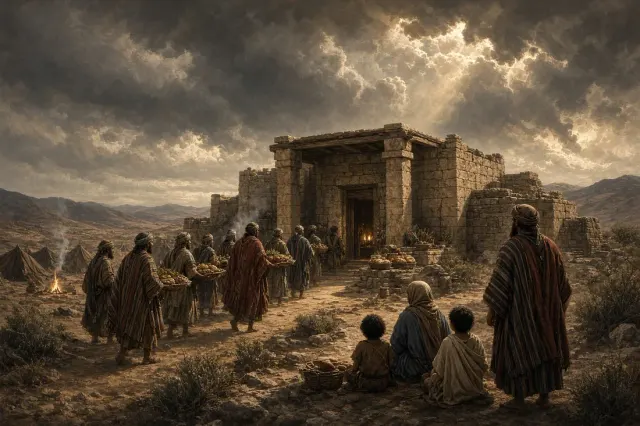
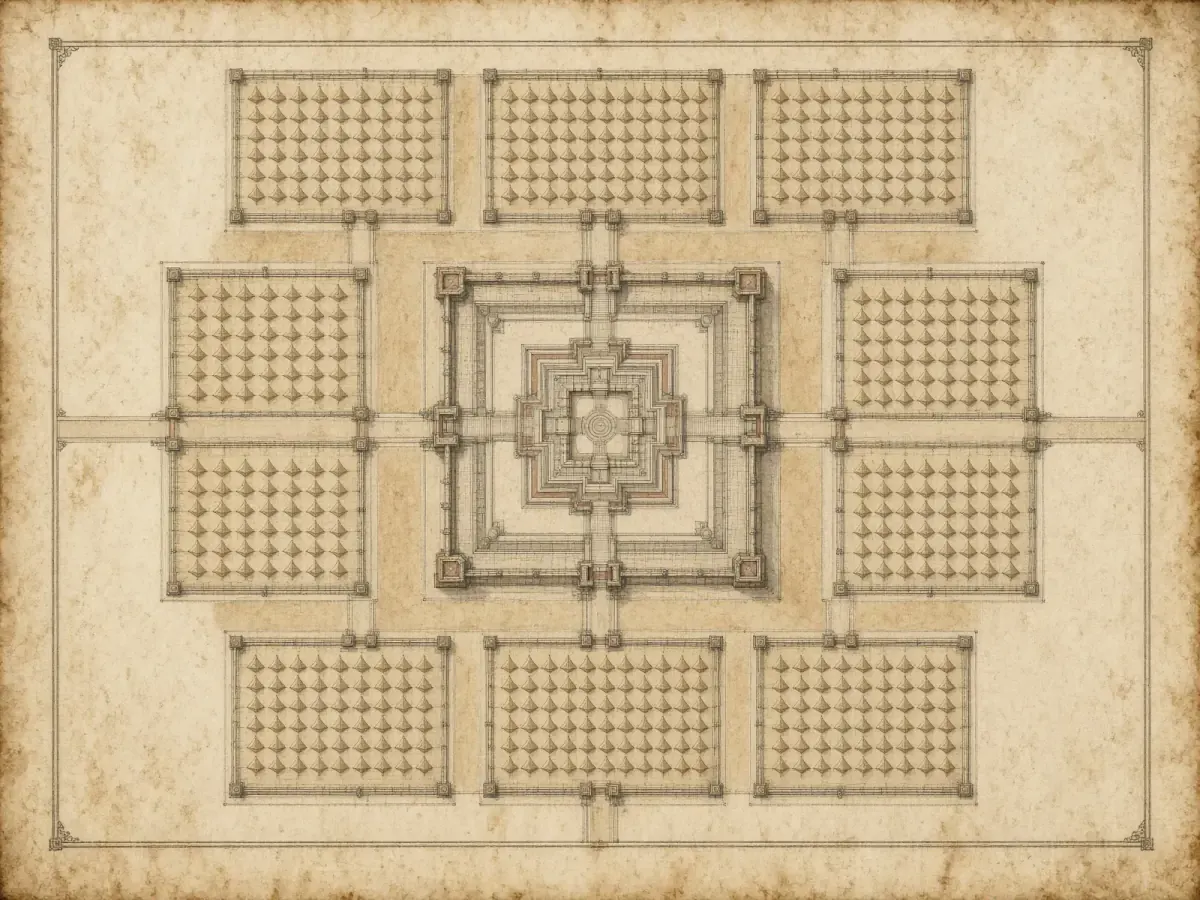
The western and northern camps complete the dedication through Ephraim, Manasseh, Benjamin, Dan, Asher, and Naphtali. By this point the reader knows every weight and animal before the sentence finishes, yet Numbers still refuses to reduce the later tribes to shorthand. The final prince, Ahira of Naphtali, receives the same full entry as Nahshon of Judah. That is especially notable beside the earlier census, where the tribes differed sharply in military size. Manasseh was much smaller than Judah, but its altar dedication is not proportionately reduced. This chapter is measuring something other than fighting strength. The equal presentations do not erase census differences or establish a universal economic rule; they show how this particular act of dedication includes every tribal division under one pattern. The repeated names make sure the smaller camps remain visible instead of disappearing into an aggregate once the form of the offering becomes familiar.
Deep dive
The western and northern camps complete the sequence. Ephraim, Manasseh, and Benjamin are followed by Dan, Asher, and Naphtali, preserving the order already given for the divisions around the tabernacle. The final prince receives the same full account of his offering as the first. The chapter’s length is part of that effect: the last tribe is not hurried past merely because the pattern has become familiar.
Manasseh’s military count was far smaller than Judah’s, but its dedication offering is not proportionately diminished. Here each tribal representative presents the same vessels and sacrificial provision. This does not erase the census differences or establish a general economic rule for Israel. It shows what this particular dedication records. Military strength and participation in the altar’s dedication are not measured by the same entry in the register. The repeated names keep both large and small tribes visibly present at the sanctuary.
Words to trace: offering, five, shekels, first, full, goats
Verse-by-verse path
- Numbers 7:48
If the offerings ran on twelve consecutive days, one fell on a sabbath. A rabbinic tradition assigned it to Elishama of Ephraim on the seventh day, and concluded that this gift overrode the sabbath rest.
- Numbers 7:49
The midrash gave symbolic meanings to the weights: 130 for Adam’s age when Seth was born (Genesis 5:3), 70 for the nations listed in Genesis 10 (Numbers Rabbah). The Book of Numbers gives only the weights.
- Numbers 7:50
The same word, kappot, names the gold spoons made for Solomon’s temple in 1 Kings 7:50. The vessel given by a tribal prince in the wilderness became a standard fitting of the permanent house.
- Numbers 7:51
“Ram” is ayil, a word also used for strong men and leaders: “the mighty men of Moab” in Exodus 15:15 are literally “the rams of Moab”. Each prince offers a ram as his tribe’s strength.
- Numbers 7:52
Hebrews 9:21 recalls that Moses sprinkled “with blood both the tabernacle, and all the vessels of the ministry”. The letter reads the dedication of the sanctuary as a work of blood from the first day.
- Numbers 7:53
The first peace offerings of the covenant were the oxen offered by young men at the foot of Sinai (Exodus 24:5), before the covenant meal on the mountain. The sanctuary’s dedication repeats that meal at the new altar.
- Numbers 7:54
Gamaliel’s father’s name, Pedahzur, means “the Rock has redeemed”, using padah, the verb for redeeming the firstborn in 3:46–51. The eighth day belongs to Manasseh, Joseph’s firstborn.
- Numbers 7:55
The sanctuary shekel was a standard weight kept at the sanctuary, protecting gifts from the “divers weights” Deuteronomy 25:13 forbids. Every silver dish is weighed by the same stone.
- Numbers 7:56
The incense was burned on the golden altar morning and evening, when the lamps were dressed and lit (Exodus 30:7–8). A pan of it was a supply for the daily service inside the tent.
- Numbers 7:57
A bull was the costliest animal an Israelite could offer. At the priests’ first public service Aaron offered a calf for himself, and the people a calf and a lamb for their burnt offering (Leviticus 9:2–3); each prince now brings a full grown bullock.
- Numbers 7:58
At the first service of the priests on the eighth day of their ordination, the people’s sin offering was likewise a kid of the goats (Leviticus 9:3, 15). The princes follow a pattern already set.
- Numbers 7:59
The blood of a peace offering was dashed against the sides of the altar (Leviticus 3:2). Each prince’s seventeen animals sent their blood onto the altar in its first days of use.
- Numbers 7:60
Benjamin completes the western camp on the ninth day, and all Rachel’s descendants have now given. Jacob’s youngest son offers before three older brothers, Dan, Asher and Naphtali.
- Numbers 7:61
Each prince gives two hundred shekels of silver, four times the fifty shekels at which a grown man was valued for a vow in Leviticus 27:3.
- Numbers 7:62
Revelation 5:8 pictures the elders holding “golden vials full of odours, which are the prayers of saints”. The gold vessel full of incense stands behind that image.
- Numbers 7:63
Isaac’s question on Moriah, “where is the lamb for a burnt offering?” (Genesis 22:7), uses the same pairing of lamb and burnt offering. There a ram was provided in the end; here both lamb and ram are brought.
- Numbers 7:64
Where the kid is offered for sin, the blood of a ruler’s sin offering is put on the horns of the altar of burnt offering (Leviticus 4:25). The corners of the new altar would have borne these marks within days of its anointing.
- Numbers 7:65
Leviticus 7:20 cuts off anyone who ate peace offering meat while unclean. The exclusions of 5:2 applied at every one of these feasts.
- Numbers 7:66
Dan opens the northern camp on the tenth day. The tribe that gave to this altar later set up its own graven image and priesthood (Judges 18:30), and Dan became a site for one of Jeroboam’s golden calves (1 Kings 12:29).
- Numbers 7:67
Inside the tent the furnishings were gold; out in the court the hooks and fillets of the pillars were silver (Exodus 27:10). The princes’ silver dishes, made for the outer altar, seem to follow that division, though the text does not draw it.
- Numbers 7:68
Kappot were also made for the table of showbread (Exodus 25:29, 37:16), translated there too as “spoons”. The table’s own set was of pure gold, made by Bezalel.
- Numbers 7:69
The ashes of the burnt offerings were carried out of the camp to a clean place (Leviticus 6:11). By the tenth day there were many loads of them.
- Numbers 7:70
When Hezekiah rededicated the temple after years of neglect, he brought seven he goats for a sin offering “for the kingdom, and for the sanctuary, and for Judah” (2 Chronicles 29:21). Dedication and purification went together then as here.
- Numbers 7:71
The goat appears twice in each gift with different words: a young kid (se’ir) for the sin offering, and grown bucks (attudim) for the peace offering. The same species serves two purposes on the same day.
- Numbers 7:72
“On the eleventh day” uses ashtei asar for eleven, a rare form of the numeral, instead of the usual achad asar. It appears in only a few places, including Deuteronomy 1:3.
- Numbers 7:73
Jewish communities read this chapter aloud during Hanukkah, one prince each day of the festival. The silver dish and bowl of Asher’s prince are recited in the same words as Judah’s.
- Numbers 7:74
The ten shekels of gold in each pan are a modest weight. Achan’s stolen wedge of gold at Jericho weighed fifty shekels (Joshua 7:21).
- Numbers 7:75
The Passover lamb was also to be “of the first year” (Exodus 12:5). The Passover of 9:1–5 was only days away when these lambs were offered.
- Numbers 7:76
Chatta’t, sin offering, is the same Hebrew word as sin. The language uses one term for the wrong and for the sacrifice that deals with it.
- Numbers 7:77
“Sacrifice” here is zevach, the word for an animal slaughtered for a meal. The olah went up in smoke; the zevach was killed and eaten.
- Numbers 7:78
Naphtali closes the twelve days. If the tabernacle was raised on the first day of the first month, the gifts ended on the twelfth, two days before Passover on the fourteenth (9:3).
- Numbers 7:79
The quantity of flour and oil in the dishes is never given, only that both were full. The jealousy offering of 5:15 measured its barley exactly; here the measure is the vessel.
- Numbers 7:80
The incense was a fixed recipe of stacte, onycha, galbanum and frankincense, salted and pure (Exodus 30:34–35). Making it for private use was forbidden (Exodus 30:37–38).
- Numbers 7:81
The burnt offering was flayed, cut in pieces, and its inner parts and legs washed before burning (Leviticus 1:6–9). Twelve days of such offerings meant the priests’ work at the altar never stopped.
- Numbers 7:82
Hebrews 10:4 says, “it is not possible that the blood of bulls and of goats should take away sins”. The letter reads offerings like this one as pointing beyond themselves.
- Numbers 7:83
The last closing formula of the twelve. With “this was the offering of Ahira the son of Enan”, the named gifts end and the arithmetic begins.
Numbers 7:48-83
King James Version48On the seventh day Elishama the son of Ammihud, prince of the children of Ephraim, offered:
49His offering was one silver charger, the weight whereof was an hundred and thirty shekels, one silver bowl of seventy shekels, after the shekel of the sanctuary; both of them full of fine flour mingled with oil for a meat offering:
50One golden spoon of ten shekels, full of incense:
51One young bullock, one ram, one lamb of the first year, for a burnt offering:
52One kid of the goats for a sin offering:
53And for a sacrifice of peace offerings, two oxen, five rams, five he goats, five lambs of the first year: this was the offering of Elishama the son of Ammihud.
54On the eighth day offered Gamaliel the son of Pedahzur, prince of the children of Manasseh:
55His offering was one silver charger of the weight of an hundred and thirty shekels, one silver bowl of seventy shekels, after the shekel of the sanctuary; both of them full of fine flour mingled with oil for a meat offering:
56One golden spoon of ten shekels, full of incense:
57One young bullock, one ram, one lamb of the first year, for a burnt offering:
58One kid of the goats for a sin offering:
59And for a sacrifice of peace offerings, two oxen, five rams, five he goats, five lambs of the first year: this was the offering of Gamaliel the son of Pedahzur.
60On the ninth day Abidan the son of Gideoni, prince of the children of Benjamin, offered:
61His offering was one silver charger, the weight whereof was an hundred and thirty shekels, one silver bowl of seventy shekels, after the shekel of the sanctuary; both of them full of fine flour mingled with oil for a meat offering:
62One golden spoon of ten shekels, full of incense:
63One young bullock, one ram, one lamb of the first year, for a burnt offering:
64One kid of the goats for a sin offering:
65And for a sacrifice of peace offerings, two oxen, five rams, five he goats, five lambs of the first year: this was the offering of Abidan the son of Gideoni.
66On the tenth day Ahiezer the son of Ammishaddai, prince of the children of Dan, offered:
67His offering was one silver charger, the weight whereof was an hundred and thirty shekels, one silver bowl of seventy shekels, after the shekel of the sanctuary; both of them full of fine flour mingled with oil for a meat offering:
68One golden spoon of ten shekels, full of incense:
69One young bullock, one ram, one lamb of the first year, for a burnt offering:
70One kid of the goats for a sin offering:
71And for a sacrifice of peace offerings, two oxen, five rams, five he goats, five lambs of the first year: this was the offering of Ahiezer the son of Ammishaddai.
72On the eleventh day Pagiel the son of Ocran, prince of the children of Asher, offered:
73His offering was one silver charger, the weight whereof was an hundred and thirty shekels, one silver bowl of seventy shekels, after the shekel of the sanctuary; both of them full of fine flour mingled with oil for a meat offering:
74One golden spoon of ten shekels, full of incense:
75One young bullock, one ram, one lamb of the first year, for a burnt offering:
76One kid of the goats for a sin offering:
77And for a sacrifice of peace offerings, two oxen, five rams, five he goats, five lambs of the first year: this was the offering of Pagiel the son of Ocran.
78On the twelfth day Ahira the son of Enan, prince of the children of Naphtali, offered:
79His offering was one silver charger, the weight whereof was an hundred and thirty shekels, one silver bowl of seventy shekels, after the shekel of the sanctuary; both of them full of fine flour mingled with oil for a meat offering:
80One golden spoon of ten shekels, full of incense:
81One young bullock, one ram, one lamb of the first year, for a burnt offering:
82One kid of the goats for a sin offering:
83And for a sacrifice of peace offerings, two oxen, five rams, five he goats, five lambs of the first year: this was the offering of Ahira the son of Enan.
Numbers 7:84-88
The Total Comes After the Names
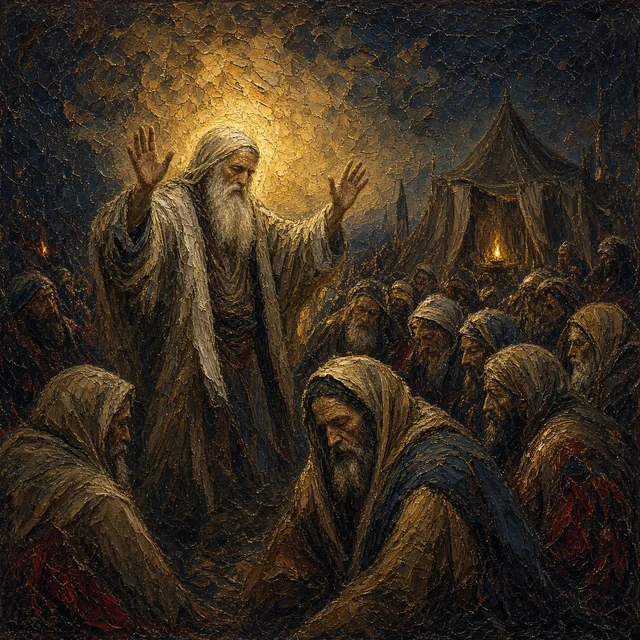
Only after all twelve princes have been named does Numbers finally behave like an accountant and add everything up. The result is twelve silver chargers, twelve silver bowls, twelve gold spoons, 2,400 shekels of silver, 120 shekels of gold, and the corresponding totals of animals for burnt, sin, and peace offerings. The aggregate confirms the repetition rather than replacing it. This order matters. A total given at the beginning could have reduced the whole dedication to inventory. By placing the arithmetic at the end, the chapter first lets the reader see twelve separate acts and only then gathers them into one sum. The repeated connection with the altar's anointing also frames the numbers inside the sanctuary's dedication rather than a report about tribal wealth. The figures matter because named people brought them for this purpose, not because the metals and animals form an impressive pile on their own.
Deep dive
Only after the twelve offerings have each been recorded does the book compress them into an aggregate. Twelve chargers, twelve bowls, and twelve gold spoons produce 2,400 shekels of silver and 120 shekels of gold. The separate sacrificial categories remain distinguishable in the totals. The closing calculation verifies the repeated pattern rather than replacing it.
This order of presentation is worth noticing. The chapter could have begun and ended with a few totals, but it first attached the offerings to twelve named leaders and twelve distinct days. The final summary does not make those entries unnecessary; it gathers what has already been individually acknowledged. The phrase connecting the dedication with the altar’s anointing also returns to the opening setting. The inventory is framed by the establishment of the sanctuary, not by a report of tribal wealth in general.
Words to trace: twelve, shekels, silver, offering, sixty, spoons
Verse-by-verse path
- Numbers 7:84
“In the day when it was anointed” covers all twelve days: “day” here means the occasion, not a single sunrise to sunset. The sum begins with the vessels, twelve of each.
- Numbers 7:85
2,400 shekels of silver, twelve times two hundred. The total gives both items together, charger and bowl, as a single weight of silver.
- Numbers 7:86
120 shekels of gold, just over a kilogram and a third. The ten-shekel weight of each pan is restated, so a reader can check the sum.
- Numbers 7:87
The burnt offerings total thirty-six animals, and twelve goats for sin. The total adds “with their meat offering”, grain offerings that none of the twelve entries mentions. When the exiles dedicated the rebuilt temple, they offered “twelve he goats, according to the number of the tribes of Israel” (Ezra 6:17).
- Numbers 7:88
The peace offerings come to 204 animals, and the whole gift to 252. The chapter now says “after that it was anointed” where verse 84 said “in the day”: the dedication ran on after the anointing itself was over.
Numbers 7:84-88
King James Version84This was the dedication of the altar, in the day when it was anointed, by the princes of Israel: twelve chargers of silver, twelve silver bowls, twelve spoons of gold:
85Each charger of silver weighing an hundred and thirty shekels, each bowl seventy: all the silver vessels weighed two thousand and four hundred shekels, after the shekel of the sanctuary:
86The golden spoons were twelve, full of incense, weighing ten shekels apiece, after the shekel of the sanctuary: all the gold of the spoons was an hundred and twenty shekels.
87All the oxen for the burnt offering were twelve bullocks, the rams twelve, the lambs of the first year twelve, with their meat offering: and the kids of the goats for sin offering twelve.
88And all the oxen for the sacrifice of the peace offerings were twenty and four bullocks, the rams sixty, the he goats sixty, the lambs of the first year sixty. This was the dedication of the altar, after that it was anointed.
Numbers 7:89
After the Inventory, a Voice
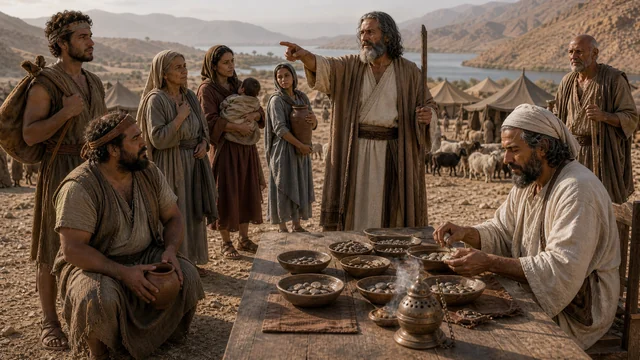
After eighty-eight verses of wagons, oxen, silver, gold, flour, incense, and sacrificial animals, Numbers ends the chapter with something no scale can register. Moses enters the tabernacle to speak with the LORD and hears a voice from above the mercy seat, between the cherubim over the ark of testimony. The verse gives no physical appearance and does not quote the words spoken. It gives the location, the hearer, and the fact of speech. That is enough to shift the whole chapter's center of gravity. The gifts have furnished and dedicated the sanctuary, but the sanctuary is not important merely because it contains valuable objects arranged correctly. It is the place where Moses hears the LORD. The long inventory therefore closes not with a final total but with encounter, moving from everything the princes have brought into the tabernacle to the voice that comes from within it.
Deep dive
The longest chapter in this part of Numbers ends with something that cannot be weighed: a voice. After wagons, vessels, metal weights, and animals, the closing attention falls on Moses hearing speech from above the mercy seat. The gifts have furnished the sanctuary, but they are not its final subject. The location of the voice identifies the tabernacle as the place of encounter described here. No physical appearance of the speaker is supplied, and the words spoken on this occasion are not quoted. The verse gives the place, the listener, and the reality of the speech, bringing the extended dedication account to a deliberately different kind of conclusion.
Words to trace: cherubims, congregation, gone, mercy, Moses, seat
Verse-by-verse path
- Numbers 7:89
“The voice of one speaking” uses a reflexive form, middabber, which may mean the voice was speaking as though to itself and Moses heard it. Exodus 25:22 had promised, “there I will meet with thee, and I will commune with thee from above the mercy seat.” This is the promise kept.
Numbers 7:89
King James Version89And when Moses was gone into the tabernacle of the congregation to speak with him, then he heard the voice of one speaking unto him from off the mercy seat that was upon the ark of testimony, from between the two cherubims: and he spake unto him.
Questions to keep in mind while reading
- Identify the people addressed and the covenant setting.
- Distinguish rescue, worship, holiness, justice, and community responsibility.
- Read commands in their literary and covenant context before making a modern application.
Text first
Where readers differ
The chapter summary begins with what the passage says and how its parts fit together. It does not assume one denomination has already settled every question. Where a conclusion depends on a tradition, literary theory, or historical reconstruction, that dependence is named openly.
The KJV text is presented first. Interpretive conclusions are labeled, and differences are introduced only when they help a reader understand why serious communities do not always reach the same answer.
Comparative interpretive notes for this chapter are in preparation. Until reviewed notes are ready, this page separates the KJV text from summary and application without claiming that serious readers agree on every question.
Questions beneath the surface
- What account of God, human freedom, responsibility, and the good life emerges from Numbers 7?
- Which tension does the chapter refuse to resolve quickly?
- What changes when the chapter is read as part of the whole canon rather than as an isolated moral lesson?
- Where might a sincere reader confuse a familiar tradition with something the text states directly?
Questions for serious personal contemplation
These open-ended questions make room for tension, honest response, prayer, and conclusions that remain accountable to the chapter.
Observe without rushing
What part of Numbers 7 makes you stop, feel unsettled, or feel surprised, and why?
Which detail in the passage would be easiest to overlook? How does that detail change your understanding?
Where do you see tension between what happens and this focus: Numbers 7 develops its own movement around offering, shekels, five, silver, first?
What important question does the passage leave open instead of resolving quickly?
Examine your inner life honestly
Which person, response, fear, or desire in the passage feels most like your own life right now?
What assumption about God, other people, or yourself does this text challenge?
Which part would you rather soften, avoid, or explain away too quickly? What might that reaction reveal?
If this Scripture could ask you one direct question, what do you think it would ask?
Respond with wisdom and courage
What do you need to remember, confess, grieve, thank God for, or trust after reading this passage?
How might another faithful person read this situation differently without ignoring the text?
What obedient response would be costly, uncomfortable, or slow, yet still faithful to Scripture?
What question will you carry into prayer this week, and which verses will you keep in front of you?
Music and video connected to the passage
Related media appears when its Scripture reference overlaps this study. Music and video can illuminate a theme while the biblical text remains the foundation.