
The big picture
Luke 23 repeatedly separates the legal sentence imposed on Jesus from the question of his guilt. Before Pilate, charges are translated into language suitable for Roman authority, including an accusation about tribute that Luke has already shown to distort Jesus' words. Pilate declares that he finds no fault and sends the Galilean to Herod, whose curiosity produces many questions, no miracle, mockery, and a return. Pilate then states innocence again and again, yet releases Barabbas, a man actually imprisoned for sedition and murder, while delivering Jesus to crucifixion. On the road, Simon carries the cross behind him and mourning women hear a warning about Jerusalem. At Calvary, Jesus prays for forgiveness while rulers, soldiers, and one criminal insist that true kingship should prove itself through self-rescue. Another criminal sees differently and asks to be remembered; he receives the promise of being with Jesus in paradise. Darkness, a torn veil, Jesus' final prayer to the Father, and a centurion's recognition follow. Joseph's dissenting council membership and the women's careful observation of the burial keep the chapter's responses varied to the end. The condemned king continues to give while those judging him repeatedly reveal what they cannot make the sentence prove.
In this chapter
- The Charge Changes When the Hearing Changes Luke 23:1-7
Once the hearing moves to Pilate, the charges change shape.
- Herod Receives the Meeting He Wanted, Not the Performance Luke 23:8-12
Herod finally gets the meeting he has wanted since Luke 9, and his delight is tied to a specific hope: he wants to see Jesus perform a miracle.
- The Verdict of Innocence Does Not Govern the Sentence Luke 23:13-25
Pilate gathers the chief priests, rulers, and people and states the result of his examination in plain terms: he has found no fault in Jesus concerning their accusations, and Herod has supplied no capital case either.
- Another Man Bears the Cross Behind Him Luke 23:26-32
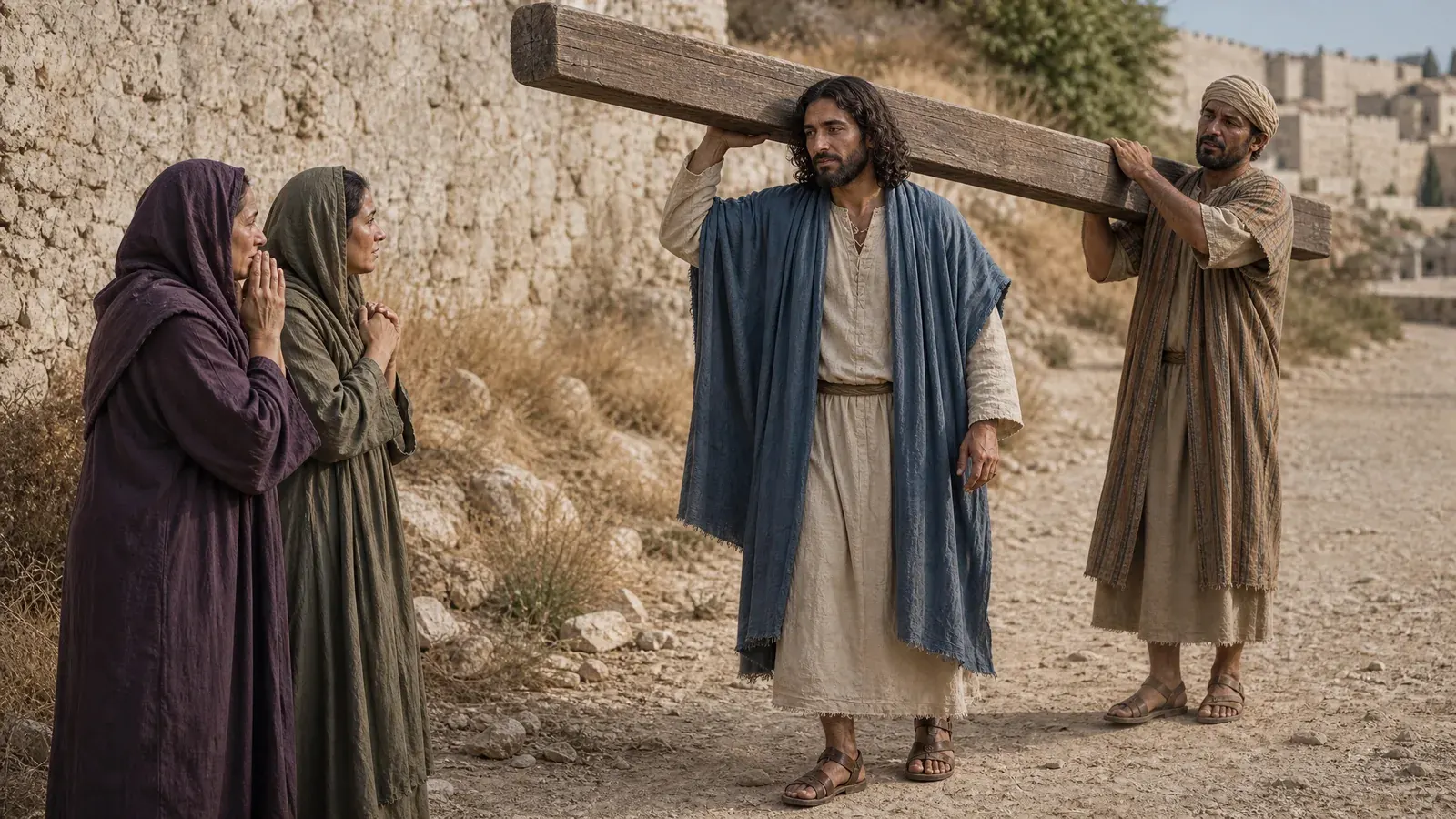
Simon of Cyrene enters the account because the authorities seize him while he is coming from the country and lay the cross on him.
- The Accusation Over the Cross Names a Kingship the Mockers Deny Luke 23:33-38
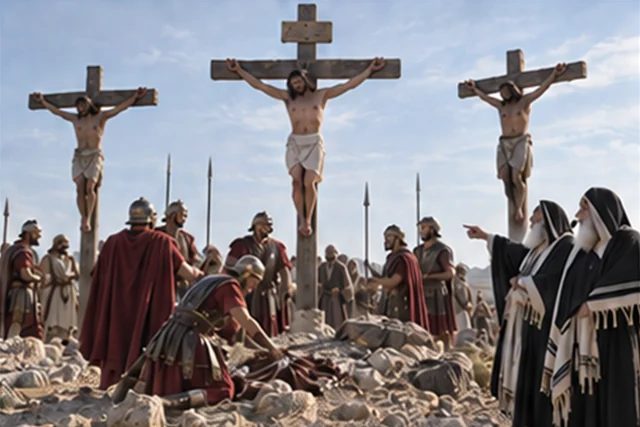
Luke reaches Calvary and states the crucifixion with remarkable restraint: the place, the act, and two criminals, one on either side.
- The Condemned Man Asks for Remembrance and Receives Presence Luke 23:39-43
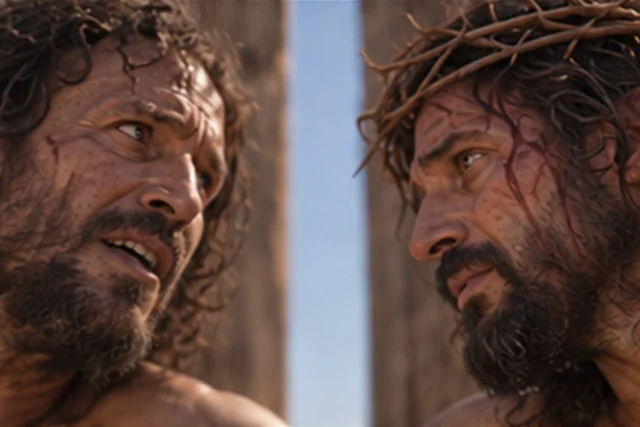
The two condemned men occupy the same execution scene and read Jesus in opposite ways.
- The Final Word Addresses the Father Luke 23:44-49
Darkness settles from about the sixth hour to the ninth, giving the scene a measured span without Luke offering a physical mechanism.
- The Burial Is Watched, and the Sabbath Is Kept Luke 23:50-56
Joseph belongs to the council, but Luke immediately refuses to let institutional membership erase individual dissent.

Scripture beside the summary
Luke · King James Version · 56Luke 23:1-7
The Charge Changes When the Hearing Changes
Once the hearing moves to Pilate, the charges change shape. The council had pressed Jesus about identity; before the Roman governor, the accusations become political: corrupting the nation, forbidding tribute to Caesar, and claiming to be Christ a king. Luke has already recorded “Render unto Caesar,” so the tax allegation arrives with a documented problem. Pilate concentrates on kingship and receives Jesus' brief “Thou sayest it,” then tells the chief priests and the people, “I find no fault in this man.” The royal claim is not denied, but Pilate does not accept that it establishes the criminal case being presented. The accusers intensify their claim by tracing Jesus' teaching from Galilee through Judea to Jerusalem. Ironically, their geography summarizes the sweep of the ministry even as they present it as evidence of danger. Hearing “Galilee,” Pilate discovers a jurisdictional exit and sends Jesus to Herod. The official changes, but the central tension does not: Jesus is treated as a dangerous offender after the governor has already declared no fault.
Deep dive
The accusations are framed for the governor: perverting the nation, forbidding tribute, and claiming to be Christ a king. The temple council's questions about identity have become allegations with civil consequences. Luke's readers have already heard Jesus' answer about Caesar in Luke 20:25, so the tax accusation is not presented as a faithful summary of his words. The issue is not simply that both sides have reported equally complete accounts.
Pilate's question concentrates on kingship, and Jesus' brief reply does not expand into the extended conversation recorded in John. Luke instead moves rapidly to the governor's declaration that he finds no fault. The claim of royal identity remains, but the charge that it establishes the alleged wrongdoing is not accepted in this initial ruling.
The renewed accusation traces Jesus' teaching from Galilee to Jerusalem, unintentionally recapitulating the geographical movement of the ministry. Pilate then uses the Galilean connection to send him to Herod, who is also in Jerusalem. The transfer changes the official hearing the case without changing the underlying discrepancy Luke has established: Jesus is being treated as a dangerous offender while the examining authority has just declared that no fault is found.
Words to trace: Pilate, asked, Galilee, King, people, accuse
Verse-by-verse path
- Luke 23:1
The whole council rises as a body. Pontius Pilate was prefect of Judea from AD 26 to 36; he lived at Caesarea and came up to Jerusalem at festivals with troops to keep order. A stone found at Caesarea in 1961 bears his name and the title praefectus Iudaeae.
- Luke 23:2
“Perverting” is diastrepho, to twist, the word of Jesus’ own “O faithless and perverse generation” (9:41). “Christ a King” glosses a Jewish title for a Roman ear: a Messiah meant nothing to Pilate, but a king not appointed by Caesar was treason.
- Luke 23:3
In Luke the phrase “King of the Jews” is spoken only by Gentiles, all in this chapter: Pilate here, the soldiers in verse 37, and the placard in verse 38. The Jewish rulers use “Christ” and “the chosen of God” (verse 35). “Thou sayest it” is the answer all four Gospels record.
- Luke 23:4
“Fault” is aition, grounds for a charge, a word Luke uses only in this chapter (verses 4, 14, 22) and once in Acts 19:40, where the town clerk of Ephesus fears there is “no cause” to justify a riot. It is a legal finding, not a moral compliment.
- Luke 23:5
“Were the more fierce” is epischyo, to insist more strongly, found only here in the New Testament. “Jewry” is the 1611 word for Judea, here in the wide sense of the whole Jewish land. “Beginning from Galilee” is how Peter will later summarise the ministry to Cornelius (Acts 10:37).
- Luke 23:6
The word Galilee catches Pilate’s ear. Luke has already reported what this governor did to Galileans: their blood he “had mingled with their sacrifices” (13:1). A Galilean prisoner was also the business of Galilee’s ruler.
- Luke 23:7
Herod Antipas, tetrarch of Galilee and Perea (3:1), was in the city for Passover. “Sent” is anapempo, the technical verb for remitting a case to another authority, which Festus uses of Paul in Acts 25:21, “till I might send him to Caesar”. Pilate could try the case himself; he chose to pass it on.
Luke 23:1-7
King James Version1And the whole multitude of them arose, and led him unto Pilate.
2And they began to accuse him, saying, We found this fellow perverting the nation, and forbidding to give tribute to Cæsar, saying that he himself is Christ a King.
3And Pilate asked him, saying, Art thou the King of the Jews? And he answered him and said, Thou sayest it.
4Then said Pilate to the chief priests and to the people, I find no fault in this man.
5And they were the more fierce, saying, He stirreth up the people, teaching throughout all Jewry, beginning from Galilee to this place.
6When Pilate heard of Galilee, he asked whether the man were a Galilæan.
7And as soon as he knew that he belonged unto Herod’s jurisdiction, he sent him to Herod, who himself also was at Jerusalem at that time.
Luke 23:8-12
Herod Receives the Meeting He Wanted, Not the Performance
Herod finally gets the meeting he has wanted since Luke 9, and his delight is tied to a specific hope: he wants to see Jesus perform a miracle. Curiosity here is not the same as the cries for mercy that have stopped Jesus on the road. The prisoner before him is expected to become a spectacle. Herod asks many questions, but Jesus gives him no answer. Chief priests and scribes continue accusing, yet no defense speech and no sign is offered to satisfy the ruler's appetite for the extraordinary. Silence refuses the terms of the encounter. Herod and his soldiers respond by treating Jesus as nothing, dressing him in a gorgeous robe, and sending him back to Pilate. The royal issue becomes material for ridicule rather than examination. Luke then adds the day's strangest diplomatic result: Herod and Pilate become friends after previous hostility. The prisoner who is not released becomes the occasion for reconciliation between the officials handling him, while their improved relationship produces no improvement in justice for the man passed between them.
Deep dive
Herod's desire to see Jesus was introduced in Luke 9:9. It now reaches its opportunity, and Luke specifies the expectation: he hopes to see a miracle. The interest is therefore not identical with the appeals for mercy that have brought others to Jesus. Herod wants an extraordinary act while Jesus stands before him as a prisoner.
Many questions produce no answer. The chief priests and scribes continue their accusations, but Luke supplies no defense speech and no miracle arranged to win the ruler's favor. The silence refuses the terms of the encounter without requiring an invented statement that Jesus has issued a final judgment about Herod's eternal condition.
The gorgeous robe turns the royal issue into an object of mockery, and Jesus is sent back. Luke closes by recording that Herod and Pilate become friends that day after previous enmity. The prisoner who is not released becomes the occasion for reconciliation between the officials handling him. Luke states the change without explaining every diplomatic calculation behind it. Their improved relationship provides no corresponding improvement in the treatment of the man passed between them.
Words to trace: Herod, Pilate, accused, arrayed, chief, desirous
Verse-by-verse path
- Luke 23:8
Herod’s wish goes back to 9:9, but so does his menace: Pharisees warned that “Herod will kill thee”, and Jesus called him “that fox” (13:31–32). “Some miracle” is semeion, a sign, the very thing Jesus refused to give on demand: “there shall no sign be given it, but the sign of Jonas” (11:29).
- Luke 23:9
The silence recalls the servant of Isaiah 53:7, “as a sheep before her shearers is dumb, so he openeth not his mouth”, the verse Acts 8:32 applies to Jesus. He speaks to Pilate, to the council, to the women on the road and to a criminal; Herod is the one person in the passion he does not answer.
- Luke 23:10
“Vehemently” is eutonos, at full stretch, used in the New Testament only here and in Acts 18:28, where Apollos “mightily convinced the Jews”. The accusers have followed Jesus from Pilate’s court to Herod’s to keep the charges alive.
- Luke 23:11
“Men of war” is strateumata, Herod’s own troops. “Gorgeous” is lampros, bright or shining, the adjective of the “bright clothing” of the angel in Acts 10:30. White garments marked candidates for office in Rome, so the robe may mock a would-be king, though Luke does not say what colour it was.
- Luke 23:12
Luke does not say why they had been enemies; the Galileans killed at the altar (13:1) are one guess. In Acts 4:27 the church prays Psalm 2 over this very pairing: “both Herod, and Pontius Pilate… were gathered together” against the one God anointed.
Luke 23:8-12
King James Version8And when Herod saw Jesus, he was exceeding glad: for he was desirous to see him of a long season, because he had heard many things of him; and he hoped to have seen some miracle done by him.
9Then he questioned with him in many words; but he answered him nothing.
10And the chief priests and scribes stood and vehemently accused him.
11And Herod with his men of war set him at nought, and mocked him, and arrayed him in a gorgeous robe, and sent him again to Pilate.
12And the same day Pilate and Herod were made friends together: for before they were at enmity between themselves.
Luke 23:13-25
The Verdict of Innocence Does Not Govern the Sentence
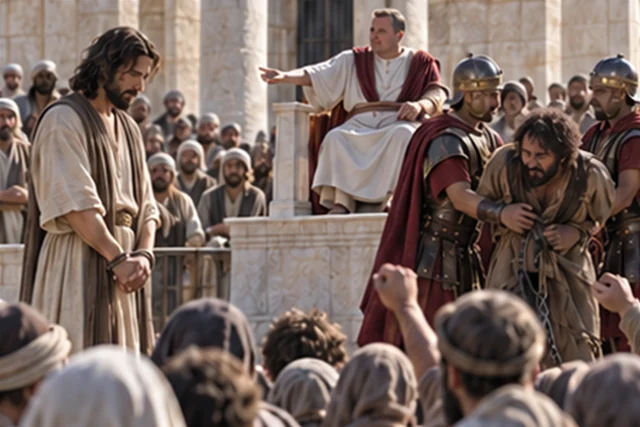
Pilate gathers the chief priests, rulers, and people and states the result of his examination in plain terms: he has found no fault in Jesus concerning their accusations, and Herod has supplied no capital case either. Yet Pilate's proposed compromise is itself crooked. He will chastise a man he says is not guilty and then release him. The crowd demands Barabbas instead, and Luke makes sure Barabbas is not a neutral alternative. He is imprisoned for sedition in the city and for murder. The contrast is almost painfully exact: the man tied to actual insurrection is released while Jesus, accused of stirring up the people, is condemned after repeated declarations that no cause of death has been found. Pilate speaks a third time, but the voices demanding crucifixion prevail. Luke does not erase his responsibility behind the pressure. Pilate gives sentence and delivers Jesus to their will. Nor does Luke turn every person in Jerusalem into the same crowd. Other responses will appear immediately. The legal outcome is death; the account refuses to let that outcome masquerade as proof of guilt.
Deep dive
Pilate assembles the accusers and people to announce the outcome of examination. He reports finding no basis for their charges and interprets Herod's return of Jesus as likewise supplying no capital case. His proposed punishment followed by release exposes the mismatch within the proceedings: even the attempted compromise includes chastising a man he has not found guilty of the alleged offense.
Barabbas is not left as an unexplained alternative name. Luke identifies imprisonment for an uprising in the city and for murder, then repeats those grounds at the point of release. The man associated with actual sedition goes free while Jesus, accused of stirring up the people, is surrendered despite the repeated denial of a proven capital charge. The contrast is established by the account itself, not by a later invented biography of Barabbas.
Pilate speaks a third time about finding no cause of death, but the voices demanding crucifixion prevail. Luke does not erase the governor's agency: he gives sentence and delivers Jesus over. Nor does the scene authorize collapsing all the people in the Gospel into the accusing group. The lamenting women, the breast-beating spectators, and the dissenting council member will shortly make the range of responses explicit. The legal conclusion is execution, but Luke's account has carefully refused to make that conclusion a demonstration of Jesus' guilt.
Words to trace: release, Pilate, chastise, chief, cried, crucify
Verse-by-verse path
- Luke 23:13
Pilate now summons “the people” along with the rulers. The laos who “were very attentive to hear him” (19:48) and whom the priests feared all week are, for the first time in Luke’s passion, gathered on the accusers’ side of the courtyard.
- Luke 23:14
“Examined” is anakrino, the formal term for a judicial hearing, used in Acts 4:9 when Peter says “we this day be examined” and in Acts 24:8. Pilate stresses that the examination was held “before you”, in their presence, so they cannot claim it was done behind their backs.
- Luke 23:15
The King James “nothing worthy of death is done unto him” is misleading in modern English. The Greek means nothing deserving death “has been done by him”: the finding is about his conduct, not about the treatment he has received.
- Luke 23:16
“Chastise” is paideuo, a verb that ordinarily means to train or discipline a child, used here for a warning flogging. Pilate offers to beat a man he has just declared innocent. Luke never records the flogging being carried out.
- Luke 23:17
The oldest manuscripts lack these words, and one ancient copy places them after verse 19; they were most likely brought in from Mark 15:6. No source outside the Gospels mentions a Passover release, though the Mishnah speaks of a lamb killed for one “whom they have promised to bring out of prison” (Pesachim 8:6).
- Luke 23:18
“All at once” is pamplethei, the whole mass together, found only here in the New Testament. “Away with this man” is the same cry the crowd raises against Paul in Acts 21:36 and 22:22: “Away with him.”
- Luke 23:19
Barabbas is Aramaic for “son of the father”. Some manuscripts of Matthew 27:16–17 give his full name as Jesus Barabbas, and Origen knew that reading. “Sedition” is stasis, an uprising; Mark places him among rebels “who had committed murder in the insurrection” (Mark 15:7).
- Luke 23:20
“Willing” is thelo, wanting to release him. Peter’s sermon in the temple holds Pilate to the same account: “ye… denied him in the presence of Pilate, when he was determined to let him go” (Acts 3:13).
- Luke 23:21
The Greek is a present imperative doubled, staurou staurou, “crucify, crucify”, the rhythm of a chant. Luke has not used the verb before; the passion predictions spoke of being “killed”, and the cross appeared only in the call to take it up (9:23; 14:27).
- Luke 23:22
“The third time” is stated outright. “No cause of death” is picked up in Paul’s sermon at Pisidian Antioch: “though they found no cause of death in him, yet desired they Pilate that he should be slain” (Acts 13:28).
- Luke 23:23
“Instant” in 1611 means urgent, pressing. The verb is epikeimai, to lie upon or press upon, used of the crowd that “pressed upon him to hear the word of God” by the lake (5:1). “Prevailed” is katischyo, to overpower.
- Luke 23:24
“Gave sentence” is epikrino, the verb for a formal ruling from the bench, found only here in the New Testament. Up to this point Pilate has only declared findings; now he decides.
- Luke 23:25
Luke repeats Barabbas’s charges at the moment of release so that the exchange is plain. “To their will” uses thelema, the word of Jesus’ prayer on the mount, “not my will, but thine” (22:42). The will of the crowd and the will Jesus submitted to meet in this sentence.
Luke 23:13-25
King James Version13And Pilate, when he had called together the chief priests and the rulers and the people,
14Said unto them, Ye have brought this man unto me, as one that perverteth the people: and, behold, I, having examined him before you, have found no fault in this man touching those things whereof ye accuse him:
15No, nor yet Herod: for I sent you to him; and, lo, nothing worthy of death is done unto him.
16I will therefore chastise him, and release him.
17(For of necessity he must release one unto them at the feast.)
18And they cried out all at once, saying, Away with this man, and release unto us Barabbas:
19(Who for a certain sedition made in the city, and for murder, was cast into prison.)
20Pilate therefore, willing to release Jesus, spake again to them.
21But they cried, saying, Crucify him, crucify him.
22And he said unto them the third time, Why, what evil hath he done? I have found no cause of death in him: I will therefore chastise him, and let him go.
23And they were instant with loud voices, requiring that he might be crucified. And the voices of them and of the chief priests prevailed.
24And Pilate gave sentence that it should be as they required.
25And he released unto them him that for sedition and murder was cast into prison, whom they had desired; but he delivered Jesus to their will.
Luke 23:26-32
Another Man Bears the Cross Behind Him
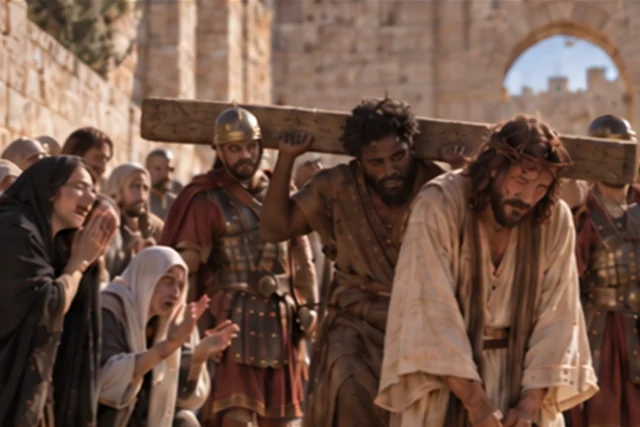
Simon of Cyrene enters the account because the authorities seize him while he is coming from the country and lay the cross on him. Luke describes him carrying it “after Jesus,” wording that naturally recalls earlier teaching about taking up the cross and following. The resemblance is real without supplying a conversion account Luke never gives. Simon's inner thoughts remain unstated. The procession also includes women mourning and lamenting, and Jesus turns toward them rather than treating their grief as background noise. He redirects their tears toward Jerusalem and the days coming upon its children. The shocking blessing on the barren belongs to that catastrophe, where parenthood will intensify anguish; it is not a general declaration that childlessness is spiritually better. The cry for mountains and hills to cover people reaches back to Hosea's judgment language, while the green and dry tree saying deepens the warning without making every element easy to assign. The section ends with two criminals led beside Jesus, making visible the earlier word that he would be numbered among transgressors.
Deep dive
Simon of Cyrene is coming from the country when he is seized for the task. Luke describes him bearing the cross after Jesus, a physical arrangement that recalls the earlier language of taking up the cross and following. The resemblance is significant, but the account does not state Simon's prior beliefs or narrate a conversion at this moment. His compelled action should not be given an invented interior history.
The following crowd includes women mourning Jesus. Their grief is not rebuked as insincere; its focus is redirected toward what will come upon Jerusalem and its children. The startling future blessing upon barren women reverses the ordinary value placed on childbearing because the coming distress will make parenthood especially painful. It is a warning shaped by catastrophe, not a general judgment that childlessness is spiritually superior.
The appeal to mountains and hills recalls Hosea 10:8, where people seek cover from judgment. The green and dry wood comparison then presses the severity further: if such treatment occurs while the wood is green, the fate of the dry will be worse. A common reading relates Jesus' present suffering to Jerusalem's coming judgment, though the exact assignment of every element is debated. The section ends with two criminals led beside him, placing his own recent citation about being numbered with transgressors into visible form.
Words to trace: coming, Jesus, laid, weep, bare, barren
Verse-by-verse path
- Luke 23:26
Cyrene, in modern Libya, had a large Jewish community; Cyrenians had their own synagogue in Jerusalem (Acts 6:9), and men of Cyrene first preached to Greeks at Antioch (Acts 11:20). Roman soldiers could press a civilian into carrying a load. Mark names Simon’s sons, Alexander and Rufus; Luke does not.
- Luke 23:27
“Bewailed” is kopto, to strike the breast in mourning, and “lamented” is threneo, to sing a dirge. The Talmud records a later custom in which respected women of Jerusalem offered wine mixed with frankincense to those being led out to execution (Sanhedrin 43a).
- Luke 23:28
“Daughters of Jerusalem” is the address of the Song of Solomon (1:5; 2:7) and of the prophets speaking to the city. “Turning” is strepho, the same turning as when “the Lord turned, and looked upon Peter” (22:61). Only Luke records these words on the road.
- Luke 23:29
The Book of Luke began with a barren woman whose reproach God took away (1:25), and a woman in the crowd once cried, “Blessed is the womb that bare thee, and the paps which thou hast sucked” (11:27). Here the same blessing is turned inside out.
- Luke 23:30
In Hosea 10:8 the words belong to the people of Samaria when the shrines of Beth-aven are destroyed. Revelation 6:16 gives the same cry to those hiding from “the wrath of the Lamb”.
- Luke 23:31
Ezekiel 20:47 has a fire that “shall devour every green tree in thee, and every dry tree”. The Greek words are hygros, moist or sappy, and xeros, dry, the second being the word for the “withered” hand of 6:6: wood that burns easily.
- Luke 23:32
Read with no comma, the Greek heteroi kakourgoi dyo could mean “two other malefactors”, counting Jesus as one; the King James comma, “two other, malefactors”, avoids it. Luke calls the pair kakourgoi, evildoers, where Mark and Matthew call them lestai, bandits.
Luke 23:26-32
King James Version26And as they led him away, they laid hold upon one Simon, a Cyrenian, coming out of the country, and on him they laid the cross, that he might bear it after Jesus.
27And there followed him a great company of people, and of women, which also bewailed and lamented him.
28But Jesus turning unto them said, Daughters of Jerusalem, weep not for me, but weep for yourselves, and for your children.
29For, behold, the days are coming, in the which they shall say, Blessed are the barren, and the wombs that never bare, and the paps which never gave suck.
30Then shall they begin to say to the mountains, Fall on us; and to the hills, Cover us.
31For if they do these things in a green tree, what shall be done in the dry?
32And there were also two other, malefactors, led with him to be put to death.
Luke 23:33-38
The Accusation Over the Cross Names a Kingship the Mockers Deny
Luke reaches Calvary and states the crucifixion with remarkable restraint: the place, the act, and two criminals, one on either side. He does not dwell on anatomy. The words spoken around the cross carry the interpretation. Jesus prays, “Father, forgive them; for they know not what they do,” a saying present in the KJV though absent from some early Greek witnesses. Ignorance does not make the act harmless; forgiveness is being requested precisely because wrong is being done. Meanwhile his garments are divided by lot. Rulers and soldiers turn the accusation of kingship into a test: if he is the Christ, if he is the king, he should save himself. Their taunts even acknowledge that he saved others while making self-rescue the required proof of identity. Above him the inscription states the royal charge in public. Luke lets the contradiction sharpen. The condemned man is mocked for not using power on himself, yet the next exchange will show him exercising royal authority toward another person without accepting escape as the definition of kingship.
Deep dive
Luke describes the crucifixion with striking economy. The place, the act, and the two condemned men beside Jesus are named without a prolonged anatomy of suffering. The brevity does not diminish the execution; it concentrates attention on what is said and disclosed there. The KJV's "Calvary" names the place of the skull, not a separate theological location requiring an additional scene.
The prayer beginning "Father, forgive them" stands beside the division of his garments. Its reference to ignorance does not declare the act harmless; forgiveness is requested precisely in the setting of wrong being done. The saying has a significant textual variant, being absent from some early Greek witnesses, although it is part of the KJV text read here. Its place in Luke's received account accords with the later prayer of Stephen for his killers in Acts 7:60. Luke does not identify every person included in the pronoun or give a separate account of each person's response to the prayer.
The rulers and soldiers repeatedly define proof of messiahship or kingship as saving himself. Their taunts acknowledge that he saved others while treating his present refusal to escape as disqualification. The inscription publicly states the royal claim under which he has been condemned, while the mockery rejects that claim on the ground of his suffering. Luke allows the contradiction to stand until the next exchange: the condemned king will answer another person's appeal without accepting self-rescue as the measure of his authority.
Words to trace: JEWS, KING, save, beholding, Calvary, chosen
Verse-by-verse path
- Luke 23:33
Luke gives the place only in Greek, Kranion, the skull, and never uses the Aramaic Golgotha that the other three Gospels give. “Calvary” comes from calvaria, the Latin word the Vulgate used here. The crucifixion itself takes three words in Greek.
- Luke 23:34
Every prayer of Jesus that Luke quotes addresses God as “Father”: in thanksgiving (10:21), in the prayer he taught (11:2), on the mount (22:42), and twice from the cross (here and verse 46). The dividing of garments uses the words of Psalm 22:18; the clothes of the condemned went to the execution squad.
- Luke 23:35
“Stood beholding” is theoreo, to watch as at a spectacle. “Derided” is ekmykterizo, to turn up the nose, used only here and of the Pharisees in 16:14; it is the verb of Psalm 22:7 in Greek, “All they that see me laugh me to scorn.” “The chosen” recalls “This is my beloved Son” at the transfiguration, where the best text reads “my chosen” (9:35).
- Luke 23:36
“Vinegar” is oxos, sour wine, the cheap drink of soldiers. Psalm 69:21 had said “in my thirst they gave me vinegar to drink”. In Luke the offer is part of the mockery, not an act of mercy.
- Luke 23:37
The soldiers repeat the rulers’ taunt with their own title. At Nazareth Jesus had foreseen the proverb that would be thrown at him: “Physician, heal thyself” (4:23). Three times in five verses he is told to save himself.
- Luke 23:38
A titulus was a placard stating the condemned man’s crime, carried before him or fixed to the cross; Suetonius describes one (Caligula 32). The words “in letters of Greek, and Latin, and Hebrew” are missing from the oldest manuscripts of Luke and were probably added from John 19:20.
Luke 23:33-38
King James Version33And when they were come to the place, which is called Calvary, there they crucified him, and the malefactors, one on the right hand, and the other on the left.
34Then said Jesus, Father, forgive them; for they know not what they do. And they parted his raiment, and cast lots.
35And the people stood beholding. And the rulers also with them derided him, saying, He saved others; let him save himself, if he be Christ, the chosen of God.
36And the soldiers also mocked him, coming to him, and offering him vinegar,
37And saying, If thou be the king of the Jews, save thyself.
38And a superscription also was written over him in letters of Greek, and Latin, and Hebrew, THIS IS THE KING OF THE JEWS.
Luke 23:39-43
The Condemned Man Asks for Remembrance and Receives Presence
The two condemned men occupy the same execution scene and read Jesus in opposite ways. One joins the surrounding demand: if you are Christ, save yourself and us. Escape becomes his condition for belief. The other rebukes him, acknowledges that their own sentence answers real wrongdoing, and says Jesus has done nothing amiss. Then he asks for something that sounds almost impossible from a cross: “Lord, remember me when thou comest into thy kingdom.” Public circumstances appear to have ended every royal prospect, but this man speaks as though the kingdom still belongs to Jesus. Luke gives no earlier discipleship résumé or theological training to explain the confidence. The request rests on guilt admitted, innocence recognized, and kingship trusted. Jesus answers with more than future remembrance at a distance: “To day shalt thou be with me in paradise.” In the KJV's natural reading, the promise is for that day, though punctuation has been debated. The center is “with me.” The man is not promised escape from death; he is promised presence beyond it.
Deep dive
The two men share the same place of execution but interpret Jesus differently. The first makes escape the condition of recognition, extending the surrounding demand that Jesus save himself. The second answers from their common exposure to judgment, acknowledging the justice of their own sentence while distinguishing Jesus as one who has done nothing amiss. His recognition is not based on being in a less desperate physical situation.
The request to be remembered when Jesus comes into his kingdom is remarkable within the scene. Public circumstances appear to close a royal future, but the man speaks of one still belonging to Jesus. Luke supplies no previous discipleship or complete theological education to explain the appeal. Its content is sufficient: acknowledgment of guilt, recognition of innocence, and trust directed toward Jesus' kingship.
The answer exceeds remembrance at a distance. In the KJV's natural reading, "To day" locates the promise of being with Jesus in paradise on that very day. Some interpreters attach the time word instead to the act of speaking, but that requires a different punctuation and construal from the KJV's. The center of the promise is "with me." Jesus does not offer escape from the present execution, and the man has no interval in which to build a new public record. The authority exercised from the cross is the gift of a future in Jesus' presence.
Words to trace: Jesus, amiss, answering, Christ, comest, condemnation
Verse-by-verse path
- Luke 23:39
“Railed” is blasphemeo. “Hanged” is kremannymi, the verb Luke uses for crucifixion in Acts 5:30 and 10:39, “whom they slew and hanged on a tree”, in the language of Deuteronomy 21:22–23. Mark and Matthew say both criminals reviled him; Luke alone distinguishes them.
- Luke 23:40
The same Book of Luke that described a judge who “feared not God” (18:2) now has a condemned criminal ask another whether he fears God. “The same condemnation” is krima, the same sentence: all three are under one verdict.
- Luke 23:41
“Nothing amiss” is atopon, literally “out of place”, improper. Luke uses it in Acts 25:5, where Festus asks for evidence of “any wickedness” in Paul, and in Acts 28:6, where the islanders wait for “harm” from the snakebite and see none.
- Luke 23:42
The oldest manuscripts read “Jesus, remember me”, the bare name, without “Lord”; no one else in Luke addresses him so. “Remember me” is the plea of Joseph to the cupbearer (Genesis 40:14) and of the psalms (Psalm 106:4). Manuscripts divide between “into thy kingdom” and “in thy kingdom”.
- Luke 23:43
Paradise is a Persian word for a walled garden or royal park, used in the Greek Old Testament for the garden of Eden (Genesis 2:8); Paul was “caught up into paradise” (2 Corinthians 12:4). This is the last of Luke’s six uses of “Verily”.
Luke 23:39-43
King James Version39And one of the malefactors which were hanged railed on him, saying, If thou be Christ, save thyself and us.
40But the other answering rebuked him, saying, Dost not thou fear God, seeing thou art in the same condemnation?
41And we indeed justly; for we receive the due reward of our deeds: but this man hath done nothing amiss.
42And he said unto Jesus, Lord, remember me when thou comest into thy kingdom.
43And Jesus said unto him, Verily I say unto thee, To day shalt thou be with me in paradise.
Luke 23:44-49
The Final Word Addresses the Father
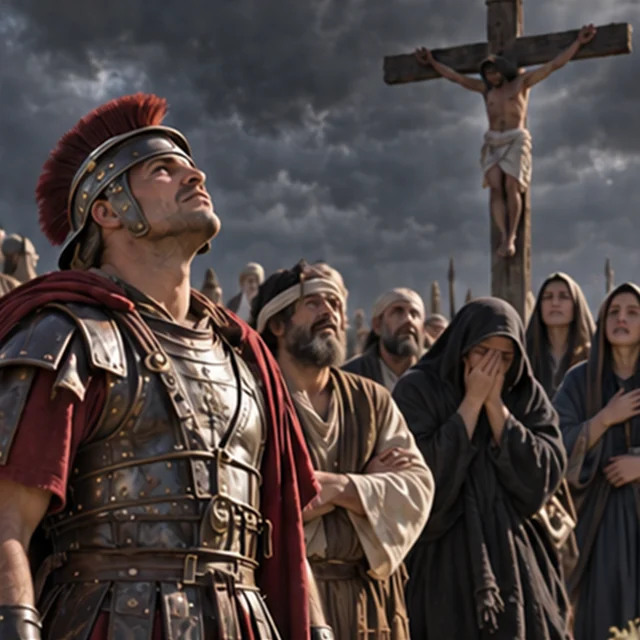
Darkness settles from about the sixth hour to the ninth, giving the scene a measured span without Luke offering a physical mechanism. The temple veil is torn in the midst, an event later Christian texts connect with access to God, though Luke does not stop here to give a complete interpretive lecture. Then Jesus' final words in this Gospel come from Psalm 31: “Father, into thy hands I commend my spirit.” Death is addressed through trust in the Father, not through uncertainty about whether the Father remains there. Jesus cries loudly, gives up the ghost, and the focus shifts to witnesses. A centurion glorifies God and calls him a righteous man, language that in this judicial setting also carries the force of innocence. The chapter's repeated declarations have now reached the execution site. Spectators beat their breasts and return; acquaintances and women from Galilee watch from a distance. Luke closes the death scene with several reactions rather than one emotional verdict assigned to everyone present. The cross has not made the surrounding human responses uniform.
Deep dive
The darkness lasts from about the sixth to the ninth hour, giving the scene a measured duration without offering a physical explanation. Luke places the tearing of the temple veil before the final cry in his telling. Readings emphasize opened access to God, judgment upon the temple order, or both; the Gospel reports the rupture without supplying a separate interpretive speech. Hebrews 10:19–22 later explicitly joins access to the holy place, the veil, and Jesus' flesh, making that a substantive rather than decorative connection.
Jesus' final words draw from Psalm 31:5 and address God as Father. The language of entrusting his spirit presents death within that relationship, not as a last attempt to discover whether the Father exists. Luke's wording should be heard in its own right rather than replaced with a different Gospel's final saying. After the loud cry he dies, and the account moves to those who have witnessed it.
The centurion glorifies God and calls Jesus righteous. The Greek word dikaios can mean righteous or just and, in this judicial setting, carries the force of innocence. The confession continues the chapter's repeated witness that the sentence does not prove guilt. The gathered spectators strike their breasts and return, a markedly different response from the rulers' mockery. Acquaintances and the women from Galilee remain at a distance watching. Luke closes the death scene with several distinct witnesses, not a single crowd assigned one emotion or one verdict.
Words to trace: beholding, hour, acquaintance, afar, breasts, centurion
Verse-by-verse path
- Luke 23:44
Hours were counted from sunrise, so the sixth is about noon and the ninth about three, the hour of the evening sacrifice and of prayer (Acts 3:1). “All the earth” can equally be “all the land”. Amos 8:9 had threatened: “I will cause the sun to go down at noon.”
- Luke 23:45
The oldest manuscripts read tou heliou eklipontos, “the sun’s light failing”, and ekleipo was the usual Greek term for an eclipse. Passover fell at full moon, when a solar eclipse cannot happen, and Luke gives no explanation of what darkened the sky.
- Luke 23:46
“Commend” is paratithemai, to deposit something in trust, the word Paul uses when he “commended them to the Lord” (Acts 14:23; 20:32). Psalm 31:5 says “Into thine hand I commit my spirit” to the “LORD God of truth”; Jesus adds the address “Father”. “Gave up the ghost” is ekpneo, breathed out.
- Luke 23:47
Luke’s centurions are consistently sympathetic: the one at Capernaum whose servant was healed (7:2–10), Cornelius (Acts 10), and Julius, who treated Paul kindly (Acts 27:3). “Glorified God” is Luke’s recurring response to God’s work, used of the shepherds (2:20) and the healed blind man (18:43).
- Luke 23:48
“Sight” is theoria, a spectacle, found only here in the New Testament; the crowd had come as to a show. They go home mourning. “Returned” is hypostrepho, Luke’s favourite verb for going back, used some thirty times in the Gospel.
- Luke 23:49
“Acquaintance” is gnostoi, those known to him, the word used when his parents searched for the boy Jesus “among their kinsfolk and acquaintance” (2:44). Psalm 88:8 in Greek has the same word: “thou hast put away mine acquaintance far from me.” The women were introduced in 8:2–3.
Luke 23:44-49
King James Version44And it was about the sixth hour, and there was a darkness over all the earth until the ninth hour.
45And the sun was darkened, and the veil of the temple was rent in the midst.
46And when Jesus had cried with a loud voice, he said, Father, into thy hands I commend my spirit: and having said thus, he gave up the ghost.
47Now when the centurion saw what was done, he glorified God, saying, Certainly this was a righteous man.
48And all the people that came together to that sight, beholding the things which were done, smote their breasts, and returned.
49And all his acquaintance, and the women that followed him from Galilee, stood afar off, beholding these things.
Luke 23:50-56
The Burial Is Watched, and the Sabbath Is Kept
Joseph belongs to the council, but Luke immediately refuses to let institutional membership erase individual dissent. He is described as a good and just man who did not consent to the counsel and deed, and he is still waiting for God's kingdom even after the king has been executed. Joseph goes to Pilate, asks for the body, wraps it in linen, and lays it in a rock-cut tomb where no one had previously been placed. Luke does not say here that Joseph owns the tomb or add Nicodemus to the burial; those details belong elsewhere. His interest is in a known body placed in a known location. The women from Galilee follow and carefully observe both the tomb and how the body is laid. Their attention matters because they will return after the Sabbath. They prepare spices and ointments and then rest according to the commandment. The spices disclose their expectation plainly enough: they are preparing to honor a dead body, not waiting beside the tomb for it to become empty. Luke ends in Sabbath stillness before overturning that expectation.
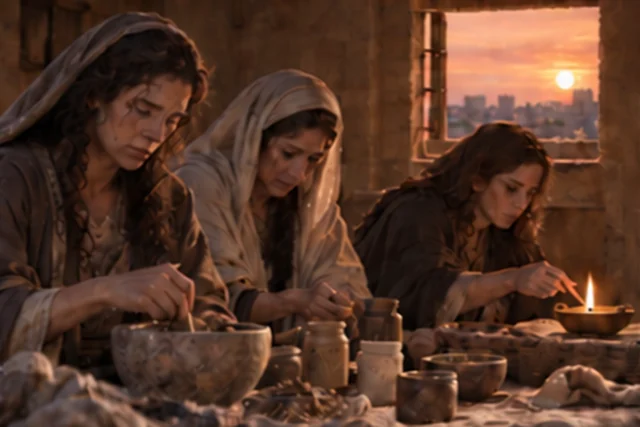
Deep dive
Joseph belongs to the council, yet Luke explicitly states that he did not consent to its decision and action. The qualification matters after the chapter's collective descriptions of the authorities. Membership in the body does not erase his dissent. He is described as good and just, waiting for God's kingdom, so the expectation that has run through the Gospel is still present beside the body of the executed king.
His approach to Pilate obtains the body for burial. Linen, a rock-cut tomb, and its unused condition give the placement concrete definition. Luke does not say here that Joseph owns the tomb or include Nicodemus; those details belong to other Gospel presentations. The account centers on this man's request and the burial he undertakes, setting a known body in a particular place.
The women who came from Galilee observe both the tomb and how the body is laid. Their attention forms an essential connection with the next chapter: they are not introduced later as visitors wandering toward an uncertain burial site. They prepare spices and ointments, then rest according to the Sabbath commandment. That rest is not indifference, and the spices do not signal expectation of an empty tomb. Luke closes with faithful preparation for attending a dead body, allowing the resurrection morning to overturn a clearly established expectation.
Words to trace: laid, body, sabbath, sepulchre, Arimath, begged
Verse-by-verse path
- Luke 23:50
“Counsellor” is bouleutes, a member of the council. He is the second man in four verses to be called dikaios, “just”, after the centurion’s verdict on Jesus in verse 47. “A good man” is how Acts 11:24 describes Barnabas.
- Luke 23:51
Arimathaea is usually identified with Ramathaim-zophim, the hill town where Samuel was born (1 Samuel 1:1). “Waited for” is prosdechomai, the verb used of Simeon “waiting for the consolation of Israel” (2:25): the Book of Luke opens and closes with devout Jews waiting in Jerusalem.
- Luke 23:52
Roman practice often left the crucified on the cross for days, but Deuteronomy 21:22–23 required a hanged man to be buried the same day. Josephus says the Jews took down the crucified and buried them before sunset (Jewish War 4.317). A request to the governor was still needed.
- Luke 23:53
“Took it down” is kathaireo, the verb Paul uses in his summary: “they took him down from the tree, and laid him in a sepulchre” (Acts 13:29). “Hewn in stone” is laxeutos, cut out of rock, found only here in the New Testament.
- Luke 23:54
“The preparation” is paraskeue, the day of getting ready for the sabbath, and still the Greek word for Friday. “Drew on” is epiphosko, literally “was dawning”, a surprising word for dusk; it may reflect the lighting of sabbath lamps, or simply the start of a new day, since Jewish days began at evening.
- Luke 23:55
Luke withholds their names until 24:10: Mary Magdalene, Joanna, and Mary the mother of James. Mary Magdalene and Joanna were among the women who “ministered unto him of their substance” in Galilee (8:2–3), and have followed him the whole way south.
- Luke 23:56
Spices (aromata) and ointments (myra, perfumed oils) were for the body, not the tomb. The Greek sentence does not end here: “they rested on the sabbath” is the first half of a construction whose second half, “but upon the first day of the week”, opens chapter 24. The chapter break falls in mid-sentence.
Luke 23:50-56
King James Version50And, behold, there was a man named Joseph, a counsellor; and he was a good man, and a just:
51(The same had not consented to the counsel and deed of them;) he was of Arimathæa, a city of the Jews: who also himself waited for the kingdom of God.
52This man went unto Pilate, and begged the body of Jesus.
53And he took it down, and wrapped it in linen, and laid it in a sepulchre that was hewn in stone, wherein never man before was laid.
54And that day was the preparation, and the sabbath drew on.
55And the women also, which came with him from Galilee, followed after, and beheld the sepulchre, and how his body was laid.
56And they returned, and prepared spices and ointments; and rested the sabbath day according to the commandment.
Questions to keep in mind while reading
- Watch what Jesus says and does, and how people respond.
- Trace kingdom, discipleship, opposition, cross, and resurrection in the evangelist’s own sequence.
- Let later doctrine clarify the scene without erasing its immediate setting.
Text first
Where readers differ
The chapter summary begins with what the passage says and how its parts fit together. It does not assume one denomination has already settled every question. Where a conclusion depends on a tradition, literary theory, or historical reconstruction, that dependence is named openly.
The KJV text is presented first. Interpretive conclusions are labeled, and differences are introduced only when they help a reader understand why serious communities do not always reach the same answer.
Comparative interpretive notes for this chapter are in preparation. Until reviewed notes are ready, this page separates the KJV text from summary and application without claiming that serious readers agree on every question.
Questions beneath the surface
- What account of God, human freedom, responsibility, and the good life emerges from Luke 23?
- Which tension does the chapter refuse to resolve quickly?
- What changes when the chapter is read as part of the whole canon rather than as an isolated moral lesson?
- Where might a sincere reader confuse a familiar tradition with something the text states directly?
Questions for serious personal contemplation
These open-ended questions make room for tension, honest response, prayer, and conclusions that remain accountable to the chapter.
Observe without rushing
What part of Luke 23 makes you stop, feel unsettled, or feel surprised, and why?
Which detail in the passage would be easiest to overlook? How does that detail change your understanding?
Where do you see tension between what happens and this focus: Jesus before Pilate and Herod, led to crucifixion, speaking from the cross, dying, and buried?
What important question does the passage leave open instead of resolving quickly?
Examine your inner life honestly
Which person, response, fear, or desire in the passage feels most like your own life right now?
What assumption about God, other people, or yourself does this text challenge?
Which part would you rather soften, avoid, or explain away too quickly? What might that reaction reveal?
If this Scripture could ask you one direct question, what do you think it would ask?
Respond with wisdom and courage
What do you need to remember, confess, grieve, thank God for, or trust after reading this passage?
How might another faithful person read this situation differently without ignoring the text?
What obedient response would be costly, uncomfortable, or slow, yet still faithful to Scripture?
What question will you carry into prayer this week, and which verses will you keep in front of you?
Music and video connected to the passage
Related media appears when its Scripture reference overlaps this study. Music and video can illuminate a theme while the biblical text remains the foundation.