The big picture
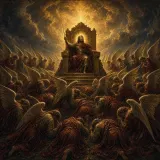
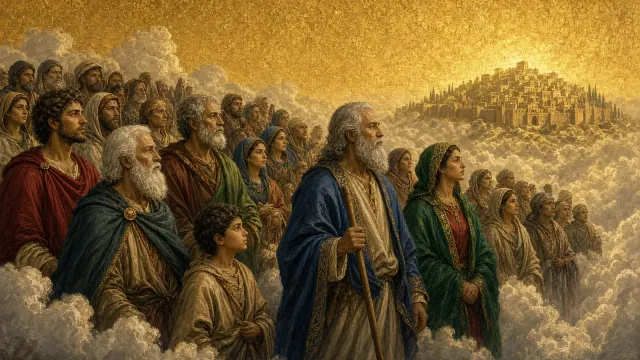
The Book of Hebrews turns faith into a long record of action under conditions where the promised outcome is not fully visible. Creation itself begins the pattern because what is seen comes from God's unseen word. Abel, Enoch, Noah, Abraham, Sara, Moses, Rahab, judges, kings, prophets, unnamed sufferers, and displaced believers then fill out the range. Some receive spectacular deliverance. Others die violently. The chapter refuses to let one outcome become the measure of genuine faith. A person may escape the sword or be slain by it and still receive the same commendation. The patriarchs live in the promised land as strangers, die without full possession, and direct blessings, bones, and hopes toward a future beyond themselves. By the end, even the honored witnesses remain incomplete without the later people of God. Faith therefore reaches across generations as well as beyond sight. The chapter is less a hall of finished heroes than a gathered company whose confidence points toward a fulfillment none of them possesses privately.
In this chapter
- The Unseen Produces Visible Actions Hebrews 11:1-7
Faith gives unseen realities present weight, but the Book of Hebrews does not describe it as a device for turning imagination into fact.
- The Promised Land Is Inhabited in Tents Hebrews 11:8-16
The promised land looks oddly provisional in this paragraph.
- The Promise Survives the Approach of Death Hebrews 11:17-22
The promise is placed under the knife and then carried to the grave.
- Faith Refuses One Identity and Joins Another People Hebrews 11:23-31
Moses' life is framed by competing identities and visible costs.
- The Victories Are Real, but the Sentence Changes Direction Hebrews 11:32-35
The names come too quickly for full biographies, and the Book of Hebrews does not try to tidy them into spotless lives.
- The World Rejects People It Is Not Worthy to Contain Hebrews 11:36-40
The final witnesses do not conquer their circumstances.

Scripture beside the summary
Hebrews · King James Version · 40Hebrews 11:1-7
The Unseen Produces Visible Actions
Faith gives unseen realities present weight, but the Book of Hebrews does not describe it as a device for turning imagination into fact. Its examples are responses to God, his warning, his promise, or his word. Even creation is understood through divine speech: visible worlds come from what does not appear. Abel and Enoch then prevent the chapter from settling into one formula for success. Abel dies and still speaks through the testimony attached to his offering; Enoch does not see death at all. Both are commended. Noah adds another shape. Warned about what is "not seen as yet," he spends himself on the very visible task of building an ark. His faith has lumber, labor, household consequences, and social cost. The Book of Hebrews therefore makes the object of faith unseen without making faith itself invisible. Worship, disappearance, construction, and divine approval differ in form, but each is ordered around the reality of God rather than immediate public confirmation.
Deep dive
The opening description grows out of the preceding contrast between faith and withdrawal. "Substance" and "evidence" give hoped-for and unseen realities present weight. Hebrews does not explain faith as a technique for making imagined objects exist. Its examples consistently concern a response to God, his warning, or his promise. Even the account of creation begins with divine speech rather than with human projection.
Abel and Enoch immediately prevent one narrow pattern from controlling the chapter. Abel dies and yet continues to speak through the testimony associated with his offering. Enoch does not see death. Both receive divine approval. The contrast is already preparing the later sequence in which some escape death and others endure it without receiving a lesser commendation.
Noah's action is directed toward something not yet seen. His fear leads to the substantial work of preparing an ark, and the result concerns his household as well as the world around him. Faith is therefore not invisible in its effects even when its object is unseen. The offerings, disappearance, and construction differ, but each example is organized around the testimony that God gives rather than the social appearance of success.
Words to trace: faith, seen, obtained, translated, Abel, appear
Verse-by-verse path
- Hebrews 11:1
“Substance” is hypostasis, the word of 1:3, the Son as “the express image of his person”, and of 3:14, “our confidence”. In business papyri of the period it can mean a title deed, a document that makes absent property yours now. “Evidence” is elenchos, proof that convicts. This is the only verse in the chapter that defines anything.
- Hebrews 11:2
“The elders” are the people of old, not church officers. “Obtained a good report” is one passive verb, emartyrethesan, “were witnessed to”, built on martys, a witness. The same verb comes back in verses 4, 5 and 39, and in 12:1 these people become the “cloud of witnesses”.
- Hebrews 11:3
The first entry in the roll of faith has no hero; the subject is “we”. “Worlds” is aionas, the ages, as in 1:2, and “framed” is the verb used of the body prepared in 10:5. The Jewish mother of 2 Maccabees 7:28 said something close, that God made heaven and earth “of things that were not”.
- Hebrews 11:4
Genesis 4:4 never says why Abel’s gift was preferred; Hebrews supplies the reason, faith. “More excellent” is literally “more”, pleiona, a fuller offering. “Yet speaketh” reaches back to the blood that cried from the ground (Genesis 4:10), and forward to 12:24, where Christ’s blood “speaketh better things than that of Abel”.
- Hebrews 11:5
Genesis 5:24 in Hebrew says Enoch “walked with God” and “was not”. The Greek Old Testament renders these as “pleased God” and “was not found”, and Hebrews quotes that Greek. “Translated” is metatithemi, to move from one place to another; the verb and its noun occur three times in this one verse.
- Hebrews 11:6
The reasoning runs backwards from Enoch: Scripture says he pleased God, and pleasing God requires faith, so Enoch had it. “Cometh to God” is the priestly verb of approach from 10:22. The faith named has two parts, that God exists and that he rewards those who “diligently seek”, ekzeteo, seek out.
- Hebrews 11:7
“Warned of God” is chrematizo, to receive an oracle, the verb used of Moses in 8:5, “admonished of God”. “Moved with fear” is eulabeomai, reverent caution. Genesis 6:9 makes Noah the first person in Scripture called righteous, and Hebrews calls him the first heir of that righteousness.
Hebrews 11:1-7
King James Version1Now faith is the substance of things hoped for, the evidence of things not seen.
2For by it the elders obtained a good report.
3Through faith we understand that the worlds were framed by the word of God, so that things which are seen were not made of things which do appear.
4By faith Abel offered unto God a more excellent sacrifice than Cain, by which he obtained witness that he was righteous, God testifying of his gifts: and by it he being dead yet speaketh.
5By faith Enoch was translated that he should not see death; and was not found, because God had translated him: for before his translation he had this testimony, that he pleased God.
6But without faith it is impossible to please him: for he that cometh to God must believe that he is, and that he is a rewarder of them that diligently seek him.
7By faith Noah, being warned of God of things not seen as yet, moved with fear, prepared an ark to the saving of his house; by the which he condemned the world, and became heir of the righteousness which is by faith.
Hebrews 11:8-16
The Promised Land Is Inhabited in Tents
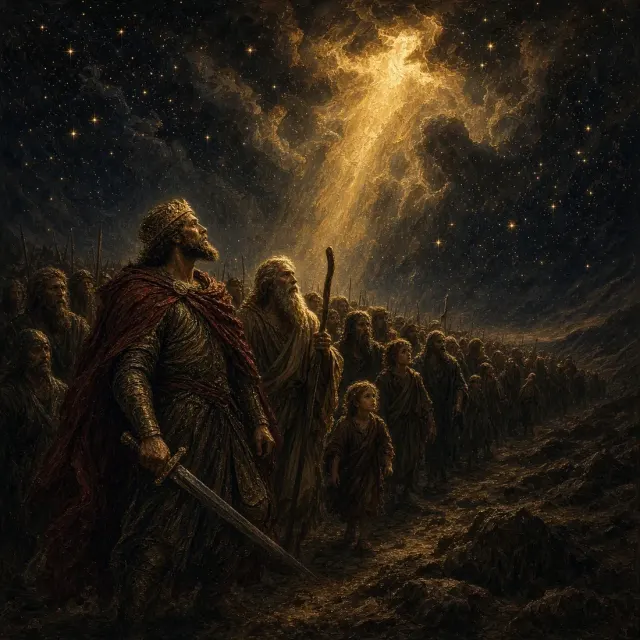
The promised land looks oddly provisional in this paragraph. The Book of Hebrews places Abraham inside it, then emphasizes that he lives there in tents as though in a strange country. Isaac and Jacob share the same temporary posture even though they are heirs of the same promise. Abraham obeys before knowing the destination, and once he arrives, arrival still does not equal full possession. The contrast with "a city which hath foundations" makes the tents do theological work. Sara's faith is likewise attached not to ordinary probability but to her judgment that the one who promised is faithful. Then comes the haunting sentence, "These all died in faith, not having received the promises." Death does not turn the promise into fraud. Their confession as strangers shows that their horizon has widened beyond the land underfoot to a better country and a city prepared by God. The Book of Hebrews makes home itself an object of hope before it becomes a settled possession.
Deep dive
Abraham's obedience includes a genuine absence of information: he goes without knowing his destination. Yet uncertainty about the route is not uncertainty about whether he has been called. Once in the land of promise, he still lives as a stranger in tents. Isaac and Jacob share that provisional life as heirs of the same promise. The promised land and permanent possession are not treated as identical experiences.
The contrast with a city having foundations gives the tents their force. It is not a dismissal of settled life as such, but a comparison between the present form of residence and the enduring future for which God is responsible. Sara's role is also explicitly one of faith. Hebrews links her reception of strength to her judgment that the one who promised is faithful, rather than turning the promise's fulfilment into a natural extension of ordinary possibility.
"These all died in faith" belongs to this patriarchal discussion; it does not cancel the earlier statement about Enoch. The ancestors could have returned to the country they left, but their expressed desire points elsewhere. God's refusal to be ashamed of being called their God answers the Son's unashamed identification with his brethren in 2:11. The city remains prepared by God even while its heirs live and die without full possession.
Words to trace: country, faith, city, promise, received, Abraham
Verse-by-verse path
- Hebrews 11:8
The participle “when he was called” is present tense in Greek, suggesting he obeyed while the call was still sounding. Genesis 12:1 had said only “unto a land that I will shew thee”. “Inheritance” is a word for property handed down, which Abraham never held beyond one burial cave.
- Hebrews 11:9
“Sojourned” is paroikeo, to live as a resident foreigner, the root from which the English “parish” descends. The three generations did overlap: Abraham was a hundred at Isaac’s birth, Isaac sixty at Jacob’s, and Abraham died at a hundred and seventy five, when Jacob was fifteen.
- Hebrews 11:10
Tents have pegs, not foundations. “Builder” is technites, a craftsman, and “maker” is demiourgos, a public builder, the word Plato used for the maker of the world; it appears nowhere else in the New Testament. The Book of Hebrews calls God the architect of a city before it calls him its giver.
- Hebrews 11:11
Genesis 18:12 records Sarah laughing at the promise; Hebrews passes over the laugh and credits her faith. The phrase “to conceive seed” is katabole spermatos, normally used of a father’s part in begetting, so many read Abraham as the subject and Sara as “with Sara herself”, an old and live question of grammar.
- Hebrews 11:12
“As good as dead” is nenekromenos, the word Paul uses of Abraham’s body in Romans 4:19. The two images come from two different promises, stars from Genesis 15:5 and the sand of the sea shore from Genesis 22:17, spoken after the sacrifice on Moriah.
- Hebrews 11:13
The formula changes: not “by faith” but “in faith”, kata pistin, according to faith, for people who died without the thing. “Embraced” is aspazomai, to greet, as a traveller waves to a city seen across a valley. Abraham told the Hittites, “I am a stranger and a sojourner with you” (Genesis 23:4).
- Hebrews 11:14
“Country” is patris, fatherland, the land of one’s fathers. The irony is plain once said: the fatherland they sought was not the place their fathers came from. “Declare plainly” is emphanizo, to make visible; their words showed where their hearts were headed.
- Hebrews 11:15
The road back was open. Abraham made his servant swear not to take Isaac back to Mesopotamia (Genesis 24:6–8), and Jacob did go back to Haran and stayed twenty years (Genesis 31:41), then came away again. “Mindful” is mnemoneuo, to keep thinking of.
- Hebrews 11:16
“Desire” is oregomai, to stretch out for. God named himself “the God of Abraham, the God of Isaac, and the God of Jacob” at the bush (Exodus 3:6), long after all three were buried, attaching his own name to three nomads who died owning a grave.
Hebrews 11:8-16
King James Version8By faith Abraham, when he was called to go out into a place which he should after receive for an inheritance, obeyed; and he went out, not knowing whither he went.
9By faith he sojourned in the land of promise, as in a strange country, dwelling in tabernacles with Isaac and Jacob, the heirs with him of the same promise:
10For he looked for a city which hath foundations, whose builder and maker is God.
11Through faith also Sara herself received strength to conceive seed, and was delivered of a child when she was past age, because she judged him faithful who had promised.
12Therefore sprang there even of one, and him as good as dead, so many as the stars of the sky in multitude, and as the sand which is by the sea shore innumerable.
13These all died in faith, not having received the promises, but having seen them afar off, and were persuaded of them, and embraced them, and confessed that they were strangers and pilgrims on the earth.
14For they that say such things declare plainly that they seek a country.
15And truly, if they had been mindful of that country from whence they came out, they might have had opportunity to have returned.
16But now they desire a better country, that is, an heavenly: wherefore God is not ashamed to be called their God: for he hath prepared for them a city.
Hebrews 11:17-22
The Promise Survives the Approach of Death
The promise is placed under the knife and then carried to the grave. The Book of Hebrews interprets Abraham's offering of Isaac through resurrection confidence: the very son through whom the promised line is named can be surrendered because God is reckoned able to raise the dead. Isaac is called "only begotten" in relation to that promised line, not because the letter has forgotten Abraham's other children. His return is then described figuratively as a kind of reception from death without claiming that he was literally killed and resurrected. After that dramatic scene, the pace becomes quieter but no less future-facing. Isaac blesses concerning things to come. Jacob does the same near death. Joseph speaks about Israel's departure and gives instructions concerning his bones. The Book of Hebrews lets burial arrangements carry theology. None of these men remains alive to supervise fulfillment. Blessing, staff, bones, and family speech all point beyond their life spans to a promise expected to outlive them.
Deep dive
Isaac is called Abraham's "only begotten" in relation to the promise being traced through him, not because Hebrews has forgotten that Abraham had other offspring. The tension is exact: the named bearer of the promised line is the son Abraham is called to offer. Hebrews supplies the interpretation that Abraham reckoned God able to raise the dead. Isaac's return is then described figuratively in those terms, not as a claim that he was actually killed and resurrected.
The pace changes after Abraham. Isaac blesses concerning things to come; Jacob blesses Joseph's sons as death approaches; Joseph gives instructions concerning his bones. The future is not secured by any of these men remaining alive to supervise it. Their final acts acknowledge a promise that continues beyond their own life spans.
Joseph's bones are particularly concrete. A confidence described in terms of unseen realities reaches all the way down to burial instructions. His remains are not to make Egypt their final address. Hebrews does not turn the patriarchs into disembodied symbols; blessing, staff, and bones keep the argument attached to bodies and households. Death constrains their immediate action without becoming the boundary of the promise.
Words to trace: faith, Isaac, blessed, concerning, Jacob, Joseph
Verse-by-verse path
- Hebrews 11:17
“Tried” is the testing of Genesis 22:1, where the King James says “God did tempt Abraham”. The Greek has two tenses: “offered up” first in the perfect, as a thing done, then in the imperfect, “was offering up”, an act begun and stopped by the angel’s call.
- Hebrews 11:18
The quotation is Genesis 21:12, spoken on the day Hagar and Ishmael were sent away. The promise that required Abraham to let one son go was attached to the very son he is now told to give up, which is where the whole trial bites.
- Hebrews 11:19
“Accounting” is logizomai, to reckon or calculate. Genesis 22:5 had already let the reckoning show: Abraham told the young men “I and the lad will go yonder and worship, and come again to you”, the last verb plural. “In a figure” is en parabole, the word of 9:9.
- Hebrews 11:20
Genesis 27 is a scene of deception, and Isaac “trembled very exceedingly” when he found it out, yet he refused to take the blessing back. Both sons were blessed with futures, Esau’s including the day he would “break his yoke” (27:40). Jacob is named first, though Esau was the elder.
- Hebrews 11:21
Hebrews passes over Jacob’s blessing of all twelve sons and chooses the crossed hands over Ephraim and Manasseh (Genesis 48). The staff comes from the Greek of Genesis 47:31. Hebrew was written without vowels, and mth read as mittah is “bed”, as the King James has there, while matteh is “staff”.
- Hebrews 11:22
“When he died” is teleutao, to reach one’s end. Joseph made the brothers swear in Genesis 50:25; Moses took the bones out of Egypt (Exodus 13:19); Joshua 24:32 buried them at Shechem, in the plot Jacob had bought. The instruction took about four centuries to carry out.
Hebrews 11:17-22
King James Version17By faith Abraham, when he was tried, offered up Isaac: and he that had received the promises offered up his only begotten son,
18Of whom it was said, That in Isaac shall thy seed be called:
19Accounting that God was able to raise him up, even from the dead; from whence also he received him in a figure.
20By faith Isaac blessed Jacob and Esau concerning things to come.
21By faith Jacob, when he was a dying, blessed both the sons of Joseph; and worshipped, leaning upon the top of his staff.
22By faith Joseph, when he died, made mention of the departing of the children of Israel; and gave commandment concerning his bones.
Hebrews 11:23-31
Faith Refuses One Identity and Joins Another People
Moses' life is framed by competing identities and visible costs. The Book of Hebrews begins with his parents, whose faith resists the king's command before Moses can choose anything himself. When grown, he refuses the status attached to Pharaoh's household and chooses affliction with God's people over temporary pleasure and Egyptian treasure. The decision is presented as an act of valuation, not as romantic poverty. He esteems reproach in relation to Christ as greater riches because his sight is fixed on reward beyond the immediate court. The exact departure from Egypt intended in verse 27 has been debated, but the stated emphasis is endurance "as seeing him who is invisible." Passover, the sea crossing, Jericho, and Rahab then move the sequence from one man to a people and finally to an unexpected outsider. The Book of Hebrews keeps Rahab's old designation rather than sanitizing it. Her reception of the spies places her response beside Israel's great acts of faith.
Deep dive
The first act of faith in Moses' life belongs to his parents, whose concealment resists the king's command. Moses later refuses an identity supplied by Pharaoh's household and chooses affliction with God's people. Hebrews calls this a reckoning of value: temporary enjoyment and Egyptian wealth are weighed against a greater reward. The language of "the reproach of Christ" reads his identification with the suffering people within the letter's Christ-centred understanding of their hope; it need not imply that every later detail was consciously known to Moses.
The departure from Egypt in verse 27 has been associated either with Moses' earlier flight or with the exodus itself. The exact episode is not named, and the contrast with fear in Exodus 2:14 has contributed to the discussion. Hebrews' stated emphasis is endurance in relation to the invisible God. The Passover then gives faith a prescribed action involving blood, and the sea crossing distinguishes Israel's passage from the Egyptians' attempted pursuit.
Jericho and Rahab conclude the sequence from opposite sides of a threatened city. The walls fall through the action Hebrews identifies with faith; Rahab survives through receiving the spies in peace. Her designation as a harlot is retained, not tactfully edited away. The chapter's commendation is attached to her response, placing an unexpected participant beside the celebrated leader of the exodus.
Words to trace: faith, Egypt, Moses, affliction, afraid, assaying
Verse-by-verse path
- Hebrews 11:23
Exodus 2:2 says the mother hid him; the Greek Old Testament has the plural, and Hebrews follows it with “parents”. “Proper” is asteios, fine or handsome, the word Stephen uses in Acts 7:20, “exceeding fair”. The king’s commandment was Exodus 1:22, every son thrown into the river.
- Hebrews 11:24
“When he was come to years” is literally “having become great”, the phrase of Exodus 2:11 in its Greek form; Stephen puts him at forty (Acts 7:23). Exodus 2:10 says “he became her son”. “Refused” is arneomai, to deny or disown, a word of renunciation.
- Hebrews 11:25
“Suffer affliction with” is one compound verb, synkakoucheomai, to be ill-treated along with others, found nowhere else in the New Testament. “For a season” is proskairos, temporary, the word Paul sets against the eternal in 2 Corinthians 4:18: “the things which are seen are temporal”.
- Hebrews 11:26
Psalm 89:50–51 speaks of “the reproach of thy servants” with which enemies reproached “the footsteps of thine anointed”, in Greek “of thy christ”, and Hebrews borrows that pairing of reproach and the anointed. “Had respect unto” is apoblepo, to look away from everything else toward one thing.
- Hebrews 11:27
“Endured” is kartereo, to hold out, found only here in the New Testament. Exodus 33:20 said no man could see God and live, and Moses is described as enduring “as seeing” the invisible: faith here borrows the language of sight for what 11:1 called “things not seen”.
- Hebrews 11:28
“Kept” is a perfect tense, pepoieken, he instituted the passover and it still stands. “He that destroyed” is the destroyer of Exodus 12:23, who passes over the doors marked with blood. The Greek verb “touch” is the one used in 12:20 of the beast that touches the mountain.
- Hebrews 11:29
“Assaying” means making trial: the Egyptians attempted exactly the same crossing and it drowned them. The difference between the two companies on the sea bed is not in the act but in the faith. “Drowned” is katapino, to swallow down, as Exodus 15:12 sings, “the earth swallowed them”.
- Hebrews 11:30
No person is the subject of the sentence; the walls fall. Israel went round the city once a day for six days and seven times on the seventh (Joshua 6:14–15), thirteen circuits in all, and no weapon is mentioned until the walls are already down.
- Hebrews 11:31
“Believed not” is apeitheo, to be disobedient, the word used in 3:18 of Israel in the wilderness. The label implies Jericho had heard enough to respond, and Rahab says so in Joshua 2:10–11. James 2:25 cites the same woman for her works; Hebrews cites her for her faith.
Hebrews 11:23-31
King James Version23By faith Moses, when he was born, was hid three months of his parents, because they saw he was a proper child; and they were not afraid of the king’s commandment.
24By faith Moses, when he was come to years, refused to be called the son of Pharaoh’s daughter;
25Choosing rather to suffer affliction with the people of God, than to enjoy the pleasures of sin for a season;
26Esteeming the reproach of Christ greater riches than the treasures in Egypt: for he had respect unto the recompence of the reward.
27By faith he forsook Egypt, not fearing the wrath of the king: for he endured, as seeing him who is invisible.
28Through faith he kept the passover, and the sprinkling of blood, lest he that destroyed the firstborn should touch them.
29By faith they passed through the Red sea as by dry land: which the Egyptians assaying to do were drowned.
30By faith the walls of Jericho fell down, after they were compassed about seven days.
31By faith the harlot Rahab perished not with them that believed not, when she had received the spies with peace.
Hebrews 11:32-35
The Victories Are Real, but the Sentence Changes Direction
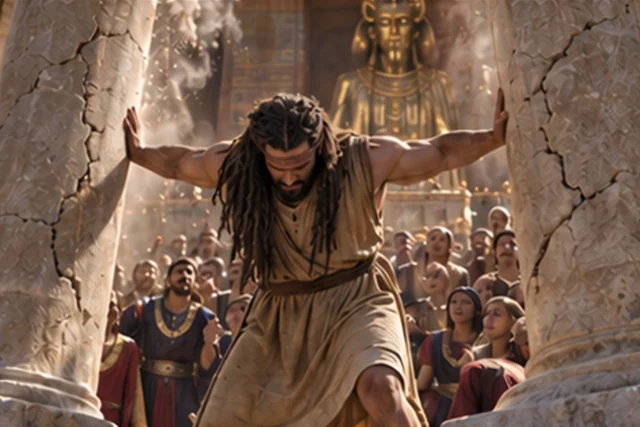
The names come too quickly for full biographies, and the Book of Hebrews does not try to tidy them into spotless lives. Gideon, Barak, Samson, Jephthah, David, Samuel, and the prophets are gathered for the faith relevant to this argument, not for blanket approval of every recorded act. Then achievements pile up: kingdoms subdued, righteousness worked, promises obtained, lions silenced, fire quenched, armies turned back, weakness made strong, and dead restored to life. The momentum feels almost triumphal until the sentence itself changes direction. "And others were tortured." The turn happens inside verse 35, making it impossible to separate successful faith from suffering faith into different categories. Some receive their dead back; others refuse deliverance because they look for "a better resurrection." The Book of Hebrews deliberately places both outcomes under the same heading. Immediate escape is real and worth naming, but it is not allowed to become the universal proof that faith has worked.
Deep dive
The named figures arrive faster than their lives can be explained. Gideon, Barak, Samson, Jephthah, David, Samuel, and the prophets are not presented as people whose every act now receives blanket approval. Hebrews gathers them for the faith relevant to its present argument. Their complicated histories are not rewritten into uniform moral biographies.
The following actions move through rule, justice, deliverance, military reversal, and the restoration of the dead. The language can recall particular passages, but Hebrews does not assign every deed to one named person. It is more interested in the range of God's dealings than in completing an identification chart.
Then the turn occurs inside verse 35, not safely after the success list has ended. Some women receive their dead back, while others endure torture without accepting deliverance in hope of a better resurrection. The repeated subject remains people of faith. Return to ordinary mortal life is not the only imaginable outcome. By placing these experiences side by side, Hebrews begins to dismantle any reading in which sufficient faith always produces immediate escape.
Words to trace: accepting, aliens, armies, Barak, better, David
Verse-by-verse path
- Hebrews 11:32
“The time would fail me” was a stock phrase of Greek orators breaking off a list. The names come in pairs, each pair out of order: Gideon before Barak, Samson before Jephthah, David before Samuel. Gedeon and Jephthae are the Greek spellings of the Hebrew names.
- Hebrews 11:33
“Wrought righteousness” can mean administered justice, as Samuel and David did as judges and kings. The lions recall Daniel 6:22, though Samson and David each killed a lion by hand (Judges 14:6, 1 Samuel 17:34–35). “Subdued” is katagonizomai, to overcome in a contest.
- Hebrews 11:34
The fire is the furnace of Daniel 3. “Armies” is parembole, a camp or encampment, the same word as “without the camp” in 13:11 and 13:13. “Aliens” means foreigners, allotrioi, and the phrase recalls the Maccabean wars as well as the judges.
- Hebrews 11:35
The widow of Zarephath and the Shunammite received sons back (1 Kings 17:22–23, 2 Kings 4:36). “Tortured” is tympanizo, to be stretched on the tympanon, a drum-shaped rack. 2 Maccabees 6–7 tells of Eleazar and of seven brothers who refused release, one saying God “shall raise us up” (7:9).
Hebrews 11:32-35
King James Version32And what shall I more say? for the time would fail me to tell of Gedeon, and of Barak, and of Samson, and of Jephthae; of David also, and Samuel, and of the prophets:
33Who through faith subdued kingdoms, wrought righteousness, obtained promises, stopped the mouths of lions,
34Quenched the violence of fire, escaped the edge of the sword, out of weakness were made strong, waxed valiant in fight, turned to flight the armies of the aliens.
35Women received their dead raised to life again: and others were tortured, not accepting deliverance; that they might obtain a better resurrection:
Hebrews 11:36-40
The World Rejects People It Is Not Worthy to Contain
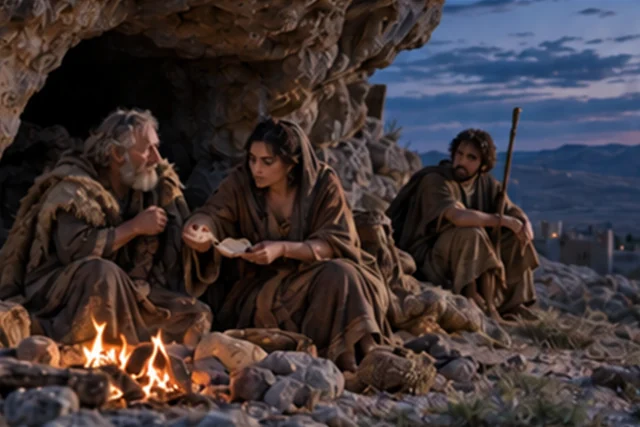
The final witnesses do not conquer their circumstances. They are mocked, scourged, imprisoned, stoned, slain, displaced, destitute, and driven into deserts and caves. The Book of Hebrews has already said that some escaped the sword; now others die by it. No explanation is offered that makes the second group less faithful. Instead, the visible verdict is reversed by the parenthesis, "Of whom the world was not worthy." People treated as unfit for ordinary society are declared too valuable for the world that rejected them. Their identities are largely withheld, which keeps the focus on the shared testimony rather than on completing an identification chart from later traditions. Then the chapter gathers victorious and afflicted witnesses into one conclusion. All receive a good report through faith, yet none receives the final promise in isolation. God has provided "some better thing for us," so earlier and later people reach completion together. The Book of Hebrews ends not with solitary heroes but with a company waiting for a shared perfection.
Deep dive
The account does not rush past the costs. Mocking, scourging, chains, stoning, and death by the sword are named, followed by the exposed life of people driven into deserts, mountains, and caves. Earlier in the chapter some escaped the sword; here others die by it. The difference in outcome is not explained by a difference in the reality of their faith.
The parenthesis about the world's unworthiness reverses the visible judgment. Those treated as unfit for ordinary human society are the people the world was unworthy to possess. Hebrews supplies that judgment itself, so the force comes from the text rather than from an added heroic flourish. Details such as being sawn apart have been linked with later accounts of particular prophets, but Hebrews leaves the sufferers unnamed. Their testimony does not depend on supplying identities the passage withholds.
The ending gathers both the victorious and the afflicted. All receive commendation through faith, yet the promised final completion is not described as a private attainment separate from the present community. God has provided a better thing in which earlier and later people are brought together. The chapter is not a gallery of finished lives offered merely for admiration. It supplies the company of witnesses with which the next chapter begins its account of endurance.
Words to trace: wandered, afflicted, asunder, better, bonds, caves
Verse-by-verse path
- Hebrews 11:36
The mockings match the seven brothers of 2 Maccabees 7:7–10. Bonds and imprisonment fit Jeremiah, put in the stocks and later in the dungeon (Jeremiah 20:2, 37:15), and the prophet Micaiah, fed “bread of affliction” in prison (1 Kings 22:27).
- Hebrews 11:37
Zechariah son of Jehoiada was stoned in the temple court (2 Chronicles 24:21). “Were tempted” sits oddly among deaths, and many scholars suspect an early copying slip for a similar Greek word meaning “were burned”. “Sheepskins” is melote, the word the Greek Old Testament uses for Elijah’s mantle.
- Hebrews 11:38
The caves are specific: Obadiah hid a hundred prophets by fifty in a cave (1 Kings 18:4), Elijah lodged in one at Horeb (1 Kings 19:9), and Jews who kept the sabbath fled to caves under Antiochus (2 Maccabees 6:11). “Dens” are holes in the ground, not animal lairs.
- Hebrews 11:39
“Good report” returns to the verb of verse 2 and closes the chapter’s frame. “Promise” is singular here, while verse 33 said they “obtained promises”, plural. Many individual promises were kept in their lifetimes; the one promise the chapter is about was not.
- Hebrews 11:40
“Provided” is problepo, to see beforehand, the idea behind the English “providence”. The chapter ends on “perfect”, teleioo, the letter’s constant verb, and makes the completion of Abel, Abraham and the rest wait for the believers who hear this letter.
Hebrews 11:36-40
King James Version36And others had trial of cruel mockings and scourgings, yea, moreover of bonds and imprisonment:
37They were stoned, they were sawn asunder, were tempted, were slain with the sword: they wandered about in sheepskins and goatskins; being destitute, afflicted, tormented;
38(Of whom the world was not worthy:) they wandered in deserts, and in mountains, and in dens and caves of the earth.
39And these all, having obtained a good report through faith, received not the promise:
40God having provided some better thing for us, that they without us should not be made perfect.
Questions to keep in mind while reading
- Identify the audience, problem, argument, command, and pastoral purpose.
- Follow connecting words so that one sentence remains inside the author’s reasoning.
- Distinguish a universal theological claim from an instruction shaped by a particular situation.
Text first
Where readers differ
The chapter summary begins with what the passage says and how its parts fit together. It does not assume one denomination has already settled every question. Where a conclusion depends on a tradition, literary theory, or historical reconstruction, that dependence is named openly.
The KJV text is presented first. Interpretive conclusions are labeled, and differences are introduced only when they help a reader understand why serious communities do not always reach the same answer.
Comparative interpretive notes for this chapter are in preparation. Until reviewed notes are ready, this page separates the KJV text from summary and application without claiming that serious readers agree on every question.
Questions beneath the surface
- What account of God, human freedom, responsibility, and the good life emerges from Hebrews 11?
- Which tension does the chapter refuse to resolve quickly?
- What changes when the chapter is read as part of the whole canon rather than as an isolated moral lesson?
- Where might a sincere reader confuse a familiar tradition with something the text states directly?
Questions for serious personal contemplation
These open-ended questions make room for tension, honest response, prayer, and conclusions that remain accountable to the chapter.
Observe without rushing
What part of Hebrews 11 makes you stop, feel unsettled, or feel surprised, and why?
Which detail in the passage would be easiest to overlook? How does that detail change your understanding?
Where do you see tension between what happens and this focus: A sequence of faith witnesses from Abel, Enoch, Noah, Abraham, Sarah, Moses, Rahab, judges, kings, prophets, sufferers, and unnamed faithful people?
What important question does the passage leave open instead of resolving quickly?
Examine your inner life honestly
Which person, response, fear, or desire in the passage feels most like your own life right now?
What assumption about God, other people, or yourself does this text challenge?
Which part would you rather soften, avoid, or explain away too quickly? What might that reaction reveal?
If this Scripture could ask you one direct question, what do you think it would ask?
Respond with wisdom and courage
What do you need to remember, confess, grieve, thank God for, or trust after reading this passage?
How might another faithful person read this situation differently without ignoring the text?
What obedient response would be costly, uncomfortable, or slow, yet still faithful to Scripture?
What question will you carry into prayer this week, and which verses will you keep in front of you?
Music and video connected to the passage
Related media appears when its Scripture reference overlaps this study. Music and video can illuminate a theme while the biblical text remains the foundation.